Sanatan Dharma Great Author
The Eternal Symphony – Voices of the Great Authors
Sanatan Dharma, often known as Hinduism, is not a religion founded by a single prophet or confined to a single scripture. It is a vast, ever-flowing river of spiritual wisdom, philosophical inquiry, and cultural expression, fed by countless tributaries over millennia. Its greatness lies not in a monolithic doctrine, but in the profound dialogue across ages between its luminous authors—sages, poets, philosophers, and mystics who perceived the divine in the cosmos, the self, and the intricate tapestry of life.
To speak of the “great authors” of Sanatan Dharma is to embark on a journey through time, exploring the foundational seers, the systematic philosophers, the devotional poets, and the modern synthesizers who have kept the eternal (sanatan) principles (dharma) vibrant and relevant.
I. The Primordial Authors: The Seers of the Vedas
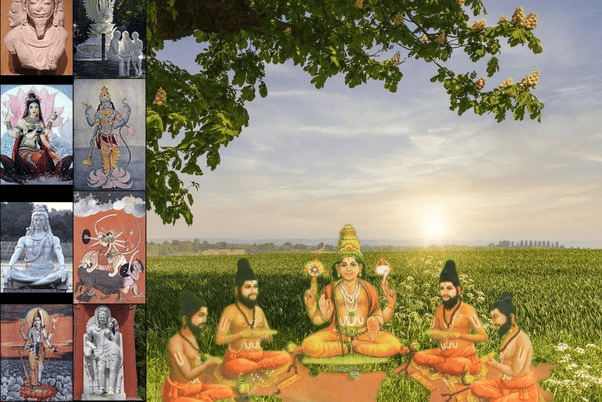
The journey begins not with written words, but with heard revelations—Shruti, “that which is heard.” The great authors of this earliest stratum are the Rishis or sages, who in deep meditative states perceived the fundamental truths of existence. Their “authorship” was one of discovery, not creation.
- The Vedic Seers: Names like Vasishta, Vishwamitra, Atri, Bharadvaja, and the visionary Rishika Gargi echo through time. They composed the hymns of the four Vedas (Rig, Yajur, Sama, Atharva). Their greatness lies in their cosmic vision. They saw divinity in natural forces—Agni (fire), Vayu (wind), Indra (the dynamism of the atmosphere), Ushas (dawn)—but simultaneously intuited a singular, transcendent reality behind them all, called Rita (cosmic order) and later, Brahman. The Nasadiya Sukta (Hymn of Creation) in the Rig Veda, with its majestic agnosticism—”Who really knows?… Perhaps even He does not know”—demonstrates a philosophical depth that embraces inquiry and mystery from the very beginning.
- The Upanishadic Sages: Building upon the ritualistic framework of the Vedas, the authors of the Upanishads (the “Vedanta” or end of the Vedas) turned the gaze inward. In profound dialogues between teachers like Yajnavalkya and his wife Maitreyi, or Uddalaka Aruni and his son Shvetaketu, they mapped the inner universe. Their great authorship established the core non-dualistic (Advaita) and dualistic (Dvaita) insights: the identity of the individual soul (Atman) with the universal soul (Brahman), the doctrine of karma and rebirth, and the paths to liberation (Moksha). They are the foundational metaphysicians of Sanatan Dharma.
II. The Architect of Dharma: The Sage of Systematization
If the Vedic seers were inspired poets, the next great author was a brilliant systematizer: Maharishi Veda Vyasa (Krishna Dvaipayana). His title “Vyasa” means “compiler” or “arranger,” and his contribution is colossal.
- Compilation of the Vedas: He is traditionally credited with classifying the single, flowing Vedic knowledge into the four Vedas for the ease of preservation in a declining age (Kali Yuga).
- Composition of the Mahabharata: His magnum opus, the Mahabharata, is not just an epic poem; it is an encyclopedia of dharma. Within its narrative of a great war lies the Bhagavad Gita, a concise spiritual compendium. Here, Vyasa, through the voice of Lord Krishna, synthesizes the paths of knowledge (Jnana), devotion (Bhakti), and disciplined action (Karma). The Gita’s author (as the vehicle for the dialogue) provides a practical, psychological guide to living a life of duty without attachment, making high philosophy accessible to every seeker.
- Composition of the Puranas: Vyasa is also the seminal figure behind the Puranas, the “ancient lore.” These texts, like the Vishnu Purana, Shiva Purana, and Bhagavata Purana, translate philosophical abstractions into myth, narrative, and symbol. They popularized theology, cosmology, and devotion, making the essence of Sanatan Dharma permeable to every stratum of society. Vyasa’s authorship created the structural backbone of the tradition.
III. The Philosopher-Authors: Building the Schools of Thought
Sanatan Dharma’s intellectual rigor is embodied in its Darshanas (philosophical systems). The great authors here are logicians and metaphysicians who built robust intellectual frameworks.
- Maharishi Kapila: The founder of the Samkhya school, credited with authoring the Samkhya Sutras. He provided a rational, atheistic (in its classical form) analysis of reality, enumerating 25 principles (Tattvas) from Purusha (consciousness) and Prakriti (primordial matter) to the mind and senses. His systematic dualism became the philosophical foundation for much of Hindu thought, including Yoga.
- Sage Patanjali: Building upon Samkhya’s metaphysics, Patanjali authored the Yoga Sutras. In 196 concise aphorisms, he outlined the eight-fold path (Ashtanga Yoga) to still the mind and achieve kaivalya (isolation of the pure consciousness). His authorship provided the definitive manual for the science of meditation and mental discipline.
- Maharishi Jaimini: Founded the Purva Mimamsa school, authoring the Mimamsa Sutras. He focused on the philosophy of Vedic ritual, dharma, and language, emphasizing the importance of action (Karma) and the self-validating authority of the Vedas.
- Acharya Badarayana: The author of the Brahma Sutras (also called Vedanta Sutras), which systematize the often-cryptic teachings of the Upanishads into a coherent philosophical text. This sutra work became the basis for all subsequent major commentaries and schools of Vedanta.
IV. The Commentator-Authors: Illuminating the Vedanta
The Brahma Sutras, cryptic by design, required interpretation. This gave rise to the golden age of commentary, where great authors shaped distinct schools of Vedanta.
- Adi Shankaracharya (8th century CE): The towering exponent of Advaita Vedanta (non-dualism). Through his brilliant commentaries (Bhashyas) on the Brahma Sutras, the Upanishads, and the Bhagavad Gita, Shankara established the doctrine of absolute non-duality: that Brahman alone is real, the world is an appearance (Maya), and the individual self is none other than Brahman. His authorship revived and refined the Upanishadic core, establishing monastic orders (Mathas) to preserve the knowledge. His independent works like Vivekachudamani are masterpieces of direct spiritual instruction.
- Ramanujacharya (11th-12th century CE): The great author of Vishishtadvaita (qualified non-dualism). In his Sri Bhashya and other works, he countered Shankara’s absolute non-dualism. For Ramanuja, the world and individual souls are real, constituting the body of a personal, saguna (with attributes) Brahman—identified as Lord Vishnu. His theology centered on prapatti (total surrender) and established a passionate, relational path to liberation.
- Madhvacharya (13th century CE): The proponent of Dvaita (dualism). In his commentaries and works like the Anu-Vyakhyana, Madhva argued for an eternal, five-fold distinction between God (Vishnu), individual souls, and matter. His system is firmly theistic, emphasizing the complete dependence of the soul on God’s grace. His sharp logical style created a distinctly dualistic interpretation of the Vedantic texts.
These three acharyas, through their authorial genius, demonstrated the intellectual flexibility and depth of Sanatan Dharma, allowing for multiple, equally valid paths to the Truth based on the temperament of the seeker.
V. The Poet-Saints: The Authors of Ecstatic Devotion
Parallel to the philosophical schools, a tidal wave of devotional love (Bhakti) swept across the Indian subcontinent from the 6th century CE onward. Its great authors were not just writers but inspired poet-saints who composed in local languages, democratizing spirituality.
- The Alvars and Nayanars (6th-9th centuries CE): In Tamilakam (South India), the Alvars (devotees of Vishnu) like Nammalvar and the Nayanars (devotees of Shiva) like Appar, Sambandar, and Sundarar authored thousands of ecstatic hymns, collected as the Divya Prabandham and Tirumurai. They spoke of a personal, intimate God accessible to all, irrespective of caste. Their Tamil compositions are considered the “Tamil Veda.”
- Sant Tradition (12th-17th centuries CE): Across India, saint-poets expressed a devotion often transcending formal religious boundaries.
- Jnaneshwar (Maharashtra): His Jnaneshwari, a commentary on the Bhagavad Gita in Marathi, is a masterpiece of poetic and mystical exposition.
- Mirabai (Rajasthan): Her Hindi bhajans to Lord Krishna are anthems of soulful, defiant love, breaking social constraints.
- Tulsidas (Uttar Pradesh): His Ramcharitmanas, an Awadhi re-telling of the Ramayana, became the scripture of North Indian devotion, portraying Lord Rama as the ideal king, husband, and God of the people.
- Surdas (Braj): His Sursagar, depicting the lilas (divine plays) of Krishna in Braj Bhasha, defines Krishna devotion for millions.
- Kabir (Uttar Pradesh): A weaver and mystic, his blunt, couplet-style dohas and sakhis criticized ritualism and caste, pointing to a formless God (Nirguna Brahman) within. His authorship bridges Hindu and Islamic mysticism.
These poet-authors gave Sanatan Dharma its emotional heart and its immense popular resonance, ensuring its survival and vitality.
VI. The Modern Synthesizers: Authors for a Global Age
The encounter with Western thought and colonial rule sparked a renaissance. Modern great authors reinterpreted Sanatan Dharma for contemporary minds.
- Sri Ramakrishna Paramahamsa (1836-1886): Though he wrote nothing, his teachings, recorded by his disciple Swami Vivekananda, form a critical modern “text.” Ramakrishna’s life was an experiment in realizing God through all paths—Advaita, Bhakti, Tantra, and even Christianity and Islam. His authorship was experiential, validating the pluralistic, universal core of Sanatan Dharma.
- Swami Vivekananda (1863-1902): The primary author of modern Hindu philosophy for the world. His speeches at the 1893 Parliament of Religions and works like Raja Yoga and Jnana Yoga presented Vedanta as a universal, rational, and practical spirituality. He coined the terms “potential divinity of the soul” and “unity in diversity,” framing Sanatan Dharma as a global, humanistic philosophy capable of addressing material and spiritual needs.
- Sri Aurobindo (1872-1950): A revolutionary, poet, and sage, he authored a monumental corpus including The Life Divine, The Synthesis of Yoga, and Savitri (an epic poem). He developed Integral Yoga and the philosophy of Involution and Evolution, proposing that Spirit has involved itself in Matter and is evolving through history towards a divine life on earth—a radical evolution of the ancient Vedantic vision.
- Sarvepalli Radhakrishnan (1888-1975): A philosopher-statesman, his authorial works like Indian Philosophy and The Hindu View of Life provided a scholarly, accessible, and comparative defense of Hindu thought, emphasizing its experiential basis and philosophical sophistication for Western academic audiences.
Conclusion: The Unfinished Symphony
The greatness of Sanatan Dharma’s authors lies in their collective, choral contribution. They are not competitors in a single truth game but collaborators in a grand, millennia-long exploration of consciousness. The Vedic seer inquiring into the cosmos, the Upanishadic sage probing the Self, Vyasa codifying dharma, Shankara and Ramanuja debating its nature, Mirabai singing in ecstasy, and Vivekananda addressing the world—all are part of a single, unbroken lineage of inquiry and realization.
They have authored more than texts; they have authored a living civilization, a framework of meaning that accommodates the absolute and the relative, the ascetic and the householder, the philosopher and the devotee. Their collective work asserts that the divine is not a distant patent but a discoverable reality within and around us, approachable through infinite paths.
The symphony they began is eternal (Sanatan), and its score remains open, inviting each new generation to add its unique note to the ongoing discovery of Truth. The great authors are not relics of the past; they are ongoing conversation partners, guiding lights in humanity’s perpetual journey from the outer world to the inner Self, and from the inner Self to the seamless unity of all existence.
Top 100 name of Sanatan Dharma Great Author
Here is a list of 100 great authors and sages from Sanatan Dharma (Hinduism) who have contributed immensely to its philosophy, scriptures, literature, and spiritual wisdom:
Courtesy: TheSpiritualExplorer
Ancient Rishis & Vedic Seers (Vedic & Upanishadic Period)
- Vyasa (Veda Vyasa) – Compiler of the Vedas, author of the Mahabharata & Puranas
- Valmiki – Author of the Ramayana
- Vashistha – One of the Saptarishis, Guru of Lord Rama
- Vishwamitra – Sage who composed the Gayatri Mantra
- Atri – One of the Saptarishis, author of parts of the Rigveda
- Bhrigu – Author of the Bhrigu Samhita, an ancient astrological text
- Angiras – Contributor to the Rigveda
- Agastya – Composer of Rigvedic hymns, father of Tamil literature
- Bharadwaja – Great scholar of Ayurveda and Dhanurveda
- Kanva – Rishi mentioned in the Rigveda
- Kashyapa – A great sage and progenitor of many divine beings
- Jamadagni – Father of Parashurama, a Rigvedic sage
- Shukracharya – Guru of the Asuras, expert in Shastra and Jyotish
- Gautama – Author of Nyaya Sutras and Rishi of Rigveda
- Yajnavalkya – Philosopher of Advaita Vedanta, author of Shatapatha Brahmana
- Patanjali – Compiler of Yoga Sutras, great grammarian
- Panini – Author of Ashtadhyayi, father of Sanskrit grammar
- Jaimini – Author of Mimamsa Sutras
- Kapila – Founder of Samkhya philosophy
- Kanada – Founder of Vaisheshika school of philosophy
Itihasa & Puranic Authors
- Narada Muni – Composer of Narada Bhakti Sutra
- Markandeya – Sage known for Markandeya Purana
- Parashara – Father of Vyasa, author of Vishnu Purana
- Lomaharshana – Disciple of Vyasa, compiler of many Puranas
- Garga Muni – Expert in astrology, wrote Garga Samhita
- Suta Goswami – Narrator of the Bhagavata Purana
- Vallabhacharya – Founder of Pushtimarg, author of Shodash Granth
- Nimbarka – Founder of the Nimbarka Sampradaya
- Bhaskara – Philosopher who commented on Vedanta
- Tulsidas – Author of Ramcharitmanas
- Kamban – Tamil poet, author of Kamba Ramayanam
- Kumarila Bhatta – Proponent of Purva Mimamsa
- Madhvacharya – Founder of Dvaita Vedanta
- Ramanujacharya – Founder of Vishishtadvaita Vedanta
- Basava – Founder of Lingayat sect
- Gorakhnath – Major saint in Nath tradition
- Chaitanya Mahaprabhu – Founder of Gaudiya Vaishnavism
- Mirabai – Poetess and devotee of Krishna
- Surdas – Poet-saint known for Sur Sagar
- Kabir Das – Mystic poet who criticized social evils
Courtesy: Dipen Singh
Modern Saints & Scholars (18th – 21st Century)
- Swami Vivekananda – Disciple of Ramakrishna, author of Raja Yoga
- Sri Aurobindo – Philosopher, author of The Life Divine
- Ramakrishna Paramhansa – Mystic and spiritual leader
- Swami Sivananda – Founder of Divine Life Society
- Ravindra Nath Tagore – Nobel laureate, spiritual poet
- Bhaktivedanta Swami Prabhupada – Founder of ISKCON, translator of Bhagavad Gita
- Swami Dayananda Saraswati – Founder of Arya Samaj
- Ramakrishna Paramahamsa – Spiritual saint of 19th-century India
- Sri Ramana Maharshi – Proponent of Advaita Vedanta
- Swami Chinmayananda – Founder of Chinmaya Mission
Mathematical & Scientific Authors
- Aryabhata – Ancient Indian mathematician and astronomer
- Brahmagupta – Mathematician and author of Brahmasphutasiddhanta
- Varahamihira – Astronomer and author of Brihat Samhita
- Bhaskara I – Mathematician known for calculus contributions
- Bhaskara II – Wrote Lilavati, Siddhanta Shiromani
- Sushruta – Father of Indian medicine, author of Sushruta Samhita
- Charaka – Author of Charaka Samhita, father of Ayurveda
- Nagarjuna – Buddhist philosopher and alchemist
Philosophers & Commentators
- Adi Shankaracharya – Founder of Advaita Vedanta, wrote commentaries on Vedas
- Vachaspati Mishra – Commentator on various Hindu scriptures
- Harsha – Sanskrit poet and philosopher
- Appayya Dikshita – Shaivite scholar
- Dnyaneshwar – Marathi saint, author of Dnyaneshwari
- Eknath – Marathi saint, author of Eknathi Bhagwat
- Namdev – Bhakti saint and poet
- Tiruvalluvar – Author of Tirukkural
- Bhartrihari – Sanskrit philosopher, poet
- Jayadeva – Author of Gita Govinda
- Vidyaranya – Advaita scholar and statesman
- Abhinavagupta – Kashmiri Shaivite philosopher
- Utpaladeva – Kashmiri Shaivite thinker
Other Great Contributors
- Raghunatha Siromani – Logician in Navya Nyaya
- Udayana – Philosopher in Nyaya tradition
- Keshav Kashmiri – Scholar who debated with Chaitanya Mahaprabhu
- Kumarasambhava (Kalidasa) – Sanskrit poet
- Vidyapati – Maithili poet
- Raskhan – Muslim devotee of Krishna and poet
- Sant Tukaram – Marathi poet-saint
- Swami Ranganathananda – Vedantic scholar
- Jagadguru Kripalu Maharaj – Founder of Radha Madhav Dham
- Swami Krishnananda – Spiritual writer, disciple of Swami Sivananda
- Gopinath Kaviraj – Tantric scholar
- Sri Yukteswar Giri – Guru of Paramahansa Yogananda
- Paramahansa Yogananda – Author of Autobiography of a Yogi
- Pandurang Shastri Athavale – Founder of Swadhyaya movement
- Baba Ramdev – Yoga guru and author on Ayurveda
- Sri Sri Ravi Shankar – Founder of Art of Living
- Sadhguru Jaggi Vasudev – Mystic and author
- Rajiv Malhotra – Modern Hindu intellectual
- Koenraad Elst – Indologist and writer on Hinduism

Table of Contents