SANATAN DHARAM TOURISM is a specialized form of cultural and spiritual tourism that focuses on exploring destinations, temples, pilgrimage sites, and heritage locations associated with Sanatan Dharma, one of the oldest spiritual traditions in the world. This form of tourism emphasizes understanding the philosophies, rituals, and practices of Sanatan Dharma while experiencing the rich spiritual and cultural heritage of India.
Travelers engaged in Sanatan Dharm Tourism often visit sacred rivers, temples, ashrams, monasteries, and historical sites linked to Hinduism, Jainism, and other dharmic traditions. The purpose is not only religious pilgrimage but also learning, personal growth, and cultural appreciation. Tourists gain insights into spiritual practices, ethical teachings, festivals, and rituals that have been preserved for thousands of years.
In addition to spiritual enrichment, Sanatan Dharm Tourism supports local communities by promoting traditional arts, crafts, and cultural performances. Modern tourism companies and local authorities are increasingly designing educational tours, workshops, and guided experiences to make these sacred journeys accessible, safe, and informative for both domestic and international travelers.
This type of tourism bridges spirituality and education, allowing participants to engage meaningfully with ancient traditions, foster inner reflection, and gain a deeper appreciation of the living culture of Sanatan Dharma. It highlights how travel can serve as a tool for cultural preservation, ethical awareness, and spiritual exploration in a contemporary world.
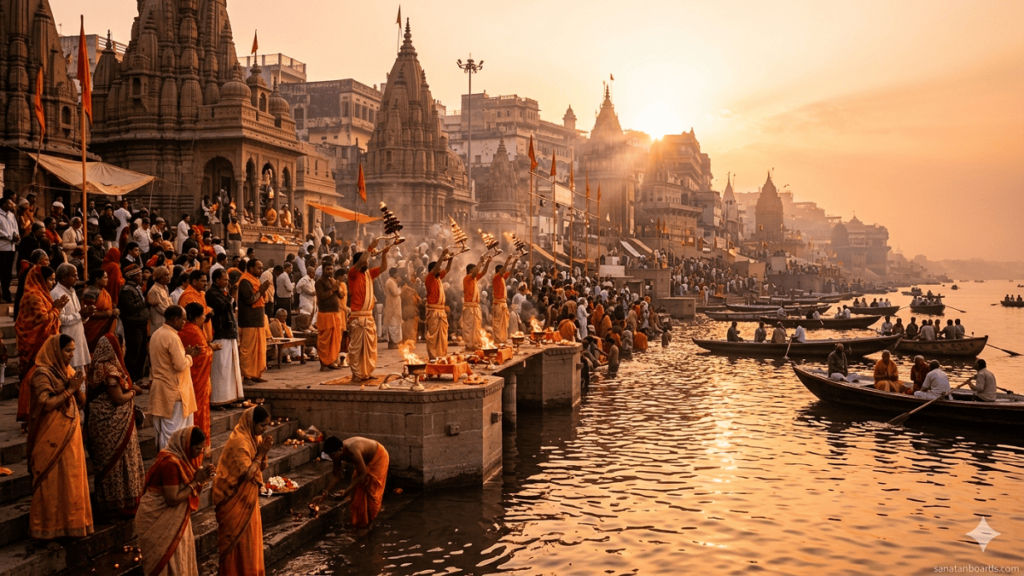
What Is Sanatan Dharam Tourism ?
Sanatan Dharm Tourism is a form of tourism centered on visiting and experiencing the sacred sites, cultural heritage, and spiritual practices associated with Sanatan Dharma. Unlike conventional travel, which may focus solely on leisure or sightseeing, Sanatan Dharm Tourism emphasizes learning, spiritual growth, and cultural immersion. It is both educational and experiential, allowing travelers to connect with India’s ancient spiritual traditions while gaining knowledge about its rituals, philosophies, and history.
At its core, Sanatan Dharm Tourism involves visiting temples, pilgrimage circuits, holy rivers, monasteries, and sacred festivals. Popular destinations include Varanasi, Rishikesh, Haridwar, Dwarka, and the Char Dham sites. Beyond physical travel, it also encompasses guided tours, workshops, lectures and interactive sessions on dharmic teachings, ethics, meditation, yoga, and classical arts. Tourists often learn about core concepts like karma, dharma, moksha, and ahimsa, as well as the significance of deities, rituals, and traditional festivals.
One of the unique aspects of Sanatan Dharm Tourism is that it is inclusive, appealing to spiritual seekers, scholars, students, and international travelers interested in India’s ancient culture and philosophy. It bridges religious devotion with education, helping participants understand not just the rituals but also the meaning behind them.
Moreover, Sanatan Dharm Tourism contributes to cultural preservation. By bringing attention to sacred sites and practices, it encourages local communities to maintain their heritage, crafts, and traditional knowledge. It also fosters ethical and sustainable tourism practices, as participants are often encouraged to respect the environment, follow local customs, and engage mindfully with communities.
Who Is Required Sanatan Dharm Tourism ?
Sanatan Dharm Tourism is required by a diverse group of individuals and organizations, each drawn to it for spiritual, educational, or cultural reasons. Understanding who benefits most from this tourism can help both travelers and tourism planners create meaningful experiences.
1. Spiritual Seekers
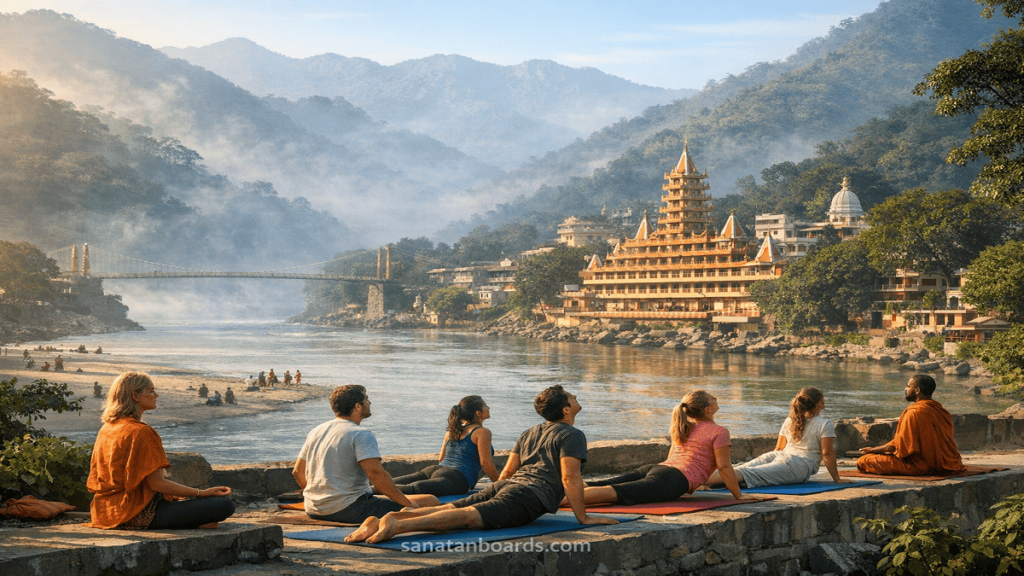
The primary group engaging in Sanatan Dharm Tourism consists of spiritual seekers. These individuals are motivated by personal growth, meditation, self-reflection, and ethical living. They often visit sacred sites such as temples, ashrams, and pilgrimage circuits to participate in rituals, practice meditation, or study dharmic philosophies. For instance, traveling to Rishikesh for yoga and meditation programs allows seekers to integrate mind-body wellness with spiritual understanding.
2. Pilgrims and Devotees
Pilgrims seeking blessings, performing rituals, or fulfilling religious vows constitute another major audience. Locations such as Varanasi, Dwarka, Tirupati, and Char Dham attract millions annually. These pilgrims aim to experience sacred ceremonies, immerse themselves in dharmic rituals, and connect with divine energy, making the journey an act of devotion and spiritual fulfillment.
3. Students and Scholars
Academics and students studying religion, history, architecture, and cultural heritage find Sanatan Dharm Tourism indispensable. Visiting temples, ashrams, and historical sites provides hands-on learning opportunities about Vedic literature, temple architecture, classical arts, and religious rituals. Researchers can study ancient manuscripts, document practices, and gain insight into dharmic traditions that cannot be fully understood through textbooks alone.
4. Cultural Tourists
International and domestic travelers interested in India’s cultural and historical richness also require Sanatan Dharm Tourism. They may not be devout practitioners but seek to experience festivals, traditional performances, rituals, and architectural marvels. For example, participating in the Rath Yatra in Puri or observing the Ganga Aarti in Varanasi allows cultural tourists to engage meaningfully with India’s living spiritual traditions.
5. Organizations and Educators
Educational institutions, cultural organizations, and government tourism boards also rely on Sanatan Dharm Tourism. They use it to promote heritage preservation, provide educational programs, and encourage responsible tourism. By designing structured tours, workshops, and cultural learning programs, these organizations help maintain sacred sites, support local communities, and facilitate global understanding of India’s dharmic heritage.
When Is Sanatan Dharm Tourism Required ?
Sanatan Dharm Tourism is most impactful when planned according to religious calendars, festival schedules, seasonal considerations, and life events. The timing of travel is not only about convenience; it is deeply connected to the spiritual significance of locations, rituals, and festivals, which enhances the overall experience for pilgrims, cultural tourists, and spiritual seekers.
1. Festival Seasons
One of the most important times for Sanatan Dharm Tourism is during major dharmic festivals, which attract thousands of devotees and tourists alike. For instance:
- Diwali: Celebrated nationwide, but cities like Varanasi, Mathura, and Dwarka offer unique rituals, temple illuminations, and cultural events.
- Navratri: Popular in Gujarat and northern India, this festival includes devotional music, dance, and temple celebrations.
- Maha Shivratri: Observed across India, particularly in Varanasi, Haridwar, and Kedarnath, with night-long vigils and rituals.
- Rath Yatra: In Puri, Odisha, this festival involves elaborate chariot processions that are both spiritual and cultural spectacles.
- Kumbh Mela: Held at Haridwar, Prayagraj, Ujjain, and Nashik, it is the world’s largest religious gathering, offering unparalleled opportunities for learning and immersion in dharmic practices.
These festivals allow tourists to experience dharmic traditions at their peak, witnessing rituals, processions, and spiritual practices that cannot be observed at other times of the year.
2. Seasonal Considerations
Seasonal factors also determine when Sanatan Dharm Tourism is ideal. For example, Char Dham pilgrimage sites in Uttarakhand—Badrinath, Kedarnath, Gangotri, and Yamunotri—are best visited during summer months (April to June) when weather conditions are safe and roads are accessible. Similarly, river pilgrimages along the Ganges, Yamuna, and Godavari are preferred post-monsoon, when water levels are manageable and rituals can be performed safely.
3. Life Milestones
Sanatan Dharm Tourism is also timed according to personal milestones. Individuals or families may plan visits to sacred temples for weddings, religious vows, rites of passage, or spiritual renewal. For example, a couple may visit Tirupati for blessings before marriage, or families may perform ancestral rituals in Varanasi to honor loved ones.
4. Educational or Retreat Programs
Tourists participating in workshops, meditation retreats, yoga programs, or dharmic study tours may choose timing based on program schedules. Ashrams in Rishikesh and Haridwar often have seasonal retreats, allowing visitors to learn yoga, meditation, and dharmic philosophy in a structured environment.
5. Research and Cultural Preservation
Scholars and researchers also plan visits to coincide with rituals, festivals, or temple ceremonies for academic purposes. This timing ensures firsthand observation of dharmic practices, architectural study, or documentation of cultural heritage.
Where Is Sanatan Dharm Tourism Required ?
Dharm Tourism is required in locations that combine spiritual, cultural, and educational significance. These places are not merely travel destinations but living hubs of dharmic practice, cultural preservation, and historical learning.
1. Northern India
Northern India hosts the most prominent Sanatan Dharm pilgrimage circuits:
- Char Dham (Uttarakhand): Badrinath, Kedarnath, Gangotri, Yamunotri—key destinations for spiritual seekers, offering breathtaking landscapes and sacred experiences.
- Varanasi (Uttar Pradesh): The city on the banks of the Ganges, famous for ghats, temples, and evening Ganga Aarti rituals.
- Rishikesh and Haridwar (Uttarakhand): Centers for yoga, meditation, ashrams, and Ganga rituals.
2. Western India
Western India offers iconic dharmic sites:
- Dwarka (Gujarat): Ancient Krishna temple with mythological and historical significance.
- Somnath (Gujarat): One of the twelve Jyotirlinga temples, known for its reconstruction and preservation.
- Ujjain (Madhya Pradesh): Host to Kumbh Mela and temples dedicated to Shiva and other deities.
3. Southern India
Southern India has culturally rich pilgrimage centers:
- Tirupati (Andhra Pradesh): Famous for Lord Venkateswara temple, attracting millions annually.
- Rameswaram (Tamil Nadu): A sacred site linked to Ramayana, known for Ramanathaswamy Temple.
- Madurai (Tamil Nadu): Meenakshi Temple, an architectural marvel and center of cultural events.
4. Eastern India
Eastern India offers festivals and temples unique to the region:
- Puri (Odisha): Jagannath Temple and Rath Yatra festival attract international attention.
- Konark (Odisha): Sun Temple, an architectural and cultural treasure.
5. Educational and Cultural Centers
Sanatan Dharm Tourism also thrives in ashrams, monasteries, and cultural institutions:
- Rishikesh ashrams offering yoga, meditation, and dharmic education.
- Temples hosting workshops on ritual performance, classical music, or arts.
6. Rivers and Natural Sites
Holy rivers like the Ganges, Yamuna, Godavari, and Kaveri play a central role. Pilgrimage to riverbanks for rituals, bathing, and spiritual ceremonies is essential for dharmic tourists.
How IS Sanatan Dharm Tourism Required ?
1. Guided Pilgrimage Tours
One of the most effective ways to experience Sanatan Dharm Tourism is through guided tours. These tours are curated by spiritual guides, historians, or tourism experts who explain the historical, philosophical, and ritual significance of each site. For example, visiting Varanasi’s ghats with a guide allows tourists to understand the Ganga Aarti, cremation rituals, and significance of the city in Hindu mythology. Similarly, guided tours of Char Dham pilgrimage sites in Uttarakhand provide safety, convenience, and deep spiritual context, making the journey educational and enriching.
2. Educational and Learning Programs
Many ashrams, temples, and spiritual centers offer workshops and courses that focus on dharmic philosophy, meditation, yoga, Sanskrit studies, and classical arts. Tourists can participate in interactive lectures, guided meditation sessions, and practical workshops that enhance knowledge of Sanatan Dharma. For instance, Rishikesh ashrams host international yoga programs where participants learn the spiritual and ethical principles behind physical practices, combining cultural education with spiritual growth.
3. Cultural Immersion
Sanatan Dharm Tourism emphasizes active cultural participation. Travelers are encouraged to attend festivals, participate in rituals, learn temple arts, and observe classical music and dance performances. Festivals such as Rath Yatra, Diwali, Kumbh Mela, and Navratri allow tourists to engage with dharmic culture in its most vibrant form. This immersion fosters cultural understanding, respect, and appreciation for traditions that have been preserved for centuries.
4. Digital Tools and Planning
Modern Sanatan Dharm Tourism also incorporates digital platforms. Mobile apps, websites, and virtual tours help travelers plan itineraries, understand local customs, and prepare for rituals or workshops. Digital guides offer historical insights, festival schedules, and even pronunciation of Sanskrit chants, enhancing both educational value and convenience for domestic and international tourists.
5. Sustainable and Ethical Practices
Experiencing Sanatan Dharm Tourism responsibly involves respecting sacred spaces, reducing environmental impact, and supporting local communities. Travelers are encouraged to avoid littering, follow temple protocols, and purchase goods or services from local artisans. Many pilgrimage organizations now focus on eco-friendly transportation, waste management, and awareness programs, ensuring that spiritual tourism is also sustainable.
6. Personal Spiritual Practice
Ultimately, how one experiences Sanatan Dharm Tourism depends on personal engagement. Meditation, prayer, reflection on dharmic teachings, and participation in rituals transform tourism into a journey of self-discovery and ethical learning. By combining physical travel with spiritual practices, tourists gain a holistic understanding of Sanatan Dharma and its relevance in contemporary life.
Case Study On Sanatan Dharm Tourism
Introduction
Sanatan Dharm Tourism is a growing segment of India’s spiritual and cultural tourism, attracting both domestic and international travelers seeking spiritual enrichment and educational experiences. Unlike conventional tourism, it emphasizes immersion in dharmic traditions, learning about sacred sites, participating in rituals, and understanding philosophical concepts.
India, as the birthplace of Sanatan Dharma, hosts countless temples, pilgrimage circuits, sacred rivers, and cultural festivals, making it a natural hub for spiritual tourism. Destinations such as Varanasi, Rishikesh, Haridwar, Dwarka, Tirupati, Puri, and Char Dham offer a combination of spiritual practice, heritage education, and immersive cultural experiences.
This case study examines how Sanatan Dharm Tourism is implemented, who it benefits, challenges faced, and its impact on communities and cultural preservation.
Objectives of Sanatan Dharm Tourism
The main objectives are:
- Spiritual Enrichment – Offering travelers opportunities to meditate, reflect, and engage in rituals.
- Cultural Preservation – Promoting awareness and protection of temples, festivals, art forms, and traditions.
- Educational Learning – Facilitating experiential learning for students, scholars, and cultural tourists.
- Community Development – Supporting local economies through tourism, handicrafts, and hospitality.
- Global Outreach – Positioning India as a center for spiritual and cultural exploration.
These objectives guide structured, meaningful travel experiences that meet both spiritual and educational needs.
Implementation Strategies
Sanatan Dharm Tourism is implemented through multiple strategies:
- Pilgrimage Circuits – Curated tours connect sacred sites. For example, the Char Dham Yatra links Badrinath, Kedarnath, Gangotri, and Yamunotri, with guides explaining the historical, religious, and philosophical significance of each site.
- Educational Workshops – Ashrams and cultural centers host sessions on yoga, meditation, Vedic philosophy, Sanskrit, and dharmic rituals.
- Festival Participation – Tourists experience festivals like Kumbh Mela, Diwali, Rath Yatra, Maha Shivratri, and Navratri, providing immersive cultural exposure.
- Cultural Experiences – Visitors learn temple arts, classical music, and dance while engaging with local communities.
- Digital Integration – Mobile apps, virtual tours, and online guides provide itineraries, historical context, and ritual explanations.
- Sustainability Practices – Operators encourage eco-friendly travel and respect for sacred spaces.
Case Example: Rishikesh – Yoga Capital of the World
Rishikesh exemplifies Sanatan Dharm Tourism:
- Spiritual Learning: Visitors attend meditation and yoga retreats at ashrams like Parmarth Niketan, learning dharmic philosophies.
- Festivals: International Yoga Festival and Ganga Aarti offer immersive experiences.
- Community Impact: Local businesses, artisans, and guides benefit economically.
- Educational Programs: Schools and universities collaborate with ashrams for study tours and experiential learning.
The Rishikesh model shows how spiritual tourism can combine education, culture, and community development effectively.
Benefits of Sanatan Dharm Tourism
- Cultural Awareness: Travelers gain firsthand knowledge of dharmic rituals, temple architecture, and festivals.
- Spiritual Growth: Participation in meditation, yoga, and rituals fosters self-reflection and ethical understanding.
- Economic Development: Tourism supports local businesses, artisans, and guides.
- Global Engagement: International tourists gain respect for India’s spiritual and cultural heritage.
- Preservation of Traditions: Continuous tourism encourages maintenance of sacred sites and rituals.
Challenges
- Infrastructure Issues: Remote pilgrimage sites often lack lodging, transport, and healthcare.
- Environmental Impact: Large gatherings like Kumbh Mela can strain natural resources.
- Cultural Sensitivity: Tourists unaware of sacred norms may unintentionally offend locals.
- Seasonal Tourism: Certain festivals create short-term economic spikes, causing uneven income distribution.
- Global Competition: Other spiritual destinations worldwide require India to maintain high-quality experiences.
Lessons Learned
- Holistic Planning: Combining pilgrimage, education, and cultural immersion maximizes the tourist experience.
- Community Participation: Involving locals ensures sustainable tourism and heritage preservation.
- Digital Tools: Virtual guides and apps enhance accessibility and understanding.
- Education Before Engagement: Pre-travel orientation improves respectful participation.
- Sustainability Focus: Eco-conscious travel protects sacred sites and natural surroundings.
Conclusion
Sanatan Dharm Tourism demonstrates how spiritual, cultural, and educational tourism can coexist harmoniously. By offering structured pilgrimages, #sanatandharmtourisminindia immersive cultural experiences, and educational programs, it provides travelers with a holistic journey of learning, self-discovery, and spiritual growth. Destinations like Rishikesh, Varanasi, and Tirupati showcase the potential of combining heritage preservation, community development, and global engagement.
With careful planning, sustainable practices, and community collaboration, Sanatan Dharm Tourism can become a model for responsible spiritual tourism worldwide,#sanatandharmtourisminuttarpradesh ensuring that India’s dharmic traditions continue to inspire, educate, and transform travelers for generations.
White Paper On Sanatan Dharm Tourism
Executive Summary
Sanatan Dharm Tourism is an emerging sector in India’s spiritual and cultural tourism industry, focusing on temples, pilgrimage circuits, sacred rivers, dharmic festivals, and educational centers. This white paper examines the current landscape, growth strategies, challenges, and future prospects of Sanatan Dharm Tourism, providing insights for policymakers, tourism operators, educational institutions, and cultural organizations.
The aim is to highlight opportunities for sustainable tourism, cultural preservation, educational enrichment, and community development, while positioning India as a global hub for spiritual and cultural travel.
Introduction
Sanatan Dharm Tourism is distinct from conventional tourism because it prioritizes spiritual immersion, cultural learning, and ethical engagement. Travelers engage in rituals, meditation, yoga, cultural festivals, and dharmic workshops, gaining both personal growth and educational insight.
India’s vast dharmic heritage, including Varanasi, Rishikesh, Haridwar, Tirupati, Dwarka, Puri, and Char Dham, provides an unparalleled ecosystem for this type of tourism. Government initiatives, private tourism operators, and ashrams contribute to its development, integrating digital tools, sustainable practices, and global marketing to expand its reach.
Current Trends in Sanatan Dharm Tourism
- Pilgrimage Tourism Expansion: Increasingly, tourists follow curated pilgrimage circuits with guided tours that provide context, safety, and immersive experiences.
- Global Audience Engagement: International travelers show growing interest in yoga, meditation, dharmic philosophy, and cultural festivals.
- Digital Integration: Mobile apps, virtual tours, and online resources provide pre-travel education, itinerary planning, and ritual guidance.
- Educational Focus: Universities and research institutions collaborate with temples and ashrams for study tours, workshops, and experiential learning programs.
- Sustainability Awareness: Eco-friendly travel, ethical participation, and conservation efforts are increasingly emphasized.
Key Components of Sanatan Dharm Tourism
- Pilgrimage Routes: Curated circuits like Char Dham Yatra, Kumbh Mela routes, and temple clusters guide tourists through sacred sites.
- Educational Programs: Workshops in yoga, meditation, Sanskrit, Vedic philosophy, and temple arts provide in-depth knowledge of Sanatan Dharma.
- Cultural Festivals: Participation in Diwali, Navratri, Rath Yatra, and Maha Shivratri offers experiential understanding of dharmic practices.
- Digital Tools: Apps, VR tours, and online lectures enhance accessibility, engagement, and knowledge acquisition.
- Community Engagement: Local artisans, guides, and hospitality providers are involved to ensure economic and cultural benefits.
- Sustainable Practices: Emphasis on eco-friendly travel, minimal impact rituals, and preservation of sacred sites.
Opportunities for Growth
- International Marketing: Promoting Sanatan Dharm Tourism through global travel fairs, cultural expos, and digital campaigns can attract more international tourists.
- Infrastructure Development: Investing in transport, lodging, healthcare, and digital connectivity ensures smooth tourist experiences.
- Academic Collaborations: Partnering with universities and cultural institutions can expand study tours, research programs, and educational pilgrimages.
- Technological Integration: Apps, AI-guided tours, and virtual reality experiences can make the tourism experience more interactive and accessible.
- Heritage Conservation: Encouraging sustainable tourism helps preserve temples, rituals, sacred rivers, and cultural traditions.
Challenges
- Overcrowding at Major Sites: Festivals like Kumbh Mela attract millions, overwhelming infrastructure.
- Environmental Strain: Large gatherings affect rivers, forests, and heritage sites.
- Cultural Awareness: Visitors often need guidance on ritual norms, etiquette, and ethics.
- Unequal Economic Benefits: Not all communities benefit equally from tourism revenue.
- Global Competition: Other spiritual tourism destinations worldwide require India to maintain high standards of service and experience.
Strategic Recommendations
- Capacity Management: Implement visitor caps, timed entry systems, and crowd management strategies for large festivals and pilgrimage sites.
- Sustainability Initiatives: Promote eco-friendly practices, renewable energy, and responsible tourism guidelines.
- Educational Orientation: Provide pre-visit guides, online resources, and orientation programs to ensure respectful engagement.
- Community Involvement: Empower local communities in tourism planning, revenue sharing, and cultural preservation.
- Technology Utilization: Leverage digital maps, virtual tours, and mobile apps to enhance visitor experience and learning.
- Marketing and Branding: Position India globally as the leading hub for spiritual, cultural, and educational tourism.
Future Prospects
Sanatan Dharm Tourism has the potential to become one of India’s most prominent tourism sectors by:
- Promoting India as a global spiritual and cultural hub.
- Supporting local economies, artisans, and cultural institutions.
- Ensuring preservation of sacred sites, rituals, and traditions.
- Expanding digital engagement for international travelers.
- Enhancing educational opportunities through immersive learning.
With strategic planning, sustainable practices, and robust digital integration, Sanatan Dharm Tourism can set global standards for responsible spiritual tourism, offering transformative experiences to travelers worldwide.
Conclusion
Sanatan Dharm Tourism represents a harmonious blend of spirituality, culture, and education. By combining structured pilgrimage routes, #sanatandharmtourisminmumbai immersive cultural experiences, educational workshops, and sustainable practices, India can offer travelers holistic experiences while preserving its spiritual and cultural heritage.
This white paper highlights the importance of strategic planning, community engagement, digital integration, and sustainable tourism. With these measures, Sanatan Dharm Tourism can flourish, ensuring that India’s dharmic traditions continue to inspire, educate, #sanatandharmtourisminvasai and transform travelers for generations to come.
Industry Application Of Sanatan Dharm Tourism
Introduction
Sanatan Dharm Tourism is not only a form of spiritual and cultural travel but also a dynamic sector with significant industry applications. It intersects with hospitality, education, cultural preservation, event management, technology, and government initiatives. The industry potential lies in transforming spiritual heritage into sustainable economic, educational, and social value.
This section explores how various stakeholders—tourism operators, hospitality providers, educational institutions, government agencies, and cultural organizations—can leverage Sanatan Dharm Tourism for growth, community development, and cultural preservation.
1. Hospitality Industry Applications
The hospitality sector plays a pivotal role in supporting Sanatan Dharm Tourism:
- Hotels and Guesthouses: Pilgrimage destinations like Varanasi, Rishikesh, Tirupati, and Puri see massive influxes during festivals and yatra seasons. Well-planned accommodations enhance the tourist experience.
- Eco-Resorts and Ashram Stays: Eco-friendly lodging integrated with ashram experiences allows tourists to combine spiritual practice with sustainable living.
- Food and Cuisine: Restaurants offering sattvic meals and traditional cuisine enrich cultural immersion while promoting local agricultural products.
- Transportation Services: Reliable local transport, shuttle services, and pilgrimage-specific travel packages improve accessibility and safety.
By tailoring services to the spiritual and cultural needs of tourists, hospitality businesses can differentiate themselves and create long-term customer loyalty.
2. Educational and Learning Institutions
Sanatan Dharm Tourism offers immense potential for experiential learning:
- Schools and Universities: Academic institutions can organize study tours, field research, and immersive cultural programs to teach history, philosophy, and cultural studies.
- Workshops and Seminars: Institutions can collaborate with temples, ashrams, and cultural centers to offer short-term courses in Sanskrit, Vedic philosophy, temple arts, and meditation.
- Research and Documentation: Scholars can study ritual practices, festivals, and architectural heritage, preserving knowledge and sharing it globally.
- Online Learning Integration: Virtual tours, webinars, and e-learning modules can extend educational reach to international students and researchers.
Educational institutions benefit from Sanatan Dharm Tourism by enhancing curriculum relevance, experiential learning opportunities, and cross-cultural engagement.
3. Cultural and Event Management Industry
Sanatan Dharm Tourism intersects heavily with event planning and cultural management:
- Festivals and Rituals: Organizing large-scale festivals like Kumbh Mela, Rath Yatra, and Maha Shivratri requires professional planning, crowd management, and safety protocols.
- Workshops and Exhibitions: Cultural workshops on temple arts, classical music, and dance attract tourists and promote local talent and artisans.
- Tour Packages: Curated festival-based travel packages enhance tourist engagement and revenue generation.
Event management companies can design, execute, and market dharmic cultural experiences for domestic and international tourists, making spirituality an industry-driven experience.
4. Government and Policy Applications
Government bodies can leverage Sanatan Dharm Tourism for economic development, cultural preservation, and global promotion:
- Tourism Promotion: Ministries of tourism can develop campaigns highlighting pilgrimage circuits, sacred festivals, and spiritual retreats.
- Infrastructure Development: Roads, accommodations, sanitation, and healthcare at pilgrimage sites improve accessibility and visitor satisfaction.
- Sustainability Initiatives: Programs focusing on waste management, eco-friendly rituals, and river conservation ensure the long-term preservation of sacred sites.
- Global Branding: Sanatan Dharm Tourism can position India as a global spiritual and cultural destination, attracting international tourists, scholars, and spiritual seekers.
Government collaboration with private operators ensures structured, safe, and sustainable tourism development.
5. Technology and Digital Industry Applications
Technology enhances accessibility, learning, and engagement in Sanatan Dharm Tourism:
- Mobile Apps: Travel planners, virtual guides, and ritual tutorials help tourists navigate pilgrimage routes and sacred sites.
- Virtual Reality (VR) and Augmented Reality (AR): Immersive experiences for inaccessible sites or educational programs attract global participants.
- Online Booking Platforms: Simplified bookings for accommodations, guided tours, and festival participation improve visitor convenience and experience.
- Data Analytics: Tourist behavior tracking enables tailored services, crowd management, and infrastructure planning.
Digital integration ensures that Sanatan Dharm Tourism is accessible, educational, and globally connected.
6. Local Community and Artisan Engagement
Sanatan Dharm Tourism supports community development and sustains traditional arts and crafts:
- Local Handicrafts and Souvenirs: Temples and pilgrimage sites provide opportunities for artisans to sell handcrafted goods, ensuring economic benefits for local communities.
- Guided Services: Training locals as guides preserves traditional knowledge and storytelling, providing employment opportunities.
- Cultural Preservation: Involving locals in rituals, festivals, and workshops ensures that ancient traditions are passed down generations.
- Sustainable Livelihoods: Community engagement in tourism strengthens local economies without compromising cultural or environmental integrity.
By integrating community participation, Sanatan Dharm Tourism creates mutually beneficial outcomes for tourists, locals, and businesses.
7. Global Market Applications
- International Pilgrimage Tourism: Targeting spiritual seekers from Europe, North America, and Southeast Asia expands the market and promotes cultural exchange.
- Yoga and Wellness Tourism: Combining spiritual tourism with yoga retreats, meditation programs, and wellness workshops attracts holistic travelers.
- Academic Tourism: Offering research programs and study tours to global students enhances India’s position as a center for dharmic education.
- Cultural Exchange Programs: Hosting international delegations and spiritual conferences strengthens India’s soft power and global influence.
Sanatan Dharm Tourism thus has strategic applications in global tourism, education, and cultural diplomacy.
Conclusion
Sanatan Dharm Tourism is a multi-dimensional industry that connects spirituality, culture, education, community development, and technology. #sanatandharmaaccreditationboardsinmumbai Its applications span hospitality, education, event management, government policy, technology, local community #sanatandharmaaccreditationboardsinvasai engagement, and global tourism markets.
By integrating sustainable practices, digital tools, community involvement, and educational programs, stakeholders can maximize economic, social, and cultural benefits. Sanatan Dharm Tourism not only preserves India’s dharmic heritage but also creates transformative experiences for travelers worldwide.
The industry potential is enormous, and with strategic planning, innovation, and collaboration, Sanatan Dharm Tourism can evolve into a global benchmark for spiritual, cultural, and educational tourism.
source : Siddhartha Joshi
ASK FAQ
What is Sanatan Dharm Tourism?
Sanatan Dharm Tourism is travel focused on spiritual, cultural, and educational experiences related to Sanatan Dharma, including temples, pilgrimages, festivals, and rituals.
Who can participate in Sanatan Dharm Tourism?
Anyone interested in spiritual growth, cultural learning, or heritage exploration can participate, including students, pilgrims, researchers, and global tourists.
When is the best time for Sanatan Dharm Tourism?
The best time varies by region and festival; October–March is ideal for most pilgrimages, while festivals like Kumbh Mela and Rath Yatra attract specific seasonal travelers.
Where are popular Sanatan Dharm Tourism destinations?
Popular destinations include Varanasi, Rishikesh, Haridwar, Tirupati, Dwarka, Puri, and the Char Dham sites across India.
How to experience Sanatan Dharm Tourism safely and meaningfully ?
Plan guided tours, attend workshops, respect local customs, follow eco-friendly practices, and engage with rituals and festivals responsibly.
Table of Contents
Disclaimer
This content is intended solely for educational and informational purposes. It provides general knowledge about Sanatan Dharm Tourism and does not constitute professional, legal, or medical advice. Readers should verify travel details, safety protocols, and local regulations before planning visits or participating in rituals. The experiences and recommendations shared are based on publicly available information and general cultural practices, which may vary regionally. Participation in festivals, pilgrimages, or spiritual activities is at the reader’s discretion, and the author is not responsible for any personal, financial, or legal outcomes arising from such participation.