Sanatan Dharam Yatra
The Philosophy of the Journey: Life as a Yatra
At its core, the concept of a Yatra in Sanatan Dharma is deeply symbolic. It is more than just physical movement from one geographical point to another; it is an inward journey towards the divine. An excellent exposition of this philosophy is found in the analogy of life itself being a Rath Yatra, or a chariot procession .
This metaphor, elaborated in ancient texts like the Katha Upanishad, is both beautiful and instructive. In this analogy, the individual soul (the Atman) is the passenger of the chariot. The body itself is the chariot (Rath). The intellect (Buddhi) is the charioteer, responsible for navigating the path of life. The mind (Manas) is the reins, which control the senses. The senses (Indriyas) are the horses that can either lead the soul towards its destination or pull it into the material world.
The roads these horses travel are the objects of the senses. The journey’s ultimate goal, or the destination of this chariot, is to reach the divine, the Supreme Lord Vishnu . This philosophical underpinning elevates every physical yatra, especially the Sanatan Dharam Yatra, from a mere ritual to a profound spiritual exercise, reminding the seeker of life’s ultimate purpose and the discipline required to achieve it.
Classical and Festival Yatras: The Grand Celebrations
Some of the most iconic Sanatan Dharam Yatras are the massive, festival-based processions that have been celebrated for centuries. These are often community events of immense scale and devotion.
The Jagannath Rath Yatra
The most famous of these is the annual Rath Yatra in Puri, Odisha, dedicated to Lord Jagannath (an incarnation of Lord Krishna), his brother Balabhadra, and his sister Subhadra. Celebrated on the auspicious day of Ashadh Sud 2 (June-July), this festival involves the ceremonial installation of the three deities on enormous, beautifully decorated chariots . These chariots are then pulled by thousands of devotees through the streets, a spectacle that draws millions from around the world.
The origin of this Yatra is steeped in mythology, recalling the time Lord Krishna, along with Balaram and Subhadra, rode a chariot through the city of Dwarika. The Puri Rath Yatra is a powerful symbol of equality and divine love, as the deities come out of the sanctum sanctorum to meet their devotees, regardless of caste or creed.
The Sacred Snana Yatra
Another significant festival is the Snana Yatra, or the divine bathing ceremony, which typically occurs on the full moon day in the month of Jyestha (May-June) . This festival is most prominently celebrated in Puri for Lord Jagannath and his siblings. The rituals are elaborate: the deities are brought out in a grand procession called Pahandi Vijay to a special bathing platform. Holy water is fetched from a sacred well (Suna Kua) in 108 pots, purified, and then used to bathe the deities in a ceremony known as Jalabhisheka.
After the bath, the deities are believed to rest and recuperate for 15 days, a period known as Anasara, during which they are not visible to the public. The Snana Yatra is not merely a ritual bath; it is a profound act of devotion, symbolizing purification, renewal, and the compassionate, approachable nature of the divine who, like humans, can “fall ill” and require rest .
Yatra as a Statement: Asserting Identity and Unity
Beyond the calendrical festivals, the term “Sanatan Dharam Yatra” has also been used in recent times for processions that serve as a public assertion of faith, identity, and unity. These yatras often arise in response to a perceived need to protect and promote the Sanatan way of life.
The Sanatan Yatra in Prayagraj
A prime example is the Sanatan Yatra organised in Prayagraj (Allahabad) in October 2025. Led by spiritual leaders like Jagatguru Ramanujacharya Swami Shandilya Ji Maharaj, this yatra was a direct response to what saints and sages described as “continuous attacks” on Sanatan Dharma . The yatra began at the mythological site of Shringaverpur Dham—a place with deep-rooted significance as the meeting point of Lord Ram and his devotee, the Nishad King Guhya—and proceeded to the sacred Dashashwamedh Ghat at the Sangam .
The choice of this route was highly symbolic. Shringaverpur represents the ideal of devotion and friendship that transcends social boundaries, while Dashashwamedh Ghat is revered as a place of cosmic creation, associated with Lord Brahma . By walking this path, the participants, including thousands of devotees and saints, were not just taking a stroll; they were re-enacting a sacred geography and issuing a clarion call for Sanatanis to protect their dharma.
The yatra included Vedic chanting, Ganga Puja, and the anointing of the Dashashwamedh Mahadev, transforming the procession into a mobile, public festival of faith. The leaders made it clear that this was a movement to counter opposition and that similar yatras would be organised to other significant places like Ayodhya and Chitrakoot .
The Sanatan Hindu Ekta Padyatra
Similarly, the Sanatan Hindu Ekta Padyatra, led by personalities like Acharya Dhirendra Krishna Shastri, is envisioned as a “clarion call for awakening” . Its primary focus is on internal reformation—to “refine thought, elevate consciousness, and reawaken the spirit of Sanatan Dharma,” particularly among the youth . This yatra aims to inspire pride in cultural roots and foster a sense of unity among Hindus, framing the journey as a transformative tool for both the individual and the collective.
Community Traditions: The Case of Jammu’s Shobha Yatra
Sometimes, these yatras are deeply ingrained in local tradition. In Jammu, a grand Shobha Yatra is taken out every year on the eve of Janmashtami by the Shri Sanatan Dharam Sabha, a tradition that has continued since the time of the erstwhile Dogra rulers . Thousands participate in this procession, which winds through the city’s historic markets, featuring tableaus that depict the life and times of Lord Krishna. For the community, this yatra is a cherished tradition that also highlights the strong inter-community bonds in the region .
The Institutional Yatra: Structured Movements for a Cause
In the 21st century, the concept of the Sanatan Dharam Yatra has also been adopted by organised spiritual and social trusts to carry out large-scale, structured movements aimed at societal transformation.
Pancham Dham’s Vision: The Bihar Sanatan Sankalp Yatra
A notable example of the evolving Sanatan Dharam Yatra tradition is the Bihar Sanatan Sankalp Yatra, an ambitious initiative by the Pancham Dham Trust. Founded in 2017 by Dr. Sailesh Lachu Hiranandani after two decades of dedicated research, Pancham Dham aims to revive and spread the teachings of Sanatan Dharma globally, with steadfast support from Rashtriya Swayamsevak Sangh (RSS) veteran Indresh Kumar, who serves as the organization’s Chief Patron . Together, they envision Sanatan Dharma’s practice as a means to foster global harmony and unity .
Challenging Perceptions, Reclaiming Heritage
The initiative seeks to counter what it describes as the “erroneous perception” of Bihar as a state defined by backwardness . Instead, the Yatra aims to reconnect Biharis with their rich Sanatani heritage—a legacy that includes the ancient Nalanda University, once a bastion of global learning, and numerous temples that dot the sacred landscape . This is not a single procession but a multi-phase, large-scale spiritual campaign designed for mass participation and lasting impact.
The Yatra’s Grand Scale and Structure
The Yatra began ceremonially on the auspicious occasion of Ganesh Chaturthi (7th September 2024) in Madhepura, Bihar, with RSS leader Indresh Kumar hoisting the Mahayagya flag at the Singheswar Mahadev Sthan . The spiritual flag then commenced a journey across all 38 districts of Bihar, visiting and performing Mahamrityunjaya Yagya and puja in 108 ancient Shiva temples . This phase aimed to honour Bihar’s sacred geography and prepare the spiritual ground for the grand finale.
The campaign culminated in a magnificent fortnight-long Mahamrityunjay Yagya held at Patna’s historic Gandhi Maidan from February 18 to 26, 2025 . This event drew an “unprecedented” gathering of saints, spiritual leaders, and devotees, with the total expected participation for the entire Yatra estimated to reach an impressive 20-25 lakh people . The scale of the event was further highlighted by the presence of cultural icons like Ghazal singer Anup Jalota .
A Yatra with a Social Conscience
The Bihar Sanatan Sankalp Yatra is distinguished by its strong social component, demonstrating that spiritual awakening and social progress are intertwined. As part of the initiative, 11 marriages of couples from economically weaker sections were performed daily during the Patna Yagya, providing them with dignified celebrations and support . The program also included daily talks by spiritual leaders and cultural programs, making it a holistic community event .
Furthermore, the Yatra paid profound obeisance to the great Bhakti saint Ravidas, whose birth anniversary (February 12) marked the commencement of the Patna Yagya’s final phase . Born into a marginalized community, Sant Ravidas rose above the caste system through his teachings of equality, devotion, and social justice . By venerating him, the Yatra made a powerful statement against caste discrimination, aligning itself with his enlightened path of bhakti that transcends all social barriers .
The Ultimate Goal: Bihar as the First Sanatan State
The overarching vision of this colossal spiritual venture is to establish Bihar as the “first Sanatan state of Bharat” . The aim is to revive and adopt Vedic practices in its ancient temples, leading the entire state on a path of spiritual enlightenment, peace, and prosperity . The Yatra’s slogan, “Awaaz Do, Hum Ek Hain” (Raise your voice, we are one), perfectly captures its spirit of unity, devotion, and collective awakening . This initiative by Pancham Dham stands as a testament to how the ancient tradition of the Yatra can be reimagined as a powerful instrument for both spiritual and social transformation in the modern era.
Conclusion: The Eternal Journey
The Sanatan Dharam Yatra, in its myriad forms, remains a vibrant and vital expression of the eternal way of life, serving as both a mirror reflecting timeless truths and a lamp illuminating the path forward. These sacred journeys—whether the thunderous pulling of Lord Jagannath’s chariot in Puri, the solemn bathing rituals of Snana Yatra, the assertive foot marches of saints in Prayagraj, or the methodical, transformative campaigns spanning Bihar’s villages—collectively weave the intricate tapestry of Sanatan Dharma.
At its philosophical heart, every yatra is a profound metaphor for life itself. As elucidated in the Katha Upanishad’s timeless analogy, the human body is the chariot, the intellect its charioteer, the mind the reins, and the senses the horses that must be guided toward the divine rather than dragged through material existence. This understanding transforms even the simplest pilgrimage from mere ritual into a spiritual exercise in self-mastery and remembrance of life’s ultimate purpose.
Yet the Sanatan Dharam Yatra is far more than individual spiritual practice. It is a living, breathing tradition that continually adapts while remaining rooted in eternal principles. The Jagannath Rath Yatra exemplifies this beautifully—when the deities emerge from the sanctum sanctorum to ride among common people, they shatter centuries-old barriers of caste and creed, proclaiming that divine love knows no hierarchy. Similarly, the Snana Yatra’s elaborate bathing ceremony reminds devotees that even the gods, in their infinite compassion, submit to rituals of purification and rest, making the transcendent beautifully approachable.
In contemporary times, these yatras have evolved to address modern challenges while preserving ancient wisdom. The Sanatan Yatra from Shringaverpur Dham to Prayagraj’s Dashashwamedh Ghat did not merely retrace sacred geography; it issued a clarion call for Sanatanis to unite in protecting their dharma against perceived threats. By beginning at the site where Lord Ram embraced the Nishad King Guhya, this procession powerfully reaffirmed that Sanatan Dharma’s essence lies in devotion and friendship transcending all social boundaries.
The Bihar Sanatan Sankalp Yatra represents perhaps the most ambitious evolution of this tradition—a 150-day, state-wide campaign spanning 108 ancient Shiva temples, aiming to reestablish Bihar as Bharat’s “first Sanatan state.” By combining Mahamrityunjaya Yagyas with mass weddings for economically weaker sections and tributes to saint Ravidas, this yatra demonstrates that spiritual awakening and social emancipation are inseparable companions on the eternal journey.
Whether manifesting as a community’s joyous Janmashtami Shobha Yatra in Jammu’s historic markets, or as Acharya Dhirendra Krishna Shastri’s clarion call for youth awakening, each yatra serves multiple sacred purposes. They connect the individual soul to the cosmic divine, anchor present generations to their ancestral past, and bind the solitary seeker to the collective community of faith. They transform abstract philosophy into embodied practice, turning dusty pilgrimage routes into living classrooms where devotion is taught through blistered feet and throbbing hearts.
As these yatras continue to be organised from the ancient banks of the Ganga to the remote villages of Bihar and beyond, they ensure that the Sanatan flame—of faith, unity, and spiritual awakening—burns bright for generations yet unborn. For Sanatan Dharma is not a museum piece to be preserved behind glass; it is a living river that must flow, adapt, and purify as it journeys eternally toward its source. And in every step of every pilgrim, on every path walked with devotion, that eternal journey continues, unchanging yet ever new, ancient yet perpetually young, inviting all who seek truth to join the endless yatra home.
Top 100 name of Sanatan Dharam Yatra
Here are 100 name ideas for a Sanatan Dharma Yatra, covering spiritual pilgrimages, sacred temple circuits, and religious journeys across India and beyond.
Courtesy: TIMES NOW Navbharat
1-25: General Sanatan Dharma Yatra Names
- Sanatan Dharma Yatra
- Divya Teerth Yatra
- Vedic Pilgrimage
- Moksha Path Yatra
- Bharat Sanatan Yatra
- Dharma Teerth Yatra
- Punyakshetra Yatra
- Sanatan Marg Yatra
- Paramarth Yatra
- Bhakti Marg Yatra
- Vedic Teerth Yatra
- Sanatan Dharmic Teerth Yatra
- Shuddh Bhakti Yatra
- Tapobhumi Yatra
- Satya Sanatan Yatra
- Sacred Temples Yatra
- Jeevan Mukti Yatra
- Dharmic Sthala Yatra
- Tirtha Darshan Yatra
- Sanatan Punya Yatra
- Anant Dharma Yatra
- Panch Kshetra Yatra
- Dharma Sangam Yatra
- Sanatan Smriti Yatra
- Shakti Peeth Darshan Yatra
26-50: Famous Hindu Pilgrimage Circuits
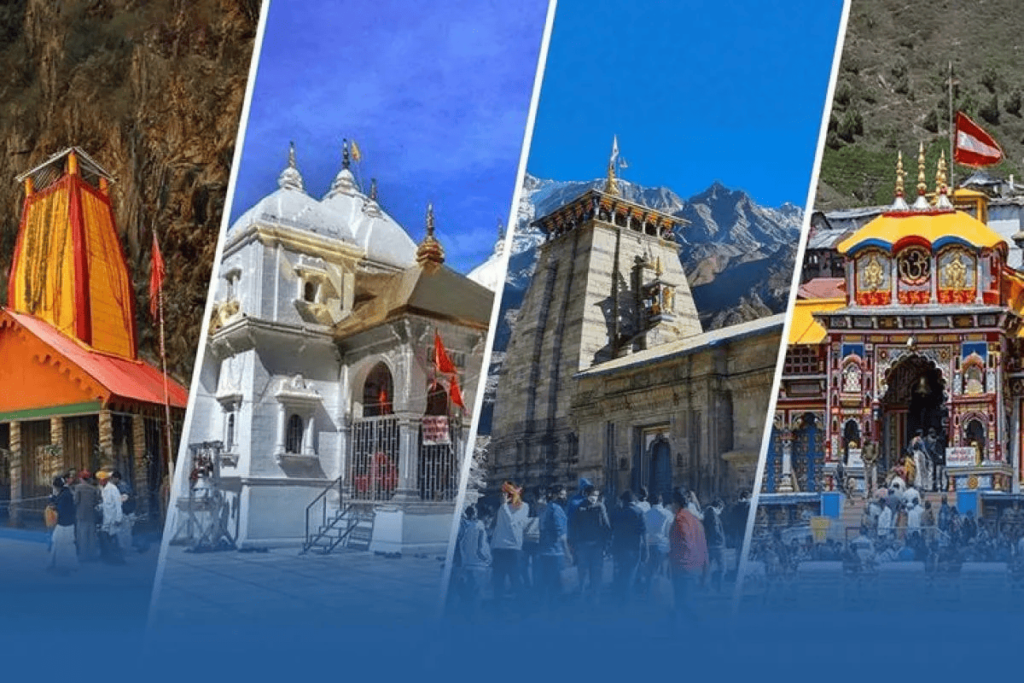
- Chardham Yatra (Badrinath, Kedarnath, Gangotri, Yamunotri)
- Chhota Chardham Yatra (Badrinath, Kedarnath, Gangotri, Yamunotri)
- Sapta Puri Yatra (7 Sacred Cities of Moksha)
- Dwadasa Jyotirlinga Yatra
- Panch Kedar Yatra
- Navagraha Yatra
- Pancha Bhoota Lingam Yatra
- Ashta Vinayak Yatra
- Shakti Peeth Yatra (51 Goddess Temples)
- Siddheshwar Yatra
- Bhagwan Ram Yatra
- Shri Krishna Bhakti Yatra
- Mahadev Darshan Yatra
- Aditya Dham Yatra
- Rameshwaram Kashi Yatra
- Sanatan Vrat Yatra
- Tirtharaj Prayag Yatra
- Ujjain Mahakaleshwar Yatra
- Panch Prayag Yatra
- Sapta Rishi Ashram Yatra
- Narmada Parikrama Yatra
- Ganga Sagar Yatra
- Puri Jagannath Yatra
- Amarnath Darshan Yatra
- Kailash Mansarovar Yatra
51-75: Specific Temple & Regional Pilgrimages
- Ayodhya Ram Janmabhoomi Yatra
- Mathura-Vrindavan Yatra
- Tirupati Balaji Darshan Yatra
- Haridwar-Rishikesh Yatra
- Varanasi Kashi Vishwanath Yatra
- Vaishno Devi Bhakti Yatra
- Somnath Jyotirlinga Yatra
- Dwarka Krishna Yatra
- Pashupatinath Darshan Yatra (Nepal)
- Maa Kamakhya Shakti Peeth Yatra
- Chitrakoot Ramayana Yatra
- Vindhyachal Devi Bhakti Yatra
- Badrinath-Kedarnath Dham Yatra
- Gaya Pind Daan Yatra
- Shri Raghunath Ji Yatra
- Panchmukhi Hanuman Darshan Yatra
- Dakshineswar Kali Yatra
- Rameshwar Jyotirlinga Yatra
- Shri Annapurna Devi Yatra
- Mithila Sita Ram Yatra
- Gokarna Mahabaleshwar Yatra
- Ujjain Simhastha Kumbh Yatra
- Prayagraj Kumbh Mela Yatra
- Shri Nathdwara Krishna Bhakti Yatra
- Sanatan Dev Bhakti Yatra
Courtesy: IndiaTV
76-100: Special Pilgrimages & Conceptual Yatras
- Shri Ganga Aarti Yatra
- Govardhan Parikrama Yatra
- Dandi Swami Vivekananda Yatra
- Sanatan Guru Parampara Yatra
- Adi Shankaracharya Yatra
- Bhagwan Dattatreya Yatra
- Ramayana Path Yatra
- Mahabharata Kshetra Yatra
- Lepakshi Veerabhadra Yatra
- Bhavani Mata Shakti Peeth Yatra
- Sarnath Buddha Sanatan Yatra
- Naimisharanya Puranic Yatra
- Jagannath Rath Yatra
- Omkareshwar-Parikrama Yatra
- Sanatan Siddha Yogi Yatra
- Himalayan Tapovan Yatra
- Saptarishi Ashram Yatra
- Satyug Tirth Yatra
- Bhagirathi Ganga Yatra
- Dakshin Bharat Teerth Yatra
- Sanatan Bhakti Sangam Yatra
- Brahma Vidya Yatra
- Parvati Parvat Yatra
- Dharma Kshetra Yatra
- Jagriti Bhakti Yatra
Conclusion
These names reflect spiritual journeys, temple circuits, jyotirlinga pilgrimages, Shakti Peeths, cultural yatras, and divine pilgrimages across Sanatan Dharma traditions.

Table of Contents





