Religion Conversion by Missionaries
Religion Conversion by christian Missionaries today in india and worldwide?
1. Introduction
Religious conversion — the change of an individual’s religious identity — is a phenomenon tied to faith, personal choice, power structures, culture, and politics. Across history, Christian missionaries have been among the most visible actors shaping conversions, often sparking debate, praise, resistance, and legal action wherever they operate.
Christian missionary work today is not monolithic: it includes evangelism, charitable service, education and healthcare outreach, and increasingly digital missions. However, the distinction between voluntary conversion and coercive or allurement-based conversion is at the heart of both international discussion and local controversy.
2. Missionary Conversion in India
a. Legal Framework and Current Context
In India, religious freedom is constitutionally guaranteed for all citizens, including freedom of conscience and the right to propagate one’s faith. However, many states have enacted anti-conversion laws aimed at restricting conversions that are perceived to involve force, fraud, allurement (enticement) or incentives such as money, education, or benefits.
States like Uttar Pradesh, Gujarat, Rajasthan, and several others have specific legislation that requires advance notice to authorities before conversions and make unlawful conversion a punishable offense. These laws stem from concerns that conversion efforts undermine communal harmony or exploit vulnerable communities.
Recent incidents in India reflect how contentious the issue remains. For instance:
- Arrests for alleged conversion activities have taken place in Uttar Pradesh and across other states, with individuals accused of luring poor families or organizing religious gatherings viewed as conversion efforts.
- In Rajasthan, police registered cases against missionaries for alleged conversion through “allurement” during spiritual events.
- Local controversies, such as villagers accusing Christian missionaries of offering inducements for conversion in Chhattisgarh, have also made headlines.
At times, these legal actions have sparked wider reactions. Arrests of clergy or missionaries on conversion charges have drawn criticism from Christian organisations that allege misuse of laws and threats to religious freedom.
b. Reported Trends and Allegations
Some trackers and reports claim hundreds of conversion cases are reported annually across different Indian states, with Uttar Pradesh and Chhattisgarh among those cited frequently. These reports allege methods ranging from financial incentives to exploiting social vulnerabilities.
However, it’s crucial to note that reliable independent data is rare, and much of the available figures come from politically or ideologically driven sources. Many cases involve accusations rather than convictions, and debates persist on whether conversions are truly coerced or voluntary.
c. Socio-Cultural Impacts
The possibility of conversion has triggered not just legal responses but also social tension, particularly in rural or tribal regions experiencing rapid socio-economic change. Debates around missionary work often intersect with concerns about cultural erosion, identity, and communality, and sometimes lead to confrontations between community groups.
Critics argue that missionary outreach attached to material benefits can unduly influence the poor or marginalized, raising ethical questions about genuine choice versus inducement — a debate mirrored in academic and sociological literature on religious conversion worldwide.
3. Christian Missionary Activity Worldwide
a. Global Trends in Christianity
Christianity remains one of the largest religions in the world. As of recent demographic studies, Christians make up nearly 30% of the global population, with an estimated growth in absolute numbers even as the share relative to global population declines slightly due to fertility patterns and the rise of other religions.
Global mission activity also reflects this broad shift. While historically dominated by Western churches, today’s missionary movement is increasingly global and diverse, with millions of missionaries coming from Africa, Asia, Latin America, and other regions.
b. Conversion Statistics and Patterns
Estimating exact numbers of conversions globally is challenging. A demographic source notes that roughly 2.7 million people convert to Christianity annually from other religions. Many of these conversions occur in Africa, Asia and Latin America — regions often referred to as the Global South — where charismatic or evangelical movements are particularly active.
Global Pew Research data suggests that while Christianity continues to grow numerically, religious switching trends vary sharply by region: in parts of Europe and North America, more people are leaving Christian affiliation than joining it; conversely, in some Asian and African regions, conversion to Christianity contributes to growth.
c. Mission Strategies and Modern Approaches
Modern missionary activity isn’t only about person-to-person evangelism. Digital missions, educational initiatives, healthcare outreach, disaster relief, and community development programmes are now part of how Christian organisations engage with communities globally. These activities can build trust and goodwill but also blur lines between social services and religious outreach — leading to debate about intent and impact.
Scholars highlight that mission strategies are shifting, with indigenous leadership, local mission movements, and culturally contextualised approaches becoming more common.
4. Controversies and Ethical Debates
Religious conversion by Christian missionaries — especially in pluralistic or secular societies — raises several ethical and practical questions:
- What constitutes genuine conversion? When does access to services become inducement?
- Are vulnerable groups being targeted? Critics argue that offering material incentives can exploit poverty or lack of opportunities.
- How should the law balance freedom of religion with protection against coercive practices? India’s anti-conversion laws reflect one approach, but they raise questions about freedom of belief and expression.
- Cultural preservation vs. individual choice: Some say conversions erode indigenous traditions, while others view religious choice as a fundamental human right.
These debates play out not only in courts and legislatures but also in social movements, community dialogues, and international human rights discourse.
5. Conclusion
Religious conversion by Christian missionaries today remains a complex and contested global issue. In countries like India, it intersects with law, politics, cultural identity, and communal interests, leading to significant social debate and legal action. Globally, mission efforts contribute to dynamic patterns of religious affiliation change — even as demographic and cultural trends shape the broader landscape of belief.
Understanding conversion requires nuanced analysis of motives, methods, context, and outcomes — balancing respect for individual choice with vigilance against exploitation. Whether viewed as a legitimate expression of faith or as a source of cultural disruption, missionary activity and religious conversion continue to stir discussion across societies worldwide.
1. Religious Conversion by Christian Missionaries in India
Missionary Activities in India
Christian missionaries operate through evangelism, social work, and charity. Some key activities include:
- Preaching Christianity through Bible distribution, public meetings, and personal evangelism.
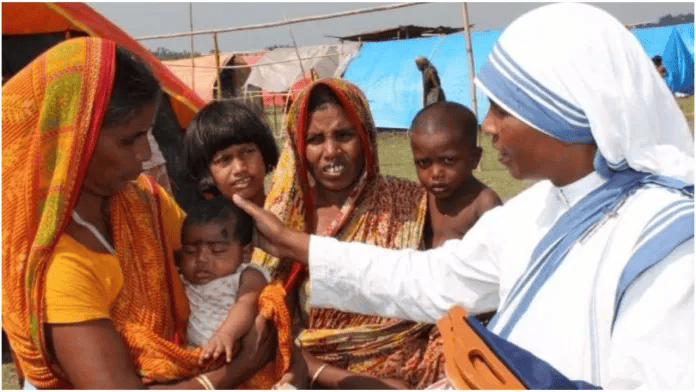
- Running schools, hospitals, orphanages, and social welfare programs for marginalized communities.
- Engaging in tribal and rural outreach, particularly among Dalits and Adivasis.
Allegations of Forced Conversions & Legal Issues
- Some Hindu nationalist groups accuse missionaries of using force, fraud, or allurement (such as financial aid, education, or medical help) to convert people.
- Several Indian states have anti-conversion laws, including Uttar Pradesh, Madhya Pradesh, Karnataka, Gujarat, and Odisha, which regulate conversions and criminalize coercion or inducement.
- Christian groups argue that these laws are misused to target minorities and restrict religious freedom.
- In some cases, violence and attacks against churches and missionaries have been reported, particularly in tribal and rural areas.
Christian Population in India
- Christians make up about 2.3% of India’s population (2011 Census).
- Despite claims of large-scale conversions, demographic data shows little change in Christian population growth.
2. Religious Conversion by Christian Missionaries Worldwide
Missionary Expansion & Methods
Christian missionary work happens globally, especially in:
- Africa: Rapid growth of Christianity, often replacing indigenous beliefs.
- Latin America: Historically Catholic, but now witnessing Protestant evangelical growth.
- Asia: Growth in China, South Korea, and some parts of Southeast Asia.
Methods used by missionaries include:
- Bible Translation & Distribution: Spreading the Gospel in native languages.
- Digital Evangelism: Social media, YouTube, and mobile apps spreading Christianity.
- Medical & Educational Missions: Providing free healthcare, education, and social services.
- Church Planting & Evangelism Conferences: Training local leaders to continue missionary work.
Challenges & Controversies
- Many countries have anti-conversion laws (e.g., China, Nepal, Sri Lanka) restricting missionary activity.
- Muslim-majority nations often have strict laws against proselytizing or leaving Islam.
- Some governments see missionaries as agents of Western influence or political agendas.
Christianity’s Global Growth Trends
- Christianity is growing in Africa and Asia, while declining in parts of Europe.
- Evangelical and Pentecostal Christianity is expanding rapidly worldwide.
- Online evangelism has become a major tool for conversion efforts.
Conclusion
- In India, Christian missionary work is controversial, with debates over forced conversions and legal restrictions.
- Globally, Christianity is expanding, especially in the Global South, despite restrictions in some regions.
- The role of social work in conversions remains a key point of discussion worldwide.
Religious Conversion by Christian Missionaries Today (India & Worldwide)
Introduction
Religious conversion has been a part of human history for thousands of years. From ancient empires spreading belief systems through trade and conquest to modern missionary movements emphasizing persuasion, education, and social service, conversion reflects deeper questions of faith, identity, power, culture, and freedom of conscience. In the contemporary world, Christian missionary activity remains one of the most visible and debated forms of religious outreach.
In India, a country marked by extraordinary religious diversity and deep civilizational roots, Christian missionary activity often triggers intense public debate. Supporters view it as an exercise of religious freedom and humanitarian service, while critics see it as cultural erosion or coercive influence. Globally, Christianity continues to expand in some regions while declining in others, creating new missionary strategies and controversies.
This comprehensive study examines religious conversion by Christian missionaries today, focusing on India and the global landscape. It explores historical background, methods, legal frameworks, demographic trends, controversies, ethical debates, and future trajectories, aiming to present a balanced and well-structured understanding of a complex subject.
Part I: Religious Conversion by Christian Missionaries in India
1. Historical Background of Christian Missions in India
Christianity in India is not a modern phenomenon. According to tradition, St. Thomas the Apostle arrived on the Malabar Coast in the 1st century CE. Over centuries, ancient Christian communities such as the Syrian Christians developed, integrating local customs and languages while maintaining Christian faith.
The major expansion of Christian missionary activity began during the colonial period. Portuguese missionaries like St. Francis Xavier in the 16th century, followed by Catholic, Protestant, and later Evangelical missions, played a significant role in spreading Christianity. Education, healthcare, and translation of religious texts into Indian languages were key missionary tools.
After Indian independence in 1947, missionary activity continued under constitutional guarantees of religious freedom, though under increasing public and political scrutiny.
2. Constitutional and Legal Framework in India
India’s Constitution guarantees freedom of religion under Articles 25–28, including the right to profess, practice, and propagate religion. However, this freedom is subject to public order, morality, and health.
Anti-Conversion Laws
Several Indian states have enacted laws commonly referred to as “Freedom of Religion Acts,” aimed at preventing conversion by force, fraud, or inducement. States with such laws include:
- Odisha
- Madhya Pradesh
- Gujarat
- Uttar Pradesh
- Chhattisgarh
- Jharkhand
- Himachal Pradesh
- Uttarakhand
- Karnataka
These laws typically require prior permission or post-conversion intimation to authorities and impose penalties for coercive conversions.
Legal Debates
Christian organizations argue that these laws are vague, prone to misuse, and often target minorities disproportionately. Critics argue that they are necessary to protect vulnerable communities from exploitation. Courts in India continue to hear cases challenging both the implementation and interpretation of these laws.
3. Missionary Activities and Methods in India
Christian missionary work in India is multifaceted and varies by denomination, region, and socio-economic context.
a) Evangelism and Preaching
- Bible distribution in local languages
- Church gatherings and prayer meetings
- Personal evangelism and testimony-sharing
- Audio-visual preaching through radio, television, and digital platforms
b) Education
Missionary-run schools and colleges are among the most prominent institutions in India. Many are respected for academic excellence, discipline, and social service. Critics, however, allege subtle religious influence in some institutions.
c) Healthcare and Social Service
Hospitals, clinics, leprosy centers, and rural health missions run by Christian organizations provide care in remote and underserved areas. Supporters see this as genuine humanitarian service; critics argue that dependency may create conditions favorable to conversion.
d) Tribal and Rural Outreach
Missionary activity is especially visible among Dalits and Adivasi communities. Historical marginalization, poverty, and lack of access to services often make these communities more receptive to missionary outreach.
4. Allegations of Forced or Induced Conversions
One of the most contentious issues in India is the allegation of forced or induced conversions.
Common allegations include:
- Conversion through material incentives such as food, money, or education
- Emotional pressure during illness or personal crisis
- Exploitation of illiteracy or social vulnerability
Christian organizations strongly deny systematic coercion and argue that conversion is a matter of personal conscience. They emphasize that social services are provided regardless of religious choice.
Independent investigations and court rulings have shown that while isolated cases of coercion may occur, large-scale forced conversion claims are not supported by demographic data.
5. Demographic Reality of Christianity in India
According to the 2011 Census of India:
- Christians constitute approximately 2.3% of India’s population
- Growth rates are comparable to national averages
- No dramatic demographic shift is visible over decades
Despite political narratives suggesting rapid conversion, statistical evidence indicates stability rather than explosive growth.
6. Social and Political Impact
a) Community Relations
In some regions, missionary activity has led to social tension, particularly where religious identity is closely linked to cultural or ethnic identity.
b) Political Mobilization
Religious conversion has become a politically charged issue, often used in election campaigns and ideological debates.
c) Violence and Security Concerns
There have been documented cases of violence against churches, clergy, and converts, particularly in rural and tribal areas. These incidents raise concerns about freedom of religion and rule of law.
Part II: Religious Conversion by Christian Missionaries Worldwide
7. Global Overview of Christian Missionary Activity
Christian missionary work operates in nearly every region of the world. Its scale, acceptance, and impact vary widely depending on political systems, cultural contexts, and religious majorities.
8. Africa: Christianity’s Fastest-Growing Region
Africa has witnessed dramatic Christian growth over the last century.
Factors Contributing to Growth:
- Indigenous leadership and local church movements
- Integration of Christianity with local culture
- Missionary education and healthcare initiatives
- Charismatic and Pentecostal movements
While critics point to cultural displacement, supporters argue that African Christianity has become largely self-directed and independent of Western control.
9. Latin America: From Catholic Dominance to Evangelical Expansion
Latin America was historically Catholic, but recent decades have seen rapid growth in Protestant and Evangelical Christianity.
Key Drivers:
- Urbanization and social change
- Charismatic worship styles
- Community support networks
- Media-based evangelism
This shift has reshaped political, cultural, and social dynamics across the region.
10. Asia: Diverse Contexts and Restrictions
Asia presents one of the most complex missionary landscapes.
East Asia
- China: Growth occurs largely through underground churches amid state restrictions
- South Korea: A major missionary-sending nation
Southeast Asia
- Mixed religious freedom depending on country
- Strong presence among ethnic minorities
South Asia
- India, Nepal, Sri Lanka: Increasing legal restrictions and scrutiny
11. Middle East and Muslim-Majority Countries
In most Muslim-majority nations, proselytization is restricted or illegal.
- Conversion from Islam may carry severe penalties
- Missionary work often focuses on expatriate communities
- Digital evangelism plays a growing role
12. Europe and North America: Decline and Re-Evangelization
Christianity is declining in much of Europe and parts of North America.
Missionary efforts now focus on:
- Immigrant communities
- Youth outreach
- Digital platforms
- Cultural engagement rather than traditional conversion
13. Modern Missionary Methods
a) Bible Translation
Translation into indigenous languages remains a core missionary activity.
b) Digital Evangelism
- Social media campaigns
- Online sermons and podcasts
- Mobile Bible apps
c) Church Planting
Establishing self-sustaining local churches led by indigenous leaders.
d) Humanitarian Missions
Disaster relief, refugee support, and poverty alleviation programs.
14. Ethical and Cultural Debates
Key ethical questions include:
- Is conversion an exercise of free will or cultural pressure?
- Can social service be separated from religious influence?
- How should missionaries respect indigenous cultures?
Opinions differ sharply depending on cultural, religious, and ideological perspectives.
15. Government Responses Worldwide
Governments respond to missionary activity in different ways:
- Liberal democracies emphasize religious freedom
- Authoritarian regimes restrict foreign religious influence
- Some states require registration and monitoring
16. Christianity’s Global Growth Trends
Current trends indicate:
- Growth concentrated in Africa and parts of Asia
- Decline in Europe
- Rise of Evangelical and Pentecostal movements
- Increasing localization of leadership
17. Media, Narratives, and Public Perception
Media portrayal plays a crucial role in shaping public opinion. Sensationalism, misinformation, and political framing often distort realities on the ground.
18. Case Studies
Case Study 1: Tribal Conversions in Central India
Examines socio-economic factors, legal responses, and community outcomes.
Case Study 2: Pentecostal Growth in Sub-Saharan Africa
Highlights indigenous leadership and cultural adaptation.
Case Study 3: Digital Evangelism in East Asia
Explores how technology circumvents restrictions.

Table of Contents