RAMESHWARAM (TAMIL NADU)
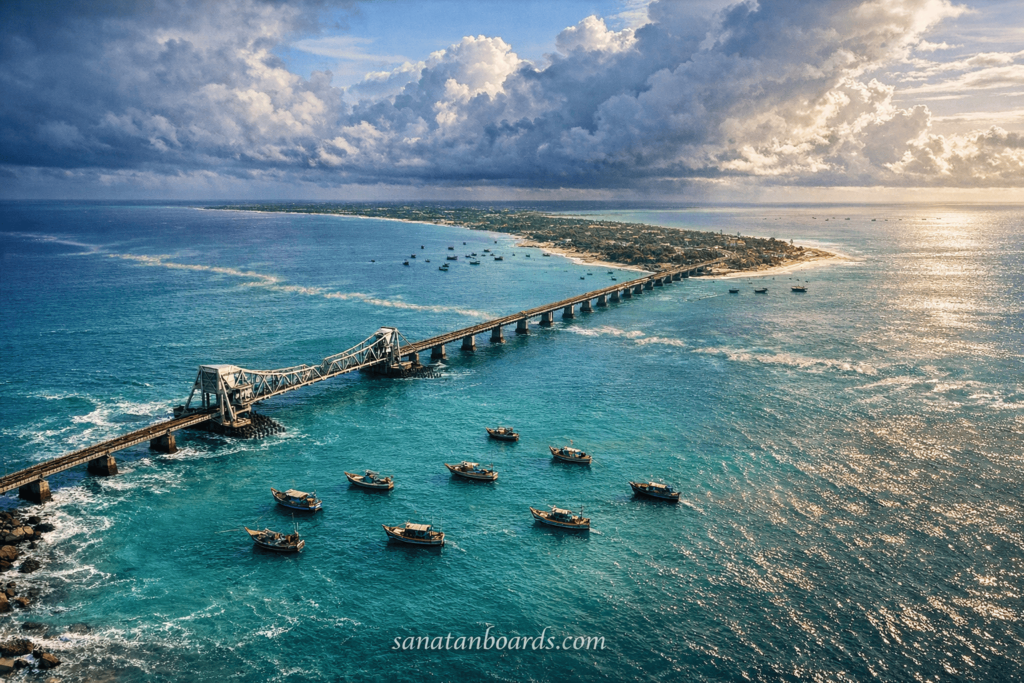
Rameshwaram is one of the most significant spiritual and culturally rich destinations located in the southern part of India in the state of Tamil Nadu. It is situated on a beautiful island separated from mainland India by the Pamban Channel and is connected through the famous Pamban Bridge. Known for its divine atmosphere, coastal beauty, and historical importance, Rameshwaram holds a special place in Indian tradition and heritage.
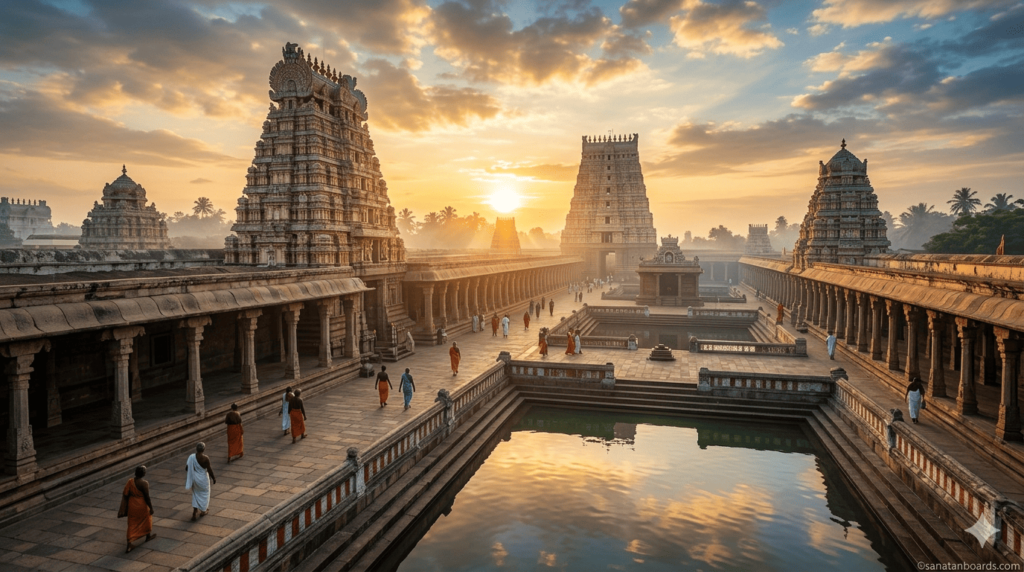
The town is widely recognized as one of the Char Dham pilgrimage sites in India, making it an important destination for spiritual seekers. The sacred shrine of Ramanathaswamy Temple is the central attraction, dedicated to Lord Shiva and known for its long corridors, intricate architecture, and sacred water tanks. The temple is believed to have been established by Lord Rama, making it deeply connected with the epic Ramayana.
Rameshwaram is not only a religious hub but also a place of natural beauty. Surrounded by the Bay of Bengal and the Indian Ocean, it offers calm beaches, clear waters and scenic landscapes that attract tourists from around the world. The combination of spirituality and natural charm makes it a unique destination.
Apart from its religious importance, Rameshwaram also plays a role in India’s scientific and strategic development due to its proximity to missile testing sites like Wheeler Island. This blend of mythology, culture, and modern development makes Rameshwaram a remarkable place of interest.
Overall, Rameshwaram stands as a symbol of devotion, history, and natural beauty, attracting pilgrims, tourists, researchers, and history lovers alike. It is a destination that reflects India’s deep spiritual roots and cultural richness.
What Is Rameshwaram (Tamil Nadu) ?
Rameshwaram is a town located in the Ramanathapuram district of Tamil Nadu, India, and is one of the most sacred pilgrimage centers in Hindu tradition. It is geographically positioned on Pamban Island, separated from mainland India by shallow sea waters. The town is historically, mythologically, and culturally significant.
According to Hindu mythology, Rameshwaram is the place where Lord Rama built a bridge, known as Ram Setu or Adam’s Bridge, to reach Lanka and rescue Goddess Sita from Ravana. Because of this connection, the town is considered extremely holy and is associated with devotion, righteousness, and spiritual victory.
The primary religious center in Rameshwaram is the Ramanathaswamy Temple, which is dedicated to Lord Shiva. The temple is famous for its magnificent corridors, sculpted pillars, and sacred water tanks called “teerthams.” Pilgrims from across India visit this temple to perform rituals and seek blessings.
Apart from its religious importance, Rameshwaram is also a coastal town with rich biodiversity and marine life. The surrounding sea region supports fishing activities, which is a major occupation of local people. Tourism also plays a significant role in the local economy.
The town has a calm and peaceful environment, making it suitable for meditation, spiritual learning, and cultural exploration. It is also connected to mainland India by the Pamban Bridge, which is an engineering marvel and adds to the town’s importance.
Who Is Required Rameshwaram (Tamil Nadu) ?
Rameshwaram is required by a wide range of individuals for different spiritual, cultural, educational, and economic purposes.
Primarily, it is required by devotees and pilgrims who follow Hindu traditions. For them, Rameshwaram is one of the most sacred Char Dham pilgrimage sites. They visit the Ramanathaswamy Temple to perform rituals, offer prayers, and seek spiritual purification. Many people believe that visiting Rameshwaram helps them attain peace, forgiveness, and religious fulfillment.
It is also required by historians and researchers who study Indian mythology, ancient architecture, and cultural evolution. The connection of Rameshwaram with the Ramayana and the legend of Ram Setu makes it a key subject of historical and archaeological interest.
Tourists and travelers also require Rameshwaram as a destination for exploration. Its coastal beauty, peaceful environment, and architectural wonders attract people who are interested in travel experiences, photography, and cultural tourism.
Local communities require Rameshwaram for their livelihood. Fishing, tourism services, hospitality, and small businesses depend heavily on the inflow of visitors. The town supports economic stability for many families living in the region.
In addition, students and educators require Rameshwaram as a case study in geography, history, religious studies, and tourism development. It provides real-world examples of how culture and economy are interconnected.
Even engineers and scientists find relevance in Rameshwaram due to nearby space and missile research activities, making it a point of technical and strategic importance.
When Rameshwaram (Tamil Nadu) Is Required ?
Rameshwaram is required at different times depending on religious calendars, personal needs, seasonal tourism patterns, and cultural events.
From a spiritual perspective, Rameshwaram is most required during religious festivals and auspicious Hindu calendar dates. Major festivals like Maha Shivaratri attract thousands of devotees to the Ramanathaswamy Temple. During these times, pilgrims travel to perform special rituals, prayers, and offerings. The belief in spiritual cleansing makes these occasions highly significant.
Rameshwaram is also required during pilgrimage seasons, especially in winter and early summer months when travel conditions are more comfortable. Many devotees plan long journeys across India to complete the Char Dham Yatra, which includes Rameshwaram as an essential stop.
From a tourism perspective, Rameshwaram is required during holiday seasons, school vacations, and long weekends. Families and travel groups visit during these times to explore beaches, temples, and historical sites. The calm weather and scenic views make these periods ideal for travel.
For researchers and historians, Rameshwaram is required whenever field studies, cultural documentation, or archaeological surveys are conducted. Its mythological connection with Ramayana and historical structures makes it relevant throughout the year for academic purposes.
Economically, the town is required continuously by local communities. Fishermen depend on seasonal fish availability, while tourism-related businesses require steady visitor flow, especially during peak seasons.
In modern strategic terms, Rameshwaram is required during defense and space research activities due to its proximity to important scientific zones like the Abdul Kalam Island (Wheeler Island), used for missile testing. Such requirements depend on scheduled scientific operations.
Religiously, emotionally, and economically, Rameshwaram is required throughout the year, but its importance intensifies during festivals, pilgrimages, and tourism seasons.
Where Rameshwaram (Tamil Nadu) Is Required ?
Rameshwaram is required in multiple geographical, cultural, and institutional contexts.
Geographically, it is required in the southern coastal region of India, specifically in Tamil Nadu’s Ramanathapuram district. Its island location in the Palk Strait makes it strategically and culturally important. It serves as a connection point between India and Sri Lanka through mythological and historical references.
Religiously, Rameshwaram is required in Hindu pilgrimage circuits across India. It is one of the Char Dham sites, along with Badrinath, Dwarka, and Puri. Pilgrims from all parts of India—north, south, east, and west—include Rameshwaram in their spiritual journeys.
Culturally, it is required in Indian heritage studies and traditional storytelling. The Ramayana epic places Rameshwaram as a key location in Lord Rama’s journey, making it essential in literature, religious teachings, and cultural discussions.
Economically, Rameshwaram is required in the tourism and fisheries sectors of Tamil Nadu. Hotels, transport services, guides, and local markets depend on its existence as a tourist destination. The coastal waters also support fishing industries that supply seafood across the region.
Educationally, Rameshwaram is required in geography textbooks, history lessons, and cultural studies programs. It is used as an example of island geography, religious tourism, and cultural integration.
Scientifically and strategically, Rameshwaram is required near defense research facilities like missile testing ranges located on nearby islands. This gives it importance in India’s aerospace and defense planning ecosystem.
Thus, Rameshwaram is required in religious circuits, economic systems, educational frameworks, and strategic zones, making it a multidimensional place of importance.
How RAMESHWARAM (TAMIL NADU) is required ?
Rameshwaram is required through various systems, practices, and processes that support its functioning as a religious, cultural, and economic center.
Spiritually, Rameshwaram is required through rituals, temple ceremonies, and pilgrimages. Devotees follow traditional practices such as bathing in sacred water tanks (teerthams), offering prayers at Ramanathaswamy Temple, and performing ancestral rituals. These religious systems ensure its continuous spiritual relevance.
Economically, Rameshwaram is required through tourism infrastructure. Hotels, transport services, ferry systems, and local markets operate based on visitor inflow. The town functions through a service-based economy where tourism is the main driver.
Culturally, Rameshwaram is required through storytelling, festivals, and religious teachings. The Ramayana narrative is preserved and passed on through generations using Rameshwaram as a central reference point.
Environmentally, Rameshwaram is required through coastal ecosystems. Its marine biodiversity supports fishing industries and ecological balance. Sustainable practices are necessary to maintain its natural resources.
Educationally, Rameshwaram is required through academic curriculum integration. Schools and universities use it to teach geography, history, religious studies, and tourism management. Field visits and research projects often include Rameshwaram as a study area.
Technologically and strategically, Rameshwaram is required through its proximity to defense testing zones. Infrastructure like bridges, roads, and communication systems support both civilian and strategic needs.
Thus, Rameshwaram is required through religious rituals, economic systems, cultural traditions, environmental balance, and strategic infrastructure, making it a continuously functioning and evolving location.
Case Study On Rameshwaram (Tamil Nadu)
Rameshwaram presents a unique case study that integrates spirituality, tourism, economy, and sustainable development.
Rameshwaram, located in Tamil Nadu, is one of India’s most visited pilgrimage destinations. Its core identity revolves around the Ramanathaswamy Temple, which attracts millions of devotees annually. The town experiences high seasonal tourism, especially during religious festivals.
One key aspect of the case study is religious tourism management. The influx of pilgrims creates challenges in crowd control, sanitation, transportation, and accommodation. Local authorities have developed systems to manage large crowds during peak seasons like Maha Shivaratri. Temporary facilities, queue systems, and security arrangements are implemented to ensure smooth operations.
Another important factor is economic dependency. A significant portion of the local population depends on tourism and fishing. Hotels, small shops, transport operators, and guides earn income from visitors. This makes the economy highly sensitive to seasonal fluctuations. During off-seasons, income levels drop, highlighting the need for diversification.
Infrastructure development is another key area. The Pamban Bridge is a crucial connection between Rameshwaram and mainland India. It supports both tourism and daily transportation. However, environmental conditions like saltwater corrosion and cyclones pose challenges to maintenance and durability.
Environmental sustainability is also a major concern. The coastal ecosystem is fragile, and increased tourism leads to waste generation, water pollution, and habitat disturbance. Efforts are being made to promote eco-friendly tourism, waste management systems, and awareness programs among visitors and locals.
Cultural preservation is another dimension. The traditions and rituals of Rameshwaram are deeply rooted in ancient scriptures. Maintaining authenticity while accommodating modern tourism demands is a delicate balance. Authorities and temple management committees work to preserve rituals while ensuring accessibility for visitors.
From a governance perspective, coordination between religious institutions, tourism departments, and local administration is essential. Policies are designed to support infrastructure growth, environmental protection, and cultural preservation simultaneously.
This case study shows that Rameshwaram is not just a religious site but a complex system where spirituality, economy, environment, and governance intersect. It demonstrates how heritage locations can evolve while maintaining traditional significance.
White Paper On Rameshwaram (Tamil Nadu)
Rameshwaram serves as a significant model for integrated heritage management, combining religious importance, tourism development, and sustainable planning.
The primary focus of this white paper is to analyze Rameshwaram as a multi-dimensional destination that requires balanced development strategies.
Firstly, Rameshwaram’s religious importance is central to its identity. The Ramanathaswamy Temple acts as the core institution driving pilgrim inflow. Managing religious tourism requires structured planning, including crowd control systems, digital booking mechanisms, and infrastructure expansion to handle peak loads.
Secondly, tourism development is a major economic driver. Rameshwaram attracts both domestic and international tourists. Improving accessibility through better transport systems, including rail, road, and bridge connectivity, enhances visitor experience. Investment in hospitality services, guided tours, and cultural programs can strengthen the tourism economy.
Thirdly, environmental sustainability is critical. Being a coastal island, Rameshwaram is vulnerable to climate change, sea-level rise, and ecological degradation. Waste management systems, plastic reduction policies, and marine conservation initiatives are necessary to preserve its natural ecosystem.
Fourthly, infrastructure resilience is essential. The Pamban Bridge and coastal roads require continuous maintenance due to harsh marine conditions. Future development should incorporate climate-resilient engineering solutions to ensure long-term sustainability.
Fifthly, cultural preservation must be prioritized. Rituals, traditions, and heritage structures must be protected from commercialization. Policy frameworks should ensure that tourism growth does not compromise cultural authenticity.
Sixthly, community development is a key aspect. Local populations depend on tourism and fishing. Skill development programs, alternative livelihood opportunities, and educational initiatives can improve socio-economic conditions.
Seventhly, digital transformation can enhance management. Smart tourism systems, online booking platforms, virtual temple tours, and digital information centers can improve visitor experience and operational efficiency.
In conclusion, Rameshwaram represents a model where #Sanatanboardsinvasai spirituality and modern development coexist. Strategic planning focusing on sustainability, infrastructure, cultural preservation, and digital integration is essential for its future growth.
Industry Application Of Rameshwaram (Tamil Nadu)
Rameshwaram has multiple industry applications across tourism, transportation, hospitality, fisheries, education, and research sectors.
In the tourism industry, Rameshwaram is a major pilgrimage and travel destination. Travel agencies, tour operators, and hospitality businesses rely heavily on visitor inflow. Hotels, resorts, and guest houses form a significant part of the local economy.
In the transportation industry, Rameshwaram plays a key role due to its connectivity requirements. The Pamban Bridge and ferry systems support movement of people and goods. Rail and road transport services are essential for maintaining accessibility.
In the hospitality industry, restaurants, food services, and accommodation providers operate extensively. Local cuisine and cultural food experiences enhance tourism value and contribute to business growth.
In the fisheries industry, Rameshwaram supports coastal fishing activities. Marine resources provide employment and contribute to regional seafood supply chains. Fishing boats, processing units, and distribution networks form an essential economic structure.
In the education sector, Rameshwaram is used as a case study for geography, religious studies, environmental science, and tourism management. Educational institutions organize field visits and research projects.
In the research and defense sector, nearby strategic zones contribute to missile testing and aerospace studies. This adds scientific and technological relevance to the region.
In the digital industry, Rameshwaram is increasingly promoted through online travel platforms, virtual tours, and digital booking systems, enhancing global accessibility.
Thus, Rameshwaram contributes to #Sanatanboardsinmumbai multiple industries by combining spiritual tourism, coastal economy, cultural heritage, and strategic significance.
source : Dua Saab
ASK FAQ
1. What is Rameshwaram famous for?
Rameshwaram is famous for the Ramanathaswamy Temple, its spiritual importance in Hinduism, and its connection to Lord Rama in the Ramayana. It is also known for its beautiful beaches and pilgrimage significance.
2. Where is Rameshwaram located?
Rameshwaram is located in the Ramanathapuram district of Tamil Nadu, India. It is situated on Pamban Island and is connected to mainland India by the Pamban Bridge.
3. Why do people visit Rameshwaram?
People visit Rameshwaram for religious pilgrimage, temple rituals, spiritual cleansing, and to explore its historical and mythological importance. It is also a popular tourist destination.
4. What is the importance of Ramanathaswamy Temple in Rameshwaram?
The Ramanathaswamy Temple is one of the 12 Jyotirlinga temples dedicated to Lord Shiva. It is a major pilgrimage site and holds deep religious and cultural significance in Hindu tradition.
5. When is the best time to visit Rameshwaram?
The best time to visit Rameshwaram is from October to April when the weather is cool and suitable for sightseeing, temple visits, and travel activities.
Table of Contents
Disclaimer
This content is created for informational, educational, and general knowledge purposes only. It is intended to provide a broad understanding of the topic and should not be considered as official, professional, or verified historical, religious, or scientific documentation. All interpretations, descriptions, and explanations are based on general knowledge and commonly available references. Readers are encouraged to verify details independently from authoritative sources before drawing conclusions or using the information for academic, research, or professional purposes.