Ramachandra Yadava, often referred to simply as Ramachandra, was a prominent medieval ruler of the Seuna (Yadava) dynasty that governed large parts of the Deccan region in central India during the late 13th and early 14th centuries. He ascended the throne of Devagiri (modern Daulatabad in Maharashtra) around 1271 CE after overthrowing his cousin Ammana and went on to become one of the most influential kings of his lineage. His reign is marked by military expansion, cultural patronage, and critical interactions with major powers of his time.
The Yadava dynasty, under Ramachandra, controlled territories that included much of present‑day Maharashtra, parts of northern Karnataka, and bordering regions. Devagiri became a central administrative and strategic hub under his rule. Ramachandra is known for his efforts to consolidate the Yadava kingdom by engaging in campaigns against neighboring dynasties, including the Paramaras,Hoysalas, Vaghelas, and Kakatiyas, which solidified his reputation as a formidable military leader.
However, his reign also coincided with the rising power of the Delhi Sultanate under Alauddin Khalji. This eastward expansion brought Ramachandra into conflict with the Sultanate’s forces. In 1296 CE, he faced an invasion by the Sultanate, after which he agreed to pay tribute and later became a vassal, maintaining his throne but with diminished autonomy. Despite external pressures, Ramachandra remained a significant figure whose policies and governance influenced the region’s political landscape.
Historically, he is remembered not only for his military and political activities but also for the cultural developments during his reign, including temple patronage and administrative organization.
What Is Ramachandra Yadava ?
Ramachandra Yadava refers to the individual ruler Ramachandra of Devagiri, a king of the Seuna Yadava dynasty that held sway in the Deccan region of India during the late 13th century. He was born into the Yadava royal family as a son of King Krishna and belonged to a long line of rulers who traced their heritage to ancient pastoral and warrior traditions.
The title “Yadava” itself historically denotes a lineage connected to the ancient Yadu clan, which is significant in South Asian cultural memory. Within this dynastic context, Ramachandra rose to prominence during a period of political turbulence and inter‑dynastic rivalries. He came to the throne by deposing his cousin Ammana through a calculated coup and leadership support from key nobles and generals at Devagiri.
As a ruler, Ramachandra exercised sovereign authority over a kingdom characterized by urban centers, fortified capitals, agrarian economies, and military forces. His authority was symbolized through titles such as Maharajadhiraja and the issuance of gold and other coinage, which served both economic and propagandistic purposes.
His reign included both expansionist initiatives and defensive diplomacy. He conducted military campaigns against neighboring dynasties in attempts to strengthen and expand Yadava territories. These military efforts underscored his role as a warrior‑king and strategic leader within the complex tapestry of Indian medieval politics.
Towards the end of his rule, Ramachandra also became a subordinate ruler under the powerful Delhi Sultanate, illustrating the shifting balance of regional power in India during this era.
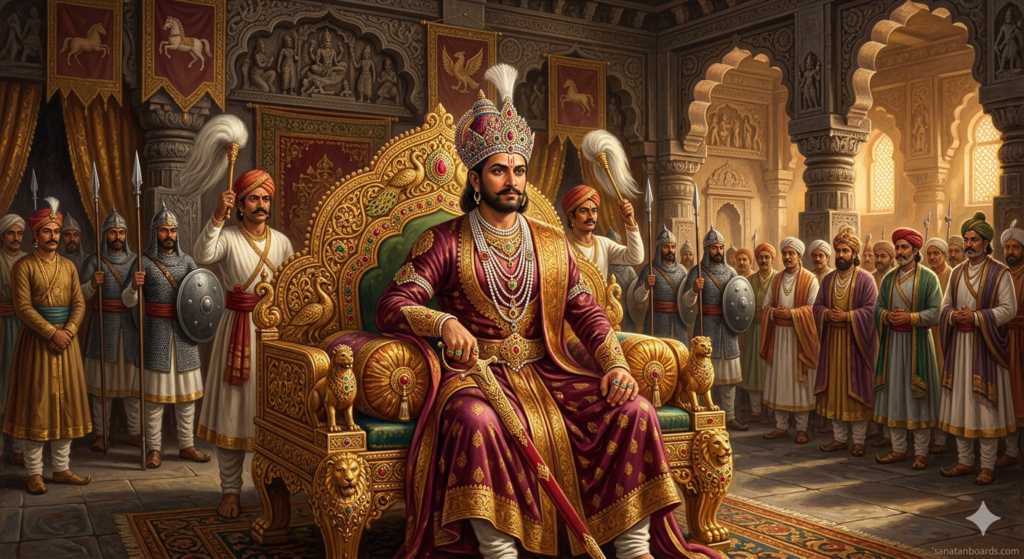
Who Is Required Ramachandra Yadava ?
- Students of Medieval Indian History: Scholars and learners focusing on the political and cultural landscape of medieval South Asia study Ramachandra Yadava to understand dynastic politics, warfare, and governance in the Deccan region during the transition between regional powers and the rise of the Delhi Sultanate. His interactions with neighboring states and the Sultanate illustrate broader geopolitical developments.
- Researchers of Regional Culture and Architecture: Ramachandra’s era saw continued patronage of temple construction and artistic traditions, including architectural styles that influenced the cultural heritage of Maharashtra and surrounding regions. Studying his period helps cultural historians contextualize these developments.
- Policy Analysts and Comparative Historians: His diplomatic and military choices, especially regarding tribute and vassalage to the Delhi Sultanate, provide case studies in statecraft, negotiation, and power dynamics, useful for analysts exploring historical models of sovereignty and diplomacy.
- General Enthusiasts of Indian History: Individuals passionate about the evolution of Indian polities find in Ramachandra’s life a vivid example of how regional kingdoms interacted and adapted in response to external pressures and internal ambitions.
Thus, Ramachandra Yadava is required or relevant to a range of audiences interested in understanding medieval Indian political structures, culture, military history, and societal transformations.
When Ramachandra Yadava Is Required ?
Ramachandra Yadava is required or contextually relevant in several key historical moments and thematic explorations, particularly in the late 13th and early 14th centuries of Indian history:
1. During the Transition of Regional Power (c.1271–1309 CE)
Ramachandra’s reign corresponds to a pivotal period in the Deccan when regional kingdoms such as the Yadavas were centers of influence and competing states in India. His ascendancy after deposing Ammana around 1271 CE marked a change in leadership that was critical for the Seuna dynasty’s consolidation and administrative reorientation.
2. In the Context of Military Conquests
Throughout his rule, Ramachandra engaged in military campaigns against neighboring powers like the Paramaras, Vaghelas, Hoysalas, and Kakatiyas. These encounters illustrate the era’s frequent territorial conflicts and strategic warfare. A detailed study of these campaigns sheds light on the broader nature of South Indian and Deccan geopolitics.
3. When Studying the Delhi Sultanate’s Expansion
Ramachandra became increasingly relevant with the expansion of the Delhi Sultanate under Alauddin Khalji. After Sultanate forces invaded in 1296 CE, Ramachandra agreed to pay an annual tribute and later became a vassal ruler. This episode is a major moment in Indian history, representing the shift from independent regional governance to Sultanate influence in the south.
4. For Understanding Political Adaptation and Diplomacy
His decision to negotiate terms with the Sultanate, maintain some level of autonomy, and assist the Sultanate’s armies against other kingdoms also mirrors the pragmatic political adaptations required by regional rulers facing expansive empires. Ramachandra is required as an example of tactical leadership under changing power structures.
5. During Cultural and Administrative Studies
The reign of Ramachandra also aligns with an important phase of artistic and architectural patronage in the Deccan. Temples and cultural institutions that flourished in this era are studied in art history and epigraphy.
Where Ramachandra Yadava Is Required ?
Ramachandra Yadava is required geographically and contextually in multiple regions and spheres of study:
1. Deccan Region (Maharashtra & Northern Karnataka)
The primary seat of Ramachandra Yadava’s power was Devagiri, modern-day Daulatabad in Maharashtra. This fortified city served as the administrative and political hub for his kingdom. Scholars studying medieval Indian urban planning, fortifications, and administrative systems often reference Ramachandra’s rule to understand governance in the Deccan plateau. His military campaigns extended Yadava influence into northern Karnataka, making it essential to include him in studies of regional territorial control.
2. Border Areas of Neighboring Dynasties
Ramachandra’s campaigns against the Paramaras, Hoysalas, Vaghelas, and Kakatiyas demonstrate his relevance across the Deccan and northern parts of southern India. When mapping inter-dynastic conflict zones, historians require his actions to understand shifts in political dominance and alliances in medieval India.
3. Delhi Sultanate Influence in the South
After 1296 CE, Devagiri became strategically important as Ramachandra agreed to pay tribute to the Delhi Sultanate. Historians studying the Sultanate’s expansion into the south require reference to his reign to understand how local rulers accommodated external imperial powers while retaining partial autonomy.
4. Cultural and Religious Sites
Ramachandra Yadava is required in regions where temples, inscriptions, and cultural artifacts associated with his rule are found. These sites, primarily in Maharashtra, provide material evidence for historians and art scholars analyzing the period’s religious practices and temple architecture
How Ramachandra Yadava Is Required ?
Ramachandra Yadava is required in historical and educational contexts through methods of analysis and study:
1. Military and Political Analysis
He is required as a case study for military strategies of medieval Indian kings. Ramachandra’s campaigns against neighboring dynasties illustrate the tactical use of terrain, fortification, and alliances, which researchers use to understand statecraft in pre-modern India.
2. Diplomacy and Governance
His negotiation with the Delhi Sultanate is a prime example of vassalage and tributary diplomacy. Scholars study how local rulers like Ramachandra retained authority while accommodating more powerful empires. This method of analysis is required in political science and history curricula to teach compromise and governance strategies.
3. Cultural Studies
Ramachandra Yadava is required in art history and archaeology through temple architecture, inscriptions, and coinage. Researchers utilize these materials to reconstruct social, religious, and economic life of the period. Techniques such as epigraphy, numismatics, and architectural surveys rely on his reign as a contextual anchor.
4. Education and Curriculum
In educational settings, he is required through textbooks, history modules, and lectures, highlighting medieval Indian politics and the decline of regional dynasties in the face of imperial expansion. By analyzing his reign, students learn cause-and-effect relationships in historical developments. (
5. Methodological Application
His life and reign are required for comparative history, where researchers draw parallels between governance structures across regions. Primary sources (inscriptions, coins) and secondary analyses are applied methodologically to understand political, military, and cultural transformations during the Yadava period.
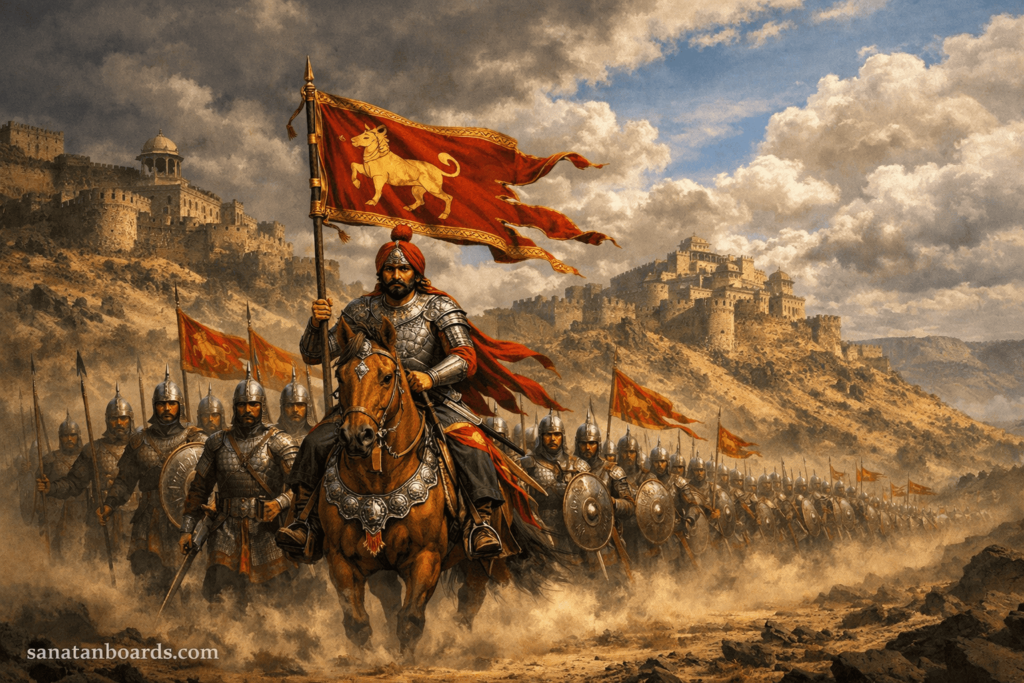
Case Study on RAMACHANDRA YADAVA
Introduction:
Ramachandra Yadava’s reign (c.1271–1309 CE) offers a compelling case study for understanding medieval Indian polity, military strategy, and cultural evolution. This case study explores the challenges, decisions, and outcomes of his leadership and interactions with the Delhi Sultanate.
Political Context:
The Seuna Yadava dynasty ruled from Devagiri, controlling key regions in the Deccan. Ramachandra came to power after a familial coup, illustrating internal dynastic politics. His leadership coincided with the rise of external threats, most notably from the Delhi Sultanate under Alauddin Khalji, which had ambitions of extending control into the Deccan. (en.wikipedia.org)
Military Strategy and Campaigns:
Ramachandra expanded his territory through campaigns against neighboring dynasties, including the Paramaras, Hoysalas, Vaghelas, and Kakatiyas. He relied on fortifications, mobilization of cavalry and infantry, and strategic alliances with other regional powers. These campaigns strengthened the Yadava dynasty’s position but also exposed vulnerabilities when facing larger forces. (prepp.in)
Interaction with the Delhi Sultanate:
In 1296 CE, Alauddin Khalji’s forces invaded Devagiri. Ramachandra adopted a pragmatic strategy: he negotiated terms, paid tribute, and agreed to vassalage. This decision preserved his throne while avoiding complete annexation, showing a blend of military prudence and diplomatic acumen. (en.wikipedia.org)
Administrative and Cultural Achievements:
Despite external pressures, Ramachandra maintained administrative efficiency, including revenue collection, city management, and temple patronage. The era saw cultural flourishing, particularly in temple architecture and religious endowments, which have left a lasting historical legacy in Maharashtra. (gazetteers.maharashtra.gov.in)
Analysis:
Ramachandra’s reign highlights the complexity of medieval leadership: balancing military ambitions with diplomacy, preserving autonomy under external threats, and fostering cultural development. His decisions provide a framework for understanding leadership under geopolitical constraints.
Conclusion:
As a case study, Ramachandra Yadava illustrates how regional rulers navigated dynastic challenges, military threats, and cultural responsibilities, making his reign a critical point of study in medieval Indian history.
White Paper On Ramachandra Yadava
Executive Summary:
Ramachandra Yadava (c.1271–1309 CE) served as the ruler of the Yadava dynasty from Devagiri. His leadership exemplifies strategic governance, regional diplomacy, and cultural patronage in medieval India. This white paper examines the historical, administrative, military, and cultural dimensions of his reign, emphasizing lessons for contemporary historical research.
Historical Background:
The Yadava dynasty governed the Deccan region during a period of significant political change. Ramachandra’s ascent to power through internal coup established his authority over Devagiri, enabling a focus on regional consolidation and administrative reform. (en.wikipedia.org)
Governance and Administration:
Ramachandra implemented structured taxation, city administration, and military oversight. Devagiri’s fortifications and administrative systems reflected careful planning. By issuing coinage and engaging in temple endowments, he reinforced both economic stability and social legitimacy. (mintageworld.com)
Military and Diplomatic Strategy:
Ramachandra’s campaigns against neighboring dynasties illustrated proactive defense and territorial expansion. Confronted by Alauddin Khalji’s Delhi Sultanate, he adopted a diplomatic strategy of tribute and vassalage, ensuring survival without complete subjugation. This model highlights adaptive governance under external pressure. (en.wikipedia.org)
Cultural Contributions:
The Yadava period under Ramachandra saw investments in temples, inscriptions, and arts, which remain valuable for historical and archaeological study. Cultural initiatives promoted social cohesion and religious patronage, contributing to the dynasty’s legitimacy. (gazetteers.maharashtra.gov.in)
Lessons and Implications:
The white paper emphasizes:
- Adaptive leadership under political threats
- Balanced military and diplomatic engagement
- Cultural patronage as political strategy
- Documentation and preservation of historical heritage
Conclusion:
Ramachandra Yadava’s reign offers a blueprint for understanding medieval Indian governance, military strategy, and culture, providing researchers and educators with a comprehensive framework for historical inquiry.
Industry Application Of Ramachandra Yadava
1. Education and Academic Research
Ramachandra Yadava’s reign is extensively studied in medieval Indian history, political science, and cultural studies programs. Academic institutions utilize his life to:
- Teach dynastic politics, governance strategies, and diplomacy in the Deccan region.
- Analyze military campaigns and territorial expansion to understand medieval warfare.
- Study cultural patronage, including temple architecture, coinage, and inscriptions, which inform courses in art history and archaeology.
2. Heritage and Tourism Industry
The historical sites associated with Ramachandra, especially Devagiri (Daulatabad Fort), are central to India’s tourism and heritage sectors. Industry professionals leverage his story to:
- Develop guided tours, museum exhibits, and educational content for visitors.
- Preserve and promote archaeological monuments, temples, and inscriptions for cultural tourism.
- Connect regional identity and historical narratives to tourist experiences, enhancing engagement and economic development.
3. Cultural Research and Archaeology
Ramachandra’s era offers rich material for cultural heritage industries:
- Numismatics and Epigraphy: Coins and inscriptions from his reign are used to study medieval economic systems and social structures.
- Architectural Conservation: Temples and fortifications provide insights for restoration and conservation projects.
- Documentary and Digital Media: His life is represented in historical documentaries, educational videos, and digital storytelling projects.
4. Leadership, Strategy, and Management Studies
Modern industries focused on leadership, management, and strategy use Ramachandra’s reign as a historical case study:
- Decision-Making Under Pressure: His diplomatic adaptation to the Delhi Sultanate demonstrates risk management.
- Conflict Resolution and Negotiation: His approach to vassalage offers lessons in compromise while maintaining autonomy.
- Organizational Strategy: Administration of Devagiri reflects planning, resource allocation, and urban governance applicable in modern organizational studies.
5. Media, Entertainment, and Publishing
His historical narrative has inspired:
- Books, articles, and academic journals focused on medieval Indian polity.
- Films, web series, and cultural documentaries that bring medieval Indian history to modern audiences.
- Digital archives and gaming content, where historical kingdoms are recreated for educational or entertainment purposes.
Conclusion:
Ramachandra Yadava’s life and legacy extend beyond historical study into multiple modern industries, from education, tourism ,#Sanatandharmaaccreditationboardsinmumbai and archaeology to leadership training and media. His reign #Sanatandharmaaccreditationboardsinvasai provides a rich framework for understanding strategic governance, cultural heritage, and historical storytelling, demonstrating how historical figures can have practical relevance in contemporary professional contexts.
SOURCE : Indian Culinary Chronicles
ASK FAQ
Who was Ramachandra Yadava?
Ramachandra Yadava was a 13th-century ruler of the Seuna (Yadava) dynasty, based in Devagiri (modern Daulatabad, Maharashtra). He is known for military campaigns, diplomacy with the Delhi Sultanate, and cultural patronage.
When did Ramachandra Yadava rule?
Ramachandra Yadava ruled approximately from 1271 CE to 1309 CE, overseeing the Yadava kingdom during a period of regional consolidation and Delhi Sultanate expansion.
What were the major achievements of Ramachandra Yadava?
His achievements include expanding the Yadava kingdom, negotiating tribute with the Delhi Sultanate, maintaining administrative efficiency in Devagiri, and patronizing temples and arts.
Why is Ramachandra Yadava important in Indian history?
He is important for illustrating medieval Deccan politics, diplomacy under external threats, and contributions to cultural and architectural heritage in Maharashtra.
Where can you study the legacy of Ramachandra Yadava today?
His legacy is preserved at Devagiri Fort, Yadava-era temples, inscriptions, coins, and through academic studies in history, archaeology, and cultural heritage programs.
Table of Contents
Disclaimer
The content provided is for educational, learning, and knowledge purposes only. All historical interpretations are based on existing research, primary and secondary sources. This information should not be construed as professional advice or historical authority beyond general academic study.