RAJENDRA CHOLA II was an emperor of the famous Chola dynasty, one of the most powerful and influential medieval Indian empires. His reign, from 1052 to 1063 CE, came during a time when the Chola Empire was at its zenith, stretching across much of South India and influencing regions as far as Southeast Asia. Rajendra Chola II is often titled Rajendradeva Chola or Parakesarivarman, reflecting both his royal authority and his place in the lineage of Chola kings.
Rajendra Chola II was born Vikraman in 997 CE in Thanjavur, a historic city in present‑day Tamil Nadu, India. He was the son of Rajendra Chola I, who was one of the most celebrated Chola emperors, and Mukkokilan Adigal. Before ascending to the throne, Rajendra served as co‑regent with his elder brother, Rajadhiraja I, meaning he shared responsibilities in governance and military affairs. When Rajadhiraja I died during the Battle of Koppam, Rajendra Chola II succeeded him and became the sole ruler of the vast Chola dominion.
During his reign, Rajendra Chola II maintained stability, retained the extensive territories acquired by his predecessors, and reinforced the empire’s prosperity. The Chola political system, which combined strong central authority with efficient local administration, enabled his rule to be relatively stable. Rajendra Chola II also worked to manage internal revolts in regions such as Pandya Nadu and SriLanka reaffirming Chola influence and rule in these areas. His leadership helped ensure that the Chola Empire remained a dominant power in South Asia throughout his decade‑long reign.
What Is Rajendra Chola Ii ?
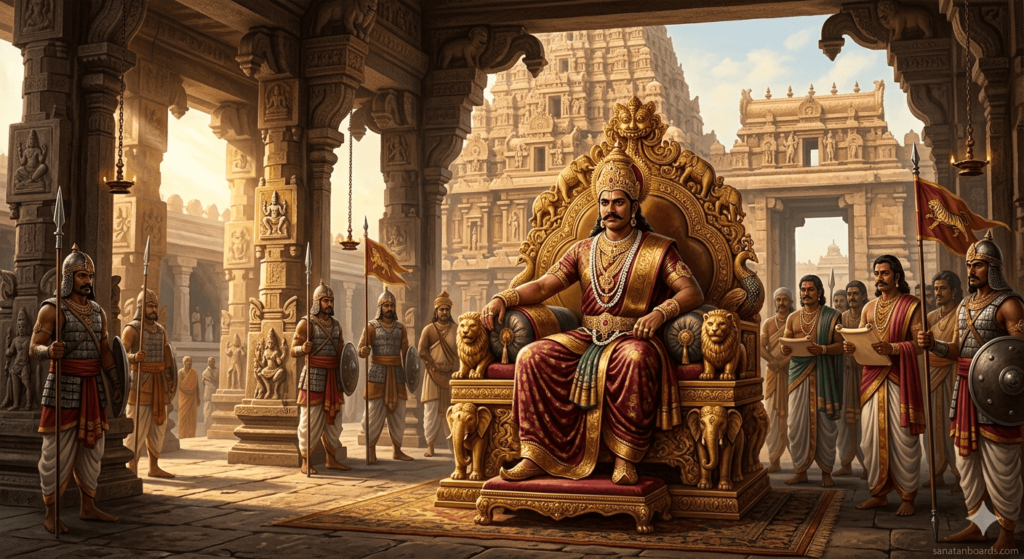
Rajendra Chola II was a Chola emperor who succeeded to the imperial throne in 1052 CE after the death of his elder brother, Rajadhiraja I. His reign lasted until 1063 CE, and he continued the expansion and consolidation of the Chola Empire, which under his rule remained one of the most significant powers in South India.
Born as Vikraman in 997 CE, Rajendra Chola II belonged to the Chola dynasty, known for its large empire, sophisticated administration, powerful military, and sea‑faring trade connections. Before becoming emperor, he was appointed co‑regent and served alongside his brother from 1044 to 1052 CE. As co‑regent, he was involved in state administration and military campaigns, gaining experience that helped him govern as emperor.
After ascending the throne, Rajendra Chola II focused on maintaining and strengthening the territories inherited from his brother and earlier rulers. The Chola Empire during his reign retained control over southern India, parts of Sri Lanka, and exerted influence into regions of Southeast Asia through trade and diplomatic contacts. He also suppressed internal rebellions in regions such as Pandya Nadu and Sri Lanka to stabilize the empire and ensure loyalty from local rulers and administrators.
Under his leadership, the Cholas continued to benefit from trade across the Indian Ocean, which contributed to the prosperity of the empire. Ports on the Coromandel Coast played a significant role in commerce with traders from Arabia, Southeast Asia, and East Africa. This period of relative political stability and economic strength allowed the Chola culture, art, temple building, and literature to flourish further.
Who Is Required Rajendra Chola Ii ?
Understanding who Rajendra Chola II was “required” for is crucial in recognizing his role in history. Rajendra Chola II was required as a leader who could sustain the power and legacy of the Chola Empire after the death of his brother, Rajadhiraja I. At a time of military competition and internal challenges, the Chola throne required an emperor with experience and resolve. Rajendra had served as co‑regent and was familiar with governance, making him a natural choice to succeed his brother.
He was required to manage a vast empire that stretched through southern India and into neighboring regions. The empire’s wealth came not only from agriculture but also from extensive trade networks across the Indian Ocean. This required a ruler who could maintain political stability while encouraging economic growth. Rajendra Chola II’s leadership ensured that the empire did not lose territory and continued to flourish under his administration.
Additionally, military vigilance was critical during this period. There were ongoing rebellions in areas such as Pandya Nadu and Sri Lanka. A strong emperor was needed to suppress these uprisings and secure the empire’s borders. Rajendra Chola II led campaigns and appointed governors and garrisons to restore order and reaffirm Chola authority.
He was also required to preserve the cultural and administrative achievements of the Cholas. The Chola Empire was renowned for temple architecture, art, and literature. A leader who upheld these traditions ensured that the Chola legacy remained influential in South Indian history. Rajendra Chola II’s period of rule thus fulfilled both administrative and cultural needs, helping the Cholas remain a dominant force during the 11th century.
When Rajendra Chola Ii Is Required ?
Rajendra Chola II was required during a critical period in the Chola Empire’s history. The early 11th century was marked by military campaigns, territorial expansion, and the need for strong governance. His predecessor and elder brother, Rajadhiraja I, died during the Battle of Koppam, leaving the empire in need of a capable leader who could continue both military campaigns and administrative consolidation. Rajendra Chola II’s ascension in 1052 CE was timely, as the empire required stability and direction after the sudden loss of the reigning emperor. (en.wikipedia.org)
He was required immediately after his brother’s death to suppress potential rebellions in the southern regions and maintain the empire’s dominance over vassal states. Regions like Pandya Nadu and parts of Sri Lanka had a history of revolt when central authority weakened. Rajendra Chola II’s leadership was critical in restoring Chola influence over these territories, ensuring loyalty from local chieftains, and securing the empire’s borders. (en.wikipedia.org)
Beyond military necessity, he was required during this period to manage a growing and prosperous economy. The Chola Empire’s trade network extended across the Indian Ocean, connecting with Arabia, Southeast Asia, and East Africa. Ports such as Kaveripattinam and Nagapattinam became vital hubs for commerce. A capable emperor was required to maintain stability in these trade regions, regulate commerce, and ensure the wealth generated was effectively used for administration, military upkeep, and temple construction. (en.wikipedia.org)
Culturally, Rajendra Chola II was required to preserve the Chola legacy of art, literature, and temple architecture. The Cholas were patrons of monumental temples, such as the famous Brihadeeswarar Temple, and ensured that religious and cultural life flourished. By maintaining stability in the empire, Rajendra Chola II provided the conditions necessary for continued artistic achievement and cultural influence. (en.wikipedia.org)
Thus, Rajendra Chola II was required at a specific historical moment to continue his family’s legacy, protect the empire’s territory, consolidate administration, support economic prosperity, and encourage cultural growth. Without his leadership, the Chola Empire might have experienced fragmentation, economic decline, or weakened influence over its territories and trading networks
Where Rajendra Chola Ii Is Required ?
Rajendra Chola II’s leadership was required across the vast territories of the Chola Empire, which spanned southern India, northern Sri Lanka, and parts of Southeast Asia through influence and trade. The Chola Empire was organized with regional governors and local administrators, but a strong central ruler was required in Thanjavur, the empire’s capital, to maintain authority and oversee governance. (en.wikipedia.org)
He was required in strategically important regions such as Pandya Nadu, which often rebelled against Chola rule. Military campaigns led by Rajendra Chola II were essential in reasserting Chola dominance, fortifying key cities, and ensuring the loyalty of local rulers. The stability of these southern territories was directly linked to the empire’s economic and political strength. (en.wikipedia.org)
In addition, Rajendra Chola II was required along the Coromandel Coast, which housed important ports like Kaveripattinam and Nagapattinam. These ports facilitated trade with foreign merchants from Arabia, Southeast Asia, and East Africa. Control over these maritime hubs ensured continued revenue and allowed the Cholas to project influence beyond the subcontinent. His presence in administrative and ceremonial roles in these regions reinforced Chola authority. (en.wikipedia.org)
Furthermore, he was required in cultural centers such as Thanjavur and Gangaikonda Cholapuram, where the construction of temples, patronage of arts, and promotion of literature took place. These regions were crucial in sustaining the Chola identity, religion, and cultural prominence. His attention to these areas ensured that the empire’s spiritual and artistic life thrived alongside military and economic strength. (en.wikipedia.org)
Even in diplomatic and distant influence zones like Southeast Asia, Rajendra Chola II was required to maintain relationships with allied states and monitor trade agreements. By sending envoys or supporting local allies, the Chola Empire extended its cultural and commercial influence. The “where” of his requirement thus spanned military, administrative, cultural, and diplomatic fronts, showing that his role was not limited to the capital but was empire-wide in scope.
How Rajendra Chola Ii Is Required ?
Rajendra Chola II was required through leadership, administration, military strategy, and cultural patronage to ensure the Chola Empire’s continuity and stability. After the death of his elder brother, he was required to step into the role of emperor immediately, overseeing both civil administration and military campaigns. His previous experience as co‑regent equipped him to manage governance efficiently. (en.wikipedia.org)
He was required through military action to suppress rebellions in regions like Pandya Nadu and Sri Lanka. By personally directing campaigns and appointing trustworthy generals and governors, Rajendra Chola II reinforced Chola authority in areas where loyalty was fragile. Military strategy under his leadership ensured that vassal states recognized Chola supremacy and that borders remained secure. (en.wikipedia.org)
Rajendra Chola II was also required through economic oversight. The Chola Empire relied heavily on trade from its ports on the Coromandel Coast, including Kaveripattinam and Nagapattinam. By monitoring trade, regulating port activities, and maintaining relationships with foreign merchants, he ensured the empire’s wealth grew and reached local administrators for infrastructure and temple projects. (en.wikipedia.org)
Culturally, he was required through patronage of art, literature, and religion. Temples were central to Chola society, serving as centers of worship, art, and education. Rajendra Chola II supported temple construction, facilitated scholarly work, and preserved inscriptions that chronicled historical events. His leadership allowed Chola culture to flourish and ensured that the empire’s legacy continued. (en.wikipedia.org)
He was also required through diplomacy. The Chola Empire maintained influence over regions in Southeast Asia through envoys, trade agreements, and cultural exchanges. Rajendra Chola II’s diplomatic strategies strengthened alliances, encouraged commerce, and expanded the empire’s prestige without unnecessary military conflict
Case Study On Rajendra Chola Ii
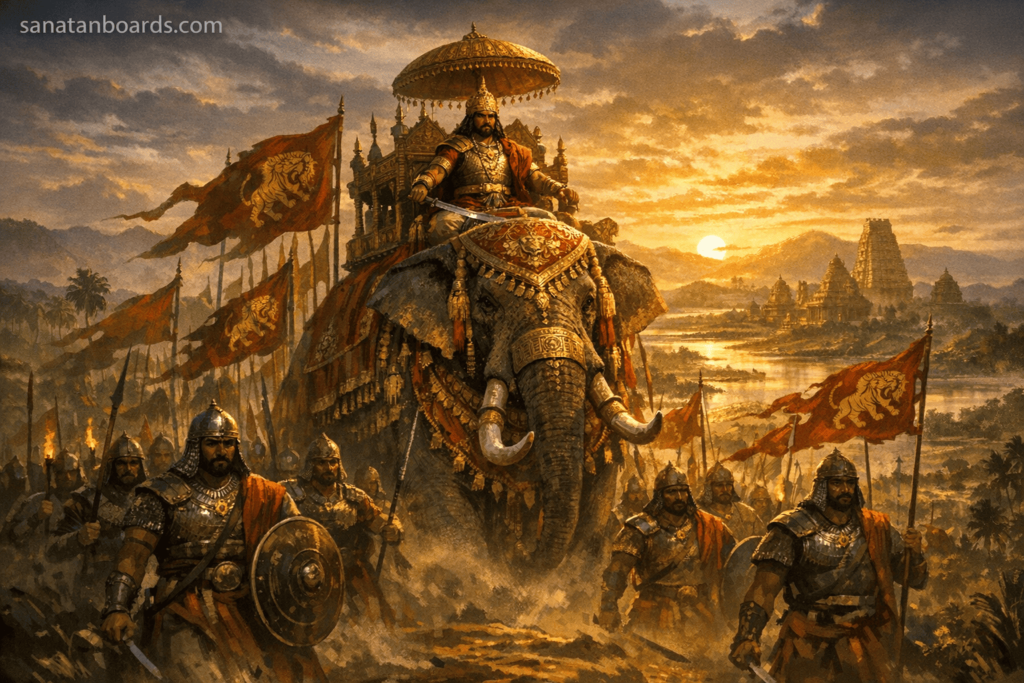
The reign of Rajendra Chola II (1052–1063 CE) provides a fascinating case study of leadership in a vast medieval empire. Following the death of his elder brother, Rajadhiraja I, Rajendra Chola II inherited an empire that was both extensive and complex. The Chola Empire stretched from the Kaveri delta in Tamil Nadu to northern Sri Lanka, with influence extending to Southeast Asia through maritime trade. Managing such a diverse territory required a combination of military prowess, administrative skill, and cultural sensitivity. (en.wikipedia.org)
Military Administration: One of the immediate challenges Rajendra Chola II faced was ensuring stability in territories prone to rebellion. The Pandya country and parts of northern Sri Lanka had histories of resistance against central authority. Rajendra Chola II deployed trusted generals, reinforced garrisons, and led campaigns personally when necessary. These strategic actions prevented fragmentation and reaffirmed Chola dominance in contested regions. Notably, he relied on predecessor-established administrative systems, leveraging the balance between local chieftains’ autonomy and central oversight. (en.wikipedia.org)
Economic Oversight: The Chola economy during his reign was heavily based on agriculture and international trade. Ports such as Kaveripattinam and Nagapattinam were pivotal nodes in trade networks connecting India with Arabia, Southeast Asia, and East Africa. Rajendra Chola II ensured that these ports remained operational and secure, facilitating the smooth movement of goods like spices, textiles, and precious metals. By maintaining strong maritime security, he preserved the empire’s wealth and reinforced its global reputation. (en.wikipedia.org)
Cultural Patronage: Beyond military and economic functions, Rajendra Chola II was essential in preserving and enhancing Chola cultural heritage. The construction and maintenance of temples, which acted as social, religious, and economic centers, was a priority. These temples, adorned with intricate architecture and sculptures, served not only as centers of worship but also as hubs for education, music, and arts. His reign contributed to the continuation of the Chola tradition of monumental temple architecture, ensuring that the empire’s cultural legacy remained influential for centuries. (en.wikipedia.org)
Diplomatic Relations: Rajendra Chola II’s reign also highlights the importance of diplomacy in empire management. Trade and cultural relations with Southeast Asian kingdoms, such as Srivijaya, required negotiation and diplomacy. Rajendra Chola II effectively used envoys to maintain alliances and protect trade interests. His diplomacy complemented military power, allowing the Chola Empire to project influence without constant warfare. (en.wikipedia.org)
Administrative Innovations: The Chola administration was highly structured, with provinces (mandalams) governed by regional officers under the emperor’s oversight. Rajendra Chola II emphasized accountability among local governors, ensured regular tax collection, and maintained law and order. His ability to balance central authority with local administration was key to sustaining the empire’s cohesion. (en.wikipedia.org)
In conclusion, the case study of Rajendra Chola II illustrates a multi-dimensional leadership model where military strategy, economic management, cultural patronage, diplomacy, and administrative oversight were all integrated. His decade-long reign, though shorter than some predecessors, played a critical role in preserving Chola supremacy, ensuring economic prosperity, and sustaining the cultural and political influence of one of South India’s greatest empires.
White Paper On Rajendra Chola Ii
Introduction:
Rajendra Chola II (r. 1052–1063 CE) was a pivotal figure in the Chola dynasty, one of the most powerful empires in South India during the medieval period. His reign, though comparatively short, represents a consolidation phase in the Chola administration, military strategy, and cultural expansion. This white paper analyzes the leadership, governance, military campaigns, economic systems, and cultural contributions of Rajendra Chola II, providing insights into the mechanisms that sustained a large empire in the 11th century. (en.wikipedia.org)
Leadership and Governance:
Rajendra Chola II’s leadership exemplified continuity in administration. Following the death of Rajadhiraja I, he ascended the throne at a moment of potential instability. His prior role as co‑regent provided him with the experience needed to govern effectively. The Chola administrative system was highly centralized yet allowed local autonomy through mandalams and nadu-level governance, ensuring accountability while minimizing rebellion. Rajendra Chola II reinforced this model, focusing on territorial cohesion, judicial oversight, and systematic taxation. His governance maintained the empire’s efficiency and stability despite challenges in peripheral regions. (en.wikipedia.org)
Military Campaigns:
Military strategy was a key aspect of Rajendra Chola II’s reign. The southern territories, including Pandya Nadu and northern Sri Lanka, were prone to rebellion. Rajendra Chola II implemented strategic military campaigns to suppress uprisings and reaffirm Chola dominance. He relied on a well-structured army with hierarchical command, fortifications, and garrison deployment. His approach balanced direct leadership with delegation, ensuring rapid response to regional unrest. This method not only quelled immediate threats but also deterred potential rebellions, contributing to long-term political stability. (en.wikipedia.org)
Economic Management:
The Chola Empire under Rajendra Chola II sustained its wealth through agriculture, trade, and maritime commerce. Key ports on the Coromandel Coast facilitated international trade with Arabia, Southeast Asia, and East Africa. Rajendra Chola II ensured these trade routes remained secure, enabling the flow of spices, textiles, and precious metals. By managing port administration and trade taxation, he enhanced revenue collection, which funded military operations, temple construction, and cultural projects. His policies illustrate the integration of economic strategy with political and military objectives. (en.wikipedia.org)
Cultural Contributions:
Rajendra Chola II’s reign continued the Chola tradition of temple building, art patronage, and literary encouragement. Temples were central to religious, educational, and social life. By supporting monumental architecture, inscriptions, and religious endowments, he reinforced the cultural identity of the empire. These efforts ensured that Chola culture remained influential both within India and in regions impacted by Chola trade and diplomacy. (en.wikipedia.org)
Diplomacy and External Relations:
Rajendra Chola II maintained diplomatic ties with Southeast Asian states, particularly through envoys and trade alliances. These relationships allowed the Chola Empire to project influence abroad without direct military involvement, highlighting a combination of soft power and strategic control. (en.wikipedia.org)
Conclusion:
Rajendra Chola II’s reign demonstrates an effective integration of administration, military strategy, economic management, culture, and diplomacy. #rajendrachol11| He preserved and strengthened the Chola Empire at a critical juncture, ensuring political stability, economic prosperity, and cultural growth. This white paper emphasizes the importance of multi-dimensional leadership in sustaining large empires, offering lessons on governance, strategy, and cultural stewardship relevant even in contemporary organizational contexts.
Industry Application On Rajendra Chola Ii
While Rajendra Chola II ruled in the 11th century, the strategies and systems he employed during his reign offer valuable insights for modern industries across leadership, management, trade, logistics, culture, and diplomacy. His governance of a vast empire with complex economic, military, and cultural systems provides lessons in organizational efficiency, strategic planning, and sustainable growth.
1. Leadership and Organizational Structure
Rajendra Chola II’s co-regency with his brother and his later succession illustrate a succession planning model that ensured continuity in leadership. Modern organizations can learn from this by implementing structured succession plans, mentoring programs, and delegation strategies. By empowering local leaders (regional governors) while maintaining a strong central authority, he demonstrated how decentralized decision-making combined with centralized oversight can optimize performance across multiple divisions or business units.
2. Risk Management and Strategic Planning
Managing an empire with distant territories required Rajendra Chola II to anticipate challenges such as rebellions, foreign threats, and logistical disruptions. In today’s industry context, this parallels enterprise risk management. Companies can apply similar frameworks by mapping potential operational risks, creating contingency plans, and deploying resources strategically. His method of preemptive military campaigns and strategic garrisons aligns with proactive crisis management in corporate and industrial operations.
3. Trade, Commerce, and Supply Chain Management
The Chola Empire under Rajendra Chola II was heavily reliant on maritime trade. Ports like Kaveripattinam and Nagapattinam acted as international trade hubs connecting India with Arabia, Southeast Asia, and East Africa. Modern industries, especially in logistics, import-export, and supply chain management, can draw lessons from his ability to maintain secure trade routes, regulate commerce, and optimize resource distribution. Ensuring seamless connectivity, monitoring trade flows, and maintaining security were key to sustaining a thriving economy—principles highly relevant to global business networks today.
4. Project Management and Infrastructure Development
Rajendra Chola II oversaw large-scale construction projects, particularly temples, which were architectural marvels requiring coordination among artisans, laborers, engineers, and administrators. These projects are analogous to modern infrastructure and construction management, demonstrating the importance of resource allocation, timeline adherence, workforce coordination, and quality control. His approach reflects a holistic project management system integrating planning, execution, monitoring, and evaluation.
5. Cultural Investments and Brand Management
By patronizing art, literature, and religion, Rajendra Chola II strengthened the cultural identity and legacy of the Chola Empire. Modern industries can translate this into corporate branding and culture-building. Investing in corporate culture, employee engagement, social responsibility initiatives, and public-facing projects can enhance reputation and long-term influence—similar to how temples, inscriptions, and cultural patronage extended the Chola legacy.
6. Diplomacy, Networking, and Strategic Alliances
The Chola Empire maintained influence over Southeast Asia through envoys, trade alliances, and diplomatic negotiations. Today, this is analogous to international business partnerships, joint ventures, and strategic alliances. Companies can benefit from establishing collaborative networks, fostering global relationships, and using diplomacy to enter new markets while minimizing conflict and competition.
7. Data-Driven Administration
Although Rajendra Chola II operated without modern technology, his governance relied on detailed record-keeping through inscriptions, tax records, and administrative logs. This reflects an early form of data-driven decision-making, which is critical in modern industries for performance monitoring, market analysis, and operational efficiency.
Conclusion
The reign of Rajendra Chola II provides a multidimensional template for modern industry leaders. His strategies in leadership, risk management, trade, #Sanatandharmaaccreditationboardsinindia logistics, project management, cultural investment, and diplomacy highlight timeless principles of effective governance and organizational efficiency. #Sanatandharmaaccreditationboardsinmumbai By applying lessons from his administration, modern industries can optimize operations, manage risks, strengthen corporate culture, and maintain sustainable growth in a competitive global environment.
source : StudyIQ IAS हिंदी
ASK FAQ
Who was Rajendra Chola II?
Rajendra Chola II (r. 1052–1063 CE) was a Chola emperor who succeeded his brother Rajadhiraja I. He strengthened the Chola Empire, maintained its territories, and promoted trade, culture, and temple construction.
When did Rajendra Chola II rule the Chola Empire?
Rajendra Chola II ruled from 1052 CE to 1063 CE, a period marked by political stability, military campaigns in Pandya Nadu and Sri Lanka, and economic prosperity through maritime trade.
What were the major achievements of Rajendra Chola II?
His major achievements include maintaining Chola dominance, suppressing rebellions, supporting temple construction, fostering trade across the Indian Ocean, and preserving the Chola cultural legacy.
Where did Rajendra Chola II have influence?
Rajendra Chola II ruled primarily over southern India and northern Sri Lanka, with influence extending through trade and diplomacy to Southeast Asia, including regions under the Srivijaya Empire.
Why is Rajendra Chola II important in Indian history?
Rajendra Chola II is important for sustaining the Chola Empire’s power, promoting economic growth via trade, reinforcing political stability, and advancing art, architecture, and cultural heritage.
Table of Contents
Disclaimer:
The content provided above is intended solely for educational, learning, and knowledge purposes. All historical information is drawn from verified sources but should be cross-checked for academic or professional research. This material does not promote or endorse any political, cultural, or religious viewpoints.