Puri, located in the eastern state of Odisha, India, is one of the most revered pilgrimage destinations in the country. At the heart of this historic city lies the iconic Jagannath Temple, a site that has attracted millions of devotees, scholars, and tourists from all over the world. Known for its rich history, intricate architecture, and spiritual significance, the Jagannath Temple is not just a religious monument but also a cultural emblem of Odisha.
The temple, dedicated to Lord Jagannath, along with his siblings Balabhadra and Subhadra, forms the core of the religious life in Puri. Lord Jagannath is considered a form of Lord Vishnu or Krishna, making the temple an important center of Vaishnavism. The temple complex itself is a marvel, featuring impressive stone carvings, towering spires, and a unique layout that reflects ancient Indian architectural principles.
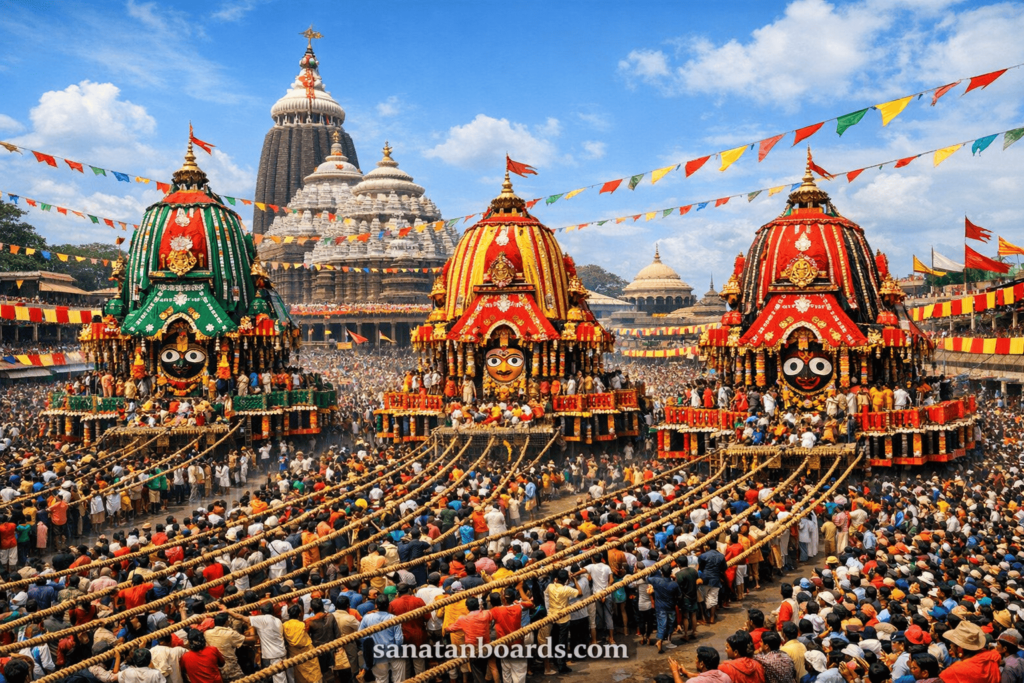
One of the most celebrated events at the Jagannath Temple is the annual Rath Yatra, or Chariot Festival, which draws millions of devotees to witness the grand procession of the deities on massive ornately decorated chariots. The festival is symbolic of the journey of life, spiritual devotion, and the unity of people from different regions and backgrounds.
Apart from its religious significance, Puri and the Jagannath Temple contribute to the socio-cultural identity of Odisha. The temple’s traditions, rituals, and festivals are closely intertwined with local art, music, dance, and cuisine. Visitors experience a blend of spirituality, culture, and history, making Puri not just a destination for pilgrims but also a center for learning about India’s ancient heritage and traditions.
What Is Puri (Odisha) – Jagannath Temple ?
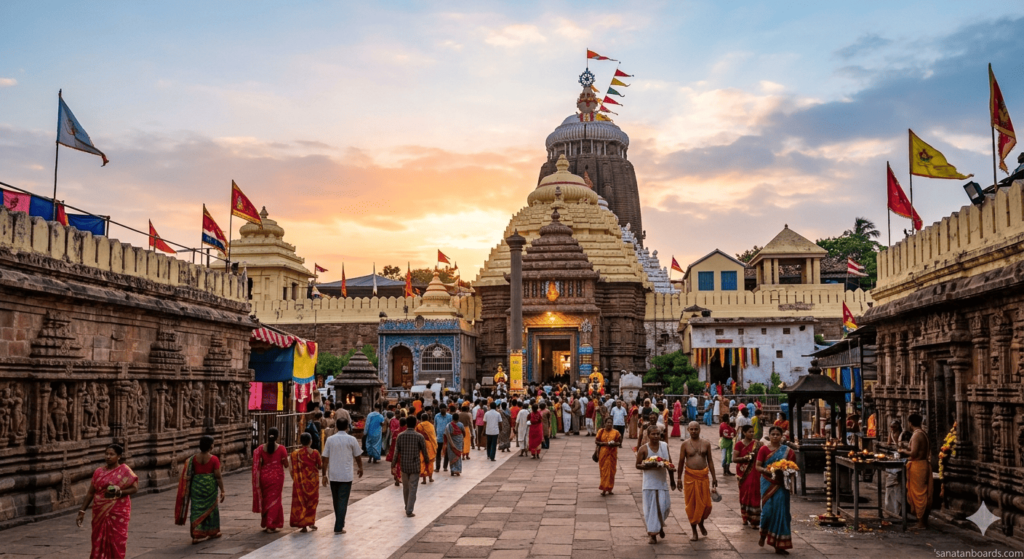
The Jagannath Temple in Puri, Odisha, is one of the four Char Dham pilgrimage sites and a major religious center in India. Constructed in the 12th century by King Anantavarman Chodaganga Deva of the Eastern Ganga dynasty, the temple is a masterpiece of Kalinga architecture. Its towering spire, intricately carved stone walls, and vast courtyard symbolize the grandeur of medieval Indian temple construction.
The temple is dedicated to Lord Jagannath, an incarnation of Lord Vishnu, along with his brother Balabhadra and sister Subhadra. The deities are unique in form, carved from sacred neem wood, and replaced every 12 years in a ritual known as Nabakalebara. This practice reflects the temple’s emphasis on regeneration, continuity, and devotion. The main temple complex spans over 400,000 square feet and includes smaller shrines, gardens, and the famous Sudarshana Chakra atop the main sanctum.
Religious rituals at the temple follow ancient traditions, with strict guidelines for priests, offerings, and ceremonies. Daily rituals, special pujas, and festivals like Rath Yatra and Snana Yatra attract devotees in massive numbers, making the temple a vibrant hub of spiritual life. The Rath Yatra, in particular, showcases the deities on giant chariots, allowing devotees to pull them through the streets of Puri in an act of devotion.
The Jagannath Temple is also a center for charitable activities, including feeding thousands of devotees daily through its famous Mahaprasad offerings. The temple not only represents spiritual devotion but also embodies Odisha’s cultural richness, craftsmanship, and historical significance, making it an essential landmark in India’s religious and cultural landscape.
Who Is Required Puri (Odisha) – Jagannath Temple ?
Puri (Odisha) – Jagannath Temple is primarily required by devotees and pilgrims seeking spiritual fulfillment. Followers of Hinduism, especially Vaishnavites, consider visiting the temple as a sacred duty, often as part of completing the Char Dham pilgrimage. People from all walks of life, irrespective of age or background, undertake journeys to the temple to seek blessings, perform rituals, and experience the spiritual aura of Lord Jagannath.
Scholars, historians, and cultural enthusiasts also find the temple essential for research and learning. Its centuries-old architecture, religious practices, and intricate carvings provide insights into medieval Indian culture, art, and temple construction. Researchers studying religious festivals, Indian mythology, and temple rituals find Puri to be a critical source of information.
Tourists and photographers are another group who require the temple as part of their journey to witness India’s rich heritage. The grand Rath Yatra, temple carvings, and cultural surroundings make Puri a visual and experiential delight.
Additionally, the temple holds importance for the local community, serving as a cultural and economic center. It provides employment, promotes arts and crafts, and sustains traditions through festivals and rituals. Charitable organizations associated with the temple also play a role in education, healthcare, and social welfare, making the temple relevant to civic planners and humanitarian groups.
When Puri (Odisha) – Jagannath Temple Is Required ?
Puri (Odisha) – Jagannath Temple is required throughout the year, but its significance peaks during certain festivals and spiritual occasions. The temple holds daily rituals that follow a precise schedule, making it a required destination for devotees seeking routine worship and personal connection with the divine. Pilgrims often plan visits around the temple’s morning, afternoon, and evening pujas, ensuring they witness sacred offerings and ceremonial practices.
The temple is most prominently required during the annual Rath Yatra, usually held in June or July. During this time, millions of devotees converge on Puri to witness the deities Jagannath, Balabhadra, and Subhadra being paraded on enormous, beautifully decorated chariots. The festival represents the journey of life, renewal, and devotion. It is considered highly auspicious, and those who cannot physically visit often engage in prayers and online participation, underscoring the festival’s universal spiritual relevance.
Another important occasion is the Nabakalebara ritual, which occurs approximately every 12 to 19 years. During this event, the wooden idols of the deities are replaced with newly carved ones, signifying rebirth and continuity. Scholars, devotees, and media personnel require the temple at this time to witness, document, and participate in this rare ceremonial transformation.
Apart from festivals, the temple is required during personal milestones such as weddings, naming ceremonies, or life transitions. Devotees visit seeking blessings, guidance, and spiritual reassurance. The temple also plays a role in seasonal observances, including Ekadashi and other auspicious lunar days, when worshippers perform special prayers and fasts.
For tourists and cultural enthusiasts, Puri is required year-round to explore its architectural marvels, participate in community traditions, and learn about Odishan culture. Educational institutions and researchers also plan visits around academic calendars to study the temple’s art, history, and rituals.
Where Puri (Odisha) – Jagannath Temple Is Required ?
The Jagannath Temple is located in Puri, Odisha, a coastal city on the eastern shores of India. Puri itself is a part of the Char Dham pilgrimage circuit, which makes the temple an essential destination for spiritual travelers from across India and abroad. The temple’s geographic location near the Bay of Bengal adds to its appeal, combining spiritual significance with scenic beauty, attracting both pilgrims and tourists.
Within the city of Puri, the temple occupies the central position, with its towering spire visible from multiple vantage points. Devotees require access to the temple complex itself, including the main sanctum, the Jagamohan (assembly hall), and surrounding shrines, to perform rituals, offer prayers, and participate in religious ceremonies.
The Rath Yatra procession extends beyond the temple premises, covering major streets of Puri. During this festival, the temple is required as the focal point from where the deities begin their journey, making surrounding roads, public spaces, and gathering areas equally significant for devotees. Hotels, ghats, and community halls around the temple become critical areas for lodging, cultural activities, and spiritual gatherings, emphasizing the temple’s regional importance.
Educational and research institutions also require the temple’s location for academic study. Archaeologists, art historians, and cultural scholars often visit Puri and surrounding districts to analyze Kalinga architecture, ancient inscriptions, and historical records preserved in and around the temple.
For international tourists, the temple is required as a cultural landmark, often included in itineraries along with other notable destinations in Odisha such as Konark Sun Temple and Chilika Lake. Its coastal location, accessibility via Puri railway station and airport connections, and well-maintained city infrastructure ensure that the temple is a practical and spiritual requirement for visitors.
How Puri (Odisha) – Jagannath Temple Is Required ?
Puri (Odisha) – Jagannath Temple is required through multiple methods that combine spiritual, cultural, and practical approaches. Devotees approach the temple physically by visiting Puri, often undertaking long pilgrimages on foot, by train, or via road networks from various parts of India. Pilgrimages are considered an act of devotion, where the journey itself is as significant as the destination, reflecting the ancient Indian belief in spiritual discipline.
Once in Puri, devotees follow temple protocols meticulously. Entry into the sanctum is restricted and regulated according to traditional customs, which ensures that worship is performed in a sacred and orderly manner. The temple priests, known as Mahants, perform daily rituals including Mangala Aarti, Abhisheka, and Bhoga offerings. Devotees are required to participate in or observe these rituals respectfully, understanding that every action—from offering flowers and food to chanting prayers—is part of a larger spiritual system.
The temple is also required through festivals like the Rath Yatra, where thousands gather to pull massive chariots of Lord Jagannath, Balabhadra, and Subhadra through the city streets. Participation in this festival is both symbolic and practical. Devotees actively pull the ropes, which is considered an expression of devotion and communal participation. Those unable to physically attend can access online broadcasts, photographs, and documentaries, highlighting the evolving methods by which the temple continues to serve devotees globally.
Educational and cultural engagement represents another “how.” Scholars, historians, and students study the temple’s architecture, rituals, and inscriptions for research, workshops, and publications. Guided tours, interpretive materials, and local experts provide methods for learning about the temple’s significance without direct ritual participation.
The temple’s role in charity, such as the Mahaprasad distribution, also illustrates how it is required practically. Devotees, volunteers, and local organizations participate in preparing and serving meals, ensuring that spiritual traditions translate into tangible benefits for the community.
Case Study On Puri (Odisha) – Jagannath Temple
Introduction
Puri (Odisha) – Jagannath Temple serves as a profound case study for understanding the intersection of spirituality, culture, architecture, and community dynamics. Built in the 12th century by King Anantavarman Chodaganga Deva, the temple exemplifies the Kalinga style of architecture and has influenced temple designs across India. This case study examines its religious significance, architectural uniqueness, festival management, community impact, and modern-day relevance.
Religious Significance
The temple is dedicated to Lord Jagannath, an incarnation of Vishnu, along with Balabhadra and Subhadra. The deities’ unique wooden forms are replaced every 12 years during the Nabakalebara ritual, symbolizing rebirth and continuity. Devotees from across India and abroad visit the temple to seek blessings, perform rituals, and participate in festivals. The temple functions as the spiritual nucleus of Puri, reinforcing religious traditions and fostering community cohesion.
Architectural Features
The main temple complex spans over 400,000 square feet, comprising the Vimana (sanctum tower), Jagamohan (assembly hall), Natamandapa (festival hall), and smaller shrines. Intricate carvings depict mythological stories, flora, fauna, and social life of the period. The temple’s spire, rising to 214 feet, is topped by the Sudarshana Chakra, visible from miles away. The case study emphasizes how architecture serves both spiritual and social purposes—guiding devotees’ movement, facilitating rituals, and creating a space for collective gathering.
Festival Management
The Rath Yatra is the temple’s most prominent festival. Organizing this event for millions requires meticulous planning: construction of massive chariots, crowd management, security, sanitation, and volunteer coordination. The festival demonstrates how religious practices intersect with modern logistical challenges. Safety protocols, route mapping, and emergency services are integrated into a centuries-old tradition, reflecting adaptive management strategies that sustain both devotion and public safety.
Community and Socioeconomic Impact
The temple drives the local economy through tourism, handicrafts, and hospitality. Vendors, artisans, guides, and hotels rely on temple activities for livelihood. The Mahaprasad kitchen serves thousands daily, illustrating community welfare intertwined with spiritual practice. Educational initiatives, workshops, and cultural programs conducted around the temple promote knowledge transfer and preserve Odishan heritage.
Modern Relevance
Digital technology has expanded the temple’s reach globally. Live-streaming of festivals, online booking systems for darshan, and mobile apps enhance accessibility while maintaining religious sanctity. The temple also collaborates with heritage conservation agencies to ensure structural preservation and archaeological research.
Conclusion
The Jagannath Temple exemplifies how a spiritual institution can maintain centuries-old traditions while adapting to modern social, economic, and technological contexts. #puriodishajagannathtemple It serves as a model for integrating religious devotion, cultural preservation, community development, and sustainable tourism. Studying Puri (Odisha) – Jagannath Temple provides valuable insights into managing complex heritage sites in a contemporary world.
White Paper On Puri (Odisha) – Jagannath Temple
Executive Summary
Puri (Odisha) – Jagannath Temple is an iconic religious, cultural, and historical institution in India. This white paper outlines the temple’s significance, management strategies, socio-economic impact, and opportunities for sustainable development while preserving spiritual and architectural heritage.
Introduction
Built in the 12th century, the temple is dedicated to Lord Jagannath, Balabhadra, and Subhadra. It is a key pilgrimage site and a symbol of Odisha’s rich heritage. Its influence extends beyond religion into culture, tourism, art, and education.
Religious and Cultural Significance
The temple’s rituals, including daily pujas, Nabakalebara, and Rath Yatra, attract millions of devotees. Cultural programs, folk performances, and educational workshops foster community engagement and cultural transmission. The temple’s practices also preserve ancient traditions such as Odissi dance, Pattachitra art, and regional cuisine.
Architectural and Heritage Conservation
The Kalinga architectural style features intricate carvings, spires, and massive courtyards. Conservation challenges include weathering, visitor wear-and-tear, and urban encroachment. Strategies include structural restoration, documentation of inscriptions, and collaboration with archaeological experts. Sustainable conservation practices are critical to maintaining the temple’s historical integrity.
Management and Operational Strategies
The temple management ensures smooth functioning of rituals, festivals, crowd control, and logistics. Coordination with civic authorities, security agencies, and volunteers is essential during large-scale events like Rath Yatra. Technology integration, such as digital darshan systems, surveillance, and online registration, enhances operational efficiency while respecting spiritual protocols.
Socio-Economic Impact
The temple supports local livelihoods through tourism, handicrafts, and food services. Mahaprasad kitchens feed thousands daily, highlighting the temple’s role in social welfare. Festivals drive economic activity, benefiting local businesses, artisans, and cultural practitioners. Research and educational collaborations further extend its societal contributions.
Opportunities and Recommendations
- Digital Engagement: Expand online darshan, educational portals, and virtual tours.
- Sustainable Tourism: Implement eco-friendly facilities, waste management, and visitor guidelines.
- Cultural Preservation: Strengthen programs for Odissi dance, Pattachitra, and temple rituals.
- Infrastructure Upgrades: Improve accessibility, lodging, and sanitation while preserving heritage aesthetics.
Conclusion
Puri (Odisha) – Jagannath Temple is a model of how religious heritage can contribute to cultural, social, and economic development. Strategic conservation, technology integration, and community engagement ensure its relevance for future generations. #Sanatandharmaaccreditationboardsinvasai This white paper provides actionable insights for policymakers, cultural managers, and religious organizations to maintain a balance between devotion, heritage preservation, and modern needs.
Industry Application On Puri (Odisha) – Jagannath Temple
Puri (Odisha) – Jagannath Temple has wide-ranging applications beyond religious practice, influencing tourism, hospitality, cultural education, heritage management, and digital technology sectors.
Tourism and Hospitality Industry
The temple drives domestic and international tourism. Hotels, guesthouses, and transport services benefit significantly from the influx of pilgrims and tourists, particularly during Rath Yatra and other festivals. Travel agencies design specialized pilgrimage packages, emphasizing both spiritual and cultural experiences.
Cultural and Educational Sector
Artisans, dancers, and scholars benefit from the temple’s traditions. Odissi dance academies, Pattachitra workshops, and music schools use the temple as a learning hub. Universities and research institutes conduct field studies on temple architecture, rituals, and heritage management.
Heritage and Conservation Industry
The temple’s architectural and historical significance demands specialized restoration and preservation services. Companies and NGOs provide expertise in stone conservation, structural engineering, and heritage site management, ensuring longevity of the 12th-century monument.
Digital and Media Applications
With live streaming of festivals, virtual darshan, and digital archives, technology companies provide platforms for global access. Mobile applications and online booking systems facilitate crowd management, enhancing the temple’s operational efficiency.
Social Welfare and Community Programs
Food distribution through Mahaprasad kitchens, volunteer coordination, and local craft promotion create opportunities for social enterprises and NGOs to collaborate with temple authorities.
Conclusion
Puri (Odisha) – Jagannath Temple serves as a model for integrating spiritual, cultural, economic, and technological dimensions. Its influence spans multiple #Sanatandharmaaccreditationboardsinmumbai industries, highlighting how heritage sites can contribute to societal growth while preserving religious and cultural values.
source : Yatra Mitra
ASK FAQ
1. What is Puri Jagannath Temple famous for?
Puri Jagannath Temple in Odisha is famous for Lord Jagannath’s deities, its unique wooden idols, Kalinga-style architecture, and the grand annual Rath Yatra festival.
2. Where is Puri Jagannath Temple located?
The temple is located in the coastal city of Puri in Odisha, India, near the Bay of Bengal, and is part of the Char Dham pilgrimage circuit.
3. When is the Rath Yatra held at Puri Jagannath Temple?
Rath Yatra is held annually, usually in June or July, during the Hindu month of Ashadha, attracting millions of devotees from across India and abroad.
4. Who can visit Puri Jagannath Temple?
The temple welcomes all devotees, tourists, and scholars. Entry is open to Hindus for the sanctum, while visitors of all faiths can explore the outer temple complex and participate in festivals.
5. How is the Jagannath Temple managed and maintained?
The temple is managed by the Temple Administration, overseeing rituals, festivals, crowd control, Mahaprasad distribution, heritage conservation, and modern digital systems like online darshan.
Table of Contents
Disclaimer:
The content provided above is intended purely for educational, learning, and knowledge-sharing purposes. It does not promote or endorse any religious beliefs, practices, or commercial interests. Readers are encouraged to verify historical and cultural facts from authentic sources when using this material for research or publication.