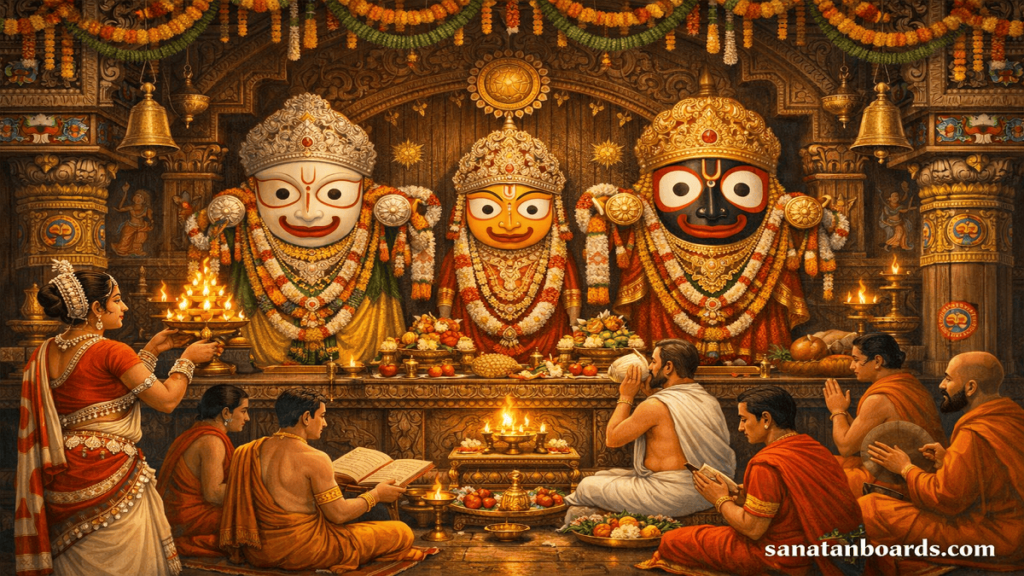
Jagannath Dharma refers to the spiritual and cultural tradition centered around Lord Jagannath, one of the most revered forms of Lord Vishnu, worshipped primarily in Puri, Odisha. The term embodies devotion, inclusiveness, and the pursuit of spiritual growth, emphasizing that sincere love for the divine transcends rigid rituals.
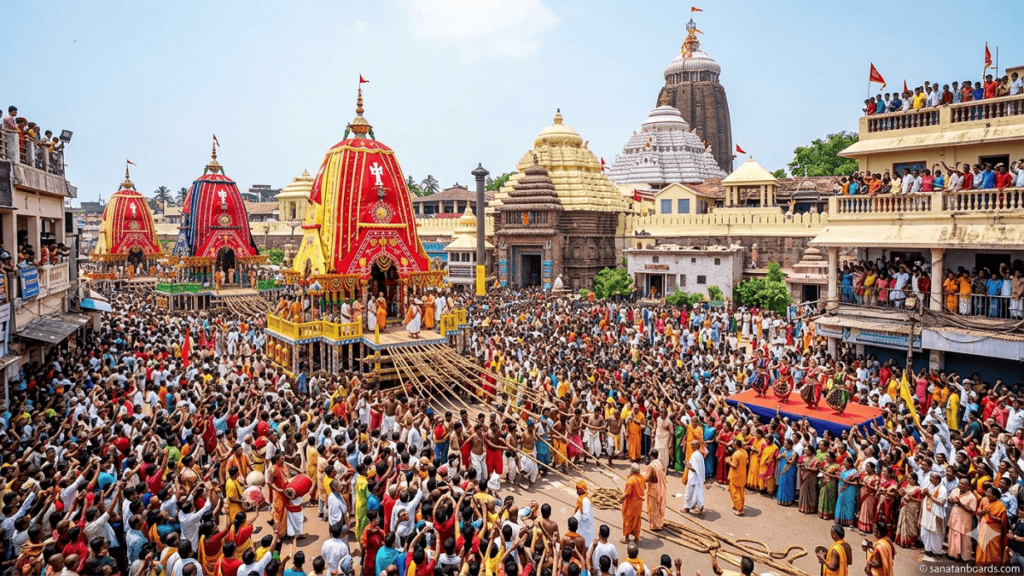
At the heart of this tradition is the Jagannath Temple of Puri, one of the four sacred Char Dhams of India. The temple celebrates unique festivals such as the Ratha Yatra, where deities are placed on enormous chariots and drawn through the streets, and the Snana Yatra, the ceremonial bathing of the deities. These festivals are not just religious events but also cultural gatherings that reinforce community and spiritual unity.
The concept of a Puri Jagannath Dharma Network reflects efforts to promote awareness, research, and global understanding of this tradition. Scholars and devotees envision a network that shares the teachings, rituals, and philosophy of Jagannath Dharma with a wider audience highlighting its universal values of compassion, devotion, and ethical living.
What Is PURI JAGANNATH DHARMA NETWORK ?
The Puri Jagannath Dharma Network is a conceptual framework for sharing, preserving, and studying the spiritual, cultural, and philosophical traditions associated with Lord Jagannath, one of the most revered deities in Hinduism. Lord Jagannath, whose name means “Lord of the Universe,” is worshipped primarily in Puri, Odisha, which is considered his main holy abode. The network emphasizes learning about Jagannath Dharma, the set of teachings and practices that combine devotion (bhakti), ethical living, and spiritual knowledge.
This network is not necessarily a single formal organization but rather a global or community-based initiative that connects scholars, devotees, and institutions. Its aim is to promote education about the rituals, festivals, and cultural heritage of Jagannath worship, including major events like the Ratha Yatra (chariot festival) and Snana Yatra (bathing ceremony).
The Puri Jagannath Dharma Network also encourages research into the historical, social, and philosophical aspects of Jagannath traditions, making resources accessible for learning and study. By focusing on knowledge, cultural preservation, and ethical-spiritual principles, it serves as an educational platform for anyone seeking to understand the values and teachings of Jagannath Dharma, fostering global awareness of this ancient and enduring spiritual heritage.
Who Is Required For PURI JAGANNATH DHARMA NETWORK ?
The Puri Jagannath Dharma Network is a conceptual initiative — a platform for learning, studying, and spreading the spiritual, cultural, and philosophical teachings associated with Lord Jagannath and the traditions centered in Puri, Odisha. To build and sustain such a network effectively, several groups of people are essential. Each plays a different but complementary role in preserving heritage, encouraging research, promoting understanding, and connecting global learners to the values of Jagannath Dharma.
1. Scholars and Researchers
At the foundation of any educational network are scholars and researchers who study the history, philosophy, literature, and rituals associated with Jagannath Dharma.
These include:
- Indologists and historians who research ancient texts, temple traditions, and cultural influences.
- Philosophy and religious studies experts who interpret spiritual teachings and compare them with broader Hindu philosophies like Vedanta, Bhakti movement teachings, and comparative religion.
- Anthropologists and cultural historians who document how Jagannath worship influences local communities, festivals, and art forms.
Their research helps build accurate, evidence‑based knowledge that becomes the backbone of the network’s educational resources.
2. Devotees and Practitioners
The spiritual core of the network comes from devotees, priests, and practitioners who keep the living tradition alive. These individuals contribute:
- First‑hand knowledge of rituals and worship practices such as Ratha Yatra, daily temple services, and seasonal observances.
- Personal experiences and oral histories of devotion, pilgrimage, and community life in Puri.
- Insights into the meaning and relevance of Jagannath Dharma in a devotee’s life.
Including practitioners ensures the network isn’t merely academic — it remains rooted in lived tradition.
3. Educators and Teachers
To share knowledge effectively, the network needs educators and teachers who can translate research and tradition into accessible learning materials. They may:
- Write books, articles, and online content explaining Jagannath Dharma in simple terms.
- Conduct classes, webinars, or workshops for students, devotees, and general learners.
- Develop curricula for schools or cultural programs that introduce Indian spiritual traditions and heritage.
Their role bridges the gap between complex scholarship and everyday learners.
4. Cultural Institutions and Libraries
Educational networks thrive on institutions such as:
- Universities and research centers that support formal study and archives.
- Libraries and museums that preserve manuscripts, historical documents, art, and ritual objects from Odisha and related regions.
- Temple archives that contain records of temple history, rituals, and ancient practices.
These institutions help preserve primary sources and make them available for study.
5. Technologists and Communicators
In a global age, a network cannot succeed without people who can digitize, communicate, and connect:
- Web developers and digital librarians who build online repositories and learning platforms.
- Writers and communicators who create content — blogs, videos, or podcasts — for broader outreach.
- Translators who make material accessible in multiple languages.
Their efforts allow the network to reach learners across countries and cultures.
6. Students and Global Learners
Finally, the network needs students and curious minds willing to learn. Whether they are:
- School and college students exploring Indian culture,
- Devotees deepening their understanding,
- Or global readers interested in world religions —
When Is The Puri Jagannath Dharma Network Required?
The Puri Jagannath Dharma Network is a conceptual and educational initiative aimed at promoting, preserving, and sharing the spiritual, cultural, and philosophical traditions of Lord Jagannath and the associated practices in Puri, Odisha. Understanding when such a network is required involves examining the needs of education, cultural preservation, global awareness, and community engagement in today’s world.
1. Preserving Cultural and Spiritual Heritage
The primary need arises whenever traditional knowledge risks being lost. The rituals, festivals, and teachings of Jagannath Dharma — such as Ratha Yatra, Snana Yatra, and daily temple services — have existed for centuries. Over time, modernization, urbanization, and changing lifestyles can lead to fading awareness, misinterpretation, or neglect of these practices. A network becomes required when communities and scholars recognize the urgency to document, study, and preserve this heritage for future generations.
2. Promoting Education and Research
The network is also needed whenever there is a demand for structured learning. Students, researchers, and educators studying Hindu philosophy, Indian culture, or comparative religion need reliable, evidence-based resources. The network supports scholarly work, develops curricula, and provides access to manuscripts, archives, and historical records. This is particularly important in a globalized context where people across countries seek to understand Jagannath Dharma beyond its ritualistic aspects.
3. Connecting Devotees and Communities
Another instance when the network is required is to connect devotees and spiritual communities globally. Pilgrims, practitioners, and diaspora communities may lack access to authentic teachings or local knowledge. The network can serve as a bridge, providing guidance, live updates on festivals, educational material, and platforms for discussion, ensuring the spiritual essence of Jagannath Dharma is accessible everywhere.
4. Facilitating Cultural Exchange
The network is needed when there is a goal to promote cross-cultural understanding. Jagannath Dharma is not only a spiritual tradition but also a cultural one, encompassing art, music, cuisine, and community practices. A network helps showcase these elements internationally, facilitating cultural exchange, academic collaboration, and global appreciation of Odisha’s heritage.
5. Supporting Digital and Global Initiatives
In the modern era, the network becomes required to leverage technology. Digital libraries, webinars, online courses, virtual tours of Puri temples, and multimedia content allow learners and devotees worldwide to engage with Jagannath Dharma. The network is particularly essential whenever digital accessibility is needed to reach broader audiences.
Where Is The Puri Jagannath Dharma Network Required?
1. Puri – The Spiritual Epicenter
The primary location where the network is required is Puri itself, home to the famous Jagannath Temple, one of the four sacred Char Dhams of India. Puri is not only a pilgrimage center but also a hub of living traditions, rituals, and festivals, such as Ratha Yatra and Snana Yatra. Within Puri, the network can support:
- Temple authorities and priests, helping preserve ritual knowledge.
- Local communities, who maintain traditional arts, crafts, and festival practices.
- Educational centers and cultural institutions, documenting oral histories and manuscripts.
The network is required here to strengthen the local custodianship of heritage, ensuring that centuries-old practices are accurately preserved and shared.
2. Odisha and Regional Centers
Beyond Puri, the network is needed throughout Odisha, where Jagannath worship and culture influence countless temples, festivals, and social practices. Regional offices, cultural centers, and schools can use the network to:
- Promote research and education about Jagannath Dharma.
- Provide training for teachers, guides, and scholars.
- Support regional devotees in understanding the philosophy behind rituals.
In these areas, the network ensures that Jagannath Dharma is widely accessible and culturally contextualized.
3. National Academic and Cultural Institutions
The network is also required across India, in universities, research centers, museums, and libraries studying religion, philosophy, and culture. Institutions can benefit from:
- Digitized manuscripts, archives, and research materials.
- Scholarly collaboration between historians, anthropologists, and religious studies experts.
- Educational programs for students, teachers, and enthusiasts.
Here, the network acts as a knowledge hub, connecting scholarship with traditional practice.
4. Global Communities and Diaspora
Jagannath Dharma has relevance beyond India, among Hindu diaspora communities and global learners. The network is required in:
- International Hindu temples and cultural centers, providing access to authentic teachings.
- Online learning platforms, webinars, and virtual seminars.
- Research and educational collaborations with global universities studying religion, culture, and anthropology.
This ensures that Jagannath Dharma is understood, respected, and practiced accurately around the world.
5. Digital and Virtual Spaces
Finally, the network is essential in digital spaces, including websites, social media, and digital archives. These platforms enable:
- Remote access to festivals, rituals, and scholarly materials.
- Educational outreach for students, devotees, and cultural enthusiasts worldwide.
- Preservation of fragile manuscripts, art, and oral traditions in a sustainable, accessible format.
How Is The Puri Jagannath Dharma Network Required?
1. Preserving and Documenting Tradition
One of the most important ways the network is required is through documentation and preservation. Jagannath Dharma involves centuries-old rituals, festivals, and oral traditions. These include:
- Temple rituals performed daily in Puri.
- Annual festivals like Ratha Yatra and Snana Yatra.
- Oral histories, hymns, and chants that have been passed down generations.
The network is required to collect, digitize, and archive this knowledge to prevent loss due to modernization, migration, or fading local practices. This ensures that the original traditions remain accessible for research and learning.
2. Supporting Education and Scholarship
The network is required to facilitate education and scholarly research. It does so by:
- Providing access to historical texts, manuscripts, and temple records.
- Encouraging academic studies in philosophy, culture, and art forms associated with Jagannath Dharma.
- Organizing workshops, seminars, and online courses to share knowledge with students, scholars, and enthusiasts.
Through these activities, the network ensures that Jagannath Dharma is understood accurately, academically, and contextually, bridging the gap between traditional knowledge and modern scholarship.
3. Connecting Communities
Another way the network is required is in community engagement. Devotees, pilgrims, and diaspora communities often seek guidance and learning about Jagannath Dharma. The network provides:
- Platforms for sharing experiences, knowledge, and guidance.
- Information about festivals, rituals, and pilgrimages.
- Support for spiritual education through classes, online content, and cultural programs.
By connecting individuals across locations, the network ensures the living tradition remains active and participatory.
4. Promoting Cultural Awareness Globally
The network is required to showcase Jagannath Dharma beyond India. This involves:
- Collaborations with international universities, cultural centers, and religious studies programs.
- Digital outreach, including websites, social media, and virtual tours of Puri temples.
- Sharing Indian art, music, and festival traditions related to Lord Jagannath.
Through global promotion, the network helps preserve heritage while fostering understanding and respect for Jagannath traditions worldwide.
5. Leveraging Technology
In the modern era, the network is required to use technology as a medium. This includes:
- Creating digital archives of manuscripts, photographs, and ritual recordings.
- Hosting webinars, online courses, and interactive learning platforms.
- Developing apps or portals to make educational content accessible to a wide audience.
Digital tools expand reach and ensure that Jagannath Dharma remains relevant, accessible, and sustainable for learners everywhere.
Case Study On Puri Jagannath Dharma Network
1. Introduction
The Puri Jagannath Dharma Network is a concept for a collaborative educational platform that supports the preservation, study, and global sharing of traditions associated with Lord Jagannath — a central deity in Hindu culture, worshipped in Puri, Odisha, India. This case study explores why such a network is significant, how it is implemented, who benefits, and the broader cultural impact.
2. Background
Lord Jagannath, meaning “Lord of the Universe,” is revered in Hinduism as a form of Lord Vishnu. The Jagannath Temple in Puri serves as the spiritual heart of this tradition, with centuries‑old rituals and festivals such as the Ratha Yatra (Chariot Festival) and Snana Yatra (Bathing Festival). These practices carry deep religious and social meaning and represent an intangible cultural heritage.
However, rapid modernization, migration, and changing lifestyles present challenges to preserving this complex cultural ecosystem. This created the need for a structured platform — the Puri Jagannath Dharma Network — that facilitates learning, documentation, community connection, and global outreach.
3. Objectives of the Network
The primary objectives of the Puri Jagannath Dharma Network include:
- Documentation and Preservation
- Recording rituals, oral traditions, and historical manuscripts.
- Digitizing rare texts and archival material to prevent loss.
- Education and Research
- Providing academic resources for students, scholars, and educators.
- Promoting courses, seminars, and workshops on Jagannath philosophy, temple arts, and cultural practices.
- Community Engagement
- Creating platforms for devotees, temple authorities, and scholars to interact.
- Supporting diaspora communities with information about Jagannath traditions.
- Global Cultural Exchange
- Collaborating with international universities and cultural institutions.
- Using digital platforms to introduce Jagannath heritage to global audiences.
4. Implementation Strategy
The network is implemented through a combination of physical and digital initiatives:
a. Archival Centers
Regional archives are established in Puri and major academic cities to:
- Store manuscripts, cultural artifacts, and audio‑visual records.
- Facilitate researcher access.
b. Digital Platforms
Online repositories and educational portals provide:
- Digital copies of rituals, lectures, historical research, and festival documentation.
- Virtual tours of temples and narrated explanations of key rites and symbols.
c. Educational Outreach
Collaborations with universities and schools help develop:
- Courses on Jagannath Dharma within religious studies and cultural programs.
- Research fellowships and student projects.
d. Community Portals
Interactive forums and social media pages enable:
- Devotees to share experiences and insights.
- Discussion spaces for comparative studies and theological discourse.
5. Outcomes and Benefits
The network delivers multiple educational and cultural benefits:
a. Preservation of Knowledge
Rare rituals and oral histories that once existed only in local memory are now systematically recorded and archived. This protects cultural traditions against gradual disappearance.
b. Academic Advancement
Students and researchers gain access to structured, peer‑reviewed material, enabling deeper analysis and scholarship. Courses and seminars increase awareness of the philosophical foundations of Jagannath Dharma.
c. Community Integration
Devotees in India and abroad can reliably learn about festivals, temple customs, and spiritual interpretations without geographic restrictions. This strengthens cultural identity and devotional understanding.
d. Global Awareness
The network amplifies cultural exchange by introducing Jagannath traditions to scholars and learners from diverse cultural backgrounds, enriching global religious studies.
6. Challenges and Lessons Learned
While the network provides valuable resources, it also faces challenges:
- Language and Translation Barriers: Translating texts from Sanskrit, Odia, and regional dialects requires skilled scholars and translators.
- Technological Infrastructure: Sustaining digital platforms demands consistent funding and technical expertise.
- Balancing Tradition and Accessibility: Presenting rituals in ways that are both authentic and understandable to modern audiences requires careful interpretation.
Lessons from implementation emphasize the importance of collaboration between temple authorities, academic institutions, cultural experts, and technologists.
7. Conclusion
The Puri Jagannath Dharma Network serves as a model of how cultural heritage can be preserved and shared in the modern era. By integrating documentation, education, community engagement, and digital outreach, the network addresses the critical need to safeguard ancient traditions while making them accessible to a global audience. It demonstrates that spiritual heritage, when supported by structured learning platforms, continues to inspire knowledge, devotion, and cultural respect across generations and continents.
White Paper On Puri Jagannath Dharma Network
1. Executive Summary
The Puri Jagannath Dharma Network is a conceptual and educational initiative aimed at preserving, studying, and sharing the spiritual, philosophical, and cultural heritage associated with Lord Jagannath, primarily centered in Puri, Odisha, India. The network is designed to connect scholars, devotees, cultural institutions, and global learners to ensure the continuity of Jagannath Dharma — the body of teachings, rituals, festivals, and ethical principles surrounding Lord Jagannath. This white paper outlines the objectives, implementation strategies, required stakeholders, challenges, and potential impact of establishing such a network.
2. Background
Lord Jagannath, meaning “Lord of the Universe”, is a revered form of Lord Vishnu. The Jagannath Temple in Puri serves as a spiritual epicenter for millions of devotees. The temple is famous for festivals such as:
- Ratha Yatra (Chariot Festival)
- Snana Yatra (Bathing Festival)
These rituals represent not only spiritual devotion but also cultural and social traditions that have been maintained for centuries. Modern challenges, such as globalization, urbanization, and fading local knowledge, highlight the need for a structured network to preserve and disseminate this heritage.
3. Objectives of the Network
- Documentation and Preservation
- Archiving manuscripts, oral traditions, rituals, and historical records.
- Digitizing cultural artifacts and audio-visual materials.
- Education and Scholarship
- Providing structured academic resources for students, researchers, and scholars.
- Offering workshops, webinars, and courses on Jagannath philosophy, art, and culture.
- Community Engagement
- Connecting devotees, temple authorities, and global communities.
- Sharing festival updates, spiritual teachings, and devotional practices.
- Global Outreach and Cultural Exchange
- Collaborating with international institutions to promote awareness of Jagannath traditions.
- Using digital platforms to reach a global audience and encourage intercultural understanding.
4. Implementation Strategies
- Archival Centers: Establish regional archives in Puri and other cultural hubs for manuscript preservation.
- Digital Platforms: Create websites, online libraries, and virtual tours to make knowledge widely accessible.
- Educational Programs: Develop curricula, research fellowships, and learning modules in collaboration with universities.
- Community Portals: Build forums and social media platforms for dialogue between scholars and devotees.
5. Stakeholders Required
- Scholars, historians, and researchers of religion and culture.
- Temple priests and devotees for ritual and practical insights.
- Educators and cultural communicators for content dissemination.
- Technology experts to manage digital infrastructure.
- Students and global learners to engage and sustain the network.
6. Challenges
- Translation and interpretation of texts in Sanskrit, Odia, and local dialects.
- Maintaining technological infrastructure and consistent funding.
- Balancing authenticity of rituals with modern accessibility.
7. Expected Impact
- Preservation of centuries-old rituals, festivals, and oral traditions.
- Academic advancement through structured study and research.
- Strengthened global awareness of Jagannath culture.
- Greater community engagement and participation among devotees worldwide.
8. Conclusion
The Puri Jagannath Dharma Network represents a vital platform for preserving, educating, and sharing the spiritual and cultural heritage of Jagannath Dharma. Through documentation, education, community engagement, and global outreach, the network ensures that these ancient traditions remain vibrant, accessible, and meaningful for present and future generations.
Industry Applications Of The Puri Jagannath Dharma Network
1. Cultural Tourism and Pilgrimage Industry
- Tourism Development: Puri is one of India’s most famous pilgrimage destinations. By integrating the network with tourism, visitors can access accurate information about rituals, festivals, and temple history.
- Virtual Tours and Augmented Reality: Digital platforms can offer virtual visits to the Jagannath Temple or Ratha Yatra experiences, attracting global tourists and enhancing visitor engagement.
- Event Management: Festivals such as Ratha Yatra can be coordinated efficiently with support from the network, helping tourism operators manage large-scale pilgrim movements.
Impact: Boosts local economy, creates jobs in hospitality and event management, and promotes Odisha’s cultural heritage globally.
2. Education and EdTech Industry
- Curriculum Development: Universities and schools can develop courses on Jagannath Dharma, Indian culture, and religious studies using network resources.
- Online Learning Platforms: Digital archives and webinars can be integrated into EdTech platforms for students, researchers, and global learners.
- Research Tools: Scholars can access historical manuscripts, festival documentation, and oral traditions for academic research.
Impact: Encourages knowledge sharing, promotes cultural literacy, and creates opportunities for educational content providers.
3. Media, Publishing, and Content Industry
- Digital Publishing: Books, articles, documentaries, and multimedia content about Jagannath Dharma can be produced using research from the network.
- Cultural Broadcasting: TV channels, YouTube, and OTT platforms can use the network to create programs on festivals, temple rituals, and local heritage.
- Language and Translation Services: Translating ancient texts and oral histories into global languages for wider dissemination creates opportunities for translators and editors.
Impact: Preserves and popularizes cultural content, while creating new media products and educational resources.
4. Technology and Digital Industry
- Software and App Development: Apps for festival updates, live streaming rituals, or digital archives of manuscripts.
- Virtual Reality (VR) / Augmented Reality (AR): Immersive experiences of Puri Temple, Ratha Yatra, and other rituals for global audiences.
- Data Management and Digitization: Cloud-based storage and AI-powered search for archives, manuscripts, and multimedia resources.
Impact: Bridges cultural heritage with technology, opening opportunities in VR/AR tourism, digital preservation, and online engagement.
5. Cultural Entrepreneurship and Craft Industries
- Local Handicrafts: Promotion of traditional art, textiles, and souvenirs associated with Jagannath festivals.
- Workshops and Training Programs: Educational tourism programs teaching temple arts, crafts, and traditional music.
- Collaborations with Global Brands: Integrating Jagannath-inspired designs and storytelling into ethical and cultural merchandise.
Impact: Generates employment for local artisans, supports sustainable entrepreneurship, and promotes cultural heritage worldwide.
Conclusion
While the Puri Jagannath Dharma Network originates as a spiritual and educational initiative, its applications span tourism, education, media, technology, and entrepreneurship. By integrating tradition with modern industry practices, it not only preserves Jagannath Dharma but also creates economic, educational, and technological value, making heritage a driver for innovation and sustainable cultural growth.
source : Pause with Dharma
ASK FAQ
What is the Puri Jagannath Dharma Network?
The Puri Jagannath Dharma Network is a platform focused on preserving, studying, and sharing the spiritual, cultural, and philosophical traditions of Lord Jagannath, primarily centered in Puri, Odish
Why is the Puri Jagannath Dharma Network important?
It is important for preserving rituals, festivals, and oral traditions, promoting scholarly research, connecting devotees, and sharing Jagannath Dharma globally.
Who can benefit from the Puri Jagannath Dharma Network?
Scholars, students, educators, devotees, cultural institutions, and global learners benefit by accessing knowledge, research materials, and digital resources about Jagannath Dharma.
How does the Puri Jagannath Dharma Network function?
It functions through archival preservation, educational programs, digital platforms, community engagement, and global outreach, combining traditional knowledge with modern technology.
Where is the Puri Jagannath Dharma Network required?
It is required in Puri, Odisha, across India, in global diaspora communities, educational institutions, and digital platforms to preserve and share Jagannath cultural and spiritual heritage.
Table of Contents
Disclaimer: This content is for educational and informational purposes only. It does not constitute religious advice, endorsement, or official affiliation with any temple, organization, or institution.