The Mysore Kingdom holds a prominent place in Indian history, especially during periods of political transformation and cultural development. One of the most notable rulers associated with this kingdom is Maharaja Krishnaraja Wodeyar III, whose reign marked a significant transition in governance, culture, and administration. His rule began in 1799 after the fall of Tipu Sultan, a turning point that reshaped the political landscape of South India.
The restoration of the Wodeyar dynasty under British supervision introduced a new phase in the history of Mysore Kingdom. Unlike previous rulers, Maharaja Krishnaraja Wodeyar III governed under the influence of the British East India Company, which limited his political authority. However despite these constraints, he played a vital role in reviving the cultural and intellectual life of the region.
His reign is often remembered for its contributions to art, literature, music, and education. He encouraged scholars and artists, transforming Mysore into a cultural center. His efforts in documenting knowledge and preserving traditions reflect his deep interest in intellectual growth.
At the same time, his rule also highlights the challenges of governance under colonial influence. Administrative difficulties eventually led to the British taking direct control in 1831 though he continued as a titular ruler.
Overall, his reign represents a balance between tradition and change. It provides valuable insights into leadership, cultural preservation, and adaptation during a time of external political control.
What Is Mysore Kingdom – Maharaja Krishnaraja Wodeyar Iii
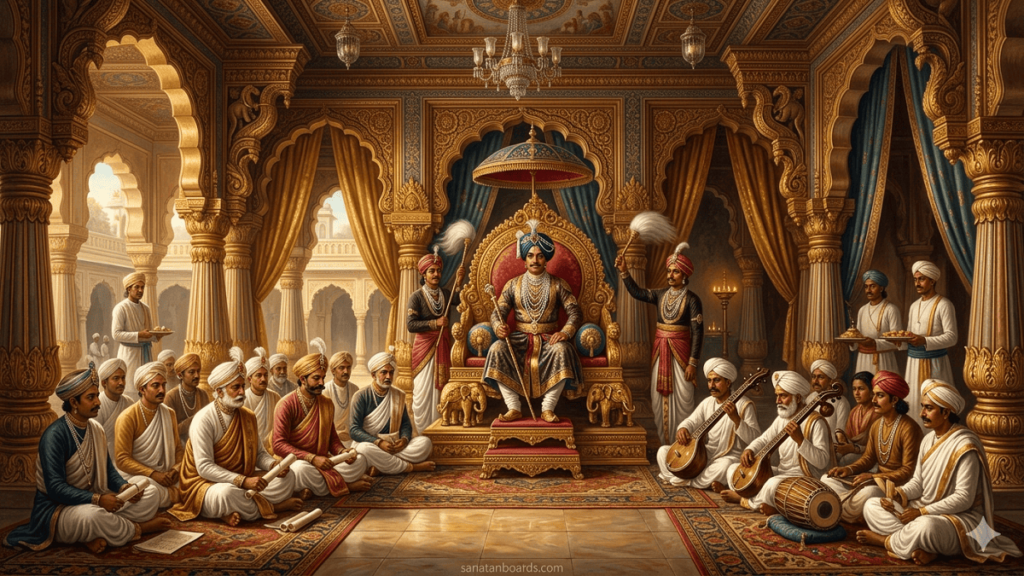
Mysore Kingdom under Maharaja Krishnaraja Wodeyar III refers to the period of rule beginning in 1799 when the Wodeyar dynasty was reinstated after the defeat of Tipu Sultan. This era is characterized by indirect British control combined with traditional monarchy.
The Maharaja became king at a young age and ruled under the supervision of the British East India Company. Although he held the title of ruler, much of the administrative power was controlled by British officials. This made Mysore a princely state rather than an independent kingdom.
Despite political limitations, his reign was marked by cultural revival. He actively promoted art, literature, and music, making Mysore a center of cultural excellence. His court became a hub for scholars and artists, contributing to the preservation of regional traditions.
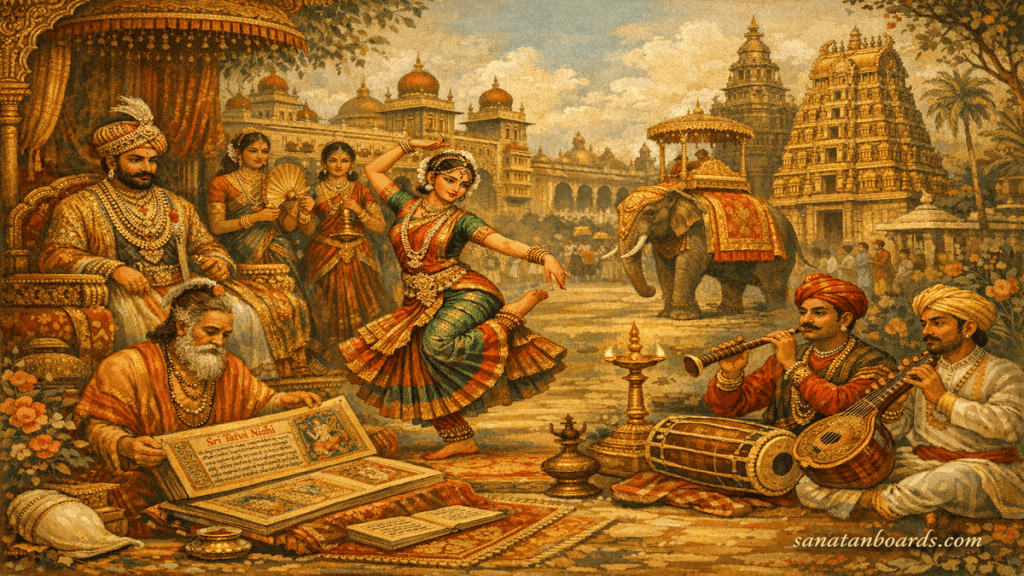
One of his most important contributions was “Sri Tatva Nidhi,” an encyclopedic work documenting various aspects of Indian culture, including dance, music, and iconography. This work reflects his dedication to preserving knowledge.
However, administrative challenges and inefficiencies led to problems in governance. In 1831, the British took direct control of Mysore, although the Maharaja retained his title.
Thus, this period represents a unique blend of cultural growth and political dependency, making it an important chapter in Indian history.
Why Is Required Mysore Kingdom – Maharaja Krishnaraja Wodeyar Iii
The study of Mysore Kingdom under Maharaja Krishnaraja Wodeyar III is required because it helps in understanding a major transitional phase in Indian history. His reign provides insights into how traditional kingdoms functioned under colonial influence.
One key reason it is required is cultural preservation. The Maharaja supported various art forms, literature, and music, ensuring their survival for future generations. His contributions helped maintain cultural identity during a time of political change.
It is also required to understand governance under constraints. His rule demonstrates how leadership operates when authority is limited by external forces. This provides valuable lessons for political and administrative studies.
Another reason is knowledge preservation. His work “Sri Tatva Nidhi” serves as an example of systematic documentation, which is important for research and education even today.
Additionally, his reign highlights the importance of administrative efficiency. The British takeover in 1831 due to governance issues shows the consequences of weak administrative systems.
Thus, studying this topic is required to understand history, leadership, culture, and governance in a comprehensive way.
When Mysore Kingdom – Maharaja Krishnaraja Wodeyar Iii
The study of Mysore Kingdom under Maharaja Krishnaraja Wodeyar III is required in multiple historical and analytical contexts, especially when examining periods of political transition and cultural development in India. This topic becomes particularly important when studying the timeline after the fall of Tipu Sultan in 1799, which marked a major turning point in South Indian history. It represents the beginning of a new administrative structure under British supervision.
This topic is required when analyzing the early phases of colonial rule in India. The Mysore Kingdom during his reign serves as an example of indirect British governance, where traditional rulers continued to exist but with limited authority. This helps in understanding how colonial powers maintained control without completely removing local leadership.
It is also required in the study of cultural history. During his reign, significant efforts were made to revive and preserve art, literature, and music. Therefore, when discussing the development of South Indian cultural traditions, this period becomes highly relevant.
In academic and research contexts, this topic is required when examining knowledge preservation. His contribution through “Sri Tatva Nidhi” provides an example of systematic documentation, making it useful for scholars studying historical records and intellectual traditions.
Additionally, this topic is required when studying governance challenges. The administrative issues that led to the British takeover in 1831 highlight the importance of efficient management and accountability. These lessons are relevant in both historical and modern governance studies.
In present times, this topic is required when comparing leadership styles across different eras. It helps in understanding how leaders can influence society even when their authority is restricted. Thus, it is required in historical, cultural, administrative, and leadership-related discussions.
Where Mysore Kingdom – Maharaja Krishnaraja Wodeyar Iii Is Required ?
The relevance of Mysore Kingdom under Maharaja Krishnaraja Wodeyar III is required across various geographical and academic areas. Primarily, it is required in the study of South Indian history, especially in the region of Karnataka, where the Mysore Kingdom played a crucial role in shaping cultural and political developments.
At the regional level, this topic is required in understanding the historical evolution of Mysore as a cultural and administrative center. The contributions made during his reign are still reflected in local traditions, art forms, and heritage sites.
At the national level, it is required in the broader study of Indian history, particularly when analyzing princely states under British rule. The Mysore Kingdom serves as a significant example of how local rulers functioned under colonial influence while maintaining traditional systems.
This topic is also required in educational institutions such as schools, colleges, and universities. Students studying Indian history, cultural studies, and political science often encounter this period as an important case for understanding governance and cultural preservation.
In research and academic institutions, it is required for detailed studies on colonial administration, cultural heritage, and knowledge systems. Scholars use this example to compare different governance models and cultural developments.
Globally, this topic is required in comparative history and international research. Historians and researchers study such examples to understand how different regions adapted to colonial rule while preserving their identity.
It is also required in cultural tourism and heritage management. Mysore remains an important destination, and its historical background plays a key role in attracting visitors and promoting cultural awareness.
Thus, this topic is required at regional, national, and global levels across education, research, governance, and cultural industries.
How Mysore Kingdom – Maharaja Krishnaraja Wodeyar Iii Is Required ?
The study of Mysore Kingdom under Maharaja Krishnaraja Wodeyar III is required in various practical and analytical ways across different disciplines. It is required as a case example to understand how cultural preservation can be maintained even during periods of political limitation.
In the field of education, this topic is required to explain historical transitions and the impact of colonial rule on Indian kingdoms. It provides a clear example of how traditional systems adapted to external control, making it useful for students and educators.
In leadership studies, it is required to demonstrate how influence can be exercised without complete authority. The Maharaja focused on cultural and intellectual contributions rather than political power, showing that leadership can take multiple forms. This makes his example relevant for modern leadership analysis.
In governance and administration, this topic is required to understand the importance of efficiency and accountability. The administrative challenges during his reign, which led to British intervention, highlight the need for strong governance systems.
It is also required in the field of knowledge management. His effort in documenting information through “Sri Tatva Nidhi” shows how knowledge can be preserved in an organized manner. This is highly relevant in modern research, data management, and archival systems.
In cultural development, this topic is required as an example of how art and traditions can be supported and sustained. His patronage of artists and scholars helped create a strong cultural foundation that continues to influence society.
Furthermore, this topic is required in comparative studies, where past and present systems are analyzed to identify similarities and differences. It helps in drawing lessons that can be applied in modern contexts.
Thus, the Mysore Kingdom under his rule is required as a practical reference in education, leadership, governance, knowledge systems, and cultural preservation.
Case Study Mysore Kingdom – Maharaja Krishnaraja Wodeyar Iii
The Mysore Kingdom under Maharaja Krishnaraja Wodeyar III provides a comprehensive case study of leadership, governance, and cultural preservation during a time of political transition in India. His reign began in 1799 after the fall of Tipu Sultan, marking the end of a powerful independent rule and the beginning of British influence in Mysore.
At a young age, Krishnaraja Wodeyar III was placed on the throne by the British East India Company. However, his authority was limited, as the British retained significant control over administration and decision-making. This situation created a unique governance structure where traditional monarchy existed alongside colonial oversight. The early years of his reign were managed by British-appointed officials, which restricted his direct involvement in state affairs.
Despite these limitations, the Maharaja demonstrated strong interest in cultural and intellectual development. He actively supported scholars, artists, and musicians, transforming Mysore into a prominent cultural center. His court became a hub of creativity and learning, where traditional art forms were revived and preserved. This cultural patronage played a key role in maintaining the identity of the region during a time of external political control.
One of the most remarkable contributions of his reign was the compilation of “Sri Tatva Nidhi.” This encyclopedic work covered a wide range of subjects including music, dance, painting, and iconography. It reflects his dedication to knowledge preservation and his vision of documenting cultural practices for future generations. This effort not only strengthened cultural identity but also provided a valuable resource for scholars.
However, the administrative side of his reign faced significant challenges. The limitations imposed by British supervision, combined with internal inefficiencies, led to governance issues. Financial mismanagement and lack of effective administrative systems created dissatisfaction among the people. These problems eventually resulted in the British taking direct control of Mysore in 1831, citing poor governance.
This turning point highlights an important lesson in leadership and administration. While the Maharaja excelled in cultural contributions, the lack of strong governance structures weakened his position. It demonstrates that effective leadership requires a balance between cultural development and administrative efficiency.
Even after losing administrative control, the Maharaja continued to contribute to cultural and intellectual life. His legacy remained strong, and his influence continued to shape Mysore’s identity. The eventual restoration of administrative control to the Wodeyar dynasty after his time shows the lasting significance of his rule.
This case study offers several key insights. First, it shows that leadership can extend beyond political power. Cultural and intellectual contributions can leave a lasting impact on society. Second, it highlights the importance of efficient governance and accountability. Third, it demonstrates how external influences can affect internal administration.
In conclusion, the Mysore Kingdom under Maharaja #mysorekingdominkarnataka Krishnaraja Wodeyar III serves as a valuable example of the complexities of leadership during colonial times. It reflects both achievements and challenges, making it an important #mysorekingdominkolkata subject for understanding history, governance, and cultural preservation.
White Paper On Mysore Kingdom – Maharaja Krishnaraja Wodeyar Iii
This white paper presents an analytical study of the Mysore Kingdom under Maharaja Krishnaraja Wodeyar III, focusing on governance, cultural development, and long-term impact. The objective is to examine how leadership functioned under colonial constraints and how cultural identity was preserved during this period.
The historical context of his reign is crucial. After the defeat of Tipu Sultan in 1799, the British East India Company restored the Wodeyar dynasty. However, this restoration came with conditions, as the British maintained control over administration. This created a hybrid governance model combining traditional monarchy with colonial oversight.
From a governance perspective, this model had both advantages and limitations. On one hand, it ensured political stability and reduced conflict. On the other hand, it restricted the authority of the ruler, making it difficult to implement independent policies. The administrative challenges that emerged during his reign highlight the limitations of such a system.
The Maharaja’s primary contributions were in cultural and intellectual domains. He actively promoted arts, literature, and education, leading to a cultural renaissance in Mysore. His support for scholars and artists helped preserve traditional knowledge and practices. This demonstrates the role of leadership in sustaining cultural identity even in challenging circumstances.
The documentation of knowledge through “Sri Tatva Nidhi” is a significant achievement. It represents an early form of systematic knowledge management, which is highly relevant in modern academic and research practices. This work reflects a structured approach to preserving information, which can be applied in contemporary knowledge systems.
However, the administrative inefficiencies during his reign cannot be overlooked. Financial difficulties and lack of effective governance mechanisms led to dissatisfaction and ultimately resulted in the British takeover in 1831. This event underscores the importance of strong administrative systems and accountability.
From a policy perspective, this case highlights the need for balance between cultural development and governance efficiency. While cultural contributions are important, they must be supported by effective administrative structures to ensure long-term stability.
The long-term impact of his reign is evident in the continued cultural significance of Mysore. The traditions and practices supported during his time continue to influence the region’s identity. This demonstrates the lasting value of cultural investment.
In conclusion, this white paper emphasizes that the Mysore Kingdom under #mysorekingdominindia Maharaja Krishnaraja Wodeyar III provides valuable lessons in leadership, governance, and cultural preservation. It highlights both successes #mysorekingdominsouthindia and challenges, offering insights that are relevant even in modern contexts.
Industry Application Of Mysore Kingdom – Maharaja Krishnaraja Wodeyar Iii
The principles and lessons derived from the Mysore Kingdom under Maharaja Krishnaraja Wodeyar III can be effectively applied across various modern industries. His approach to leadership, cultural development, and knowledge management provides valuable insights for contemporary practices.
In the education industry, his emphasis on knowledge preservation is highly relevant. His work “Sri Tatva Nidhi” demonstrates how information can be systematically documented and organized. Modern educational institutions can adopt similar approaches to create structured learning systems and preserve knowledge for future use. This is particularly important in research and academic development.
In the field of management and leadership, his reign offers important lessons. Despite having limited political authority, he focused on areas where he could make a meaningful impact, such as culture and education. This approach is applicable in corporate environments where leaders often operate within constraints. It shows the importance of strategic focus and adaptability.
The cultural and creative industries can greatly benefit from his model of patronage. By supporting artists, musicians, and scholars, he created a thriving cultural ecosystem. Modern industries such as film, music, and art can adopt similar strategies by investing in talent and promoting creative expression. This can lead to both cultural enrichment and economic growth.
In governance and public administration, his reign highlights the importance of accountability and efficient systems. The challenges faced during his rule demonstrate the consequences of administrative weaknesses. Modern governments and organizations can learn from these lessons to improve decision-making processes and institutional frameworks.
In the field of knowledge management and data systems, his structured documentation approach is highly applicable. Organizations today rely on effective data management systems to store and retrieve information. His work serves as an early example of how knowledge can be organized in a systematic manner.
Additionally, his leadership style is relevant in the field of organizational behavior. It shows that influence is not always dependent on authority. Leaders can inspire change through vision, support, and commitment to long-term goals.
In tourism and heritage industries, his contributions continue to attract visitors to Mysore. The cultural richness developed during his reign plays a key role in promoting heritage tourism. This demonstrates how historical and cultural investments can have long-term economic benefits.
Furthermore, his approach is relevant in innovation and sustainability. By preserving traditional knowledge while adapting to new conditions, he created a model for sustainable development. This balance between tradition and change is essential in modern industries.
In conclusion, the Mysore Kingdom under Maharaja Krishnaraja Wodeyar III provides valuable lessons that can be applied across multiple industries. #sanatandharmaaccreditationboardsinmumbai His focus on culture, knowledge, and strategic leadership offers practical insights for education, management, governance, and creative sectors. #sanatandharmaaccreditationboardsisouthindia His legacy demonstrates that even in challenging circumstances, effective leadership can create lasting impact.
SOURCE : FactDesk
ASK FAQ
Who was Maharaja Krishnaraja Wodeyar III?
Maharaja Krishnaraja Wodeyar III was the ruler of the Mysore Kingdom from 1799 to 1868, known for his contributions to culture, art, and literature under British supervision.
What is the significance of the Mysore Kingdom during his reign?
The Mysore Kingdom during his rule is significant for cultural revival, preservation of traditions, and the transition to a princely state under British control.
How did Maharaja Krishnaraja Wodeyar III contribute to culture?
He promoted art, music, and literature and created “Sri Tatva Nidhi,” which documented important cultural knowledge and traditions.
Why did the British take control of Mysore in 1831?
The British took control due to administrative inefficiencies and financial problems, although the Maharaja remained a symbolic ruler.
What were the main achievements of Maharaja Krishnaraja Wodeyar III?
His main achievements include cultural development, support for scholars and artists, and preservation of knowledge through documented works.
Table of Contents
Disclaimer:
This content is created for informational and educational purposes only. While efforts have been made to ensure accuracy, the information may vary based on sources and interpretations.