Martanda Varma (Travancore) refers to one of the most notable rulers of the historic Indian kingdom of Travancore, located in the southern part of present‑day Kerala. Born Anizham Thirunal Marthanda Varma in 1706, he rose to power in 1729 as the Maharaja of Travancore and ruled until his death in 1758. His reign is widely regarded as the foundation of modern Travancore because he transformed a relatively weak feudal principality, known as Venad, into a powerful, centralized, and militarily strong kingdom.
Marthanda Varma was a charismatic and ambitious monarch who implemented military, administrative social, and economic reforms to consolidate power. One of his most significant achievements was defeating the Dutch East India Company at the Battle of Colachel (1741), one of the earliest instances in Indian history where a local ruler overcame a major European colonial force. This victory had broader implications for South Indian geopolitics, weakening Dutch influence in the region and helping Travancore assert control over spice trade routes.
Under his leadership, Travancore built a European‑style standing army, reorganized governance structures, and extended its territorial boundaries from Kanyakumari in the south up toward Cochin in the north. He also initiated major infrastructural and economic initiatives such as road construction, irrigation works, and measures to encourage trade, especially in black pepper — a major commodity of global demand.
Perhaps uniquely, Marthanda Varma chose to donate his kingdom to the deity of the Padmanabhaswamy Temple — ruling as the temple’s “vice‑regent” (or Sri Padmanabha Dasa), blending politics with religious patronage.
His reign laid the foundations for Travancore’s prosperity and long‑term stability, shaping social, military, and administrative norms that continued under his successors.
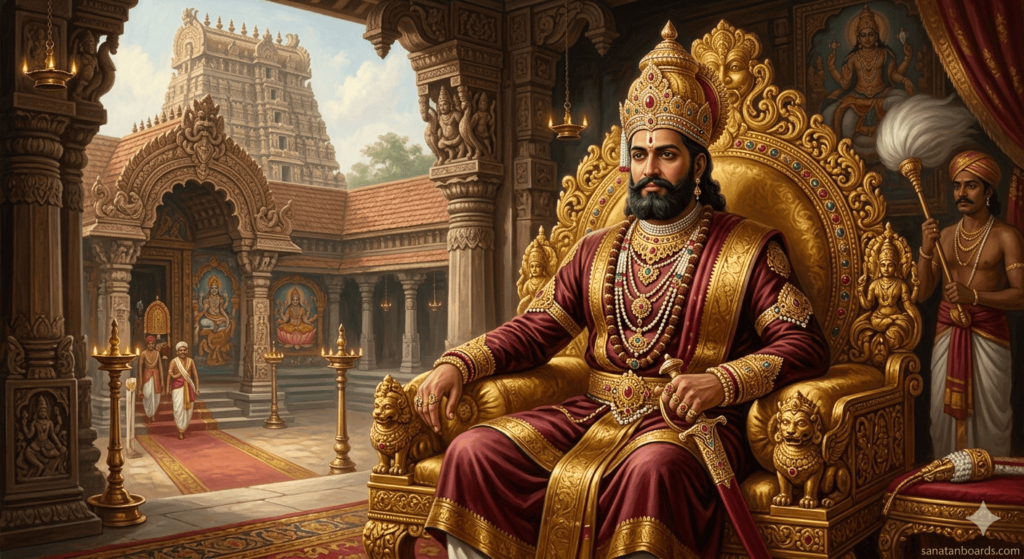
What Is Martanda Varma (Travancore) ?
Martanda Varma (Travancore) was the founder and architect of the modern Travancore kingdom — an influential and unified political entity in southern India during the 18th century. He was born in 1706 and ascended to the throne in 1729 as the ruler of a fragmented territory then called Venad. Through a mix of strategic diplomacy, military force, and administrative reform, he laid the bedrock for Travancore’s emergence as a significant regional power.
At the time of his accession, local power structures were weakened by internal rivalries among feudal lords and external threats from European colonial interests eager to dominate the lucrative spice trade. Marthanda Varma systematically reduced the influence of regional nobles and centralized power, building one of the first standing armies in the region, trained in European methods and equipped with modern weaponry. This army enabled him to secure victory against both internal foes and external powers, most notably the Dutch.
Marthanda Varma’s strategic foresight extended beyond warfare; he introduced administrative reforms that strengthened governance. He streamlined revenue systems, bolstered internal security, and promoted infrastructural development; this included canals, roads, and irrigation systems that facilitated economic growth. His policies on foreign trade positioned Travancore as a key participant in Indian Ocean commerce, particularly by regulating the pepper trade — a commodity of global significance.
Culturally, Marthanda Varma also reaffirmed religious patronage by formalizing the kingdom’s spiritual association with the Padmanabhaswamy Temple in Thiruvananthapuram. By dedicating his realm to the presiding deity and ruling as “vice‑regent,” he created a unique fusion of theocratic authority and statecraft.
Who Is Required Martanda Varma (Travancore) ?
The phrase “who is Martanda Varma (Travancore)” refers to identifying the person and historical role of this ruler. Martanda Varma was Anizham Thirunal Marthanda Varma — the Maharaja of Travancore from 1729 to 1758 — and is remembered as a remarkable king and visionary leader who reshaped the political, military, and socio‑economic landscape of the kingdom.
He belonged to the Kulasekhara dynasty and inherited a fragmented and unstable feudal state known as Venad. Despite the surrounding threats — from competing local nobles to encroaching European forces — he succeeded in unifying and centralizing authority. His leadership qualities — courage, strategic foresight, resolute decision‑making, and ability to navigate complex diplomatic landscapes — made him essential to Travancore’s rise.
As a leader, Martanda Varma was both a warrior and administrator. Militarily, he is best known for the decisive Battle of Colachel against the Dutch East India Company in 1741 — a rare defeat of a European colonial power by an Indian ruler in that period. This victory safeguarded Travancore’s autonomy and ensured its strategic control over regional trade.
Administratively, he instituted reforms that dismantled outdated feudal structures and established a strong bureaucracy. By organizing a standing army, reforming revenue systems, and encouraging infrastructural development, he strengthened Travancore’s internal stability and external influence. His ability to blend traditional authority with progressive reforms made him indispensable to the kingdom’s success.
Thus, Martanda Varma is required — or considered necessary — in history because his leadership catalyzed the transformation of a fragmented region into one of India’s most influential and cohesive principalities.
When Martanda Varma (Travancore) Is Required ?
Martanda Varma (Travancore) was required — that is, his leadership became historically necessary — during the early 18th century, at a time of severe political instability and external pressures in southern India. When he ascended the throne in 1729, the region that later became Travancore was known as Venad, a fragmented and feudal territory beset by internecine rivalries among powerful regional lords and aristocratic clans. These local elites, including the Ettuveetil Pillamar and Yogakkar councils, held disproportionate power and often undermined royal authority. The absence of a unified central administration weakened the state, making it susceptible to internal disorder and foreign intervention.
At the same time, European colonial powers were aggressively expanding their influence along the Indian Ocean trade routes. The Dutch East India Company (VOC), in particular, sought to dominate the lucrative spice trade along the Malabar Coast. This directly threatened the economic autonomy of local rulers and jeopardized the region’s long‑standing commercial networks. The Dutch were not merely traders but wielded military power to enforce monopolies and political concessions. The Kingdom of Venad lacked the military strength or unified governance to resist such encroachments on its own.
In this context, Martanda Varma’s rise was pivotal. His leadership was required to stabilize and centralize political authority, wrest control from overmighty nobles, and organize a capable military force. Rather than relying on traditional feudal levies and fragmented alliances, he built a substantial standing army on European lines. This new army, estimated at about 50,000 troops, enabled him to confront both internal factionalism and external threats effectively.
One of the most defining moments that marked when his leadership was crucially needed was the Travancore–Dutch War (1739–1753). The war culminated in the Battle of Colachel in 1741, where his forces achieved one of India’s earliest victories against a European colonial power. This triumph not only safeguarded the sovereignty of his kingdom but also marked a turning point in the regional struggle against European domination in trade and politics.
Throughout the 1730s to the 1750s, therefore, Martanda Varma’s reign was required to confront a volatile political landscape, unify disparate factions, defend territorial integrity, and transform a weak feudal polity into a powerful and centralized kingdom. His rule was a response to a historical moment that demanded military innovation, administrative reform, and diplomatic acumen — and successfully delivered it.
Where Martanda Varma (Travancore) Is Required ?
Martanda Varma (Travancore) was required primarily in the region of southern Kerala and the southernmost tip of India, an area historically referred to as Venad prior to his consolidation of power. Geographically, this region encompassed the coastal lowlands, central midlands, and eastern highland terrains between Kanyakumari in the south and the strategic borders near Cochin (Kochi) in the north.
This territory was significant for several reasons. First, it lay along the west coast of the Indian subcontinent, adjacent to major maritime trade routes across the Indian Ocean. The coastal belt was historically central to the spice trade, particularly black pepper, which attracted European powers such as the Dutch and later the British. Control over this trade meant economic influence, revenue, and strategic leverage — and it was precisely in this geographic corridor that Martanda Varma’s leadership became vitally needed.
Second, the region’s internal political configuration — with powerful feudal lords controlling distinct local territories — meant that a strong central authority was necessary within this landscape to bring competing factions under unified governance. Prior to Martanda Varma’s reign, the absence of centralized rule in this area resulted in political fragmentation, which the Ettuveetil Pillamar and other aristocratic councils exploited to assert disproportionate influence, limiting the ruler’s effective control. His ascension marked the beginning of political consolidation across these territories.
The battlefields and fortresses in this region were also where Martanda Varma’s military reforms were crucial. For example, the Battle of Colachel in 1741, fought near the western coastal town of Colachel, was not just a military engagement but a geographic assertion of Travancore’s sovereignty over Dutch colonial ambitions. Defeating the Dutch in this specific locale disrupted their plans to control the spice trade and shifted the balance of power in the broader South Indian context.
Additionally, the region’s administrative heart, which later became Thiruvananthapuram (Trivandrum), grew in importance during his rule. Martanda Varma made this city a focal point of governance, economic activity, and religious patronage, linking urban development with territorial administration across southern Kerala.
How Martanda Varma (Travancore) Is Required ?
Martanda Varma (Travancore) was required to transform a fragmented kingdom into a unified and powerful state through strategic, military, administrative, and diplomatic measures. His methods were innovative for 18th-century South India, combining traditional authority with modern techniques.
Military Consolidation
Martanda Varma recognized that Travancore’s survival depended on a strong army. He created a standing army trained on European lines, incorporating modern weapons and disciplined regiments. He reduced the influence of rebellious local nobles by integrating their forces under royal command. This army enabled him to defeat the Dutch East India Company at the Battle of Colachel (1741) — a historical milestone that demonstrated the kingdom’s capability to resist European colonial aggression. (en.wikipedia.org)
Administrative Reforms
To centralize governance, Martanda Varma dismantled feudal structures that allowed local lords excessive power. He implemented a hierarchical revenue and taxation system, ensuring the crown collected resources efficiently. The king also established reliable bureaucratic mechanisms to oversee justice, trade, and public order. By enforcing consistent governance across his territory, he created stability and legitimacy for his rule. (studypage.in)
Economic Measures
Marthanda Varma leveraged the kingdom’s strategic position in the spice trade. By regulating black pepper and other commodities, he ensured Travancore’s economic independence while generating state revenue. He promoted infrastructure such as roads and irrigation systems, facilitating trade and agricultural productivity. (en.wikipedia.org)
Religious Patronage and Political Legitimacy
A unique aspect of his strategy was dedicating Travancore to Sri Padmanabhaswamy, ruling as the deity’s vice-regent. This fusion of religion and politics enhanced legitimacy, reduced opposition from nobles, and strengthened loyalty among subjects. By invoking spiritual authority, he reinforced centralized governance without constant coercion
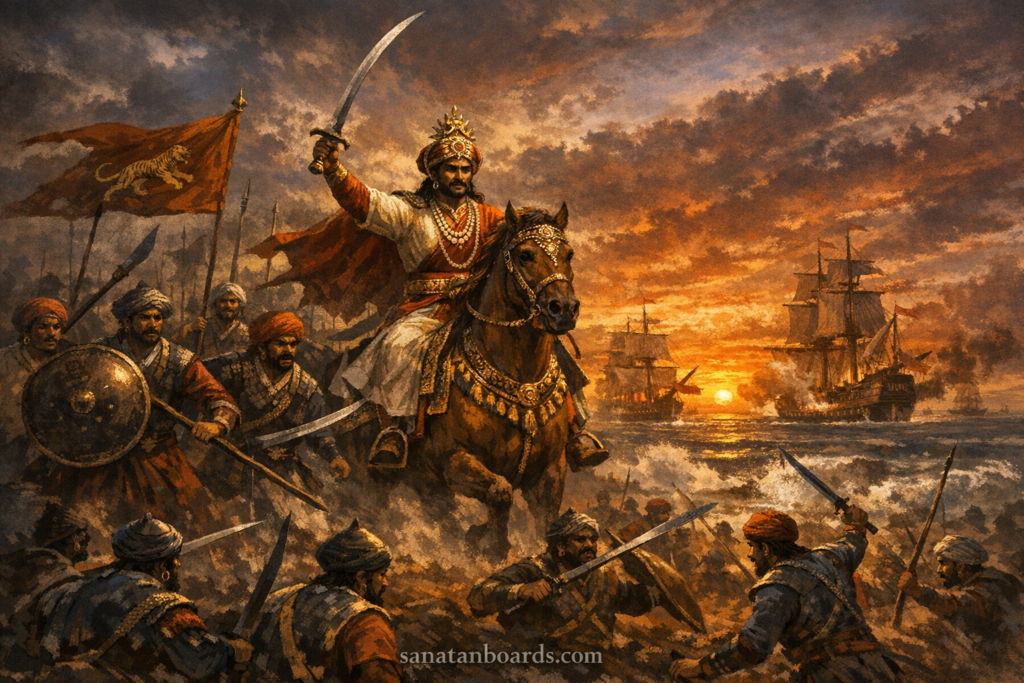
Case Study On Martanda Varma
Background
In the early 18th century, the Kingdom of Venad faced severe challenges. Feudal lords controlled key regions, and European powers, particularly the Dutch East India Company, sought dominance over the spice trade. Internal strife and external threats left the kingdom vulnerable. (en.wikipedia.org)
Ascension to Power
Born in 1706, Marthanda Varma ascended to the throne in 1729. Facing opposition from Ettuveetil Pillamar, he systematically neutralized their influence, often through military campaigns and strategic alliances. By consolidating power, he ensured a centralized authority capable of implementing reforms and defending the state.
Military Reforms and the Battle of Colachel
Martanda Varma reorganized the army, introducing European training methods and modern weaponry. His forces confronted the Dutch at Colachel in 1741, marking one of the earliest victories of an Indian ruler over a European power. This battle not only demonstrated military strategy and discipline but also secured Travancore’s sovereignty and control over the spice trade. (en.wikipedia.org)
Administrative Centralization
He implemented reforms to centralize governance. By abolishing feudal privileges, introducing revenue systems, and standardizing administration, he strengthened the kingdom’s internal stability. Travancore became an efficient, well-governed state, capable of sustaining military campaigns and economic growth. (studypage.in)
Economic and Trade Policies
Travancore under Martanda Varma leveraged its strategic location. Regulating the pepper trade and improving infrastructure, he ensured economic independence. Roads, irrigation projects, and improved marketplaces strengthened internal trade networks. European merchants were carefully managed, balancing foreign influence with local control. (en.wikipedia.org)
Religious Patronage
Martanda Varma dedicated Travancore to Sri Padmanabhaswamy, ruling as the deity’s representative. This fusion of spiritual and political authority minimized dissent, reinforced loyalty, and legitimized reforms. Temples became centers of administration and cultural identity. (en.wikipedia.org)
Impact and Legacy
The case study demonstrates how strategic leadership, military innovation, administrative reform, and religious legitimacy combined to create a resilient kingdom. Martanda Varma’s policies ensured Travancore remained politically stable, economically #sanatanaccreditationboardinmumbai prosperous, and militarily secure for decades. His governance model influenced subsequent rulers and set benchmarks in South Indian history for centralized statecraft.
White Paper On Martanda Varma
Executive Summary
Martanda Varma (Travancore), also known as Anizham Thirunal Marthanda Varma, reigned from 1729 to 1758 and is recognized as the architect of modern Travancore. His leadership transformed a fragmented feudal region into a centralized, militarily capable, and economically prosperous kingdom. This white paper analyzes his military, administrative, economic, and socio-religious strategies and evaluates their long-term historical impact.
Introduction
Prior to Marthanda Varma’s reign, Venad (southern Kerala) was politically unstable. The Ettuveetil Pillamar and other regional lords exercised disproportionate influence, often undermining royal authority. External threats from the Dutch East India Company further endangered the kingdom’s sovereignty. The white paper objective is to detail how Martanda Varma’s leadership addressed these challenges and established Travancore as a model of 18th-century governance. (en.wikipedia.org)
Military Strategy and Defense
Martanda Varma’s foremost priority was military modernization. He:
- Created a standing army trained on European lines.
- Equipped troops with modern weaponry including firearms and artillery.
- Conducted strategic campaigns against rebellious nobles and foreign powers.
Case in point: The Battle of Colachel (1741) was a strategic masterstroke. Marthanda Varma’s forces defeated the Dutch East India Company, marking one of the earliest instances of an Indian ruler defeating a European colonial power. This not only ensured sovereignty but also secured control over spice trade routes. (en.wikipedia.org)
Administrative Reforms
Marthanda Varma implemented systematic governance reforms:
- Centralization of power: Reduced feudal autonomy by integrating lords’ authority into royal command.
- Revenue system: Established efficient taxation mechanisms to increase state funds.
- Bureaucracy: Created a reliable administrative structure for law enforcement, justice, and trade oversight.
These measures fostered political stability and enabled Travancore to manage internal and external challenges effectively. (studypage.in)
Economic and Trade Policies
Travancore’s economic growth under Martanda Varma focused on:
- Spice trade management: Regulating black pepper exports ensured revenue and reduced foreign exploitation.
- Infrastructure development: Roads, canals, and irrigation projects facilitated commerce and agriculture.
- Market regulation: Encouraged local production and balanced European merchant influence.
This economic strategy reinforced the kingdom’s independence and allowed sustained funding for military and administrative reforms. (en.wikipedia.org)
Religious and Cultural Integration
Martanda Varma adopted the Padmanabhaswamy Temple-centric model, ruling as the deity’s vice-regent. Benefits included:
- Legitimization of authority: Reduced dissent from nobles and subjects.
- Cultural unity: Temples became administrative and cultural hubs.
- Moral governance: Spiritual patronage strengthened the kingdom’s social cohesion.
This fusion of religious authority and political governance ensured loyalty and long-term stability. (en.wikipedia.org)
Impact and Legacy
Martanda Varma’s reign:
- Stabilized southern Kerala politically and militarily.
- Established Travancore as a powerful, centralized kingdom.
- Set benchmarks in administrative efficiency, military innovation, and economic management.
- Inspired successors and influenced regional governance in 18th-century South India.
Conclusion: Martanda Varma exemplifies how visionary leadership, when combined with strategic military, administrative, and cultural integration, #Sanatandharmaaccreditationboardsinmumbai can transform a fragmented region into a cohesive, prosperous, and enduring polity.
Industry Application On Martanda Varma
Although Martanda Varma’s achievements are rooted in 18th-century history, his strategies, reforms, and leadership principles have broader applications that can inform modern industries and organizational practices. These lessons are drawn from his military, administrative, economic, and cultural policies.
1. Military and Strategic Management
- Application: Modern defense and security organizations can study his army reorganization and strategic deployment.
- Lesson: Building a well-trained, disciplined, and technologically adaptive workforce ensures readiness to respond to complex challenges.
- Example: His victory over the Dutch East India Company at Colachel illustrates strategic planning, intelligence gathering, and decisive execution — concepts applicable to modern corporate strategy and risk management.
2. Administrative Efficiency
- Application: Government agencies, corporate enterprises, and public institutions can emulate his centralized governance model.
- Lesson: Streamlining bureaucracy, reducing redundant authority, and creating clear reporting structures improves efficiency.
- Example: His systematic taxation and revenue systems provide a historical framework for resource management and operational optimization in large organizations.
3. Economic and Trade Strategy
- Application: Supply chain management, trade organizations, and export-import businesses can learn from his trade regulation and infrastructure planning.
- Lesson: Monitoring resources, controlling key economic commodities, and investing in infrastructure boosts sustainable growth.
- Example: Travancore’s regulation of the spice trade parallels modern strategies in market control, risk mitigation, and trade diversification.
4. Cultural and Leadership Integration
- Application: Leaders in multinational organizations or community-driven projects can study his religious and cultural legitimacy strategies.
- Lesson: Aligning organizational goals with cultural or social values fosters loyalty, cohesion, and motivation.
- Example: Martanda Varma’s governance under the Padmanabhaswamy Temple demonstrates value-driven leadership, similar to modern corporate social responsibility (CSR) initiatives.
5. Crisis Management and Conflict Resolution
- Application: Public policy experts and corporate leaders can analyze his approach to internal rebellion and external threats.
- Lesson: Anticipating risks, deploying resources effectively, and maintaining morale are key to overcoming crises.
- Example: His handling of feudal uprisings and Dutch incursions illustrates #Sanatandharmaaccreditationboardsinkerala proactive leadership and adaptive problem-solving, applicable to both political and corporate crises.
SOURCE : TFIPost
ASK FAQ
Who was Martanda Varma of Travancore?
Martanda Varma (1706–1758) was the Maharaja of Travancore who transformed the fragmented Venad kingdom into a centralized, powerful state and is known for defeating the Dutch at the Battle of Colachel.
What were the major achievements of Martanda Varma?
His key achievements include military reforms, victory over the Dutch, administrative centralization, economic growth through spice trade regulation, and dedicating Travancore to the Padmanabhaswamy Temple.
When did Martanda Varma rule Travancore?
Martanda Varma ruled Travancore from 1729 to 1758, a period marked by military victories, administrative reforms, and territorial expansion.
Why is Martanda Varma important in Indian history?
He is important for unifying southern Kerala, defeating European colonial forces, modernizing governance, and laying the foundation for Travancore’s prosperity and stability.
How did Martanda Varma strengthen Travancore?
He strengthened Travancore by building a standing army, centralizing administration, reforming revenue systems, controlling trade, and integrating religious and political authority for legitimacy.
Table of Contents
Disclaimer
The content provided in this blog is intended solely for historical, educational, and informational purposes. All facts, interpretations, and analyses are based on historical records, scholarly research, and documented sources regarding Martanda Varma and the Kingdom of Travancore.
This material does not constitute professional, legal, financial, or academic advice, and readers are encouraged to consult primary historical sources, academic publications, and expert analyses for in-depth study or scholarly work. While care has been taken to ensure accuracy, the author and publisher do not accept liability for any errors, omissions, or interpretations arising from the use of this information.