Maharaja Chhatrasal was one of the most courageous and visionary warriors in Indian history, known for his resistance against the Mughal Empire and his role in establishing an independent kingdom in Bundelkhand. Born in 1649, he emerged during a time when the Mughal Empire was at its peak under Emperor Aurangzeb, and regional rulers were struggling to maintain autonomy. Despite these challenges, Maharaja Chhatrasal displayed extraordinary leadership, military intelligence, and determination from a young age.
Bundelkhand, a region rich in culture and heritage, was under constant pressure from Mughal expansion. Chhatrasal, inspired by the ideals of freedom and self-rule, initiated a rebellion against Mughal authority. His early life was marked by struggle and hardship, but these experiences shaped him into a resilient leader. He is often compared to great contemporaries like Shivaji Maharaj for his guerrilla warfare tactics and his ability to mobilize local support.
Maharaja Chhatrasal not only fought battles but also worked towards building a stable and prosperous state. He encouraged art, culture, and religion, making Bundelkhand a center of spiritual and cultural growth. His alliance with the Marathas further strengthened his position and helped him expand his territory.
His legacy continues to inspire generations, especially in central India where he is remembered as a symbol of bravery, independence, and justice. The story of Maharaja Chhatrasal is not just about warfare but also about leadership, resilience, and the pursuit of freedom.
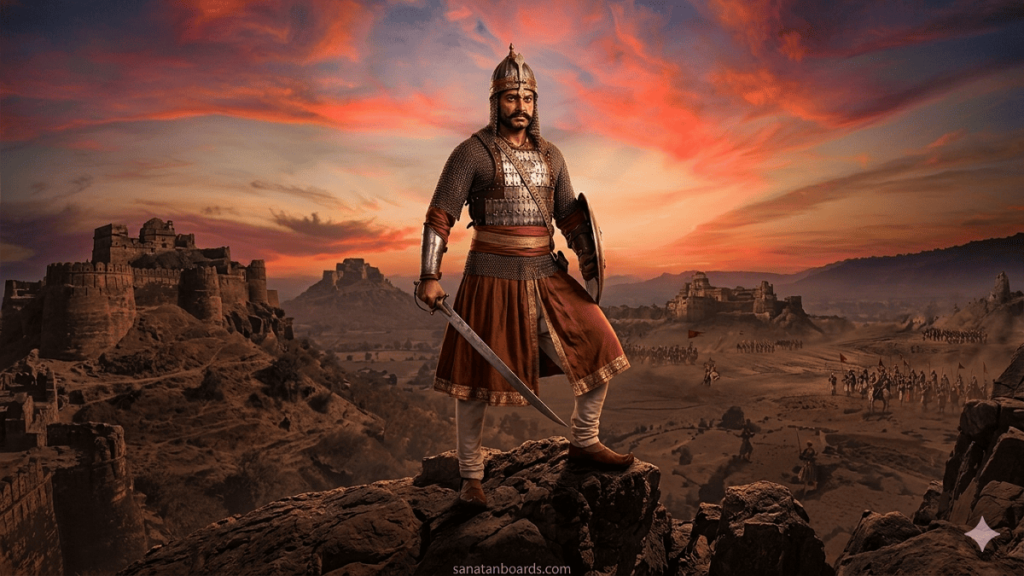
What Is Maharaja Chhatrasal (Bundelkhand) ?
Maharaja Chhatrasal (Bundelkhand) represents a historical figure, a legacy, and a symbol of resistance against imperial dominance. He was the founder of the Bundela kingdom in Bundelkhand and played a significant role in weakening Mughal control in central India during the late 17th and early 18th centuries.
The term “Maharaja Chhatrasal (Bundelkhand)” is often used to describe not just the individual but also the political and cultural movement he led. It signifies the rise of regional powers during the decline of the Mughal Empire. His leadership marked a shift from centralized imperial rule to localized governance, where rulers focused on protecting their land, culture, and people.
Chhatrasal’s reign is characterized by his strategic warfare techniques, particularly guerrilla tactics, which allowed him to defeat larger and more powerful Mughal forces. His ability to unite local communities and warriors under a common cause made him a formidable leader.
In a broader sense, Maharaja Chhatrasal (Bundelkhand) stands as a case study of leadership under adversity. His life demonstrates how determination, strategic planning, and strong values can lead to the establishment of a powerful and independent state.
Today, his name is associated with bravery, patriotism, and regional pride. Educational institutions, infrastructure, and cultural programs in India often honor his contributions. His story is widely studied in history to understand the dynamics of resistance movements and regional power formation.
Who Is Required Maharaja Chhatrasal (Bundelkhand)
The relevance of Maharaja Chhatrasal (Bundelkhand) extends across multiple groups, including students, historians, policymakers, and leadership enthusiasts. His life and achievements provide valuable insights into governance, military strategy, and social organization.
For students, especially those studying Indian history, Maharaja Chhatrasal serves as an important figure in understanding the resistance against Mughal rule. His strategies and leadership qualities offer lessons in courage, decision-making, and perseverance.
Historians and researchers require the study of Maharaja Chhatrasal (Bundelkhand) to analyze the transition period of Indian history when regional powers began to rise. His alliances, conflicts, and administrative policies provide a deeper understanding of political dynamics during that era.
Leadership professionals and management learners can draw inspiration from his ability to build a kingdom from limited resources. His approach to problem-solving, team-building, and long-term vision is relevant even in modern organizational contexts.
For policymakers, his governance model highlights the importance of local leadership, cultural preservation, and community engagement. His rule demonstrates how decentralized governance can effectively address regional needs.
Additionally, the general public benefits from learning about Maharaja Chhatrasal as it fosters a sense of cultural identity and pride. His story encourages individuals to stand against injustice and work towards collective progress.
Thus, Maharaja Chhatrasal (Bundelkhand) is not limited to historical study but is relevant to anyone seeking inspiration in leadership, resilience, and nation-building.
When Maharaja Chhatrasal (Bundelkhand) Is Required?
The importance of Maharaja Chhatrasal (Bundelkhand) becomes particularly evident during discussions related to historical resistance movements, leadership studies, and regional identity. His legacy is required whenever there is a need to understand how individuals can challenge powerful systems and bring about change.
In academic contexts, his contributions are essential when studying the decline of the Mughal Empire. His resistance against Aurangzeb’s rule highlights the weakening grip of centralized authority and the rise of regional powers. This period is crucial for understanding the transformation of India’s political landscape.
Maharaja Chhatrasal is also relevant in discussions about military strategy. His use of guerrilla warfare, similar to that of Maratha leaders, demonstrates how smaller forces can effectively counter larger armies. His strategies are studied in defense and military education for their practical application.
In modern times, his story is required when discussing leadership under adversity. Organizations and institutions often look for examples of individuals who have succeeded despite challenges. Chhatrasal’s journey from a struggling warrior to a powerful king serves as a powerful example.
His legacy is also important during cultural and regional celebrations, especially in Bundelkhand. Events, festivals, and public programs often commemorate his contributions, reinforcing cultural identity and historical awareness.
Furthermore, Maharaja Chhatrasal is relevant in discussions about alliances and diplomacy. His collaboration with the Marathas shows the importance of strategic partnerships in achieving common goals.
Where Maharaja Chhatrasal (Bundelkhand) Is Required ?
Maharaja Chhatrasal (Bundelkhand) holds significance across various domains and geographical contexts. His influence is most prominent in the Bundelkhand region, which spans parts of present-day Madhya Pradesh and Uttar Pradesh. Here, he is regarded as a legendary figure whose contributions shaped the region’s identity and history.
In educational institutions, his story is included in history curricula to provide students with an understanding of regional resistance movements. Schools and universities use his life as a case study to explain the dynamics of power, leadership, and governance.
Cultural platforms and heritage sites also highlight his importance. Monuments, forts, and temples associated with his reign serve as reminders of his legacy. These locations attract historians, tourists, and researchers interested in exploring India’s past.
Maharaja Chhatrasal is also relevant in leadership training programs and management studies. His ability to build alliances, manage resources, and lead effectively is studied in both academic and corporate environments.
In media and literature, his life is portrayed through books, documentaries, and dramas. These representations help in preserving his story and making it accessible to a wider audience.
Government and policy-making institutions also refer to historical figures like Maharaja Chhatrasal to draw lessons in governance and administration. His focus on local development and cultural preservation is particularly relevant in today’s decentralized governance models.
Additionally, his influence extends to public discourse, where he is often cited as an example of bravery and resilience. His story is used to प्रेरणा (inspiration) people to stand up against injustice and work towards societal progress.
How Maharaja Chhatrasal (Bundelkhand) Is Required ?
Maharaja Chhatrasal (Bundelkhand) is required as a model of effective leadership, strategic thinking, and resilience. His life provides a framework for understanding how individuals can overcome challenges and achieve success through determination and planning.
One of the key ways in which he is relevant is through his military strategies. His use of guerrilla warfare allowed him to defeat stronger opponents, demonstrating the importance of adaptability and innovation. These principles are applicable in modern military and business strategies.
His leadership style is another important aspect. He was known for his ability to inspire and unite people under a common cause. This quality is essential in today’s organizational and political environments, where teamwork and collaboration are crucial.
Maharaja Chhatrasal also emphasized the importance of alliances. His partnership with the Marathas strengthened his position and helped him expand his kingdom. This highlights the value of strategic partnerships in achieving long-term goals.
In governance, his approach focused on justice, cultural preservation, and development. His policies ensured stability and prosperity in his kingdom, making him a respected ruler. These principles are still relevant in modern governance systems.
His life is also required as a source of inspiration. His journey from adversity to success motivates individuals to pursue their goals despite challenges. His story teaches the importance of perseverance, courage, and vision.
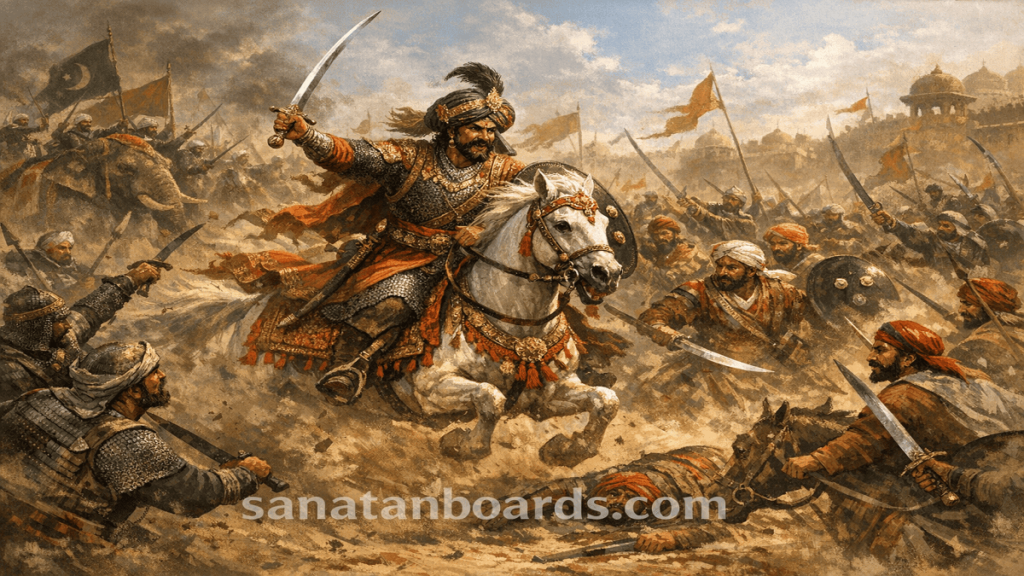
Case Study On Maharaja Chhatrasal (Bundelkhand)
Maharaja Chhatrasal stands as a remarkable case study in leadership, resilience, and strategic state-building during one of the most turbulent periods in Indian history. Born in 1649 in Bundelkhand, he grew up witnessing the dominance of the Mughal Empire under Aurangzeb and the struggles faced by regional rulers. Inspired by the vision of independence and self-rule, Chhatrasal decided to challenge Mughal authority despite limited resources.
In the early phase of his struggle, he faced significant challenges, including a lack of financial support, a small army, and powerful opposition. However, he turned these disadvantages into strengths by adopting unconventional warfare techniques. His use of guerrilla tactics—swift attacks, knowledge of local terrain, and strategic retreats—allowed him to defeat larger Mughal forces. This approach not only ensured survival but gradually expanded his influence across Bundelkhand.
A key turning point in his journey was his alliance with Peshwa Bajirao I. This collaboration strengthened his military capabilities and enabled him to secure his territories more effectively. It also highlighted his ability to recognize the importance of strategic partnerships in achieving long-term objectives.
Chhatrasal’s leadership extended beyond warfare. He focused on establishing a stable administrative system that promoted economic growth and social harmony. Agriculture, trade, and local industries were encouraged, ensuring prosperity within his kingdom. His governance emphasized justice, fairness, and respect for cultural and religious diversity, which strengthened public trust and loyalty.
Despite continuous threats from the Mughal Empire, Chhatrasal demonstrated resilience and adaptability. He was not only a warrior but also a visionary leader who understood the importance of sustainable development and cultural preservation.
This case study highlights several key lessons: the importance of strategic thinking, the value of alliances, the effectiveness of adaptive leadership, #maharajachhatrasalinbundelkhand and the role of strong governance in ensuring long-term success. Maharaja Chhatrasal’s life illustrates how determination and innovation can overcome even the most formidable challenges.
White Paper On Maharaja Chhatrasal (Bundelkhand)
Maharaja Chhatrasal (Bundelkhand) represents a pivotal figure in the transformation of India’s political landscape during the late 17th and early 18th centuries. This white paper provides a structured analysis of his strategies, governance model, and long-term impact on regional and national history.
During the reign of Aurangzeb, the Mughal Empire maintained strong centralized control. However, this period also witnessed the rise of regional resistance movements. Chhatrasal emerged as a key leader in this transformation, challenging imperial authority and establishing an independent kingdom in Bundelkhand.
His military strategy was based on flexibility and efficiency. Instead of engaging in large-scale conventional battles, he relied on guerrilla warfare. This included surprise attacks, mobility, and the use of local geography to his advantage. Such tactics minimized losses while maximizing impact, making them highly effective against larger forces.
Another significant aspect of his success was his focus on local support. By maintaining strong relationships with local communities, he ensured a steady supply of resources and manpower. This grassroots support was crucial in sustaining his campaigns over a long period.
Chhatrasal’s alliance with Peshwa Bajirao I further strengthened his position. This partnership not only provided military assistance but also demonstrated the importance of collaboration among regional powers. It reflected a broader trend of decentralized governance and collective resistance against imperial dominance.
In terms of administration, Chhatrasal implemented policies that promoted economic stability and social welfare. Agriculture and trade were prioritized, ensuring a stable revenue system. His emphasis on justice and inclusivity created a harmonious society, which contributed to the long-term stability of his kingdom.
The impact of Maharaja Chhatrasal extends beyond his lifetime. His efforts weakened Mughal control in central India and paved the way for the rise of other regional powers. His legacy continues to influence discussions on leadership, governance, and strategic planning.
This white paper concludes that Maharaja Chhatrasal’s success was the result of a combination of military innovation, strategic alliances, and effective governance. #Sanatandharmaaccreditationboardsinbundelkhand His model remains relevant in modern contexts, offering valuable insights for policymakers, business leaders, and strategists.
Industry Application On Maharaja Chhatrasal (Bundelkhand)
The principles derived from Maharaja Chhatrasal have wide-ranging applications across modern industries. His life and strategies provide a framework that can be adapted to leadership, management, defense, and organizational development.
In the corporate and business sector, Chhatrasal’s approach to leadership is highly relevant. He demonstrated the ability to lead under pressure, make strategic decisions, and inspire people toward a common goal. Modern business leaders can learn from his resilience and adaptability, especially in competitive and uncertain environments. His emphasis on long-term vision over short-term gains aligns with sustainable business practices.
In strategic management, his use of guerrilla warfare can be compared to disruptive innovation. Startups and smaller companies often compete with larger corporations by using innovative and unconventional strategies. Chhatrasal’s tactics show how agility and creativity can overcome resource limitations.
The defense and military sector continues to study similar strategies used by leaders like Chhatrasal. His emphasis on mobility, intelligence, and terrain advantage is relevant in modern warfare. Military institutions analyze such historical examples to develop training programs and strategic frameworks.
In public administration, his governance model provides insights into decentralized leadership. He focused on local development, cultural preservation, and community engagement. Governments today can apply these principles to ensure inclusive growth and effective policy implementation.
The education sector also benefits from his legacy. His life is used as a case study to teach leadership, history, and ethics. Educational institutions incorporate such examples to help students understand real-world applications of theoretical concepts.
In human resource management, his ability to unite diverse groups under a common cause highlights the importance of team-building and motivation. Organizations can adopt similar approaches to enhance employee engagement and productivity.
In international relations and diplomacy, his alliance with Peshwa Bajirao I demonstrates the importance of strategic partnerships. Countries and organizations today rely on alliances to achieve mutual goals and address global challenges.
Overall, Maharaja Chhatrasal (Bundelkhand) provides a #Sanatandharmaaccreditationboardsinmumbai timeless model that can be adapted across industries. His principles of leadership, innovation, and collaboration remain relevant in addressing modern challenges.
source : PanchtantraOne
ASK FAQ
Who was Maharaja Chhatrasal (Bundelkhand)?
Maharaja Chhatrasal was a महान warrior and king who founded an independent kingdom in Bundelkhand during the Mughal period. He is known for his bravery, leadership, and resistance against Mughal rule.
Why is Maharaja Chhatrasal (Bundelkhand) famous?
Maharaja Chhatrasal is famous for his successful rebellion against Aurangzeb and for establishing a strong and independent Bundela kingdom. His guerrilla warfare tactics and leadership made him a legendary figure.
What was the contribution of Maharaja Chhatrasal (Bundelkhand)?
His major contribution includes weakening Mughal control in central India, promoting regional independence, and building a stable administration that supported agriculture, culture, and economic growth.
Which alliance helped Maharaja Chhatrasal (Bundelkhand) grow his power?
His alliance with Peshwa Bajirao I significantly strengthened his military power and helped him expand and protect his kingdom effectively.
What lessons can be learned from Maharaja Chhatrasal (Bundelkhand)?
His life teaches leadership, courage, strategic thinking, resilience, and the importance of alliances—valuable lessons for students, leaders, and professionals today.
Table of Contents
Disclaimer
This content on MAHARAJA CHHATRASAL (BUNDELKHAND) is intended for general informational, learning, and knowledge-sharing purposes. The information presented is based on historical records, interpretations, and commonly available sources, which may vary across different historians and references.
While every effort has been made to ensure accuracy and relevance, this content does not claim to be exhaustive or free from errors or omissions. Readers are encouraged to cross-reference with additional sources for a more detailed and comprehensive understanding of the subject.
This material does not intend to promote any bias, misinterpretation, or distortion of historical facts. It is designed solely to provide structured insights and enhance understanding of the topic. Any resemblance to differing viewpoints is coincidental and reflects the diversity of historical perspectives.