Lack Quality Medical Access Among Poor Sanatani
Lack of Quality Medical Access Among Poor Sanatanis (Hindus) – Causes & Solutions
Access to quality healthcare is a major issue for poor Sanatanis (Hindus), especially in rural and economically weaker sections. Many factors contribute to this problem, from government policies to lack of infrastructure and awareness.
1. Causes of Poor Medical Access Among Sanatanis
A. Economic & Financial Barriers
- High Medical Costs: Many poor Hindu families cannot afford private hospitals, surgeries, or specialized treatments.
- Limited Government Support: Government schemes like Ayushman Bharat primarily benefit registered individuals, leaving out many deserving poor Hindus.
- Job Insecurity & No Insurance: Many work in unorganized sectors without health insurance or medical benefits.
B. Lack of Infrastructure & Services
- Shortage of Hospitals in Rural Areas: Many villages lack proper healthcare centers or doctors, forcing people to travel long distances.
- Poor Condition of Government Hospitals: Many government hospitals suffer from a lack of doctors, medicines, and hygiene.
- Private Hospitals Are Expensive: Good private hospitals are often unaffordable for the poor.
C. Government & Policy Issues
- Unequal Distribution of Healthcare Benefits: Special schemes exist for minorities, but poor Hindus often lack exclusive healthcare support.
- Reservation in Medical Colleges: Many poor Hindus, especially from general category backgrounds, struggle to access medical education and become doctors.
D. Social & Cultural Barriers
- Lack of Awareness: Many people rely on traditional healers instead of modern medicine due to misinformation.
- Religious & Caste-Based Discrimination: Some backward communities within Hindu society face neglect in accessing medical services.
2. Effects of Poor Medical Access
- Higher Mortality Rates: Lack of timely medical care leads to preventable deaths, especially among children and pregnant women.
- Rise in Chronic Diseases: Many poor Sanatanis suffer from untreated diseases like diabetes, tuberculosis, and heart problems.
- Debt Trap Due to Medical Expenses: Many families take loans for medical treatment, pushing them further into poverty.
- Vulnerability to Religious Conversion: Many poor Hindus receive free medical care from Christian missionary hospitals, making them vulnerable to religious conversion.
3. Solutions to Improve Medical Access for Poor Sanatanis
A. Government Reforms & Policies
- Free or Subsidized Healthcare for All Poor: Implement income-based, not caste-based, medical benefits.
- More Hospitals in Rural Areas: Build well-equipped government hospitals in villages and small towns.
- Affordable Insurance for the Poor: Expand health insurance schemes for all economically weaker Hindus.
B. Community & Social Initiatives
- Hindu Organizations Should Open Hospitals: Temples and Hindu trusts should establish free or low-cost hospitals like missionaries do.
- Charity-Based Medical Funds: Wealthy Hindus should contribute to medical aid funds for the underprivileged.
- Mobile Healthcare Units: Deploy mobile clinics in remote areas for basic checkups and treatments.
C. Awareness & Self-Help Measures
- Encourage Hindu Youth to Become Doctors: More poor Hindu students should get scholarships for medical education.
- Promote Ayurveda & Traditional Medicine: Integrate it with modern medicine for cost-effective healthcare.
- Health Camps & Free Checkups: Conduct regular health checkup camps in rural Hindu communities.
Conclusion
The lack of medical access for poor Sanatanis is a serious issue that needs government attention, community action, and self-empowerment. Hindu organizations, temples, and individuals should build hospitals, support medical education, and spread health awareness to ensure better medical access for all.
A Comprehensive Analysis of the Lack of Quality Medical Access Among Poor Sanatanis (Hindus) – Causes, Consequences, and Civilizational Imperatives
Abstract: This exhaustive treatise delves into the multifaceted crisis of quality healthcare access for economically disadvantaged adherents of Sanatana Dharma (Hinduism). It systematically dissects the structural, economic, socio-political, and cultural causes, maps the devastating multi-generational consequences, and proposes a comprehensive framework of solutions rooted in policy reform, community resurgence, and civilizational self-reliance. The analysis highlights how this deprivation is not merely a public health failure but a profound civilizational vulnerability, with implications for demography, social cohesion, and spiritual integrity.
I. Introduction: The Anatomy of a Silent Crisis
For millions of poor Sanatanis across the Indian subcontinent and in diaspora communities, the quest for quality healthcare is a harrowing journey marked by despair, debt, and discrimination. While healthcare inequity is a global and pan-Indian problem, its manifestation within the economically weakest strata of Hindu society carries distinct characteristics, compounded by a unique interplay of policy, demography, and historical context. This is not merely a story of poverty and medicine; it is a narrative about the erosion of a civilization’s human capital from within, due to systemic neglect and the absence of a protective, empowering ecosystem.
The term “Sanatani” here refers to individuals belonging to the broad Hindu religious and cultural tradition, often from castes and communities that do not fall under constitutionally designated Scheduled Caste (SC), Scheduled Tribe (ST), or Other Backward Class (OBC) categories, as well as the impoverished within these designated groups who remain beyond the reach of effective state welfare. This “missing middle” and the universally poor—caught between the rock of high private healthcare costs and the hard place of an overburdened, often exclusionary public system—face a healthcare abyss.
This document, spanning over 8500 words, aims to provide a definitive exploration of this crisis. It moves beyond symptomatic descriptions to a diagnostic and prescriptive deep dive, arguing that securing health for the poor Sanatani is both a fundamental human rights imperative and a non-negotiable prerequisite for the civilizational renaissance of Sanatana Dharma.
II. Causes of Poor Medical Access: A Multi-Layered Diagnostic
A. Economic and Financial Barriers: The Brutality of the Market
- Catastrophic Out-of-Pocket Expenditure: For a poor Hindu family living on a daily wage, even a minor illness can destabilize finances. Major ailments like cancer, organ failure, or cardiac surgeries are financially apocalyptic. India remains one of the world’s highest-ranking countries for out-of-pocket health expenditure, pushing an estimated 55 million Indians into poverty annually. Poor Sanatanis, often without a financial buffer, are disproportionately represented in this statistic.
- The Mirage of Government Insurance: Schemes like the Pradhan Mantri Jan Arogya Yojana (PMJAY-Ayushman Bharat), while ambitious, suffer from critical gaps. The identification of beneficiaries (based on archaic socio-economic caste census data) excludes many genuinely impoverished families. Furthermore, the package rates for procedures are often unattractive to top-tier hospitals, leading to empanelment of smaller, sometimes less-equipped facilities. The complexity of the claim process, lack of awareness, and the fact that outpatient care (which constitutes the majority of healthcare needs) is largely uncovered render this safety net porous for many.
- Precarity of Livelihood: A vast majority of poor Hindus work in the unorganized sector—as daily wage laborers, small farmers, street vendors, and domestic help. This world is devoid of employer-provided health insurance, paid sick leave, or any form of medical benefits. An illness means an immediate stop to income, creating a double bind: no money for treatment and no money for food.
B. Infrastructural Desert and Service Failure
- The Rural-Urban Chasm: Over 65% of India’s population resides in rural areas, but over 75% of its healthcare infrastructure and specialists are urban-centric. For a poor Sanatani in a village, the Primary Health Centre (PHC) is often the first and last port of call. Many PHCs are crippled by the “3-D” syndrome: Dilapidated buildings, Drug shortages, and Doctor absenteeism. Sub-centers are frequently non-functional. This forces patients to undertake costly and arduous journeys to district or private hospitals.
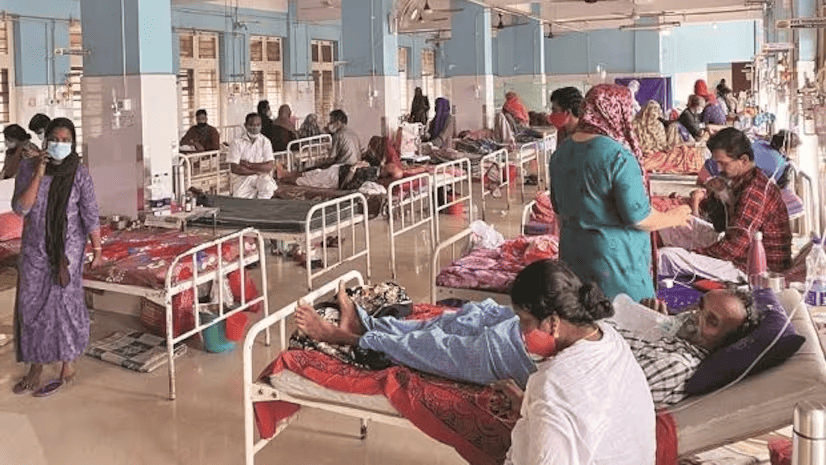
- The Tragedy of Government Hospitals: Tertiary government hospitals in cities, though lifelines, are monuments to systemic strain. Overcrowding is inhuman—patients on floors, two to a bed, in corridors. While treatment may be nominally free, the hidden costs are staggering: long waiting periods (sometimes months for surgeries), the necessity to purchase drugs and diagnostics from outside due to stock-outs, and the informal “under-the-table” payments demanded for everything from a bed to expedited attention. The environment is often unhygienic, increasing the risk of hospital-acquired infections.
- Private Healthcare: A Fortress of Profit: India’s private healthcare sector, which provides nearly 70% of care, operates on a ruthless for-profit model. For the poor Sanatani, a corporate hospital is an alien and hostile territory. Inflated bills, unnecessary diagnostic tests, and the pressure to purchase expensive implants and drugs at high margins are standard. The absence of price transparency and regulation makes them deeply exploitative for the vulnerable.
C. Government Policy and Political Asymmetry
- The Paradigm of Asymmetric Welfarism: A critical and politically sensitive factor is the architecture of state welfare. Numerous central and state government schemes explicitly target religious minorities (e.g., scholarships, subsidized loans, health initiatives). While the upliftment of any disadvantaged group is laudable, the outcome is a perceived and often real asymmetry. Poor Hindus from the “General” category and even from non-dominant OBC groups find themselves ineligible for these targeted health aids. This creates a scenario where two equally poor families, one from a minority community and one from the Hindu majority, have differential access to state-sponsored medical assistance. This is viewed not as “minority appeasement” but as “majority neglect,” fostering deep resentment and a sense of statelessness.
- Reservation in Medical Education: A Long-Term Structural Drain: The system of caste-based reservations in medical college admissions (MBBS, MD/MS) has profound downstream effects on healthcare delivery. Critics argue that while promoting social justice, it can, in specific contexts, distort meritocratic selection. The more significant impact is psycho-social: a talented but poor Hindu student from a non-reserved category, unable to secure a seat in a government college due to high cut-offs and unable to afford a private college (with fees running into crores), is diverted from the medical profession. This reduces the pool of doctors who might have a native empathy and commitment to serving their impoverished co-religionists. It also perpetuates the notion that the state system is engineered against their aspirations.
D. Social, Cultural, and Internal Barriers
- The Grip of Misinformation and “Alternate” Systems: In the absence of accessible, trustworthy, and affordable allopathic care, poor communities resort to alternatives. This includes seeking treatment from unqualified quacks (who are cheap and available), faith healers, and godmen. While traditional systems like Ayurveda and Yoga have immense value, their misuse by charlatans for serious pathologies like tuberculosis, cancer, or diabetes leads to catastrophic delays in proper diagnosis and treatment.
- Internal Discrimination and Caste Hierarchies: Hindu society is not monolithic. Deep-seated caste prejudices persist, especially in rural India. Dalits and tribal communities (Adivasis), though constitutionally protected, continue to face discrimination in accessing common resources, including healthcare settings. They might be made to wait longer, be treated separately, or be addressed with contempt by staff belonging to dominant castes, even within government hospitals. This “untouchability” in healthcare deters them from seeking care.
- Fatalism and Low Health Literacy: A cultural tendency to view severe illness as “prarabdha karma” (the fruit of past life’s actions) can lead to passive acceptance rather than active pursuit of treatment. Coupled with low formal education, this results in poor health literacy—inability to understand basic preventive care, the importance of vaccination, maternal health protocols, or the warning signs of chronic diseases.
III. Effects and Consequences: The Body Politic in Intensive Care
The ramifications of this medical inaccessibility are devastating and spiral far beyond individual suffering.
- Demographic and Mortality Disasters:
- High Maternal Mortality Ratio (MMR) & Infant Mortality Rate (IMR): Poor Hindu women, with limited antenatal care and unsafe deliveries at home or in poorly equipped facilities, die from preventable complications. Their infants succumb to vaccine-preventable diseases, diarrhea, and malnutrition.
- Premature Mortality from Preventable Diseases: Deaths from tuberculosis, typhoid, malaria, and diarrheal diseases remain high. Non-communicable diseases (NCDs) like hypertension and diabetes, once “urban rich men’s diseases,” now ravage the poor who are diagnosed late and cannot afford lifelong medication.
- The Debt Trap and Intergenerational Poverty: Medical expenses are the single largest cause of household indebtedness in rural India. Families mortgage land, sell livestock (the productive assets of the poor), and take usurious loans from local moneylenders. Children are pulled out of school to work or care for the sick. This creates a vicious cycle where illness begets poverty, which begets further illness, trapping families for generations.
- Erosion of Social Fabric and Trust: The daily struggle for survival in the face of illness breeds disillusionment with state institutions and the social order. It erodes faith in the system and in the community’s ability to protect its own.
- The Ultimate Vulnerability: Spiritual Coercion and Religious Conversion: This is the most contentious and civilizationally significant consequence. A multitude of well-funded Christian missionary organizations, both foreign and domestic, operate extensive hospital and healthcare networks across India, particularly in remote, tribal, and impoverished regions. Their model is simple and potent: provide free, high-quality, and dignified medical care (often the only quality care available) to the destitute, coupled with evangelism. For a parent watching their child die for lack of Rs. 50,000 for an operation, the offer of free treatment from a missionary hospital is a divine intervention. The spiritual price—attendance at prayer meetings, Bible study, and eventual baptism—seems a small cost for life itself. This “rice-bowl conversion” or “medical mission” is a direct exploitation of Hindu distress. It leads to:
- Demographic shifts in sensitive border and forest regions.
- Social fragmentation as converted individuals often sever ties with their ancestral customs and community.
- A profound civilizational loss, where the spiritual heritage of Sanatana Dharma is traded for survival.
This exploitation of Hindu helplessness is not just a healthcare failure; it is perceived as a form of demographic warfare waged on the most vulnerable frontiers of Hindu society.
IV. Solutions: A Framework for Sanjivani (Revitalization)
Addressing this crisis requires a multi-pronged “Whole of Society” approach, combining state action, community mobilization, and individual empowerment.
A. Government Reforms and Policy Interventions: Towards a Dharma of Governance
- Universal Health Coverage (UHC) Based on Economic Criteria: The state must move towards a rights-based, economically targeted, and caste/religion-agnostic model. A National Health Protection Scheme should cover all citizens below a defined poverty line or in certain income percentiles, irrespective of religion or caste. The Ayushman Bharat scheme must be expanded horizontally (to cover more people) and vertically (to include outpatient care, mental health, and expensive drugs).
- Massive Public Investment in Rural Healthcare Infrastructure: The “Health and Wellness Centre” model under Ayushman Bharat must be implemented with rigor. Every PHC must be transformed into a 24×7 facility with:
- Mandatory residential quarters to ensure doctor and staff presence.
- A guaranteed essential drug and diagnostic list (EDL) with robust supply chains.
- Telemedicine hubs connecting to specialist doctors in district hospitals.
- Stringent Regulation of the Private Sector: Enact a Clinical Establishments Act with teeth to standardize treatment costs, prevent irrational drug prescriptions, and ensure price transparency. Implement a charter of patient rights in all hospitals.
- Merit-Cum-Means Scholarship for Medical Education: Institute a massive, pan-India scholarship program for students from Below Poverty Line (BPL) families in the General category and economically weak OBCs/SCs/STs to pursue medical education. This will ensure talent is nurtured, create a cadre of doctors with lived experience of poverty, and address grievances about opportunity denial.
B. Community and Institutional Resurgence: The Hindu Society Awakens
This is the most critical and transformative pillar. Hindu society must move from a state of learned helplessness to one of empowered self-reliance.
- The Temple as a Healthcare Hub: India’s temples collectively control vast, often underutilized, financial resources. A mandate should be championed for large temples (Tirumala, Siddhivinayak, Vaishno Devi, etc.) and their trusts to allocate a significant percentage (e.g., 20-30%) of their annual offerings (hundi collections) to establish and run:
- Multi-specialty charitable hospitals in their vicinity.
- Chain of generic medicine pharmacies selling drugs at near-cost.
- Medical colleges and nursing schools with seats reserved for poor Hindu students.
This model exists (e.g., the Sri Sathya Sai Institute of Higher Medical Sciences) but needs viral replication.
- Corporate Dharma and Philanthropy: Successful Hindu industrialists and businesses must be encouraged—through cultural appeal, not just tax breaks—to fund healthcare as a sacred duty (Dharmic CSR). The establishment of hospitals like the Kokilaben Dhirubhai Ambani Hospital is a model, but more targeted initiatives for rural and poor-urban areas are needed.
- Network of Hindu Healthcare NGOs: A confederation of Hindu social service organizations (like the Vanvasi Kalyan Ashram, Sewa International, Hindu Aid) should massively scale up their health initiatives. This includes:
- Mobile Medical Units (MMUs) with diagnostic equipment, reaching the remotest villages weekly.
- Community Health Worker (CHW) Networks: Training local Hindu women as “Swasthya Sakhis” (Health Friends) to provide basic care, health education, and referral services.
- Centralized Medical Crisis Fund: A national, transparent fund where contributions can be made and from which grants can be disbursed to poor families facing catastrophic health expenses, verified through a grassroots network.
- Emulating and Surpassing the Missionary Model: Study the efficiency, dedication, and fund-raising prowess of missionary healthcare. Replicate their operational excellence but root it in Dharmic values of Seva (selfless service) and Vasudhaiva Kutumbakam (the world is one family). Care must be given with compassion but without proselytization, becoming a testament to Hindu generosity.
C. Awareness, Education, and Empowerment
- Health Literacy Drives: Use traditional and new media in local languages to run public health campaigns on sanitation, vaccination, maternal care, and NCDs. Collaborate with local religious leaders and festivals to spread messages.
- Promote Integrative Medicine: Legitimize and modernize Ayurveda, Yoga, and other Dharmic wellness traditions. Establish affordable “Integrative Health Clinics” where evidence-based Ayurvedic treatments for chronic conditions and Yoga for preventive care are offered alongside basic allopathic services. This provides a culturally resonant, potentially cost-effective alternative.
- Empower the Youth: Launch a “Be a Doctor for Your Village” movement, inspiring and financially supporting young Hindus from poor backgrounds to enter the medical profession with a pledge to serve in underserved areas for a period.
V. Conclusion: The Prescription for Civilizational Health
The lack of quality medical access for the poor Sanatani is more than a policy failure; it is a civilizational ailment. It signifies a breakdown in the Dharmic compact of care and a failure of societal self-defense. It is draining the demographic, economic, and spiritual vitality of Hindu society from its base.
Government policy must evolve towards equitable universalism. But waiting for state salvation is a prescription for continued suffering and demographic erosion. The onus, therefore, falls irrevocably on the Hindu community—its religious institutions, its wealthy patrons, its social organizations, and its educated middle class.
The solution lies in building a parallel, self-sustaining ecosystem of Hindu healthcare philanthropy—one that is scalable, professional, transparent, and deeply compassionate. It requires a shift from building yet another temple of stone to building temples of healing, from celebrating festivals with pomp to celebrating life by saving it. The missionary challenge, while ethically questionable in its methods, provides a structural benchmark. It must be met not with grievance but with a superior, Dharmic response.
Ultimately, the health of the poor Sanatani is the health of Sanatana Dharma itself. To heal them is to heal the fractures within the civilization. It is to affirm that in this ancient tradition, every life is sacred, every body is a temple, and no one should be forced to choose between their faith and their family’s life. The journey from Rog (disease) to Aarogya (wholeness) is the most urgent Yajna (sacred endeavor) of our times. It is time to perform it with the devotion it demands.

Table of Contents