Lack of Quality Education Among Poor Sanatani
Lack of Education Among Poor Sanatanis (Hindus) – Causes & Solutions
The lack of education among poor Sanatanis (followers of Sanatan Dharma or Hinduism) is a significant issue in India, affecting social and economic progress. Here’s a breakdown of the key causes, effects, and possible solutions.
1. Causes of Educational Backwardness Among Poor Sanatanis
A. Economic Factors
- Poverty: Many poor Hindu families struggle to afford education, leading to child labor.
- Lack of Government Support: Many economically weak Hindus lack access to scholarships or reservation benefits.
- Job-Oriented Mindset: Some families prefer sending children to work instead of school due to financial needs.
B. Social & Cultural Factors
- Caste Discrimination & Division: Dalits, backward classes, and some rural communities face neglect in education.
- Traditional Beliefs & Superstitions: Some communities prioritize religious rituals over modern education.
- Lack of Awareness: Many parents, especially in rural areas, are unaware of the importance of education.
C. Government & Institutional Neglect
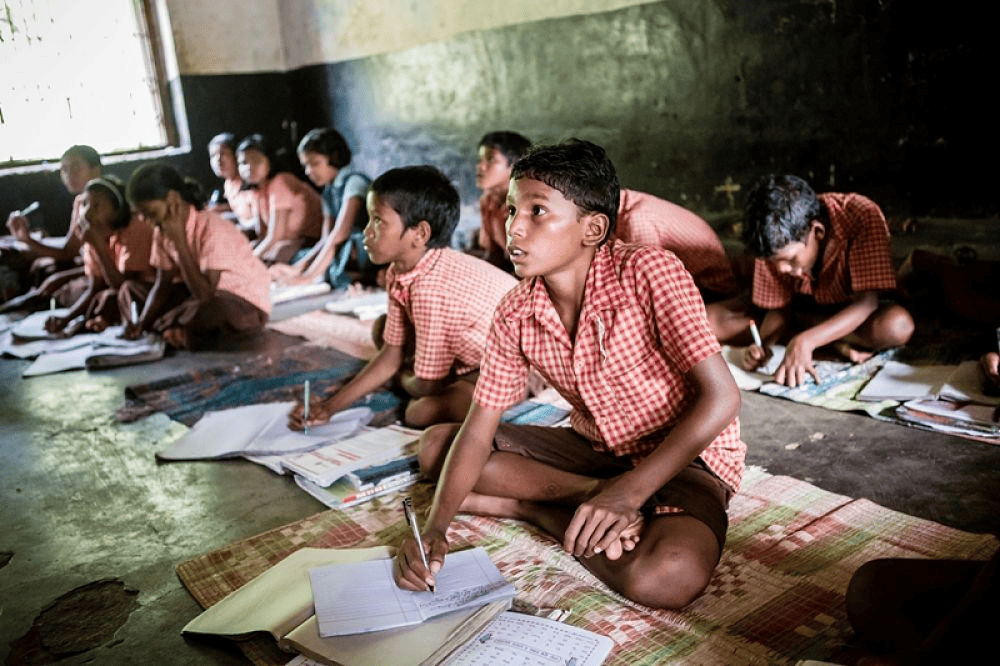
- Poor Infrastructure: Many government schools in rural areas lack proper teachers, facilities, and quality education.
- Limited Reservation Benefits: While SC/ST/OBC communities get reservations, many poor upper-caste Hindus remain neglected in education policies.
- Focus on Minority Welfare: Government policies often prioritize minority communities (Muslims, Christians) for scholarships, while poor Hindus lack similar structured programs.
2. Effects of Educational Backwardness
- Economic Disadvantage: Lack of education leads to unemployment, pushing communities into poverty cycles.
- Religious & Cultural Decline: Poor knowledge of Hindu scriptures and philosophy reduces awareness of their heritage.
- Vulnerability to Conversion: Many poor Sanatanis convert to other religions due to educational and economic incentives from missionaries.
- Political Weakness: Lack of education leads to poor political awareness, making them vulnerable to exploitation.
3. Solutions to Improve Education Among Poor Sanatanis
A. Government Policies & Reforms
- Implement economic-based reservations instead of caste-based reservations.
- Provide free education, scholarships, and hostel facilities for poor Hindu students.
- Improve rural schools, ensure quality teachers, and upgrade infrastructure.
B. Community & Social Initiatives
- Hindu organizations should establish affordable private schools & coaching centers.
- Promote gurukul-style education combined with modern subjects.
- Strengthen donation-based education funds to help poor Hindu children.
C. Awareness & Cultural Revival
- Educate people about the importance of modern education alongside religious teachings.
- Encourage Hindu youth to take up teaching and uplift their communities.
- Strengthen cultural identity through awareness programs on Hindu history, science, and philosophy.
Conclusion
Lack of education among poor Sanatanis is a major challenge, but economic reforms, social efforts, and awareness programs can bring change. Hindu communities need to take self-initiative, along with demanding fair government policies, to improve their educational and economic status.
Chapter 1: Introduction – The Landscape of Educational Inequality
1.1 Defining the Problem: Who are the “Poor Sanatanis”?
The term “Sanatani” refers to adherents of Sanatan Dharma, the eternal or universal law, commonly known as Hinduism. This spiritual and philosophical tradition encompasses a vast diversity of communities, languages, castes, and sects. Within this broad demographic, a substantial population lives below the poverty line (BPL), facing acute educational deprivation. According to the National Sample Survey Office (NSSO) and Periodic Labour Force Survey (PLFS) data, while overall literacy rates have improved, deep disparities persist along economic lines within the Hindu community.
The “educationally backward poor Sanatani” is not a monolithic category but includes:
- Economically Weaker Sections (EWS) across all castes, including those from “upper” castes who do not qualify for caste-based reservations.
- Scheduled Caste (SC) and Scheduled Tribe (ST) Hindus, who, despite constitutional safeguards, remain disproportionately represented among the poor and illiterate.
- Other Backward Class (OBC) Hindus from low-income rural and urban households.
- Nomadic and Denotified Tribes (NT/DNTs) who follow Hindu traditions but remain among the most marginalized.
- Rural agrarian and landless labor communities with strong Hindu identities.
This educational deficit is not merely a metric of literacy but encompasses low enrollment, high dropout rates (especially post-primary education), poor learning outcomes, and negligible progression to higher and professional education.
1.2 The Significance of the Issue: Beyond Individual Deprivation
The lack of education among a significant section of India’s majority community has profound implications:
- National Development: It represents a massive loss of human capital, hindering India’s demographic dividend and economic growth potential.
- Social Cohesion: Educational disparity fuels social fragmentation, resentment, and weakens the bonds of citizenship.
- Cultural Continuity: It risks severing the connection between vulnerable communities and their philosophical, artistic, and ethical heritage.
- Democratic Health: An uneducated electorate is vulnerable to manipulation, weakening the foundations of informed democracy.
This analysis moves beyond simplistic narratives to explore the intricate web of factors causing this deprivation and proposes solutions rooted in equity, social justice, and community empowerment.
Chapter 2: Structural and Economic Causes of Educational Backwardness
2.1 The Tyranny of Poverty: The Primary Driver
For impoverished households, education is often a luxury deferred in favor of survival.
- Direct Costs: Even “free” government education involves indirect costs—uniforms, books, transportation, and miscellaneous fees—that are prohibitive for families earning less than ₹10,000 per month.
- Opportunity Cost: Children are viewed as economic assets. Sending a child to school means losing their contribution to household income (through wage labor) or domestic chores (freeing adults for work). The NSSO reports high incidence of child labor in impoverished Hindu communities in agrarian states, the informal sector, and home-based industries.
- Intergenerational Poverty Trap: Without education, children replicate the low-skilled occupations of their parents, perpetuating the cycle. Poverty begets educational neglect, which begets poverty.
2.2 Flawed Targeting: The Lacunae in Policy Support
Government welfare schemes, while extensive, often suffer from poor targeting and implementation gaps that disproportionately affect the poor from all backgrounds.
- The “Crevice” Category: The most significant policy failure is the neglect of the poor from “forward” castes. Until the introduction of the 10% EWS quota in 2019, this group had no constitutional claim to reservation in education or jobs. Their access to targeted scholarships (like pre-matric and post-matric schemes) remains limited compared to SC/ST/OBC beneficiaries.
- Scholarship Shortfalls: Scholarships for SC/ST students, though crucial, are often delayed, insufficient to cover full costs, or mired in bureaucratic red tape. For the poor OBC and EWS Hindu student, scholarships are fewer and less publicized.
- Reservation vs. Reality: Caste-based reservation, while a historic and necessary corrective for systemic oppression, does not perfectly correlate with economic status today. A poor Brahmin, Rajput, or Bania student may face identical economic barriers as a poor Dalit student but with far less institutional support, creating a sense of unjust exclusion.
2.3 The Rural-Urban Divide: A Tale of Two Systems
A majority of poor Sanatanis reside in rural India, where the educational infrastructure is in crisis.
- School Infrastructure Deficit: Many government schools lack functional toilets, drinking water, electricity, boundary walls, and digital equipment. The Right to Education (RTE) Act norms are frequently unmet.
- Teacher Absenteeism and Multi-Grade Teaching: Single-teacher schools or schools with chronic teacher absenteeism are common. This results in multi-grade teaching, where one teacher handles students from different grades simultaneously, severely compromising quality.
- The “Learning Crisis”: ASER reports consistently show that a large proportion of children in Grade V cannot read a Grade II text or solve basic arithmetic. Schooling does not guarantee learning, devaluing the entire endeavor in the eyes of poor parents.
Chapter 3: Socio-Cultural and Religious Dimensions
3.1 The Enduring Shadow of Caste and Social Hierarchy
While legally abolished, caste continues to shape educational access and experience.
- Exclusion and Discrimination: In many rural areas, Dalit and Adivasi children face overt discrimination—forced to sit separately, clean toilets, or endure casteist slurs from teachers and peers. This creates a hostile environment leading to dropout.
- Internalized Hierarchy: Among OBCs and other marginalized groups, certain sub-castes remain more backward than others. A perception that education is the domain of “higher” castes can persist, discouraging aspiration.
- Gendered Caste Oppression: Girls from poor SC/ST backgrounds face a triple burden of poverty, caste, and gender, resulting in the lowest educational indicators.
3.2 Traditional Mindsets and the Value of Education
In certain orthodox communities, particularly in remote and rural belts, traditional occupations are prized over formal education.
- Occupational Determinism: Communities historically associated with farming, fishing, weaving, or pottery may see formal education as irrelevant to their lifeworld. The curriculum’s disconnect from local knowledge and economies reinforces this.
- Early Marriage: Poverty and tradition converge to promote early marriage for girls, especially in northern and central India. Education is seen as an unnecessary delay before marriage.
- Misplaced Religious Fatalism: A distorted interpretation of concepts like karma or bhagya (fate) can sometimes lead to passive acceptance of deprivation, including educational deprivation, as pre-ordained. This is not intrinsic to Sanatan Dharma but a syncretic folk belief often exploited to maintain status quos.
3.3 The Paradox of Religious Identity and Modern Education
- Perceived Conflict: Some traditionalists within the community view modern, secular education with suspicion, fearing it will alienate youth from their cultural roots or promote materialism. This is a defensive reaction to a rapidly changing world.
- Neglect of Gurukul & Sanskritic Education: While the modern state system is accessed, traditional pathways of learning (Sanskrit Pathshalas, Gurukuls) have withered, often due to lack of patronage and integration with mainstream credentialing. This creates a false dichotomy between “secular” and “religious” knowledge.
3.4 Lack of Parental Awareness and Educational Social Capital
Parents who are themselves illiterate or poorly educated cannot guide their children’s educational journey.
- Inability to Support Learning: They cannot help with homework or navigate the complexities of the school system.
- Low Aspiration: Their lived experience may not demonstrate the tangible benefits of education, especially if they see educated youth unemployed.
- Vulnerability to Misinformation: They may be unaware of scholarship schemes, admission processes, or the importance of foundational literacy and numeracy.
Chapter 4: Systemic and Political Failures
4.1 Policy Myopia and Implementation Deficits
- One-Size-Fits-All Curriculum: The national curriculum often fails to resonate with local contexts, languages, and cultures, making learning abstract and irrelevant for poor rural children.
- Language Barrier: The imposition of English or Hindi as mediums of instruction in early grades, where children speak only their mother tongue, creates an insurmountable cognitive hurdle.
- Failure of Incentive Schemes: Schemes like free midday meals, bicycles, and uniforms have improved enrollment but have not been matched by equivalent investments in pedagogical quality.
4.2 The Politicization of Educational Welfare
- Vote Bank Politics: Educational policies are often framed as concessions to specific caste or religious “vote banks.” This has led to a perception of competitive minorityism, where appeasement policies for religious minorities (like exclusive scholarships, subsidies for madrasa education) are not balanced with robust, economic need-based programs that would benefit all poor, including Hindus. This fuels resentment and diverts the discourse from universal quality.
- Neglect of the “Silent Majority”: Politicians often assume the Hindu vote is monolithic and secured, leading to complacency in addressing the acute economic and educational distress within the community. The poor Hindu is often reduced to a symbolic rather than a substantive subject of policy.
- Corruption and Leakage: Funds allocated for school infrastructure, scholarships, and teacher training are frequently siphoned off by local officials and contractors, ensuring that policies fail at the last mile.
Chapter 5: The Multifaceted Consequences of Educational Deprivation
5.1 Economic Stagnation and Vulnerability
- Confinement to the Informal Sector: Lack of education confines individuals to low-paid, insecure, and exploitative work in the informal economy, with no social security.
- Intergenerational Poverty: The cycle is reinforced, with each generation unable to break free due to a lack of skills and credentials.
- Reduced National Productivity: A large, unskilled workforce limits innovation, industrial growth, and global competitiveness.
5.2 Social and Political Marginalization
- Voice and Agency: Illiteracy strips individuals of the ability to engage with legal systems, government schemes, and democratic processes effectively. They remain dependents, not citizens.
- Vulnerability to Exploitation: Uneducated populations are easily manipulated by corrupt leaders, extremist ideologies, and money power during elections.
- Social Fragmentation: Educational disparity reinforces existing caste and class hierarchies, preventing the formation of solidarities based on shared economic interests.
5.3 Cultural Erosion and Identity Crisis
- Loss of Scriptural and Philosophical Access: Without basic literacy and critical thinking skills, individuals cannot access the profound philosophical texts of their own tradition—the Vedas, Upanishads, Gita, or the works of saints and poets. Their religious understanding becomes mediated solely by often superstitious oral traditions.
- Weakening of Cultural Defenses: An uneducated mind is less equipped to engage in inter-faith dialogue or critically examine proselytization. This, combined with economic desperation, increases vulnerability to religious conversion driven by material incentives rather than spiritual conviction. The loss is not merely numerical but represents a severing of a living cultural lineage.
- Erosion of Arts and Crafts: Traditional arts, music, and crafts, often caste-based, die out as educated youth disengage, seeing them as markers of backwardness.
5.4 Psychological and Civic Impact
- Low Self-Esteem and Fatalism: Chronic educational deprivation breeds a sense of helplessness and inferiority.
- Erosion of Civic Sense: Education fosters public hygiene, environmental consciousness, and rule of law—its absence hampers community development.
Chapter 6: A Multi-Pronged Solution Framework
Addressing this crisis requires a concerted effort from the state, civil society, and the community itself, moving beyond blame to constructive action.
6.1 State-Led Reforms: Toward Equity and Excellence
- Shift to Primary Focus on Economic Criteria: Implement and strengthen the 10% EWS quota in education and jobs. Design all new scholarship and welfare schemes primarily on economic deprivation, with additional weightedage for historical social backwardness (caste) and geography (rural/remote). This is the most equitable and politically sustainable path.
- Revolutionize Government Schooling: Increase public spending on education to 6% of GDP. Focus on outcomes, not just inputs. Implement a National Tutoring Mission to bridge learning gaps. Invest in teacher recruitment, training, and accountability. Make schools vibrant community hubs with libraries, sports, and digital labs.
- Curriculum and Pedagogical Reform: Develop contextually relevant curricula that integrate local knowledge, history, and ecology. Promote mother-tongue based multilingual education in foundational years. Introduce vocational skill training from secondary school, aligned with local economic opportunities.
- Transparent Delivery and Grievance Redressal: Digitize scholarship disbursement through direct benefit transfer (DBT). Create a robust online grievance portal for students and parents. Involve School Management Committees (SMCs) with real power.
6.2 Community and Civil Society Mobilization
- Community-Based Organizations (CBOs): Encourage the formation of “Shiksha Samitis” (Education Committees) in every village/town, comprising respected local figures, retired teachers, and youth. Their role: monitor school quality, run awareness campaigns, tutor children, and guide parents on scholarships.
- Role of Hindu Religious and Philanthropic Institutions: Major temples, maths, and trusts (like Tirumala Tirupati Devasthanams, Siddhivinayak Trust, Swaminarayan Sanstha) must allocate a mandated percentage of their massive incomes (beyond routine charity) to establish and run model secular schools, merit-cum-means scholarships, and digital learning centers for the poorest in their vicinity, irrespective of caste. This is a dharma of the highest order.
- Revitalizing the Gurukul Model: Modernize traditional Gurukuls to offer NCERT-equivalent accreditation alongside instruction in Sanskrit, philosophy, yoga, and ethics. This creates a unique value proposition and preserves tradition within a modern framework.
- Peer Mentoring and Youth Leadership: Launch a “Each One, Teach One; Each One, Guide One” campaign within the community. Educated Hindu youth must volunteer to mentor at least one poor child from their community, providing academic and career guidance.
6.3 Family-Centric and Awareness-Driven Interventions
- Targeted Awareness Campaigns: Use local media, street plays, and community radio to disseminate success stories of educated individuals from similar backgrounds. Demystify higher education and showcase vocational success.
- Empowering Women and Mothers: Female literacy is the best predictor of child education. Accelerate adult literacy programs for women, linking them to micro-credit and health awareness. An educated mother is a transformative agent.
- Celebrating Educational Achievement: Communities should publicly honor students who excel academically, especially first-generation learners, creating new role models and shifting social norms.
6.4 Syncretic Cultural-Pedagogical Approach
- Integrate Heritage in Learning: School projects can involve documenting local festivals, folklore, and temple architecture. Teach science through concepts in Vaisheshika or yoga; mathematics through Vedic geometry or temple design. This creates pride and relevance.
- Promote Critical Dharma Education: Develop accessible, non-sectarian courses on Hindu philosophy, history, and contributions to science and arts, teaching them as subjects of rational inquiry, not blind faith. An educated, confident Hindu is less vulnerable to exploitation from any quarter.
Chapter 7: Case Studies and Models of Success
- The Eklavya Model Residential Schools (EMRS): Though for STs, this model of residential schooling with quality infrastructure in tribal areas has shown success. A similar “Chanakya” or “Vidyaranya” model school network for the economically poorest 5% in each district could be revolutionary.
- RSS-Affiliated Schools (Saraswati Shishu Mandirs, Vidya Bharati): Their network demonstrates community ability to run schools. The challenge and opportunity is to ensure they serve the poorest within the community with fee waivers and extra support, not just the aspiring lower-middle class.
- The Kerala Model: High social reform movements, investment in public education, and focus on female literacy made Kerala an outlier. This underscores the importance of social mobilization alongside state policy.
- Grassroots Initiatives: Documented successes of NGOs like Pratham (teaching at the right level), Akanksha Foundation (after-school support), and local endeavors like free coaching classes run by college students in UP/Bihar for poor aspirants.
Chapter 8: Conclusion – Toward an Educated, Equitable, and Enlightened Community
The lack of education among poor Sanatanis is a profound civilizational crisis that threatens the very fabric of Hindu society and impedes national progress. It is a crisis born of complex intersections—economic desperation, social stratification, political neglect, and policy failure.
Solving it requires a fundamental reorientation:
- From Caste to Class (with Justice): Policies must prioritize economic need as the primary criterion, while conscientiously addressing the unique historical wounds of caste-based oppression.
- From State Dependence to Community Responsibility: The Hindu community, particularly its wealthy and influential institutions, must move beyond ritualistic charity to strategic, large-scale investment in the education of its poorest. This is not philanthropy but self-preservation and dharma.
- From Resentment to Constructive Action: The discourse must shift away from blaming “others” or “appeasement” and focus on internal reform, self-help, and demanding accountable, universal welfare from the state.
- From Schooling to Learning: The goal must be quality education that empowers with knowledge, skills, values, and a confident sense of identity.
An educated individual is not merely an earner but a thinker, a citizen, and a custodian of culture. The journey to educate every poor Sanatani child is the most vital yajna (sacrifice) for the 21st century—a yajna that will determine whether Sanatan Dharma remains a vibrant, evolving, and contributive force in the modern world, or shrinks into a relic of the past, preserved only by an elite few. The choice, and the work, begins now.

Table of Contents