The Khmer Empire, one of the most remarkable civilizations in Southeast Asia, extended over present-day Cambodia, southern Vietnam, and parts of Thailand. At the heart of its rise and consolidation was King Jayavarman II, who is widely considered the founder of the Angkorian dynasty. The Khmer Empire, flourishing between the 9th and 15th centuries, became renowned for its architectural marvels, administrative organization, and religious developments, particularly the fusion of Hinduism and Buddhism.
King Jayavarman II ascended to power during a period of regional fragmentation and instability, uniting rival principalities into a single political entity. His reign marked the beginning of a centralized state with a strong ruler at its core. He declared himself “Devaraja”, or god-king, a concept that linked the monarchy to divine authority and strengthened the political unity of the empire. Under his leadership the foundations for monumental construction projects, elaborate irrigation systems, and trade networks were laid, setting the stage for the empire’s golden age.
Geographically, the Khmer Empire benefited from fertile plains and river systems, particularly the Mekong and Tonle Sap, which facilitated agriculture, transport, and trade. Jayavarman II’s consolidation of power also allowed for the development of cultural identity, as the empire promoted art, language, and religious practices that reflected both local traditions and Indian influence. The historical significance of Jayavarman II lies not only in political unification but also in the cultural legacy that would shape Southeast Asia for centuries. His reign represents a critical turning point in the region’s history, where the Khmer Empire emerged as a dominant power, influencing neighboring states and leaving a lasting imprint on the landscape and society of Cambodia, Vietnam, and Thailand.
What Is Khmer Empire (Cambodia, Vietnam, Thailand) – King Jayavarman Ii ?
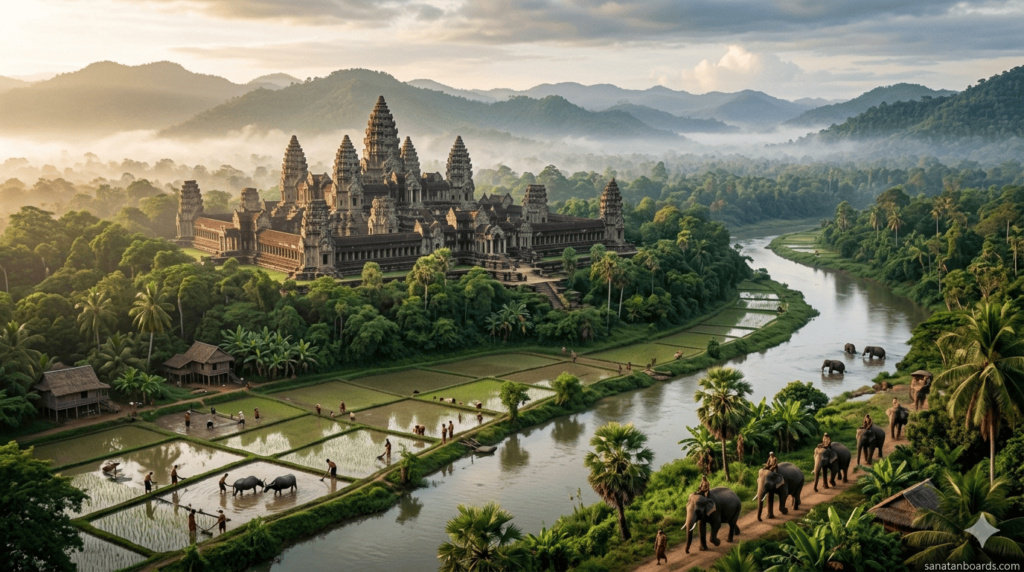
The Khmer Empire, sometimes referred to as the Angkor Empire, was a powerful and expansive kingdom in Southeast Asia, covering regions that are now Cambodia, southern Vietnam, and parts of Thailand. Established in the early 9th century, it grew into a sophisticated civilization known for advanced governance, engineering, and artistry. Its foundation is closely linked to King Jayavarman II, who is credited with unifying the fragmented territories into a single empire.
The empire’s political structure revolved around a centralized monarchy, where the king held absolute power as both a political and spiritual leader. Jayavarman II introduced the Devaraja cult, positioning himself as a god-king and legitimizing his authority. This divine association not only enhanced royal prestige but also fostered loyalty among regional lords and subjects. The Khmer Empire’s prosperity was heavily reliant on agriculture, particularly rice cultivation, which was supported by extensive hydraulic systems such as canals, reservoirs, and barays. These innovations enabled population growth and economic stability, making the empire one of the most enduring in Southeast Asia.
Culturally, the Khmer Empire absorbed influences from India, particularly Hinduism and later Mahayana Buddhism, while maintaining indigenous traditions. This blend of beliefs is evident in temple architecture, inscriptions, and religious ceremonies. Iconic monuments like those initiated by Jayavarman II and later rulers symbolize the empire’s spiritual and political ambitions. The Khmer Empire also engaged in trade with China, India, and other regional kingdoms, facilitating cultural exchange and wealth accumulation.
King Jayavarman II’s role in establishing the empire cannot be overstated. By consolidating fragmented territories and creating a central authority, he laid the groundwork for centuries of political stability and cultural development. The empire’s legacy is reflected not only in historical records but also in the archaeological remnants, inscriptions, and monumental structures that continue to inspire researchers, tourists, and scholars worldwide.
Who is required KHMER EMPIRE (CAMBODIA, VIETNAM, THAILAND) – KING JAYAVARMAN II ?
King Jayavarman II is considered the foundational figure of the Khmer Empire. His importance lies in his role as a unifier, administrator, and spiritual leader who transformed a fragmented region into a cohesive empire. Before his reign, the territories of present-day Cambodia, southern Vietnam, and parts of Thailand were divided among various small principalities, often engaged in local conflicts. Jayavarman II’s vision of a unified kingdom helped centralize authority and reduce internal strife, providing political stability that allowed civilization to flourish.
Jayavarman II’s declaration as Devaraja, or god-king, was a strategic and religious maneuver that solidified his legitimacy. By linking his authority to divine power, he commanded loyalty from local chieftains and integrated them into a structured governance system. This also allowed him to initiate large-scale construction projects, religious ceremonies, and administrative reforms, which required centralized control and coordination.
Historians view Jayavarman II as essential not only for political reasons but also for cultural and spiritual continuity. He promoted the integration of Hinduism into Khmer society, laying the foundations for monumental temple architecture and symbolic religious practices that reflected the divine status of kingship. Without Jayavarman II, the Khmer territories might have remained a collection of fragmented principalities, vulnerable to external threats and internal rivalries.
His requirement in history extends to the establishment of identity for the Khmer people. By creating a central authority, he enabled the development of Khmer language, cultural traditions, and societal norms. Today, he is recognized as a pivotal figure whose actions shaped the political, spiritual, and cultural trajectory of Southeast Asia, ensuring that the Khmer Empire would become a dominant force for centuries.
When Khmer Empire (Cambodia, Vietnam, Thailand) – King Jayavarman Ii Is Required ?
The period when King Jayavarman II rose to power marks a significant turning point in the history of Southeast Asia. Before his reign, which began in the early 9th century (around 802 CE), the region was politically fragmented. Various local chieftains and small kingdoms governed different territories, often clashing with one another for resources, territory, and influence. The absence of a centralized authority made the region vulnerable to internal disputes and external invasions. It was during this context that the emergence of a strong leader like Jayavarman II became necessary.
King Jayavarman II is required in history as the initiator of the Angkorian era, a period when the Khmer Empire expanded both geographically and culturally. His declaration of himself as Devaraja, or god-king, in 802 CE was not merely symbolic; it was a political act aimed at legitimizing his rule over the newly unified territories. By connecting kingship with divinity, Jayavarman II ensured loyalty among local rulers and established a central administration capable of managing vast areas. This unification helped stabilize the region, providing the social and political infrastructure necessary for large-scale economic development and architectural projects.
The time of his reign is also crucial because it set the stage for the Khmer Empire’s golden age, which followed under successive rulers. Jayavarman II laid the foundations for monumental religious structures, such as early temples that combined Hindu cosmology with Khmer artistic sensibilities. This period witnessed the development of centralized taxation systems, water management infrastructure, and trade routes that allowed the empire to thrive. Without the timing of Jayavarman II’s leadership, the consolidation of the Khmer territories might have been delayed or prevented, altering the trajectory of Southeast Asian history.
The historical requirement for King Jayavarman II is thus twofold: politically, he was needed to unify the region under a single authority; culturally, he was necessary to integrate religious and societal norms that defined Khmer civilization. His era is remembered as a critical moment when disparate principalities transformed into an enduring empire, influencing the development of Cambodia, Vietnam, and Thailand for centuries to come.
Where Khmer Empire (Cambodia, Vietnam, Thailand) – King Jayavarman Ii Is Required ?
The Khmer Empire, established under King Jayavarman II, represents one of the most influential empires in Southeast Asian history. Spanning modern Cambodia, southern Vietnam, and parts of Thailand, the empire achieved a remarkable level of political organization, cultural development, and technological innovation. Jayavarman II’s consolidation of power around 802 CE marked the beginning of a centralized state, which allowed the empire to expand both territorially and economically.
At the core of the empire was a sophisticated governance system. Jayavarman II introduced the concept of Devaraja, merging religious authority with political power. This divine kingship ensured centralized control over local rulers and facilitated the organization of large-scale projects, including temples, water reservoirs, and road networks. The Khmer Empire’s economy relied heavily on rice cultivation, supported by extensive irrigation systems. Barays (artificial reservoirs) and canals not only enabled agricultural productivity but also allowed the empire to sustain large urban populations.
Cultural achievements under Jayavarman II’s leadership were significant. Hinduism influenced early Khmer religious practices, temple design, and iconography, while Mahayana Buddhism gradually integrated into society, reflecting the empire’s religious adaptability. Architectural innovations, especially temple complexes and monuments, symbolized both spiritual devotion and royal power. These structures, often decorated with intricate carvings, demonstrated the Khmer mastery of art and engineering.
The empire’s strategic location facilitated trade with neighboring kingdoms, India, and China, enhancing wealth and cultural exchange. Commerce allowed the Khmer Empire to acquire resources, technology, and ideas, contributing to its stability and prosperity. Jayavarman II’s emphasis on unity, infrastructure, and religious legitimacy created a framework that allowed successive rulers to expand and strengthen the empire further.
How Khmer Empire (Cambodia, Vietnam, Thailand) – King Jayavarman Ii Is Required ?
King Jayavarman II’s reign demonstrates how strategic leadership and religious legitimacy can unify a region and establish a lasting empire. His approach combined political maneuvering, spiritual authority, and infrastructural development to create a sustainable and centralized state.
The first step in his method was political unification. Jayavarman II successfully brought together rival principalities and local chieftains under a single authority. He did this by asserting himself as Devaraja, linking his rule to divine power. This concept not only reinforced loyalty among subordinates but also minimized internal conflicts that could weaken the state. By centralizing power, Jayavarman II established a government capable of enforcing laws, collecting taxes, and organizing large-scale projects.
Infrastructure development was another essential component. The empire’s prosperity depended on effective management of water resources for agriculture. Jayavarman II initiated the construction of canals, reservoirs, and irrigation networks, which allowed rice production to flourish. This agricultural surplus supported population growth, urbanization, and trade. The Mekong River and Tonle Sap Lake played a critical role in transportation and commerce, connecting the Khmer Empire to neighboring regions.
Cultural integration was equally important. Jayavarman II encouraged the adoption of Hinduism and the concept of divine kingship, which provided spiritual justification for political authority. Temples and monuments served as centers of religious life and symbols of royal power. These structures reinforced social cohesion, promoted cultural identity, and demonstrated the ruler’s divine legitimacy.
Trade and diplomacy further enhanced the empire’s stability. By engaging with China, India, and neighboring kingdoms, Jayavarman II secured resources, knowledge, and political alliances that strengthened the empire. The combination of centralized governance, infrastructural planning, religious authority, and diplomatic strategy allowed the Khmer Empire to thrive over centuries.
Case Study On Khmer Empire (Cambodia, Vietnam, Thailand) – King Jayavarman Ii
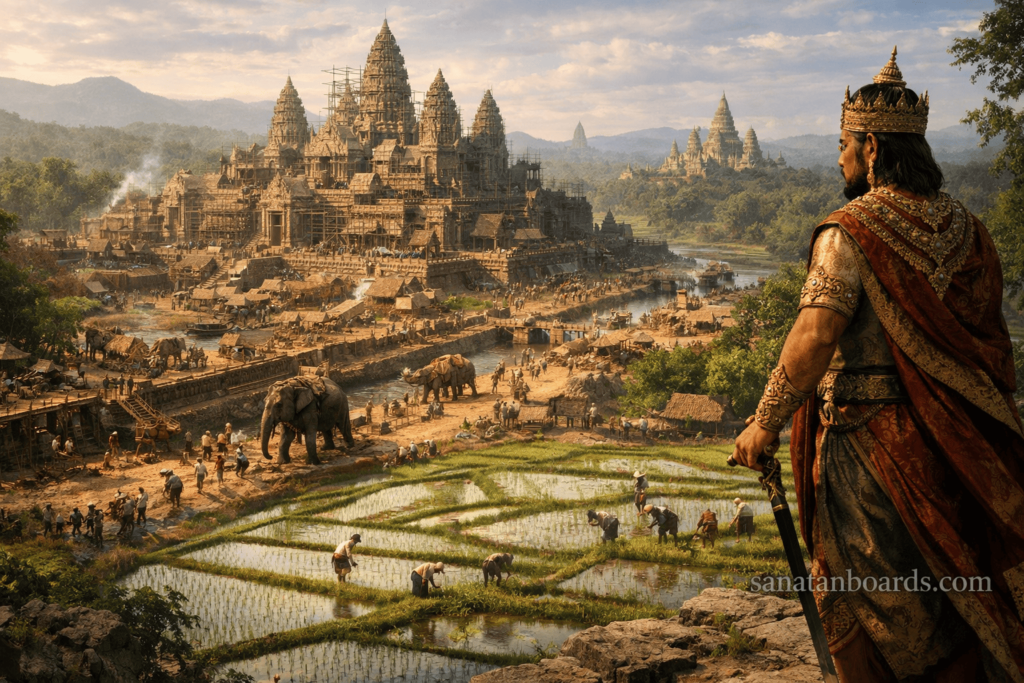
The Khmer Empire, under King Jayavarman II, provides a fascinating case study of state formation, cultural consolidation, and long-term regional influence. The empire emerged in a period marked by political fragmentation across modern-day Cambodia, southern Vietnam, and parts of Thailand. Local principalities were often in conflict, lacking central authority and facing external threats. Jayavarman II’s leadership offers a model of how strong political vision, religious integration, and infrastructural development can create a sustainable empire.
Jayavarman II ascended to power around 802 CE, declaring himself Devaraja, or god-king. This act had profound political and religious significance. It was not merely a claim to authority but a strategic approach to unify the population under a single ruler. By positioning himself as both a spiritual and political leader, Jayavarman II created a system in which loyalty to the king was intertwined with religious devotion. This fusion of governance and spirituality allowed him to centralize power effectively, reducing internal rivalries and ensuring compliance from regional lords.
Infrastructure was a critical aspect of his reign. The Khmer Empire relied heavily on agriculture, particularly rice cultivation, which required sophisticated water management. Jayavarman II initiated the construction of canals, reservoirs, and barays to regulate water supply, store rainwater, and prevent floods. The Tonle Sap and Mekong River systems were integrated into these hydraulic networks, enabling consistent agricultural production. These projects not only improved food security but also facilitated population growth, urbanization, and trade. Large urban centers, supported by this agricultural base, became hubs of administration, commerce, and culture.
Cultural and religious policies were equally transformative. Jayavarman II promoted Hinduism and established temples that reflected the cosmology of divine kingship. These temples served as both religious centers and political symbols. By reinforcing the king’s divine authority, Jayavarman II strengthened social cohesion and created a sense of shared identity among the empire’s diverse populations. Over time, Mahayana Buddhism also integrated into Khmer society, demonstrating the empire’s adaptability to evolving cultural influences.
The Khmer Empire also engaged in regional and international trade. Connections with India, China, and neighboring Southeast Asian kingdoms brought goods, technology, and cultural exchange. These trade networks enhanced the empire’s wealth and strategic influence. Jayavarman II’s diplomatic and economic foresight ensured that the Khmer Empire was not isolated but a dynamic participant in regional politics.
This case study highlights how Jayavarman II’s approach to governance—combining political unification, religious authority, infrastructure development, and international trade—created a resilient and influential state. The empire’s success under his leadership laid the groundwork for future rulers, such as Suryavarman II and Jayavarman VII, to expand and consolidate the empire further. The Khmer Empire’s monumental architecture, complex irrigation systems, and enduring cultural legacy reflect the strategic vision of Jayavarman II, whose reign demonstrates the interconnection of political, spiritual, and economic factors in empire-building.
White Paper On Khmer Empire (Cambodia, Vietnam, Thailand) – King Jayavarman Ii
Executive Summary:
The Khmer Empire, established under King Jayavarman II in the early 9th century, represents a pivotal moment in Southeast Asian history. The empire’s foundation in modern Cambodia, southern Vietnam, and parts of Thailand demonstrates the effectiveness of centralized governance, strategic religious integration, and advanced infrastructure in sustaining a long-lasting civilization. This white paper examines the empire’s political structure, economic systems, cultural policies, and regional influence, highlighting the methods and outcomes of Jayavarman II’s leadership.
Introduction:
King Jayavarman II’s rise occurred during a time of political fragmentation. Local rulers competed for territory, trade control, and influence. The lack of centralized authority led to instability, making the region susceptible to external threats. Jayavarman II’s vision was to unify these principalities under a single kingdom, ensuring political stability and economic prosperity.
Governance and Leadership:
Central to the Khmer Empire was the Devaraja concept, which merged divine and political authority. Jayavarman II claimed himself as a god-king, which reinforced loyalty among regional leaders and provided a spiritual justification for centralized rule. This approach minimized internal conflict and created a hierarchy capable of implementing large-scale projects and enforcing law and order. The administration relied on a network of local officials reporting to the king, enabling effective governance across vast territories.
Economic and Agricultural Systems:
The Khmer economy was predominantly agrarian, with rice cultivation at its core. Jayavarman II prioritized the development of hydraulic infrastructure, including canals, reservoirs, and barays, to regulate water supply and maximize agricultural output. These projects facilitated urbanization, population growth, and trade. The empire also engaged in regional commerce with China, India, and neighboring kingdoms, enhancing wealth and resource availability.
Cultural and Religious Integration:
Jayavarman II leveraged religion as a tool for unification. Hinduism, particularly the cult of Shiva, influenced governance, temple construction, and art. Temples served as both religious sanctuaries and political symbols of divine kingship. Later, Buddhism integrated into Khmer society, reflecting the empire’s adaptability. Monumental architecture, such as temples and palaces, reinforced social cohesion and projected the empire’s cultural identity across Southeast Asia.
Regional Influence:
The Khmer Empire’s influence extended beyond Cambodia, reaching southern Vietnam and parts of Thailand. Trade routes facilitated economic and cultural exchange, while Jayavarman II’s governance model inspired neighboring states. The combination of centralized authority, spiritual legitimacy, and infrastructural innovation allowed the empire to endure for centuries and become a dominant regional power.
Conclusion:
King Jayavarman II’s reign demonstrates the strategic integration of political, spiritual, and economic strategies in empire-building. By centralizing authority, promoting religious legitimacy, investing in infrastructure, and engaging in regional trade, #Sanatandharmaaccreditationboardsinvasai he laid the foundations for the Khmer Empire’s enduring legacy. The empire’s architectural, cultural, and hydraulic innovations continue to influence Cambodia, Vietnam, and Thailand, offering valuable lessons in governance, societal integration, and sustainable development.
Industry Application On Khmer Empire (Cambodia, Vietnam, Thailand) – King Jayavarman Ii
The Khmer Empire under King Jayavarman II provides several lessons applicable to modern industries, particularly in governance, urban planning, agriculture, tourism, and cultural preservation.
- Governance and Leadership Models: The concept of centralized authority and strategic leadership can inform modern organizational management. Jayavarman II’s ability to unify diverse principalities under a common vision mirrors how corporate leaders can integrate different departments or subsidiaries to achieve efficiency and cohesion.
- Urban Planning and Infrastructure: The empire’s hydraulic engineering and city planning demonstrate the importance of sustainable infrastructure. Modern urban developers can draw inspiration from the Khmer irrigation systems, which balanced population growth with resource management and flood control. Smart water management and sustainable agriculture practices echo the innovations initiated by Jayavarman II.
- Cultural Preservation and Tourism: Temples and monuments serve as both cultural symbols and economic assets. Countries like Cambodia use the legacy of Angkor and Khmer architecture to promote tourism, which is a significant revenue source. Lessons from historical preservation combined with modern tourism strategies can enhance economic growth while respecting heritage.
- Agriculture and Resource Management: The empire’s reliance on rice cultivation supported by hydraulic networks highlights efficient resource use. Today, agricultural industries can learn from this integration of water management and crop production to ensure sustainability and resilience against environmental challenges.
- International Trade and Diplomacy: Jayavarman II’s emphasis on trade and regional relations provides insights into global business strategy. Modern industries can apply these principles to supply chain management, cross-border partnerships, and economic diplomacy.
In essence, the Khmer Empire’s political, economic, and cultural strategies under Jayavarman II continue to inform contemporary practices across #Sanatandharmaaccreditationboardsinmumbai multiple sectors. Industries can adapt historical models of leadership, infrastructure, resource management, and cultural integration to optimize performance, sustainability, and social impact.
source : Kings and Generals
ASK FAQ
Who was King Jayavarman II of the Khmer Empire?
King Jayavarman II (reigned c. 802–850 CE) was the founder of the Khmer Empire, unifying territories in modern Cambodia, southern Vietnam, and parts of Thailand, and establishing the Devaraja cult as a god-king.
What territories did the Khmer Empire cover under Jayavarman II?
The Khmer Empire extended over present-day Cambodia, southern Vietnam, and parts of Thailand, forming a centralized state with political and cultural influence in Southeast Asia.
Why is King Jayavarman II important in history?
He is important for unifying fragmented principalities, introducing the divine kingship system (Devaraja), and laying the foundation for the empire’s political, cultural, and architectural legacy.
What were the key achievements of the Khmer Empire under Jayavarman II?
Key achievements include centralizing governance, building hydraulic irrigation systems for rice cultivation, establishing temple architecture, promoting Hinduism and Buddhism, and expanding trade networks.
How did the Khmer Empire influence Southeast Asia?
The empire influenced regional politics, culture, religion, and architecture, leaving enduring monuments like temples, advanced irrigation techniques, and a model of centralized governance that shaped Cambodia, Vietnam, and Thailand.
Table of Contents
Disclaimer:
The content provided above is for educational, learning, and informational purposes. It is based on historical research and general knowledge of the Khmer Empire and King Jayavarman II. While efforts have been made to ensure accuracy, interpretations of historical events may vary, and the content should not be considered professional or authoritative advice.