The Kedarnath Devbhoomi Network is an initiative aimed at promoting education, awareness, and learning about the sacred region of Kedarnath in Uttarakhand, also known as Devbhoomi, or the “Land of the Gods.” Its primary purpose is to provide knowledge-based resources about the geography, culture, spiritual heritage, and environmental significance of the Kedarnath region.
Through digital platforms, online courses, and community-driven programs, the network educates students, researchers, and the general public about the Himalayan ecosystem, local traditions, and the historical importance of Kedarnath Dham. It also emphasizes learning about disaster management, climate change and sustainable practices, which are particularly relevant in the fragile mountainous terrain.
The network collaborates with schools, universities, and research organizations to create interactive educational content, such as virtual tours, documentaries, and workshops. These resources not only highlight the spiritual and cultural dimensions of Devbhoomi but also foster scientific literacy, environmental awareness, and cultural preservation among learners.

What Is Kedarnath Devbhoomi Network?
The Kedarnath Devbhoomi Network is an educational and informational initiative focused on promoting knowledge, awareness, and learning about the sacred Himalayan region of Kedarnath in the Indian state of Uttarakhand, often called Devbhoomi — the “Land of the Gods.” The term “network” here refers to a system of interconnected resources, platforms, and activities designed to share valuable information about the cultural, spiritual, ecological, and historical aspects of Kedarnath.
Located high in the Garhwal Himalayas, Kedarnath is best known for the Kedarnath Temple, one of the most revered pilgrimage sites of Lord Shiva. Beyond its religious significance, the region is a rich focus for academic and ecological study due to its unique geography, biodiversity, traditional Himalayan culture, and environmental challenges.
The Kedarnath Devbhoomi Network aims to support students, educators, researchers, and the general public by providing reliable and accessible content about:
- Himalayan ecology: The fragile mountain ecosystem, flora and fauna, and environmental conservation.
- Cultural heritage: Local traditions, language, folklore, and the history of the Kedarnath Temple and surrounding settlements.
- Spiritual education: Philosophical insights into pilgrimage traditions, devotional practices, and the role of Devbhoomi in Indian spirituality.
- Disaster awareness and sustainability: Lessons on the region’s vulnerability to natural events like landslides and floods, and how communities adapt sustainably.
This network operates through digital platforms, e‑learning modules, videos, articles, workshops, and collaborations with educational institutions. It encourages interactive learning by connecting academic knowledge with real‑world understanding of Himalayan life and landscapes.
Who Is Required For Kedarnath Devbhoomi Network?
The Kedarnath Devbhoomi Network is an educational and knowledge-sharing initiative, and its success depends on the active participation of several key groups of people. Educators and scholars are essential for designing and delivering content about the region’s spiritual, cultural, and ecological significance. They create research-based materials, interactive modules, and learning resources that help students and the public understand Kedarnath’s heritage.
Students and learners are central to the network, as they engage with the content, participate in workshops, and contribute to discussions, helping spread awareness and knowledge about Devbhoomi. Their involvement ensures that the learning objectives of the network are met and that the next generation appreciates both the spiritual and ecological importance of the region.
Local communities and guides also play a crucial role. They provide firsthand knowledge of traditions, history, and environmental practices, ensuring authenticity and cultural accuracy in educational resources.
Finally, technology experts and content creators are required to manage digital platforms, create e-learning tools, and maintain communication networks, making knowledge about Kedarnath accessible to people across India and abroad.
When Is Kedarnath Devbhoomi Network Required?
The Kedarnath Devbhoomi Network is an educational and knowledge-sharing initiative designed to preserve, disseminate, and enhance understanding of the sacred Kedarnath region in Uttarakhand, also known as Devbhoomi or the “Land of the Gods.” Understanding when this network is required involves looking at the educational, cultural, environmental, and social contexts in which it operates.
1. During Educational Outreach and Learning Programs
The network is most essential when promoting education about Kedarnath’s spiritual, cultural, and ecological significance. Schools, colleges, and research institutions require this network to provide structured learning resources about the region. Through workshops, digital content, and interactive learning modules, the network helps students and researchers access authentic knowledge about Kedarnath Temple, Himalayan ecology, local culture, and traditions. This ensures that learners gain both spiritual and scientific insights in a systematic way.
2. During Pilgrimage and Cultural Awareness Initiatives
The network becomes vital when preparing pilgrims, tourists, and general visitors to understand Kedarnath’s historical and cultural importance. Pilgrimage-based educational programs use the network to provide guidance on local traditions, rituals, environmental sustainability, and responsible tourism practices. It ensures that visitors appreciate the region’s heritage and contribute to its preservation rather than inadvertently causing harm.
3. During Environmental and Disaster Management Awareness
Kedarnath lies in a fragile Himalayan ecosystem prone to natural disasters such as landslides, floods, and avalanches. The network is required whenever there is a need to educate communities, travelers, and authorities about disaster preparedness, climate change impact, and sustainable living practices. By sharing knowledge on environmental conservation and safety protocols, the network helps protect both human life and the region’s ecological balance.
4. During Digital Knowledge Sharing and Remote Learning
In today’s technologically connected world, the network is particularly required when providing remote learning opportunities. Students and enthusiasts who cannot physically visit Kedarnath rely on the digital platforms, online courses, and virtual tours supported by the network. These resources enable continuous learning about Devbhoomi, regardless of geographic limitations.
5. During Cultural Documentation and Research
Finally, the network is required whenever documentation, research, and preservation of cultural heritage are undertaken. Scholars, historians, and local communities use it to record folklore, rituals, festivals, and oral histories, ensuring that Kedarnath’s traditions are passed on to future generations.
Where Is Kedarnath Devbhoomi Network Required?
1. In Educational Institutions
The network is required in schools, colleges, and universities across India and abroad that aim to teach students about Himalayan ecology, Indian spirituality, culture, and history. By providing structured learning materials, virtual tours, and interactive content, it allows learners to study Kedarnath’s heritage without needing to physically visit the remote region.
2. In Pilgrimage and Cultural Centers
Devotees and tourists visiting Kedarnath require the network to learn about religious practices, rituals, and local traditions. The network provides guidance on temple history, festival significance, and pilgrimage safety, ensuring that visitors gain a deeper understanding of the spiritual and cultural environment.
3. In Remote and Mountainous Areas
Given Kedarnath’s location in the high Himalayas, local communities and schools in nearby villages benefit from the network to access educational content. It ensures that even in remote areas, students and residents can learn about sustainable practices, disaster preparedness, and environmental conservation.
4. Online and Digital Platforms
The network is required wherever digital learning and remote education are needed. Through websites, e-learning modules, mobile applications, and social media, the network reaches students, researchers, and spiritual seekers globally, extending Kedarnath’s educational impact far beyond its physical location.
5. In Research and Environmental Studies Centers
Universities, research institutions, and environmental NGOs require the network to study climate, biodiversity, and disaster management in the region. It acts as a hub for sharing data, research findings, and educational resources related to the Himalayan ecosystem.
How Is Kedarnath Devbhoomi Network Required?
1. Through Digital Platforms and E-Learning
One of the primary ways the network is required is by providing digital resources. Online platforms, websites, and e-learning modules allow students, researchers, and spiritual seekers to access authentic knowledge about Kedarnath’s geography, culture, and history. Virtual tours, interactive maps, and video lectures make it possible to study the region remotely, which is especially important due to Kedarnath’s high-altitude location and limited accessibility during certain seasons.
2. Through Community Engagement and Local Collaboration
The network is also required through collaboration with local communities and educational institutions. Teachers, guides, and scholars from nearby villages play a key role in sharing traditional knowledge, oral histories, and cultural practices. This ensures that learning resources are accurate, contextually rich, and reflective of the lived experiences of the people of Devbhoomi.
3. Through Educational Programs and Workshops
Workshops, seminars, and field trips organized under the network are essential for practical learning. These programs allow learners to experience environmental conservation, cultural rituals, and Himalayan biodiversity firsthand. By participating in such programs, students and visitors develop a deeper understanding of the spiritual, ecological, and cultural importance of Kedarnath.
4. Through Research and Data Sharing
The network is required to support research and knowledge documentation. Environmental studies, climate impact assessments, and disaster management research rely on the network to collect and share data. This helps in creating awareness about sustainable practices and preparing local communities and pilgrims for natural challenges like floods, landslides, or extreme weather events.
5. Through Awareness Campaigns and Information Dissemination
Finally, the network is required through information dissemination, both online and offline. News updates, newsletters, mobile notifications, and educational publications inform people about festivals, pilgrimage safety, conservation efforts, and learning opportunities. These resources connect learners worldwide with the heritage of Kedarnath and Devbhoomi.
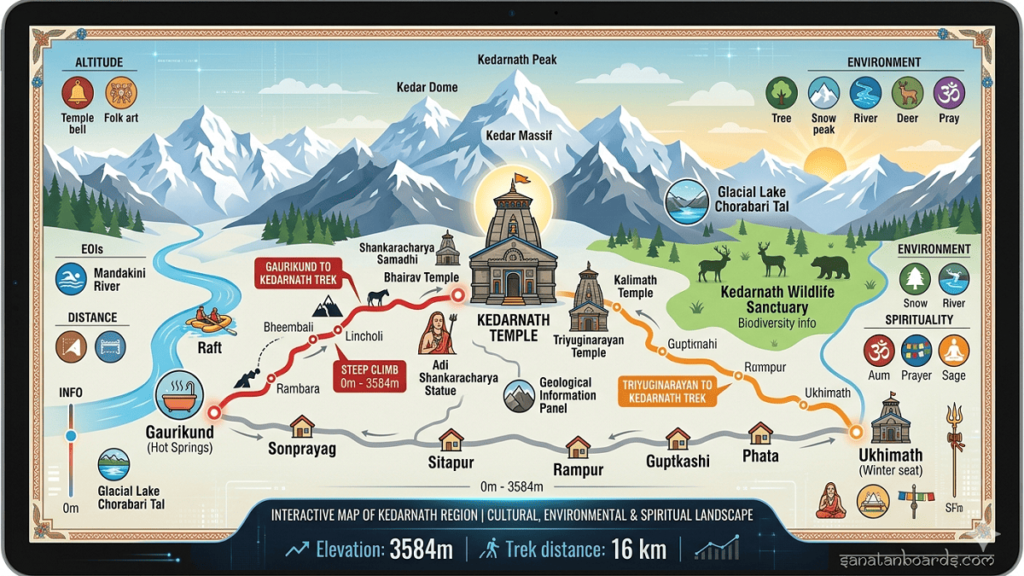
Case Study On Kedarnath Devbhoomi Network
Introduction
The Kedarnath Devbhoomi Network is an educational and knowledge-sharing initiative aimed at promoting awareness about the sacred region of Kedarnath in Uttarakhand, India, often referred to as Devbhoomi, or the “Land of the Gods.” This network focuses on providing educational resources, cultural knowledge, environmental awareness, and spiritual insights to students, researchers, pilgrims, and the global community.
Background
Kedarnath is a high-altitude Himalayan region known for its ancient temple dedicated to Lord Shiva, extreme weather conditions, and fragile ecosystem. The need for a structured knowledge-sharing system arose because the region is geographically remote, making access to formal education and awareness about local ecology, culture, and disaster preparedness challenging. The Kedarnath Devbhoomi Network was conceived to bridge this gap by leveraging digital platforms, local expertise, and educational programs.
Objectives
The primary objectives of the network include:
- Educating learners about the spiritual and cultural significance of Kedarnath.
- Raising awareness of the ecological and environmental challenges in the Himalayan region.
- Promoting disaster preparedness and sustainable practices for pilgrims and local communities.
- Facilitating research and documentation of local traditions, folklore, and biodiversity.
- Connecting students, educators, and spiritual seekers through digital and community-based resources.
Implementation
The Kedarnath Devbhoomi Network employs multiple strategies:
- Digital Learning Platforms: Websites, e-learning modules, and virtual tours allow learners to study Kedarnath remotely.
- Community Engagement: Local scholars and guides provide firsthand knowledge about traditions, rituals, and environmental practices.
- Educational Workshops: Seminars and field visits encourage experiential learning about culture, ecology, and disaster management.
- Research Collaboration: Partnerships with universities and environmental organizations support studies on biodiversity, climate change, and Himalayan geology.
Impact
Since its implementation, the network has:
- Enhanced cultural literacy among students and pilgrims.
- Improved awareness of environmental conservation and disaster preparedness.
- Documented oral histories and traditions of local communities.
- Enabled global access to educational resources about Kedarnath and Devbhoomi.
Challenges
- Limited internet connectivity in high-altitude areas.
- Seasonal accessibility due to harsh weather conditions.
- Ensuring authenticity and accuracy of cultural and historical content.
Conclusion
The Kedarnath Devbhoomi Network demonstrates how technology, community collaboration, and education can be combined to preserve cultural heritage, promote environmental awareness, and facilitate learning. By bridging the gap between remote Himalayan communities and global learners, it serves as a model for educational initiatives in other geographically challenging regions.
White Paper On The Kedarnath Devbhoomi Network
Executive Summary
The Kedarnath Devbhoomi Network is a strategic educational initiative designed to preserve, document, and disseminate knowledge about the sacred Himalayan region of Kedarnath in Uttarakhand, India, known as Devbhoomi (“Land of the Gods”). This white paper explores the need, objectives, implementation strategies, and benefits of the network, highlighting its role in fostering education, cultural preservation, environmental awareness, and research in a geographically remote yet spiritually and ecologically significant area.
1. Introduction
Kedarnath, situated at an altitude of over 3,500 meters, is famous for its ancient Kedarnath Temple, extreme weather, and fragile Himalayan ecosystem. The region attracts thousands of pilgrims annually but faces challenges in accessibility, education, and disaster preparedness. The Kedarnath Devbhoomi Network addresses these challenges by creating a comprehensive educational ecosystem that connects learners, educators, researchers, and local communities.
2. Objectives of the Network
The network aims to:
- Educate students and pilgrims about the spiritual, historical, and cultural significance of Kedarnath.
- Raise awareness about the ecological and environmental challenges in the Himalayas.
- Promote disaster preparedness and sustainable practices for residents and visitors.
- Facilitate research on Himalayan biodiversity, climate impact, and local traditions.
- Enhance digital learning accessibility, providing virtual platforms for remote education.
3. Scope and Target Audience
The network serves:
- Educational Institutions: Schools, colleges, and universities teaching Himalayan studies, culture, and ecology.
- Students and Learners: Individuals seeking knowledge about spirituality, geography, or environmental studies.
- Local Communities: Villages near Kedarnath who contribute knowledge and benefit from educational resources.
- Researchers and Scholars: Academics studying culture, environment, or disaster management in the region.
- Pilgrims and Tourists: Visitors seeking educational guidance about local traditions, rituals, and sustainability practices.
4. Implementation Strategy
The network employs multiple channels:
- Digital Platforms: E-learning modules, websites, mobile applications, and virtual tours.
- Community Engagement: Local scholars, guides, and educators provide authentic knowledge and hands-on learning.
- Workshops and Field Programs: Interactive learning experiences, environmental awareness programs, and disaster preparedness training.
- Research Collaboration: Partnerships with universities, NGOs, and government bodies to collect data, conduct studies, and document cultural practices.
5. Benefits and Impact
- Enhanced cultural literacy and spiritual understanding.
- Improved environmental awareness and disaster preparedness.
- Preservation of oral histories, traditions, and Himalayan knowledge.
- Greater accessibility to learning for global audiences via digital platforms.
6. Challenges
- Limited internet and digital infrastructure in remote areas.
- Seasonal accessibility due to harsh weather conditions.
- Ensuring authenticity and accuracy of cultural and ecological information.
7. Conclusion
The Kedarnath Devbhoomi Network represents a model for integrating education, culture, environment, and technology in remote and sensitive regions. By connecting learners, communities, and scholars, the network not only preserves the spiritual and cultural heritage of Kedarnath but also promotes environmental stewardship, research, and sustainable practices. It is essential for ensuring that future generations understand and value the significance of Devbhoomi, both spiritually and ecologically.
Industry Applications Of Kedarnath Devbhoomi Network
1. Tourism and Hospitality Industry
The network helps tourism operators, hotels, and pilgrimage services by providing:
- Accurate educational content for tourists about Kedarnath’s spiritual and cultural significance.
- Guidance on sustainable tourism practices to reduce environmental impact.
- Pilgrim safety and disaster preparedness resources integrated into tour packages.
This strengthens responsible tourism and enhances the visitor experience.
2. Educational Technology (EdTech) Industry
The network is leveraged by EdTech platforms to develop:
- E-learning modules on Himalayan ecology, spiritual traditions, and cultural heritage.
- Virtual reality (VR) and augmented reality (AR) experiences for remote learning.
- Interactive digital resources for schools and universities.
This fosters remote education and global learning accessibility.
3. Environmental and Disaster Management Industry
Given Kedarnath’s fragile ecosystem, the network supports:
- Research and data collection for climate change studies and disaster risk assessment.
- Community training programs on landslide, flood, and avalanche preparedness.
- Sustainable development planning for Himalayan communities.
This application ensures safer and environmentally responsible practices in the region.
4. Media and Communication Industry
The network supports local and national media by:
- Providing accurate news, cultural updates, and event coverage from Kedarnath.
- Offering platforms for documenting and broadcasting heritage, festivals, and educational initiatives.
This strengthens information dissemination and cultural awareness.
5. Research and Academia
Universities and research institutions utilize the network for:
- Field studies on biodiversity, geology, and Himalayan culture.
- Publishing educational materials and research papers.
- Facilitating collaborative projects with local communities.
This bridges the gap between traditional knowledge and modern research.
Conclusion
The Kedarnath Devbhoomi Network serves as a versatile platform that connects education, culture, technology, and sustainability. Its industry applications span tourism, EdTech, environmental management, media, and research, making it a multifaceted resource for promoting knowledge, heritage, and responsible development in the sacred Himalayan region.
source : Y Series Production
ASK FAQ
What is Kedarnath Devbhoomi Network?
It is an educational and knowledge-sharing initiative focused on promoting awareness about Kedarnath’s spiritual, cultural, and ecological significance.
Who can benefit from Kedarnath Devbhoomi Network?
Students, researchers, pilgrims, local communities, and educators seeking information on Devbhoomi.
Why is Kedarnath Devbhoomi Network important?
It preserves cultural heritage, promotes environmental awareness, and provides educational resources about the sacred Himalayan region.
How does Kedarnath Devbhoomi Network work?
Through digital platforms, e-learning modules, workshops, community collaboration, and research initiatives for global access to knowledge.
Where is Kedarnath Devbhoomi Network implemented?
In Uttarakhand’s Kedarnath region, online platforms, educational institutions, and Himalayan communities to facilitate learning and awareness.
Table of Contents
Disclaimer: The content on this blog is for educational and informational purposes only. While we strive for accuracy, the information may not reflect the latest updates. Readers should verify details independently before making decisions based on this content.