Kashi Vishwanath Temple is one of the most significant and sacred spiritual centers in India, located in the ancient city of Varanasi, Uttar Pradesh. The temple holds deep cultural, religious, and historical importance and is widely recognized as a powerful symbol of devotion and spirituality. It is dedicated to Lord Shiva, who is worshipped here in the form of Vishwanath, meaning “The Ruler of the Universe.”
Varanasi, also known as Kashi, is considered one of the oldest continuously inhabited cities in the world. Within this spiritually vibrant city, Kashi Vishwanath Temple stands as a central pillar of faith for millions of devotees. The temple attracts pilgrims from across India and around the world, who visit to seek blessings, peace of mind, and spiritual liberation.
The temple is located on the western bank of the sacred river Ganga, which adds to its religious significance. The belief that a visit to this temple and a dip in the holy river can cleanse one’s sins and lead to salvation makes it one of the most revered pilgrimage destinations.
Over centuries, the temple has witnessed destruction and reconstruction multiple times, reflecting the resilience of faith and devotion among followers. Despite historical challenges it has remained a symbol of eternal spirituality and unwavering belief.
Today, Kashi Vishwanath Temple is not only a place of worship but also a representation of India’s rich cultural heritage. Its architecture, rituals, and spiritual environment continue to inspire devotion and curiosity among visitors. The temple stands as a timeless reminder of the deep connection between humanity, divinity, and tradition.
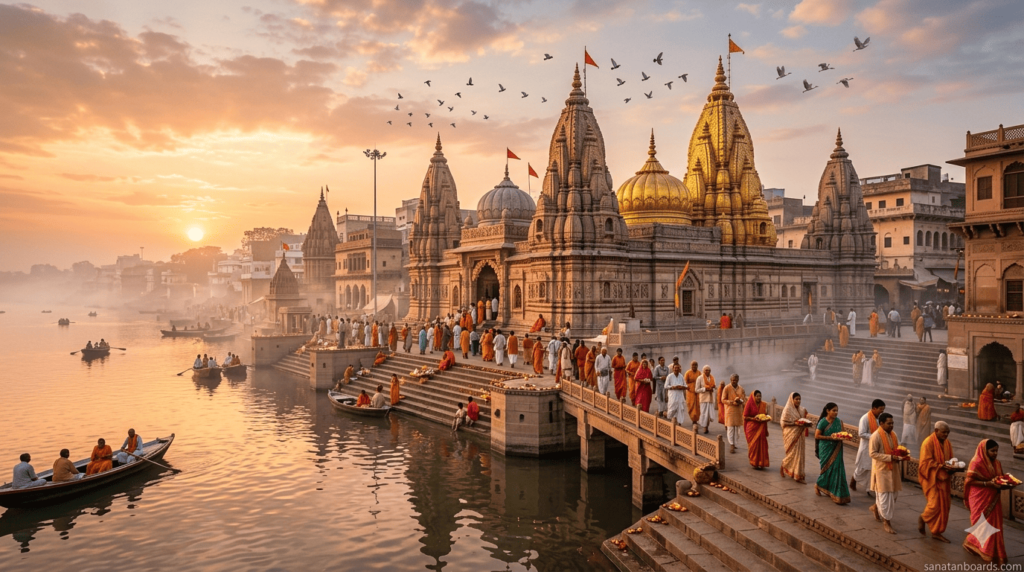
What Is Kashi Vishwanath (Uttar Pradesh) ?
Kashi Vishwanath Temple is a sacred Hindu temple dedicated to Lord Shiva, one of the principal deities in Hinduism. The word “Vishwanath” translates to “Lord of the Universe,” emphasizing Shiva’s role as the supreme cosmic force. The temple is situated in Varanasi, Uttar Pradesh, and forms one of the most important pilgrimage sites in Hindu tradition.
The temple complex is not just a single structure but a spiritual hub that includes multiple shrines and sacred spaces. The main deity, a Shiva Lingam, is placed in the sanctum sanctorum, where devotees offer prayers, flowers, and sacred water from the Ganges.
Religiously, it is believed that visiting this temple grants moksha, or liberation from the cycle of birth and death. This belief has made it a central destination in the spiritual journeys of millions of devotees.
Historically, the temple has been rebuilt several times due to invasions and destruction, yet it has always regained its spiritual prominence. The current structure was reconstructed in the 18th century under the patronage of Maharani Ahilyabai Holkar, a major figure in Indian history known for temple restoration efforts.
The temple also plays an important role in daily religious rituals. Special prayers, aarti ceremonies, and festivals such as Mahashivratri attract large gatherings of devotees. The spiritual energy of the temple, combined with the chanting of mantras and ringing of bells, creates an atmosphere of deep devotion.
Who Is Required Kashi Vishwanath (Uttar Pradesh) ?
The spiritual presence of Kashi Vishwanath Temple is considered significant for a wide range of individuals, particularly those seeking religious fulfillment, inner peace, and spiritual growth. Devotees of Lord Shiva form the primary group who feel a strong connection to this sacred place.
Hindu pilgrims from across India and abroad consider a visit to the temple an essential part of their spiritual journey. It is especially important for those following Shaivism, a tradition that worships Lord Shiva as the supreme deity.
The temple is also significant for individuals performing religious rites for ancestors. Many people visit Varanasi and the Kashi Vishwanath Temple to perform rituals such as pind daan, which is believed to bring peace to departed souls.
Spiritual seekers, yogis, and scholars interested in Indian philosophy also find deep relevance in the temple. The environment of Varanasi, combined with the temple’s spiritual aura, provides an ideal setting for meditation and introspection.
Additionally, tourists and cultural researchers are drawn to the temple due to its historical and architectural significance. It represents centuries of Indian heritage, resilience, and devotion.
People experiencing emotional distress or searching for meaning in life often turn toward such sacred spaces for mental peace and clarity. The temple’s atmosphere is believed to provide comfort and a sense of divine connection.
When Kashi Vishwanath (Uttar Pradesh) Is Required ?
The spiritual importance of Kashi Vishwanath Temple becomes especially relevant at various stages of life, during specific religious occasions, and in moments of personal transformation or crisis.
One of the most common times people feel drawn to the temple is during major Hindu festivals, especially Mahashivratri. This festival, dedicated to Lord Shiva, sees thousands of devotees visiting the temple to offer prayers, observe fasts, and participate in night-long worship ceremonies. Similarly, Shravan month (Sawan) is considered highly auspicious for Shiva worship, making it another peak period for pilgrimage.
The temple is also considered important during life transitions such as birth, marriage, and death rituals. Families often visit to seek blessings for new beginnings or to perform rituals for deceased relatives. It is believed that prayers offered here during these moments carry deep spiritual significance.
Many individuals visit the temple when they experience emotional hardship, confusion, or loss. In such times, the temple serves as a place of reflection, helping people regain mental stability and hope. The spiritual environment is believed to guide individuals toward clarity and acceptance.
Additionally, people planning major life decisions such as career changes, business ventures, or personal commitments may visit to seek divine guidance. The belief in Lord Shiva’s protective and transformative power makes the temple a symbolic place for seeking direction.
From a cultural perspective, visits to the temple are often planned during pilgrimages across Varanasi, especially when exploring the sacred Ganga ghats and other nearby religious sites.
Where Kashi Vishwanath (Uttar Pradesh) Is Required ?
Kashi Vishwanath Temple holds its most direct relevance in Varanasi, Uttar Pradesh, where it is physically located and spiritually centered. The temple is situated near the western bank of the holy river Ganga, in the heart of the old city area known as Kashi.
Within Varanasi, the temple is required as a central hub of religious activity. It is surrounded by narrow lanes, traditional markets, and numerous smaller shrines, all of which contribute to its vibrant spiritual ecosystem. Devotees often combine their visit to the temple with visits to nearby ghats such as Dashashwamedh Ghat, where evening Ganga Aarti takes place.
Beyond Varanasi, the influence of the temple extends across India. It is required in the spiritual practices of devotees who incorporate Shiva worship into their daily rituals. Many households keep symbolic references to Kashi Vishwanath in their prayer rooms and daily prayers.
In the broader context of Hindu pilgrimage circuits, the temple is an essential part of the “Char Dham” and other sacred journeys undertaken across India. Pilgrims from states such as Uttar Pradesh, Bihar, Madhya Pradesh, Maharashtra, and Tamil Nadu frequently travel to Varanasi specifically to visit this temple.
Internationally, the temple is required in discussions of Indian spirituality, heritage tourism, and religious studies. Scholars, researchers, and cultural enthusiasts across the world study Varanasi and its temples as part of understanding ancient Hindu civilization.
It is also required in the cultural identity of Hindu diaspora communities living outside India. Many consider visiting Kashi Vishwanath at least once in their lifetime as a spiritual milestone.
How Kashi Vishwanath (Uttar Pradesh) Is Required?
The importance of Kashi Vishwanath Temple is realized through various forms of worship, rituals, cultural practices, and spiritual engagement. Devotees “use” or approach the temple in structured and meaningful ways based on tradition and belief.
One of the primary ways the temple is required is through darshan, the act of seeing the deity. Devotees enter the temple to witness the Shiva Lingam and offer prayers. This act is considered highly sacred and is believed to establish a direct spiritual connection with Lord Shiva.
Ritual offerings such as water from the Ganges, milk, flowers, and bilva leaves are commonly used in worship. These offerings symbolize purity, devotion, and surrender. Priests guide rituals and help maintain traditional practices that have been followed for generations.
Another important aspect is the performance of aarti, a ceremonial worship involving lamps, chants, and music. Morning and evening aartis create a powerful spiritual atmosphere that strengthens the emotional and devotional experience of visitors.
The temple is also required in pilgrimage practices. Devotees often follow a structured journey that includes bathing in the Ganga, visiting multiple shrines, and completing prayers at Kashi Vishwanath as the final spiritual step.
In a broader cultural sense, the temple is required as a center of learning and tradition. Scriptures, mythological stories, and teachings about Lord Shiva are shared and preserved through temple activities.
Technologically and administratively, the temple is also managed using modern systems for crowd control, security, and pilgrimage management, ensuring smooth access for millions of visitors.
Thus, Kashi Vishwanath Temple is required through devotion, ritual practices, pilgrimage traditions, and cultural preservation, making it an active and living center of spirituality.
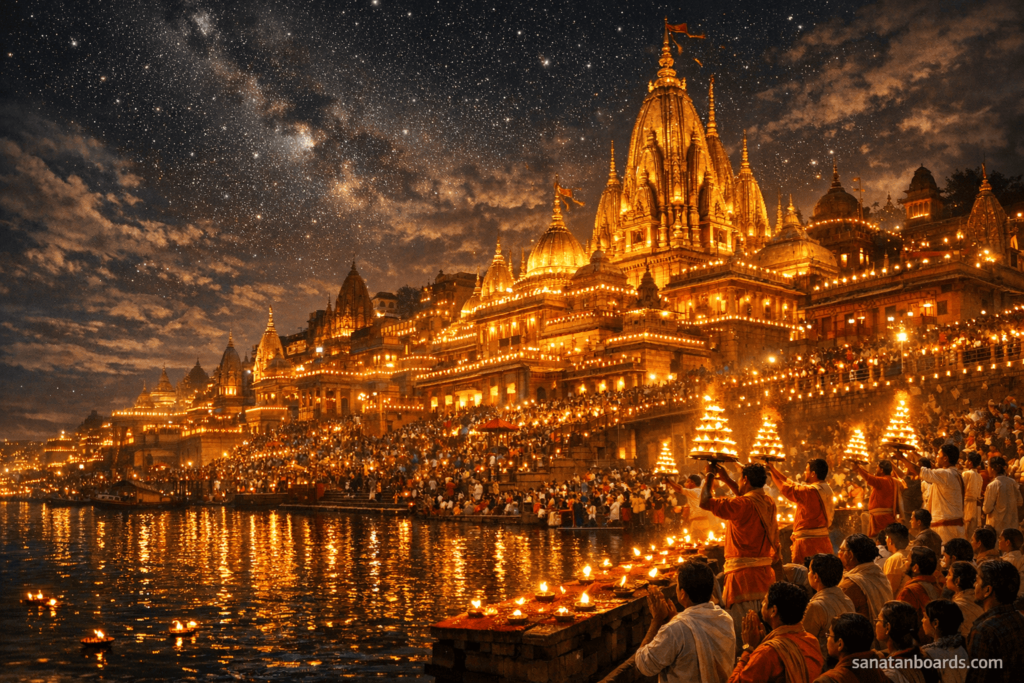
Case Study On Kashi Vishwanath (Uttar Pradesh)
The case study of Kashi Vishwanath Temple focuses on its historical evolution, cultural resilience, and transformation into a modern spiritual landmark while retaining its ancient significance.
Historically, the temple has undergone several cycles of destruction and reconstruction. Despite these disruptions, its spiritual importance never diminished. The resilience of devotees ensured that worship continued in some form even during challenging times. This demonstrates the strong emotional and religious attachment associated with the temple.
A major turning point in its history was the reconstruction under Maharani Ahilyabai Holkar in the 18th century. Her efforts restored the temple’s structure and revived its prominence as a major pilgrimage site. This reconstruction symbolizes the role of leadership in preserving cultural heritage.
In modern times, the Kashi Vishwanath Corridor Project has significantly transformed the temple surroundings. The project aimed to improve accessibility, reduce congestion, and enhance the overall pilgrimage experience. It also connected the temple more directly with the Ganga river, making the spiritual journey more seamless for visitors.
From a sociocultural perspective, the temple serves as a unifying space for people from diverse backgrounds. Millions of pilgrims from different regions, languages, and social groups come together with a shared sense of devotion. This highlights the temple’s role in promoting cultural integration.
Economically, the temple contributes significantly to Varanasi’s tourism industry. Local businesses, guides, hotels, and transport services benefit from the constant influx of pilgrims and tourists. The temple thus acts as an economic driver for the region.
Environmentally, managing large crowds while preserving the sacred Ganga river poses challenges. Efforts have been made to maintain cleanliness, regulate waste, and improve infrastructure around the temple complex.
From a governance perspective, the temple is managed with a combination of traditional priestly systems and modern administrative support. This dual system ensures that religious customs are preserved while maintaining order and safety for visitors.
The case study highlights that Kashi Vishwanath Temple is not just a religious site but also a living institution that reflects history, culture, economy, and #kashivishwanathuttarpradesh modern urban development. Its continued relevance demonstrates how ancient traditions can adapt to contemporary needs while preserving their core spiritual identity.
White Paper On Kashi Vishwanath (Uttar Pradesh)
A structured analysis of Kashi Vishwanath Temple positions it as a multidimensional institution combining spirituality, heritage, governance, and socio-economic impact.
1. Strategic Importance
The temple functions as a core spiritual node in Hindu pilgrimage networks. Its significance extends beyond religion into cultural identity and national heritage representation.
2. Heritage Conservation
The temple represents centuries of architectural and spiritual evolution. Preservation efforts focus on maintaining traditional design while integrating modern safety and accessibility features. The balance between conservation and modernization is critical.
3. Pilgrimage Management
With millions of annual visitors, efficient crowd management systems are essential. Structured entry and exit pathways, security checks, and digital monitoring systems have improved visitor experience while ensuring safety.
4. Economic Impact
The temple significantly contributes to the regional economy of Varanasi. Tourism-driven industries such as hospitality, transportation, retail, and handicrafts benefit directly from pilgrim inflow.
5. Urban Development
The development of surrounding infrastructure, especially the corridor connecting the temple with the Ganga river, has reshaped the urban landscape. This integration supports smoother pilgrimage flow and enhances urban aesthetics.
6. Cultural Continuity
The temple acts as a repository of ancient rituals, traditions, and oral histories. It plays a vital role in preserving Hindu cultural practices and transmitting them across generations.
7. Social Impact
The temple fosters social cohesion by bringing together people from diverse backgrounds. It also serves as a space for collective participation in rituals and festivals.
8. Challenges
Key challenges include overcrowding, environmental sustainability, and maintaining historical integrity while accommodating modern infrastructure demands.
9. Opportunities
Digitalization of services, improved crowd analytics, and sustainable tourism practices present opportunities for long-term development.
Conclusion
Kashi Vishwanath Temple represents a dynamic institution where spirituality intersects with governance, economy, and culture. Its management model reflects #Sanatanboardsinvasai how ancient heritage sites can evolve sustainably in the modern era.
Industry Application On Kashi Vishwanath (Uttar Pradesh)
The influence of Kashi Vishwanath Temple extends into multiple industries, making it a significant cultural and economic catalyst.
1. Tourism and Hospitality Industry
The temple is a major driver of religious tourism in India. Hotels, guest houses, and travel agencies in Varanasi rely heavily on pilgrim traffic. Organized tour packages often include temple visits as a central attraction.
2. Transportation Industry
Railways, airlines, taxis, and local transport services benefit from the constant flow of visitors. Special pilgrimage trains and guided travel services are often designed around peak temple visitation periods.
3. Retail and Handicrafts Industry
Local markets around Varanasi sell religious items such as flowers, offerings, souvenirs, and handicrafts. The temple indirectly supports thousands of artisans and small businesses.
4. Media and Cultural Industry
The temple is frequently featured in documentaries, films, travel shows, and digital content. It plays a role in promoting Indian culture globally through visual storytelling.
5. Digital Technology and Smart Pilgrimage Systems
Modern systems for crowd management, online booking, and digital darshan services are increasingly integrated into temple operations. This enhances accessibility and improves visitor experience.
6. Education and Research
The temple is a subject of study in fields such as history, architecture, religious studies, and anthropology. Universities and research institutions analyze its cultural and historical significance.
7. Event Management Industry
Large festivals and religious events require organized planning, security, logistics, and hospitality services. This creates opportunities for professional event management services.
8. Public Administration and Governance
The temple serves as a model for managing high-density pilgrimage sites. Coordination between religious authorities and government agencies is essential for smooth operations.
9. Environmental Management Industry
Efforts to maintain cleanliness around the Ganga river and temple surroundings involve waste management systems, sanitation services, and ecological conservation initiatives.
Conclusion
Kashi Vishwanath Temple influences multiple industries directly and indirectly. Its role extends beyond spirituality into economic development, #Sanatanboardsinmumbai technological innovation, cultural promotion, and urban planning.
source : Yatra Vats
ASK FAQ
1. When should one visit Kashi Vishwanath Temple?
Devotees visit Kashi Vishwanath Temple mainly during Maha Shivratri, Shravan month, and other Hindu festivals for spiritual blessings and rituals.
2. Why is Kashi Vishwanath Temple required in life events?
It is visited during major life events like birth, marriage, and ancestral rituals to seek Lord Shiva’s blessings and peace.
3. When do pilgrims most commonly go to Kashi Vishwanath?
Pilgrims commonly visit during religious holidays, special puja days, and peak pilgrimage seasons like Shravan (Sawan).
4. When is Kashi Vishwanath Temple important for spiritual seekers?
It is important during times of stress, confusion, or spiritual searching when individuals seek inner peace and guidance.
5. When is Kashi Vishwanath Temple considered most powerful to visit?
It is believed to be most powerful during early morning aarti, Shivratri nights, and sacred Hindu calendar dates dedicated to Lord Shiva.
Table of Contents
Disclaimer
This content is prepared for informational and educational purposes only. It is intended to provide general knowledge and structured understanding of the topic. It does not intend to offend, misrepresent, or alter any religious beliefs, traditions, or cultural sentiments. All interpretations are based on commonly available historical and cultural references.