Kanchipuram, in Tamil Nadu, is one of India’s oldest and most revered spiritual cities. Known as a city of temples and learning, it has been a center of religious and cultural activity for centuries. Among its sacred sites, the Kamakshi Amman Temple stands out as the heart of Shakti worship in the region.
Shakti, meaning power or energy, represents the divine feminine — the creative force that sustains and animates the universe. At the Kamakshi Temple, the goddess is worshipped as Adi Parashakti, embodying wisdom, prosperity, and spiritual strength. The temple is also one of the Shakti Peethas, sacred sites connected to the mythology of Goddess Sati, making Kanchipuram a key node in the broader spiritual network of Devi worship in India.
The city’s temples, rituals, and festivals form a living network of Shakti, where devotees seek blessings, inner strength, and guidance. Beyond religion, this network preserves centuries of art, philosophy, and cultural heritage, offering insights into how myth, devotion, and community shape society.
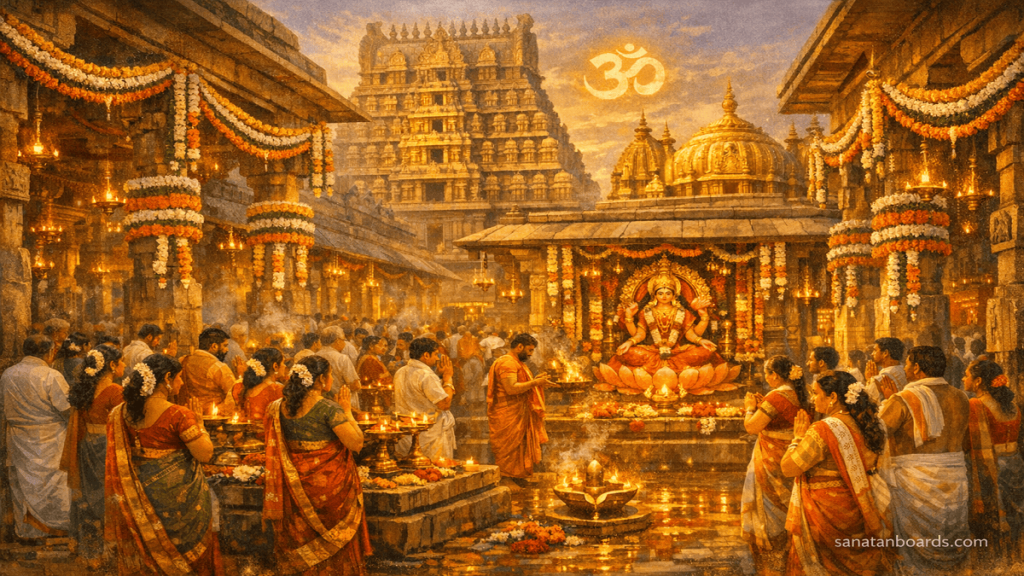
What Is KANCHIPURAM SHAKTI NETWORK?
The Kanchipuram Shakti Network refers to the spiritual and cultural web of divine feminine energy centered around the worship of Goddess Shakti in the historic city of Kanchipuram in Tamil Nadu, India. Kanchipuram is one of India’s oldest sacred cities, renowned for its temples, including the famous Kamakshi Amman Temple, where Goddess Kamakshi — a powerful form of Adi Parashakti (the supreme goddess in the Shaktism tradition of Hinduism) — is venerated. This temple is considered a Shakti Peetha, a sacred site linked to the cosmic feminine power and devotion.
In this context, “Shakti Network” doesn’t mean modern technology or computers; rather, it signifies a network of sacred places, rituals, beliefs, and practices that connect devotees with the energy of the Divine Mother. Pilgrims, scholars, and devotees from across India visit Kanchipuram to experience this Shakti tradition, which also links with wider Hindu Shakti sites and cultural traditions through shared mythology, festivals, and philosophical teachings about feminine divine power.
The network reflects how spiritual geography, temple culture, and devotional traditions together form a living, interconnected web of sacred feminine energy in the city of Kanchipuram.
Who Is Required for the Kanchipuram Shakti Network?
The Kanchipuram Shakti Network is not a physical organization but a spiritual and cultural system centered on the worship of Goddess Shakti in Kanchipuram, Tamil Nadu. Participation in this network involves multiple groups of people, each playing a vital role in sustaining and experiencing the divine energy.
1. Devotees and Pilgrims:
At the heart of the network are devotees, who visit temples like the Kamakshi Amman Temple, offering prayers, performing rituals, and participating in festivals. Their devotion fuels the living energy of the network, connecting them with the goddess and with other pilgrims across the region. Devotees of all ages, backgrounds, and spiritual inclinations form the primary community of the Shakti network.
2. Priests and Ritual Specialists:
Temple priests (pujaris) and ritual experts are essential for maintaining the sacred traditions. They perform daily worship (pujas), manage temple festivals, and guide devotees in proper rituals. Their knowledge ensures that the spiritual practices remain authentic and aligned with centuries-old traditions.
3. Scholars and Educators:
Religious scholars, historians, and spiritual teachers study the mythology, philosophy, and rituals of Shakti worship. They interpret texts, conduct discourses, and teach the next generation about the significance of the goddess and her temples, ensuring cultural and spiritual continuity.
4. Cultural and Community Leaders:
Local communities, artisans, and cultural organizers sustain the network through temple arts, music, dance, and festival organization. They maintain the tangible and intangible heritage of Kanchipuram, supporting rituals, pilgrimages, and public celebrations.
When is the Kanchipuram Shakti Network Required?
1. During Daily Worship:
The network is continuously active through the daily rituals and pujas performed in temples like the Kamakshi Amman Temple. Every morning and evening, priests conduct ceremonies that invoke the goddess’s energy. Devotees participate in these rituals to seek guidance, protection, and blessings. In this sense, the network is required daily, as the regular worship maintains the living presence of Shakti in the city.
2. During Festivals and Special Occasions:
The network becomes particularly significant during major Shakti festivals, such as Navaratri, which celebrates the nine forms of the goddess, and other local temple festivals. During these events, large gatherings of devotees, priests, scholars, and cultural performers come together. Rituals, music, dance, and community offerings ensure the transmission of spiritual and cultural knowledge. The network is required most visibly during such festivals, as collective devotion amplifies the goddess’s energy and reinforces the city’s spiritual identity.
3. During Personal or Community Spiritual Needs:
The network is also invoked whenever individuals or communities seek divine support. People may turn to the temples and their rituals during life events like marriages, childbirth, or periods of hardship, relying on Shakti’s protective and transformative power. The network functions as a support system, spiritually, socially, and culturally, providing guidance and a sense of belonging.
4. During Educational and Cultural Activities:
The network is required when teaching and preserving knowledge about Shakti traditions, temple arts, and mythology. Scholars, teachers, and cultural organizers activate the network through discourses, workshops, and cultural programs. This ensures that the heritage of Kanchipuram’s Shakti worship is passed on to future generations.
Where Is The Kanchipuram Shakti Network Required?
1. Temples – The Core of the Network
The most important place where the network is required is, naturally, the temples of Kanchipuram, especially the Kamakshi Amman Temple. This temple, dedicated to Goddess Kamakshi (a form of Adi Parashakti), is a key Shakti Peetha and serves as the spiritual hub of the city. Daily rituals, ceremonies, and prayers are conducted here by priests and devotees. The network is required within temple premises to maintain the living presence of the goddess, ensure the proper performance of rituals, and guide devotees in their spiritual practices.
Other important temples in Kanchipuram, such as the Ekambareswarar Temple and Varadaraja Perumal Temple, are also connected to the Shakti network, either directly or through associated rituals and festivals. Collectively, these temples form a geographical and spiritual grid, sustaining the flow of divine energy throughout the city.
2. Community Spaces and Festival Grounds
The Shakti network is also required in community spaces, where large gatherings and public rituals take place. During festivals such as Navaratri, Karthigai Deepam, and temple anniversaries, open grounds, temple courtyards, and streets are used for processions, devotional music, dance performances, and communal worship. These spaces allow the network to function beyond temple walls, connecting devotees from diverse neighborhoods and backgrounds.
3. Educational and Cultural Centers
The network is required in learning and cultural spaces, such as schools, religious institutions, and cultural centers. Here, scholars, teachers, and practitioners share knowledge about Shakti worship, mythology, temple architecture, music, and dance traditions. By activating the network in these spaces, the heritage of Kanchipuram is preserved for future generations, reinforcing the city’s identity as a hub of sacred feminine energy and learning.
4. Homes and Personal Spaces
Finally, the Shakti network extends to homes and private spaces. Devotees maintain small altars, conduct daily prayers, and observe rituals that connect them spiritually to the goddess. In these personal spaces, the network provides guidance, protection, and a sense of belonging, ensuring that Shakti’s energy is experienced both publicly and privately.
How the Kanchipuram Shakti Network is Required?
1. Through Rituals and Daily Worship
The network is required through the performance of daily rituals in temples such as the Kamakshi Amman Temple, the spiritual heart of Kanchipuram. Priests (pujaris) conduct morning and evening pujas, offer flowers, light lamps, and chant mantras to invoke the goddess’s presence. Devotees participate in these rituals, creating a living connection between human devotion and divine energy. The network is required here to maintain spiritual continuity, ensuring that sacred practices remain consistent and effective.
2. During Festivals and Special Occasions
The network is particularly required during major festivals such as Navaratri, Karthigai Deepam, and temple anniversaries, when large numbers of devotees gather. Rituals are intensified, processions are organized, and cultural performances take place. In these periods, the network acts as a coordinating system, bringing together priests, devotees, cultural performers, and volunteers to collectively generate spiritual energy. The presence of the network ensures that these celebrations are ritually accurate, culturally vibrant, and spiritually potent.
3. Through Education and Cultural Preservation
The network is also required through education, scholarship, and cultural transmission. Religious scholars, spiritual teachers, and local cultural institutions interpret texts, explain the significance of rituals, and teach temple arts such as classical music and dance. By doing so, the network ensures that the philosophy and practice of Shakti worship are passed on to future generations. Workshops, discourses, and storytelling sessions strengthen the network by linking spiritual experience with knowledge and understanding.
4. In Personal and Community Life
The Kanchipuram Shakti Network is required in everyday personal and community contexts, including homes, local gatherings, and charitable activities connected to temples. Devotees perform home rituals, celebrate small-scale festivals, and engage in community service inspired by the goddess. These practices extend the network beyond temple walls, ensuring that Shakti’s energy infuses the social and personal fabric of Kanchipuram.
5. Through Coordination and Participation
Ultimately, the network is required through the active coordination of all participants — priests, devotees, scholars, artisans, and community members. Each individual contributes a part, whether through ritual, learning, performance, or service, forming a living, interconnected system that sustains the spiritual and cultural identity of Kanchipuram.
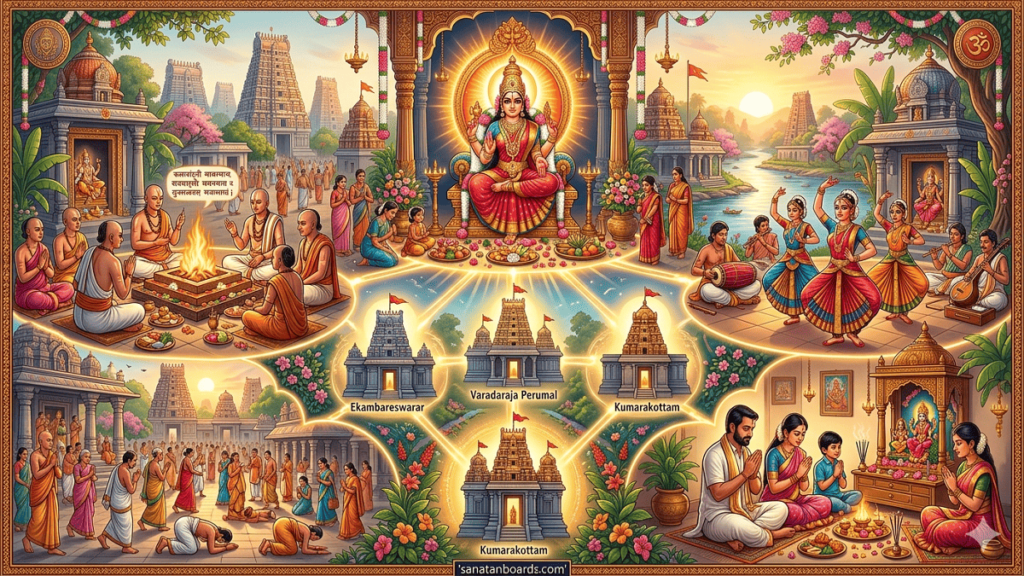
Case Study On The Kanchipuram Shakti Network
Introduction
Kanchipuram, Tamil Nadu, is one of India’s most historic spiritual cities, renowned for its temples and rich religious traditions. Among these, the Kamakshi Amman Temple stands out as a hub of Shakti worship, where Goddess Kamakshi, a form of Adi Parashakti (the supreme feminine divine), is venerated. The Kanchipuram Shakti Network refers to the living web of spiritual, cultural, and community practices connected to the worship of Shakti, encompassing temples, rituals, festivals, education, and devotees.
Objective of the Study
This case study aims to explore how the Kanchipuram Shakti Network functions, who is involved, and the ways it sustains spiritual and cultural continuity in the city. It also examines its role in education, social cohesion, and heritage preservation.
Methodology
The study draws on:
- Observations of temple rituals and festivals in Kanchipuram.
- Interviews with priests, scholars, and local devotees.
- Review of historical and contemporary sources on Shakti worship and Kanchipuram temple culture.
Findings
1. Temples as the Core
The Kamakshi Amman Temple serves as the primary node of the network. Daily worship, special pujas, and ritual coordination require the active participation of priests and devotees, ensuring continuous spiritual energy.
2. Festivals and Community Engagement
Festivals such as Navaratri activate the network on a larger scale. The participation of thousands of devotees, cultural performers, and local communities transforms the city into a living center of Shakti energy, strengthening social cohesion.
3. Education and Cultural Transmission
The network functions through educational initiatives such as temple schools, workshops, and discourses, where knowledge about rituals, mythology, and temple arts is passed to younger generations, ensuring cultural preservation.
4. Personal and Domestic Spaces
Devotees extend the network to homes, maintaining small shrines and performing daily rituals, demonstrating how sacred energy permeates both public and private life.
Conclusion
The Kanchipuram Shakti Network is required wherever spiritual, cultural, and educational continuity is essential — in temples, during festivals, in homes, and through learning. Its success depends on the coordinated participation of priests, devotees, scholars, and communities. The network exemplifies how spiritual traditions can sustain cultural identity and community cohesion over centuries.
White Paper On The Kanchipuram Shakti Network
Executive Summary
The Kanchipuram Shakti Network is a living spiritual and cultural ecosystem centered on the worship of Goddess Shakti in Kanchipuram, Tamil Nadu. At its heart is the Kamakshi Amman Temple, a major Shakti Peetha, where devotees, priests, scholars, and community members participate in rituals, festivals, and educational activities. This network is essential for sustaining divine feminine energy, promoting cultural continuity, and reinforcing social cohesion. This white paper analyzes the network’s participants, functions, and impact, offering insights for scholars, educators, and spiritual practitioners.
Introduction
Kanchipuram, known as the “City of Temples,” has been a center of Hindu religious activity for centuries. The worship of Goddess Kamakshi embodies the concept of Shakti, the cosmic feminine power. The Kanchipuram Shakti Network represents the interlinked system of temples, rituals, festivals, educational practices, and personal devotion that together maintain the city’s spiritual and cultural vitality.
Key Components of the Network
- Temples:
Temples like Kamakshi Amman Temple, Ekambareswarar Temple, and others form the central nodes where rituals are performed and devotees congregate. - Devotees:
Devotees provide the network’s energy through daily worship, offerings, and participation in festivals. - Priests and Ritual Specialists:
Priests ensure the authenticity of rituals, manage temple functions, and guide devotees. - Scholars and Educators:
They preserve knowledge through discourses, workshops, and the teaching of temple arts, mythology, and philosophy. - Community and Cultural Practitioners:
Artisans, musicians, dancers, and volunteers contribute to festivals, processions, and cultural transmission.
Functioning of the Network
- Daily Operations: Rituals maintain the goddess’s energy and connect devotees spiritually.
- Festivals: Events like Navaratri and Karthigai Deepam activate large-scale participation, strengthening communal and spiritual bonds.
- Education: Temple schools and workshops pass on knowledge about Shakti worship, mythology, and cultural heritage.
- Home Practices: Devotees extend the network to private spaces, performing rituals that integrate spiritual energy into everyday life.
Significance
- Spiritual: Sustains the presence of Shakti and facilitates personal and collective devotion.
- Cultural: Preserves centuries-old arts, rituals, and traditions.
- Social: Strengthens community bonds through collective participation in festivals and temple activities.
- Educational: Provides structured learning about mythology, philosophy, and cultural practices.
Conclusion
The Kanchipuram Shakti Network is a dynamic, interconnected system that blends devotion, culture, and education. Its effectiveness depends on the coordinated participation of temples, priests, devotees, scholars, and community members. By understanding and supporting this network, Kanchipuram continues to serve as a model of living religious, cultural, and educational heritage.
Industry Applications Of The Kanchipuram Shakti Network
1. Tourism and Hospitality Industry
Kanchipuram is globally recognized as a pilgrimage and heritage tourism hub. The Shakti Network drives:
- Pilgrimage Tourism: Devotees from across India visit temples like Kamakshi Amman Temple during festivals like Navaratri, boosting hotel, transport, and local businesses.
- Cultural Tourism: Temple architecture, traditional rituals, and festivals attract cultural tourists and heritage enthusiasts.
- Event Management: Large-scale festivals and processions require coordination, creating opportunities for hospitality, catering, and logistics services.
2. Education and Research Industry
The network’s structure and practices offer significant educational applications:
- Religious Studies & Anthropology: Scholars can study Shakti traditions, rituals, and community networks.
- Art and Music Education: Temple arts, classical music, and dance forms are taught in cultural institutions, promoting traditional knowledge.
- Workshops and Cultural Exchange: Educational programs for students and tourists help transmit heritage knowledge.
3. Wellness and Spiritual Industry
The Shakti Network supports industries related to mind-body wellness and spiritual practices:
- Yoga and Meditation Centers: Temples and spiritual sites provide venues and inspiration for wellness programs.
- Spiritual Retreats: Pilgrims and tourists participate in immersive experiences, connecting with Shakti energy.
- Holistic Lifestyle Programs: Traditional rituals, temple diets, and devotional practices can inspire wellness initiatives.
4. Artisan and Handicraft Industry
Kanchipuram is also known for its silk weaving and handicrafts, which are tied culturally to temples and festivals:
- Kanchipuram Silk Sarees: Festivals and temple rituals drive demand for traditional textiles.
- Cultural Merchandise: Statues, devotional items, and temple art support local artisans and small businesses.
5. Technology and Digital Industry
Modern technology can enhance the Shakti Network’s reach:
- Virtual Temple Tours: Digital platforms allow global devotees to participate remotely.
- Mobile Apps: For ritual guidance, festival calendars, and donations.
- Digital Archives: Preserving manuscripts, rituals, and temple histories for research and education.
Conclusion
The Kanchipuram Shakti Network is more than a spiritual system; it is a dynamic framework that intersects with multiple industries — tourism, education, wellness, handicrafts, and technology. By integrating traditional practices with modern industrial strategies it supports economic development while preserving cultural heritage.
SOURCE : Ankittammmm🇮🇳
ASK FAQ
What is the Kanchipuram Shakti Network?
The Kanchipuram Shakti Network is a spiritual and cultural ecosystem in Kanchipuram, Tamil Nadu, centered on Goddess Kamakshi, involving temples, rituals, festivals, and community participation.
Where is the Kanchipuram Shakti Network located?
It is primarily centered around the Kamakshi Amman Temple in Kanchipuram, with connected activities extending to temples, homes, and community spaces across the city.
Who participates in the Kanchipuram Shakti Network?
The network involves devotees, priests, scholars, artisans, and local communities who perform rituals, preserve traditions, and organize festivals.
When is the Kanchipuram Shakti Network most active?
It is most active during daily temple rituals, major festivals like Navaratri and Karthigai Deepam, and educational or cultural programs.
How does the Kanchipuram Shakti Network function?
The network functions through rituals, festivals, education, community participation, and devotional practices at temples and homes, sustaining spiritual energy and cultural heritage.
Table of Contents
Disclaimer:
The content provided about the Kanchipuram Shakti Network is intended for educational and informational purposes only. While we strive for accuracy, the information may not be complete or up-to-date. Readers are encouraged to consult relevant experts for personal, religious, or professional guidance.