The Kakatiya Dynasty was a prominent South Indian dynasty that ruled over the Telugu-speaking regions, mainly present-day Telangana and Andhra Pradesh, from the 12th to the early 14th century. Among its rulers, King Prataparudra stands out as one of the most significant figures. He ascended the throne in the late 13th century and became the last great king of the dynasty. Under his reign, the Kakatiya kingdom witnessed remarkable cultural, architectural, and military achievements.
Prataparudra was known for his administrative acumen and efforts to strengthen the fortifications of Warangal, the dynasty’s capital. He maintained a well-organized army and actively defended the kingdom from invasions, especially from the Delhi Sultanate. Despite facing several military challenges, his rule is remembered for patronizing arts, literature, and temple construction, which contributed significantly to Telugu culture.
He also implemented land revenue reforms that improved the agricultural system, ensuring prosperity for his subjects. Prataparudra’s reign marked the peak of the Kakatiya Dynasty’s influence, but eventually, his conflicts with the Delhi Sultanate led to the decline of the dynasty. Today, his legacy is celebrated for his courage, cultural contributions, and dedication to his kingdom.
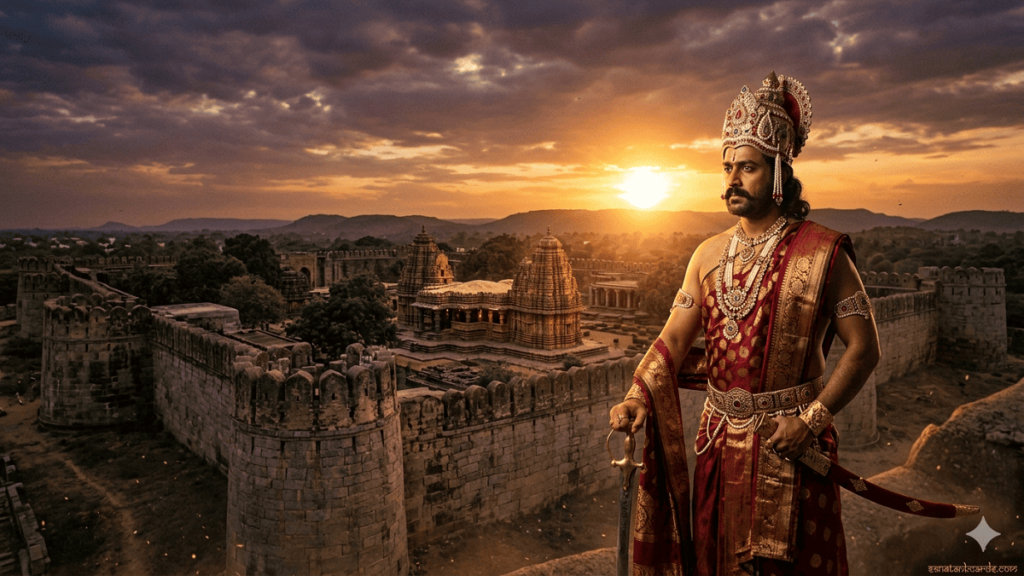
What Is Kakatiya Dynasty – King Prataparudra ?
The Kakatiya Dynasty – King Prataparudra refers to the period of rule of the Kakatiya kingdom under its last powerful monarch, Prataparudra, who reigned during the late 13th and early 14th centuries. The Kakatiya Dynasty itself was a medieval South Indian dynasty known for its governance, trade, architecture, and patronage of arts and literature. The dynasty primarily ruled over the Telugu-speaking regions, including modern-day Telangana, parts of Andhra Pradesh, and neighboring areas.
King Prataparudra is historically significant because he embodied both the political and cultural peak of the Kakatiya rule. He inherited a kingdom strengthened by his predecessors, especially Ganapati Deva, and further fortified its defenses. Warangal, the capital city, became a symbol of military strength and architectural brilliance under his leadership. Prataparudra is also noted for building and maintaining impressive structures, including forts, tanks, and temples, many of which still exist as heritage sites.
During his reign, the king faced significant military threats from northern invasions, particularly the Delhi Sultanate under Alauddin Khalji. Despite his efforts to resist Prataparudra was eventually defeated, which marked the end of Kakatiya sovereignty. However, his reign is remembered for consolidating Telugu culture and administration. The king supported literature in Telugu and Sanskrit, encouraged agricultural development through land reforms, and maintained trade networks that contributed to the region’s prosperity.
Who Is Required Kakatiya Dynasty – King Prataparudra ?
Understanding KAKATIYA DYNASTY – KING PRATAPARUDRA is particularly relevant for historians, students, and researchers interested in medieval South Indian history. Scholars who study political systems, dynastic governance, or the socio-economic structures of the 12th-14th centuries find his reign a crucial case study. Prataparudra’s rule is significant because it illustrates the administrative, military, and cultural achievements of the Kakatiya Dynasty, providing insight into governance models that supported prosperity and stability in medieval India.
Students of architecture and art history are also required to learn about Prataparudra, as his reign saw remarkable contributions to temple architecture and urban planning. The famous Warangal Fort, the Thousand Pillar Temple, and various irrigation projects are enduring examples of his vision. These structures are studied for their engineering, aesthetics, and historical significance.
Moreover, political scientists and military historians examine Prataparudra’s strategies in defending his kingdom against the Delhi Sultanate. His experiences highlight the complexities of diplomacy, regional alliances, and warfare during a time of great upheaval in the Indian subcontinent. Understanding his methods and failures can provide lessons on leadership, resilience, and strategy.
Cultural enthusiasts and linguists also find studying his period relevant because of the patronage he extended to Telugu and Sanskrit literature. Scholars exploring the evolution of Telugu language, literary styles, and epigraphy find valuable material from inscriptions and manuscripts preserved from his time.
Even modern policymakers and economists can draw lessons from his reign. Prataparudra implemented agrarian reforms, maintained trade networks, and encouraged local governance, which contributed to the kingdom’s stability and economic prosperity. These historical strategies can inspire contemporary approaches to regional development and governance.
When Is Kakatiya Dynasty – King Prataparudra Required ?
The study of KAKATIYA DYNASTY – KING PRATAPARUDRA is required at multiple points in educational, historical, and cultural contexts. Firstly, it is essential for understanding medieval Indian history, especially the political and social developments in the Telugu-speaking regions during the 12th to 14th centuries. Prataparudra’s reign, as the last significant ruler of the Kakatiya Dynasty, marks a critical period when the kingdom faced external invasions and internal administrative challenges. By studying this era, students and historians gain insight into the decline of regional powers in India and the subsequent influence of the Delhi Sultanate on South Indian politics.
Secondly, learning about King Prataparudra is required when examining cultural and architectural heritage. His reign witnessed the construction of monumental forts, temples, and irrigation systems, which are still studied today for their engineering brilliance and artistic value. The Warangal Fort and the Thousand Pillar Temple are prime examples of architecture under his rule. Understanding when these constructions occurred helps researchers trace the evolution of medieval South Indian architecture and urban planning.
Thirdly, the study is required when analyzing governance and administrative systems. Prataparudra implemented efficient revenue collection methods, land reforms, and local administration through decentralized governance. By identifying when these reforms were implemented, scholars can better understand the mechanisms that sustained the kingdom’s prosperity and stability during his reign.
Additionally, this knowledge is required in literary studies, especially for Telugu and Sanskrit literature. During Prataparudra’s reign, poets and scholars flourished under royal patronage. Understanding the timeline of his rule allows researchers to place literary works in historical context, connecting cultural production with political events.
Furthermore, this study is required when exploring military history. Prataparudra’s battles against the Delhi Sultanate demonstrate medieval strategies, fortification techniques, and defense mechanisms. Knowing when these confrontations occurred provides clarity on the geopolitical pressures of the era and the challenges faced by regional rulers.
Finally, knowledge of when Prataparudra ruled is essential for comparative studies of Indian dynasties. His reign (circa late 13th to early 14th century) provides a reference point for understanding transitions in power, culture, and economics across South India during that period.
Where Is Kakatiya Dynasty – King Prataparudra Required ?
The study of KAKATIYA DYNASTY – KING PRATAPARUDRA is required in several geographical and institutional contexts due to its historical, cultural, and educational significance. Primarily, it is required in the Telangana and Andhra Pradesh regions of India, where the Kakatiya Dynasty had its political and cultural stronghold. Warangal, the dynasty’s capital, and surrounding areas still house monuments, temples, and forts built during Prataparudra’s reign. Scholars, archaeologists, and historians working in these regions often focus on his rule to understand the local history, urban development, and architectural innovations.
It is also required in academic institutions and research centers across India and globally. Universities offering South Asian history, archaeology, or cultural studies include the Kakatiya period in their curriculum. Learning about King Prataparudra in these contexts helps students understand regional governance systems, military strategies, and cultural patronage in medieval India. Institutions like the Archaeological Survey of India (ASI) and research departments of Telugu universities emphasize the preservation and study of Kakatiya monuments, making his reign relevant for field studies and scholarly research.
Furthermore, it is required in museums and cultural heritage sites. Museums showcasing Indian medieval history often include inscriptions, coins, and artifacts from the Kakatiya period, highlighting Prataparudra’s contributions. Visitors and researchers can study these materials to understand the social, economic, and artistic achievements under his rule.
It is also required in literary and linguistic studies. Scholars studying Telugu and Sanskrit literature focus on works composed during his reign. The geographical relevance here extends beyond Telangana to other Telugu-speaking areas and neighboring regions influenced by Kakatiya culture.
Finally, it is required in tourism and heritage management sectors. Warangal Fort, the Thousand Pillar Temple, and other sites linked to Prataparudra attract educational tours, cultural enthusiasts, and historians. Understanding the historical geography of his rule is essential for accurate documentation, conservation, and promoting awareness of South Indian heritage.
How Is Kakatiya Dynasty – King Prataparudra Required ?
The study of KAKATIYA DYNASTY – KING PRATAPARUDRA is required through various methods, approaches, and tools to gain a comprehensive understanding of his reign, achievements, and legacy. Primarily, it is required through historical research. Scholars and students analyze inscriptions, manuscripts, coins, and official records from the Kakatiya period. These sources provide information about Prataparudra’s administrative policies, military campaigns, land reforms, and patronage of arts. Epigraphy, the study of inscriptions, is particularly important in decoding the historical context of his rule.
It is also required through archaeological exploration. Excavations at Warangal Fort, the Thousand Pillar Temple, and other Kakatiya sites reveal the architectural techniques, urban planning, and defensive strategies used during Prataparudra’s reign. Archaeologists study fortifications, water reservoirs, and temple layouts to understand how the king’s governance influenced city infrastructure and public welfare.
Additionally, it is required through literary and linguistic analysis. Prataparudra’s reign supported Telugu and Sanskrit poets, scholars, and authors. By studying literary works, scholars can trace cultural development, social norms, and intellectual trends of the period. This method is crucial for understanding the role of royal patronage in shaping regional literature and language evolution.
It is also required through comparative political and military studies. Historians compare Prataparudra’s strategies with contemporary rulers in South India and northern kingdoms like the Delhi Sultanate. Studying his alliances, fortification strategies, and battles helps understand the dynamics of medieval warfare and diplomacy.
Furthermore, it is required through field studies and heritage preservation efforts. Students and researchers visit historical sites to observe, document, and analyze physical remnants of his rule. This hands-on approach aids in connecting textual knowledge with real-world evidence, deepening the understanding of Kakatiya culture, architecture, and governance.
Finally, it is required through modern digital tools and technology. GIS mapping, 3D reconstructions, and virtual heritage tours allow scholars to recreate Warangal Fort, temples, and irrigation systems, providing insights into the layout, scale, and design under Prataparudra’s reign. Digital archives of inscriptions and manuscripts make research accessible globally.
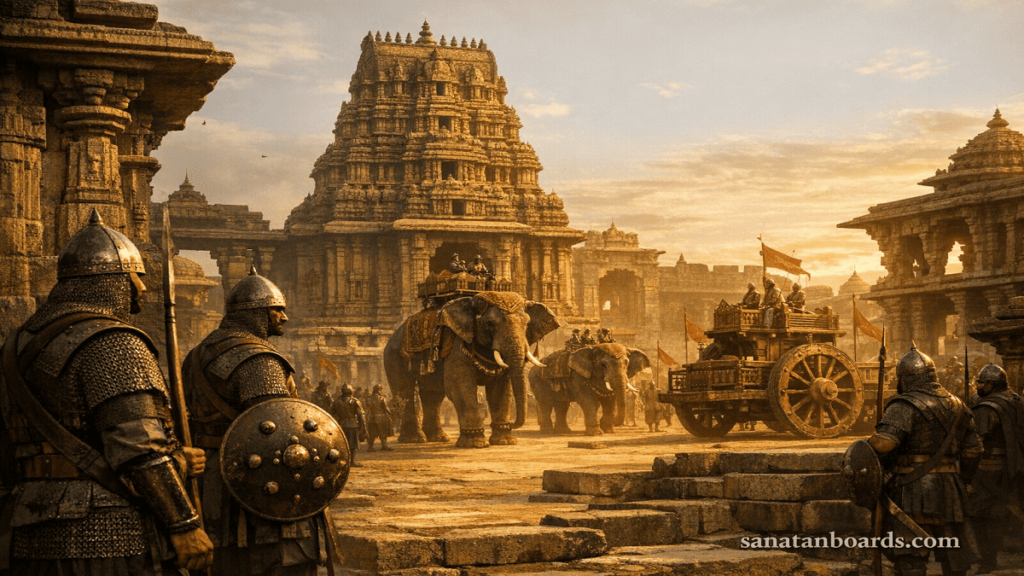
Case Study On Kakatiya Dynasty – King Prataparudra
Introduction
The Kakatiya Dynasty – King Prataparudra represents one of the most remarkable chapters in medieval South Indian history. The Kakatiya Dynasty, ruling primarily over present-day Telangana and parts of Andhra Pradesh from the 12th to the early 14th century, achieved significant cultural, political, and architectural milestones. King Prataparudra, the last powerful ruler of this dynasty, ascended the throne in the late 13th century and presided over the kingdom during a period marked by both prosperity and challenges. His reign serves as a critical case study in understanding the dynamics of medieval governance, military strategy, cultural patronage, and urban development in South India.
Historical Background
The Kakatiya Dynasty originated from the Telugu-speaking region and rose to prominence under rulers like Prola II and Ganapati Deva. By the time Prataparudra became king, the dynasty had already established a well-organized administrative system, thriving agriculture, and fortified cities. The Kakatiyas were renowned for their construction of forts, temples, and tanks, which not only served military purposes but also facilitated trade and agriculture. Prataparudra inherited a kingdom that was culturally rich, economically stable, and militarily prepared, yet it faced the looming threat of northern invasions, particularly from the Delhi Sultanate.
Administrative Achievements
Prataparudra’s reign is notable for strong administrative reforms. He maintained a decentralized governance system with local officials, known as nayakas and samantas, overseeing villages and towns. Land revenue collection was streamlined, and irrigation projects, including tanks and canals, were expanded to enhance agricultural productivity. These measures ensured the prosperity of both urban and rural populations and strengthened the kingdom’s economic base. Scholars note that Prataparudra’s policies reflected a balance between central authority and local autonomy, which was crucial for maintaining order and stability in a diverse kingdom.
Military Campaigns and Strategies
King Prataparudra is perhaps best remembered for his military acumen. The Kakatiya kingdom was under constant threat from northern invaders, especially the Delhi Sultanate led by Alauddin Khalji. Prataparudra fortified Warangal and other strategic locations to resist invasions. He maintained a well-trained army, strategically utilized forts, and employed advanced war techniques for the era. Despite his efforts, repeated attacks eventually weakened the kingdom, culminating in the Delhi Sultanate capturing Warangal in 1323 CE. His military campaigns illustrate both the resilience and vulnerability of regional powers in medieval India.
Cultural and Architectural Contributions
One of the hallmarks of Prataparudra’s reign was his patronage of culture and architecture. The construction of the Warangal Fort, with its massive stone gateways and fortified walls, demonstrated advanced engineering skills. The Thousand Pillar Temple and Ramappa Temple are prime examples of intricate stonework and artistic excellence under his rule. Moreover, Prataparudra supported Telugu and Sanskrit literature, fostering a golden age of poetry and scholarly works. These contributions highlight his vision of promoting a rich cultural identity alongside political governance.
Economic Policies and Trade
Prataparudra understood the importance of a strong economy for sustaining the kingdom. He promoted agriculture through irrigation and introduced land reforms that encouraged productivity. Trade was encouraged both within the kingdom and with neighboring regions, enhancing economic stability. Warangal, the capital, became a hub for crafts, textiles, and commerce. The king’s economic strategies reflected foresight in maintaining the prosperity and resilience of his kingdom amidst external threats.
Decline and Legacy
Despite his achievements, the Kakatiya Dynasty declined following repeated invasions by the Delhi Sultanate. Prataparudra was eventually captured and died in captivity, marking the end of the dynasty’s sovereignty. However, his legacy lived on through the forts, temples, inscriptions, and cultural advancements that continue to be studied today. Prataparudra’s reign is considered the zenith of Kakatiya power, and his contributions remain a testament to the kingdom’s influence on South Indian history.
Lessons from the Case Study
- Balanced Governance – Prataparudra’s decentralized administration ensured local governance while maintaining central control.
- Cultural Patronage – Supporting arts and literature strengthens societal cohesion and preserves cultural identity.
- Strategic Defense – Fortifications and military planning are essential in sustaining sovereignty, though external pressures can still prevail.
- Economic Planning – Irrigation, agriculture, and trade are vital for regional prosperity.
Conclusion
The case study of KAKATIYA DYNASTY – KING PRATAPARUDRA demonstrates the interplay between political power, cultural patronage, military strategy, #kakatiyadynastykingprataparudrainmumbai and economic governance in medieval South India. His reign serves as a model for understanding the challenges faced by regional kingdoms and the enduring impact of their administrative and cultural policies. Today, his legacy is preserved #kakatiyadynastykingprataparudrainsouthindia not only in historical texts but also in the monumental structures and literary achievements that continue to inspire scholars and enthusiasts alike.
White Paper On Kakatiya Dynasty – King Prataparudra
Executive Summary
The Kakatiya Dynasty – King Prataparudra represents a pivotal period in the history of South India, highlighting a combination of military resilience, administrative efficiency, cultural patronage, and economic foresight. This white paper examines the historical significance, governance structures, military strategies, cultural contributions, and economic policies during King Prataparudra’s reign. The insights drawn from his rule provide valuable lessons for historians, policy analysts, cultural scholars, and governance experts.
Introduction
The Kakatiya Dynasty, flourishing between the 12th and early 14th centuries, controlled the Telugu-speaking regions, including present-day Telangana and parts of Andhra Pradesh. Among its rulers, King Prataparudra (reign: late 13th–early 14th century) stands out for his efforts to consolidate power, strengthen infrastructure, and promote arts and literature. Despite facing invasions from the Delhi Sultanate, his reign marked the cultural and administrative zenith of the dynasty. This white paper explores how Prataparudra’s leadership impacted politics, culture, economy, and society.
Historical Context
The Kakatiya Dynasty emerged from a relatively small principality and grew into a dominant regional power under rulers like Ganapati Deva. By the time Prataparudra ascended the throne, the dynasty had established strong administrative systems, thriving trade networks, and fortified cities. Warangal, the capital, became both a political and cultural hub. Prataparudra inherited these strengths and faced the challenge of protecting the kingdom from northern invasions while maintaining internal stability.
Governance and Administration
King Prataparudra implemented a decentralized yet efficient governance system. Local officials, including nayakas and samantas, managed towns and villages, ensuring law and order while facilitating tax collection. The king introduced land revenue reforms to streamline administration and improve agricultural output. This approach demonstrates how medieval South Indian rulers combined central authority with local governance to maintain control over diverse regions. The white paper highlights these administrative practices as early examples of effective decentralized governance.
Military Strategies
Prataparudra’s reign coincided with growing threats from the Delhi Sultanate. He reinforced Warangal Fort and other key strategic locations, maintaining a well-trained army equipped for both offensive and defensive operations. Despite these measures, repeated invasions eventually led to the fall of Warangal in 1323 CE. The study of his military strategies provides insights into medieval fortification techniques, strategic alliances, and the limitations faced by regional powers in resisting large-scale invasions.
Cultural Contributions
Prataparudra was a major patron of culture, architecture, and literature. Temples such as the Thousand Pillar Temple and Ramappa Temple exemplify the advanced engineering and artistic vision of his reign. Moreover, he supported Telugu and Sanskrit literature, encouraging poets and scholars to produce works that enriched the region’s intellectual and cultural heritage. This patronage not only strengthened the kingdom’s identity but also contributed to the long-term preservation of regional culture.
Economic Policies
Economic development was central to Prataparudra’s governance. Irrigation projects, including tanks and canals, improved agricultural productivity, while trade networks facilitated commerce both within the kingdom and with neighboring regions. The king’s focus on agriculture, craft production, and trade ensured economic resilience, even amidst external threats. Modern economists can study these measures to understand the interconnection between governance, infrastructure, and regional prosperity.
Legacy and Lessons
- Balanced Leadership – Prataparudra combined administrative efficiency, military strategy, and cultural patronage to sustain the kingdom.
- Infrastructure and Urban Planning – Forts, irrigation systems, and temples reflect advanced urban management strategies.
- Cultural Preservation – Supporting arts and literature strengthens regional identity and social cohesion.
- Economic Resilience – Diversified agriculture, trade, and efficient revenue systems sustain prosperity even in turbulent times.
Conclusion
The reign of KAKATIYA DYNASTY – KING PRATAPARUDRA provides a comprehensive case of how leadership can integrate governance, defense, culture, and economy. Despite facing military defeat, his policies and cultural #kakatiyadynastykingprataparudrainkarnataka contributions left an enduring legacy in South India. Scholars, policymakers, and cultural managers can draw lessons from his administration, military planning, and cultural patronage to #kakatiyadynastykingprataparudraintamilnadu understand how historical frameworks influence modern governance and heritage preservation.
Industry Application Of Kakatiya Dynasty – King Prataparudra
Introduction
The reign of KAKATIYA DYNASTY – KING PRATAPARUDRA may belong to medieval South Indian history, yet its lessons have contemporary relevance across various industries. From architecture and urban planning to tourism, heritage management, education, and even governance consulting, Prataparudra’s legacy provides practical insights for modern applications. This paper explores how historical knowledge of his rule can inform and inspire modern industries.
Architecture and Construction Industry
Prataparudra’s reign is renowned for monumental architecture, including the Warangal Fort, Thousand Pillar Temple, and Ramappa Temple. These structures demonstrate advanced techniques in stone construction, fortification, and urban layout. Modern architects and civil engineers can study these constructions for insights into:
- Structural Stability: Kakatiya forts and temples were designed to withstand natural forces and attacks, offering lessons in durable construction.
- Aesthetic Integration: The fusion of art, religious symbolism, and functionality can inspire modern sustainable and culturally integrated architecture.
- Urban Planning: The strategic placement of tanks, forts, temples, and roads provides early examples of urban zoning and infrastructure planning.
Architectural firms and urban development consultants often reference medieval structures like those from Prataparudra’s reign to develop projects that balance heritage aesthetics with modern functionality.
Heritage Tourism Industry
The Kakatiya monuments and temples have immense potential for heritage tourism. Industries focused on cultural tourism can leverage the historical significance of King Prataparudra’s reign to design educational tours, immersive experiences, and interactive heritage trails. Applications include:
- Virtual Reality (VR) and Augmented Reality (AR): Creating digital reconstructions of Warangal Fort and temples allows tourists to experience history firsthand.
- Cultural Festivals: Organizing events celebrating Kakatiya culture, arts, and crafts can attract visitors while promoting local artisans.
- Educational Tourism Packages: Collaborations between travel agencies and educational institutions can provide students with historical context while visiting Kakatiya sites.
Tourism industries benefit from both economic returns and social impact, preserving cultural heritage while generating awareness about Prataparudra’s contributions.
Education and Research Industry
Prataparudra’s reign is a rich subject for academic research and educational programs. Universities and research institutions can develop modules on Kakatiya governance, military strategy, cultural patronage, and urban planning. Applications in this sector include:
- Curriculum Development: Incorporating case studies of his administrative policies and architecture in history, literature, and political science courses.
- Research Publications: Scholars can analyze inscriptions, literary works, and monuments to publish studies on socio-economic systems of medieval South India.
- Workshops and Seminars: Organizing programs to train students in epigraphy, archaeology, and heritage preservation techniques.
Educational technologies can also integrate digital archives of inscriptions and 3D reconstructions, making Prataparudra’s legacy accessible globally.
Cultural and Creative Industries
Prataparudra’s patronage of literature and arts has direct relevance for the creative industry, including film, media, literature, and design. Examples include:
- Historical Films and Documentaries: Recreating Prataparudra’s reign for visual storytelling in cinema or digital platforms.
- Graphic Design and Animation: Using Kakatiya motifs and architecture in modern design for branding, textiles, or interactive media.
- Literary Adaptations: Encouraging writers and playwrights to adapt historical events, legends, and poetry from his era.
By integrating historical insights into creative output, the cultural industry can enhance both educational value and audience engagement.
Governance and Management Consulting
Prataparudra’s administrative methods and decentralized governance models are applicable in modern management and policy-making. Examples include:
- Leadership Training: Studying his military strategies, crisis management, and decision-making under threat can inspire executive leadership programs.
- Urban and Rural Planning: Lessons from his irrigation projects, land reforms, and resource allocation can inform sustainable development strategies.
- Economic Policy Analysis: His trade networks and agrarian policies provide historical models for maintaining economic resilience in local governance.
Consulting firms and policy think tanks can apply these insights to improve organizational efficiency, project planning, and crisis response.
Technology and Digital Applications
Modern technology industries can use digital tools to preserve and study Prataparudra’s contributions. Applications include:
- GIS Mapping: Mapping Kakatiya forts, temples, and irrigation systems to analyze historical urban planning.
- 3D Modeling: Reconstructing structures for educational, tourism, and preservation purposes.
- Digital Archives: Storing inscriptions, manuscripts, and historical data in accessible digital platforms for research and public engagement.
These applications ensure that Prataparudra’s legacy is preserved while supporting modern industry innovation.
Conclusion
The legacy of KAKATIYA DYNASTY – KING PRATAPARUDRA has far-reaching applications across multiple industries. From architecture and tourism to education, cultural industries, governance, and technology, lessons from his reign continue to #sanatandharmaaccreditationboardsinmumbai inform modern practices. By integrating historical insights into contemporary frameworks, industries can enhance cultural preservation, economic development, and educational enrichment.
Prataparudra’s example shows that historical knowledge is not confined to textbooks; it has tangible applications in modern industry, #sanatandharmaaccreditationboardsinkarnataka demonstrating that lessons from the past can drive innovation, sustainability, and cultural continuity in the present.
SOURCE : Anveshi History Channel
ASK FAQ
Who was King Prataparudra of the Kakatiya Dynasty?
King Prataparudra was the last powerful ruler of the Kakatiya Dynasty, known for his administrative skills, military campaigns, and cultural patronage in 13th–14th century South India.
What are the major contributions of King Prataparudra?
He strengthened Warangal Fort, supported Telugu and Sanskrit literature, implemented land reforms, and built temples like the Thousand Pillar Temple.
When did King Prataparudra rule the Kakatiya Dynasty?
Prataparudra ruled in the late 13th century to early 14th century, marking the final phase of the Kakatiya Dynasty.
Where was the Kakatiya Dynasty under Prataparudra located?
The dynasty ruled over present-day Telangana and parts of Andhra Pradesh, with Warangal as its capital.
Why is King Prataparudra historically important?
He represents the peak of Kakatiya power, combining military defense, economic reforms, and cultural advancements, leaving a lasting legacy in South Indian history.
Table of Contents
Disclaimer
The content provided about KAKATIYA DYNASTY – KING PRATAPARUDRA is intended solely for educational and informational purposes. While every effort has been made to ensure accuracy, historical interpretations may vary, and readers should consult primary sources or academic research for in-depth study. This content does not promote or endorse any political, religious, or cultural perspective. It is not professional advice and should not be used for legal, financial, or commercial decisions. By using this material, readers acknowledge it is for knowledge enrichment, general learning, and historical awareness only.