Jayasimha Siddharaja, popularly known as JAYASIMHA SIDDHARAJA (SOLANKI), was one of the most powerful and influential rulers of the Solanki (Chaulukya) dynasty in medieval India. He ruled during the 12th century and played a significant role in shaping the political, cultural, and architectural landscape of western India, particularly in the region of present-day Gujarat. His reign is often considered a golden period marked by administrative efficiency, military strength, and remarkable patronage of art and learning.
Born into the Solanki royal lineage, Jayasimha inherited a well-established kingdom but expanded it further through strategic conquests and alliances. His leadership was characterized by a balance of strength and intellect, enabling him to maintain stability while fostering growth in multiple domains. He was not only a warrior king but also a visionary administrator who understood the importance of governance, infrastructure, and cultural development.
One of the most notable aspects of his rule was his contribution to architecture and water management systems. Temples, stepwells, and public works constructed during his time reflect advanced engineering skills and artistic excellence. His court was also a hub of scholars poets, and philosophers, making it a center of intellectual activity.
JAYASIMHA SIDDHARAJA (SOLANKI) is remembered not just for his territorial expansion but also for his efforts in promoting education, religion, and social harmony. His reign left a lasting legacy that continues to be studied and admired by historians and scholars. Through his achievements, he established himself as a symbol of power, wisdom, and cultural prosperity in Indian history.
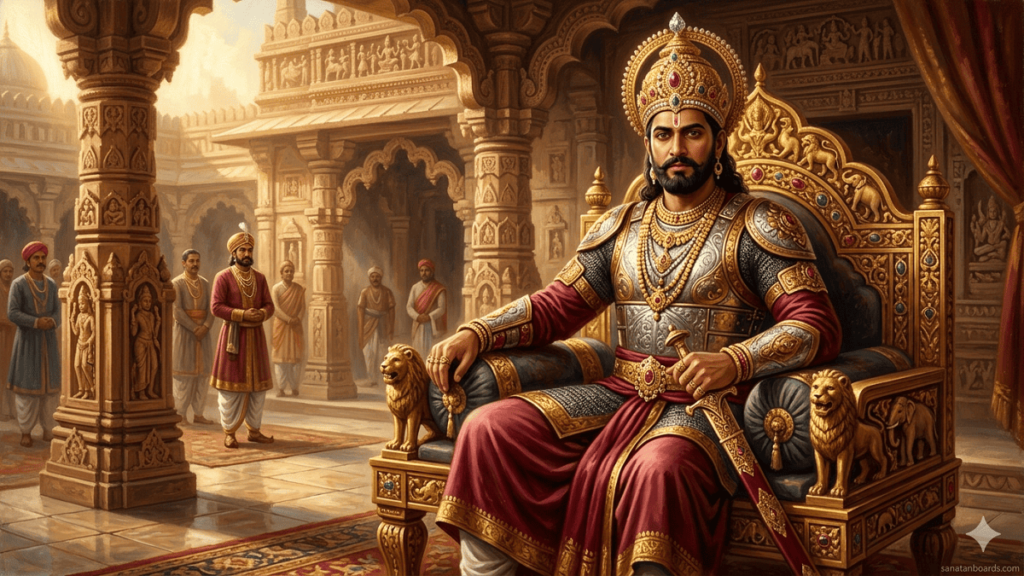
What Is Jayasimha Siddharaja (Solanki) ?
JAYASIMHA SIDDHARAJA (SOLANKI) refers to a historically significant monarch of the Solanki dynasty who ruled parts of western India during the medieval period. He is widely recognized as one of the most prominent rulers of Gujarat, known for his administrative capabilities, military achievements, and patronage of culture and learning.
In historical context, JAYASIMHA SIDDHARAJA (SOLANKI) represents more than just an individual ruler; he symbolizes a period of political stability and cultural flourishing. His reign is often associated with advancements in architecture, literature, and governance. The structures built during his time, including temples and water reservoirs, demonstrate a blend of functionality and artistic sophistication.
He also stands as a representation of effective kingship in ancient India. His governance model included efficient taxation systems, law enforcement, and public welfare initiatives. These elements contributed to the prosperity of his kingdom and the well-being of his subjects.
From a cultural perspective, JAYASIMHA SIDDHARAJA (SOLANKI) is linked to the promotion of education and religious tolerance. His court attracted scholars from different parts of the country, fostering an environment of intellectual exchange. He supported various religious traditions, which helped maintain harmony within his diverse kingdom.
Who Is Required Jayasimha Siddharaja (Solanki) ?
The concept of who requires JAYASIMHA SIDDHARAJA (SOLANKI) can be interpreted in terms of relevance to different groups such as historians, students, researchers, and individuals interested in Indian heritage. His life and achievements provide valuable insights into governance, culture, and historical development.
For historians, JAYASIMHA SIDDHARAJA (SOLANKI) is an essential subject of study. His reign offers detailed information about the political dynamics of medieval India, including territorial expansion, diplomacy, and conflict resolution. His policies and strategies are often analyzed to understand the functioning of ancient kingdoms.
Students and academic learners also require knowledge about JAYASIMHA SIDDHARAJA (SOLANKI) as part of their curriculum. His contributions to architecture, administration, and culture serve as important examples in subjects such as history, political science, and sociology.
Researchers focusing on art and architecture find his period particularly significant due to the construction of temples, stepwells, and other public works. These structures are studied for their design, engineering techniques, and cultural symbolism.
Additionally, individuals interested in cultural heritage and tourism benefit from understanding his legacy. Many historical sites associated with his reign continue to attract visitors and provide a glimpse into the past.
Thus, JAYASIMHA SIDDHARAJA (SOLANKI) is required by a wide range of audiences for educational, analytical, and cultural purposes, making him a key figure in the study of Indian history.
When Jayasimha Siddharaja (Solanki) Is Required ?
The relevance of JAYASIMHA SIDDHARAJA (SOLANKI) becomes significant in various contexts where understanding historical development, governance, and cultural evolution is essential. His importance is not limited to a specific time but extends across multiple academic and intellectual scenarios.
In educational settings, JAYASIMHA SIDDHARAJA (SOLANKI) is required when studying medieval Indian history. His reign provides a comprehensive example of how kingdoms functioned, how rulers maintained power, and how societies developed during that period. Students often encounter his contributions while learning about regional dynasties and their impact on India’s cultural and political landscape.
He is also required during discussions on ancient governance systems. His administrative methods, including taxation, infrastructure development, and public welfare, are studied to understand early models of governance. These discussions are particularly relevant in political science and public administration studies.
In the field of architecture and engineering, JAYASIMHA SIDDHARAJA (SOLANKI) is required when analyzing historical constructions such as temples and water management systems. His era showcases advanced techniques and artistic expression that continue to inspire modern architects and engineers.
Furthermore, his relevance emerges during cultural and heritage studies. Festivals, traditions, and historical sites linked to his reign are explored to understand the continuity of cultural practices. His support for scholars and religious institutions highlights the importance of intellectual and spiritual development in society.
He is also required in comparative studies where historians analyze different rulers and their approaches to governance and development. His achievements provide a benchmark for evaluating other contemporary rulers.
Overall, JAYASIMHA SIDDHARAJA (SOLANKI) is required whenever there is a need to explore the intersections of history, governance, culture, and architecture, making him a timeless subject of study.
Where Jayasimha Siddharaja (Solanki) Is Required ?
JAYASIMHA SIDDHARAJA (SOLANKI) is required in various domains and locations where historical knowledge and cultural understanding are emphasized. His influence is particularly strong in regions associated with the Solanki dynasty, especially Gujarat, but his significance extends beyond geographical boundaries.
In academic institutions such as schools, colleges, and universities, his contributions are included in history and social science curricula. Students learn about his reign to gain insights into medieval Indian politics, culture, and architecture. Libraries and research centers also require information about him for scholarly work and historical documentation.
Museums and heritage sites serve as important places where JAYASIMHA SIDDHARAJA (SOLANKI) is required. Artifacts, inscriptions, and architectural remains from his period are preserved and displayed to educate visitors about his legacy. These places play a crucial role in keeping history alive and accessible to the public.
Tourist destinations linked to his reign, including temples and stepwells, are significant locations where his presence is felt. Visitors exploring these sites often seek information about the ruler who commissioned or influenced their construction. This enhances the overall experience and appreciation of historical architecture.
In cultural studies and research institutions, his era is examined to understand the evolution of traditions, art forms, and societal structures. Scholars use his reign as a reference point for analyzing cultural continuity and change over time.
Additionally, digital platforms and educational resources have become modern spaces where JAYASIMHA SIDDHARAJA (SOLANKI) is required. Online courses, articles, and documentaries provide accessible information to a global audience, ensuring that his legacy reaches beyond physical boundaries.
Thus, JAYASIMHA SIDDHARAJA (SOLANKI) is required in educational, cultural, and historical spaces, both physical and digital, contributing to a deeper understanding of India’s rich heritage.
How Jayasimha Siddharaja (Solanki) Is Required ?
JAYASIMHA SIDDHARAJA (SOLANKI) is required in a variety of ways depending on the context in which his legacy is being explored. His contributions are utilized as examples, case references, and sources of inspiration across multiple disciplines.
In education, he is required as a subject of study. Teachers and educators use his life and achievements to explain concepts related to governance, leadership, and cultural development. His reign provides practical examples that help students understand theoretical ideas in a historical context.
In research, JAYASIMHA SIDDHARAJA (SOLANKI) is required as a primary focus for analysis. Historians examine records, inscriptions, and architectural evidence to reconstruct the events of his reign. His policies and decisions are studied to gain insights into the functioning of medieval societies.
In architecture and engineering, his contributions are required as reference models. The structures built during his time demonstrate innovative techniques and sustainable practices, particularly in water management. These examples are analyzed to understand traditional methods that can be adapted to modern needs.
In cultural and heritage promotion, he is required as a symbol of historical pride. His achievements are highlighted in exhibitions, documentaries, and tourism campaigns to attract interest and educate the public. This helps preserve cultural identity and promotes awareness of historical achievements.
Furthermore, in leadership studies, JAYASIMHA SIDDHARAJA (SOLANKI) is required as an example of effective governance. His ability to balance military strength with administrative efficiency and cultural patronage serves as a model for leadership analysis.
Overall, JAYASIMHA SIDDHARAJA (SOLANKI) is required as a source of knowledge, inspiration, and analysis across education, research, architecture, culture, and leadership studies.
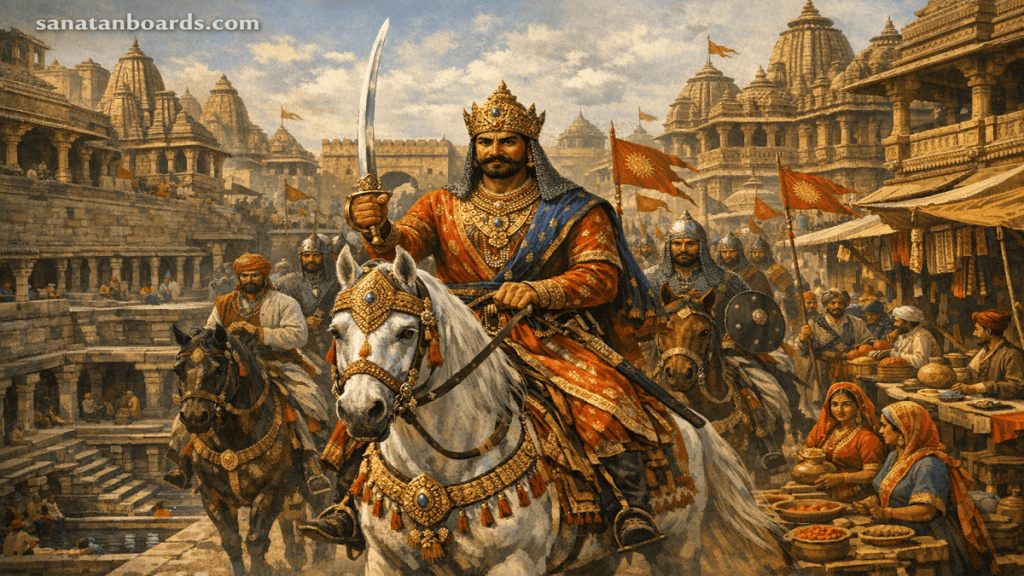
Case Study On Jayasimha Siddharaja (Solanki)
The reign of JAYASIMHA SIDDHARAJA (SOLANKI) provides a comprehensive case study in effective governance, cultural development, and architectural advancement during medieval India. His rule demonstrates how a balanced approach to administration, military power, and intellectual growth can lead to a prosperous and stable society.
One of the key aspects of this case study is his administrative efficiency. JAYASIMHA SIDDHARAJA (SOLANKI) implemented systems that ensured proper tax collection, law enforcement, and public welfare. His governance structure allowed for local administration while maintaining centralized control, which helped in managing a vast territory effectively.
Another important dimension is his military strategy. He expanded his kingdom through calculated campaigns and maintained strong defenses to protect his territories. His ability to manage both expansion and stability highlights his strategic thinking and leadership skills.
Culturally, his reign is notable for its support of education and the arts. Scholars, poets, and philosophers were welcomed in his court, creating an environment of intellectual exchange. This contributed to the development of literature and knowledge, which had a lasting impact on the region.
Architecturally, the structures built during his time serve as evidence of advanced engineering and artistic excellence. Stepwells and temples not only fulfilled practical needs but also reflected the aesthetic sensibilities of the period. These constructions continue to be studied for their design and functionality.
The case study also highlights his approach to religious tolerance. By supporting different religious traditions, he ensured social harmony within his kingdom.#jayasimhasiddharajaofgujrat This inclusive approach helped maintain stability and unity among diverse communities.
In conclusion, the case study of JAYASIMHA SIDDHARAJA (SOLANKI) illustrates the importance of balanced leadership, where governance, culture, and innovation work together to create a thriving society. His reign remains a valuable example for historical and leadership studies.
White Paper On Jayasimha Siddharaja (Solanki)
The study of JAYASIMHA SIDDHARAJA (SOLANKI) offers valuable insights into the political, cultural, and architectural advancements of medieval India. This white paper aims to present a structured analysis of his contributions and their long-term impact.
JAYASIMHA SIDDHARAJA (SOLANKI) ruled during a period of regional consolidation and cultural expansion. His leadership played a crucial role in strengthening the Solanki dynasty and establishing Gujarat as a center of power and culture. His policies focused on stability, growth, and inclusivity, which contributed to the prosperity of his kingdom.
One of the major areas of impact was governance. His administrative framework ensured efficient resource management and public welfare. The emphasis on infrastructure development, including water management systems, demonstrated a forward-thinking approach to sustainability.
In the cultural domain, his patronage of scholars and artists led to significant advancements in literature and education. His court became a hub of intellectual activity, attracting talent from different regions. This contributed to the preservation and dissemination of knowledge.
Architectural achievements during his reign are another critical area of study. The construction of temples and stepwells reflects a combination of utility and artistic expression. These structures continue to serve as important historical and cultural landmarks.
The white paper also examines his approach to religious diversity. By supporting multiple religious traditions, he promoted social harmony and inclusivity. This approach not only strengthened his rule but also contributed to the cultural richness of his kingdom.
In conclusion, JAYASIMHA SIDDHARAJA (SOLANKI) represents a model of effective leadership that integrates governance, #sanatandharmaaccreditationboardsingujrat culture, and innovation. His contributions continue to influence historical studies and provide valuable lessons for modern society.
Industry Application On Jayasimha Siddharaja (Solanki)
The legacy of JAYASIMHA SIDDHARAJA (SOLANKI) extends beyond historical significance and finds relevance in modern industry applications, particularly in areas such as management, architecture, cultural tourism, and public administration.
In management and leadership, his governance style serves as a case study for effective decision-making and resource management. Modern organizations can draw lessons from his ability to balance expansion with stability and innovation with tradition. His emphasis on structured administration and accountability aligns with contemporary management principles.
In the field of architecture and urban planning, the constructions from his era provide valuable insights into sustainable design. Stepwells and water management systems developed during his reign demonstrate efficient use of resources and environmental adaptation. These principles are increasingly relevant in modern sustainable development practices.
Cultural tourism is another area where his legacy has significant applications. Historical sites associated with his reign attract tourists and contribute to the economy. Promoting these sites helps preserve cultural heritage while generating economic benefits. His contributions provide a strong foundation for heritage tourism initiatives.
In public administration, his policies offer examples of governance that prioritize public welfare and infrastructure development. Modern governments can study his approach to taxation, law enforcement, and social harmony to improve administrative efficiency.
Additionally, his support for education and intellectual growth highlights the importance of knowledge-driven development. Industries focused on education and research can draw inspiration from his patronage of scholars and institutions.
Overall, JAYASIMHA SIDDHARAJA (SOLANKI) provides a multidimensional framework that can be applied across various industries, demonstrating the enduring #sanatandharmaaccreditationboardsinmumbai relevance of historical leadership in modern contexts.
SOURCE : Itihas Pedia
ASK FAQ
Who was JAYASIMHA SIDDHARAJA (SOLANKI)?
JAYASIMHA SIDDHARAJA (SOLANKI) was a powerful 12th-century ruler of the Solanki dynasty in Gujarat, known for his military strength, administrative skills, and cultural contributions.
When did JAYASIMHA SIDDHARAJA (SOLANKI) rule?
He ruled during the early 12th century, approximately from 1094 to 1143 CE, marking a golden period for Gujarat.
What are the major achievements of JAYASIMHA SIDDHARAJA (SOLANKI)?
His achievements include temple construction, stepwells, promotion of education, and strengthening governance and public welfare systems.
Why is JAYASIMHA SIDDHARAJA (SOLANKI) important in Indian history?
He is important for stabilizing the Solanki dynasty, fostering cultural growth, advancing architecture, and promoting social and religious harmony.
Where can you find the legacy of JAYASIMHA SIDDHARAJA (SOLANKI) today?
His legacy is visible in Gujarat through historical temples, stepwells, inscriptions, and cultural landmarks that attract scholars and tourists.
Table of Contents
Disclaimer
This content is intended solely for informational, educational, and knowledge-sharing purposes. While efforts have been made to ensure accuracy and clarity, the information presented is based on historical interpretations and may vary across different sources and perspectives.