JAYAPIDA (KARKOTA DYNASTY, KASHMIR) is one of the most fascinating subjects in ancient Indian history, highlighting the life and legacy of Jayapida, a powerful ruler known for his military strength, cultural patronage, and complex leadership in Kashmir.
Jayapida stands as one of the most intriguing rulers in the history of early medieval India. Belonging to the powerful Karkota dynasty, Jayapida ruled over Kashmir during a period marked by political dynamism, cultural advancement, and regional expansion. His reign is primarily documented in the historical chronicle Rajatarangini written by Kalhana, which provides valuable insights into his personality, governance, and achievements.
Jayapida is often remembered as a ruler of contrasts. On one hand, he is portrayed as a brave warrior and patron of learning, while on the other, he is criticized for administrative inconsistencies and eventual decline in leadership. His ambition to expand territorial boundaries and strengthen his kingdom reflects the broader political climate of the time, where regional powers constantly competed for dominance.
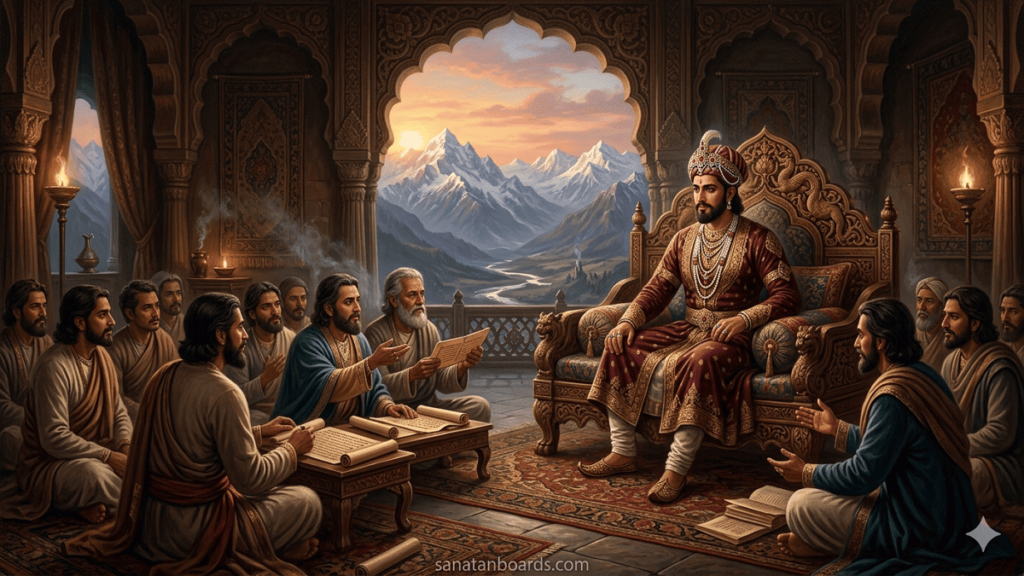
The era of Jayapida represents a significant phase in Kashmir’s history, where art, literature, and intellectual discourse flourished under royal patronage. His court is said to have attracted scholars, poets, and thinkers, making it a center of cultural vibrancy. At the same time, his military campaigns and diplomatic engagements demonstrate the strategic importance of Kashmir in early medieval geopolitics.
Understanding Jayapida is essential to grasp the complexities of leadership during the Karkota period. His life offers a lens through which one can examine governance ambition, cultural patronage, and the challenges of sustaining power. As a historical figure, Jayapida continues to evoke interest among scholars and readers alike, symbolizing both the heights and pitfalls of kingship.
What Is Jayapida (Karkota Dynasty, Kashmir) ?
JAYAPIDA (KARKOTA DYNASTY, KASHMIR) refers to the historical figure of King Jayapida, a ruler of the Karkota dynasty who governed Kashmir during the early medieval period. He is not merely an individual but represents a significant phase in the political and cultural history of Kashmir. His reign illustrates the functioning of monarchy, statecraft, and intellectual life in that era.
Jayapida is often described as a multifaceted ruler. Historically, he is seen as a king who combined military ambition with cultural patronage. His identity is shaped by his role as a warrior, administrator, and supporter of arts and education. Through his actions and policies, Jayapida contributed to shaping the socio-political structure of Kashmir.
The concept of JAYAPIDA also reflects the broader framework of the Karkota dynasty, which was known for its strong governance and expansionist policies. Jayapida inherited a legacy of power and attempted to build upon it through military expeditions and administrative reforms. His reign is therefore understood as both a continuation and a transformation of earlier traditions.
In historical narratives, Jayapida symbolizes the dual nature of leadership—success and failure. While he achieved notable victories and supported intellectual growth, his later years are often associated with instability and decline. This makes his story particularly important for understanding the challenges faced by rulers in maintaining long-term authority.
Thus, JAYAPIDA (KARKOTA DYNASTY, KASHMIR) is not just a historical name but a representation of a period marked by ambition, cultural richness, and the complexities of governance. It serves as a case through which historians analyze the evolution of political power and cultural development in ancient Kashmir.
Who Is Required Jayapida (Karkota Dynasty, Kashmir) ?
The study of JAYAPIDA (KARKOTA DYNASTY, KASHMIR) is required by a diverse group of individuals, particularly those interested in history, political science, and cultural studies. Scholars, researchers, and students benefit greatly from examining his reign, as it provides insights into early medieval governance and society.
Historians require knowledge of Jayapida to understand the evolution of Kashmir as a significant political entity. His reign highlights the strategies adopted by rulers to expand territories and maintain authority. By analyzing his successes and failures, historians can draw comparisons with other rulers of the time.
Students preparing for academic examinations or competitive tests also find Jayapida relevant. His contributions and challenges form part of the broader curriculum related to Indian history. Understanding his role helps in building a comprehensive perspective on regional dynasties and their impact.
Researchers focusing on cultural and literary history require Jayapida as a reference point because his court was associated with intellectual and artistic activities. His patronage of scholars demonstrates the relationship between power and knowledge in ancient societies.
Additionally, policy analysts and leadership scholars may find Jayapida’s reign useful as a historical case of governance. His life illustrates how leadership decisions can influence the stability and prosperity of a kingdom.
Thus, JAYAPIDA (KARKOTA DYNASTY, KASHMIR) is required by anyone seeking to explore the intersections of politics, culture, and leadership in historical contexts. His story continues to provide valuable lessons across multiple disciplines.
When Jayapida (Karkota Dynasty, Kashmir) Is Required ?
The relevance of JAYAPIDA (KARKOTA DYNASTY, KASHMIR) emerges in multiple contexts, particularly when studying the early medieval period of Indian history. His reign is especially important when examining the timeline of the Karkota dynasty and understanding the transitions within it.
Jayapida is required when analyzing the period following the reign of powerful rulers like Lalitaditya Muktapida. This phase marks a shift in political stability and offers insights into how successive rulers managed inherited power. His reign helps historians identify patterns of continuity and change within dynastic rule.
In academic settings, Jayapida becomes relevant during discussions of regional kingdoms in India. His rule provides an example of how smaller yet strategically important regions like Kashmir played a crucial role in shaping broader political landscapes. Students encounter his name while studying the rise and fall of dynasties and the factors influencing them.
Jayapida is also required when exploring the cultural and intellectual history of Kashmir. His association with scholars and literary figures highlights the importance of royal patronage in fostering knowledge and creativity. This makes his period significant for understanding the development of literature and education.
Furthermore, his reign is relevant in discussions about leadership challenges. The later part of his rule, often marked by instability, serves as an example of how internal issues can weaken even a strong kingdom. This makes his story useful for analyzing governance failures and their consequences.
In modern times, Jayapida is required when revisiting historical narratives to understand regional identities and heritage. His contributions and legacy form part of Kashmir’s rich historical tapestry, making him an important figure in cultural studies.
Where Jayapida (Karkota Dynasty, Kashmir) Is Required ?
JAYAPIDA (KARKOTA DYNASTY, KASHMIR) is primarily required in the geographical and historical context of Kashmir, which served as the center of his rule. The region’s strategic location made it an important hub for political, cultural, and economic activities during his time.
Within Kashmir, Jayapida’s influence is associated with administrative centers, cultural institutions, and areas of military significance. His reign contributed to shaping the region’s identity as a center of learning and governance. Historical studies often focus on Kashmir as a key location to understand his impact.
Beyond Kashmir, Jayapida is required in the broader study of Indian history. His interactions with neighboring regions highlight the interconnected nature of early medieval kingdoms. His campaigns and diplomatic relations extend the scope of his relevance to areas beyond his immediate territory.
In academic institutions, Jayapida is required as part of history curricula. Universities and schools include his reign when discussing regional dynasties, making him relevant in educational contexts worldwide. Libraries, research centers, and historical archives also serve as spaces where his contributions are studied and analyzed.
Jayapida is also required in cultural studies that explore the heritage of Kashmir. His patronage of arts and literature connects him to various cultural expressions, making him relevant in discussions about artistic traditions and intellectual history.
Additionally, digital platforms and historical documentation projects increasingly include information about Jayapida. This expands the “where” of his relevance to virtual spaces where knowledge is preserved and shared.
How Jayapida (Karkota Dynasty, Kashmir) Is Required ?
The requirement of JAYAPIDA (KARKOTA DYNASTY, KASHMIR) can be understood through the methods and approaches used to study his life and reign. Historians rely on literary sources, archaeological findings, and comparative analysis to reconstruct his contributions and significance.
One of the primary ways Jayapida is studied is through historical texts like the Rajatarangini. These narratives provide detailed accounts of his achievements, personality, and challenges. By analyzing such sources, researchers gain insights into the socio-political environment of his time.
Another method involves examining the administrative and military aspects of his rule. Scholars study his campaigns, governance strategies, and policies to understand how he managed his kingdom. This helps in identifying the strengths and weaknesses of his leadership.
Jayapida is also required through interdisciplinary approaches. Cultural historians analyze his patronage of arts and literature, while political scientists examine his governance style. This multi-dimensional study enhances the understanding of his role in history.
In educational contexts, Jayapida is required through structured learning. Textbooks, lectures, and research papers present his story in a systematic manner, making it accessible to students and scholars.
Modern technology has also influenced how Jayapida is studied. Digital archives, online resources, and virtual learning platforms provide new ways to access information about his reign. This ensures that his legacy continues to be explored in contemporary settings.
Case Study On Jayapida (Karkota Dynasty, Kashmir)
The reign of Jayapida provides a compelling case study in leadership, governance, and cultural development. His rule reflects both the potential and limitations of monarchy in early medieval India.
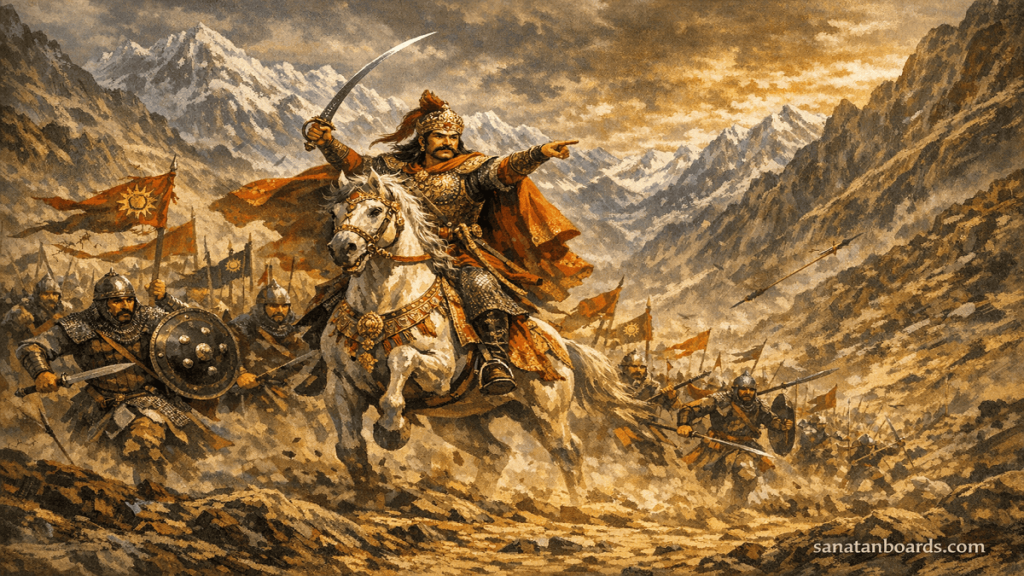
Jayapida ascended the throne during a period of relative stability but faced the challenge of maintaining and expanding his kingdom. His military campaigns demonstrate his ambition to strengthen his position and assert dominance over neighboring regions. These efforts highlight the importance of strategic planning and resource management in sustaining power.
One of the most notable aspects of his reign is his patronage of scholars and intellectuals. His court became a center of learning, attracting individuals who contributed to the cultural and intellectual life of Kashmir. This demonstrates the role of leadership in promoting knowledge and creativity.
However, Jayapida’s reign also illustrates the challenges of governance. Historical accounts suggest that his later years were marked by administrative difficulties and declining authority. This serves as an example of how internal issues can undermine even a strong ruler.
The case study of Jayapida also emphasizes the importance of balance in leadership. While ambition and expansion are essential, they must be complemented by effective administration and stability. His story shows that neglecting internal governance can lead to long-term consequences.
Another important aspect is the role of historical narratives in shaping our understanding of leaders. The Rajatarangini provides valuable insights #jayapidakarkotadynasty but also reflects the perspective of its author. This highlights the need for critical analysis when studying historical sources.
Overall, the case study of JAYAPIDA (KARKOTA DYNASTY, KASHMIR) offers lessons in leadership, cultural patronage, and the complexities of governance, making it a valuable subject for academic and practical analysis.
White Paper On Jayapida (Karkota Dynasty, Kashmir)
The study of JAYAPIDA (KARKOTA DYNASTY, KASHMIR) provides a structured understanding of early medieval governance, cultural development, and regional politics. As a ruler of the Karkota dynasty, Jayapida’s reign represents a critical phase in the history of Kashmir.
This white paper examines his contributions from multiple perspectives. Politically, Jayapida’s reign highlights the challenges of maintaining stability in a dynamic environment. His military campaigns and administrative policies reflect the complexities of ruling a kingdom with diverse needs and external pressures.
Culturally, Jayapida’s support for scholars and intellectuals played a significant role in promoting knowledge and creativity. His court became a hub for literary and academic activities, contributing to the cultural richness of Kashmir.
Economically, his reign demonstrates the importance of resource management and strategic planning. The success of his campaigns and governance depended on the efficient use of available resources.
However, the later phase of his rule reveals the limitations of leadership. Administrative challenges and declining authority underscore the importance of sustainable governance practices.
This white paper also emphasizes the relevance of #sanatandharmaaccreditationboardsinkashmir Jayapida’s reign in contemporary studies. His story provides insights into leadership, decision-making, and the interplay between power and culture.
Industry Application Of Jayapida (Karkota Dynasty, Kashmir)
The lessons derived from JAYAPIDA (KARKOTA DYNASTY, KASHMIR) extend beyond history and can be applied to modern industries and organizational practices. His reign offers valuable insights into leadership, management, and strategic planning.
In the corporate world, Jayapida’s leadership highlights the importance of vision and ambition. His efforts to expand his kingdom can be compared to business strategies aimed at growth and market expansion. However, his challenges also emphasize the need for balance between expansion and internal stability.
In the field of education, his patronage of scholars serves as an example of the importance of investing in knowledge and innovation. Organizations can learn from this by fostering environments that encourage creativity and learning.
In governance and public administration, Jayapida’s reign provides insights into policy-making and resource management. His successes and failures demonstrate the impact of leadership decisions on overall stability and development.
The cultural aspects of his reign are relevant to industries such as media, arts, and tourism. His support for cultural activities highlights the role of leadership in preserving and promoting heritage.
Additionally, his story can be used in leadership training and management studies. By analyzing his decisions and their outcomes, professionals can gain a deeper understanding of effective leadership practices.
Thus, JAYAPIDA (KARKOTA DYNASTY, KASHMIR) offers #sanatandharmaaccreditationboardsinmumbai valuable lessons that can be applied across various industries, making it a relevant and insightful subject for modern applications.
source : Crazy Color Facts
ASK FAQ
Who was Jayapida?
Jayapida was a ruler of the Karkota dynasty in Kashmir during the early medieval period. He is known for his military campaigns, patronage of scholars, and contributions to the cultural development of the region.
Why is Jayapida important in Kashmir history?
Jayapida is important because his reign reflects both political expansion and cultural growth in Kashmir. His rule also highlights the challenges of leadership and governance in ancient India.
What are the major achievements of Jayapida?
Jayapida’s major achievements include military expansion, support for education and literature, and strengthening the influence of the Karkota dynasty. His court was known as a center for intellectual activities.
Which historical source mentions Jayapida?
The main historical source that describes Jayapida is the Rajatarangini, written by Kalhana. It provides detailed accounts of his life and reign.
What lessons can be learned from Jayapida’s reign?
Jayapida’s reign teaches lessons about leadership, the importance of balancing expansion with stability, and the role of cultural patronage in strengthening a kingdom.
Table of Contents
Disclaimer
This content is intended for informational, educational, and knowledge-sharing purposes only. While efforts have been made to present accurate and structured information, historical interpretations may vary based on sources and scholarly perspectives. Readers are encouraged to refer to multiple references for deeper understanding.