The Hoysala Dynasty was a prominent South Indian dynasty that ruled over Karnataka and surrounding regions between the 10th and 14th centuries. Among its notable rulers, King Vishnuvardhana stands out as one of the most influential and celebrated monarchs. Ascending the throne in the early 12th century, Vishnuvardhana played a pivotal role in expanding the Hoysala kingdom through military conquests, diplomacy, and strategic alliances.
King Vishnuvardhana is particularly remembered for his contribution to religion, art, and architecture. Initially a follower of Jainism, he embraced Vaishnavism under the influence of the philosopher Ramanujacharya, promoting the Bhakti movement in his kingdom. He commissioned numerous temples, including the renowned Chennakesava Temple at Belur, which remains a testament to Hoysala architectural brilliance.
Under his reign, the Hoysala Dynasty flourished economically and culturally. Trade, agriculture, and administration were strengthened, making the kingdom prosperous and influential in South India. His leadership laid a strong foundation for successive Hoysala rulers, ensuring that the dynasty remained a significant political and cultural force for over two centuries.
The legacy of King Vishnuvardhana continues to inspire historians, scholars, and art enthusiasts, highlighting the Hoysala Dynasty as a symbol of South Indian heritage and innovation. His reign represents the zenith of Hoysala power and cultural achievement.
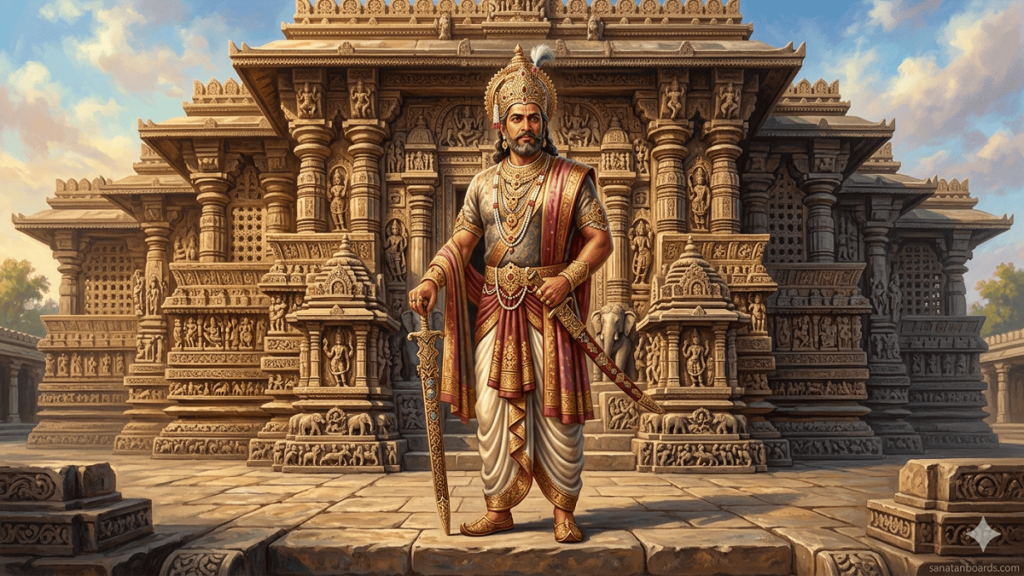
What Is Hoysala Dynasty – King Vishnuvardhana ?
The Hoysala Dynasty – King Vishnuvardhana refers to one of the most illustrious periods in the history of South India. The Hoysalas were initially feudatories under the Western Chalukyas but gradually established an independent kingdom in present-day Karnataka. King Vishnuvardhana, who ruled in the early 12th century, is regarded as the architect of this transformation, turning the Hoysalas into a dominant power in the region.
Vishnuvardhana’s reign is characterized by military prowess, religious devotion, and remarkable cultural achievements. He led successful campaigns against rival kingdoms, including the Cholas, and expanded Hoysala territory significantly. This consolidation of power provided the stability required for economic and cultural growth.
Religiously, King Vishnuvardhana shifted from Jainism to Vaishnavism, influenced by the teachings of Ramanujacharya, a key proponent of the Bhakti movement. This conversion had a profound impact on temple building and patronage of art. The Chennakesava Temple in Belur and the Hoysaleswara Temple in Halebidu are prime examples of the sophisticated Hoysala architectural style, known for intricate carvings, detailed sculptures, and innovative star-shaped layouts.
The king also strengthened administration by introducing efficient revenue systems, promoting agriculture, and encouraging trade. His support for literature, scholarship, and temple arts helped foster a flourishing cultural environment.
Who Is Required Hoysala Dynasty – King Vishnuvardhana ?
The study of Hoysala Dynasty – King Vishnuvardhana is essential for students, historians, researchers, and anyone interested in South Indian history, culture, and architecture. Understanding his reign provides deep insights into the political, cultural, and religious evolution of medieval Karnataka.
Students and Educators: History students, especially those focusing on Indian dynasties or South Indian heritage, benefit greatly from studying King Vishnuvardhana. His reign exemplifies the rise of regional powers after the decline of the Western Chalukyas, providing context for understanding medieval political structures. Educators use his example to illustrate leadership, administration, and cultural patronage in history lessons.
Historians and Researchers: Scholars studying the evolution of Indian kingdoms, temple architecture, or religious movements find Vishnuvardhana’s reign invaluable. His conversion from Jainism to Vaishnavism underlines the spread of the Bhakti movement in southern India, highlighting the interplay between religion and politics. Researchers focusing on art history explore his contributions to Hoysala temple architecture, which showcases intricate carvings, sculptural innovation, and urban planning.
Art and Architecture Enthusiasts: Hoysala temples built during Vishnuvardhana’s reign, like the Chennakesava Temple at Belur and Hoysaleswara Temple at Halebidu, are masterpieces of Indian architecture. Artists, architects, and cultural tourists study these works to understand Hoysala construction techniques, stone carving, and temple layout, which remain influential even today.
Policy Makers and Cultural Conservators: Preservation of historical monuments requires knowledge about their origin, significance, and context. King Vishnuvardhana’s contributions to temple construction and urban planning provide essential information for those involved in cultural heritage management.
General Public: For anyone seeking to understand Karnataka’s cultural and historical identity, the Hoysala period under Vishnuvardhana is a critical reference. His reign represents political stability, religious transformation, and cultural prosperity that shaped South Indian civilization for centuries.
When Is Required Hoysala Dynasty – King Vishnuvardhana ?
The study of Hoysala Dynasty – King Vishnuvardhana is particularly required when exploring several key aspects of South Indian history, culture, and heritage. Understanding the “when” is crucial to place his reign in the proper historical and cultural timeline.
King Vishnuvardhana ascended the throne in the early 12th century, around 1108 CE, during a period when the Western Chalukyas were declining, creating a power vacuum in the Karnataka region. This timing was pivotal because it allowed the Hoysala Dynasty to emerge as a significant regional power. Studying his reign during this era is required to understand how the political dynamics of South India shifted, how regional powers rose, and how local kingdoms gained independence from larger empires.
When studying political history, Vishnuvardhana’s era is essential because it illustrates the transition from feudatory rule to sovereign authority. Military campaigns against the Cholas and other neighboring kingdoms were conducted during this period, defining territorial boundaries and political influence. Historians examine these events to understand the strategies and governance models employed in the 12th century.
When exploring religious and cultural shifts, his reign is required because it marks the significant conversion from Jainism to Vaishnavism under the guidance of Ramanujacharya. This period saw the growth of the Bhakti movement and temple-centric cultural expression. Temples like Chennakesava at Belur and Hoysaleswara at Halebidu were constructed during this time, reflecting the religious and artistic priorities of the era.
When studying architecture and arts, Vishnuvardhana’s period is critical because the Hoysala architectural style reached its maturity during his reign. Scholars examine this period to analyze the intricate stone carvings, star-shaped temple plans, and sculptural innovation that became trademarks of Hoysala craftsmanship.
When considering economic and administrative developments, this period is required because it demonstrates how trade, agriculture, and governance were enhanced under his leadership. Revenue reforms, urban planning, and support for artisans contributed to the prosperity of the Hoysala kingdom.
Where Is Hoysala Dynasty – King Vishnuvardhana Required ?
Karnataka, India: The heart of the Hoysala Dynasty was in present-day Karnataka. King Vishnuvardhana’s reign significantly influenced regions including Belur, Halebidu, and surrounding areas. These locations are where iconic temples such as the Chennakesava Temple at Belur and the Hoysaleswara Temple at Halebidu were built. Scholars, tourists, and historians often focus on these sites to study Hoysala architecture, sculpture, and inscriptions. The state remains a hub for research on medieval South Indian dynasties.
South Indian Cultural Regions: Beyond Karnataka, the Hoysala Dynasty’s influence extended into parts of Tamil Nadu, Andhra Pradesh, and Kerala. Military campaigns and diplomatic relationships under Vishnuvardhana impacted neighboring Chola and Western Chalukya territories. Therefore, studying this dynasty is relevant wherever South Indian history, trade networks, and cultural exchanges of the 12th century are examined.
Educational Institutions and Research Centers: Universities, museums, and cultural research centers across India and abroad require knowledge of Vishnuvardhana’s reign. Departments of history, archaeology, art, and architecture study the Hoysala period for its political, religious, and artistic contributions. These institutions often conduct field studies at Hoysala temple sites and analyze inscriptions to understand historical governance and culture.
Global Heritage and Tourism: Hoysala architecture under Vishnuvardhana has gained international recognition for its intricacy and uniqueness. Art historians, archaeologists, and cultural tourists worldwide explore Karnataka to witness these structures. Therefore, the relevance of this topic is not confined to India; it extends globally wherever medieval South Indian art and architecture are studied or preserved.
Digital and Online Platforms: In the modern era, “where” the study is required also includes online educational platforms, virtual heritage tours, and digital archives. Students, researchers, and enthusiasts from anywhere in the world access resources about King Vishnuvardhana and the Hoysala Dynasty through these platforms.
How Is Hoysala Dynasty – King Vishnuvardhana Required ?
The study of Hoysala Dynasty – King Vishnuvardhana is required through various methods, combining historical research, field study, and interdisciplinary analysis. Understanding how this topic is studied and applied is essential for students, historians, and cultural enthusiasts.
Historical Research: One of the primary methods is examining inscriptions, manuscripts, and historical texts from the Hoysala period. Stone inscriptions on temples like the Chennakesava Temple at Belur provide detailed information about military conquests, donations, religious conversions, and administrative decisions. Scholars analyze these inscriptions to reconstruct events understand governance, and trace cultural developments during Vishnuvardhana’s reign.
Archaeological Study: Field studies at Hoysala temple sites, palaces, and fortifications help researchers understand architectural styles, urban planning, and material culture. Archaeologists study the layout of temples, sculptures, and carvings to interpret religious symbolism and artistic techniques. Excavations and preservation efforts also reveal insights into everyday life, trade, and social structures of the Hoysala kingdom.
Art and Architectural Analysis: The Hoysala period is particularly renowned for its unique temple architecture and sculptural artistry. Students and researchers study the star-shaped temple layouts, intricate carvings, and iconography to understand construction techniques, aesthetic principles, and religious significance. This method is crucial for art historians, architects, and cultural conservators.
Literary and Religious Study: Vishnuvardhana’s reign marked a shift from Jainism to Vaishnavism under the influence of Ramanujacharya. Scholars analyze religious texts, literary works, and philosophical treatises from the period to understand the social and spiritual impact of this transformation. Studying devotional literature and temple inscriptions helps trace the Bhakti movement’s influence on culture and society.
Educational and Digital Methods: Today, learning about Vishnuvardhana is also facilitated through online courses, virtual museum tours, and academic lectures. Digital archives and multimedia presentations allow students worldwide to access information, study temple architecture, and explore historical records without physical travel.
Interdisciplinary Approach: Combining history, archaeology, art, architecture, religious studies, and digital technology ensures a comprehensive understanding of Vishnuvardhana’s reign. This approach allows learners to see the interconnection between political power, cultural achievements, and religious evolution during the Hoysala period.
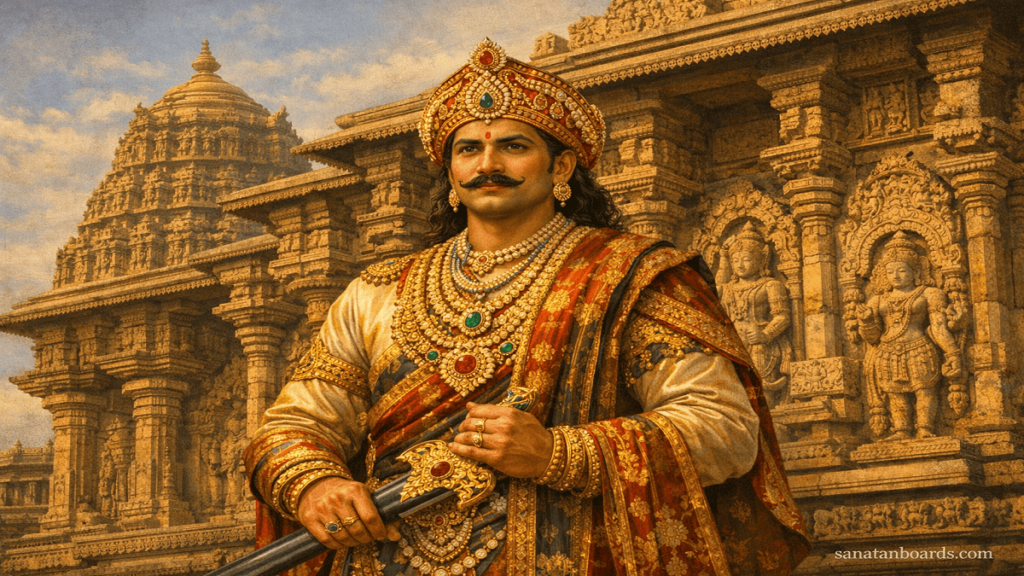
Case Study On Hoysala Dynasty – King Vishnuvardhana
Introduction
The Hoysala Dynasty – King Vishnuvardhana represents one of the most remarkable periods in South Indian history, reflecting political consolidation, religious transformation, and cultural flourishing. This case study explores Vishnuvardhana’s reign in detail, examining his rise to power, administrative policies, religious influences, contributions to art and architecture, and long-term impact on the Hoysala kingdom. The objective is to provide a comprehensive understanding of how a regional dynasty under a visionary ruler left a lasting legacy in Indian history.
Historical Context
The Hoysalas were initially minor feudatories under the Western Chalukyas in Karnataka. By the early 12th century, the political landscape of South India was fragmented, with declining Chalukya power and rising Chola influence. It was during this period that Vishnuvardhana ascended the throne (circa 1108 CE), inheriting a kingdom that required strong leadership and vision to expand its influence.
Vishnuvardhana capitalized on this political environment by engaging in strategic alliances, military campaigns, and administrative reforms. His reign marked the transition of the Hoysalas from subordinate feudatories to an independent, powerful kingdom, setting the stage for cultural and economic prosperity.
Military Achievements
One of the critical aspects of Vishnuvardhana’s reign was his military success. He successfully defeated neighboring powers, including the Cholas in the southern regions, securing key territories. The king’s campaigns were not only strategic but also helped establish political stability, allowing economic development and cultural expansion. His military victories ensured the protection of trade routes, agricultural lands, and temple centers, making the Hoysala kingdom both secure and prosperous.
Religious Influence
Vishnuvardhana’s religious transformation is a defining feature of his reign. Originally a follower of Jainism, he converted to Vaishnavism under the influence of Ramanujacharya, a prominent proponent of the Bhakti movement. This shift was more than personal; it catalyzed a broader cultural and religious movement in his kingdom. Temples became centers for education, community gatherings, and art patronage, contributing to social cohesion and spiritual growth.
The king’s patronage of Vaishnavism led to the construction of grand temples like the Chennakesava Temple at Belur, which symbolized his devotion and artistic vision. Religious festivals, temple rituals, and endowments under his reign strengthened the kingdom’s cultural identity.
Contributions to Art and Architecture
King Vishnuvardhana’s reign is synonymous with Hoysala architecture, considered among the finest in South Indian history. The Chennakesava Temple at Belur and the Hoysaleswara Temple at Halebidu exemplify his architectural patronage. These temples feature intricate star-shaped layouts, detailed sculptures of deities, dancers, and scenes from epics like the Ramayana and Mahabharata.
Hoysala temples were not only religious structures but also expressions of political power and cultural sophistication. Stone carvings were executed with precision, reflecting both artistic skill and a deep understanding of religious symbolism. Vishnuvardhana’s support for artisans, sculptors, and architects created a unique legacy that continues to attract scholars and tourists alike.
Administrative and Economic Policies
Beyond military and religious achievements, Vishnuvardhana’s administration was highly efficient. He introduced revenue reforms, encouraged agricultural productivity, and supported trade networks. The kingdom became economically stable, allowing for sustained temple construction and cultural activities. Urban centers under his rule developed systematic planning, with markets, water systems, and public spaces contributing to a prosperous society.
Cultural Impact
Vishnuvardhana’s reign fostered a vibrant cultural environment. Literature, music, and philosophical discourse flourished under his patronage. Sanskrit and Kannada scholars received royal support, producing works that enriched intellectual life. Temples served as hubs for education, art, and community events, creating a rich cultural ecosystem.
Legacy
The legacy of King Vishnuvardhana extends beyond his lifetime. The Hoysala architectural style, religious patronage, and administrative model influenced subsequent rulers and shaped Karnataka’s cultural identity. His reign demonstrated how political power, religious devotion, and cultural investment can coexist, leaving an enduring imprint on history.
Conclusion
The case study of Hoysala Dynasty – King Vishnuvardhana highlights a period of remarkable achievement in South Indian history. #hoysaladynastykingvishnuvardhanainhyderabad Military strategy, religious transformation, cultural patronage, and economic prosperity converged under his leadership, making his reign a benchmark for excellence. Studying his period provides invaluable insights into medieval Indian governance, art, religion, and society, #hoysaladynastykingvishnuvardhanaingujrat demonstrating why Vishnuvardhana remains a pivotal figure in historical scholarship.
White Paper On Hoysala Dynasty – King Vishnuvardhana
Executive Summary
The Hoysala Dynasty – King Vishnuvardhana represents a transformative period in the history of South India, blending political authority, cultural patronage, religious reform, and architectural innovation. This white paper examines the historical significance of King Vishnuvardhana, his administrative strategies, religious contributions, architectural legacy, and the broader implications of his reign on South Indian society. The document is intended for historians, educators, cultural institutions, and policy makers involved in heritage preservation and academic research.
Introduction
The Hoysala Dynasty emerged in the 10th century as a regional power in Karnataka. Initially subordinate to the Western Chalukyas, the Hoysalas gradually gained independence through strategic military and political maneuvers. The reign of King Vishnuvardhana (circa 1108–1152 CE) marked the pinnacle of Hoysala power and influence. His leadership not only consolidated territorial control but also established a strong foundation for cultural and economic development.
This white paper aims to explore Vishnuvardhana’s multifaceted contributions and analyze their significance for understanding South Indian history and culture.
Political Consolidation
King Vishnuvardhana’s reign is defined by effective political and military strategies. He undertook successful campaigns against neighboring Chola and regional powers, securing the kingdom’s borders and expanding Hoysala territory. These military victories facilitated political stability, enabling the kingdom to invest in social, religious, and cultural development.
The administrative system established during his reign emphasized efficient revenue collection, equitable taxation, and support for agrarian development. Urban centers, fortified towns, and marketplaces under his rule were well-organized, contributing to the kingdom’s prosperity.
Religious Transformation
A defining aspect of Vishnuvardhana’s leadership was his conversion from Jainism to Vaishnavism, influenced by the teachings of Ramanujacharya. This religious shift catalyzed the growth of the Bhakti movement in Karnataka, integrating spiritual devotion with social cohesion.
Temples constructed during this period served as centers of worship, education, and community engagement. Vishnuvardhana’s religious patronage promoted art, music, and literature, creating a rich cultural environment that transcended spiritual practice and shaped social identity.
Architectural and Artistic Legacy
The Hoysala architectural style reached its zenith under Vishnuvardhana. Temples like the Chennakesava Temple at Belur and the Hoysaleswara Temple at Halebidu demonstrate intricate stone carvings, star-shaped layouts, and elaborate sculptures depicting mythological scenes.
This architectural innovation reflects the kingdom’s technical expertise, artistic sophistication, and cultural values. The detailed sculptures of dancers, deities, and narratives from Hindu epics showcase a blend of spiritual symbolism and aesthetic mastery.
Artisans and architects received royal support, resulting in a unique architectural tradition that influenced subsequent South Indian temple construction. These monuments continue to attract scholars, tourists, and cultural enthusiasts worldwide.
Economic and Cultural Policies
Vishnuvardhana’s reign encouraged trade, agriculture, and crafts. The economic prosperity under his leadership supported temple construction and artistic production, creating a self-sustaining cultural ecosystem. Literature in Sanskrit and Kannada flourished, documenting history, philosophy, and devotional expression.
Temples became hubs of learning, where scholars and students studied religious texts, performed rituals, and engaged in artistic endeavors. This integration of religion, education, and art highlights the holistic approach to governance and cultural patronage.
Strategic Importance and Legacy
The Hoysala Dynasty under Vishnuvardhana played a strategic role in South India. By establishing political dominance and promoting religious and cultural initiatives, he strengthened Karnataka’s regional identity. His reign influenced subsequent Hoysala rulers and contributed to the broader historical narrative of South India.
The architectural masterpieces, administrative efficiency, and religious reforms initiated during his reign serve as benchmarks for understanding medieval Indian governance, culture, and society.
Conclusion
The reign of King Vishnuvardhana represents a convergence of military strategy, religious reform, cultural patronage, and economic development. His leadership elevated the Hoysala Dynasty to unprecedented heights, leaving a lasting legacy in South Indian history.
This white paper underscores the significance of studying Vishnuvardhana’s contributions, emphasizing their relevance for historical research, cultural preservation, #hoysaladynastykingvishnuvardhanainmumbai and educational initiatives. Understanding this period provides critical insights into the interplay between #hoysaladynastykingvishnuvardhanainvasai political authority, religion, art, and society in medieval India.
Industry Application Of Hoysala Dynasty – King Vishnuvardhana
Introduction
The study of Hoysala Dynasty – King Vishnuvardhana is not limited to historical or cultural knowledge; it also has significant applications across multiple modern industries. Insights from Vishnuvardhana’s reign—spanning governance, architecture, religious patronage, and cultural development—inform sectors such as tourism, education, heritage management, architecture, and digital media. This paper explores how the legacy of King Vishnuvardhana translates into practical and strategic industry applications today.
Tourism Industry
The Hoysala temples, particularly the Chennakesava Temple at Belur and Hoysaleswara Temple at Halebidu, are key attractions for cultural tourism. These monuments draw thousands of domestic and international visitors annually, creating economic opportunities for the hospitality, transport, and service sectors.
Tour operators and heritage guides leverage detailed knowledge of Vishnuvardhana’s reign to offer educational tours that combine historical storytelling with architectural analysis. This approach enhances visitor engagement, increasing the tourism industry’s revenue while promoting cultural awareness. Heritage walks, workshops, and interactive tours based on Hoysala history are increasingly popular in Karnataka, demonstrating direct industry applications.
Education and Academic Industry
King Vishnuvardhana’s contributions are critical to curricula in history, archaeology, art, architecture, and religious studies. Educational institutions develop specialized courses focusing on Hoysala governance, temple architecture, and cultural evolution under Vishnuvardhana.
Publishing houses, online educational platforms, and e-learning modules also utilize content derived from his reign. Students studying medieval Indian history, architecture, or religious movements can access primary sources, virtual tours, and interactive simulations. This supports the growth of educational content industries and encourages scholarly research with real-world applications in academia.
Heritage and Cultural Preservation
The preservation of Hoysala monuments is a major industry involving government agencies, NGOs, and private organizations. Conservation techniques, structural restoration, and digital documentation rely on understanding Vishnuvardhana’s architectural and cultural vision.
Companies specializing in stone preservation, 3D scanning, and structural reinforcement of ancient buildings directly benefit from historical studies of Hoysala temple construction. Modern heritage management software integrates historical data about Vishnuvardhana-era structures, aiding project planning, funding, and tourism integration.
Architecture and Design Industry
Hoysala architectural principles under Vishnuvardhana—such as star-shaped temple layouts, detailed sculptural work, and ornamental designs—serve as inspiration for contemporary architecture and urban design. Architects and designers draw from Hoysala aesthetics for modern temples, museums, cultural centers, and even residential projects.
Educational workshops for architects, sculptors, and urban planners often include case studies of Vishnuvardhana-era temples, highlighting efficient use of space, material durability, and aesthetic innovation. This bridges historical knowledge with practical design and construction applications.
Digital Media and Entertainment Industry
King Vishnuvardhana’s legacy also informs digital media, including films, documentaries, video games, and virtual reality experiences. Game developers and filmmakers recreate historical settings, battles, and temples from his reign to provide immersive storytelling.
Virtual reality (VR) and augmented reality (AR) platforms allow users to explore the Hoysala temples and simulate 12th-century life, combining education with entertainment. Companies in the gaming and VR industry benefit directly from detailed historical research into Vishnuvardhana’s reign, bringing the past to life for global audiences.
Policy and Governmental Planning
Insights from Vishnuvardhana’s governance and urban planning guide modern policy frameworks for cultural preservation and tourism development. Governments and municipal bodies study Hoysala city planning and temple-centric communities to inform contemporary urban design, heritage zoning, and economic development strategies.
Training programs for heritage administrators and tourism officials include modules on Hoysala administrative and cultural systems, improving efficiency in managing historical sites while boosting local economies.
Conclusion
The legacy of Hoysala Dynasty – King Vishnuvardhana demonstrates that historical study has wide-reaching industry applications. Tourism, #sanatandharmaaccreditationboardsinmumbai education, heritage preservation, architecture, digital media, and policy planning all benefit from insights derived from his reign.
By bridging past and present, Vishnuvardhana’s contributions not only enrich academic knowledge but also generate economic, cultural, and #sanatandharmaaccreditationboardsinvasai technological value. Modern industries continue to leverage his political, architectural, and cultural legacy to create sustainable and innovative solutions, proving that historical leadership can inform contemporary professional practice.
source : Pro PLANET
ASK FAQ
Who was King Vishnuvardhana of the Hoysala Dynasty?
King Vishnuvardhana was a 12th-century ruler of the Hoysala Dynasty in Karnataka, known for military conquests, religious conversion to Vaishnavism, and promoting art, culture, and temple architecture.
What are the famous temples built by Vishnuvardhana?
The most notable temples include the Chennakesava Temple at Belur and the Hoysaleswara Temple at Halebidu, showcasing intricate Hoysala architecture and sculpture.
When did King Vishnuvardhana rule the Hoysala kingdom?
Vishnuvardhana ruled approximately from 1108 CE to 1152 CE, during which the Hoysala Dynasty reached its political and cultural peak.
How did Vishnuvardhana contribute to art and culture?
He patronized temple construction, supported sculptors, encouraged literature in Kannada and Sanskrit, and promoted the Bhakti movement through Vaishnavism.
Why is the Hoysala Dynasty under Vishnuvardhana historically significant?
It marks a period of political expansion, architectural innovation, religious transformation, and cultural prosperity in South India.
Table of Contents
Disclaimer
This content is intended solely for educational and informational purposes. The historical details, interpretations, and cultural references are based on publicly available research and scholarly sources. It does not constitute professional, legal, or financial advice. While efforts have been made to ensure accuracy, the author and publisher assume no responsibility for errors, omissions, or the use of this information in academic, commercial, or personal applications. Readers are encouraged to verify facts through credible sources before citing or using them for professional work. All historical content reflects interpretations of available evidence and may evolve with new research.