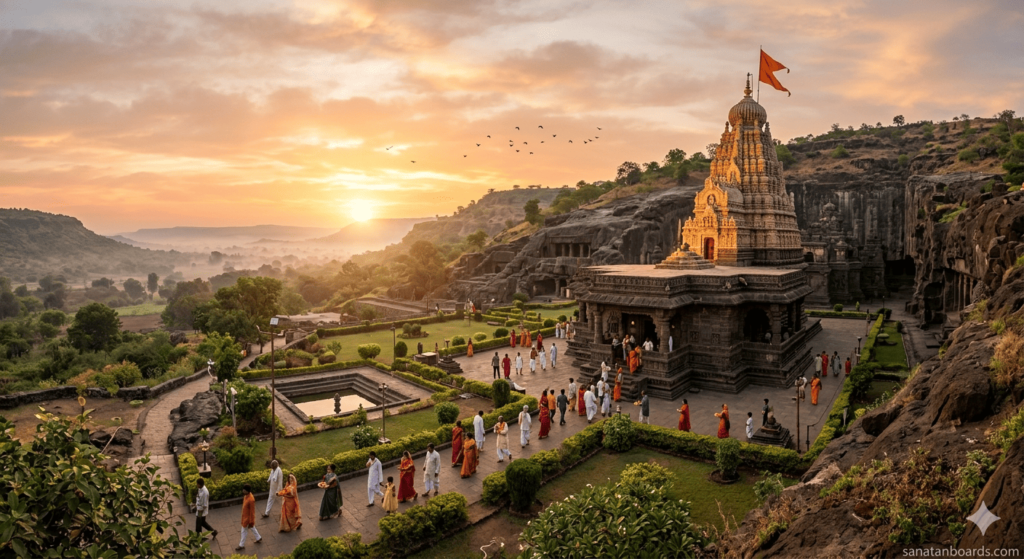
Grishneshwar Temple is one of the most significant and sacred shrines in India, located near the famous Ellora cave complex in Maharashtra. It is considered the twelfth and final Jyotirlinga among the twelve Jyotirlingas dedicated to Lord Shiva. The temple holds immense spiritual importance and attracts devotees from across India and the world throughout the year.
Situated close to Ellora Caves, the temple reflects a deep connection between ancient rock-cut architecture and traditional Hindu temple design. The structure showcases intricate carvings, red stone architecture, and a peaceful spiritual atmosphere that symbolizes devotion and faith.
The history of Grishneshwar is believed to date back several centuries with references found in ancient scriptures and mythological texts. The temple has been rebuilt and restored multiple times due to invasions and destruction, yet it continues to stand as a strong symbol of resilience and devotion.
Devotees believe that visiting Grishneshwar Jyotirlinga brings spiritual purification and fulfillment of wishes. The temple is especially crowded during Maha Shivratri, when thousands of devotees gather to offer prayers and perform rituals.
The surroundings of the temple add to its divine charm, with the presence of caves, ancient carvings, and a serene environment that enhances the spiritual experience. The temple is not just a religious site but also a representation of India’s rich cultural and architectural heritage.
Grishneshwar continues to remain an important pilgrimage destination, symbolizing faith, tradition, and timeless devotion to Lord Shiva.
What Is Grishneshwar (Maharashtra)?
Grishneshwar Temple is a Hindu temple dedicated to Lord Shiva and recognized as one of the twelve Jyotirlingas in India. A Jyotirlinga represents the most sacred form of Shiva, where he is worshipped in the form of a radiant pillar of light. Grishneshwar is considered the final Jyotirlinga in the traditional list, making it spiritually significant.
The temple is located in the village of Verul, near Ellora Caves, a UNESCO World Heritage Site known for its rock-cut cave temples. The location itself enhances the importance of Grishneshwar, as it stands among some of the finest ancient monuments in India.
Architecturally, the temple is built using red volcanic stone and features detailed carvings depicting mythological stories and deities. The structure is relatively small compared to other major temples, but its spiritual importance is extremely high. The temple consists of a main sanctum housing the Shiva Linga, a mandapa for devotees, and beautifully carved pillars.
Religiously, Grishneshwar represents devotion, forgiveness, and divine blessings. It is believed that sincere prayers offered here remove obstacles and bring peace of mind. The temple follows traditional Hindu rituals and daily worship practices, including Abhishekam, Aarti, and special ceremonies during festivals.
Culturally, it is an important part of Maharashtra’s spiritual landscape and is closely linked to ancient legends of Lord Shiva and his devotees. The temple is also associated with stories of devotion and miracles that strengthen its sacred identity.
Who Is Required Grishneshwar (Maharashtra) ?
Grishneshwar Temple is required and significant for a wide range of people, primarily those seeking spiritual growth, religious fulfillment, and cultural understanding.
First, Hindu devotees of Lord Shiva are the primary group who consider visiting this temple essential. As one of the twelve Jyotirlingas, it holds the highest importance in Shiva worship. Devotees believe that visiting all Jyotirlingas, including Grishneshwar, completes a sacred pilgrimage that brings spiritual liberation.
Second, pilgrims and spiritual seekers from across India and abroad visit the temple to experience peace, devotion, and connection with divine energy. Many individuals who are going through personal challenges, emotional stress, or seeking blessings for life events such as marriage, health, or prosperity come here for prayer.
Third, historians, researchers, and students of Indian culture also find Grishneshwar important. The temple represents ancient Indian architecture, religious evolution, and restoration history. It provides valuable insight into how temples survived invasions and were rebuilt over time.
Fourth, tourists and heritage explorers visiting Ellora Caves often include Grishneshwar in their itinerary. It helps them understand the connection between spirituality and architecture in ancient India.
Fifth, artists, architects, and cultural enthusiasts also study the temple for its carvings, design, and symbolic representations.
Thus, Grishneshwar is required not only for religious purposes but also for cultural learning, heritage exploration, and spiritual enrichment. It serves different purposes for different individuals, making it universally significant.
When Grishneshwar (Maharashtra) Required ?
Grishneshwar Temple is considered important at various stages of life and during specific spiritual or personal moments. Devotees believe that the temple can be visited at any time of the year, but certain occasions and life situations make its significance even greater.
One of the most important times when Grishneshwar is considered highly required is during religious festivals, especially Maha Shivratri. During this period, devotees observe fasts, perform night-long prayers, and seek blessings of Lord Shiva. The spiritual energy and gathering of devotees make this time extremely powerful for worship.
Another important time is when individuals face personal struggles such as health issues, financial difficulties, or emotional stress. Many believe that praying at Grishneshwar Jyotirlinga helps in overcoming obstacles and bringing positive change in life.
It is also considered important during milestone events in life such as marriage, childbirth, or starting a new business. Devotees often seek blessings at the temple before beginning new journeys, believing it ensures success and stability.
Pilgrimage seasons, especially winter and post-monsoon months, are also popular times to visit due to favorable weather conditions in Maharashtra. During these times, travel and temple visits become more comfortable for pilgrims.
Additionally, spiritual seekers often visit during personal transformation phases when they aim to deepen their connection with faith and inner peace. The temple environment supports meditation, reflection, and spiritual clarity.
Tourists visiting nearby heritage sites like Ellora Caves also consider it an ideal time to include Grishneshwar in their travel plans.
Where Grishneshwar (Maharashtra) Required ?
Grishneshwar Temple is located in the village of Verul in the Aurangabad district of Maharashtra, India. The temple is situated very close to the world-famous Ellora Caves, which is a UNESCO World Heritage Site known for its rock-cut architecture and historical significance.
Geographically, the temple lies in the western part of India, in the state of Maharashtra, which is well connected by road, rail, and air routes. The nearest major city is Aurangabad (now known as Chhatrapati Sambhajinagar), which serves as the main access point for pilgrims and tourists visiting Grishneshwar.
The temple is surrounded by a semi-rural environment, offering a peaceful and spiritual atmosphere away from the noise of urban life. The natural surroundings and proximity to ancient caves make it a unique destination where spirituality and history coexist.
The exact location of the temple makes it an important part of the Ellora tourism circuit. Visitors often combine their trip to Grishneshwar with visits to nearby attractions such as Ellora Caves, Daulatabad Fort, and other historical monuments in the region.
Being situated in Maharashtra also makes it accessible to devotees from major cities like Mumbai, Pune, and Nashik. Well-developed transportation networks, including highways and local transport services, make the journey convenient for pilgrims.
The temple’s location also enhances its cultural importance, as the region has been a significant center of ancient Indian civilization, religious development, and architectural achievements.
How Grishneshwar (Maharashtra) Is Required ?
Grishneshwar Temple is required through structured religious practices, pilgrimage traditions, and personal devotion. The process of visiting and worshipping at the temple follows traditional Hindu customs that have been maintained for centuries.
Devotees typically begin their journey by planning a pilgrimage to one of the twelve Jyotirlingas. Upon reaching the temple, they first take part in purification rituals such as bathing and preparing mentally for worship. This symbolizes cleansing of mind and body before entering the sacred space.
Inside the temple, devotees offer prayers to the Shiva Linga through Abhishekam, which involves pouring water, milk, and other sacred offerings. Flowers, bilva leaves, and incense are also commonly used during worship. These rituals represent devotion and surrender to Lord Shiva.
The temple priests conduct regular Aarti ceremonies, which are attended by large groups of devotees. Chanting of mantras such as “Om Namah Shivaya” creates a spiritual environment that enhances concentration and faith.
Many devotees also perform circumambulation (pradakshina) around the shrine, which symbolizes respect and devotion. Some visitors undertake vows or fasts before or during their visit as a sign of dedication.
In addition to rituals, the temple is also required for spiritual reflection and inner peace. Devotees often sit in silence, meditate, or pray for guidance in life decisions.
Tourists visiting nearby Ellora Caves often include the temple visit as part of a broader cultural and spiritual journey, combining history with devotion.
Thus, Grishneshwar is required not only through rituals but also through emotional, spiritual, and cultural engagement, making it a complete devotional experience.
Case Study On Grishneshwar (Maharashtra)
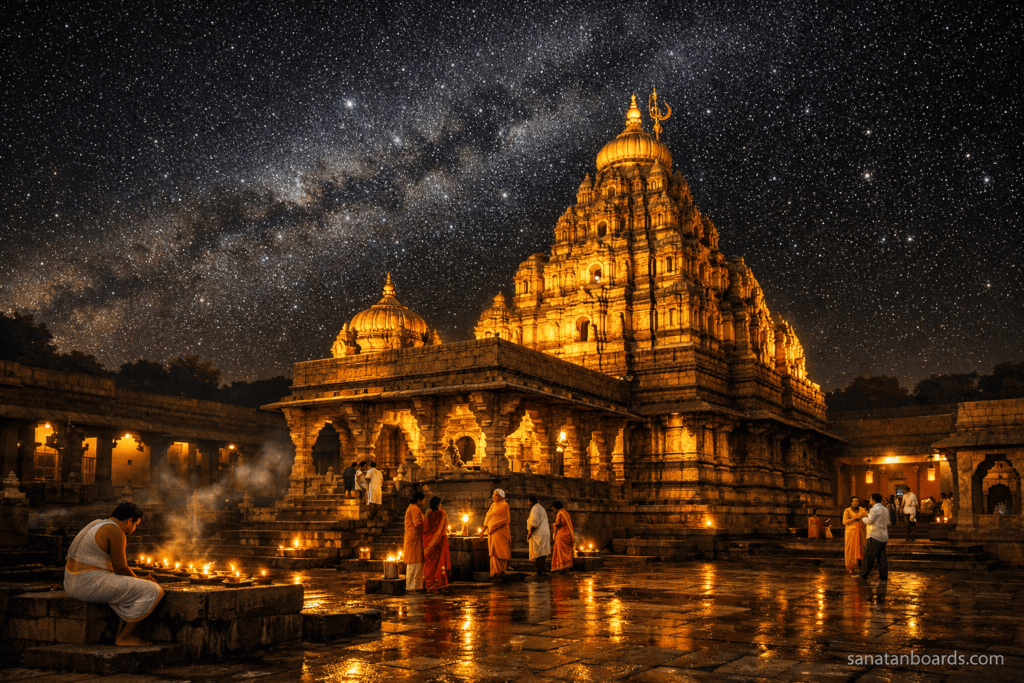
Grishneshwar Temple represents a powerful case study in religious continuity, heritage preservation, and cultural resilience in India.
Historically, the temple has faced multiple phases of destruction and reconstruction due to invasions and political changes. Despite these challenges, it has continued to exist as a symbol of devotion and identity. This resilience makes it a unique case in the study of Indian temple architecture and religious survival.
From a cultural perspective, Grishneshwar demonstrates how faith-based communities preserve sacred spaces even in difficult circumstances. Local communities and rulers contributed to rebuilding the temple, ensuring that worship practices were not discontinued. This highlights the role of collective devotion in heritage preservation.
Architecturally, the temple is built using traditional stone construction methods. The carvings on its walls depict stories from Hindu mythology, particularly those associated with Lord Shiva. The design reflects a blend of simplicity and spiritual symbolism, making it an important subject for architectural studies.
In terms of tourism and economy, the temple plays a significant role in attracting visitors to the Aurangabad region. Its proximity to Ellora Caves creates a combined heritage circuit that boosts local tourism, transportation services, and hospitality industries.
Religiously, Grishneshwar continues to be a central point of pilgrimage for Shiva devotees. It completes the Jyotirlinga circuit, which is considered a major spiritual achievement in Hindu tradition. This has helped maintain a continuous flow of pilgrims throughout the year.
From a management perspective, the temple is maintained by religious trusts and government support, ensuring proper upkeep, crowd management, and ritual continuity. This represents a model of collaboration between religious institutions and administrative bodies.
Socially, the temple serves as a gathering place where people from different regions, languages, and backgrounds come together with a shared sense of devotion. This promotes unity and cultural exchange.
Environmentally, the temple area maintains a balance between development and preservation. Efforts are made to manage waste, regulate tourism flow, and protect the surrounding heritage sites.
Overall, Grishneshwar serves as a case study in #Sanatanboardsinvasai how ancient religious sites can remain relevant in modern times through continuous worship, heritage conservation, and cultural tourism.
White Paper On Grishneshwar (Maharashtra)
Grishneshwar Temple is a significant heritage and religious site that represents the intersection of spirituality, architecture, and cultural continuity. This white paper outlines its importance in religious studies, heritage conservation, tourism development, and socio-cultural sustainability.
1. Historical Significance
Grishneshwar is one of the twelve Jyotirlingas dedicated to Lord Shiva, making it one of the most sacred pilgrimage destinations in Hinduism. Its history reflects multiple phases of destruction and restoration, demonstrating resilience in the face of political and social upheavals. The temple’s continued existence highlights the deep-rooted devotion of communities and rulers who preserved it across centuries.
2. Architectural Value
The temple showcases traditional stone architecture with detailed carvings depicting mythological narratives. Its design is relatively compact but symbolically rich. The proximity to Ellora Caves further enhances its architectural significance, as both sites represent ancient craftsmanship and spiritual expression.
3. Religious Importance
As the final Jyotirlinga, Grishneshwar completes the sacred circuit of Shiva worship. It attracts devotees seeking spiritual fulfillment, blessings, and liberation. Rituals performed here include Abhishekam, Aarti, and mantra chanting, all of which reinforce traditional Hindu practices.
4. Tourism and Economic Impact
The temple contributes significantly to regional tourism. Pilgrims and tourists visiting nearby heritage sites generate revenue for local businesses, transport operators, and hospitality services. This creates a sustainable economic ecosystem around religious tourism.
5. Cultural Integration
Grishneshwar acts as a cultural bridge, bringing together people from diverse regions and backgrounds. It supports the transmission of traditional values, rituals, and community participation. Festivals like Maha Shivratri play a key role in reinforcing cultural unity.
6. Conservation Challenges
Despite its importance, the site faces challenges such as crowd management, environmental pressure, and infrastructure limitations. Preservation of ancient structures requires continuous maintenance and careful regulation of tourist activities.
7. Strategic Importance
Grishneshwar is strategically located near major heritage circuits, making it an essential part of Maharashtra’s cultural tourism map. Its integration with Ellora enhances its global recognition.
Conclusion
Grishneshwar remains a vital symbol of spiritual heritage, #Sanatanboardsinmumbai cultural identity, and historical continuity. Its preservation is essential for maintaining India’s rich religious and architectural legacy.
Industry Application Of Grishneshwar (Maharashtra)
Grishneshwar Temple has several indirect applications across different industries, primarily due to its status as a major pilgrimage and heritage site.
1. Tourism Industry
The temple is a major driver of religious tourism in Maharashtra. It supports travel agencies, tour operators, guides, and transportation services. Packages combining Grishneshwar and Ellora Caves are widely offered.
2. Hospitality Industry
Hotels, lodges, and guesthouses in Aurangabad benefit from continuous pilgrim inflow. Seasonal peaks during festivals significantly increase occupancy rates.
3. Transportation Industry
Taxi services, buses, and private travel operators rely on pilgrimage routes to the temple. Connectivity improvements have enhanced regional mobility.
4. Handicrafts and Local Economy
Local vendors sell religious items such as flowers, incense, and souvenirs. This supports small-scale industries and rural livelihoods.
5. Cultural and Educational Sector
The temple serves as a case study for students of history, architecture, and religious studies. Educational tours and research programs are frequently organized.
6. Media and Content Industry
Travel documentaries, blogs, and cultural programs often feature Grishneshwar, increasing its visibility and promoting digital tourism.
7. Government and Heritage Management
The site requires continuous involvement of heritage conservation bodies and tourism departments for maintenance, crowd control, and infrastructure development.
source : Yatra Mitra
ASK FAQ
1. What is Grishneshwar Temple famous for?
Grishneshwar Temple is famous for being the 12th Jyotirlinga of Lord Shiva, making it one of the most sacred Shiva temples in India. It is also known for its spiritual importance and historical architecture near Ellora.
2. Where is Grishneshwar Temple located?
Grishneshwar Temple is located in Verul village, Aurangabad district, Maharashtra, India, very close to the UNESCO World Heritage site Ellora Caves.
3. Why is Grishneshwar Jyotirlinga important?
Grishneshwar Temple is important because it is the final Jyotirlinga in the Shiva pilgrimage circuit, believed to grant spiritual peace, blessings, and fulfillment of wishes to devotees.
4. When is the best time to visit Grishneshwar Temple?
The best time to visit Grishneshwar Temple is during Maha Shivratri and winter season (October to February) when the weather is pleasant and major religious celebrations take place.
5. How to reach Grishneshwar Temple?
Grishneshwar Temple can be easily reached from Chhatrapati Sambhajinagar (Aurangabad) by road, as it is only a short drive away and well connected by buses, taxis, and private vehicles.
Table of Contents
Disclaimer
The information provided above is compiled for general informational and descriptive purposes. It is based on historical, cultural, and traditional references associated with Grishneshwar Temple and related heritage context. Interpretations may vary depending on different historical sources and beliefs.