ndia’s struggle for independence was not fought only by famous male revolutionaries; many brave women also played a crucial role. One such fearless woman was Durgawati Devi, popularly known as Durga Bhabhi. She was a revolutionary associated with the Hindustan Socialist Republican Association (HSRA) and actively supported the underground revolutionary network that fought against the British Raj.
The Durga Devi Network refers to the revolutionary connections, support systems, and secret operations in which Durga Bhabhi played a vital role. Through courage, intelligence, and dedication, she helped many revolutionaries carry out missions against British rule.
What is the Durga Devi Network?
The Durga Devi Network refers to the revolutionary support system and underground connections organized and supported by Durgawati Devi, popularly known as Durga Bhabhi, during India’s struggle for independence from British rule. She was an important member of the revolutionary organization Hindustan Socialist Republican Association (HSRA), which worked secretly to fight against the British government in India. The network consisted of revolutionaries, safe houses, communication channels, and supporters who helped plan and carry out revolutionary activities.
Durgawati Devi was born on 7 October 1907 in Allahabad, in present-day Uttar Pradesh, India. She became involved in the freedom movement after marrying Bhagwati Charan Vohra, a revolutionary leader of HSRA. Through her husband, she met many famous revolutionaries such as Bhagat Singh, Chandrashekhar Azad, and Shivaram Rajguru. These revolutionaries considered her a trusted ally and respectfully called her “Durga Bhabhi.”
The Durga Devi Network played a very important role in supporting the revolutionary movement. Because the revolutionaries were constantly being watched by the British police, they needed secret places to meet, hide, and plan their activities. Durga Bhabhi helped create a network of safe houses and supporters where revolutionaries could stay safely. She also helped transport weapons, deliver messages, and arrange travel for revolutionaries who needed to move secretly from one place to another.
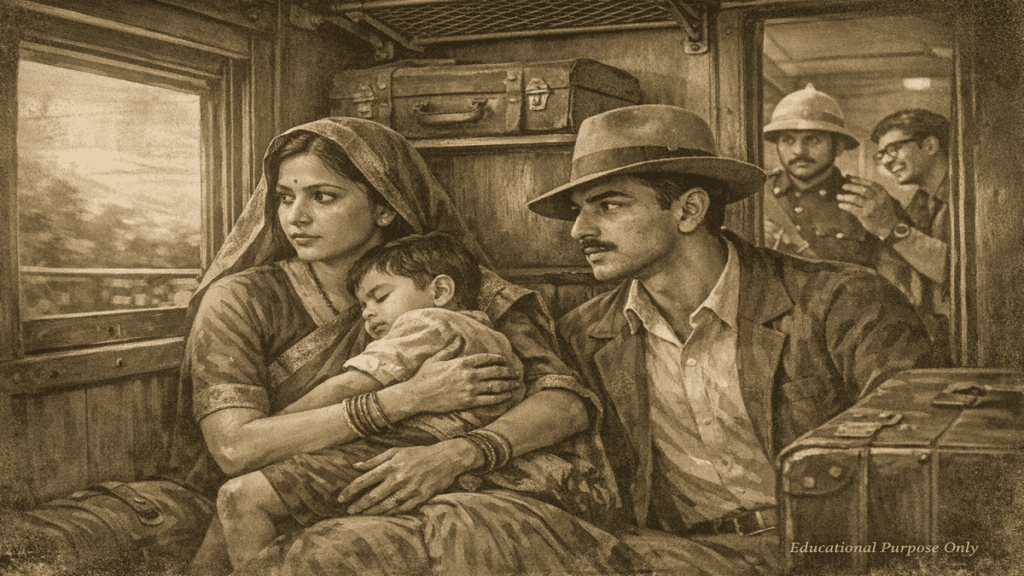
One of the most famous events connected with this network occurred after the Assassination of John Saunders in 1928. After the attack, the British police began searching everywhere for Bhagat Singh. To help him escape, Durga Bhabhi came up with a clever plan. She disguised herself as Bhagat Singh’s wife and traveled with him on a train while carrying her young child. This made the disguise appear natural and helped Bhagat Singh escape from Lahore without being recognized by the police. This brave action became one of the most remarkable examples of her intelligence and courage.
Durga Bhabhi was not only involved in supporting activities but also directly participated in revolutionary actions. She helped raise funds for revolutionary work and even attempted to attack British officials as part of the protest against colonial rule. Her courage showed that women were actively involved in India’s freedom struggle and were capable of taking bold risks for the country.
After India gained independence in 1947, Durga Bhabhi chose to live a quiet and simple life. Instead of seeking political power, she dedicated herself to education and social service. She later opened a school to educate poor children and continued to contribute to society in a peaceful way.
Who Is Required For Durga Devi Network?
The Durga Devi Network mainly involved members of the revolutionary organization Hindustan Socialist Republican Association (HSRA) who worked together secretly against British rule.
Main People in the Durga Devi Network
1. Durgawati Devi (Durga Bhabhi)
- The central and most important person in the network.
- She provided shelter, disguises, weapons transport, and communication support for revolutionaries.
- Helped Bhagat Singh escape from Lahore after the Saunders incident.
2. Bhagwati Charan Vohra
- Husband of Durga Bhabhi.
- A key revolutionary leader of HSRA who helped organize many revolutionary plans.
3. Bhagat Singh
- One of the most famous revolutionaries of India.
- Closely connected with Durga Bhabhi and depended on the network for support.
4. Chandrashekhar Azad
- A major leader of HSRA and mentor to many revolutionaries.
- Worked with Durga Bhabhi and others in planning revolutionary activities.
5. Shivaram Rajguru
- Revolutionary who helped in the Assassination of John Saunders along with Bhagat Singh.
6. Sukhdev Thapar
- Close associate of Bhagat Singh.
- Played an important role in organizing revolutionary actions.
When The Durga Devi Network Required?
The Durga Devi Network was required during the intense phase of India’s struggle for independence from British rule, particularly in the late 1920s and early 1930s. During this time, many Indian revolutionaries were actively fighting against the British colonial government through secret organizations and underground activities. One of the most important groups involved in these activities was the Hindustan Socialist Republican Association (HSRA). Members of this organization worked secretly to oppose British rule and inspire people to fight for freedom.
The network became especially important after the Assassination of John Saunders in 1928. This event occurred in Lahore, when revolutionaries such as Bhagat Singh, Shivaram Rajguru, and Sukhdev Thapar carried out the attack to protest against the death of Indian leader Lala Lajpat Rai, who had been injured during a British police lathi charge. After the assassination, the British government launched a massive search operation to capture the revolutionaries involved. Police surveillance increased, and many revolutionaries were at risk of arrest or execution.
At this crucial time, the support system organized by Durgawati Devi, popularly known as Durga Bhabhi, became extremely important. She was closely connected with revolutionary leaders and was the wife of Bhagwati Charan Vohra, a prominent member of HSRA. Because of her bravery and dedication, she became an essential part of the revolutionary movement. The Durga Devi Network helped revolutionaries continue their struggle despite the strict monitoring and repression by British authorities.
The network was required mainly to provide protection, communication, and logistical support to revolutionaries. During the late 1920s and early 1930s, many freedom fighters were living underground and could not move freely in public. They needed safe places to hide, secret communication methods, and assistance in traveling from one place to another without being detected by the police. Durga Bhabhi and her supporters helped create a system that provided these essential services.
One of the most famous examples showing why the network was required occurred soon after the Saunders incident. Bhagat Singh needed to escape from Lahore quickly to avoid arrest. Durga Bhabhi helped him by disguising herself as his wife and traveling with him on a train while carrying her child. This clever plan helped Bhagat Singh pass through police checkpoints without suspicion. Such actions demonstrated how important the Durga Devi Network was during that period.
The network also supported other revolutionary leaders like Chandrashekhar Azad, who continued to organize resistance against British rule. Through safe houses, secret meetings, and financial support, the network ensured that revolutionary activities could continue despite constant danger.
Where Was the Durga Devi Network Required?
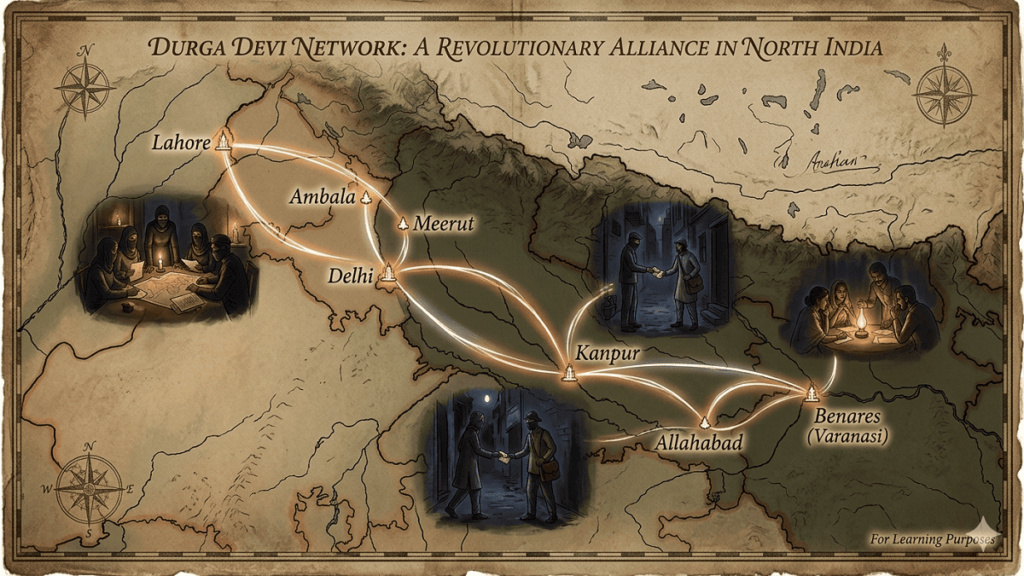
The Durga Devi Network was required in several important cities and regions of northern India during the Indian freedom struggle against British rule, especially in the late 1920s and early 1930s. These locations were places where revolutionary activities were strong and where members of the Hindustan Socialist Republican Association (HSRA) operated secretly. The network helped revolutionaries hide, communicate, and organize their activities without being captured by British authorities.
One of the most important places where the network was required was Lahore, which at that time was a major center of revolutionary activities. Lahore became especially important after the Assassination of John Saunders in 1928, carried out by revolutionaries including Bhagat Singh and Shivaram Rajguru. After this incident, British police began searching aggressively for the revolutionaries involved. Because of this, Lahore became a dangerous place for them to stay. At this point, the support system created by Durgawati Devi, also known as Durga Bhabhi, became very important. Her network helped revolutionaries escape from Lahore and move safely to other locations.
Another important place where the Durga Devi Network was required was Kanpur. Kanpur was a key center for revolutionary planning and secret meetings. Many members of HSRA used the city to organize their activities and coordinate with other revolutionaries. Safe houses and trusted supporters in Kanpur helped revolutionaries avoid arrest and continue their work against British rule.
The network was also active in Allahabad, which was the birthplace of Durgawati Devi. Allahabad was an important political and intellectual center during the freedom movement. Several revolutionary leaders traveled through this city, and it served as a place for communication and coordination between different groups fighting against British rule.
Another key location was Lucknow, where revolutionary supporters helped provide shelter and assistance to underground fighters. Like other major cities in northern India, Lucknow had many people who secretly supported the freedom struggle and were willing to help revolutionaries by offering safe places to stay or by helping them travel without attracting attention.
In addition to these cities, the network extended across several parts of India wherever revolutionary activities were taking place. Members of HSRA, including leaders like Chandrashekhar Azad and Sukhdev Thapar, often moved from one city to another to avoid police detection. Because of this constant movement, the Durga Devi Network was needed in multiple locations to provide support at different stages of their journeys.
The main purpose of having the network in different places was to create a system of safe houses, secret meeting points and trusted contacts. This allowed revolutionaries to communicate with each other, plan their actions, and escape from British police surveillance. Without such networks in various cities, it would have been much more difficult for revolutionaries to continue their fight for independence.
How Durga Devi Network Required?
The Durga Devi Network became necessary during an important phase of India’s freedom struggle when many revolutionaries were actively working against British rule. During the late 1920s and early 1930s, the British government increased its surveillance and control over revolutionary groups. Freedom fighters who opposed colonial rule faced the constant risk of arrest, imprisonment, or even execution. Because of this dangerous environment, revolutionaries needed a strong support system to help them survive and continue their activities. This situation created the need for the network associated with Durgawati Devi, popularly known as Durga Bhabhi.
Durga Bhabhi was closely connected with the revolutionary organization Hindustan Socialist Republican Association (HSRA). This organization was formed by young revolutionaries who believed in direct action against British rule in order to achieve independence for India. Many well-known revolutionaries such as Bhagat Singh, Chandrashekhar Azad, Shivaram Rajguru, and Sukhdev Thapar were part of this group. Their activities attracted the attention of British authorities, which made their work extremely risky. Because of this, they required help from trusted individuals who could support them behind the scenes.
The need for such a network became even more serious after the Assassination of John Saunders in 1928. This incident took place in Lahore when revolutionaries targeted a British police officer as a protest against the death of Indian leader Lala Lajpat Rai, who had been injured during a police lathi charge. After the event, the British government launched a large search operation to capture the revolutionaries involved. Police raids, arrests, and strict monitoring became common in many cities.
Under these circumstances, the Durga Devi Network became extremely valuable for the revolutionary movement. Durga Bhabhi and her associates helped provide support that allowed revolutionaries to stay safe and continue their work. This support included arranging safe locations where they could stay without being discovered by the police, helping them move from one city to another, and maintaining communication between different members of the movement. These actions helped revolutionaries stay organized despite the difficult situation.
One famous example that shows the importance of this network was when Bhagat Singh needed to leave Lahore after the Saunders incident. Durga Bhabhi helped him travel safely by pretending to be his wife and carrying her child during the train journey. This clever disguise helped Bhagat Singh avoid suspicion and escape from the city while the British police were searching for him.
The Durga Devi Network also represented the important role of women in the Indian freedom struggle. Durga Bhabhi showed great courage, intelligence, and dedication in supporting the revolutionary movement. Her contributions proved that the fight for independence involved not only famous leaders but also many brave individuals working quietly behind the scenes.
Case Study: The Durga Devi Network
Introduction
The Durga Devi Network refers to the system of support and cooperation built around Durgawati Devi, also known as Durga Bhabhi, during India’s struggle for independence. She was associated with the revolutionary organization Hindustan Socialist Republican Association (HSRA). The network helped revolutionary leaders operate secretly and continue their fight against British colonial rule. This case study explains the background, role, and impact of the Durga Devi Network in supporting India’s freedom movement.
Background
During the late 1920s, revolutionary activities increased in northern India. Members of HSRA, including Bhagat Singh, Chandrashekhar Azad, Shivaram Rajguru, and Sukhdev Thapar, were actively working to end British rule. Because of their activities, the British government started strict surveillance and arrests. Revolutionaries needed secret support systems to stay safe and continue their work.
At this time, Durgawati Devi became an important supporter of the revolutionary movement. She was the wife of Bhagwati Charan Vohra, a key member of HSRA. Her courage and dedication helped create a network that provided protection and support for revolutionaries.
The Revolutionary Situation
The need for the Durga Devi Network became very clear after the Assassination of John Saunders in 1928 in Lahore. The attack was carried out by Bhagat Singh and his associates to protest against the death of Lala Lajpat Rai, who was injured during a British police lathi charge. After this incident, British authorities began searching aggressively for the revolutionaries involved. Police raids and arrests increased across the region.
Role of the Durga Devi Network
The Durga Devi Network helped revolutionaries in several important ways. It provided safe places where revolutionaries could stay temporarily to avoid arrest. These safe houses allowed them to plan their activities and move from one place to another safely.
Another important role of the network was helping revolutionaries travel without being recognized. One of the most famous examples was when Durga Bhabhi helped Bhagat Singh escape from Lahore. She disguised herself as his wife and traveled with him on a train while carrying her child. This clever plan helped Bhagat Singh pass through British checkpoints without suspicion.
The network also helped revolutionaries communicate with each other. Since modern communication technology did not exist at that time, trusted individuals had to deliver messages secretly. Durga Bhabhi and her associates helped maintain these connections between revolutionary groups.
Impact of the Network
The Durga Devi Network played an important role in keeping the revolutionary movement active during a difficult period. Without such support systems, many revolutionaries could have been captured much earlier. The network allowed them to continue spreading their ideas and organizing resistance against British rule.
It also highlighted the role of women in India’s freedom struggle. Durga Bhabhi showed remarkable bravery and commitment by participating in activities that involved serious personal risk.
Conclusion
This case study shows that the Durga Devi Network was an essential support system for revolutionaries during India’s independence movement. Through courage, intelligence, and dedication, Durgawati Devi helped protect and assist revolutionary leaders who were fighting against British rule. Her contribution remains an inspiring example of patriotism and the important role individuals can play in shaping a nation’s history.
White Paper on the Durga Devi Network
1. Introduction
This white paper examines the historical importance of the Durga Devi Network, a support system that assisted Indian revolutionaries during the struggle for independence from British rule. The network was closely associated with Durgawati Devi, popularly known as Durga Bhabhi. Through courage and dedication, she helped create a system that supported revolutionary activities carried out by members of the Hindustan Socialist Republican Association (HSRA). This document highlights the background, objectives, operations, and impact of the network in the Indian freedom movement.
2. Historical Background
During the late 1920s, India experienced increased revolutionary activity against British colonial rule. Several young revolutionaries believed that direct action was necessary to challenge the authority of the British government. Leaders such as Bhagat Singh, Chandrashekhar Azad, Shivaram Rajguru, and Sukhdev Thapar became prominent members of HSRA. Their actions attracted strict monitoring by British authorities, making it necessary to establish secret networks that could help revolutionaries continue their activities safely.
3. Purpose of the Durga Devi Network
The Durga Devi Network was developed to provide essential support to revolutionaries working underground. The main purposes included:
- Offering safe shelter for revolutionaries who were being pursued by British authorities.
- Supporting communication between members of revolutionary groups.
- Assisting with travel arrangements so that revolutionaries could move safely between cities.
- Providing financial and logistical support for revolutionary activities.
These efforts allowed revolutionary leaders to continue organizing resistance against British rule despite the constant threat of arrest.
4. Key Historical Event
The importance of the network became especially clear after the Assassination of John Saunders in 1928 in Lahore. The incident was carried out by Bhagat Singh and his associates as a protest against the death of Indian nationalist leader Lala Lajpat Rai, who had been injured during a police lathi charge. Following this event, British authorities intensified their search for the revolutionaries involved. Under these circumstances, Durga Bhabhi’s support became extremely valuable in helping revolutionaries avoid capture.
5. Role of Durgawati Devi
Durgawati Devi played a central role in supporting the revolutionary movement. She was the wife of Bhagwati Charan Vohra, a key member of HSRA, and actively participated in revolutionary activities. Her actions demonstrated courage and commitment to the cause of independence.
One of the most well-known examples of her bravery involved helping Bhagat Singh escape from Lahore after the Saunders incident. She disguised herself as his wife and traveled with him by train while carrying her child. This strategy helped Bhagat Singh move safely past British police checkpoints.
6. Impact and Significance
The Durga Devi Network played a crucial role in sustaining the revolutionary movement during a time of intense political pressure. By providing protection, communication, and support, the network helped revolutionaries remain active in their mission to challenge British authority.
Additionally, the contributions of Durga Bhabhi highlighted the important role played by women in India’s freedom struggle. Her courage inspired many others and demonstrated that the fight for independence involved individuals from all sections of society.
7. Conclusion
The Durga Devi Network represents a significant example of cooperation and dedication within India’s revolutionary movement. Through the leadership and bravery of Durgawati Devi, many revolutionaries were able to continue their efforts despite strict British control. This network remains an important part of the historical narrative of India’s struggle for independence and stands as a symbol of courage, sacrifice, and patriotism.
SOURCE : BhaktiWood
Industry Application of the Durga Devi Network
he Durga Devi Network, associated with Durgawati Devi and the revolutionary activities of the Hindustan Socialist Republican Association, was originally a historical support system used during India’s freedom struggle. Although it was not an industrial system, the principles behind the network—such as coordination, communication, secrecy, and support systems—can be applied in modern industries and organizations.
1. Organizational Networking and Team Coordination
In modern industries, companies rely heavily on strong networks and teamwork. The Durga Devi Network demonstrated the importance of trust, cooperation, and coordination among members. Similarly, businesses today build internal networks among departments to ensure that employees work together efficiently toward common goals.
2. Crisis Management and Risk Handling
The revolutionary network functioned during a time of great risk and uncertainty. Members had to operate carefully and protect each other from danger. In industries today, organizations use risk management systems to deal with unexpected problems such as financial crises, operational failures, or cybersecurity threats. The concept of a strong support network helps organizations respond quickly and effectively during emergencies.
3. Secure Communication Systems
One important aspect of the Durga Devi Network was the use of secure communication and trusted messengers to share information safely. In modern industries, secure communication is equally important. Businesses use encrypted messaging, cybersecurity tools, and secure networks to protect sensitive information and maintain confidentiality.
4. Logistics and Resource Management
The network also helped revolutionaries manage resources such as transportation, shelter, and financial support. In modern industries, logistics and supply chain management play a similar role. Companies must carefully plan the movement of goods, services, and information to ensure efficient operations.
5. Leadership and Strategic Support
The leadership shown by Durgawati Devi demonstrates the importance of strong leadership in any organization. In modern industries, leaders must guide teams, make strategic decisions, and motivate employees to work toward organizational success.
6. Social and Community Applications
The ideas behind the Durga Devi Network can also be applied in social organizations and community initiatives. Non-profit groups, educational institutions, and volunteer organizations often build support networks to help people in need and coordinate social programs effectively.
Conclusion
Although the Durga Devi Network was created in a historical revolutionary context, its underlying principles—such as collaboration, secure communication, leadership, and resource management—have valuable applications in modern industries and organizations. These concepts highlight the importance of strong networks and effective coordination in achieving complex goals in both historical and modern settings.
ASK FAQ
1. What is the Durga Devi Network?
The Durga Devi Network refers to the revolutionary support system connected with Durgawati Devi, also known as Durga Bhabhi, during India’s freedom struggle. She helped members of the Hindustan Socialist Republican Association (HSRA) by providing shelter, communication, and assistance to revolutionaries working secretly against British rule.
2. Who was Durgawati Devi and why is she important?
Durgawati Devi, popularly known as Durga Bhabhi, was a brave Indian revolutionary who supported the freedom movement. She was married to Bhagwati Charan Vohra, a member of HSRA.
Her importance comes from her courage and support for revolutionaries. She helped them hide from British authorities, arranged safe travel, and participated in revolutionary activities. Her work showed that women also played an important role in India’s fight for independence.
3. Why was the Durga Devi Network important in the freedom struggle?
he Durga Devi Network was important because it provided protection and support to revolutionaries when the British government was trying to arrest them.
After the Assassination of John Saunders in 1928, British authorities began searching for revolutionaries like Bhagat Singh. The network helped them escape, communicate, and continue their mission for independence.
4.What role did Durga Bhabhi play in helping Bhagat Singh escape?
After the Saunders incident in Lahore, Bhagat Singh needed to leave the city quickly. Durgawati Devi helped him escape by disguising herself as his wife.
She traveled with him on a train while carrying her child so that the situation looked normal. This clever plan helped Bhagat Singh avoid suspicion from British police.
What lessons can be learned from the Durga Devi Network?
The Durga Devi Network teaches several important lessons:
The importance of teamwork and cooperation in achieving a common goal
The value of courage and dedication during difficult times
The role of support systems and communication in organizing movements
The significant contribution of women in the freedom struggle
The story of Durgawati Devi continues to inspire people by showing how determination and bravery can contribute to national progress.
Table of Contents
Disclaimer:
The information provided in this article is for educational and informational purposes only. It is based on historical records and publicly available sources. The content is not intended to promote any political view or ideology and should not be considered as professional advice.