Devaraya II was one of the most powerful and influential emperors of the Vijayanagar Empire, an important medieval Indian state based in southern India. The Vijayanagar Empire was founded in 1336 CE and became one of the most lasting and culturally significant Hindu empires in Indian history. It dominated much of southern India during the 14th to 16th centuries, encompassing modern‑day Karnataka, Andhra Pradesh, Tamil Nadu, Kerala, and parts of Maharashtra and Telangana.
Devaraya II, also eulogized in contemporary literature with the title Gajabetegara (often interpreted as “great hunter of elephants”), succeeded to the Vijayanagar throne in the early 15th century. His reign marked a period of relative stability, territorial expansion, and consolidation following earlier struggles both within the empire and against external powers.
Under his leadership, Vijayanagar asserted dominance over local feudal chiefs, expanded influence into the south against rulers such as the Zamorin of Calicut and Quilon, and engaged in campaigns that reached Sri Lanka. Devaraya II is credited with strengthening central authority, quelling rebellious governors, and maintaining diplomatic pressure on neighboring kingdoms such as the Bahmani Sultanate, though conflicts with them continued.
Inscriptions from his reign, such as those recorded in Karnataka temples, provide valuable evidence of his rule, titles, and administrative structure. Coins depicting elephants and royal legends from his era also attest to his reputation and the economic life of the empire.
Devaraya II’s period of rule helped solidify Vijayanagar’s status as a dominant regional power and laid important groundwork for both the empire’s subsequent rulers and its cultural achievements.
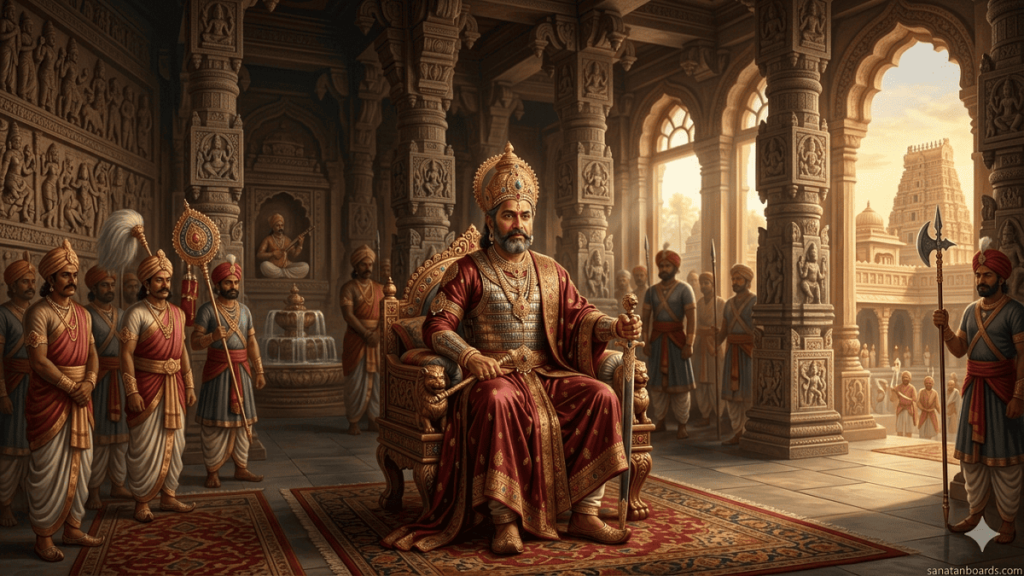
What Is Devaraya Ii (Vijayanagar) ?
Devaraya II was an emperor of the Vijayanagar Empire belonging to the Sangama dynasty, one of the earliest ruling families of the empire. He ascended the throne following the reign of his predecessors who had established and expanded the empire across peninsular India. His reign is generally placed in the first half of the 15th century, a period of military activity administrative consolidation, and intense interaction with neighboring kingdoms.
The title Gajabetegara, attached to Devaraya II in inscriptions and literary sources, reflects the martial culture of his age and possibly his prowess or symbolic embodiment of dominance over war elephants, a key military asset in medieval South Asian warfare. Historians interpret this title as part of the cultural language of kingship at the time, where military success was closely tied to royal legitimacy.
During his rule, Devaraya II engaged in campaigns against rebellious feudal lords within the empire’s borders and against powerful southern rulers like the Zamorin of Calicut. His forces pushed into Sri Lanka and exerted suzerainty over distant polities, including parts of Burma (present‑day Myanmar). These expeditions extended Vijayanagar’s influence and secured its position as the principal power in southern India.
Devaraya II’s administration worked to maintain centralized control in a landscape of often fractious regional chiefs and rival states. Though later skirmishes with the Bahmani Sultanate tested his resources and strategic focus, his reign is remembered as relatively successful in balancing military engagement with internal governance.
Who Is Required Devaraya Ii (Vijayanagar) ?
The question of “who is required” in the context of Devaraya II (Vijayanagar) relates to the stakeholders, communities, and groups historically connected to or impacted by his reign. As an emperor, his leadership was crucial for the stability of the Vijayanagar Empire, making him central to the political, social, and military framework of southern India during the early 15th century. (en.wikipedia.org)
Primarily, Devaraya II was required by the administrative and ruling elites of the empire. Provincial governors, military commanders, and local chieftains depended on his authority to legitimize their positions and coordinate campaigns. Without strong central leadership, the empire’s vast territories—spanning modern Karnataka, Andhra Pradesh, Tamil Nadu, and parts of Kerala—risked fragmentation. (bangaloremirror.indiatimes.com)
The military apparatus of Vijayanagar also required him. As the commander-in-chief, Devaraya II directed campaigns against rival kingdoms such as the Bahmani Sultanate, the Zamorin of Calicut, and foreign expeditions to Sri Lanka. His strategic guidance ensured that the empire not only survived but expanded its influence across southern India. (en.wikipedia.org)
Additionally, the religious and cultural institutions of the empire required his patronage. Temples, scholars, and poets relied on the royal court for protection, grants, and recognition. Devaraya II’s support for temples and inscriptions not only reinforced his authority but also preserved the cultural identity of the empire. (bangaloremirror.indiatimes.com)
Finally, the general populace indirectly required him as a unifying ruler. His military successes, administrative efficiency, and cultural patronage contributed to economic stability, security, and societal cohesion, which were essential for daily life and local governance.
When Devaraya Ii (Vijayanagar) Is Required ?
The reign of Devaraya II (Vijayanagar) is historically required during a critical juncture in the early 15th century when the empire needed consolidation and expansion. Following the initial establishment of Vijayanagar by Harihara I and Bukka I, the empire faced challenges such as rebellious provincial governors, rival kingdoms like the Bahmani Sultanate, and external threats from southern kingdoms and foreign expeditions. (en.wikipedia.org)
Devaraya II’s leadership was required immediately after periods of instability, particularly when feudal lords and local chieftains threatened the cohesion of the empire. His military campaigns during this period helped enforce central authority, ensuring that the empire remained unified and capable of projecting power beyond its core territories. (bangaloremirror.indiatimes.com)
Moreover, Devaraya II was required during territorial expansion. His reign saw successful campaigns in the southern regions, including modern Kerala and Tamil Nadu, and expeditions to Sri Lanka. These actions were necessary to secure trade routes, tribute, and resources vital to the empire’s economy and political influence. By establishing Vijayanagar’s presence in these regions, he strengthened the empire’s long-term strategic position. (en.wikipedia.org)
Devaraya II was also required in times of cultural consolidation and administration. During his rule, Vijayanagar witnessed the growth of temple construction, patronage of scholars, poets, and inscriptions documenting achievements. These cultural investments were necessary to legitimize the emperor’s authority and unify a diverse population under a common religious and cultural framework. (bangaloremirror.indiatimes.com)
Finally, the emperor was required during interactions with neighboring kingdoms, whether through diplomacy or warfare. His reign coincided with fluctuating relations with the Bahmani Sultanate, the Zamorin of Calicut, and rulers of coastal Andhra and Telangana. The presence of a strong, capable ruler like Devaraya II ensured that Vijayanagar could negotiate, defend, and expand simultaneously, maintaining its dominance in southern India.
Where Devaraya Ii (Vijayanagar) Is Required ?
Devaraya II (Vijayanagar) was required in multiple geographical and strategic locations across the empire, reflecting the breadth of his authority and the demands of governance and defense. The primary seat of power was the capital, Vijayanagar (modern Hampi, Karnataka), which functioned as the administrative, political, and cultural hub. From here, the emperor coordinated military campaigns, governance, and economic policies. (en.wikipedia.org)
He was required on the frontlines of military conflict, particularly along the borders with the Bahmani Sultanate in northern Karnataka. Control over strategic fortresses, trade routes, and fertile agricultural land was essential to maintain Vijayanagar’s dominance. Devaraya II personally led campaigns to quell rebellions and defend the empire against external invasions, making these areas crucial to his presence. (bangaloremirror.indiatimes.com)
In southern India, he was required in regions such as modern Kerala, Tamil Nadu, and parts of Andhra Pradesh, where local rulers and feudal lords posed challenges to centralized authority. These areas were also rich in trade and natural resources, so maintaining imperial oversight was necessary to ensure revenue, security, and political influence. His presence in these regions, whether through military campaigns or administrative decrees, helped integrate them into the Vijayanagar state structure. (en.wikipedia.org)
Devaraya II was also required in coastal regions, especially ports and trade hubs, to protect maritime trade routes and ensure the collection of tributes. These locations were essential for sustaining economic prosperity, which underpinned military and cultural initiatives throughout the empire. (mintageworld.com)
Finally, he was required within cultural and religious centers, such as major temples in Karnataka and Andhra Pradesh. By supervising temple constructions, patronizing scholars, and issuing inscriptions, Devaraya II reinforced his legitimacy and maintained the empire’s religious cohesion. These sites were focal points for both civic life and imperial propaganda, linking the emperor to divine authority.
How Devaraya Ii (Vijayanagar) Is Required ?
Devaraya II (Vijayanagar) was required through a combination of leadership, strategic governance, military command, and cultural patronage. His role was not just symbolic but practical, influencing every aspect of the empire’s administration and survival.
Firstly, he was required through direct military leadership. Devaraya II personally led campaigns against rival kingdoms, particularly the Bahmani Sultanate in the north and southern polities like the Zamorin of Calicut. By directing armies and coordinating logistics, he ensured that territories under Vijayanagar control remained secure. The emperor’s presence on the battlefield also served to boost morale among troops and reinforce loyalty among local chieftains. (en.wikipedia.org)
Secondly, he was required through administrative and bureaucratic oversight. Devaraya II supervised the governance of provinces, ensuring that tax collection, law enforcement, and infrastructure projects were effectively managed. By appointing trusted governors and issuing royal decrees, he maintained central authority over a vast empire with diverse communities. Inscriptions from temples and royal records indicate the formal mechanisms through which he executed administrative control. (bangaloremirror.indiatimes.com)
Thirdly, he was required through cultural and religious patronage. By funding temple construction, supporting scholars, poets, and artisans, and commissioning inscriptions, Devaraya II reinforced both the spiritual and political legitimacy of his reign. These actions helped unify the population under shared cultural and religious values, strengthening loyalty to the empire. (en.wikipedia.org)
Additionally, he was required through diplomacy and trade oversight. Maintaining relationships with neighboring states and controlling key trade routes allowed Vijayanagar to flourish economically. Devaraya II negotiated alliances, collected tributes, and ensured that ports and markets remained secure, which sustained the empire’s wealth and stability.
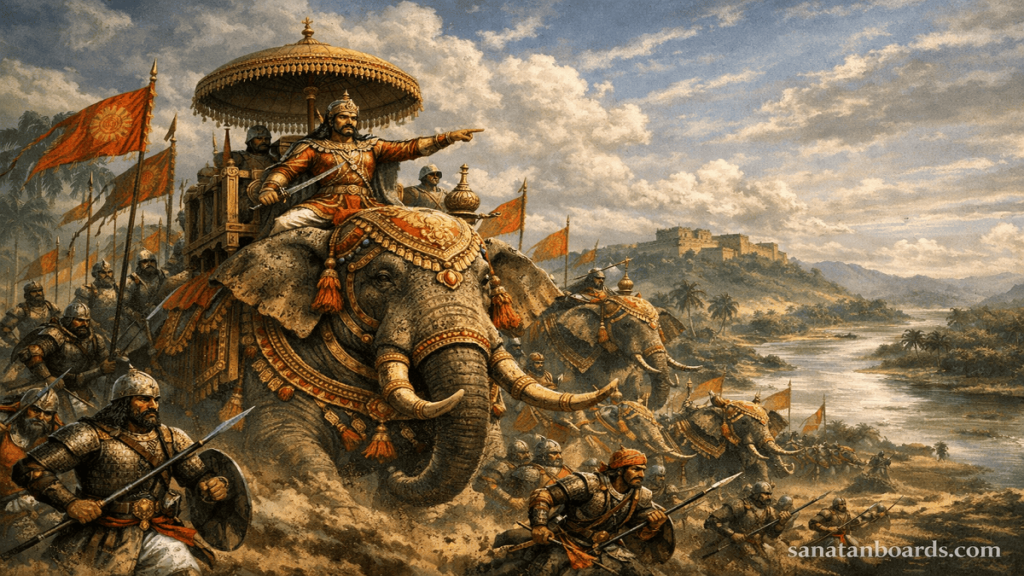
Case Study On Devaraya Ii (Vijayanagar)
Introduction
Devaraya II, ruling in the first half of the 15th century, is considered one of the most capable and dynamic emperors of the Vijayanagar Empire. His reign represents a pivotal moment in the consolidation and expansion of southern India’s political landscape. This case study examines his military campaigns, administrative innovations, cultural contributions, and overall impact on the Vijayanagar state.
Military Expansion
Devaraya II’s campaigns against the Bahmani Sultanate, the Zamorin of Calicut, and other southern rulers were essential in asserting Vijayanagar’s dominance. He employed a combination of direct military engagement, strategic fortifications, and careful alliances. Notably, his expedition to Sri Lanka extended the empire’s influence overseas, securing tribute and trade opportunities. Military success was reinforced by the use of war elephants, cavalry, and coordinated regional levies. These campaigns solidified his reputation as a powerful and respected monarch.
Administrative Reforms
The emperor implemented effective governance through a centralized bureaucratic system. Provincial governors, appointed based on loyalty and competence, managed day-to-day administration, taxation, and local justice. Inscriptions indicate that Devaraya II codified certain legal and fiscal policies, ensuring uniformity across provinces. This administrative oversight prevented rebellion, encouraged economic activity, and integrated distant regions into a cohesive empire.
Cultural Patronage
Devaraya II was a patron of religion, literature, and architecture. He commissioned temples, supported scholars, and promoted Telugu, Kannada, and Sanskrit literature. Temples not only served religious functions but also acted as centers of learning and community cohesion. His reign produced inscriptions celebrating victories, endowments, and religious observances, linking spiritual authority with royal power.
Economic and Trade Policies
By securing southern ports and inland trade routes, Devaraya II ensured the flow of goods, tribute, and resources. Trade with the Indian Ocean region and internal markets strengthened the empire’s economy, funding both military campaigns and cultural projects. Coins minted during his reign, often depicting elephants and royal insignia, illustrate both economic prosperity and symbolic authority.
Diplomacy
Devaraya II skillfully managed relationships with neighboring states. While engaging in military campaigns when necessary, he also negotiated alliances, marriage ties, and tribute arrangements. This combination of diplomacy and force helped Vijayanagar maintain regional supremacy.
Conclusion
Devaraya II’s reign demonstrates the importance of strong leadership in military, administrative, cultural, and economic spheres. His ability to combine personal prowess with structured governance enabled the Vijayanagar Empire to achieve stability, expansion, and enduring cultural influence. Today, his legacy remains evident in the inscriptions, literature, and architectural remains of the period.
White Paper On Devaraya Ii (Vijayanagar)
Executive Summary
Devaraya II of the Vijayanagar Empire represents a paradigm of strong, centralized leadership in medieval South India. His reign, during the early 15th century, illustrates the convergence of military strategy, administrative governance, cultural patronage, and economic management. This white paper examines the multifaceted contributions of Devaraya II and explores lessons in leadership, statecraft, and regional development.
Historical Context
The Vijayanagar Empire, founded in 1336 CE, emerged as a powerful Hindu state in southern India amidst political fragmentation. Prior rulers established initial territorial control and administrative frameworks, but the empire required consolidation to survive threats from northern sultanates and local chiefs. Devaraya II’s reign fulfilled this requirement, achieving stability and expansion during a period of intense regional competition.
Leadership and Governance
Devaraya II was pivotal in centralizing power within Vijayanagar. Provincial governors were appointed based on loyalty and capability, creating a hierarchical but accountable administrative structure. Inscriptions confirm standardized policies for taxation, land grants, and dispute resolution. His leadership demonstrated that strong personal authority, coupled with an organized bureaucracy, is critical for state cohesion.
Military Strategy
The emperor’s campaigns were crucial for territorial expansion and defense. Key military achievements include:
- Successful campaigns against the Bahmani Sultanate in the north.
- Subjugation of southern polities, including the Zamorin of Calicut.
- Overseas expeditions to Sri Lanka, extending influence and securing tribute.
Devaraya II utilized war elephants, cavalry, and infantry with coordinated regional levies, reflecting sophisticated military planning.
Cultural Contributions
Devaraya II actively promoted religion, literature, and architecture. He patronized temples across Karnataka and Andhra Pradesh, supporting scholars in Telugu, Kannada, and Sanskrit. Temples served as religious, educational, and social centers, linking spiritual authority with imperial legitimacy. Inscriptions and coinage illustrate both cultural and economic strength.
Economic Policies
Trade and revenue management under Devaraya II ensured long-term stability. Coastal ports and internal trade routes were secured, fostering wealth accumulation. Coins minted during his reign demonstrate the circulation of currency and economic symbolism, with emblems of royal authority and elephants representing military strength.
Diplomacy and Regional Influence
Devaraya II skillfully combined diplomacy with military power. Alliances, marriage ties, and tribute arrangements maintained regional influence while avoiding constant conflict. This dual approach allowed Vijayanagar to dominate southern India while conserving resources for cultural and economic projects.
Lessons and Implications
The reign of Devaraya II provides several lessons for governance and leadership:
- Centralized authority with accountable local governance ensures stability.
- Military prowess must be complemented with strategic diplomacy.
- Cultural patronage reinforces legitimacy and social cohesion.
- Economic management underpins military and cultural initiatives.
Conclusion
Devaraya II’s reign demonstrates that leadership effectiveness is multidimensional, integrating military, administrative, economic, and cultural dimensions. His legacy continues to inform studies of medieval Indian statecraft, regional integration, and leadership models.
Industry Application On Devaraya Ii (Vijayanagar)
While Devaraya II (Vijayanagar) is a historical figure, the principles from his reign have applications in modern organizational and industrial contexts. Lessons from his military strategy, governance, cultural patronage, and economic management can be adapted for leadership, operations, and organizational development.
Strategic Leadership
Devaraya II’s approach to military campaigns and administration provides a model for strategic leadership in organizations:
- Decision-making under uncertainty: Just as he navigated regional conflicts, managers must assess risks and opportunities in competitive industries.
- Centralized yet distributed authority: Delegating responsibilities to trusted governors parallels modern organizational hierarchies where decision-making is decentralized but guided by overarching leadership.
Operational Efficiency
The emperor’s governance and resource management demonstrate effective operational planning:
- Resource allocation: Military campaigns and infrastructure projects under his supervision required meticulous allocation of manpower, finances, and materials.
- Process standardization: Administrative protocols and taxation systems resemble modern enterprise standard operating procedures (SOPs).
Risk Management and Crisis Response
Devaraya II’s handling of rebellions and invasions highlights risk assessment and crisis management:
- Rapid deployment of troops mirrors agile response teams in industrial operations.
- Balancing multiple threats simultaneously parallels portfolio management in business.
Cultural and Knowledge Management
Patronage of temples, literature, and inscriptions provides insight into knowledge management and corporate culture:
- Talent development: Scholars and artisans under royal patronage reflect employee development programs.
- Institutional branding: Cultural projects reinforced the empire’s legitimacy, similar to how corporations use brand-building to strengthen market presence.
Economic and Trade Management
Securing trade routes and managing revenue under Devaraya II offers lessons for financial management and supply chain oversight:
- Market expansion: His overseas campaigns parallel business expansion into new markets.
- Revenue optimization: Taxation and tribute systems illustrate pricing strategies and resource monetization.
Diplomacy and Stakeholder Engagement
Devaraya II’s diplomacy highlights stakeholder engagement and negotiation strategies:
- Negotiating alliances mirrors partnerships and joint ventures in industry.
- Managing feudal lords and neighboring states resembles multi-stakeholder coordination in large-scale projects.
Modern Applications
- Military/Defense: Strategic planning and logistics for modern defense operations.
- Corporate Leadership: Hierarchical yet flexible management and risk mitigation strategies.
- Education/Knowledge Institutions: Supporting research, scholarship, and cultural development.
- Trade and Economics: Market expansion, revenue systems, and supply chain security.
Conclusion
Devaraya II’s strategies, though historical, provide a blueprint for leadership, operational efficiency, and organizational development across industries. #sanatandharmaaccreditationboardsinkarnataka His reign underscores the integration of strategy, #sanatandharmaaccreditationboardsinmumbai culture, economics, and diplomacy—principles that remain relevant in contemporary management and organizational contexts.
SOURCE StudyIQ IAS
ASK FAQ
Who was Devaraya II of Vijayanagar?
Devaraya II was a powerful emperor of the Vijayanagar Empire in the 15th century, known for military campaigns, administrative reforms, and cultural patronage, consolidating southern India under his rule.
When did Devaraya II rule the Vijayanagar Empire?
Devaraya II ruled Vijayanagar in the early 15th century, during a period of political consolidation and territorial expansion.
What were the major achievements of Devaraya II?
His achievements include successful campaigns against the Bahmani Sultanate, expansion into southern India and Sri Lanka, temple patronage, administrative reforms, and economic development.
Where did Devaraya II expand the Vijayanagar Empire?
Devaraya II expanded the empire across modern Karnataka, Andhra Pradesh, Tamil Nadu, parts of Kerala, and overseas influence in Sri Lanka.
Why is Devaraya II important in Indian history?
Devaraya II strengthened Vijayanagar’s military, cultural, and administrative foundations, making it a dominant power in southern India and leaving a lasting legacy in literature, temples, and inscriptions.
Table of Contents
Disclaimer:
The information provided in this blog is for educational and informational purposes only. All historical facts are based on credible sources and research. The content is not intended as professional advice. Readers are encouraged to verify details independently.