CHHATRASAL BUNDELA (MADHYA PRADESH) was a legendary Indian warrior‑king and ruler of the Bundela Rajput clan, born on 4 May 1649 in the village of Kachar Kachnai (present‑day Tikamgarh district, Madhya Pradesh). He became one of the most courageous resistance leaders against the declining Mughal Empire during the late 17th and early 18th centuries.
Known by the honorific title Bundela Kesari (the Lion of Bundelkhand), Chhatrasal refused to submit to the central authority of the Mughal Emperor Aurangzeb. Early in his life, he faced tragedy when his father, Champat Rai, died at the hands of Mughal forces. This personal loss fueled his determination to fight for freedom and self‑rule.
At a young age, Chhatrasal embarked on a long struggle for independence. Starting with only a handful of supporters, he gradually built a formidable army. Throughout his life, he fought numerous battles, liberating large parts of the Bundelkhand region — a historic territory covering modern parts of Madhya Pradesh and Uttar Pradesh. He was a persistent symbol of courage and resistance, standing against imperial suppression.
His reign, which lasted from 1675 until his death on 20 December 1731, marked a critical chapter in regional Indian history. Chhatrasal’s efforts not only carved out an autonomous Bundela kingdom but also preserved local culture, traditions, and autonomy during a period of intense political upheaval in India.
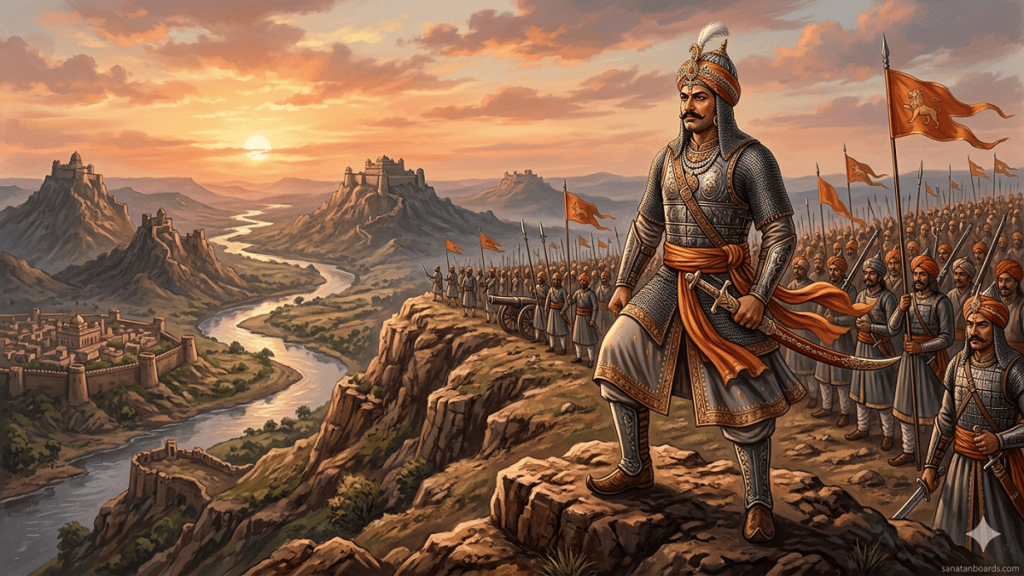
What Is Chhatrasal Bundela (Madhya Pradesh) ?
CHHATRASAL BUNDELA (MADHYA PRADESH) refers to the historical figure Maharaja Chhatrasal Bundela — a medieval Indian ruler who founded an independent kingdom in the central Indian region of Bundelkhand and fiercely resisted Mughal dominance.
Chhatrasal belonged to the Bundela Rajput clan, which ruled various principalities in Bundelkhand, a region that now lies mostly in Madhya Pradesh with parts in Uttar Pradesh. From humble beginnings, he rose to become a powerful monarch, who fought the powerful Mughal Empire at a time when the central authority was still formidable in India.
Born to Rathore–Rajput lineage, Chhatrasal dedicated his life to welfare and independence of his people. After the early death of his father, he built an army from scratch, starting with just a handful of soldiers. Over decades, he waged persistent campaigns, ultimately establishing sovereign rule and liberating Bundelkhand from Mughal control.
The term also encapsulates his role as a strategic military leader, administrator, and promoter of culture and literature, hosting poets and scholars in his court.
He maintained governance that balanced military strength with cultural patronage.
The legacy of Chhatrasal is deeply rooted in the geography and cultural memory of Madhya Pradesh. The city of Chhatarpur was named in his honor, and various historical sites such as temples, cenotaphs (chhatris), and local memorials stand as testaments to his rule.
Thus, CHHATRASAL BUNDELA (MADHYA PRADESH) is not only a name but a symbol of resistance, regional identity, cultural heritage, and enduring legacy in Indian history.
Who Is Required Chhatrasal Bundela (Madhya Pradesh) ?
Students and Scholars of Indian History:
Chhatrasal’s life represents a crucial phase of resistance against imperial domination, making him essential for students studying the decline of the Mughal Empire, regional politics, and the rise of local powers in 17th‑18th century India. Researchers of Regional Culture and Identity:
His reign shaped the socio‑political landscape of Bundelkhand and influenced local cultural narratives, literature, and folklore. Those studying Madhya Pradesh’s heritage, Bundelkhand’s traditions, and regional dynastic histories must be familiar with Chhatrasal’s role. Military Historians and Strategists:
Chhatrasal’s long struggle against the Mughal imperial forces — starting with minimal resources — displays unique military strategy and alliance‑building (including with the Maratha Empire under Baji Rao I) that is insightful for military history assessments. Cultural Enthusiasts and Writers:
His patronage of poets and sponsorship of literature encourages modern writers, artists, and cultural historians to explore the convergence of regional literature and politics during his reign. Citizens of India and Madhya Pradesh:
For local communities and citizens interested in regional pride and national heritage, Chhatrasal represents a heroic figure symbolizing autonomy, courage, and resistance.
When Chhatrasal Bundela (Madhya Pradesh) Is Required ?
Chhatrasal’s era (1649–1731) coincided with the decline of the Mughal Empire under Aurangzeb and his successors. During this period, the central authority in India weakened, creating opportunities for regional leaders like Chhatrasal to assert autonomy. His leadership became essential during moments of political crisis when local rulers and communities needed protection from imperial overreach.
He is particularly relevant during studies of the late 17th and early 18th centuries, a time of fragmented political power in India. Students, historians, and researchers studying Mughal decline, the rise of regional kingdoms, and the interplay of local and imperial politics would reference his life and reign.
Chhatrasal’s relevance is also required during commemorative and cultural occasions, such as local festivals in Bundelkhand and Madhya Pradesh. The city of Chhatarpur and other local memorials celebrate his legacy through statues, public events, and cultural programs that honor his resistance and leadership.
Additionally, Chhatrasal is required when studying alliances in Indian history, particularly his collaboration with the Maratha Peshwa Baji Rao I. This alliance demonstrates the strategic political moves of local rulers during periods of empire decline, highlighting the importance of Chhatrasal in understanding inter-regional diplomacy.
Even in modern education, his story is required when lessons on leadership, courage, and patriotism are discussed. His struggle with limited resources against a powerful empire offers examples of resilience and strategic thinking that are still referenced in leadership studies, historical debates, and regional identity narratives.
Thus, Chhatrasal Bundela becomes relevant whenever the focus is on resistance against central powers, regional autonomy, military strategy, or cultural heritage, bridging the gap between medieval Indian history and modern historical understanding.
Where Chhatrasal Bundela (Madhya Pradesh) Is Required ?
Geographically, his rule was concentrated in Bundelkhand, which today spans northern Madhya Pradesh and southern Uttar Pradesh. Key locations include Chhatarpur, Tikamgarh, and Sagar, where his forts, memorials, and historical landmarks still exist. These sites are required for anyone visiting or studying the physical history of Chhatrasal’s reign.
Academically, Chhatrasal is required in universities, historical research centers, and museums across Madhya Pradesh and India. Historical archives, manuscripts, and local oral histories preserve his legacy, making these locations essential for primary research.
Culturally, he is required in local temples, monuments, and memorials such as the Chhatrasal Maharaj Samadhi and chhatris built to honor him. These locations serve as centers for educational tours, public celebrations, and cultural heritage projects, making the knowledge of Chhatrasal relevant to visitors and students alike.
In literary terms, references to his life are required in regional literature, folk songs, and storytelling circles in Bundelkhand. These narratives continue to be performed in schools, theaters, and local festivals, emphasizing his ongoing relevance to cultural expression.
Moreover, Chhatrasal Bundela is required in modern media platforms, including documentaries, historical TV programs, and online educational portals, which often recreate or study the locations associated with his life to illustrate the socio-political dynamics of 17th-century India.
Finally, in governance and civic planning, knowledge of Chhatrasal is required where local history is incorporated into educational curricula, tourism strategies, and heritage preservation initiatives,
especially in Madhya Pradesh. Thus, the “where” extends from physical spaces of historical importance to academic, cultural, and digital realms where his legacy continues to be studied, celebrated, and applied.
How Chhatrasal Bundela (Madhya Pradesh) Is Required ?
Through Education:
Chhatrasal’s life is required through history textbooks, university lectures, and research studies. Scholars and students analyze his military campaigns, alliances, and administration to understand medieval Indian polity. His example is also required to teach resilience, strategic thinking, and leadership in classrooms and leadership workshops.
Through Field Study:
Historians and students visit forts, memorials, and cities like Chhatarpur and Tikamgarh to study architectural, military, and administrative aspects of his reign. Such fieldwork provides tangible insights into governance, defense strategies, and regional culture during Chhatrasal’s period.
Through Cultural Documentation:
His life is required in folk literature, songs, and oral traditions, which continue to narrate his struggles and victories. Cultural festivals, plays, and storytelling sessions preserve his memory and teach new generations about local history.
Through Research Publications and Media:
Historians and authors write biographies, case studies, and white papers on Chhatrasal’s life, emphasizing his political significance and role in Indian resistance history. Documentaries and online platforms also serve as mediums through which his achievements are required and disseminated widely.
Through Civic and Heritage Projects:
Municipalities and heritage organizations use Chhatrasal’s legacy to promote tourism, maintain historical sites, and educate the public about regional identity. His life is required in policy frameworks that seek to preserve monuments and promote Madhya Pradesh’s cultural heritage.
Through Inspiration:
Chhatrasal Bundela is required as a symbol of courage and leadership, inspiring individuals, scholars, and citizens to value resilience, cultural pride, and strategic thinking. His life lessons are applied in leadership training, motivational writing, and historical analyses.
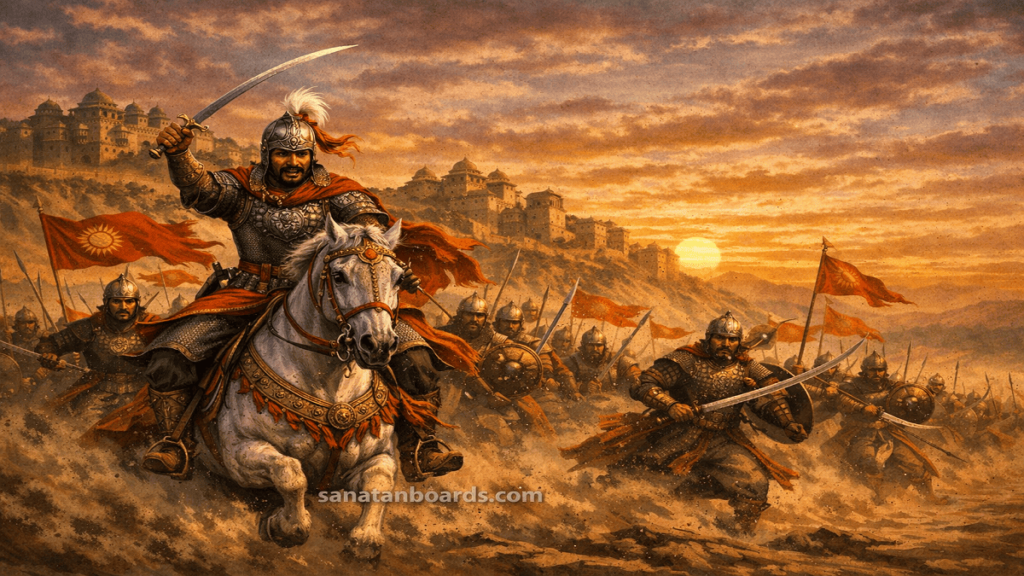
Case Study On Chhatrasal Bundela (Madhya Pradesh)
Background
Chhatrasal was born in 1649 into the Bundela Rajput clan. Early in life, he faced adversity when his father, Champat Rai, was killed by Mughal forces. This personal loss shaped his determination to resist Mughal domination. His rise to power coincided with the decline of the Mughal Empire under Aurangzeb, creating both opportunity and conflict.
Early Struggle
At the age of 22, Chhatrasal declared independence in Bundelkhand. Initially, he had only a few followers and limited resources. Through persistent guerrilla warfare and alliances with local chiefs, he gradually built a formidable army. His early campaigns were primarily defensive, aimed at protecting his homeland from Mughal incursions.
Military Strategies
Chhatrasal’s military tactics combined guerrilla warfare, strategic alliances, and psychological warfare. He utilized Bundelkhand’s dense forests and hilly terrain to launch surprise attacks, often outmaneuvering larger Mughal forces. One notable alliance was with the Maratha Peshwa, Baji Rao I, who provided military support in exchange for territorial cooperation. This alliance strengthened Chhatrasal’s position and helped expand his kingdom.
Administration
After securing independence, Chhatrasal focused on governance. He established administrative systems to ensure stability in Bundelkhand. Local chieftains were incorporated into the governance framework, allowing semi-autonomous rule under his overall authority. He also promoted agriculture, trade, and taxation systems that strengthened his economic base.
Cultural Patronage
Chhatrasal was not only a warrior but also a patron of arts and culture. His court hosted poets, scholars, and artists, contributing to the flourishing of regional literature and culture. Temples, forts, and memorials constructed during his reign continue to reflect Bundela architectural styles and cultural aesthetics.
Challenges and Threats
Despite his successes, Chhatrasal faced constant threats from Mughal forces and neighboring rulers. He relied heavily on alliances and local intelligence to maintain his autonomy. His ability to adapt, build trust with allies, and exploit the weaknesses of adversaries was critical to his survival and long-term success.
Legacy
Chhatrasal Bundela’s kingdom became a symbol of resistance and regional pride. The city of Chhatarpur was named in his honor. His governance model, military strategies, and cultural contributions have been subjects of extensive study. Modern historians recognize him as a pivotal figure in the history of Madhya Pradesh and the broader Indian subcontinent.
Lessons Learned
The case study demonstrates that effective leadership, strategic alliances, and cultural patronage are vital for sustaining a regional kingdom #chhatrasalbundelainmadyapradesh against a larger imperial power. Chhatrasal’s life offers insights into conflict management, resilience, and regional identity formation.
White Paper On Chhatrasal Bundela (Madhya Pradesh)
Executive Summary
This white paper examines the historical significance, strategic leadership, and socio-cultural impact of Chhatrasal Bundela (Madhya Pradesh). It serves as a reference for historians, policymakers, and educators interested in regional governance, resistance movements, and cultural heritage preservation.
Historical Context
Chhatrasal’s life unfolded during the late Mughal period, characterized by centralized authority weakening under Aurangzeb. The region of Bundelkhand was vulnerable to external aggression and internal instability. Chhatrasal’s rise illustrates the dynamics of regional power assertion in pre-colonial India.
Leadership and Governance
Chhatrasal’s leadership combined military acumen, administrative efficiency, and cultural stewardship. He demonstrated visionary leadership by balancing centralized authority with decentralized governance. Local chieftains were integrated into the administrative system, ensuring loyalty and effective local management.
Military Strategy
The white paper analyzes Chhatrasal’s military strategies, including:
- Guerrilla tactics in forested and hilly terrain
- Strategic alliances with the Marathas and local chiefs
- Psychological warfare to weaken enemy morale
- Mobilization of limited resources to maximize defensive and offensive capabilities
These strategies allowed him to resist Mughal incursions and expand his territory despite numerical disadvantages.
Economic Policies
Chhatrasal implemented policies to promote agriculture, trade, and taxation systems. Revenue collection was streamlined to fund military campaigns and public works. These economic strategies strengthened Bundelkhand’s self-sufficiency and stability.
Cultural Contributions
Under Chhatrasal, Bundelkhand experienced a cultural renaissance. He patronized poetry, architecture, and religious institutions, promoting local identity and continuity of traditions. These cultural policies enhanced social cohesion and contributed to his enduring legacy.
Challenges and Resilience
The white paper highlights the challenges Chhatrasal faced:
- Threats from Mughal forces and neighboring states
- Limited manpower and resources
- Political fragmentation in the region
Chhatrasal overcame these through strategic alliances, adaptive governance, and community support, demonstrating resilience and tactical brilliance.
Modern Relevance
Chhatrasal’s strategies and governance models remain relevant today for:
- Regional heritage preservation
- Studies in leadership and crisis management
- Military strategy education
- Civic engagement and local governance
Conclusion
Chhatrasal Bundela exemplifies how regional leadership, strategic planning, and cultural stewardship can create a lasting impact even #sanatandharmaaccreditationboardsinmadhyapradesh against larger powers. His life provides valuable lessons for historical scholarship, leadership studies, and cultural preservation.
Industry Application: Chhatrasal Bundela (Madhya Pradesh)
Education Industry
Chhatrasal’s life is incorporated into curricula for history, political science, and cultural studies. Schools and universities in Madhya Pradesh use his example to teach leadership, governance, and resistance strategies. Case studies on Chhatrasal are developed for classroom discussion, workshops, and educational publications.
Tourism and Hospitality
Bundelkhand’s forts, memorials, and cities associated with Chhatrasal are tourist attractions. Cities like Chhatarpur and Tikamgarh promote heritage tourism through guided tours, museums, and cultural festivals. Hotels, local travel agencies, and heritage resorts leverage his historical narrative to enhance visitor engagement.
Media and Entertainment
Documentaries, historical TV series, and films draw on Chhatrasal’s life. His story inspires dramas, animations, and digital content, making history accessible and engaging to modern audiences. Media companies use his narrative to explore themes of leadership, resistance, and culture.
Cultural Industry
Chhatrasal’s patronage of arts is a model for modern cultural initiatives. Festivals, local crafts, performing arts, and literature celebrate his contributions. Cultural NGOs and state agencies use his legacy to promote local art forms, storytelling, and literary heritage.
Leadership and Corporate Training
Chhatrasal’s strategies in resource management, alliance-building, and resilience inform leadership programs and corporate training. Workshops on strategic thinking, crisis management, and negotiation use historical case studies from his campaigns.
Digital and Knowledge Industries
Online platforms, educational apps, and historical databases incorporate Chhatrasal’s life. Interactive learning modules, e-books, and virtual tours provide digital access to his history, benefiting researchers, students, and enthusiasts worldwide.
Public Administration
His governance model informs modern regional planning and heritage conservation initiatives. Municipalities and cultural organizations use his administrative strategies to design local governance policies, integrate community leadership, and preserve historical sites.
Conclusion
Chhatrasal Bundela’s legacy transcends history. By applying lessons from his life, modern industries such as education, tourism, media, culture, #sanatandharmaaccreditationboardsinmumbai leadership training, and digital knowledge platforms can enhance engagement, education, and cultural preservation. His story demonstrates how historical figures can have practical, contemporary applications in diverse sectors.
source : The Lallantop
ASK FAQ
Who was Chhatrasal Bundela of Madhya Pradesh?
Chhatrasal Bundela was a 17th‑18th century Rajput ruler of Bundelkhand who fought against the Mughal Empire and established an independent kingdom in Madhya Pradesh.
When did Chhatrasal Bundela rule Bundelkhand?
He ruled Bundelkhand from 1675 to 1731, during the decline of the Mughal Empire.
Where is Chhatrasal Bundela’s legacy visible today?
His legacy is visible in Chhatarpur, Tikamgarh, and other parts of Bundelkhand through forts, memorials, temples, and cultural heritage sites.
How did Chhatrasal Bundela defeat the Mughals?
He used guerrilla warfare, strategic alliances (notably with the Maratha Peshwa Baji Rao I), and local support to resist Mughal forces and expand his kingdom.
Why is Chhatrasal Bundela important in Indian history?
Chhatrasal symbolizes resistance, regional autonomy, leadership, and cultural patronage, making him a key figure in the history of Madhya Pradesh and Bundelkhand.
Table of Contents
Disclaimer: The content in this blog is for informational and educational purposes only. While we strive for accuracy, historical interpretations may vary, and readers should consult primary sources or experts for detailed research.