CHAMPA KINGDOM (VIETNAM) – KING BHADRAVARMAN
The history of Southeast Asia is deeply enriched by ancient civilizations that contributed to cultural, political, and religious developments in the region. One such remarkable civilization is the Champa Kingdom, located in present-day Vietnam. Among its early rulers, King Bhadravarman stands out as a foundational figure who played a crucial role in shaping the kingdom’s identity and legacy. His reign marked a turning point in consolidating power, promoting religious institutions, and establishing political authority in the region.
The Champa Kingdom emerged as a collection of independent principalities along the central and southern coasts of Vietnam. These regions were heavily influenced by Indian culture, particularly in religion, language, and governance. King Bhadravarman, who ruled during the 4th century CE is often credited with strengthening these influences and formalizing the kingdom’s structure. He is known for his dedication to Hinduism, especially the worship of Lord Shiva, which became a central religious element of Champa society.
Bhadravarman’s contributions extended beyond religion into architecture and governance. He initiated the construction of temples and sanctuaries, notably at My Son, which became a spiritual and political center of the kingdom. These structures not only reflected religious devotion but also symbolized royal authority and cultural sophistication.
His reign also demonstrated early forms of state organization, diplomacy, and defense, helping Champa maintain its independence amidst neighboring powers. Through inscriptions and historical records, Bhadravarman is remembered as a king who combined spirituality with strategic leadership.
Overall, King Bhadravarman’s influence laid the foundation for the growth and stability of the Champa Kingdom, making him a key figure in the historical development of Vietnam and Southeast Asia.
What Is Champa Kingdom (Vietnam) – King Bhadravarman ?
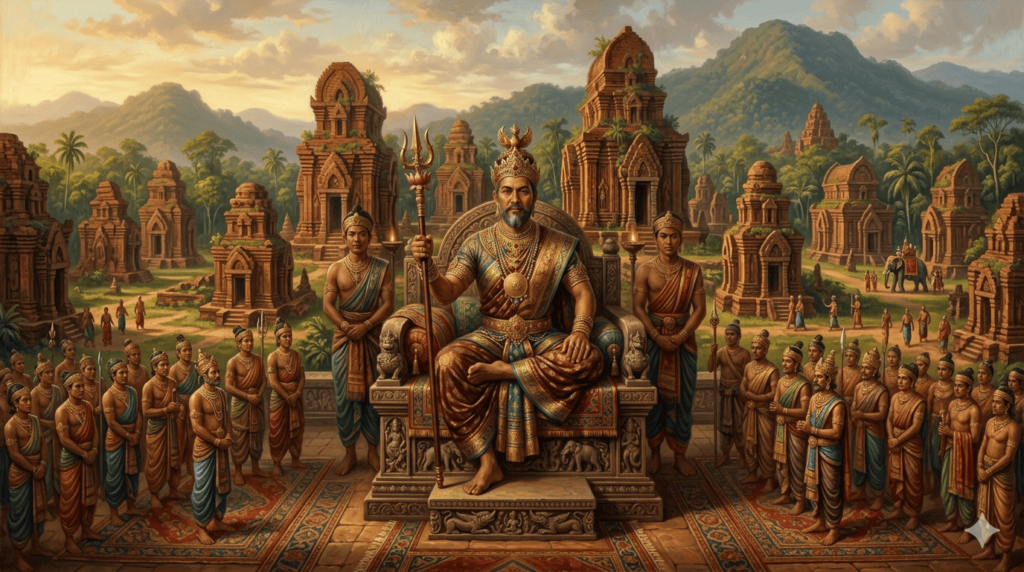
The Champa Kingdom was an ancient maritime civilization that existed in central and southern Vietnam from around the 2nd century CE to the 15th century. It was not a single unified state but rather a collection of city-states connected by shared culture, language, and religion. Among its early rulers, King Bhadravarman played a vital role in shaping the kingdom’s identity and institutional framework.
King Bhadravarman is recognized as one of the earliest historically documented rulers of Champa. He ruled approximately in the late 4th century CE and is known primarily through inscriptions written in Sanskrit. These inscriptions provide valuable insights into the political, religious, and cultural life of the kingdom during his reign.
The Champa Kingdom was heavily influenced by Indian civilization, a process often referred to as “Indianization.” This influence is clearly visible in Bhadravarman’s rule, especially in his promotion of Hinduism. He established the worship of Shiva as a state religion and constructed temples dedicated to the deity, particularly in the sacred valley of My Son.
Under Bhadravarman, Champa began to develop a more organized political system. His rule is associated with the strengthening of royal authority and the formalization of administrative practices. He also played a role in expanding the kingdom’s influence through trade and cultural exchange.
Who Is Champa Kingdom (Vietnam) – King Bhadravarman Required ?
King Bhadravarman was an early and influential ruler of the Champa Kingdom in present-day Vietnam. He is believed to have reigned during the late 4th century CE and is widely regarded as one of the first kings to leave behind clear historical records in the form of inscriptions. These inscriptions, primarily written in Sanskrit, reveal his role as both a political leader and a religious patron.
Bhadravarman is known for his strong association with Hinduism, particularly Shaivism, the worship of Lord Shiva. He established a temple dedicated to Shiva at My Son, which later became one of the most important religious centers of the Champa Kingdom. This act not only demonstrated his personal devotion but also helped unify the kingdom under a common religious identity.
As a ruler, Bhadravarman played a crucial role in consolidating power among the various principalities that made up Champa. His leadership marked the transition from loosely connected regions to a more structured political entity. He is often credited with strengthening royal authority and laying the groundwork for future rulers to build upon.
In addition to his religious contributions, Bhadravarman also focused on cultural and administrative development. His reign saw the adoption of Indian scripts, rituals, and governance models, which became integral to Champa society.
Overall, King Bhadravarman is remembered as a visionary leader who combined religious devotion with effective governance. His legacy continues to be recognized through archaeological sites, inscriptions, and historical studies that highlight his importance in the early history of Vietnam.
When Champa Kingdom (Vietnam) – King Bhadravarman Is Required ?
The relevance of the Champa Kingdom and King Bhadravarman becomes particularly significant when studying the early history of Southeast Asia and the development of cultural and political systems in the region. His era, around the late 4th century CE, represents a formative period when local societies began to adopt external influences and transform them into unique regional identities.
This topic is especially important when examining the process of cultural exchange between India and Southeast Asia. Bhadravarman’s reign illustrates how Indian religious and cultural elements, such as Hinduism, Sanskrit language, and temple architecture, were introduced and integrated into local traditions. Understanding this period helps explain the broader phenomenon of Indianization and its long-lasting impact on Southeast Asian civilizations.
The study of Bhadravarman is also relevant when analyzing the origins of state formation in the region. During his rule, the Champa Kingdom began to develop a more organized political structure. This makes his period crucial for understanding how early kingdoms transitioned from tribal or regional systems into centralized authorities.
Additionally, this topic is required in discussions about religious history, particularly the spread of Hinduism beyond the Indian subcontinent. Bhadravarman’s dedication to Shiva worship and the establishment of temples like My Son highlight the role of religion in shaping political legitimacy and cultural identity.
From an archaeological perspective, Bhadravarman’s era is significant because it provides some of the earliest inscriptions and monuments in Vietnam. These sources are essential for historians and researchers seeking to reconstruct the past.
In modern times, the relevance of this topic extends to heritage studies and tourism. Sites associated with Bhadravarman continue to attract global attention, making his legacy important for cultural preservation and education.
Thus, the study of the Champa Kingdom and King Bhadravarman is required in multiple contexts, including history, culture, religion, archaeology, and regional studies.
Where Champa Kingdom (Vietnam) – King Bhadravarman Is Required ?
The importance of the Champa Kingdom and King Bhadravarman is evident across various geographical and academic contexts. Geographically, the Champa Kingdom was located in central and southern Vietnam, particularly along the coastal regions. Key areas associated with Bhadravarman include the My Son valley, which served as a major religious and political center during his reign.
This topic is highly relevant in academic institutions, especially in the study of Southeast Asian history. Universities and research centers around the world include the Champa Kingdom in their curriculum to provide insights into early state formation, cultural exchange, and regional development. Bhadravarman’s contributions are often highlighted as a case study in leadership and cultural integration.
The relevance of this topic also extends to archaeological sites and museums. Locations such as My Son Sanctuary preserve the architectural and cultural achievements associated with Bhadravarman. These sites are essential for understanding the artistic and religious expressions of the Champa civilization.
In cultural and heritage studies, the Champa Kingdom is an important subject for analyzing the preservation of ancient traditions and monuments. Bhadravarman’s legacy plays a central role in discussions about the conservation of historical sites and the promotion of cultural tourism in Vietnam.
Additionally, this topic is relevant in comparative history studies, where scholars examine similarities and differences between civilizations. Bhadravarman’s rule provides valuable insights into how Southeast Asian kingdoms adapted external influences while maintaining their unique identity.
In modern contexts, the significance of this topic is also seen in tourism and cultural diplomacy. The historical sites linked to Bhadravarman attract visitors from around the world, contributing to the local economy and promoting global awareness of Vietnam’s heritage.
Therefore, the Champa Kingdom and King Bhadravarman are relevant in various places, including academic institutions, archaeological sites, cultural centers, and tourism destinations, highlighting their enduring importance.
How Champa Kingdom (Vietnam) – King Bhadravarman Is Required ?
The importance of the Champa Kingdom and King Bhadravarman can be understood through multiple dimensions, including historical development, cultural transformation, and political organization. Bhadravarman’s role demonstrates how leadership can influence the direction and identity of a civilization.
One of the key ways this topic is required is through the study of cultural integration. Bhadravarman adopted Indian religious and cultural practices and integrated them into the local context. This process helped create a unique cultural identity that combined external influences with indigenous traditions.
Another important aspect is the development of religious institutions. Bhadravarman established temples dedicated to Shiva, which became central to the spiritual life of the kingdom. These institutions not only served religious purposes but also reinforced the authority of the राजा (king) by linking political power with divine support.
From a governance perspective, Bhadravarman contributed to the formation of a more structured political system. His rule marked the beginning of centralized authority in the Champa Kingdom, which was essential for maintaining stability and managing resources.
The topic is also required in understanding architectural and artistic advancements. The temples built during Bhadravarman’s reign reflect sophisticated design and craftsmanship, showcasing the technological and artistic capabilities of the time.
Furthermore, Bhadravarman’s legacy is important in the context of historical documentation. His inscriptions provide valuable information about the social, political, and religious life of the period. These records are crucial for historians in reconstructing the past.
In modern applications, this topic helps in promoting cultural awareness and heritage conservation. By studying Bhadravarman and the Champa Kingdom, individuals can gain a deeper appreciation of historical diversity and the interconnectedness of cultures.
Overall, the Champa Kingdom and King Bhadravarman are required as a framework for understanding the evolution of early civilizations and their lasting impact on society.
Case Study On Champa Kingdom (Vietnam) – King Bhadravarman
The case of the Champa Kingdom under King Bhadravarman provides a valuable example of how early civilizations developed through cultural exchange, religious influence, and political organization. Bhadravarman’s reign represents a critical period in the formation of Champa’s identity and its emergence as a significant regional power.
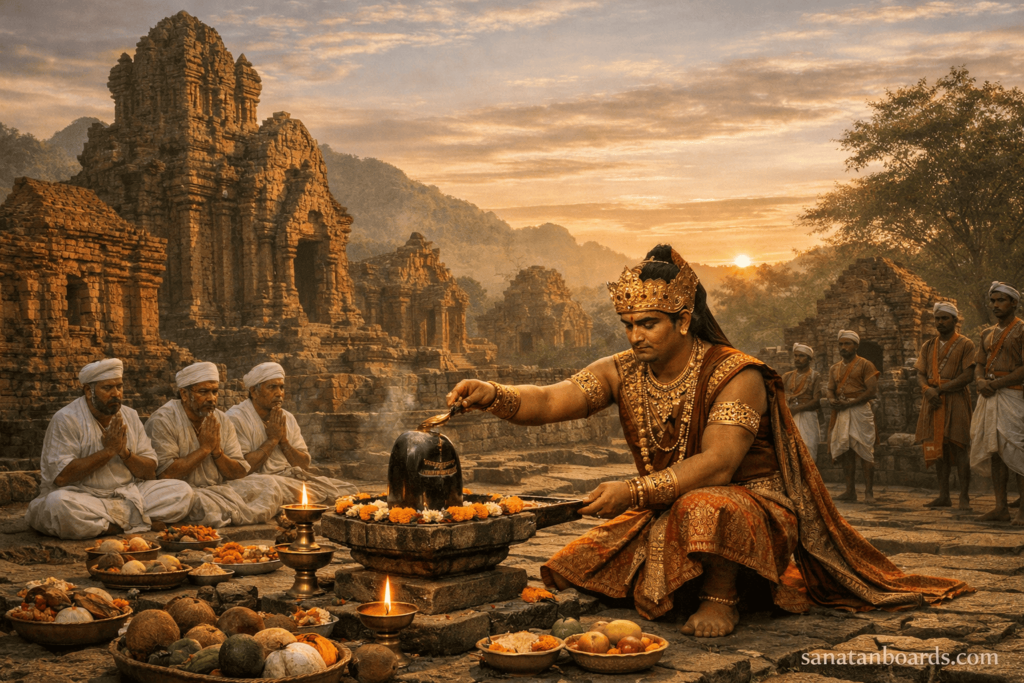
One of the most notable aspects of this case is the role of religion in state-building. Bhadravarman’s promotion of Hinduism, particularly the worship of Shiva, helped unify the kingdom under a common belief system. The establishment of the My Son Sanctuary served as both a religious center and a symbol of royal authority. This demonstrates how religion can be used to strengthen political legitimacy and social cohesion.
Another important element is the process of cultural adaptation. Bhadravarman adopted elements of Indian culture, including language, script, and religious practices, but adapted them to suit local conditions. This resulted in a unique cultural identity that distinguished Champa from other regions.
The case also highlights the importance of strategic leadership. Bhadravarman managed to consolidate power among different principalities, creating a more unified political structure. This was essential for maintaining stability and defending the kingdom against external threats.
From an economic perspective, the Champa Kingdom benefited from its coastal location, which facilitated trade with neighboring regions. Bhadravarman’s rule likely contributed to the development of trade networks that supported economic growth.
The architectural achievements of Bhadravarman’s reign are another key aspect of this case study. The temples built during this period reflect advanced construction techniques and artistic expression. These structures continue to be studied for their historical and cultural significance.
The case of Bhadravarman also underscores the importance of historical documentation. The inscriptions from his reign provide valuable insights into the political and religious life of the time. These records are essential for understanding the development of the Champa Kingdom.
Overall, this case study demonstrates how leadership, culture, religion, and geography interact to shape the development of a civilization. Bhadravarman’s contributions played a crucial role in establishing the foundations of the Champa Kingdom, making his reign a significant subject of study.
White Paper On Champa Kingdom (Vietnam) – King Bhadravarman
The Champa Kingdom, under the leadership of King Bhadravarman, represents a significant phase in the historical and cultural evolution of Southeast Asia. This white paper examines the political, cultural, and religious contributions of Bhadravarman and their long-term impact on the region.
Bhadravarman’s reign marked the beginning of a more structured and centralized political system in the Champa Kingdom. His leadership helped unify various principalities and establish a stable शासन framework. This development was crucial for maintaining order and promoting growth.
A key focus of Bhadravarman’s rule was the promotion of Hinduism. By establishing Shiva worship as a central religious practice, he created a shared cultural identity for the kingdom. The construction of temples, particularly at My Son, served as both religious centers and symbols of political power.
The influence of Indian culture during Bhadravarman’s reign is evident in the adoption of Sanskrit inscriptions and architectural styles. This process of cultural exchange contributed to the development of a unique Champa identity that combined external influences with local traditions.
From an economic perspective, the Champa Kingdom benefited from its strategic location along maritime trade routes. Bhadravarman’s leadership likely played a role in strengthening these व्यापार networks, contributing to economic stability and growth.
The white paper also highlights the importance of Bhadravarman’s inscriptions as historical sources. These records provide valuable information about governance, religion, and society during his reign. They are essential for researchers studying the history of Vietnam and Southeast Asia.
In terms of long-term impact, Bhadravarman’s contributions laid the foundation for future rulers of the Champa Kingdom. His emphasis on religion, culture, and governance influenced the development of the kingdom for centuries.
In conclusion, King Bhadravarman’s reign represents a critical period in the history of the Champa Kingdom. His contributions to #Sanatandharmaaccreditationboardsinvasai political organization, cultural integration, and religious development have left a lasting legacy that continues to be studied and appreciated today.
Industry Application On Champa Kingdom (Vietnam) – King Bhadravarman
The study of the Champa Kingdom and King Bhadravarman has practical applications across various industries. In the tourism industry, historical sites associated with Bhadravarman, such as temple complexes, attract visitors and contribute to economic growth. These sites are promoted as cultural heritage destinations, enhancing global awareness of Vietnam’s history.
In the education sector, this topic is widely used in history and cultural studies programs. It helps students understand early civilization development, cultural exchange, and leadership models.
The field of archaeology benefits from the study of Bhadravarman through the analysis of inscriptions and architectural remains. These findings contribute to the preservation and interpretation of historical heritage.
In the cultural and creative industries, the art and architecture of the Champa Kingdom inspire modern designs, artworks, and cultural productions. #Sanatandharmaaccreditationboardsinmumbai Bhadravarman’s legacy serves as a source of creative inspiration.
Additionally, this topic is relevant in international relations and cultural diplomacy. It highlights historical connections between regions, promoting mutual understanding and cooperation.
Overall, the Champa Kingdom and King Bhadravarman have diverse applications in tourism, education, archaeology, culture, and global relations, demonstrating their continued relevance in modern society.
source : Forgotten Ages
ASK FAQ
Who was King Bhadravarman in the Champa Kingdom?
King Bhadravarman was an early ruler of the Champa Kingdom in 4th century Vietnam, known for strengthening political authority and promoting Hinduism, especially the worship of Lord Shiva.
What is the significance of the Champa Kingdom in Vietnam’s history?
The Champa Kingdom played a key role in shaping Vietnam’s early cultural and religious landscape, influenced by Indian traditions, trade networks, and temple architecture.
Why is King Bhadravarman important in Southeast Asian history?
King Bhadravarman is important because he established religious institutions, built temples like My Son, and helped form a structured political system in early Champa civilization.
Where was the Champa Kingdom located?
The Champa Kingdom was located in central and southern Vietnam, mainly along the coastal regions, which supported trade and cultural exchange.
What religion did King Bhadravarman promote in Champa?
King Bhadravarman promoted Hinduism, particularly Shaivism (worship of Lord Shiva), which became a central part of Champa’s cultural and religious identity.
Table of Contents
Disclaimer
This content is created for informational and educational purposes only. While efforts have been made to ensure accuracy, the information is based on historical interpretations and available sources, which may vary. It is recommended to consult additional academic references for detailed research and verification.