BHOJADEVA (MALWA) refers to King Bhojadeva, a celebrated medieval Indian ruler of the Paramara dynasty, who reigned over the Malwa region in central India (in present‑day Madhya Pradesh) from around c. 1010 to 1055 CE. He is one of the most iconic and storied monarchs of Indian history, remembered not only as a powerful king but also as a scholar, poet, thinker, and patron of culture, literature, and the arts.
The name Bhojadeva literally means “the divine Bhoja” or “the lordly king” — combining the Sanskrit words Bhoja (a personal or dynastic name associated with generosity and nobility) and deva (god or lord). As the ruler of Malwa, Bhojadeva’s court became a center of intellectual and artistic activity, attracting scholars, poets, and artisans from across the Indian subcontinent.
His capital was Dhara‑nagara (modern Dhar), and under his leadership the Malwa kingdom expanded and prospered geographically, culturally, and economically. The historical legacy of Bhojadeva extends far beyond immediate political achievements, influencing Sanskrit literature architecture, temple design, aesthetics, and philosophy through works he wrote or inspired.
Throughout Indian tradition, Bhojadeva is celebrated as a symbol of learned kingship — blending royal authority with intellectual curiosity. His era is often regarded as a golden age for arts and letters in central India, with enduring monuments such as the unfinished Bhojeshwar Temple, and references to educational institutions and literary works associated with his name
What Is Bhojadeva (Malwa)?
BHOJADEVA (MALWA) is widely identified in history as King Bhoja, the ruler of the Malwa region during the early to mid‑11th century CE. He belonged to the Paramara dynasty, a Rajput lineage that controlled central India’s Malwa plateau from its capital at Dhara (today’s Dhar in Madhya Pradesh).
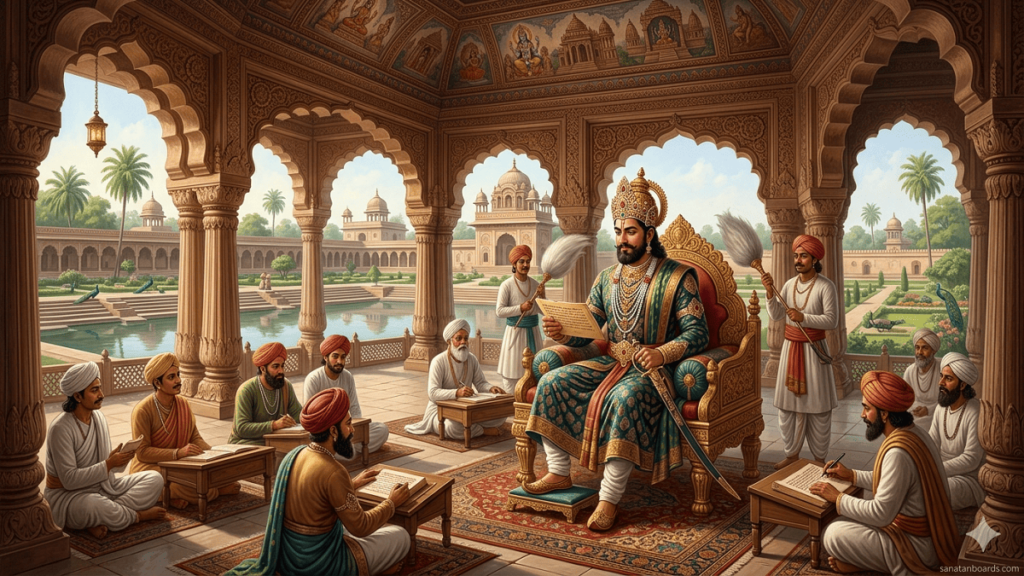
Unlike many kings whose reputations are primarily martial, Bhojadeva’s importance lies equally in his scholarly and cultural contributions. He was known not just as a political leader but also as a patron of literature, arts, philosophy, temple architecture, and Sanskrit scholarship. His rule is remembered as a period when intellectual pursuits and statecraft were interwoven, giving rise to extensive works in poetry, poetics, grammar, architecture, religious discourse, and more — some authored by him directly, others attributed to his encouragement or patronage.
His kingdom stretched over a broad area of central India, engaging diplomatically and militarily with neighboring powers, while also creating spaces for formal scholastic discourse. He founded or supported institutions where scholars and poets would gather, and his court became a magnet for thinkers. In texts produced in or after his lifetime, Bhojadeva is described as a king whose intellect was as formidable as his political authority.
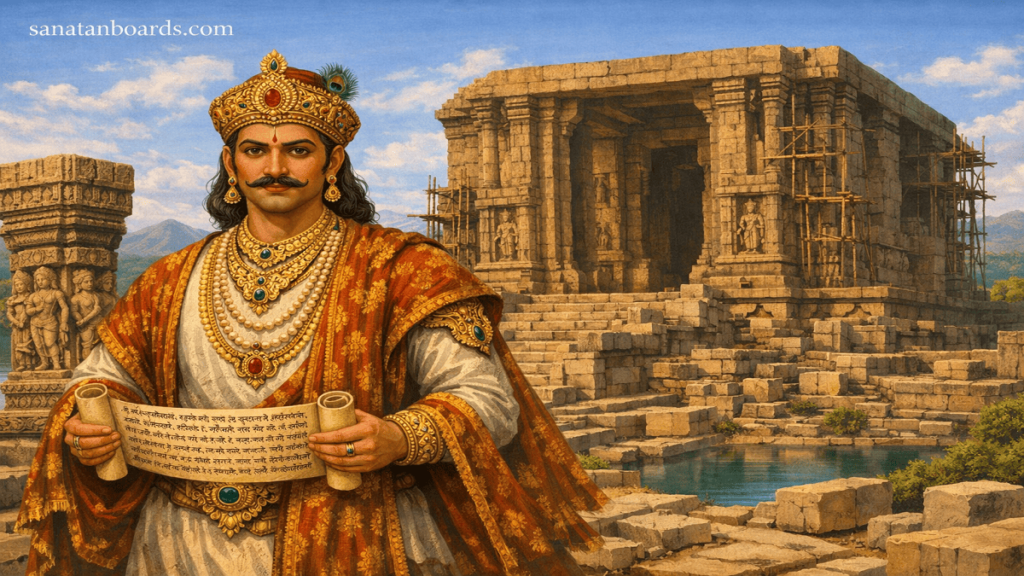
Architectural legacies, such as the Bhojeshwar Temple, are tied to his reign, with inscriptions and architectural patterns pointing to his ambitions as a builder of sacred spaces that blended spiritual and structural harmony. The very landscape of Malwa, with its reservoirs, towns, and temples, bears traces of his influence.
Over time, Bhojadeva became more than a historical monarch — he evolved in literary and cultural memory as an idealized learned king, whose example shaped later perceptions of kingly virtue in Indian traditions.
Who Is Required Bhojadeva (Malwa) ?
BHOJADEVA (MALWA) is a figure required by historians, scholars, students, and anyone interested in Indian cultural history because he represents a unique fusion of rulership with intellectual and artistic pursuits. His life and works are not merely of antiquarian interest; they provide insight into how historical leadership can promote learning, creativity, and cultural innovation.
Historians use Bhojadeva as a key reference point in understanding medieval Indian polity and culture. His reign marks a period when regional kingdoms were not only military powers but also cultural centers. Studying Bhojadeva helps explain how Sanskrit literature and classical arts evolved outside the major northern courts of India.
Students of literature and linguistics examine works associated with Bhojadeva’s court and patronage to understand the development of poetics, rhetoric, grammar, and aesthetics in India. Because texts linked to him range from architectural treatises to poetic theory, his era offers material across disciplines — from literary theory to sacred architectural design.
Architects and archaeologists find Bhojadeva’s legacy important because of temple projects and structural plans attributed to his reign. These constructions reveal the architectural styles and technical approaches of the time, offering real evidence of medieval Indian planning and engineering principles.
Culture enthusiasts and heritage organizations value Bhojadeva’s contributions as part of India’s broader historical identity. His support for arts, music, learning centers, and religious literature reflects how leadership can shape cultural legacy enduring for centuries. Thus, scholars from humanities, social sciences, arts, and cultural studies all “require” Bhojadeva as a subject of serious inquiry.
When Bhojadeva (Malwa) Is Required ?
BHOJADEVA (MALWA) becomes particularly relevant in contexts where understanding the intersection of rulership, culture, and knowledge is essential. His example is required when examining periods of medieval Indian history, especially the early 11th century, as it highlights how a ruler could foster both political stability and intellectual growth simultaneously. (historyatlas.com)
Scholars and enthusiasts refer to Bhojadeva’s reign when studying cultural patronage in regional kingdoms. Unlike the major empires of India that dominated large territories, Malwa under Bhojadeva demonstrated that smaller kingdoms could exert considerable influence on literature, architecture, and education. His era is required as a reference point for tracing the evolution of Sanskrit literature, as many treatises on poetics, logic, and architecture were either authored by him or produced under his court’s patronage. (en.dharmapedia.net)
BHOJADEVA (MALWA) is also required in the study of temple architecture and urban planning. The unfinished Bhojeshwar Temple at Bhojpur is often analyzed for its engineering techniques, design philosophy, and symbolic representation of cosmic principles. Researchers studying hydraulic systems, water reservoirs, and town planning in medieval India reference Bhojadeva’s contributions to understand practical innovations combined with aesthetic and religious considerations. (historyatlas.com)
Moreover, Bhojadeva’s example is required in educational and philosophical research, particularly for those exploring the role of kings as intellectual leaders. His support for scholars across disciplines, encouragement of encyclopedic works, and emphasis on learning set a precedent for the ideal of a philosopher-king, making his life relevant in the study of governance, ethics, and culture. (en.dharmapedia.net)
In modern contexts, BHOJADEVA (MALWA) is required when discussing heritage conservation, cultural tourism, and regional identity in central India. Preservation of monuments, inscriptions, and texts related to Bhojadeva ensures that current and future generations can study and appreciate the integration of power, knowledge, and creativity that characterized his rule.
Where Bhojadeva (Malwa) Is Required ?
BHOJADEVA (MALWA) is required primarily in central India, particularly in the Malwa region of present-day Madhya Pradesh. Historical and archaeological sites associated with him, such as Dhara (Dhar) and Bhojpur, serve as living references to his contributions in governance, culture, and infrastructure. Scholars conducting field studies in these areas find his influence embedded in temples, inscriptions, water systems, and urban layouts. (historyatlas.com)
Outside the geographical Malwa, Bhojadeva’s relevance extends to Indian literature, arts, and history institutions worldwide, including universities, museums, and cultural research centers. His works and patronage are studied in Sanskrit literature courses, courses on medieval Indian history, and art history programs, making him significant wherever the study of intellectual and cultural flourishing under regional kingdoms is undertaken. (en.dharmapedia.net)
BHOJADEVA (MALWA) is also required in academic conferences, seminars, and publications focused on medieval polity, architecture, and philosophy. Institutions studying royal patronage, temple architecture, or Sanskrit scholarship often reference Bhojadeva as a model of how rulers could merge administrative authority with cultural responsibility. (historyatlas.com)
In addition, he is required in heritage tourism sites where visitors explore Bhojeshwar Temple and Dhara fort ruins, experiencing firsthand the architectural and urban legacy of his reign. Local educational initiatives and museums in Malwa incorporate Bhojadeva into regional history curricula, ensuring that his contributions are preserved and highlighted for both residents and scholars. (en.dharmapedia.net)
Globally, his works are referred to in comparative studies of leadership and intellectual culture, making him required wherever researchers aim to understand the role of learned kings in shaping social, cultural, and educational frameworks.
How Bhojadeva (Malwa) Is Required ?
BHOJADEVA (MALWA) is required in multiple ways depending on the context of study or application. Historically, he is required as a paradigm of integrated kingship, where political authority, cultural patronage, and intellectual curiosity coexist. Scholars rely on inscriptions, literary texts, and architectural remnants to reconstruct how his policies, vision, and personal scholarship shaped Malwa. (historyatlas.com)
In literary and linguistic studies, BHOJADEVA (MALWA) is required by analyzing texts he authored or inspired. Works like treatises on poetics, grammar, architecture, and philosophy are used to study the evolution of Sanskrit thought, offering insights into medieval Indian intellectual traditions. (en.dharmapedia.net)
Architecturally, he is required as a case study in temple construction and hydraulic innovation. The unfinished Bhojeshwar Temple demonstrates advanced knowledge in stone carving, load distribution, and water management, and researchers examine these sites to understand medieval Indian engineering and planning. (historyatlas.com)
BHOJADEVA (MALWA) is required in education and curriculum development to illustrate how rulers can promote knowledge and cultural growth. Schools and universities use his example to teach ethics of leadership, scholarly engagement, and cultural patronage. (en.dharmapedia.net)
In heritage management, he is required as a reference for conservation strategies. Understanding how his constructions and settlements were planned helps preservationists maintain structural integrity while respecting historical authenticity. Similarly, in tourism, his legacy is leveraged to engage visitors with Malwa’s historical and cultural narrative, ensuring that Bhojadeva’s influence remains tangible and relevant.
Case Study On Bhojadeva (Malwa)
Introduction
BHOJADEVA (MALWA), known in history as King Bhoja of the Paramara dynasty, ruled the Malwa region of central India approximately from 1010 to 1055 CE. His reign stands as a remarkable example of a ruler who combined political authority with intellectual leadership, cultural patronage, and urban innovation — a case study that continues to fascinate historians, architects, philosophers, and cultural scholars.
Historical Background
Bhojadeva succeeded his father Sindhuraja to the Paramara throne and established his capital at Dhara‑nagara, now known as Dhar in modern Madhya Pradesh. His kingdom extended across a significant swath of central and western India, engaging in military campaigns and diplomacy with neighboring powers. However, it was not his battlefield feats alone that made him legendary — rather, it was his unwavering commitment to learning, culture, architecture, and literature that marked his reign.
Cultural and Intellectual Leadership
Bhojadeva’s court became one of the most vibrant intellectual centers of his time. He was a patron of scholars, poets, and artists, attracting thinkers from across India. One of his most significant contributions was the establishment of Bhoj Shala, a centre for Sanskrit learning that also functioned as a temple dedicated to the goddess Sarasvatī, the patron of knowledge.
Bhojadeva himself was a polymath — traditionally credited with works across diverse disciplines. Texts attributed to him include treatises on architecture (Samaranganasutradhara), aesthetics and poetics (Śringāraprakāśa), and other writings that reflect an extraordinary range of interests. This juxtaposition of royal authority and intellectual depth makes his reign a rare case where scholarly pursuits were embedded into the very identity of kingship.
Urban and Architectural Vision
One of the most striking material legacies associated with Bhojadeva is the Bhojeshwar Temple at Bhojpur. Commissioned during his reign, this temple exemplifies the ambition and sophistication of early medieval Indian architecture. Although unfinished, the temple’s colossal lingam (Shiva phallic symbol), the scale of masonry, and the underlying geometric planning reflect a complex architectural vision that blended religious devotion with engineering prowess.
Bhojadeva also invested in hydraulic and urban infrastructure. Historical accounts attribute to him the construction of three major earthen and stone dams that created a massive reservoir, integrating water management with religious and civic life. These systems were not merely functional; they represented an advanced understanding of landscape engineering, resource planning, and environmental design — all rare for the period.
Socio‑Economic Structures
Under Bhojadeva’s rule, Malwa became both a cultural hub and a thriving socio‑economic landscape. His patronage of artistic and scholarly activity drew artisans, writers, and intellectuals to Dhara. Agricultural productivity likely increased due to improved water management, contributing to urban settlement and long‑term economic stability. The incorporation of learning institutions, urban planning, and resource networks illustrates how governance under Bhojadeva was both holistic and integrative, blending cultural achievement with economic well‑being.
Cultural Legacy and Continuing Influence
Bhojadeva’s impact was not confined to his lifetime. After his death, he became a symbolic benchmark for subsequent Indian rulers and cultural figures. Later dynasties invoked his name as an ideal of scholar‑king leadership, and literary treatments of his life elevated him into the realm of legend. Textual traditions compare him with the legendary Vikramaditya, a ruler associated with wisdom, justice, and cultural flourishing.
The ongoing relevance of his architectural and urban designs continues to inform studies in heritage conservation, archaeology, and historical architecture. The Bhojeshwar Temple, now part of India’s cultural heritage landscape and candidate for UNESCO recognition, stands as a site of not only archaeological inquiry but also inspiration for contemporary architectural study.
Lessons from the Case Study
The reign of Bhojadeva offers several key lessons for scholars and practitioners:
- Integration of Governance and Culture: His leadership shows how statecraft and cultural patronage can reinforce each other.
- Holistic Urban Planning: His water management and city design demonstrate early integration of engineering, ecology, and civic life.
- Cultural Continuity: His influence persisted long after his death, shaping perceptions of ideal rulership.
- Scholarly Leadership: Bhojadeva’s devotion to learning challenges conventional histories of kingship focused only on conquest and defense.
Together, these factors make the reign of BHOJADEVA (MALWA) a timeless case study in leadership that nurtured not just territory, but knowledge, culture, and societal resilience.
White Paper on BHOJADEVA (MALWA)
Architectural and Urban Contributions
One of Bhojadeva’s most tangible legacies is the Bhojeshwar Temple at Bhojpur. This structure exemplifies early medieval Indian architectural ingenuity. The temple was intended to house one of the largest Shiva lingams in India, with construction methods that showcase advanced knowledge of load distribution, stone carving, and geometric design. Although unfinished, it provides scholars with invaluable insight into royal patronage of monumental architecture, including site selection, material logistics, and symbolic layout. (whc.unesco.org)
Bhojadeva’s reign also featured the development of hydraulic infrastructure. Earthen and masonry dams, reservoirs, and canals under his direction allowed irrigation and urban sustainability, demonstrating foresight in environmental engineering and civic planning. His integration of water management with religious and civic spaces reflected a sophisticated understanding of socio-ecological systems. Modern researchers studying historical water conservation and urban planning frequently cite his work as a model of sustainable pre-industrial engineering. (historyatlas.com)
Socio-Cultural Impact
BHOJADEVA (MALWA) also reshaped the cultural landscape of central India. His patronage created a vibrant courtly culture, fostering creativity in literature, music, philosophy, and visual arts. Scholars like Bilhana and others visited his court, producing texts and poetry that were often dedicated to him or inspired by his patronage. The court became a melting pot of intellectual exchange, blending classical Sanskrit traditions with regional innovation. (en.wikipedia.org)
By positioning scholarship at the core of his governance, Bhojadeva reinforced intellectual authority alongside political legitimacy. This dual approach strengthened social cohesion, as citizens and elites alike associated the king not just with political power but with cultural and moral leadership. His efforts created a template for subsequent Indian rulers who sought to balance statecraft with intellectual and religious guidance. (en.dharmapedia.net)
Policy and Governance
Bhojadeva’s governance model emphasized strategic diplomacy, military readiness, and administrative innovation. While records of his battles exist, they are often secondary to his contributions in civil infrastructure and cultural initiatives. He reportedly maintained detailed records of revenue, land management, and public works, aligning his political administration with economic stability and cultural flourishing. (historyatlas.com)
Legacy and Continuing Relevance
The legacy of Bhojadeva extends beyond the historical record. In modern times, his influence is evident in heritage conservation, tourism, cultural studies, and leadership education. Institutions like Bhoj Shala have inspired contemporary scholarly programs, while the Bhojeshwar Temple remains a site of active archaeological and cultural research. His life serves as an enduring model for leaders who seek to integrate knowledge, culture, and governance in meaningful ways. (whc.unesco.org)
Recommendations for Research and Policy
- Cultural Preservation: Protect and maintain architectural and literary artifacts linked to Bhojadeva to ensure the continuity of cultural heritage.
- Interdisciplinary Study: Encourage collaborations across history, architecture, engineering, and literary studies to fully appreciate his contributions.
- Tourism Development: Promote Malwa’s historical sites to foster educational tourism, highlighting Bhojadeva’s integrated approach to governance and culture.
- Leadership Models: Study Bhojadeva as an exemplar for modern leaders, emphasizing the balance between administrative authority and cultural patronage.
Conclusion
BHOJADEVA (MALWA) exemplifies the integration of knowledge, culture, and governance. His reign offers a holistic model of leadership, blending #bhojadevaofindia intellectual curiosity with practical administration. Modern scholarship continues to draw inspiration from his contributions to architecture, literature, and urban planning, making his legacy a cornerstone in understanding India’s medieval history.
Industry Applications Of Bhojadeva (Malwa)
Cultural Tourism and Heritage Industry
The legacy of BHOJADEVA (MALWA) has direct applications in the tourism and heritage industry. The Bhojeshwar Temple, along with archaeological sites in Dhar and Bhojpur, attracts historians, tourists, and cultural enthusiasts. These sites provide opportunities for heritage-driven economic development, including guided tours, museum exhibits, and cultural festivals. Leveraging Bhojadeva’s history, tourism agencies can design educational and immersive experiences, integrating historical storytelling, archaeology, and art appreciation. (whc.unesco.org)
Architecture and Urban Planning
Bhojadeva’s approach to architecture and urban infrastructure has modern industrial applications in civil engineering, urban planning, and sustainable design. The water management systems he implemented demonstrate early integration of hydraulic engineering with urban settlements, a principle now applied in eco-friendly city planning and smart water resource management. Engineers can study his techniques to design sustainable reservoirs, dams, and urban water systems in semi-arid regions, reflecting historical innovation adapted to contemporary needs. (historyatlas.com)
Educational Industry
Bhojadeva’s role as a patron of learning can be applied in modern education and research institutions. The model of the Bhoj Shala, a center for interdisciplinary scholarship, inspires universities to integrate multi-disciplinary studies under one institution. Programs focusing on literature, architecture, history, and engineering can emulate the holistic educational vision of Bhojadeva’s court, encouraging cross-disciplinary collaboration and intellectual leadership. (en.dharmapedia.net)
Cultural and Creative Industries
BHOJADEVA (MALWA) is relevant to the creative industry, particularly in film, literature, art, and digital media. His life story and cultural achievements provide material for documentaries, films, and digital storytelling projects. Artists can draw inspiration from medieval Indian art, temple carvings, and royal iconography associated with his reign, fostering both historical awareness and artistic innovation. (en.wikipedia.org)
Sustainable Development and Water Management
Bhojadeva’s hydraulic systems offer insights for industries involved in water technology and sustainable agriculture. His approach to reservoirs, canals, and irrigation networks demonstrates a balance of technical efficiency and environmental adaptation, which is relevant in modern water conservation projects, flood control, and irrigation planning. Engineers can study these historical systems to develop resilient infrastructure in semi-arid regions, aligning with contemporary climate adaptation strategies. (historyatlas.com)
Research and Knowledge Economy
BHOJADEVA (MALWA) serves as a case study in knowledge-driven governance, with applications in policy-making, leadership training, and knowledge management industries. His model emphasizes integrating scholarly input with administrative decision-making, which modern institutions can replicate in corporate strategy, public policy, and educational governance. (en.dharmapedia.net)
Conclusion
BHOJADEVA (MALWA) is more than a historical figure; his legacy intersects tourism, architecture, education, creative industries, sustainability, and governance. #sanatandharmaaccreditationboardsinmumbai By studying his contributions, industries can adapt historical insights for contemporary applications, fostering innovation, cultural preservation, and sustainable development. His life demonstrates #sanatandharmaaccreditationboardsinmalwa how cultural heritage can inform modern economic, environmental, and intellectual strategies, making him relevant across sectors today.
SOURCE : GhumakkadRaja
ASK FAQ
Who was BHOJADEVA (MALWA)?
BHOJADEVA (MALWA) was King Bhoja of the Paramara dynasty, ruling central India’s Malwa region in the 11th century. He was known as a scholar-king, patron of literature, arts, architecture, and Sanskrit scholarship.
What are the contributions of BHOJADEVA (MALWA)?
BHOJADEVA (MALWA) contributed to literature, temple architecture, urban planning, and water management. He commissioned the Bhojeshwar Temple, supported scholars at Bhoj Shala, and improved Malwa’s socio-cultural landscape.
Why is BHOJADEVA (MALWA) important in Indian history?
He is important for combining political power with intellectual and cultural leadership, making Malwa a hub for learning, arts, and architecture during his reign.
Where can you find the legacy of BHOJADEVA (MALWA)?
His legacy is visible in Dhara (Dhar), Bhojpur, the unfinished Bhojeshwar Temple, historical inscriptions, and institutions like Bhoj Shala, attracting historians, scholars, and tourists.
How did BHOJADEVA (MALWA) influence architecture and culture?
He influenced architecture with grand temple constructions and water systems, and culture through patronage of Sanskrit literature, arts, and scholarly institutions, setting a model for learned kingship.
Table of Contents
Disclaimer:
The content provided in this blog on BHOJADEVA (MALWA) is intended for informational purposes only. While every effort has been made to ensure accuracy, the historical details, interpretations, and references are based on available sources and scholarly research, which may be subject to revision or differing opinions. Readers are encouraged to cross-check facts and consult additional references for academic or professional purposes. The author and publisher do not assume responsibility for any errors, omissions, or consequences arising from the use of this information. All rights to images, texts, and sources cited belong to their respective owners.