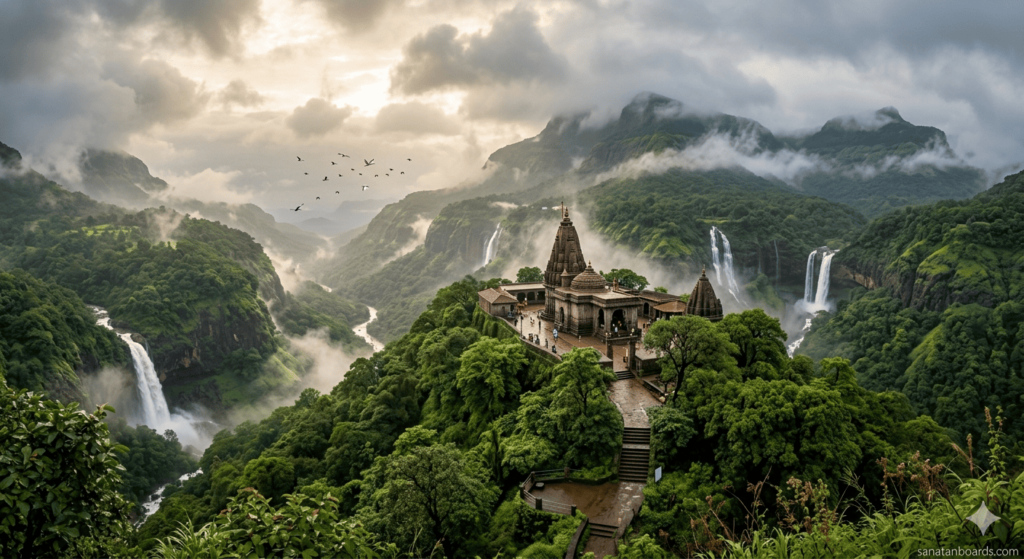
Bhimashankar is one of the most significant spiritual and ecological destinations located in the Sahyadri ranges of the Western Ghats in Maharashtra. It is widely known for its ancient Shiva temple, lush green forests, and rich biodiversity. Situated at an altitude of around 3,250 feet, Bhimashankar attracts pilgrims, nature lovers, trekkers, and researchers throughout the year.
The place holds a deep cultural and religious importance as it is one of the twelve Jyotirlingas of Lord Shiva in India. Surrounded by dense forests, waterfalls, and mist-covered hills, Bhimashankar offers a unique blend of spirituality and natural beauty. The region is also part of the Bhimashankar Wildlife Sanctuary, which is home to several rare species of flora and fauna, including the Indian Giant Squirrel (Shekru), which is the state animal of Maharashtra.
The environment of Bhimashankar is calm and peaceful, making it a perfect destination for meditation and spiritual reflection. The temple architecture reflects ancient Hemadpanthi style, showcasing historical craftsmanship and devotion. Over the years, Bhimashankar has become not only a religious site but also an important eco-tourism destination.
The journey to Bhimashankar is itself an experience, as visitors pass through winding roads, dense forests, and scenic landscapes. It plays a significant role in promoting tourism, local culture and environmental awareness in the region. Bhimashankar stands as a symbol of harmony between nature and spirituality, attracting people from different parts of India and the world.
What Is Bhimashankar (Maharashtra) ?
Bhimashankar is a sacred pilgrimage site located in the Pune district of Maharashtra. It is primarily known for the Bhimashankar Temple, which is dedicated to Lord Shiva and is considered one of the twelve Jyotirlingas in India. A Jyotirlinga is a highly revered shrine where Lord Shiva is worshipped in the form of a radiant column of light.
Apart from its religious significance, Bhimashankar is also recognized as a protected wildlife area under the Bhimashankar Wildlife Sanctuary. This sanctuary is part of the Western Ghats, which is a UNESCO World Heritage Site known for its ecological richness. The region is covered with thick forests, waterfalls, and diverse wildlife species, making it an important environmental zone.
Bhimashankar is not just a single structure or temple; it is a combination of spiritual heritage and natural ecosystem. The temple is believed to be very ancient and has mythological connections with stories from Hindu scriptures, where Lord Shiva is said to have taken the form of Bhimashankar to defeat evil forces.
The area is also important for trekking and adventure tourism. The trails leading to Bhimashankar pass through dense forests and hilly terrain, offering a challenging yet rewarding experience for visitors. The climate remains cool and pleasant for most of the year due to its high elevation.
Who Is Required Bhimashankar (Maharashtra) ?
Bhimashankar is required or significant for multiple groups of people due to its spiritual, ecological, educational, and tourism value.
First, devotees of Lord Shiva consider Bhimashankar extremely important because it is one of the twelve Jyotirlingas. Pilgrims from all over India visit the temple to offer prayers, seek blessings, and participate in religious rituals. For them, Bhimashankar is a sacred destination that fulfills spiritual needs and religious beliefs.
Second, nature enthusiasts and environmentalists require Bhimashankar because it is part of a rich biodiversity zone. The Bhimashankar Wildlife Sanctuary protects rare species such as the Indian Giant Squirrel and several endemic plants. Researchers and conservationists study this region to understand forest ecosystems and wildlife behavior.
Third, trekkers and adventure seekers are drawn to Bhimashankar because of its challenging trails and scenic routes. It provides opportunities for physical activity, exploration, and nature-based experiences.
Fourth, students and researchers in geography, ecology, and history require Bhimashankar as a field study location. It helps them understand topics like biodiversity conservation, mountain ecosystems, and ancient temple architecture.
Finally, tourism departments and local communities depend on Bhimashankar for economic development. Tourism generates income, supports local businesses, and creates employment opportunities for people living in nearby villages.
Thus, Bhimashankar is required by different categories of people for different purposes, making it a multi-dimensional destination with spiritual and environmental importance.
When Bhimashankar (Maharashtra) Required ?
Bhimashankar is required or visited at different times depending on purpose, climate conditions, and religious or tourism schedules.
From a religious perspective, Bhimashankar is required throughout the year by devotees of Lord Shiva. However, it becomes especially important during festivals such as Mahashivratri, when thousands of pilgrims visit the temple to perform special prayers and rituals. Mondays, which are traditionally dedicated to Lord Shiva, also see increased footfall.
From a seasonal point of view, Bhimashankar is most frequently visited during the post-monsoon and winter months. During monsoon (June to September), the region receives heavy rainfall, turning the landscape into lush green forests with flowing waterfalls. This period is ideal for nature lovers and photographers, although trekking can become difficult due to slippery paths. Winter months (October to February) are considered the most comfortable for travel and trekking due to cool temperatures and clear weather.
From an ecological research perspective, Bhimashankar is required at different times of the year to study seasonal changes in flora and fauna. Scientists and researchers visit during specific periods to observe animal behavior, migration patterns, and forest growth cycles.
For tourism and trekking activities, Bhimashankar is required when weather conditions are safe and favorable. Adventure seekers often plan their visits during dry seasons to avoid risks associated with heavy rainfall and dense fog.
For local communities and tourism operators, Bhimashankar is required continuously as it supports livelihoods throughout the year. Hotels, guides, transport services, and small businesses depend on a steady flow of visitors in all seasons.
Where Bhimashankar (Maharashtra) Required ?
Bhimashankar is located in the Sahyadri mountain range of the Western Ghats in western India. It lies in the Pune district of Maharashtra, approximately 110 kilometers from Pune city and about 220 kilometers from Mumbai. The region is situated at an elevation of around 3,250 feet above sea level, which contributes to its cool and humid climate.
Geographically, Bhimashankar is part of a dense forest ecosystem known as the Bhimashankar Wildlife Sanctuary. This sanctuary spans across the districts of Pune and Thane and forms a crucial part of the Western Ghats biodiversity hotspot. The area is characterized by steep hills, deep valleys, dense evergreen forests, and flowing streams.
The temple of Bhimashankar is located on a hilltop, surrounded by natural greenery and wildlife. The location makes it both a spiritual retreat and an ecological reserve. The Western Ghats, where Bhimashankar is situated, is recognized globally for its rich biodiversity and is listed as a UNESCO World Heritage Site.
The accessibility to Bhimashankar is through road networks connecting major cities like Pune, Mumbai, and Nashik. The nearest towns serve as base points for trekking routes leading to the temple. The final stretch often requires walking through forest trails, enhancing the overall experience of visiting the site.
The location of Bhimashankar plays a significant role in maintaining its natural beauty and spiritual atmosphere. Being away from urban congestion, it provides a peaceful environment that is ideal for meditation, tourism, and wildlife conservation.
Thus, Bhimashankar’s geographical position in the Western Ghats of Maharashtra makes it a unique destination that combines religious importance with ecological richness.
How Bhimashankar (Maharashtra) Required ?
Bhimashankar is required through a combination of spiritual practices, environmental conservation efforts, tourism infrastructure, and cultural engagement.
From a spiritual perspective, Bhimashankar is required through rituals, prayers, and temple activities performed by devotees. The temple follows traditional Hindu worship practices dedicated to Lord Shiva. Priests conduct daily pujas, abhishekam, and special ceremonies that maintain the religious significance of the site. Devotees participate by offering prayers, flowers, and water, which sustains the spiritual atmosphere of the place.
From an environmental perspective, Bhimashankar is required through conservation programs that protect its wildlife sanctuary. Forest departments and environmental organizations implement measures to preserve biodiversity, prevent deforestation, and protect endangered species like the Indian Giant Squirrel. Monitoring systems and eco-tourism guidelines ensure that human activities do not harm the ecosystem.
From a tourism perspective, Bhimashankar is required through infrastructure such as roads, trekking paths, accommodation facilities, and guided tours. These systems allow visitors to access the region safely while maintaining environmental balance. Local guides also play a key role in helping tourists understand the cultural and ecological importance of the area.
From a cultural perspective, Bhimashankar is required through festivals, traditions, and community participation. Local communities organize events and support temple activities, ensuring that cultural heritage is preserved and passed on to future generations.
From a safety and management perspective, Bhimashankar is required through administrative systems that regulate visitor flow, maintain cleanliness, and ensure disaster preparedness during heavy rains or trekking seasons.
Thus, Bhimashankar is required in multiple ways that combine religious devotion, environmental protection, tourism development, and cultural sustainability.
Case Study On Bhimashankar
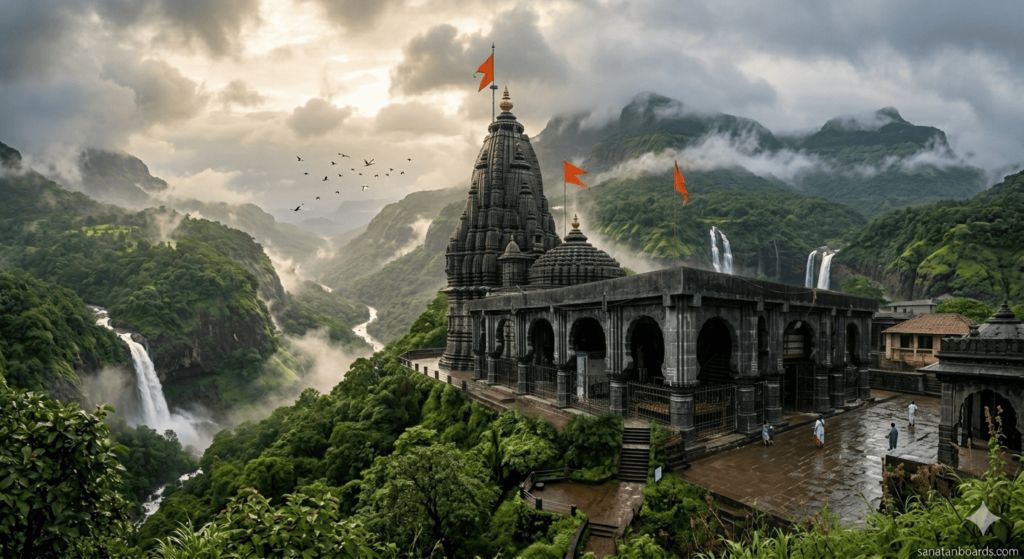
Bhimashankar serves as an important case study for understanding the integration of religious heritage, biodiversity conservation, and sustainable tourism development in a single geographical region.
The Bhimashankar region presents a unique model where a sacred religious site exists within a protected wildlife sanctuary. This dual identity creates both opportunities and challenges. On one hand, the temple attracts thousands of pilgrims annually, boosting local tourism and economy. On the other hand, the ecological sensitivity of the Western Ghats requires strict conservation measures to protect biodiversity.
One major aspect of the case study is environmental conservation. The Bhimashankar Wildlife Sanctuary is home to endangered species such as the Indian Giant Squirrel. Forest authorities have implemented conservation strategies including habitat protection, anti-poaching measures, and controlled tourism. These efforts aim to maintain ecological balance while allowing limited human access.
Another aspect is pilgrimage management. During peak seasons like Mahashivratri, the number of visitors increases significantly. Managing crowd control, waste disposal, and safety becomes a major administrative challenge. Authorities have introduced regulated entry systems and improved infrastructure to handle large gatherings without damaging the environment.
Tourism development is another key element. Bhimashankar has become a popular destination for eco-tourism and trekking. Local communities benefit economically through guiding services, transport, and hospitality. However, uncontrolled tourism can lead to environmental degradation, making sustainable tourism practices essential.
Infrastructure development in Bhimashankar has been carefully planned to balance accessibility and conservation. Roads and trekking paths are designed to minimize ecological disturbance. Facilities such as rest areas and information centers help educate visitors about environmental responsibility.
Cultural preservation is also an important factor. The ancient Bhimashankar Temple represents Hemadpanthi architecture and holds deep mythological significance. Maintaining the temple structure while accommodating modern visitors requires continuous restoration and management efforts.
Community involvement plays a vital role in the success of Bhimashankar’s conservation model. Local residents participate in tourism services and conservation programs, creating a sense of ownership and responsibility toward the environment.
Despite these efforts, challenges remain. Issues such as littering, habitat disturbance, and pressure from increasing tourist numbers continue to pose risks. Authorities are working on awareness programs and stricter regulations to address these concerns.
In conclusion, Bhimashankar stands as a successful yet evolving case study of how religious heritage sites can coexist with ecological conservation. It highlights the importance of balancing human activity with environmental protection while promoting sustainable development.
White Paper On Bhimashankar
Bhimashankar represents a significant intersection of spirituality, ecology, and sustainable development, making it a valuable subject for structured analysis and policy-oriented discussion.
The primary focus of this white paper is to evaluate the ecological and cultural importance of Bhimashankar and propose strategies for sustainable management. Located in the Western Ghats, Bhimashankar is part of a globally recognized biodiversity hotspot. The region’s dense forests, rich wildlife, and unique climatic conditions make it an essential ecological asset.
One of the key components is biodiversity conservation. The Bhimashankar Wildlife Sanctuary protects several endemic and endangered species. Conservation policies emphasize habitat preservation, species protection, and controlled human interaction. Continuous monitoring and scientific research are necessary to ensure long-term ecological stability.
Another major focus is religious tourism management. As one of the twelve Jyotirlingas, Bhimashankar attracts large numbers of pilgrims. This creates both economic opportunities and environmental pressures. The challenge lies in managing visitor flow, waste disposal, and infrastructure development without harming the natural ecosystem.
Sustainable tourism is a core recommendation. Eco-friendly practices such as limiting plastic use, promoting guided trekking, and educating visitors about environmental responsibility are essential. Tourism policies should prioritize minimal ecological impact while maximizing community benefits.
Infrastructure development must follow environmental guidelines. Roads, accommodation facilities, and public utilities should be designed using eco-sensitive planning principles. Renewable energy sources and waste management systems should be integrated into development plans.
Community participation is another critical element. Local communities play a key role in both conservation and tourism services. Empowering them through training, employment opportunities, and decision-making roles ensures sustainable development and reduces environmental conflicts.
Climate change also poses a significant challenge. Changes in rainfall patterns and temperature can affect forest ecosystems and biodiversity. Adaptive management strategies are required to address these evolving environmental conditions.
Policy implementation should involve coordination between forest departments, tourism authorities, and local governance bodies. A unified management framework can help balance ecological preservation with economic development.
Education and awareness programs are essential for long-term sustainability. Visitors and local populations should be informed about the ecological significance of Bhimashankar and encouraged to adopt responsible behaviors.
In conclusion, Bhimashankar represents a model site where religious heritage and environmental conservation intersect. #Sanatanboardsinvasai A well-planned sustainable management approach can ensure that this unique region continues to thrive for future generations.
INDUSTRY APPLICATION OF BHIMASHANKAR (MAHARASHTRA)
Bhimashankar has several industry applications across tourism, environmental science, education, hospitality, and infrastructure development.
In the tourism industry, Bhimashankar serves as a major eco-tourism and pilgrimage destination. Travel agencies design packages for pilgrims and trekkers, while hospitality businesses provide accommodation and food services. This supports local economic development and employment generation.
In the environmental industry, Bhimashankar is used as a research and conservation site. Forest departments, wildlife organizations, and ecological researchers study biodiversity, forest behavior, and conservation strategies. The presence of rare species makes it an important site for ecological studies.
In the education sector, Bhimashankar is used as a field study location for students of geography, environmental science, and history. Educational institutions organize study tours to help students understand ecosystems, climate patterns, and cultural heritage.
In the hospitality industry, nearby regions benefit from hotels, homestays, and transport services catering to visitors. This encourages the growth of small and medium enterprises in rural areas.
In the infrastructure industry, Bhimashankar contributes to the development of roads, trekking paths, communication systems, and safety facilities. Engineering projects in such ecologically sensitive areas promote sustainable construction practices.
In the cultural and religious sector, Bhimashankar supports temple management systems, festival organization, and heritage conservation efforts. This ensures the preservation of traditional practices and architectural heritage.
Thus, Bhimashankar plays a multi-industry #Sanatanboardsinmumbai role, contributing to economic development, environmental protection, and cultural preservation simultaneously.
source Traveller Dilkhush
ASK FAQ
1. What is Bhimashankar famous for?
Bhimashankar is famous for the ancient Bhimashankar Temple, one of the 12 Jyotirlingas of Lord Shiva, and its rich biodiversity located in the Western Ghats of Maharashtra.
2. Where is Bhimashankar located?
Bhimashankar is located in the Pune district of Maharashtra, India, in the Sahyadri hills of the Western Ghats at an altitude of about 3,250 feet.
3. Why do people visit Bhimashankar?
People visit Bhimashankar for religious pilgrimage, trekking, nature exploration, wildlife viewing, and to experience its peaceful natural environment.
4. What is the best time to visit Bhimashankar?
The best time to visit Bhimashankar is from October to February when the weather is cool and pleasant, making it ideal for trekking and sightseeing.
5. Which animals are found in Bhimashankar Wildlife Sanctuary?
Bhimashankar Wildlife Sanctuary is home to the Indian Giant Squirrel, leopards, barking deer, and many species of birds and plants.
Table of Contents
DISCLAIMER
The information provided above is a structured compilation intended for general knowledge, writing, and informational use. It is not an official record or authoritative document. Readers are advised to verify details from credible and official sources before using it for academic, professional, or decision-making purposes.