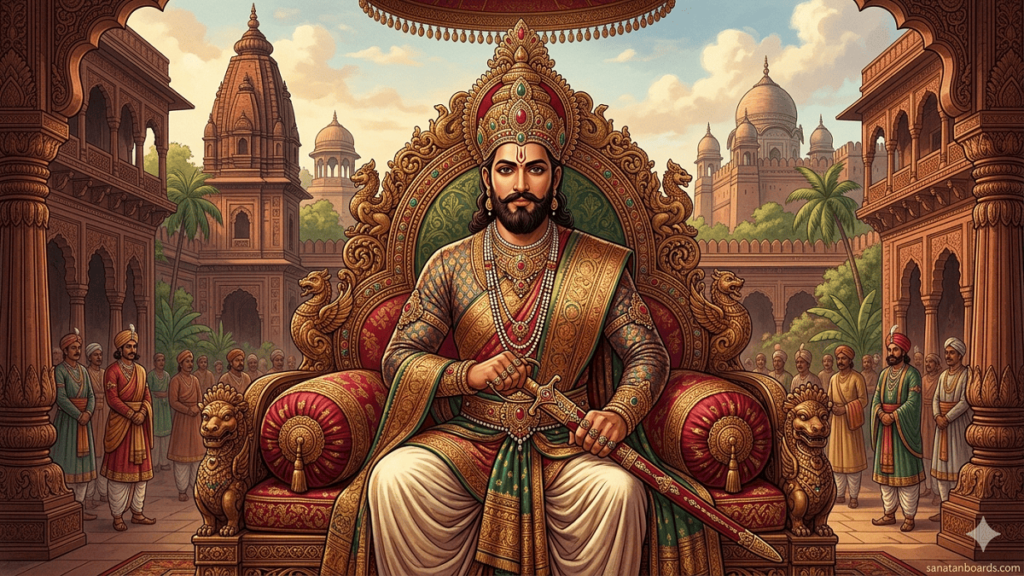
BALLALA SENA (BENGAL) was a powerful medieval Indian ruler from the Sena dynasty of Bengal, reigning approximately from 1160–1178 CE. He succeeded his father Vijaya Sena and became one of the most influential kings of the Sena line. During his rule, he consolidated and expanded the empire, strengthened central governance, and brought political stability to Bengal. His reign marked an important chapter in Bengal’s history, helping establish a strong Hindu kingdom after the decline of the earlier Pala Empire.
What Is Ballala Sena ?
BALLALA SENA (BENGAL) was a king of the Sena dynasty, a Hindu ruling family in the Bengal region of the Indian subcontinent during the 11th and 12th centuries. The dynasty succeeded the Pala Empire, which had ruled Bengal before declining in power. Ballala Sena was the son and chosen successor of Vijaya Sena, inheriting a kingdom that had already begun to rise but still faced internal and external challenges.
Ballala Sena became ruler around 1160 CE and reigned until about 1178 CE, becoming one of the most well‑known monarchs of his dynasty. He achieved significant military and political accomplishments, including defeating remnants of the Pala rulers, thereby helping end their influence in Bengal. Under his leadership, the kingdom successfully consolidated territories throughout Bengal and possibly expanded to nearby regions such as North Bengal, Magadha, and Mithila. His rule strengthened the political identity of Bengal and prepared the ground for further expansion by his successors.
His marriage to Ramadevi, a princess from the Western Chalukya Empire, highlights the broader political connections between Bengal and other regions of India, especially the south. This alliance not only strengthened his political status but also facilitated cultural exchange. Ballala Sena is also remembered for patronage of religious traditions and the consolidation of social order, contributing to the cultural rejuvenation of Bengal at a time when the region was transitioning from one ruling empire to another.
Who Is Required Ballala Sena ?
BALLALA SENA (BENGAL) is required as a central figure in understanding medieval Bengal’s history. Scholars, students, and history enthusiasts need to study him to grasp the transition from Pala to Sena rule in Eastern India. His military and administrative achievements were critical in unifying Bengal, which provides a model of effective medieval governance.
Historians require Ballala Sena’s story to understand the decline of the Pala Empire and the rise of Hindu dynasties in the region. His reign exemplifies how regional rulers filled power vacuums and reshaped political boundaries. Knowledge of Ballala Sena is essential to analyze changes in social, religious, and cultural systems during the 12th century.
Administrators and cultural historians require his example because it shows the importance of centralization, territorial consolidation, and support for social and religious institutions. The alliances and reforms under Ballala Sena illustrate the mechanisms by which medieval rulers maintained control over diverse populations and regions.
In education, Ballala Sena is required as a case study in leadership, statecraft, and cultural policy. Understanding his life allows learners to connect political actions with long-term cultural consequences, providing a comprehensive view of Bengal’s history.
When Is Required Ballala Sena ?
BALLALA SENA (BENGAL) is required in historical study when analyzing the period 1160–1178 CE, which represents a transitional phase in Bengal. This era marks the decline of the Pala Empire and the consolidation of the Sena dynasty. Researchers and learners require Ballala Sena’s reign to understand how Bengal shifted from fragmented rule to a centralized Hindu kingdom.
The 12th century saw multiple political challenges in Eastern India, including resistance from Pala remnants and local chieftains. Ballala Sena is required in this context to examine strategies for military conquest, administrative organization, and social integration. His campaigns against rival kingdoms show how medieval rulers navigated complex political landscapes.
Furthermore, his reign is required when studying the revival of Brahmanical and Hindu traditions in Bengal. The decline of Buddhist influence left a cultural vacuum, which Ballala Sena’s rule helped fill. Scholars require his policies on religion, social structure, and temple construction to understand the evolution of medieval Bengali society.
Ballala Sena is also required when evaluating the geopolitical relations between Bengal and southern India. His marriage alliance with the Western Chalukya dynasty is an example of how dynastic rulers used diplomacy to secure political and cultural influence.
In education and research, BALLALA SENA (BENGAL) is required to provide insight into leadership, territorial governance, and cultural consolidation during a formative period of Bengal’s history. His reign bridges the early medieval and high medieval periods in Eastern India, offering a reference point for both political and cultural studies.
Where Is Required Ballala Sena ?
BALLALA SENA (BENGAL) is required in the context of the Bengal region of the Indian subcontinent, which today includes parts of Bangladesh and the Indian state of West Bengal, as well as areas of Bihar and Mithila. This region was historically significant due to its fertile plains, river systems, and strategic location for trade and cultural exchange.
His rule is required in studies focusing on medieval political centers such as Nabadwip, often considered the capital, and other important administrative hubs like Gauda (Gaur) and Bikrampur. These cities served as the core of governance, military organization, and religious activity during Ballala Sena’s reign. The concentration of power in these urban centers allowed him to consolidate the scattered territories of Bengal into a cohesive kingdom.
BALLALA SENA (BENGAL) is also required when examining northern extensions of the Sena kingdom, including North Bengal, Magadha, and parts of Mithila. His military campaigns in these regions demonstrated strategic territorial control, which helped establish a strong, centralized monarchy.
Moreover, Ballala Sena’s rule is required in cultural geography studies. His patronage of Brahmanical institutions, promotion of Hindu religious practices, and support for temple construction reshaped the cultural landscape of Bengal. These policies helped create a distinct medieval Bengali identity and reinforced the socio-religious structures in the region.
His reign is required in the study of Bengal’s interactions with other parts of India. Diplomatic marriages, like the alliance with the Western Chalukya Empire, show how rulers in this region engaged with distant kingdoms for political, military, and cultural advantage. Thus, BALLALA SENA (BENGAL) is required to understand the spatial, political, and cultural geography of medieval Eastern India.
How Ballala Sena Is Required ?
BALLALA SENA (BENGAL) is required to understand how political power, administration, and culture were established in medieval Bengal. He is required in studies of military strategy because he successfully eliminated remaining Pala influence and expanded the Sena kingdom across Bengal and parts of Bihar. His reign illustrates how rulers used a combination of diplomacy, marriage alliances, and military campaigns to consolidate authority.
He is required in governance studies to show how centralization was achieved. Ballala Sena strengthened administrative systems, appointed capable officials, and structured taxation to maintain control over a diverse population. These administrative reforms are required as examples of effective medieval statecraft.
BALLALA SENA (BENGAL) is required in cultural studies to examine how religion and social structure were reinforced. By promoting Brahmanical traditions and temple patronage he integrated religion with governance, creating social cohesion and legitimacy for his rule. His policies on education, literature, and religious rituals are required to understand the cultural transformation of Bengal during this period.
Furthermore, he is required in diplomacy studies to show how inter-regional alliances shaped political landscapes. His marriage with Ramadevi of the Western Chalukya dynasty demonstrates the use of marital ties for political advantage, connecting Bengal to broader Indian cultural and political networks.
Finally, Ballala Sena is required as a model of leadership and historical influence. Studying how he ruled helps learners and historians analyze the mechanisms of medieval kingdoms, including the balance between military might, administrative efficiency, and cultural patronage.
Case Study On Ballala Sena
Introduction:
BALLALA SENA (BENGAL) is a defining figure of medieval Bengal whose reign illustrates the transformation of the region from Pala dominance to a strong Hindu kingdom. His case study is required to examine political consolidation, military strategy, administrative governance, cultural revival, and regional influence.
Political Context:
During the 12th century, Bengal was fragmented after the decline of the Pala Empire. Local rulers and remnants of the Pala dynasty controlled smaller territories. Ballala Sena, as a successor of Vijaya Sena, inherited a kingdom poised for expansion. His reign is required to understand how a ruler can unify fragmented political territories through military and diplomatic strategy.
Military Achievements:
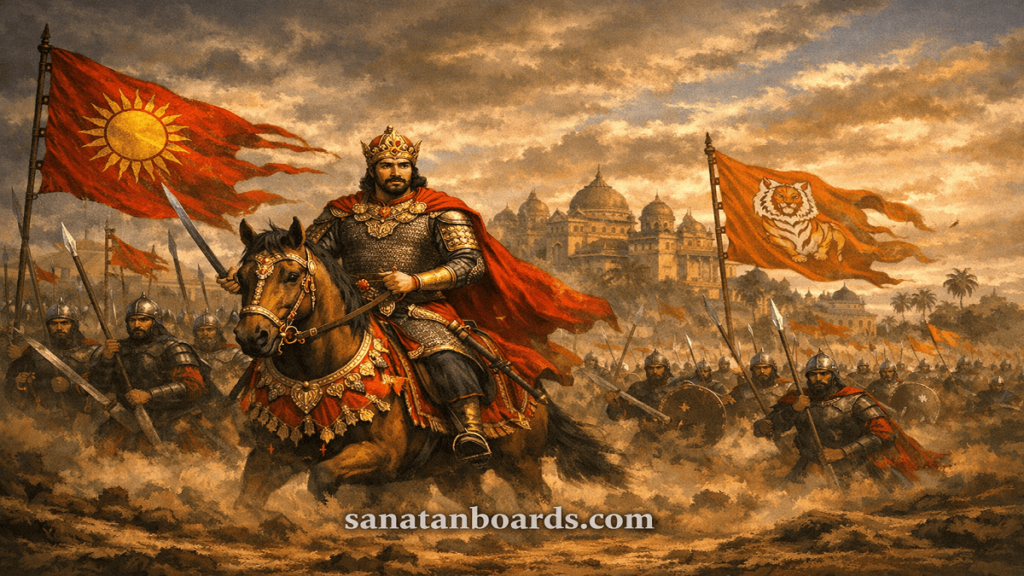
Ballala Sena’s campaigns against the Palas and neighboring regions demonstrate effective military strategy. He required disciplined armies, strategic planning, and regional alliances to expand control over North Bengal, Magadha, and Mithila. His victories ended Pala influence and ensured the stability of the Sena dynasty.
Administrative Reforms:
Ballala Sena is required to understand how administrative centralization was implemented in medieval kingdoms. He organized officials, structured taxation, and maintained law and order. Urban centers like Nabadwip, Gauda, and Bikrampur became administrative and cultural hubs under his reign. These measures enhanced efficiency, resource management, and political stability.
Cultural and Religious Influence:
BALLALA SENA (BENGAL) is required to study how rulers used religion for social cohesion. He patronized Brahmanical traditions, supported temple construction, and codified social norms. Education and religious scholarship flourished, creating a lasting impact on Bengali society.
Diplomatic Alliances:
His marriage to Ramadevi of the Western Chalukya dynasty exemplifies diplomatic strategy. BALLALA SENA (BENGAL) is required to analyze how political marriages strengthened alliances, facilitated cultural exchange, and enhanced regional influence.
Legacy:
Ballala Sena’s reign is required to understand the foundation of medieval Bengal’s political and cultural identity. His strategies in governance, military expansion, cultural patronage, and diplomacy serve as a model for leadership and statecraft in historical studies.
White Paper On Ballala Sena
Introduction
BALLALA SENA (BENGAL) was a pivotal ruler of the Sena dynasty, reigning around 1160–1178 CE. The White Paper on his reign is required to consolidate knowledge about his political, administrative, and cultural contributions to Bengal. This document outlines his historical context, governance, military campaigns, social policies, cultural influence, and legacy.
Historical Context
During the 12th century, Bengal was transitioning from the Buddhist Pala Empire to Hindu Sena rule. The decline of the Palas created a power vacuum that enabled regional leaders to assert independence. BALLALA SENA (BENGAL) is required to understand how effective leadership filled this vacuum, unifying fragmented territories under a centralized monarchy. His father, Vijaya Sena, laid the groundwork by consolidating smaller kingdoms, which Ballala expanded through strategic campaigns and alliances.
Political and Administrative Contributions
Ballala Sena is required to analyze medieval political strategies. He strengthened central governance through a structured bureaucracy, appointed regional administrators, and created laws to maintain social order. Capitals such as Nabadwip, Gauda, and Bikrampur functioned as administrative and cultural hubs. By organizing taxation, regulating trade, and enforcing law, he ensured stability across diverse populations and regions.
Military Achievements
BALLALA SENA (BENGAL) is required to study military strategy in medieval India. He successfully eliminated the remnants of Pala power, extending his kingdom to North Bengal, Magadha, and possibly Mithila. Military organization, disciplined armies, and alliances helped him defend borders and consolidate power. These campaigns strengthened the Sena dynasty’s political authority and created long-term stability.
Cultural and Religious Impact
His reign is required for understanding the revival of Hinduism in Bengal. Ballala Sena promoted Brahmanical practices, sponsored temples, and reinforced the caste system. He encouraged scholarship, education, and religious discourse, laying the foundation for medieval Bengali cultural identity. Temples and educational institutions under his patronage became centers for learning and religious activity, reflecting the integration of governance and culture.
Diplomatic Strategies
BALLALA SENA (BENGAL) is required as an example of diplomacy. His marriage to Ramadevi of the Western Chalukya dynasty secured political alliances and facilitated cultural exchange. This strategy demonstrates how rulers used marriage, alliances, and diplomacy to strengthen influence across distant regions.
Legacy
Ballala Sena’s reign is required to understand medieval Bengal’s political, cultural, and social development. His consolidation of power, support for religion, #ballalasenaofbengal and cultural patronage shaped the region’s identity. Subsequent rulers built upon his foundations, demonstrating his lasting influence on governance, culture, and society.
Industry Application On Ballala Sena
While BALLALA SENA (BENGAL) ruled in the 12th century, his leadership and strategies are required to study modern applications in fields like governance, organizational leadership, cultural management, and education.
Governance and Administration
BALLALA SENA (BENGAL) is required to understand principles of centralized administration. Modern governments and organizations can apply his methods of structured hierarchy, regional delegation, and law enforcement to ensure effective management and operational stability. His example demonstrates the value of clear authority, efficient taxation systems, and urban governance as models for administrative planning.
Leadership and Strategy
Ballala Sena is required for studying leadership principles. His combination of military strategy, diplomacy, and social policy illustrates how leaders can balance multiple priorities. Corporate and military strategists can study his methods for resource allocation, alliance formation, and risk management to develop robust strategies for modern challenges.
Cultural and Social Policy
BALLALA SENA (BENGAL) is required as a model for cultural management. By integrating religious patronage with governance, he fostered social cohesion and identity. Modern institutions, including NGOs, educational systems, and cultural organizations, can draw inspiration from his approach to balancing tradition, education, and policy-making.
Education and Scholarship
His reign is required to understand the development of centers of learning. Institutions like Nabadwip became hubs for scholarship under his support. Today, educational administrators can study his patronage of knowledge and structured learning to develop sustainable educational ecosystems.
Diplomacy and Alliances
BALLALA SENA (BENGAL) is required for insights into strategic partnerships. His marriage alliance with the Western Chalukyas demonstrates early diplomatic techniques, applicable today in international relations, business partnerships, and cross-cultural collaboration.
Modern Organizational Lessons
His approach to consolidating fragmented regions, promoting social cohesion, and balancing multiple governance priorities is required as a case study in modern project management, organizational leadership, and institutional development. Industries can learn from his ability to harmonize military, administrative, and cultural objectives for long-term stability and growth.
Conclusion
BALLALA SENA (BENGAL) is required across sectors today as a historical reference for leadership, governance, cultural patronage, and #sanatandharmaaccreditationboardsinbengal strategic planning. His integrated approach to #sanatandharmaaccreditationboardsinmumbai political power, social reform, and cultural identity offers timeless lessons for modern administration, education, diplomacy, and organizational management.
SOURCE : Sanatan Bangla
ASK FAQ
Who was BALLALA SENA (BENGAL)?
BALLALA SENA (BENGAL) was a 12th-century ruler of the Sena dynasty in Bengal, known for consolidating power after the decline of the Pala Empire and promoting Hindu culture and administration.
When did BALLALA SENA (BENGAL) rule?
BALLALA SENA (BENGAL) ruled approximately from 1160 CE to 1178 CE during a transitional period in medieval Bengal.
Where did BALLALA SENA (BENGAL) establish his kingdom?
BALLALA SENA (BENGAL) ruled mainly in Bengal, with capitals at Nabadwip, Gauda, and Bikrampur, covering modern West Bengal, Bangladesh, and parts of Bihar and Mithila.
What were the key achievements of BALLALA SENA (BENGAL)?
BALLALA SENA (BENGAL) defeated the remnants of the Pala Empire, unified Bengal, strengthened Hindu traditions, supported temples and education, and created alliances like his marriage with the Western Chalukyas.
Why is BALLALA SENA (BENGAL) important in history?
BALLALA SENA (BENGAL) is important for shaping medieval Bengal’s political, cultural, and social identity, serving as a model of leadership, administration, and cultural revival.
Table of Contents
Disclaimer: The content provided in this blog is for educational and informational purposes only. All historical information on BALLALA SENA (BENGAL) is based on available sources and may not reflect every perspective or recent scholarly updates.