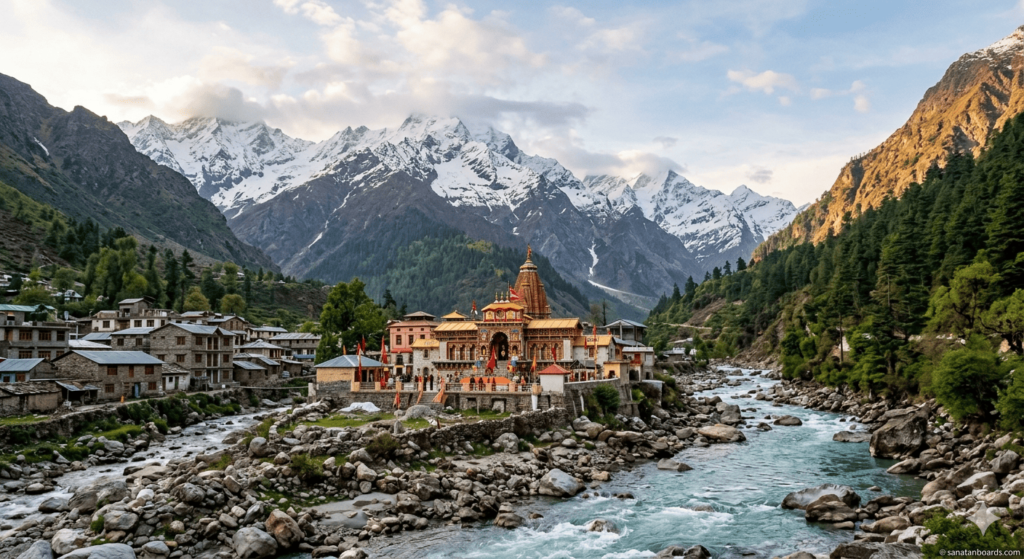
BADRINATH (UTTARAKHAND) – VISHNU TEMPLE is one of the most sacred Hindu temples in India, dedicated to Lord Vishnu in his form as Badrinarayan. Located in the small Himalayan town of Badrinath in the Chamoli district of Uttarakhand, this temple sits at an altitude of approximately 3,100 metres (10,279 ft) above sea level along the banks of the Alaknanda River.
The temple is part of the Char Dham and Chota Char Dham pilgrimages, four of the most venerated sites in Hinduism. Devotees from across India and around the world undertake long journeys to reach the temple, often trekking through challenging mountain terrain to seek blessings and spiritual upliftment. As one of the 108 Divya Desams—holy shrines revered in Vaishnavism—the temple holds immense religious significance and is regarded as a powerful centre of faith and devotion.
Each year, the temple remains open to pilgrims only for approximately six months, from late April to early November, due to extreme climate conditions and heavy winter snowfall. During this period thousands of devotees perform rituals, offer prayers, and participate in festivals and cultural observances that have been handed down through centuries.
The serene landscape around BADRINATH (UTTARAKHAND) – VISHNU TEMPLE invites visitors into a rich tapestry of mythology, natural beauty, and spiritual tradition. With its distinctive architecture, sacred idol of Lord Vishnu, and deep historical roots, the temple is not only a place of worship but also a symbol of enduring faith in the divine.
What Is Badrinath (Uttarakhand) – Vishnu Temple ?
BADRINATH (UTTARAKHAND) – VISHNU TEMPLE—commonly called Badrinath Temple or Badrinarayan Temple—is a Hindu temple dedicated to Lord Vishnu, one of the principal deities of Hinduism, who is worshipped here in his serene meditative form known as Badrinarayan. The temple forms the spiritual heart of the town of Badrinath, which lies in the Garhwal range of the Indian Himalayas.
Architecturally, the temple blends traditional North Indian Hindu style with elements unique to its high-altitude environment. The structure features a tall conical roof, vivid colored façade, and ornate carved pillars and archways leading into spacious halls used for worship and gatherings. Inside the sanctum is the sacred idol of Badrinarayan—made of black granite—seated in padmasana (a meditative posture), symbolising peace, spiritual focus, and divine presence.
The temple’s history is deeply entwined with ancient Indian scriptures like the Vishnu Purana, Skanda Purana, and Mahabharata, where Badrinath and its environs are celebrated as places of spiritual power and divine revelation. It was also mentioned in the Tamil Vaishnavite canon Naalayira Divya Prabandham, making it an important pilgrimage destination for devotees of Vishnu.
The site was sanctified and popularised as a pilgrimage by the sage Adi Shankaracharya in the 8th–9th century CE when he is said to have rediscovered the black stone deity and installed it in the current temple. Over time, the temple experienced periods of rebuilding due to damage from natural forces like earthquakes and avalanches.
Today, BADRINATH (UTTARAKHAND) – VISHNU TEMPLE is not just an architectural monument; it remains a living centre of faith that continues to attract millions of pilgrims each year who seek divine grace, spiritual renewal, and inner peace.
Who Is Required Badrinath (Uttarakhand) – Vishnu Temple ?
It means recognising the range of people who visit, revere, and are spiritually connected to this sacred site. At its core, the temple is essential to devotees of Lord Vishnu, known as Vaishnavites, who look upon Badrinath as one of the most sacred abodes of their deity. For these devotees, the temple is required as a place for deep prayer, spiritual solace, and to perform religious vows.
Beyond Vaishnavites, Hindu pilgrims from various traditions across India and abroad consider visiting Badrinath a significant spiritual milestone. Many undertake the journey to fulfil personal vows, seek blessings for family well-being, commemorate life events like marriages and births, or to achieve a sense of inner peace and liberation (moksha). The Char Dham pilgrimage, of which Badrinath is a part, is believed to purify the soul and break the cycle of rebirth, making it required for devout Hindus seeking spiritual growth.
The temple is also significant for scholars, historians, and cultural enthusiasts who study India’s rich religious heritage, ancient scriptures, and temple architecture. As BADRINATH (UTTARAKHAND) – VISHNU TEMPLE appears in many traditional texts, it offers insights into ancient beliefs, mythological narratives, and the historical evolution of temple culture in the Himalayas.
Lastly, the temple plays an important role for the local community and economy. Residents of Badrinath and surrounding hill regions depend on the pilgrimage season for livelihood through tourism, hospitality, guiding services, and religious offerings, making the existence of the temple required for cultural identity and economic sustenance.
When Badrinath (Uttarakhand) – Vishnu Temple Is Required ?
BADRINATH (UTTARAKHAND) – VISHNU TEMPLE is most required during specific periods when spiritual, seasonal, and cultural factors converge. Primarily, the temple operates for six months a year, from late April to early November, due to extreme Himalayan winters. Pilgrims plan their visits during this open period, as it coincides with favorable weather conditions for travel through steep mountain terrain and for participation in rituals.
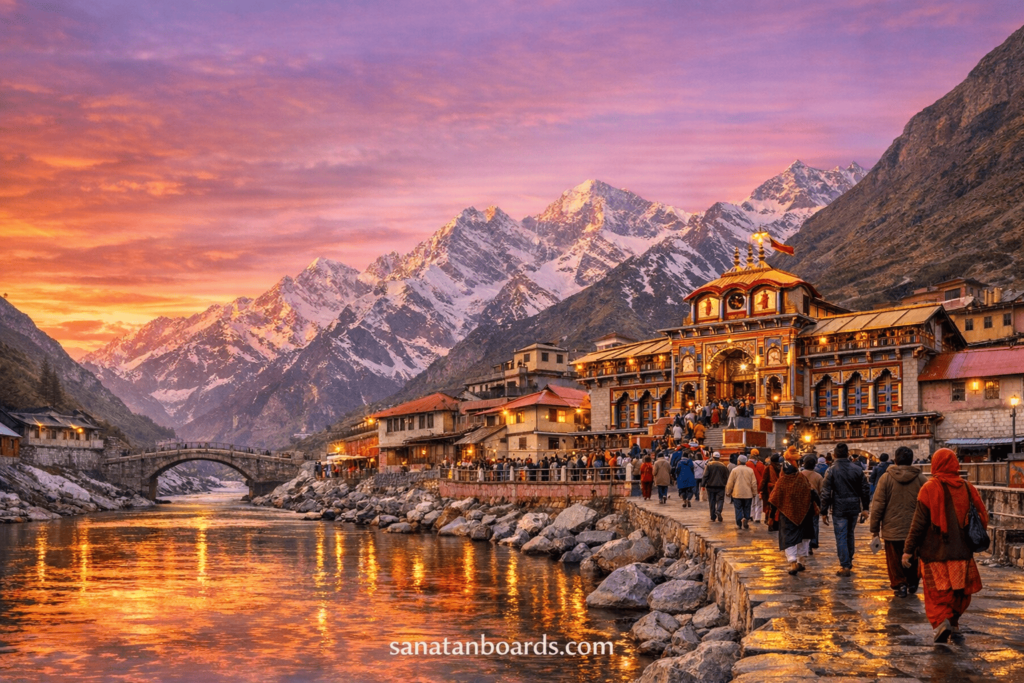
The temple is especially required during major Hindu festivals, such as Vijaya Dashami, Makar Sankranti, and Vaikuntha Ekadashi. During these festivals, devotees flock to seek divine blessings, perform special prayers, and participate in elaborate ceremonies. The temple becomes a center of collective spiritual energy, providing both personal and communal fulfilment.
For individuals, BADRINATH – VISHNU TEMPLE is required at life milestones: for instance, when seeking health, prosperity, spiritual guidance, or liberation. Pilgrims also visit to complete vows (known as pradakshina) or to atone for personal transgressions. According to tradition, a visit to the temple during these auspicious times can purify the mind and soul, aligning the devotee with divine will.
Moreover, from a historical and cultural perspective, the temple is required whenever there is a threat to continuity of tradition, such as natural disasters or periods of neglect. The re-establishment of festivals, rituals, and maintenance of the temple ensures the preservation of centuries-old religious practices and local cultural identity.
Where Badrinath (Uttarakhand) – Vishnu Temple Is Required ?
The physical location of BADRINATH (UTTARAKHAND) – VISHNU TEMPLE in Badrinath town, Chamoli district, Uttarakhand, is strategically significant for spiritual and geographical reasons. Nestled between the Nar and Narayana mountain ranges and along the Alaknanda River, the temple is surrounded by natural beauty that enhances the sense of divinity and serenity. Its Himalayan setting requires devotees to traverse forests, rivers, and mountain passes, reflecting a journey not only in distance but also in inner transformation.
The temple is required in the heart of religious tourism circuits such as the Char Dham and Chota Char Dham, which includes Kedarnath, Gangotri, and Yamunotri. Its geographical positioning makes it an endpoint for spiritual seekers who undertake a pilgrimage route designed to encompass a holistic spiritual experience across the Himalayas.
Additionally, the temple’s presence is required in cultural and educational contexts, serving as a living classroom for researchers of Hindu architecture, Himalayan ecology, and religious studies. Scholars and students visiting Badrinath gain direct exposure to temple architecture, rituals, and the integration of religious practice with natural surroundings.
The temple is also required within the local community, forming the core of socio-economic activity. The town’s economy revolves around pilgrim inflow, and its marketplaces, lodges, and services exist primarily to serve devotees. Its location makes it central to both spiritual life and regional livelihood.
How Badrinath (Uttarakhand) – Vishnu Temple Is Required ?
BADRINATH (UTTARAKHAND) – VISHNU TEMPLE is required through multiple practical and spiritual mechanisms. Devotees access the temple by foot, helicopter, or mountain roads, engaging in a journey that embodies physical effort, mental discipline, and spiritual devotion. The process of travel itself—trekking through steep Himalayan paths—is seen as an integral component of the ritual, preparing pilgrims for communion with the divine.
Inside the temple, devotees participate in rituals such as darshan, abhishekam, and aarti, which are required to establish a personal connection with Lord Vishnu. These practices include offering flowers, reciting sacred chants, and performing ceremonial circumambulations (pradakshina) around the sanctum.
The temple’s requirement also manifests in administration and upkeep, which involves the temple trust, local authorities, and religious scholars who maintain rituals, manage pilgrim logistics, and ensure preservation of heritage. This ensures that worship, festival celebrations, and community gatherings are sustained annually.
From a spiritual perspective, the temple is required through devotional practice and adherence to scriptural prescriptions. It functions as a living embodiment of sacred law (dharma) where rituals, teachings, and pilgrim discipline converge to create spiritual efficacy
Case Study On Badrinath (Uttarakhand) – Vishnu Temple
Overview: The case of BADRINATH (UTTARAKHAND) – VISHNU TEMPLE demonstrates the intersection of religion, culture, and geography in sustaining a high-altitude pilgrimage site. Located at 3,100 meters in the Garhwal Himalayas, the temple attracts millions of pilgrims annually, serving as a model for understanding religious tourism, ecological management, and socio-economic impact on mountain communities.
Historical Context: Historical records and Puranic texts reference Badrinath as a place of divine manifestation. Sage Adi Shankaracharya’s revival of the temple in the 8th–9th century CE reinforced its importance in Vaishnavite worship. Subsequent renovations, especially post-natural calamities, underscore the adaptive measures required to preserve such sacred sites in earthquake-prone and avalanche-prone regions.
Religious Significance: The temple is part of the Char Dham pilgrimage, a journey believed to cleanse the soul and bring moksha. It is also counted among the 108 Divya Desams, establishing its status in Vaishnavism. Daily rituals, festival observances, and spiritual practices provide continuity of faith while facilitating pilgrim engagement.
Tourism and Socio-Economic Impact: Pilgrimage season stimulates local economy through accommodation, food services, guide services, and transportation. Local communities depend heavily on these seasonal flows for income, making the temple indispensable for economic sustainability. Studies of regional tourism highlight how infrastructure development—roads, helipads, and safety measures—enhances accessibility while balancing environmental preservation.
Challenges: High-altitude environment, unpredictable weather, and natural disasters like floods and landslides pose challenges. The temple authorities employ disaster management, community training, and architectural reinforcement to ensure safety and uninterrupted spiritual practices. Pilgrim congestion during peak festivals necessitates crowd management protocols.
Cultural and Educational Dimensions: The temple serves as a living archive of Himalayan architecture, religious practice, and ritual symbolism. Scholars and students use the temple as a site for research on Vaishnavism, temple art, and Himalayan ecology. Conservation strategies also involve education for locals and visitors, promoting awareness of heritage preservation.
Outcome and Learning: The case demonstrates that religious significance, community participation, and environmental adaptation are central to the sustainability of sacred sites. BADRINATH (UTTARAKHAND) – VISHNU TEMPLE exemplifies how pilgrimage #badrinathuttarakhandvishnutemple can be harmonized with ecological responsibility, cultural continuity, and socio-economic development.
White Paper On Badrinath (Uttarakhand) – Vishnu Temple
It generally refers to the serene visual and symbolic aspects of BADRINATH (UTTARAKHAND) – VISHNU TEMPLE rather than an official alternate name. The temple, though featuring colorful architecture, is often seen surrounded by snow-capped Himalayan peaks, giving it a striking white backdrop that enhances its spiritual aura and purity. This snowy environment symbolizes peace, divinity, and transcendence, inviting devotees to detach from worldly concerns and focus on spiritual reflection.
The white Himalayan surroundings influence not only the aesthetic but also the ritualistic and cultural practices of the temple. Winter snows force the temple to close from November to April, during which time priests and caretakers relocate to nearby areas such as Joshimath, maintaining continuity of worship in preparation for the next pilgrimage season. The snow-laden landscape also shapes the pilgrim experience, as the physical journey across icy terrain is considered an act of devotion and spiritual endurance.
Symbolically, the “white” imagery represents purity and enlightenment, key aspects of Vishnu worship. The pristine environment of Badrinath is reflected in the ritual cleanliness of the temple premises, the sacred Alaknanda River, and the disciplined conduct of both priests and pilgrims. Devotees often meditate on the symbolism of snow and white peaks to cultivate inner purity and detachment from material desires.
From an architectural perspective, efforts are made to preserve the temple against snow, ice, and glacial melt, blending traditional construction techniques with modern materials to withstand the harsh Himalayan climate. Maintenance includes reinforcing roofs, drainage management, and careful restoration of carvings and sanctum spaces affected by moisture and cold.
Culturally, the white environment fosters festivals and celebrations uniquely adapted to the Himalayan context. Pilgrims experience a combination of spiritual ceremonies and natural wonder, which makes Badrinath not only a religious landmark but also an immersive educational and cultural environment. Photography, guided tours, and storytelling about local legends such as Nar-Narayan mountain pairs or the tale of Adi Shankaracharya are enhanced by the snowy landscape.
Ecologically, the “white” aspect underlines sustainable pilgrimage practices, with initiatives to manage waste, prevent deforestation, and ensure #Sanatandharmaaccreditationboardsinmumbai the safety of flora and fauna around the temple. Snow-fed rivers and cold weather ecosystems are integral to the sacred geography and influence both ritual water use and community resource planning.
In summary, WHITE BADRINATH emphasizes the integration of natural purity, religious symbolism, and cultural heritage. It portrays a holistic experience where environmental beauty, ritual practice, and spiritual contemplation converge #Sanatandharmaaccreditationboardsinvasai to make BADRINATH (UTTARAKHAND) – VISHNU TEMPLE a unique site of devotion, learning, and ecological awareness.
Industry Application Of Badrinath (Uttarakhand) – Vishnu Temple
While BADRINATH (UTTARAKHAND) – VISHNU TEMPLE is primarily a religious site, its significance extends into tourism, hospitality, education, and heritage conservation industries:
- Religious Tourism Industry: The temple is a central hub for Himalayan pilgrimage tourism, attracting millions annually. Travel operators, guides, and transport services rely heavily on the pilgrimage season. Helicopter services, trekking guides, and eco-tourism operators benefit directly from pilgrim influx.
- Hospitality and Food Services: Lodges, hotels, and eateries around Badrinath are established to serve the spiritual tourism economy. Seasonal employment for locals in accommodations, catering, and services boosts the regional economy.
- Education and Research: Scholars of religion, history, and architecture study the temple for Vaishnavite rituals, Himalayan construction techniques, and cultural heritage. This creates opportunities for academic publications, documentary production, and guided educational programs.
- Heritage Conservation and Architecture: The temple serves as a case study for maintaining ancient structures in harsh environments. Techniques for seismic-resistant construction, weatherproofing, and sustainable maintenance influence heritage conservation practices across the Himalayas.
- Cultural and Media Industries: The temple’s mythological and historical narratives inspire books, films, documentaries, and digital content about Indian heritage and pilgrimage culture. This supports creative industries and global awareness of Himalayan religious sites.
- Environmental and Sustainable Development: Ecological management around the temple—including river conservation, waste management, and eco-friendly pilgrim practices—provides a model for integrating sustainability into religious tourism and mountain industry planning.
Overall, BADRINATH (UTTARAKHAND) – VISHNU TEMPLE exemplifies multi-sector impact, demonstrating that spiritual landmarks can intersect meaningfully with modern industry while preserving cultural and ecological integrity.
source : Tanishq Mishra
ASK FAQ
1. What is Badrinath Temple in Uttarakhand?
Badrinath Temple, also called Badrinarayan Temple, is a sacred Hindu temple dedicated to Lord Vishnu, located in Badrinath town, Chamoli district, Uttarakhand, at 3,100 meters above sea level.
2. When is the best time to visit Badrinath Temple?
The temple is open from late April to early November, during the summer months when the weather is suitable for Himalayan pilgrimage.
3. Who can visit Badrinath Temple?
Devotees of Lord Vishnu, Hindu pilgrims, scholars, and cultural enthusiasts can visit Badrinath Temple for spiritual, educational, and cultural experiences.
4. Where is Badrinath Temple located?
Badrinath Temple is situated in the Garhwal Himalayas, along the banks of the Alaknanda River, between the Nar and Narayana mountain ranges in Uttarakhand, India.
5. Why is Badrinath Temple important?
Badrinath Temple is a key pilgrimage site in the Char Dham circuit, revered for spiritual purification, religious rituals, and as a symbol of Vaishnavism and Himalayan heritage.
Table of Contents
DISCLAIMER
The information provided in this blog on BADRINATH (UTTARAKHAND) – VISHNU TEMPLE is intended for educational, cultural, and knowledge-sharing purposes. It is compiled from publicly available historical, religious, and academic sources. Readers should verify pilgrimage details, travel arrangements, and local regulations independently before planning visits. This content does not constitute professional, legal, or travel advice.