The Amarnath Cave, located in the northern region of India in the Union Territory of Jammu and Kashmir, is one of the most revered spiritual destinations in the world. Nestled at a high altitude in the Himalayas, this sacred cave attracts thousands of pilgrims every year who undertake a challenging journey to witness the naturally formed ice structure known as the Ice Shiva Linga.
The cave holds immense cultural, spiritual, and mythological importance in Hindu tradition. It is believed to be closely associated with Lord Shiva, one of the principal deities in Hinduism. The natural formation of ice inside the cave is considered a divine symbol representing Lord Shiva himself. This phenomenon occurs seasonally and draws devotees from across India and other parts of the world.
The journey to the cave is not just a pilgrimage but also an experience of endurance, devotion, and faith. Pilgrims travel through difficult terrains, steep mountains, cold weather, and high altitudes to reach the sacred shrine. Despite these challenges, the spiritual significance of the destination motivates people to continue the journey.
Amarnath Cave is also a symbol of harmony between nature and spirituality. The ice formation inside the cave is influenced by climatic conditions, altitude, and surrounding geological features. However, for devotees, it represents divine presence and eternal energy.
Over time, the Amarnath Yatra has become one of the most significant religious pilgrimages in India, supported by administrative arrangements and safety measures. It reflects a blend of devotion, cultural heritage, and natural wonder, making it a unique spiritual landmark in the Himalayas.
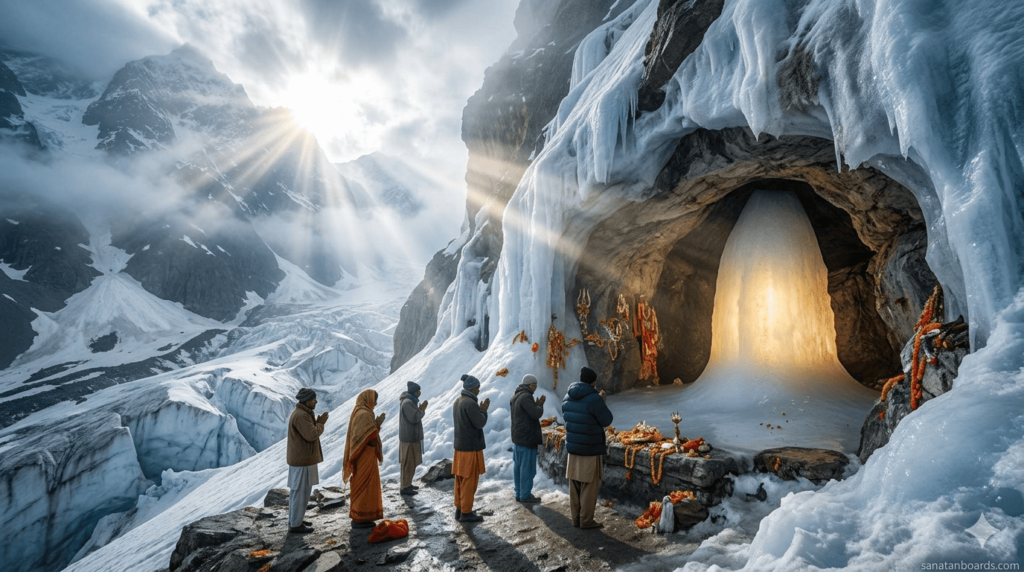
What Is Amarnath Cave (Jammu & Kashmir) – Ice Shiva Linga?
The Amarnath Cave is a natural limestone cave situated in the Himalayan region of Jammu and Kashmir. It is widely known for the naturally formed ice structure inside it, called the Ice Shiva Linga. This ice formation is considered sacred and is worshipped as a representation of Lord Shiva.
The Ice Shiva Linga is formed due to the freezing of water droplets that drip from the cave roof. The size of the ice formation changes with the lunar cycle and seasonal temperature variations. During the pilgrimage season, the ice structure reaches its peak size, attracting devotees who come to offer prayers.
The cave itself is located at a high altitude, surrounded by snow-covered mountains and rugged terrain. The environment is extremely cold, and accessibility is limited to a few months each year, typically during summer when the snow partially melts and routes become passable.
In Hindu mythology, the cave is believed to be the place where Lord Shiva revealed the secret of immortality (Amar Katha) to Goddess Parvati. It is said that the cave was chosen for this divine revelation due to its isolation and purity.
The Ice Shiva Linga is not a man-made idol but a natural formation, which adds to its mystical and spiritual significance. Devotees see it as a living symbol of divine energy that appears and disappears naturally.
The Amarnath Cave thus represents a combination of natural geological processes and deep religious belief. It stands as a unique example where nature and spirituality merge, creating a powerful place of faith and devotion for millions of followers.
Who Is Required Amarnath Cave (Jammu & Kashmir) – Ice Shiva Linga ?
The Amarnath Cave pilgrimage is primarily required or undertaken by devotees of Lord Shiva and followers of Hindu spirituality who seek religious fulfillment, blessings, and spiritual awakening. It is especially significant for individuals who believe in completing sacred pilgrimages as part of their faith practice.
Devotees who are deeply religious often consider visiting the Ice Shiva Linga as an essential spiritual duty. It is believed that witnessing the natural formation brings peace, removes sins, and helps in attaining spiritual growth. Many pilgrims also undertake the journey to fulfill vows or prayers made during difficult times.
Apart from religious devotees, spiritual seekers and travelers interested in Himalayan culture and sacred geography are also drawn to this destination. Researchers and historians study the site for its mythological, cultural, and environmental importance.
The pilgrimage is also significant for people seeking physical and mental endurance challenges. Due to the difficult terrain, high altitude, and harsh weather conditions, the journey requires strong physical fitness and mental determination. Therefore, individuals who are prepared for such demanding conditions are considered suitable for the pilgrimage.
In addition, government authorities, security personnel, and support teams are required to manage the pilgrimage process. They ensure safety, medical assistance, route management, and environmental protection during the pilgrimage season.
Thus, the Amarnath Cave pilgrimage is not limited to religious devotees alone but also involves various groups of people including administrators, researchers, support staff, and adventure seekers. Each group engages with the site in different ways, contributing to its overall significance and functioning.
When Amarnath Cave (Jammu & Kashmir) – Ice Shiva Linga Is Required ?
The Amarnath Cave pilgrimage is required during a specific seasonal period every year, mainly in the summer months when the routes to the cave become accessible. The Ice Shiva Linga naturally forms during this time due to climatic conditions, making it the ideal period for devotees to visit.
Typically, the pilgrimage season begins around June or July and continues until August or early September, depending on weather conditions. During this period, snow along the trekking routes melts partially, allowing pilgrims to travel safely with necessary precautions. Outside this time frame, heavy snowfall and extreme cold make the region inaccessible.
The Ice Shiva Linga is also at its most visible and stable form during this pilgrimage window. As temperatures fluctuate, the ice structure grows and shrinks naturally, but it reaches peak visibility during mid-season. This timing is considered spiritually significant for devotees who plan their journey accordingly.
From a religious perspective, the timing of the pilgrimage is aligned with traditional calendars and auspicious periods. Many devotees choose specific dates based on spiritual beliefs, lunar cycles, or personal vows. Special days such as Shravan month are considered especially important for visiting the shrine.
From an administrative point of view, the pilgrimage is carefully scheduled and regulated by authorities to ensure safety and environmental protection. Permits, registration, and route management are organized in advance to control the flow of pilgrims and avoid overcrowding.
The “when” aspect is also important for logistical planning. Helicopter services, medical camps, security arrangements, and accommodation facilities are all activated during this limited period. Outside this time, such facilities are not operational due to harsh environmental conditions.
Therefore, the Amarnath Cave pilgrimage is required during a narrow seasonal window each year, combining natural accessibility, spiritual timing, and administrative planning to ensure a safe and meaningful experience for pilgrims.
Where Amarnath Cave (Jammu & Kashmir) – Ice Shiva Linga Is Required ?
The Amarnath Cave is located in the northern part of India within the Himalayan mountain range in the Union Territory of Jammu and Kashmir. It lies at a high altitude in a remote and rugged region surrounded by snow-covered peaks, glaciers, and steep valleys.
Geographically, the cave is situated in the Lidder Valley, which is part of the Anantnag district. The region is known for its breathtaking natural beauty, extreme climatic conditions, and challenging terrain. The location is accessible only through designated pilgrimage routes that pass through mountainous trails.
There are two main traditional routes to reach the Amarnath Cave. One route passes through Pahalgam, which is longer but considered more gradual and scenic. The other route passes through Baltal, which is shorter but steeper and more physically demanding. Both routes require trekking through high-altitude paths and temporary camps established during the pilgrimage season.
The cave is surrounded by glaciers and remains covered in snow for most of the year. Due to its altitude, oxygen levels are lower, and weather conditions can change rapidly. This makes the location both spiritually significant and physically challenging.
From a spiritual geography perspective, the cave is considered a sacred Himalayan site where divine energy is believed to reside. Its isolation and natural surroundings contribute to its reputation as a place of meditation and spiritual awakening.
The “where” aspect also includes its administrative location within Jammu and Kashmir, which is governed under Indian administration with special arrangements for pilgrimage management. Temporary infrastructure such as security posts, medical camps, and communication networks are set up during the pilgrimage season to support visitors.
Thus, the Amarnath Cave is not just a physical location but also a symbolic spiritual destination deeply embedded in the Himalayan landscape, combining natural beauty, geographical difficulty, and religious significance.
How Amarnath Cave (Jammu & Kashmir) – Ice Shiva Linga Is Required ?
The process of reaching and experiencing the Amarnath Cave involves careful preparation, physical endurance, and spiritual dedication. The pilgrimage is not a simple journey but a structured process that requires planning and discipline.
First, pilgrims must register through official pilgrimage systems. This ensures regulated movement and safety tracking. After registration, travelers are assigned specific dates and routes for their journey. Medical fitness is often required due to the high altitude and physical difficulty involved.
The journey to the cave typically begins from base camps such as Pahalgam or Baltal. From these points, pilgrims proceed on foot or with the help of ponies, palanquins, or helicopter services for certain segments. The trek involves steep climbs, narrow paths, and unpredictable weather conditions.
Along the route, temporary camps are established to provide food, shelter, and medical assistance. These facilities are managed by authorities and volunteer organizations to ensure the safety and well-being of pilgrims.
As pilgrims approach the cave, they experience decreasing temperatures and increasing altitude challenges. Proper clothing, oxygen support, and hydration are essential for completing the journey safely. Security personnel and rescue teams remain stationed along the route for emergency assistance.
Upon reaching the cave, devotees enter the sacred space to witness the Ice Shiva Linga. The experience is considered highly spiritual, and pilgrims offer prayers, perform rituals, and seek blessings. The time spent inside the cave is usually limited due to crowd control and environmental conditions.
The return journey follows the same routes, often requiring additional caution due to fatigue. Overall, the “how” of the Amarnath Cave pilgrimage involves a combination of physical trekking logistical support, administrative planning, and spiritual devotion.
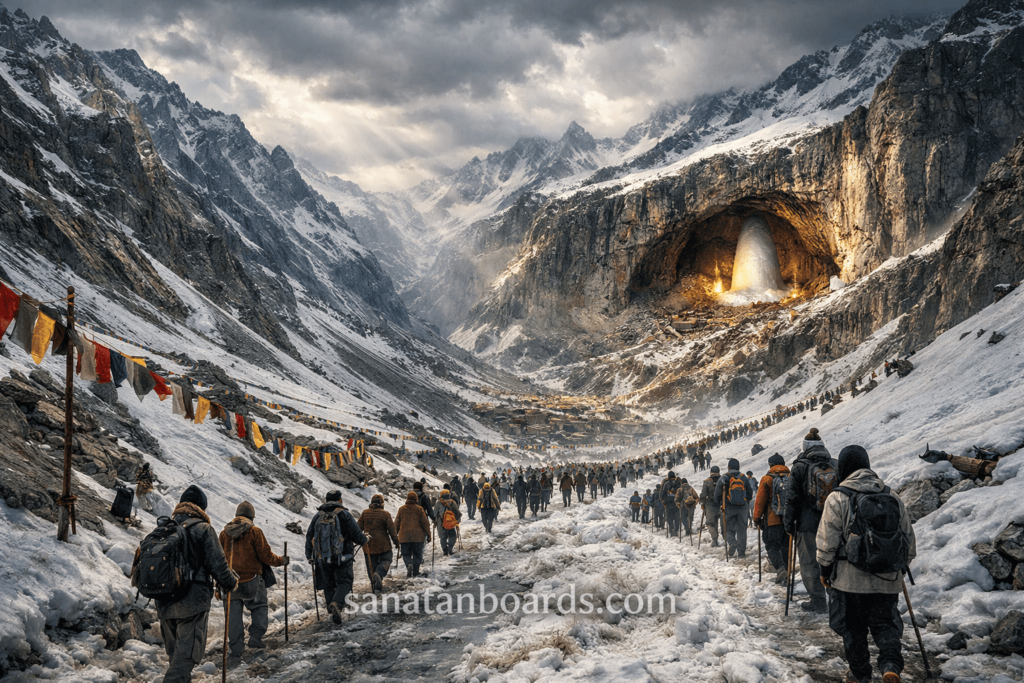
Case Study On Amarnath Cave (Jammu & Kashmir) – Ice Shiva Linga
The Amarnath Cave pilgrimage serves as a significant case study in the intersection of religion, geography, logistics, and environmental management. It demonstrates how a natural phenomenon can evolve into a large-scale pilgrimage system requiring complex coordination.
From a religious perspective, the Ice Shiva Linga represents one of the most powerful symbols of devotion in Hindu tradition. Millions of pilgrims undertake the journey annually, driven by faith and spiritual belief. The case highlights how mythology and natural formations can create sustained cultural practices over centuries.
From a geographical standpoint, the cave is located in one of the most challenging terrains in the Himalayas. The altitude, climate, and accessibility issues make it a difficult destination. Despite this, human adaptation through trekking routes, temporary infrastructure, and technological support has made the pilgrimage possible.
Logistically, the pilgrimage is a massive operation involving government agencies, security forces, medical teams, and volunteers. Temporary towns are created along the route with food, shelter, communication systems, and emergency services. This demonstrates large-scale event management in extreme environments.
Environmental management is another key aspect. The fragile Himalayan ecosystem requires careful monitoring to prevent damage from mass tourism. Waste management, route regulation, and controlled entry are implemented to reduce environmental impact.
Economically, the pilgrimage supports local communities by generating income through transport services, lodging, food supply, and guiding services. It creates seasonal employment opportunities for residents of nearby regions.
However, challenges such as landslides, extreme weather, and health risks remain constant. Authorities continuously improve safety measures, including real-time monitoring systems and weather forecasting support.
This case study shows how a religious site can become a complex system involving multiple stakeholders, including devotees, government bodies, environmental agencies, and local communities. #amarnathcavejammuandkashmir It highlights the importance of balancing faith, safety, and sustainability in managing such a unique pilgrimage destination.
White Paper On Amarnath Cave (Jammu & Kashmir) – Ice Shiva Linga
The Amarnath Cave pilgrimage represents a unique convergence of spiritual heritage, natural geology, and large-scale human movement. A structured analysis reveals the need for sustainable management, improved safety protocols, and long-term environmental protection strategies.
At its core, the Ice Shiva Linga phenomenon is a natural formation influenced by temperature, altitude, and moisture conditions. However, its religious significance transforms it into a major pilgrimage site attracting large crowds annually. This dual nature requires a balanced approach between preservation and accessibility.
One of the primary considerations is safety management. The high-altitude terrain presents risks such as hypoxia, weather instability, and physical exhaustion. Therefore, medical preparedness, emergency evacuation systems, and real-time monitoring are essential components of the operational framework.
Another important factor is crowd management. The limited duration of the pilgrimage season leads to high density of visitors. Controlled registration systems, route allocation, and time-slot management help in reducing congestion and ensuring smoother movement of pilgrims.
Environmental sustainability is also a critical concern. The Himalayan ecosystem is fragile and highly sensitive to human activity. Waste disposal systems, plastic bans, and eco-friendly infrastructure are necessary to minimize ecological impact. Continuous monitoring of environmental indicators ensures long-term preservation of the region.
Infrastructure development plays a key role in supporting the pilgrimage. Temporary bridges, shelters, communication towers, and transportation services are deployed during the season. These must be designed for minimal environmental disruption while ensuring maximum efficiency.
Technological integration is increasingly important. Satellite communication, GPS tracking, weather forecasting systems, and emergency alert networks enhance safety and coordination. These tools help authorities respond quickly to changing conditions.
From a governance perspective, collaboration between multiple agencies is essential. Coordination among security forces, local administration, health departments, and disaster management teams ensures smooth operations.
The white paper also highlights the importance of community involvement. Local populations play a vital role in providing services and maintaining cultural continuity. Their participation ensures economic benefits and strengthens regional development.
In conclusion, the Amarnath Cave pilgrimage requires a multi-dimensional management strategy that integrates spirituality, safety, sustainability, and technology. #Sanatanboardsinvasai A structured framework ensures that the pilgrimage continues safely while preserving the natural and cultural heritage of the region.
Industry Application On Amarnath Cave (Jammu & Kashmir) – Ice Shiva Linga
The Amarnath Cave pilgrimage and the naturally formed Ice Shiva Linga have significant industry applications across multiple sectors including tourism, infrastructure, logistics, healthcare, technology, environmental management, and public administration. This pilgrimage system acts as a real-world operational model for managing large-scale human movement in extreme geographical conditions.
In the tourism industry, the Amarnath pilgrimage is a major example of religious tourism combined with adventure tourism. It generates seasonal economic activity involving travel operators, transport services, accommodation providers, and local guides. The structured flow of pilgrims creates a model for managing high-demand tourism in sensitive ecological regions while maintaining controlled access and safety.
The infrastructure industry benefits from continuous development of temporary and semi-permanent facilities in high-altitude environments. This includes construction of trekking routes, ropeways, bridges, resting shelters, and base camps. Engineering solutions developed here are often studied for application in other mountainous or disaster-prone regions, where traditional construction is difficult.
In the logistics and supply chain sector, the pilgrimage is a complex case of delivering essential goods such as food, medical supplies, fuel, and equipment to remote locations under unpredictable weather conditions. Efficient coordination between multiple agencies provides insights into disaster logistics and remote area supply chain management.
The healthcare industry plays a critical role through high-altitude medical camps, emergency response systems, oxygen supply units, and evacuation protocols. These systems serve as a model for managing altitude sickness, trauma care, and emergency healthcare delivery in isolated regions.
The technology sector is increasingly involved through the use of GPS tracking, satellite communication, weather forecasting systems, surveillance drones, and digital registration platforms. These technologies enhance safety, crowd control, and real-time decision-making during the pilgrimage season.
In the environmental management sector, the pilgrimage highlights the need for sustainable practices in fragile ecosystems. Waste management systems, plastic control measures, and ecological monitoring are implemented to reduce environmental impact. These practices are studied for replication in other environmentally sensitive zones.
The security and disaster management industry also draws valuable lessons from the pilgrimage. Crowd control strategies, emergency evacuation planning, and risk management protocols developed for this event are applicable to large public gatherings and disaster response scenarios.
Overall, the Amarnath Cave pilgrimage serves as a multi-industry operational model that integrates spirituality with modern management systems, #Sanatanboardsinmumbai offering valuable insights for development, sustainability, and large-scale coordination in challenging environments.
source : Shri Amarnath Ji Yatra
ASK FAQ
1. What is Amarnath Cave and Ice Shiva Linga?
Amarnath Cave is a sacred Hindu shrine in Jammu & Kashmir where a naturally formed ice structure is worshipped as the Ice Shiva Linga, symbolizing Lord Shiva.
2. Where is Amarnath Cave located?
Amarnath Cave is located in the Himalayan region of Anantnag district, Jammu & Kashmir, India, at a high altitude surrounded by snow-covered mountains.
3. Why is the Ice Shiva Linga famous?
The Ice Shiva Linga is famous because it forms naturally inside the cave and is believed to represent Lord Shiva, attracting thousands of pilgrims every year.
4. When does Amarnath Yatra take place?
The Amarnath Yatra usually takes place between June and August, when the cave becomes accessible due to melting snow.
5. How do pilgrims reach Amarnath Cave?
Pilgrims reach Amarnath Cave by trekking from Pahalgam or Baltal routes, or by using ponies, palanquins, and helicopter services during the pilgrimage season.
Table of Contents
Disclaimer
The information provided above is intended for educational, informational, and general knowledge purposes only. It is based on widely known cultural, geographical, and traditional references related to the Amarnath Cave and its significance. Readers are advised to refer to official sources and authorized guidelines for pilgrimage planning, travel arrangements, and safety instructions.