Aditya Chola I, often referred to as ADITYAN CHOLA, was one of the most influential kings of the Chola Empire, a powerful dynasty that emerged in southern India in the early medieval period. He lived during the late 9th and early 10th centuries CE, and his reign from roughly 871 CE to 907 CE marked a turning point in the history of the Cholas. While his father Vijayalaya Chola revived the Chola dynasty by capturing Thanjavur, it was Aditya Chola I who gave the dynasty its early imperial character by expanding its territories and establishing Chola supremacy in the region.
ADITYAN CHOLA’s rule is often viewed as the foundation of the Medieval Chola Empire. Prior to his leadership, the Cholas had emerged from a period of relative obscurity following several centuries of diminished influence. The political landscape of South India at that time was dominated by larger regional powers such as the Pallavas, Pandyas, and Rashtrakutas, all of which exerted significant influence over southern territories. ADITYAN CHOLA navigated this complex political terrain through military skill, strategic alliances, and administrative reforms, enabling the Cholas to assert control over rival kingdoms and consolidate power throughout Tamilakam and beyond.
Under his leadership, the Chola realm expanded to include regions such as Tondaimandalam and Kongu Nadu, territories previously under Pallava and Pandya influence. ADITYAN CHOLA’s victories over the Pallavas in particular marked the decline of one of the oldest ruling houses of South India and set the stage for a period of sustained Chola dominance.
His legacy is significant because it paved the way for later rulers like Parantaka I, Rajaraja Chola I, and Rajendra Chola I, who would build upon the foundation he established to create one of the most powerful and far‑reaching empires in Indian history.
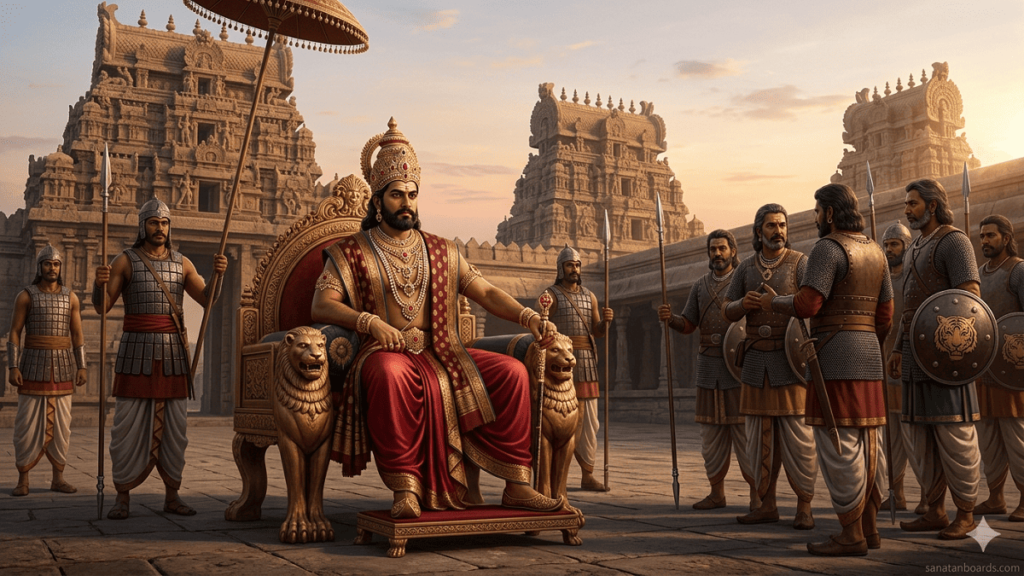
What Is Adityan Chola ?
ADITYAN CHOLA, historically known as Aditya Chola I, was a monarch of the Chola dynasty, an ancient Tamil royal family that ruled parts of southern India. He ascended the throne around 871 CE, succeeding his father Vijayalaya Chola, who had revived the Chola power base by capturing the city of Thanjavur. While Vijayalaya laid the groundwork for the Chola resurgence, Aditya Chola I transformed the kingdom’s potential into real political and military strength.
Aditya Chola I was more than a local king; he became a formative emperor. His reign signifies a major shift in South Indian politics, where the Cholas began consolidating territory, defeating rivals, and asserting imperial authority. ADITYAN CHOLA’s title often included royal honorifics and traditional dynastic designations such as “Parakesarivarman” and “Rajakesari Varman,” reflecting his dual roles as warrior king and sovereign leader.
One of his most notable achievements was his strategic involvement in the Battle of Thirupurambiyam (878 CE), where he aligned with the Western Ganga king to defeat the Pandya forces. This victory significantly weakened the Pallava influence in the region and enhanced Chola prestige. Later, ADITYAN CHOLA launched direct campaigns against the Pallavas, ultimately leading to the capture of Tondaimandalam and the annexation of their territories.
Beyond military achievements, ADITYAN CHOLA played a crucial role in strengthening the administrative structures of the empire. He invested in infrastructure, such as repairing major highways that linked different parts of the kingdom and improved internal cohesion.
Who Is Required Adityan Chola ?
Understanding who might require knowledge of ADITYAN CHOLA involves recognizing the broad impact his life and reign have on various fields of study and interest. Scholars and students of South Asian history, particularly those focused on medieval India, find ADITYAN CHOLA’s life and actions a central part of understanding how one of India’s most influential empires came into being. Historians use his example to analyze how political power shifted in southern India during the 9th century, from fragmented regional polities to more consolidated empires.
Researchers of military history also look to ADITYAN CHOLA because his campaigns demonstrate early forms of organized warfare, alliance building, and strategic regional control that defined medieval South Indian battle practices. The Battle of Thirupurambiyam, where he helped subdue Pandya power and weaken the Pallavas, is a key subject in understanding military tactics and diplomacy of the era.
Students and enthusiasts of political science often study his reign to understand the mechanics behind transition periods — from resurgence after decline to the establishment of a structured state. ADITYAN CHOLA’s era presents an early example of statecraft amidst multiple competing states, balancing military force with administrative reforms to achieve greater territorial unity.
Cultural historians and those interested in temple architecture find relevance in ADITYAN CHOLA’s rule because the period marks early temple patronage in the Chola tradition, which later culminated in grand architectural achievements under subsequent rulers.
Finally, general readers in India and beyond who are curious about the historical roots of Indian Civilization benefit from learning about ADITYAN CHOLA. His story bridges ancient regional kingdoms and the later expansive and internationally influential Chola Empire, touching upon themes of leadership, resilience, and legacy that resonate with many.
When Adityan Chola Is Required
ADITYAN CHOLA’s significance arises primarily in the context of historical study, cultural research, and regional politics of medieval South India. His reign, spanning approximately 871 CE to 907 CE, marks a transitional period where the Chola dynasty transformed from a small regional power into a formidable empire. The study of ADITYAN CHOLA is required whenever there is a need to understand the early foundations of the Chola Empire, which later became one of the most expansive and influential dynasties in Indian history.
In terms of military history, ADITYAN CHOLA’s campaigns are critical to examine. Historians, military analysts, and students studying South Indian warfare require insights into the Battle of Thirupurambiyam (c. 878 CE), where his leadership helped defeat the Pandya forces and weakened Pallava dominance. This battle is often cited as a turning point that allowed the Cholas to gain control over Tondaimandalam and consolidate power across Tamilakam. By studying ADITYAN CHOLA’s military strategies, modern scholars gain perspective on medieval battle tactics, coalition building, and territorial expansion.
ADITYAN CHOLA’s era is also required when exploring administrative evolution. During his reign, he strengthened the governance structures inherited from his father Vijayalaya Chola. Records show he focused on tax collection, infrastructure development, and local administration, establishing practices that would support the Chola Empire’s later prosperity. Anyone analyzing how early medieval South Indian states managed resources and maintained stability will find his rule highly relevant.
Cultural and architectural studies also highlight the period of ADITYAN CHOLA. His reign marked early temple patronage in the Chola tradition, laying the groundwork for the monumental architecture under rulers like Rajaraja Chola I. Thus, historians and archaeologists require this period to trace the origins of temple architecture, regional art forms, and religious influence in Tamil society.
Finally, ADITYAN CHOLA’s legacy is required for understanding lineage and succession. Later Chola rulers built upon his accomplishments, and his reign provides essential context for analyzing the dynasty’s sustained dominance. For anyone studying historical continuity, political strategy, or leadership patterns, ADITYAN CHOLA’s reign serves as a foundational reference.
Where Adityan Chola Is Required ?
ADITYAN CHOLA is particularly required in contexts related to southern India, especially the regions historically under the Chola dynasty. The most relevant areas include Thanjavur, which was the Chola capital, as well as Kongu Nadu, Tondaimandalam, and parts of modern-day Tamil Nadu where he extended Chola influence. These regions provide geographical and archaeological evidence of ADITYAN CHOLA’s campaigns, governance, and temple patronage.
Scholars of Indian history and culture require this information in academic institutions, museums, and cultural heritage sites, particularly those preserving records from the Chola period. The reign of ADITYAN CHOLA is critical when examining early medieval South Indian political geography, as his military campaigns and administrative reforms shaped the boundaries and governance structures of Tamilakam.
Cultural institutions, such as temples, inscriptions, and local heritage boards, also rely on understanding ADITYAN CHOLA. Many stone inscriptions and temple relics from the 9th century CE directly reflect his reign, making his study essential for archaeology, epigraphy, and preservation efforts.
In a broader sense, ADITYAN CHOLA is required wherever there is a focus on studying the roots of South Indian dynastic power, early state formation, and cultural evolution. His reign is referenced across historical texts, research publications, and regional histories, making knowledge of his contributions relevant wherever a comprehensive understanding of the Chola Empire is necessary.
How Adityan Chola Is Required ?
Understanding how ADITYAN CHOLA is required involves examining the methods through which his historical significance is applied. First and foremost, his reign serves as a case study in early imperial expansion. Military historians and political analysts study his strategies in campaigns against the Pallavas and Pandyas to understand how small kingdoms can evolve into enduring empires through alliance-building, strategic warfare, and administrative consolidation. (india123.co.in)
In academic research, ADITYAN CHOLA is required as a reference point in epigraphy, archaeology, and cultural studies. Inscriptions from his period, found in temples and historical sites, provide insights into tax systems, land grants, religious patronage, and local governance. These records help scholars reconstruct political hierarchies and societal organization during his reign.
ADITYAN CHOLA is also required in pedagogical frameworks, where students of history analyze his reign to understand medieval South Indian politics, economics, and culture. His contributions to temple construction and early Chola administration form part of curricula that examine state-building and cultural influence in pre-modern India.
Culturally, ADITYAN CHOLA is required to trace the origins of Chola temple architecture, religious endowments, and artistic traditions. By studying his support for temples and cultural institutions, historians, architects, and art scholars understand the evolution of Dravidian architecture and regional cultural identity.
Finally, ADITYAN CHOLA is required in heritage preservation and public awareness efforts. Modern historians and local communities use his reign to highlight regional pride, historical continuity, and contributions of Tamil rulers to India’s rich historical tapestry. His reign offers a framework for understanding the roots of political, cultural, and architectural development in southern India, which continues to influence research and public discourse.
Case Study On Adityan Chola
Background and Context
Aditya Chola I, also known by titles such as Rajakesari Varman and Kodandarama, was the king of the Chola Empire from about 871 CE to 907 CE. He was the son and successor of Vijayalaya Chola, the ruler who reestablished Chola power by capturing Thanjavur and laying the early foundation of the medieval Chola dynasty. At the time of his accession, the Chola kingdom was limited in territory and political influence compared with its neighbours — the Pallavas, Pandyas, and Rashtrakutas — but possessed strategic potential in the fertile Tamil region of the Kaveri delta.
Military Strategy and Key Campaigns
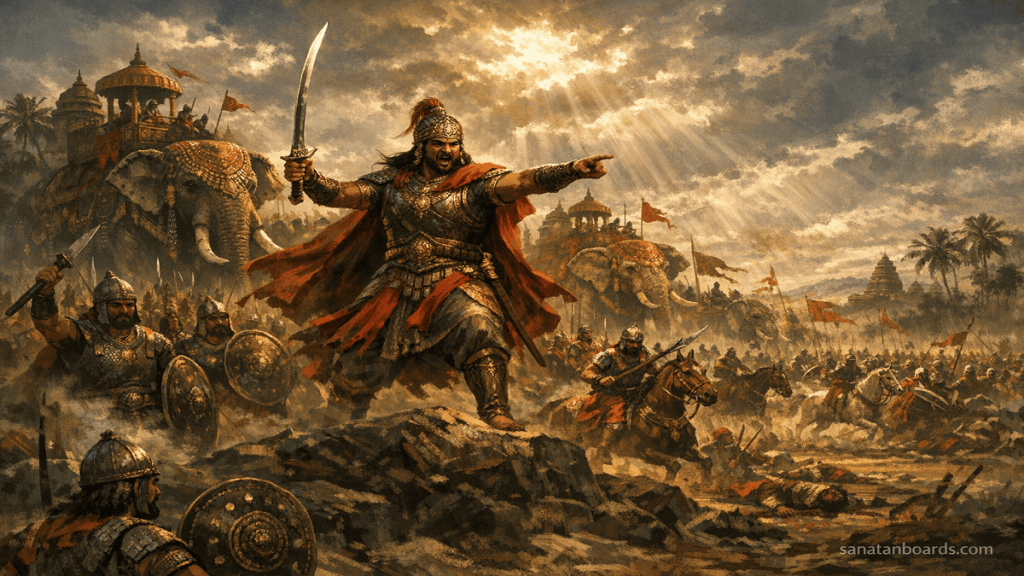
One of the most important aspects of Aditya Chola’s rise was his role in the Battle of Thirupurambiyam in 878 CE, a critical conflict that shaped the future course of South Indian history. In this battle, the Chola forces joined with Western Ganga allies to confront the invading Pandyas. Although the Ganga king Prithvipati I was killed in the battle, the allied forces defeated the Pandyan army, which significantly weakened Pallava control in the region and provided the Cholas with an opportunity to expand their power.
After establishing military strength, Aditya Chola launched targeted campaigns against the Pallava kingdom, which had long dominated northern Tamil regions such as Tondaimandalam (around modern Kanchipuram) and the broader Coromandel Coast. Around 897 CE, after years of careful strategic preparation and gradual expansion, Aditya Chola defeated and killed Aparajita Pallava, the last effective ruler of the Pallava line, and annexed their territories. This victory marked the end of the Pallava dynasty and a major shift in regional power dynamics, positioning the Cholas as the dominant force in South India.
Aditya also expanded Chola influence into Kongu Nadu and obtained tribute and allegiance from several smaller chieftains, including Feudatory powers in the Kongu and Kaveri valleys. These expansions created a territorial base that future emperors would build upon.
Administration and Governance
Although military success is often the highlight of his reign, Aditya Chola also worked to consolidate his conquests through effective administration. Inscriptions from his time indicate efforts to improve infrastructure, such as the repair and maintenance of major trade and military roads connecting different parts of the kingdom. One such route was the Rajakesari Peruvazhi, which linked Chera Nadu (western Tamil regions) with Kongu Nadu, facilitating commerce, communication, and troop movements.
Under Aditya’s rule, local governance structures such as nattars (local assemblies) and village councils began to play formalized roles in revenue collection and regional oversight. This localized system of governance later became characteristic of the Chola administrative model and was expanded and perfected by subsequent rulers.
Cultural and Religious Patronage
Religious patronage was another dimension of Aditya’s leadership. While his reign did not produce monumental temple architecture on the scale of later Chola kings like Rajaraja I, inscriptions from the period show his support for temple construction and maintenance, particularly Shiva temples in the fertile Kaveri valley. These acts of patronage strengthened his political legitimacy and fostered cultural continuity.
Legacy and Succession
Aditya Chola’s death in 907 CE occurred at Tondaimanarrur, and he was succeeded by his son Parantaka Chola I, who continued expanding the empire and consolidating east and south Indian territories. His achievements are widely recognized as laying the critical infrastructure — military, administrative, and political — upon which later Chola emperors built one of the most extensive and powerful empires in South Asian history.
Significance in Historical Perspective
As a case study, Aditya Chola exemplifies how a relatively modest regional kingdom can, through strategic governance, military alliance, and #sanatandharmaaccreditationboardsinmumbai focused campaigns, challenge established powers and establish a new imperial order. His transition from a chieftain inheriting a small kingdom to an emperor consolidating territory reflects broader patterns in medieval Indian state formation, where diplomacy, warfare,#sanatandharmaaccreditationboardsinvasai and administrative innovation interplayed to shape long‑lasting dynasties.
White Paper On Adityan Chola
Executive Summary
This white paper examines the reign, strategies, and lasting impact of ADITYAN CHOLA (Aditya Chola I), second ruler of the medieval Chola dynasty, whose leadership between 871–907 CE positioned the Chola Empire as an emergent imperial power in southern India. By analyzing military campaigns, governance structures, economic frameworks, and cultural investments, this paper assesses how his reign contributed foundational elements to later Chola supremacy.
Historical Context
Prior to Aditya Chola’s rule, the Cholas had experienced a resurgence under his father Vijayalaya, who recaptured the city of Thanjavur and reasserted dynastic identity following a long period of diminished influence. Southern India in the 9th century was a fractious political landscape with competing powers — Pallavas in the north, Pandyas in the south, and occasional influence from northern dynasties like the Rashtrakutas. Aditya inherited a kingdom poised between resurgence and vulnerability.
Strategic Military Expansion
A defining feature of ADITYAN CHOLA’s rule was his systematic expansion of Chola territory. His involvement in the Battle of Thirupurambiyam in 878 CE was a strategic masterstroke that weakened the Pallava position and enabled Chola influence to grow. By aligning with the Western Ganga forces and confronting the Pandyas, Aditya not only demonstrated tactical skill but also legitimacy as a power capable of shaping regional dynamics.
Subsequent campaigns directly targeted the Pallava kingdom. In about 897 CE, Aditya defeated and killed Aparajita Pallava, effectively ending the Pallava dynasty’s domination and annexing Tondaimandalam into Chola territory. These victories laid the groundwork for future expansions under his successors.
Administrative Framework
Beyond conquest, Aditya Chola strengthened the administrative mechanisms needed for sustained governance. Roads like Rajakesari Peruvazhi, which linked key regions, played dual roles in commerce and military logistics. His administration incorporated localized governance units such as nattars and village councils, which enhanced stability and tax collection. These systems eventually defined the efficient Chola bureaucratic model that later facilitated long‑term territorial cohesion across the empire.
Economic Policies
While direct evidence of economic policies from his reign is limited, inscriptions and regional records suggest that Aditya Chola placed importance on agricultural productivity, trade connectivity, and infrastructure. The fertile Kaveri delta remained the core of Chola wealth, providing surplus resources that undergirded military campaigns and cultural projects. Trade routes linking inland regions with ports facilitated internal markets and fostered economic resilience.
Cultural Impact
Although not as renowned for grand architectural monuments as later Cholas, ADITYAN CHOLA’s support for temples and religious institutions contributed significantly to regional cultural consolidation. Temples were not merely religious centers but served as hubs of economic activity, land management, and artistic production — functions that enhanced social cohesion and centralized royal authority.
Risk Management and Strategic Diplomacy
Aditya’s engagement with powerful neighbours demonstrated pragmatic diplomacy and calculated military risk. Collaboration with the Western Ganga and others helped offset the strength of rivals. His ability to pivot from subordinate alliances with Pallavas to direct confrontation showcases a nuanced understanding of realpolitik — an ability that future Cholas continued to refine.
Legacy and Forward Influence
The reign of ADITYAN CHOLA set the stage for the golden era of Chola dominance under rulers like Parantaka I, Rajaraja I, and Rajendra I. Parantaka, his son and successor, further expanded influence across southern India, while Rajaraja and Rajendra later extended it to parts of Sri Lanka and Southeast Asia. The foundational systems initiated by Aditya underpinned institutional continuity throughout the empire’s zenith.
Conclusions
Aditya Chola I’s rule represents a pivotal period in the political consolidation of South India. His achievements in military expansion, #adityacholaempireinindia administrative structuring, economic integration, and cultural patronage collectively contributed to the emergence of the Chola Empire as a dominant regional power. By blending #adityancholaleadership strategic foresight with governance reforms, ADITYAN CHOLA exemplified the transformation from regional leadership to enduring imperial authority.
Industry Application On Adityan Chola
While ADITYAN CHOLA lived in the 9th–10th century CE, the concepts and strategies from his reign offer lessons that resonate in modern organizational leadership, strategic planning, and governance models. Below are key applications in current contexts:
1. Strategic Leadership and Expansion
Aditya Chola’s approach to territorial expansion — combining alliances, timing, and decisive action — mirrors how businesses and organizations pursue growth:
- Alliances and partnerships: Just as Aditya Chola formed alliances to challenge larger rivals, modern enterprises collaborate through strategic partnerships to enter new markets or compete with established players.
- Incremental Consolidation: Rather than overextending, Aditya focused first on weakening dominant powers, then expanding territorially. Similarly, companies often expand regionally before scaling globally, ensuring core stability before riskier ventures.
In leadership terms, this emphasizes readiness, adaptability, and timing — pillars of strategic growth.
2. Governance and Decentralized Administration
The Chola system under Aditya emphasized local autonomy through nattars and community councils, facilitating efficient resource management:
- Decentralized decision‑making: Modern organizations benefit when decision‑making authority is distributed — for example, empowering regional managers or business units to respond quickly to local needs.
- Infrastructure support: Aditya’s investment in transportation routes parallels today’s focus on digital infrastructure and supply chain frameworks that support scalable operations.
This teaches that centralized strategic vision combined with decentralized execution enhances responsiveness and resilience.
3. Infrastructure and Connectivity
Aditya’s emphasis on infrastructure — including roadways linking regions — highlights connectivity as a foundation for economic integration:
- IT and Physical Infrastructure: In modern industry, robust digital networks, logistics, and transportation systems are crucial for seamless operations across markets.
- Sustainable Growth: Like ancient road networks that facilitated trade and mobility, contemporary investments in connectivity (data networks, highways, smart cities) enable scalable growth and competitive advantage.
4. Cultural Investment and Identity
Cultural patronage under Aditya Chola helped legitimize and unify the empire’s identity:
- Brand and Culture Building: Organizations today cultivate strong internal cultures and external brand identities to align stakeholders and build loyalty.
- Corporate Social Impact: Supporting arts and community projects strengthens public engagement — similar to how temple patronage reinforced social cohesion and royal legitimacy in ancient times.
5. Diplomacy and Stakeholder Engagement
Aditya Chola’s balanced diplomacy with stronger neighbours is analogous to businesses managing stakeholder relations:
- Negotiation and Alliances: Businesses must manage relationships with regulators, larger competitors, and community partners — much like Aditya balanced alliances and rivalries.
- Risk Mitigation: Proactive diploma , like forming alliances or entering cooperative agreements, reduces risk and builds mutual capacity.
6. Strategic Legacy Planning
Aditya’s legacy shows how foundational strategic choices benefit future leadership:
- Succession Planning: Modern organizations emphasize leadership development and transition planning to sustain long‑term growth.
- Institutional Memory: Documenting processes and decision frameworks — akin to inscriptions and administrative records in the Chola period — preserves organizational wisdom and continuity.
SOURCE : Time Traveller
ASK FAQ
Who was ADITYAN CHOLA?
ADITYAN CHOLA, also known as Aditya Chola I, was a 9th-century king of the Chola dynasty who expanded the empire, defeated the Pallavas, and laid the foundation for Chola supremacy in South India.
When did ADITYAN CHOLA rule?
He ruled approximately from 871 CE to 907 CE, succeeding his father Vijayalaya Chola and consolidating early Chola power.
What were the major achievements of ADITYAN CHOLA?
His key achievements include victory in the Battle of Thirupurambiyam, annexation of Pallava territories, territorial expansion into Tondaimandalam and Kongu Nadu, and early temple patronage.
How did ADITYAN CHOLA contribute to the Chola Empire?
He strengthened military, administrative, and cultural foundations, creating a stable base for future rulers like Parantaka I and Rajaraja Chola I to expand the empire further.
Where can ADITYAN CHOLA’s influence be seen today?
His influence remains in southern India, particularly Tamil Nadu, through inscriptions, temple heritage, historical studies, and the lasting legacy of the Chola administrative and cultural systems.
Table of Contents
Disclaimer: The content presented in this blog is intended for informational purposes only and is based on historical records, inscriptions, and scholarly sources related to ADITYAN CHOLA (Aditya Chola I) and the Chola Empire. While every effort has been made to ensure the accuracy and reliability of the information, historical interpretations may vary due to differences in sources, translations, and scholarly research. Readers are encouraged to consult primary historical texts, archaeological findings, and expert publications for detailed study. The blog does not constitute professional, legal, or academic advice and is provided solely for general knowledge and reference purposes.