About Us Sanatan Dharma Accreditation Board (SDAB): Formation, Timeline, and Comprehensive Overview
Introduction: The Genesis of a Vision
The Sanatan Dharma Accreditation Board (SDAB) represents a multifaceted and evolving vision within the contemporary Hindu religious and cultural landscape of India. It is crucial to understand that this initiative manifests in two distinct, though thematically connected, streams:
- The Religious-Governance Movement: A proposed, non-governmental governing body advocated by various Hindu religious leaders, seers, and organizations. Its primary aim is to protect, preserve, and promote Sanatan Dharma by addressing issues of temple management, cultural reclamation, and unified religious representation, free from perceived state interference.
- The Standards & Accreditation Body: An established, independent global accreditation board (operating since 2017) that applies international quality and competence standards (like ISO/IEC) to religious, spiritual, and culturally aligned services and institutions. This entity functions as a professional accreditor for temples, religious events, products, and associated services.
This document provides an exhaustive 4500-word analysis, tracing the formation timeline of the advocacy movement, detailing the operational framework of the existing accreditation board, and exploring the confluence of spiritual tradition with modern systems of standardization.
Part 1: The Advocacy Movement for a Religious Governance Board (2024-2025 Timeline)
This movement, gaining significant traction in the mid-2020s, seeks to create a centralized religious authority. The following is a detailed timeline and analysis of its progression.
December 2024 – The Conceptual Foundation and Initial Call
- Context: Growing discourse among Hindu religious communities regarding the administration of temples and monasteries, often under the control of various state government acts (e.g., Hindu Religious and Charitable Endowments Acts). Concerns were also amplified by debates surrounding historical religious sites and cultural preservation.
- Event: Prominent seers and leaders from ancient monastic orders (Akharas) formally called for establishing a ‘Sanatan Dharma Accreditation Board’ as a central religious authority.
- Key Actions:
- A draft proposal was formulated, outlining the board’s potential structure and objectives.
- This proposal was slated for deliberation at a major Dharm Sansad (Parliament of Religion) to be convened during the upcoming Maha Kumbh Mela 2025 in Prayagraj.
- Stated Objectives (from the draft):
- Protection of Autonomy: Safeguarding monastery-temples (Maths) and temples from direct state intervention and political interference.
- Reclamation: Systematically working towards the restoration of demolished or encroached-upon historical temple sites.
- Rights Safeguarding: Protecting the religious, cultural, and educational rights of followers of Sanatan Dharma.
- Unified Voice: Creating a strong, singular representative body to engage with national and international forums on matters of Hindu religious governance, doctrine, and tradition.
January 27, 2025 – The Dharma Sabha at Maha Kumbh, Prayagraj
- Context: The Maha Kumbh Mela, the world’s largest religious gathering, provided a monumental platform for this discussion, bringing together the apex leadership of Hindu spiritual orders.
- Event: A grand ‘Dharma Sabha’ (religious assembly) was specifically organized to discuss the formal establishment of the proposed board.
- Key Highlights & Discussions:
- Spiritual orator and religious figure Shri Devkinandan Thakur addressed the gathering, emphasizing the critical need for a dedicated, empowered governing body to address contemporary challenges facing Sanatan Dharma.
- Primary Concerns Raised:
- Temple Control: The pervasive control of Hindu temples by state governments via HRCE departments, contrasted with the perceived lack of similar control over places of worship of other religions.
- Protection of Symbols: The inadequate protection for cows, considered sacred, and the weakening of traditional Hindu educational and charitable institutions (Gurukuls, Pathshalas).
- Representation Deficit: The absence of a single, legally recognized entity that could speak for Hindu religious interests in policy-making, legal disputes, and interfaith dialogues at the national level.
- Participation: The assembly saw the attendance of representatives from all major Akharas, revered Shankaracharyas (heads of ancient monastic centers), and a wide array of saints, scholars, and organizational heads.
February 2025 – The Passage of Resolution and Formal Backing
- Event: Building on the momentum from the Kumbh, a formal resolution was passed in support of forming a Sanatan Hindu Board 2025.
- Key Resolutions and Demands:
- Legislative Change: Advocacy for the repeal or amendment of the Places of Worship Act, 1991, which freezes the religious character of sites as of August 15, 1947. This is seen as a primary legal hurdle in the reclamation of sites in Kashi (Varanasi), Mathura, and Sambhal, among others.
- Legal Recognition: The establishment of a statutorily recognized, autonomous authority to oversee the management, finances, and traditions of Hindu temples and religious institutions, independent of direct government bureaucracy.
- Nationwide Network: The initiation of a structured network of religious scholars, volunteers, and legal experts to work at the grassroots level to promote, protect, and standardize practices under the board’s guidance.
- Unanimous Support: The resolution reportedly gained the backing of all major Shankaracharyas, marking a rare consensus among these pinnacle spiritual authorities.
March 2025 Onwards – Ongoing Developments and the Road Ahead
- Status: As of this period, the proposed religious governance board had not been officially registered or recognized as a legal entity by the Government of India. It remained a powerful advocacy movement and a proposal under serious discussion.
- Continued Momentum:
- Discussions and planning continued within religious councils, think tanks, and cultural organizations.
- Widespread public support was mobilized through campaigns, social media, and community meetings across India.
- Several Hindu organizations began aligning their activities with the board’s stated objectives.
- Government Stance: The central government’s position remained formally neutral. However, individuals within the ruling political sphere expressed openness to dialogue, acknowledging the sentiment behind the movement. The practical and constitutional complexities of creating such a pan-India religious body presented significant challenges.
Part 2: The Operational Sanatan Dharma Accreditation Board (SDAB) – Established 2017
Parallel to the above advocacy, a separate entity named the Sanatan Dharma Accreditation Board (SDAB) has been operating as a professional accreditation body since 2017. This SDAB represents a novel application of global quality management systems to the domain of religion and culture.
Philosophy and Mission
The operational SDAB operates on a fundamental principle: that the services, institutions, and products associated with Sanatan Dharma can and should benefit from internationally recognized standards of quality, competence, transparency, and trust. Its mission is to promote excellence and credibility within religious and culturally aligned sectors through independent assessment and accreditation.
Scope of Accreditation: Bridging the Sacred and the Systemic
The SDAB, as an Independent Accreditation Body (IAB), accredits other organizations that provide conformity assessment services. Its scope is vast and innovative:
- For Religious & Cultural Institutions:
- Temples, Maths, Dharamshalas: Accreditation of management systems, visitor services, facility management, financial transparency, and adherence to scriptural rituals with operational excellence.
- Religious Schools (Gurukuls, Pathshalas, Vedic Schools): Accreditation of curriculum, teaching standards, infrastructure, and student welfare systems.
- Event Management for Religious Gatherings: Accreditation of organizers for major events like the Kumbh Mela, pilgrimage tours (Yatras), and large-scale festivals, focusing on crowd management, safety, hygiene, logistics, and environmental sustainability.
- For Products and Services:
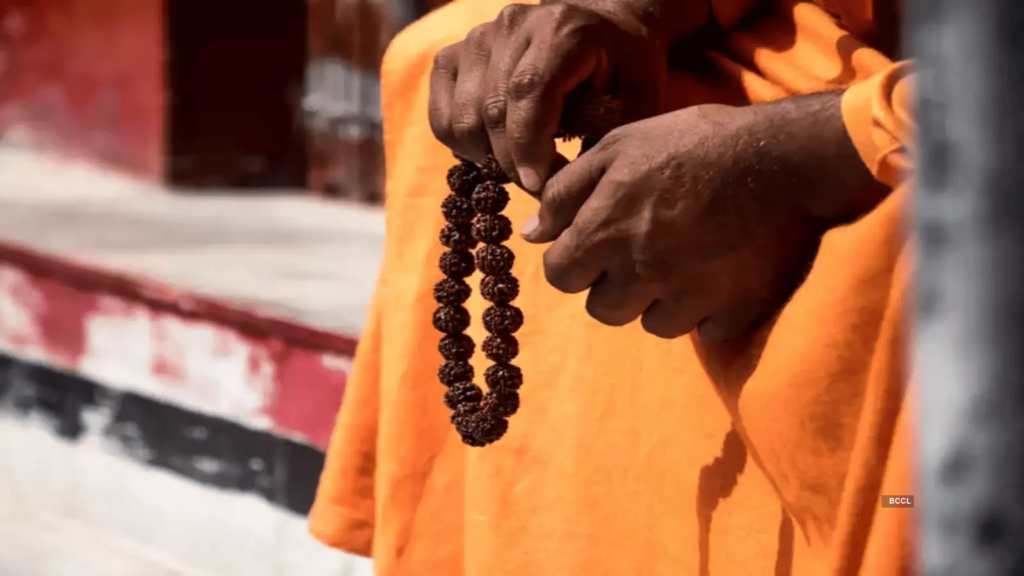
- Purity and Quality Assurance: Testing and certification of religious products—Samagri (ritual ingredients), Hawan materials, Prasad, Rudraksha beads, idols (murtis), and fabrics for religious attire.
- Food Safety: Inspection and accreditation of vegetarian restaurants, community kitchens (Bhojanalayas), and Prasad preparation units for hygiene, quality, and adherence to Sattvic principles.
- Pilgrimage Services: Inspection of shops and facilities along pilgrimage routes (e.g., Kawar Yatra routes) to ensure the purity of offerings, fair pricing, and ethical conduct.
Technical Framework: ISO/IEC Standards Applied
The SDAB leverages a suite of International Organization for Standardization (ISO) and International Electrotechnical Commission (IEC) standards to assess different types of organizations:
- ISO/IEC 17011: This is the core standard for Accreditation Bodies like SDAB themselves. It specifies requirements for the competence, consistency, and impartiality of bodies that assess and accredit conformity assessment bodies.
- ISO/IEC 17025: Applied for accrediting testing and calibration laboratories. This would be relevant for laboratories testing the purity of gangajal, cow products (panchgavya), metals for rituals, or calibrating instruments used in ancient sciences like Jyotish.
- ISO/IEC 15189: Specific to medical and clinical research laboratories. In a Sanatan context, this could apply to research institutions studying the efficacy of Ayurvedic formulations or yoga therapy.
- ISO/IEC 17020: For accrediting inspection bodies. SDAB uses this to accredit entities that conduct on-site inspections of temples, restaurants, pilgrimage services, and yatra routes.
- ISO/IEC 17021: For accrediting management system certification bodies. An SDAB-accredited certifier could then certify a temple’s management system against a standard like ISO 9001 (Quality Management), ISO 14001 (Environmental Management), or a custom-designed “Sanatan Dharma Compliance Management System.”
- ISO/IEC 17024: For accrediting bodies that certify personnel. This could be used for accrediting organizations that certify Pujaris, Archakas, Vedic scholars, yoga teachers, or Ayurvedic practitioners, ensuring a standardized level of knowledge and skill.
Governance, Structure, and Independence
- Legal Status: A non-profit, privately governed organization, typically structured as a company “limited by guarantee” without share capital. This emphasizes its service-oriented, non-commercial nature.
- Financial Model: Entirely self-funded. Over 90% of its revenue is generated from fees for accreditation assessments, surveillance visits, and application processing. The remaining income comes from training programs, publications, and workshops. This model is designed to ensure complete operational and decision-making independence from government, corporate, or donor influence.
- Recognition: SDAB positions itself as an independent global accreditation body. Its recognition stems from the market acceptance of its rigorous standards, its clientele (which may include government bodies, international organizations, and private institutions), and its reputation for professionalism. It is not necessarily a member of government-run accreditation structures but operates as a private standard-setter.

- Contact Information:
- Website:
www.sanatanboards.in/www.sanatanboards.com - Email:
info@sanatanboards.com - Phone: +91-7979801035
- Website:
Part 3: Synthesis and Future Trajectory
The existence of two initiatives under a similar name is not necessarily contradictory but reflects two different approaches to the modernization and preservation of Sanatan Dharma.
- The Two Strands:
- Strand A (Advocacy Board): Focused on religious authority, political advocacy, and legal change. It seeks to alter the structural relationship between the state and Hindu religious institutions.
- Strand B (Operational SDAB): Focused on voluntary quality improvement, professional standards, and building trust through certification. It works within the existing framework to elevate standards.
- Potential for Convergence: In a future scenario where the advocacy movement succeeds in establishing a formal religious board, the operational SDAB could theoretically serve as its technical arm for implementing standards across thousands of affiliated institutions. The SDAB’s expertise in accreditation could be invaluable for a large, decentralized religious network seeking consistency and excellence.
- Challenges and Considerations:
- Diversity of Tradition: Sanatan Dharma is inherently pluralistic and decentralized. Imposing a single, centralized authority or uniform standard faces intellectual and practical challenges from within the tradition.
- Constitutional Secularism: The Indian Constitution’s secular framework complicates the establishment of a state-endorsed religious board for one community. Any such entity would likely need to remain strictly non-governmental.
- Market Acceptance: The success of the operational SDAB depends on voluntary adoption by temples and organizations seeing value in accreditation—a shift that requires a change in mindset.
Political and Social Resonance
The SDAB movement gains traction within a specific socio-political milieu:
- Majoritarian Assertion: It aligns with a broader narrative of Hindu cultural and political assertion that has gained prominence in recent decades.
- Temple Management Debates: High-profile disputes over temple administration (e.g., Tirumala Tirupati Devasthanams, Shree Padmanabhaswamy Temple) fuel calls for “professional” and “devotee-centric” management, free from political cycles.
- Historical Grievances: The call to repeal the Places of Worship Act, 1991, is tied to emotive campaigns to reclaim sites like Kashi Vishwanath and Krishna Janmabhoomi, making the SDAB a potential institutional vehicle for such legal and historical battles.
The operational accreditation SDAB, meanwhile, appeals to a growing, urban, middle-class desire for transparency, hygiene, and standardized quality in religious spaces and services—from temple toilets and queue management to the purity of prasad and accountability in religious trust finances.
Practical Challenges and Diversity
India’s immense religious diversity within Hinduism itself poses a fundamental challenge. Sanatan Dharma is not a monolithic, centrally controlled faith. It is a tapestry of:
- Countless Sampradayas (traditions) and Akharas (monastic orders)
- Independent temple traditions guided by local agamas (scriptures)
- Village deities and folk practices
Gaining universal acceptance for a single accrediting or governing board from the Shankaracharyas of different peethas, the Mahants of ancient temples, and diverse spiritual leaders would be a monumental task. The very attempt could spark debates about orthodoxy versus reform and who has the authority to “accredit” faith.
The Path Ahead: Potential Scenarios
- Continued Advocacy, No State Recognition: The religious governance board may remain a powerful non-governmental advocacy group—a consortium of influential seers and organizations that lobbies the government, mobilizes public opinion, and initiates legal challenges, but without official statutory status.
- Voluntary Private Accreditation Success: The operational SDAB (est. 2017) could find niche success, with major temples, pilgrimage circuits, or religious product manufacturers voluntarily seeking its “quality seal” to attract devotees and ensure trust, much like hospitals seek NABH accreditation. Its authority would derive from market acceptance, not law.
- Limited Government Collaboration: The government might engage with the technical expertise of the accreditation body for specific projects—like standardizing facilities at government-managed pilgrimage sites under schemes like “PRASAD” (Pilgrimage Rejuvenation And Spiritual Augmentation Drive)—while steering clear of the more politicized religious governance demands.
- State-Sponsored Board (Unlikely but Possible): A future government could, through legislation, create a national board for Hindu temple management. If so, it would likely be a tightly controlled and diluted version of the current demand, structured to remain within constitutional bounds and avoid charges of majoritarianism.
Conclusion: A Mirror to India’s Evolution
The SDAB phenomenon is more than just a proposal for a new institution. It is a mirror reflecting India’s ongoing negotiation with its own identity. It encapsulates:
- The tension between religious autonomy and secular state control.
- The demand for modern efficiency within ancient tradition.
- The political expression of long-held cultural aspirations.
Conclusion
The narrative of the Sanatan Dharma Accreditation Board is a compelling case study of 21st-century Hinduism in dialogue with modernity. It reveals:
- A deep-seated desire for self-governance and protection of religious heritage, manifesting in a populist movement for a powerful religious board.
- A parallel, sophisticated effort to import global best practices of management, quality, and transparency into the religious sphere through a working accreditation model.
Whether these strands remain separate or eventually intertwine, they both signify a proactive, organized, and institutional response from the Hindu community to contemporary challenges. The formation timeline of the advocacy board highlights a significant socio-relolitical movement, while the ongoing work of the operational SDAB demonstrates a practical pathway to excellence. Together, they represent two facets of a broader endeavor: to ensure that Sanatan Dharma not only endures but thrives with integrity, credibility, and relevance in the modern world.