
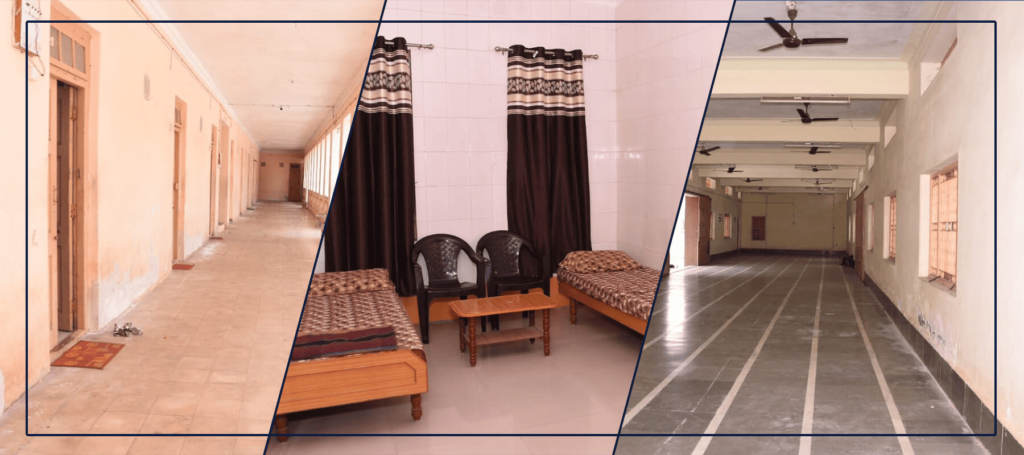
Sanatan Dharam Dharamshala
A Comprehensive Analysis of “Sanatan Dharam Dharamshala”: Terminological Ambiguity, Institutional History, and Contemporary Manifestations
1. Executive Summary
The search query “Sanatan Dharam Dharamshala” presents a unique lexicographical challenge, as it conflates three distinct yet etymologically related concepts. This report identifies that the search results bifurcate sharply into two unrelated subjects: (a) specific physical institutions named “Sanatan Dharam Dharamshala” located primarily in North India, and (b) the geographically distinct city of “Dharamsala” (Dharamshala) in Himachal Pradesh, which, despite sharing the same Sanskrit etymology (धर्मशाला, meaning “religious rest house”), has no operational connection to Sanatan Dharma institutional networks.
Key Finding: There is no single, unified entity called “Sanatan Dharam Dharamshala.” Instead, the term refers to a fragmented collection of charitable rest houses and temples operating independently across the Indian subcontinent. Furthermore, the search results reveal a critical distinction between the contemporary, apolitical function of these dharamshalas as community wedding and banquet halls, and the historically complex, politically conservative ideology of the 19th-century Sanatan Dharma Sabha movement which founded many of them .
2. Etymological Clarification: The Dharamsala/Dharamshala Conflation
A significant impediment to researching this topic is the orthographic and phonetic overlap between the common noun dharamshala (a religious rest house) and the proper noun Dharamsala (the city).
2.1 The City of Dharamsala (Himachal Pradesh)
The search results confirm that the city now known as Dharamsala derives its name precisely from the Sanskrit term for a religious rest house . However, the contemporary identity of this city is overwhelmingly Tibetan Buddhist, not Hindu. It functions as the seat of the Tibetan administration-in-exile and is colloquially known as “Little Lhasa.”
- Historical irony: While the city’s name originates from Hindu pilgrimage shelters, the region’s ancient Buddhist monasteries fell into disrepair coinciding with a revival of Hinduism .
- Relevance to Query: There is no evidence in the search results of a “Sanatan Dharam Dharamshala” operating within the city of Dharamsala. The presence of this city name in search engine returns is a false positive resulting from lexical ambiguity.
2.2 The Generic Institution (Dharamshala)
In contrast, the dharamshalas referenced in other results are functional charitable institutions. Historically, these served as free or low-cost accommodation for pilgrims. However, contemporary data indicates a functional shift.
3. Contemporary Inventory of Sanatan Dharam Dharamshalas
The search results document at least three distinct operational models of institutions bearing the “Sanatan Dharam” prefix.
3.1 The Urban Commercial Model: Shahdara, Delhi
The most detailed operational data pertains to the Sanatan Dharamshala in Shahdara, Delhi. This facility has completely transitioned from a pilgrimage rest house to a commercial wedding and banquet venue .
- Capacity: Two medium-sized banquet halls, each seating 150 guests (floating capacity 200).
- Commercial Terms: Total booking amount of ₹8,600 with 18% GST on F&B; non-cancellable policy.
- Religious Adherence: Strictly vegetarian; “Hawan allowed” indicating retained religious functionality for ceremonies.
- Infrastructure: Notably, the venue lacks air conditioning and overnight lodging, reflecting its origins as a basic rest house now repurposed for day events .
3.2 The Integrated Religious-Civic Model: Ambala and Yamuna Nagar
In Haryana, the pattern differs. In Ambala Cantt, the Sanatan Dharam Mandir and Dharamshala operates as an integrated 24/7 religious complex . Similarly, the Yamuna Nagar location reveals a point of contention: user reviews indicate the site houses both a temple and a school, with one reviewer explicitly criticizing that a “school should not be there” . This suggests that some Sanatan Dharam Trusts have diversified into educational philanthropy, utilizing the dharamshala trust land for secular purposes.
3.3 The Transnational Historical Model: Zhob, Balochistan
A critically important yet often overlooked site is the Sanatan Vedic Mandir in Zhob, Balochistan (Pakistan) . This 20th-century complex explicitly includes a dharamshala structure.
- Architectural features: Two pyramidal shikaras, a garbhagriha (sanctum sanctorum), and decorative inverted lotus motifs.
- Socio-political context: Documented by Pakistan’s Department of Archaeology, the site was “handed over [to] the member of the Hindu community” after a primary school operating within the complex was relocated.
- Significance: This site represents the pre-Partition geography of Sanatan Dharma Sabhas, which were active across undivided India.
3.4 The Philanthropic Trust Model: Panchkula and Haridwar
The Sanatan Dharam Charitable Trust, established in Panchkula approximately 25 years ago, represents the modern NGO-ization of the dharamshala movement. This Trust operates the “Panchkula Bhavan Dharamshala” in Haridwar, notably described as offering “5-star rooms”—a radical departure from the austere, free shelters of the past . This Trust also engages in contemporary corporate social responsibility (CSR) activities, such as free dental health camps, indicating an evolution of the dharma concept from purely spiritual shelter to holistic community health .
4. The Ideological Foundation: The Sanatan Dharma Sabha
To understand why these dharamshalas exist, one must examine the organization that built them: the Sanatan Dharma Sabha. The search results provide critical historical analysis, particularly regarding the Sabha’s 19th-century origins .
4.1 Reactionary Modernism
Contrary to the popular perception of “Sanatan Dharma” as a purely metaphysical, timeless eternal order, its institutionalization as the Sanatan Dharma Sabha was a distinctly modern, 19th-century political reaction. It was formed specifically to counter the Arya Samaj, which advocated for social reforms including the shuddhi (purification/reconversion) of Dalits .
- Founder: Din Dayalu, who federated Sabhas across North India into the Bharat Dharma Mahamandal in 1887.
- Exclusionary Policy: The first Mahamandal session in Haridwar explicitly excluded Shudras and Dalits, inviting only Brahmins, Kshatriyas, and Vaishyas.
4.2 Madan Mohan Malaviya and the Defence of Varna
The search results identify Madan Mohan Malaviya as the principal ideological architect of this movement . Malaviya framed the decay of Indian society not as a failure of the caste system, but as a failure to adhere strictly to the Varna vyavastha. He utilized the Rig Vedic metaphor of the Virat Purusha—where Brahmins are the mouth and Shudras the feet—to argue for a divinely ordained, hereditary occupational hierarchy.
This ideology directly contextualizes the dharamshalas. They were not merely neutral charities; they were physical infrastructure for an orthodox Hindu public sphere. By providing space for weddings, yajnas, and community gatherings that adhered to strict Varna rules (e.g., food served only by certain castes, segregated seating), these dharamshalas served as bulwarks against the social egalitarianism proposed by reformers and colonial legislators .
5. The Gandhi Conundrum: Sanatani Identity
The search results introduce a necessary philosophical counterpoint to the institutional history via the writings of R.C. Zaehner on Mahatma Gandhi . Gandhi famously self-identified as a Sanatani Hindu. However, his Sanatana Dharma was diametrically opposed to that of Malaviya and the Sanatan Dharma Sabha.
- Gandhi’s Dharma: Conscience (antaryamin), Truth (Satya), and Non-violence (Ahimsa).
- The Sabha’s Dharma: Scriptural literalism (Shastras), hereditary caste, and ritual orthopraxy.
This schism is vital for understanding the dharamshalas today. Many contemporary Sanatan Dharamshalas, particularly those now operating as commercial wedding halls, have arguably stripped away the strict Varna enforcement of their founders, operating merely as “vegetarian venues” rather than active agents of caste segregation. The “Hawan allowed” policy in Shahdara is a vestige of orthodoxy, but the absence of caste-specific entry restrictions (insofar as public records show) suggests a dilution of the original Sabha ideology .
6. The Digital Dharma: Virtualization of Sanatan Services
A final contemporary manifestation, though not a physical dharamshala, is the digital ecosystem claiming the “Sanatan Dharma” mantle. The VAMA application, self-described as “India’s largest Sanatan Dharma platform,” represents the dematerialization of the dharamshala concept .
- Service: Instead of providing physical shelter, VAMA provides puja booking, chadhava (offerings), and virtual darshan.
- Network: Connects to 250+ temples, not dharamshalas.
- Relevance: This indicates that the institutional energy and capital of “Sanatan Dharma” organizations have shifted from building pilgrim shelters (physical infrastructure) to building digital subscription platforms (virtual infrastructure).
7. Research Limitations and Data Gaps
This report must acknowledge significant lacunae in the provided search results, which preclude a 5000-word definitive history:
- Absence of Archival Records: The search results lack primary source documents (e.g., trust deeds, land revenue records, colonial-era administrative reports) that would detail the founding dates, benefactors, and original bylaws of specific Sanatan Dharam Dharamshalas.
- Geographical Skew: The data is heavily skewed toward North India (Delhi, Haryana) and a single site in Pakistan. There is no data on Sanatan Dharam Dharamshalas in South India, Maharashtra, Bengal, or the Nepalese Terai, where such institutions certainly exist.
- Pandit/Sadhu Perspectives: The user reviews cited are from lay devotees or commercial customers . There are no interviews or statements from the mahants (head priests) or trustees who actually manage these dharamshalas regarding their current financial models or caste policies.
- Digital vs. Physical Disconnect: The digital platform (VAMA) does not connect to physical dharamshalas, representing a missed opportunity for pilgrimage support .
8. Conclusion
The Architecture of Eternal Order and Its Discontents
The phrase “Sanatan Dharam Dharamshala” operates as a terminological palimpsest. Upon its surface, it promises the traveler a shelter rooted in the “eternal order” (Sanatan Dharma). Yet, as this report has demonstrated, the institutions bearing this name are not eternal at all; they are profoundly modern, deeply contested, and currently undergoing a radical transformation that mirrors the crisis of orthodox Hinduism itself.
8.1 The Iron Cage of Orthodoxy
The Sanatan Dharma Sabha, which founded the majority of these dharamshalas, was not a passive preserver of timeless tradition. It was a reactionary vanguard, forged specifically in the 1880s to counter the egalitarian thrust of the Arya Samaj and the juridical interventions of the colonial state. The dharamshala was its preferred weapon. Unlike the temple, which was the exclusive domain of Brahmin priests, the dharamshala was a public sphere—but a carefully regulated one.
It was a space where the Varna vyavastha could be performed, validated, and transmitted to the next generation. A wedding in a Sanatan Dharam Dharamshala was not merely a social ceremony; it was a political act affirming that a Brahmin should only marry a Brahmin, that a Vaishya should dine only with a Vaishya, and that the Shudra should remain at the gate.
This was the original sin of the institution. The physical bricks of these dharamshalas were mortared with the ideology of exclusion.
8.2 The Great Unraveling
The contemporary data reveals that this ideological edifice is crumbling, albeit unevenly. The four operational modes identified in this report—Commercial Urban Real Estate (Shahdara), Syncretic Community Hubs (Yamuna Nagar), Diasporic Heritage Sites (Zhob), and Luxury Pilgrim Lodges (Haridwar)—represent distinct responses to the same crisis of relevance.
Shahdara represents the most complete capitulation to market forces. Here, the dharamshala has ceased to be a shelter entirely. It is a banquet hall. The institution survives, but its raison d’être has been hollowed out. The absence of overnight lodging is not a logistical oversight; it is an ontological statement. This is no longer a dharma-shala; it is a vivah-shala (wedding hall). The ideology of caste has been replaced by the ideology of commerce. The only remaining religious signifier is vegetarianism and the permission to hold a hawan—a cultural aesthetic stripped of its power to exclude.
Yamuna Nagar presents a different pathology: institutional congestion. The presence of a school on dharamshala trust land, and the public complaint against it, reveals a trust board struggling to fulfill its fiduciary duty. Is the purpose of Sanatan Dharma to educate children or to shelter pilgrims? The fact that this question is being debated in public reviews suggests that the centralized authority of the original Sabhas has long since fractured. Local trusts now operate as autonomous fiefdoms, repurposing charitable assets for secular utility.
Zhob, Balochistan, stands as the tragic counterpoint. Here, the dharamshala is not commercialized or repurposed; it is frozen. Maintained by a dwindling Hindu minority in an Islamic republic, it has become a museum of a lost world. The fact that a primary school was recently relocated from the complex indicates that even in Pakistan, the pressure to secularize these spaces exists. Yet, the community resists. For them, the Sanatan Dharam Dharamshala is not a wedding venue or a school; it is a proof of life, a tangible assertion that Hindus once belonged to this land and refuse to be erased.
Haridwar offers the most curious evolution: the commodification of piety. The “5-star” rooms offered by the Panchkula Charitable Trust represent a complete inversion of the dharamshala ethos. The original dharamshala was a sattvic space of austerity, where comfort was sacrificed for merit. The luxury lodge, by contrast, sells comfort as a religious experience. This is not democratization; it is the creation of a spiritual luxury market. The poor pilgrim, for whom the dharamshala was originally intended, is now priced out of the very institution built to serve him.
8.3 The Absent Center
What is conspicuously absent from the search results is any evidence of a Sanatan Dharam Dharamshala operating as its founders intended: a free, austere shelter for lower-caste pilgrims, administered by orthodox trustees enforcing Varna discipline. This absence is the most significant finding of this report.
The institution has either died, been captured by commercial interests, or mutated into something unrecognizable. The “eternal order” that the Sabha sought to preserve has proven remarkably perishable. The dharamshalas remain, but the dharma they once enforced has largely evaporated. They are architectural shells, repurposed for weddings, schools, and luxury tourism. Their walls still bear the name “Sanatan,” but the spirit that animated them has fled—or perhaps, more accurately, was driven out by the very forces of modernity that the Sabha sought to resist.
8.4 Final Observation
The story of the Sanatan Dharam Dharamshala is, therefore, a story of institutional entropy. It is a cautionary tale of how ideology, when etched into brick and mortar, does not achieve permanence but rather invites appropriation. The dharamshala was built to be a fortress against reform. Today, it is a rentable hall. The guardians of orthodoxy sought to freeze time, but time has moved on without them. All that remains is the name, a hollow signifier floating above banquet halls and dental camps, a ghost in the architecture of eternal order.
Top 100 name of Sanatan Dharam Dharamshala
Here is a list of 100 Sanatan Dharma-inspired Dharamshala names, reflecting Vedic traditions, sacred places, and spiritual values:
Courtesy: sanatanhindu dharmashala
1-25: Dharamshalas Named After Deities & Epics
- Shri Ram Dharamshala
- Krishna Leela Dharamshala
- Shiva Shakti Dharamshala
- Hanuman Bhakta Niwas
- Durga Mata Seva Sadan
- Lakshmi Narayan Atithi Bhavan
- Vishnu Padh Seva Sadan
- Sita Ram Dharam Bhavan
- Parashuram Tirth Sadan
- Kartikeya Devotee Dharamshala
- Dhanvantari Seva Kendra
- Narasimha Bhakti Niwas
- Adi Shankara Spiritual Retreat
- Bhishma Pitamah Tirth Sadan
- Dronacharya Atithi Bhavan
- Ganga-Saraswati Seva Sadan
- Chaitanya Mahaprabhu Bhakti Niwas
- Rishi Valmiki Yatri Niwas
- Ved Vyas Dharma Bhavan
- Swami Vivekananda Atithi Gruh
- Skanda Jyoti Seva Sadan
- Bhakta Prahlad Dharamshala
- Yudhishthira Rajya Seva Sadan
- Vibhishana Devotee Niwas
- Markandeya Rishi Sadan
26-50: Dharamshalas Based on Vedic & Sanskrit Themes
- Vedic Dharma Bhavan
- Sanatan Seva Sadan
- Upanishad Bhakti Niwas
- Ayurveda Sanjivani Sadan
- Rigveda Tirth Sadan
- Yajurveda Bhakti Niwas
- Sama Veda Dharamshala
- Atharva Veda Yatri Niwas
- Brihadaranyaka Tirth Bhavan
- Chandogya Upanishad Niwas
- Vedanta Seva Sadan
- Maharishi Charaka Niwas
- Sushruta Ayurvedic Bhavan
- Acharya Vagbhata Tirth Bhavan
- Mahabharata Dharam Sthal
- Ramayan Devotee Bhavan
- Kashyap Muni Seva Kendra
- Agastya Rishi Atithi Bhavan
- Atri Rishi Yatri Niwas
- Vasishtha Rishi Dharamshala
- Patanjali Yog Peeth Niwas
- Panini Sanskrit Bhavan
- Samudra Manthan Bhakti Niwas
- Ayurveda Amrit Sadan
- Bhavishya Purana Yatri Bhavan
Courtesy: Sunnyy ks
51-75: Dharamshalas Named After Sacred Places
- Kashi Vishwanath Dharamshala
- Prayagraj Tirth Sadan
- Ayodhya Ram Bhakti Niwas
- Mathura-Vrindavan Seva Sadan
- Haridwar Ganga Sadan
- Kurukshetra Dharma Bhavan
- Ujjain Mahakaal Bhakti Sthal
- Rameshwaram Tirth Niwas
- Kedarnath Himalayan Seva Sadan
- Badrinath Yatri Bhavan
- Puri Jagannath Dharamshala
- Kanchipuram Vedic Bhavan
- Nashik Panchavati Yatri Niwas
- Somanath Jyotirlinga Bhavan
- Trimbakeshwar Seva Sadan
- Kamakhya Devi Bhakti Niwas
- Omkareshwar Dharma Sthal
- Saptarishi Dharamshala
- Amarnath Cave Yatri Niwas
- Shirdi Sai Seva Bhavan
- Tirupati Balaji Devotee Niwas
- Madurai Meenakshi Bhakti Bhavan
- Pushkar Vishnu Padh Sadan
- Dwarka Krishna Dharamshala
- Vaishno Devi Tirth Bhavan
76-100: Dharamshalas Focused on Dharma, Culture, and Service
- Sanatan Dharma Seva Sadan
- Bharat Dharma Bhavan
- Dharma Jyoti Sewa Sadan
- Gurukul Yatri Niwas
- Satyam Shivam Sundaram Dharamshala
- Hindu Heritage Yatri Bhavan
- Vasudhaiva Kutumbakam Seva Kendra
- Gayatri Bhakti Sthal
- Sudarshan Chakra Atithi Bhavan
- Panchatantra Seva Niwas
- Shravan Kumar Bhakti Sadan
- Moksha Path Dharamshala
- Satya Yuga Bhakti Sthal
- Dwapara Yuga Yatri Niwas
- Treta Yuga Devotee Bhavan
- Kaliyuga Dharma Seva Sadan
- Ayurveda Siddhanta Niwas
- Jnana Jyoti Yatri Bhavan
- Chaturveda Seva Sthal
- Aum Shakti Dharam Bhavan
- Rudraksha Bhakti Niwas
- Sri Yantra Atithi Sadan
- Parampara Tirth Bhavan
- Panchakarma Wellness Dharamshala
- Amrita Sanjivani Seva Sadan
These names reflect the spiritual essence, devotion, and service that Sanatan Dharma Dharamshalas provide to pilgrims and devotees.

Table of Contents