
RAVANA CAVES (ELLA, SRI LANKA)]
RAVANA CAVES (ELLA, SRI LANKA) stand as one of the most intriguing historical and mythological landmarks in Sri Lanka. Located near the picturesque town of Ella, these caves are deeply connected to ancient folklore, particularly the legendary epic Ramayana. The caves are believed to have been used by Ravana, a powerful ruler and central figure in the epic.
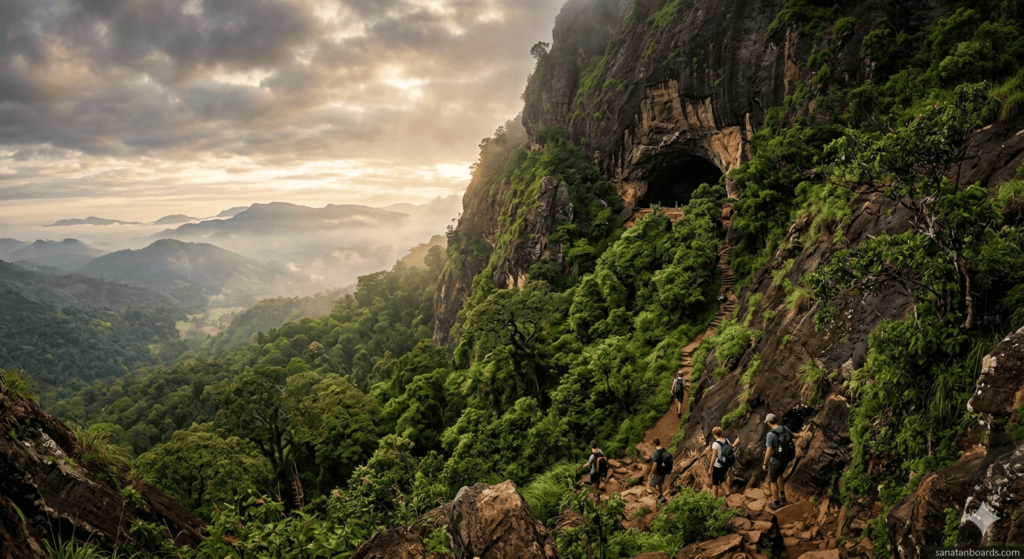
Situated at an elevation of about 1,370 meters above sea level, the caves offer not only historical significance but also breathtaking panoramic views of the surrounding hills and forests. The structure of the caves suggests that they may have once been part of a complex tunnel network, possibly used for strategic or secretive purposes. Archaeological findings in the region indicate human habitation dating back thousands of years, adding scientific value to their mythological importance.
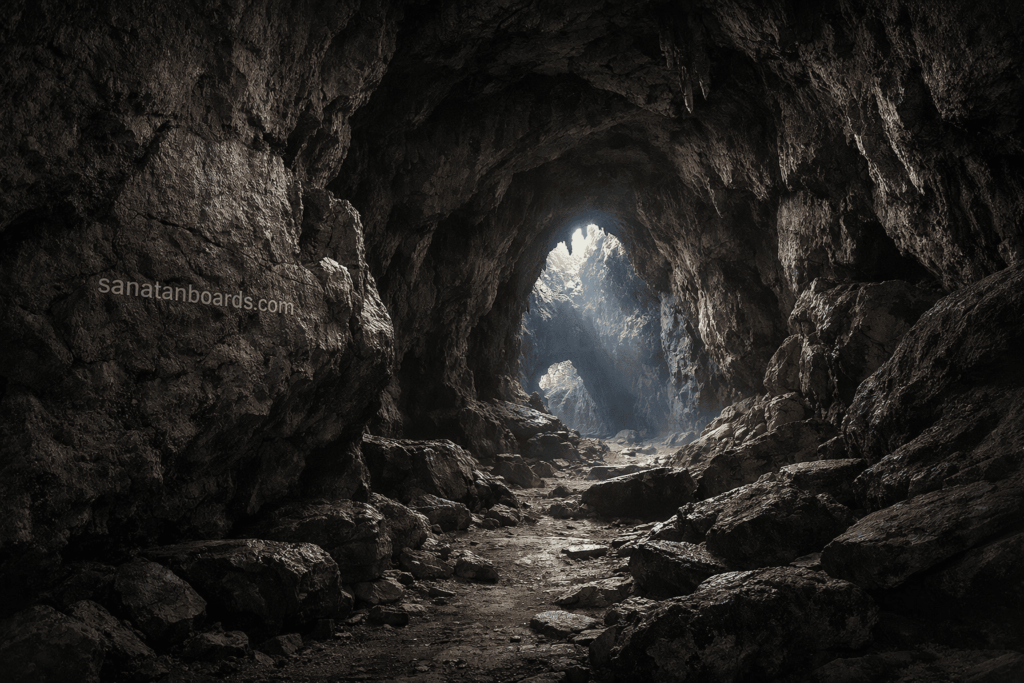
The caves are relatively small but carry immense cultural weight. Visitors often climb a steep path to reach the entrance, which adds an element of adventure to the experience. Inside the caves are narrow and dimly lit, giving a sense of mystery and antiquity. Despite their modest size, they attract tourists, historians, and spiritual seekers alike.
RAVANA CAVES (ELLA, SRI LANKA) serve as a blend of legend, history, and natural beauty. Whether viewed as a mythological site or an archaeological landmark, they continue to captivate the imagination of people across the world. Their connection to ancient stories and their scenic location make them a unique destination worth exploring.
What Is Ravana Caves (Ella, Sri Lanka) ?
RAVANA CAVES (ELLA, SRI LANKA) are a historically and culturally significant cave system located near Ella in Sri Lanka. These caves are widely recognized for their association with the ancient Indian epic Ramayana and the legendary king Ravana.
Geographically, the caves are positioned on a cliff face, making them naturally concealed and strategically located. This positioning has led to theories that they may have been used as a hideout or a secure location in ancient times. The caves themselves are formed from limestone and exhibit signs of natural erosion combined with possible human modification. Archaeological studies suggest that these caves were inhabited by prehistoric humans, making them important from both historical and scientific perspectives.
From a mythological standpoint, RAVANA CAVES (ELLA, SRI LANKA) are believed to be one of the places where Ravana hid Sita after abducting her. This belief is deeply rooted in local folklore and continues to attract devotees and cultural enthusiasts. While there is no definitive historical evidence to confirm this narrative, the story has become an integral part of the site’s identity.
In addition to mythology, the caves are also valued for their natural beauty. Surrounded by lush greenery and scenic landscapes, they provide a serene environment for visitors. The climb to the caves is moderately challenging, adding an adventurous element to the visit.
Today, RAVANA CAVES (ELLA, SRI LANKA) function as a tourist attraction, drawing visitors from around the world. They represent a convergence of myth, archaeology, and natural geography, making them a multifaceted site of interest. Whether one approaches them from a historical, cultural, or recreational perspective, these caves offer a unique and enriching experience.
Who Is Required Ravana Caves (Ella, Sri Lanka)
RAVANA CAVES (ELLA, SRI LANKA) are relevant to a diverse range of individuals and groups, each finding value in the site for different reasons. Historians and archaeologists are among the primary groups interested in these caves due to their potential to reveal insights into prehistoric human habitation. Evidence found in and around the caves suggests early human activity, making them an important subject for academic research.
Mythology enthusiasts and scholars of the Ramayana also consider RAVANA CAVES (ELLA, SRI LANKA) significant. The association with Ravana and Sita makes the site a focal point for studying cultural narratives and their geographical interpretations. For devotees, the caves hold spiritual importance and are sometimes visited as part of religious journeys.
Tourists and travel enthusiasts are another major group for whom these caves are relevant. Located near Ella, a popular destination known for its scenic beauty, the caves provide an additional attraction that combines adventure with cultural exploration. The climb to the caves and the surrounding views appeal to those seeking unique travel experiences.
Educators and students also find value in RAVANA CAVES (ELLA, SRI LANKA) as a case study in interdisciplinary learning. The site integrates aspects of geography, history, mythology, and environmental studies, making it a rich resource for educational purposes.
Additionally, conservationists and environmentalists may be interested in the caves due to their ecological surroundings. Preserving such sites ensures the protection of both natural and cultural heritage.
When Ravana Caves (Ella, Sri Lanka) Is Required ?
RAVANA CAVES (ELLA, SRI LANKA) become particularly relevant during specific contexts and timeframes, depending on the purpose of engagement. From a tourism perspective, the caves are most frequently visited during peak travel seasons in Sri Lanka, especially between December and April when the weather is favorable. During this time, travelers exploring Ella often include the caves in their itineraries.
From an academic standpoint, these caves are required when conducting research related to prehistoric human settlements or South Asian mythology. Archaeologists may study the caves when investigating early human habitation patterns, while scholars of the Ramayana may explore them to understand the geographical connections of mythological narratives.
Culturally, the caves gain importance during religious or mythological discussions, especially those centered around Ravana. Events, lectures, or cultural programs that focus on ancient epics often reference such locations to provide context and depth.
In the field of education, RAVANA CAVES (ELLA, SRI LANKA) are required when teaching interdisciplinary subjects that combine history, geography, and literature. They serve as a practical example that bridges theoretical knowledge with real-world locations.
The caves are also relevant in conservation efforts. At times when discussions arise about preserving cultural heritage sites, these caves become important case points. Environmental studies may also require attention to such locations to understand the balance between tourism and ecological preservation.
Thus, RAVANA CAVES (ELLA, SRI LANKA) are required in tourism seasons, academic research periods, cultural discussions, educational contexts, and conservation initiatives. Their relevance is not confined to a single timeframe but extends across multiple domains depending on the need.
Where Ravana Caves (Ella, Sri Lanka) Is Required ?
RAVANA CAVES (ELLA, SRI LANKA) are required in various geographical, academic, and cultural contexts. Physically, they are located near Ella in Sri Lanka, making them an essential part of regional tourism circuits. Visitors exploring the central highlands often include these caves as a key stop.
In academic institutions, particularly those focusing on archaeology, history, and literature, RAVANA CAVES (ELLA, SRI LANKA) are required as a case study. Universities and research centers use such sites to analyze human evolution, settlement patterns, and the influence of mythology on geography.
Culturally, the caves are required in discussions related to the Ramayana. They are often referenced in cultural programs, documentaries, and literary analyses to illustrate how ancient stories are linked to real-world locations.
In tourism industries, travel agencies and tour operators require such destinations to create diverse and engaging itineraries. The inclusion of mythological and historical sites enhances the appeal of travel packages.
Additionally, in environmental and conservation forums, RAVANA CAVES (ELLA, SRI LANKA) are required as examples of sites that need sustainable management. Discussions about balancing tourism with preservation often include such locations.
Thus, the caves are required across physical, academic, cultural, tourism, and environmental domains, highlighting their multifaceted importance.
How Ravana Caves (Ella, Sri Lanka) Is Required ?
RAVANA CAVES (ELLA, SRI LANKA) are required through various methods and applications depending on the context. In tourism, they are utilized as a destination that offers a blend of adventure, history, and mythology. Travel planners incorporate the caves into itineraries to provide visitors with a comprehensive experience of Ella.
In academic research, the caves are required through field studies, archaeological excavations, and historical analysis. Researchers examine physical evidence within the caves to understand early human life and settlement patterns. Scholars studying the Ramayana analyze the site to explore its mythological connections with Ravana.
Educationally, the caves are required as teaching tools. Educators use them as real-world examples to explain theoretical concepts in history, geography, and literature. Visual and experiential learning through such sites enhances student understanding.
In cultural preservation, RAVANA CAVES (ELLA, SRI LANKA) are required through conservation efforts. Authorities and organizations work to maintain the integrity of the site while allowing public access. This involves implementing safety measures, controlling visitor impact, and promoting awareness.
Technologically, the caves may be required in digital documentation and virtual tourism. Modern tools such as 3D mapping and virtual tours help preserve and share the site with a global audience.
Overall, the caves are required through tourism integration, academic research, educational use, conservation practices, and technological documentation.
Case Study On Ravana Caves (Ella, Sri Lanka)
RAVANA CAVES (ELLA, SRI LANKA) present a compelling case study that combines mythology, archaeology, tourism development, and environmental conservation. Located near Ella in Sri Lanka, these caves have evolved from a local legend into a recognized cultural and tourism asset.
Historically, the caves are believed to date back thousands of years, with archaeological findings indicating prehistoric human habitation. Tools and remnants discovered in the surrounding areas suggest that early humans used the caves as shelter. This gives the site scientific importance beyond its mythological associations. The cave system itself appears to have been naturally formed but later modified, possibly for habitation or strategic purposes.
Mythologically, the caves are strongly linked to the Ramayana and the legendary king Ravana. According to local beliefs, Ravana used these caves as a hiding place for Sita after abducting her. While this claim is not historically verified, it significantly enhances the cultural and spiritual appeal of the site. The integration of mythology into a physical location demonstrates how narratives shape geographical identity.
From a tourism perspective, RAVANA CAVES (ELLA, SRI LANKA) have become a key attraction. Visitors are drawn by the combination of scenic beauty, adventure, and storytelling. The climb to the caves adds a physical challenge, making it appealing for adventure tourism. The site contributes to the local economy by attracting both domestic and international tourists, benefiting nearby businesses such as hotels, restaurants, and transport services.
However, increased tourism also brings challenges. Environmental degradation, littering, and structural wear are concerns that need to be addressed. The caves are relatively small and fragile, making them susceptible to damage from heavy foot traffic. This highlights the importance of sustainable tourism practices.
Efforts have been made to preserve the site while maintaining accessibility. Local authorities and tourism boards have introduced measures such as designated pathways, visitor guidelines, and awareness campaigns. These steps aim to balance economic benefits with environmental protection.
Another important aspect of this case study is the role of education. Schools and universities use RAVANA CAVES (ELLA, SRI LANKA) as a practical example of interdisciplinary learning. Students studying history, geography, and literature can observe how these fields intersect in a real-world setting.
In conclusion, RAVANA CAVES (ELLA, SRI LANKA) serve as a multifaceted case study. They illustrate how mythology can influence tourism, how archaeological sites can provide scientific insights, and how sustainable management is essential for preservation. The site’s continued relevance depends on maintaining this balance between cultural significance, economic benefit, and environmental responsibility.
White Paper On Ravana Caves (Ella, Sri Lanka)
RAVANA CAVES (ELLA, SRI LANKA) represent a significant cultural, historical, and economic resource within Sri Lanka. This white paper outlines the strategic importance of the site, identifies challenges, and proposes recommendations for sustainable development and preservation.
Introduction and Significance
RAVANA CAVES (ELLA, SRI LANKA) are a unique blend of natural formation and cultural heritage. Located near Ella, the caves are associated with the Ramayana and the figure of Ravana. This dual significance makes the site attractive for both academic research and tourism.
Objectives
The primary objectives of this white paper are to promote sustainable tourism, ensure conservation of the site, enhance educational value, and maximize economic benefits for local communities.
Current Challenges
Despite its importance, the site faces several challenges. Unregulated tourism has led to environmental concerns such as littering and erosion. The lack of advanced infrastructure limits visitor capacity and safety. Additionally, there is a need for more scientific research to better understand the archaeological aspects of the caves.
Tourism Development Strategy
To enhance the value of RAVANA CAVES (ELLA, SRI LANKA), a structured tourism strategy is required. This includes improving access routes, installing informative signage, and developing guided tour programs. Digital promotion through virtual tours and online platforms can also increase global visibility.
Conservation Framework
Preservation of the caves should be a top priority. This involves implementing strict visitor regulations, monitoring environmental impact, and conducting regular maintenance. Collaboration with conservation organizations can help in adopting best practices.
Educational and Research Opportunities
The site offers significant potential for academic research. Partnerships with universities and research institutions can facilitate archaeological studies and cultural analysis. Educational programs can be developed to engage students and scholars.
Economic Impact
RAVANA CAVES (ELLA, SRI LANKA) contribute to the local economy by attracting tourists. Enhancing the site’s infrastructure and promotion can increase revenue while creating employment opportunities for local communities.
Recommendations
Key recommendations include establishing a management authority, implementing sustainable tourism policies, investing in research, and promoting community involvement. Technology should be leveraged for documentation and virtual accessibility.
Conclusion
RAVANA CAVES (ELLA, SRI LANKA) have the potential to become a model for sustainable heritage management. By balancing tourism, conservation, #sanatanboardsinvasai and research, the site can continue to provide cultural, educational, and economic value.
Industry Application On Ravana Caves (Ella, Sri Lanka)
RAVANA CAVES (ELLA, SRI LANKA) have diverse applications across multiple industries, including tourism, education, media, and heritage management. Their unique combination of mythology, history, and natural beauty makes them a valuable asset in various sectors.
Tourism Industry
The tourism sector is the primary beneficiary of RAVANA CAVES (ELLA, SRI LANKA). Located near Ella in Sri Lanka, the caves are a key attraction for travelers. Tour operators include the site in travel packages, offering guided tours that combine adventure with cultural storytelling. The site supports local businesses such as hotels, restaurants, and transportation services.
Education Sector
In education, the caves serve as a practical learning resource. Institutions use them to teach subjects like history, geography, and literature. The connection to the Ramayana and Ravana provides a unique opportunity to study the relationship between mythology and geography.
Media and Entertainment
The caves have potential applications in media and entertainment. Documentaries, travel shows, and films can use the site as a backdrop due to its scenic and historical appeal. Storytelling based on mythology can be enhanced by showcasing real-world locations like RAVANA CAVES (ELLA, SRI LANKA).
Digital and Technology Sector
With advancements in technology, the caves can be integrated into digital platforms. Virtual reality (VR) and augmented reality (AR) experiences can allow users to explore the site remotely. Digital mapping and 3D modeling can aid in preservation and global accessibility.
Heritage Management
In the field of heritage management, RAVANA CAVES (ELLA, SRI LANKA) serve as an example of how cultural sites can be preserved while generating economic value. Strategies such as controlled tourism, community involvement, and environmental monitoring are essential for sustainable management.
Economic and Community Development
The site contributes to local economic development by creating jobs and supporting small businesses. Community involvement in tourism activities ensures that economic benefits are distributed locally. Training programs can be introduced to improve service quality and visitor experience.
Sustainability Practices
Sustainability is a key aspect of industry application. Measures such as waste management, eco-friendly infrastructure, and visitor education can help minimize environmental impact. Collaboration between government, private sector, and local communities is crucial.
Conclusion
RAVANA CAVES (ELLA, SRI LANKA) demonstrate how a single site can have wide-ranging applications across industries. By leveraging their cultural, historical, and #sanatanboardsinindia natural significance, these caves can continue to contribute to tourism, education, media, and sustainable development.
source : THE INDO TREKKER
ASK FAQ
1. What are RAVANA CAVES (ELLA, SRI LANKA) famous for?
RAVANA CAVES (ELLA, SRI LANKA) are famous for their connection to the ancient epic Ramayana and the legend of Ravana, along with their historical and archaeological significance.
2. Where are RAVANA CAVES (ELLA, SRI LANKA) located?
RAVANA CAVES (ELLA, SRI LANKA) are located near Ella in Sri Lanka, surrounded by scenic hills and lush greenery.
3. How can you reach RAVANA CAVES (ELLA, SRI LANKA)?
You can reach RAVANA CAVES (ELLA, SRI LANKA) by traveling to Ella and then hiking a short but steep path leading up to the caves.
4. What is the mythological importance of RAVANA CAVES (ELLA, SRI LANKA)?
According to the Ramayana, Ravana is believed to have used these caves to hide Sita.
5. Is visiting RAVANA CAVES (ELLA, SRI LANKA) worth it?
Yes, visiting RAVANA CAVES (ELLA, SRI LANKA) is worth it for its blend of history, mythology, scenic views, and adventure near Ella.
Table of Contents
Disclaimer
The information provided about RAVANA CAVES (ELLA, SRI LANKA) is intended for educational and informational purposes only. While efforts have been made to ensure accuracy, certain aspects, particularly those related to mythology and historical interpretations, may vary based on sources and perspectives. The content does not claim absolute historical authenticity regarding legendary narratives. Readers are encouraged to conduct further research or consult experts for detailed understanding. The site’s cultural and historical significance should be respected, and any visit should adhere to local guidelines and conservation practices to preserve its integrity for future generations.