AFRICA
Africa is a vast and diverse continent known for its deep historical roots, cultural richness, and growing global importance. Often described as the birthplace of human civilization, it holds a unique position in understanding human origins and development. Over time, the continent has evolved through ancient civilizations, colonial periods, and modern independence, shaping its present identity.
With more than a billion people, this region is home to a young and rapidly growing population. Its societies are defined by a wide range of languages, traditions, and lifestyles, making it one of the most culturally vibrant areas in the world. From expansive deserts to tropical forests and rapidly developing cities, the landscape reflects both natural beauty and economic transformation.
In recent years, growth has been driven by technological advancement, urbanization, and increasing global partnerships. Digital innovation, especially in mobile services, has improved access to finance, education, and communication. These changes are helping communities adapt to modern challenges while preserving traditional values.
Despite facing issues such as climate change, economic inequality, and infrastructure limitations, steady progress is visible across multiple sectors. Governments, businesses, and local communities are working toward sustainable development and long-term stability.
Understanding this region is important for anyone interested in global trends, as it continues to influence economic growth, environmental sustainability, and cultural exchange. Its future holds both challenges and significant opportunities.
What Is Africa ?
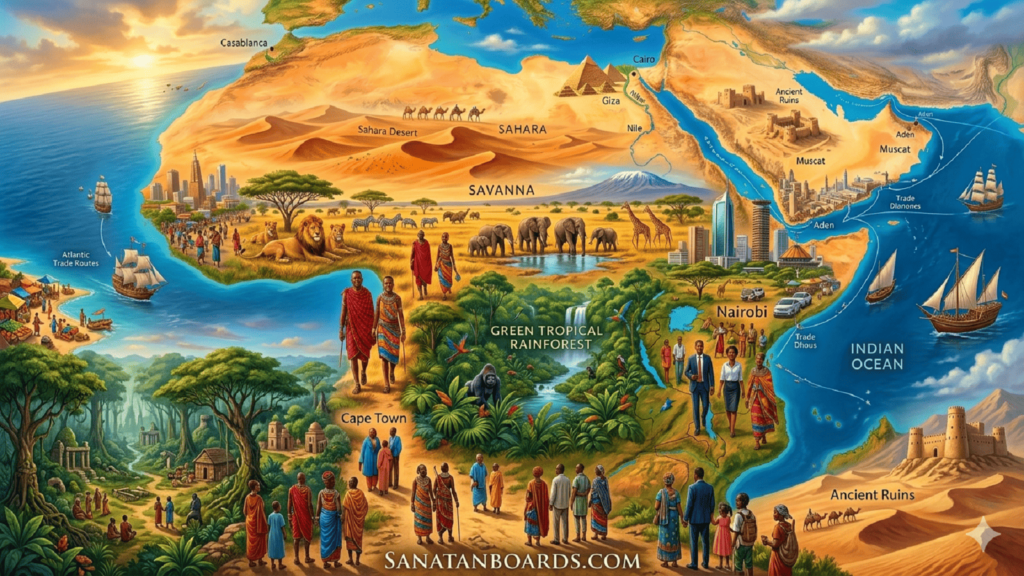
Africa is the second-largest continent in the world, located between the Atlantic and Indian Oceans. It includes 54 independent countries, each with distinct political systems, economies, and cultures. The geography is highly diverse, ranging from deserts and savannas to mountains and river systems that support both human life and wildlife.
Historically, the region is recognized as the origin of early human life. Archaeological discoveries have provided valuable insights into human evolution and early societies. Over centuries, civilizations developed trade networks, cultural traditions, and systems of governance that continue to influence modern societies.
Today, the continent represents a mix of traditional lifestyles and modern development. Many areas are experiencing rapid urban growth, while others maintain strong connections to rural and agricultural practices. This balance creates a unique blend of heritage and progress.
The economy is supported by natural resources such as minerals, oil, and fertile land. While some countries face developmental challenges, others are emerging as strong economic players with growing industries and improved infrastructure.
Culturally, the region stands out for its diversity. Languages, art forms, music, and traditions vary widely, reflecting deep-rooted histories and social values. These cultural elements contribute significantly to global heritage.
Overall, Africa is not a single identity but a collection of diverse nations and experiences that together form a complex and influential part of the world.
Who Is Required Africa ?
Africa is required by various global stakeholders due to its economic, strategic, and cultural importance. Governments, international organizations, and private companies recognize the region as a key partner in development and global cooperation. Its resources, population, and market potential make it valuable across multiple sectors.
Industries depend on the region for natural resources such as minerals, oil, and agricultural products. These materials are essential for manufacturing, energy production, and technological development. As global demand increases, this region continues to play a vital role in supply chains.
Investors and businesses are also interested in emerging markets found across African nations. A growing middle class, expanding urban areas, and increasing digital connectivity create opportunities in finance, retail, infrastructure, and technology. Startups and entrepreneurs are contributing to innovation and economic activity.
Researchers and academic institutions rely on the region for its biodiversity, cultural diversity, and historical significance. It provides valuable insights into climate science, medicine, anthropology, and sustainable practices.
International organizations require cooperation with African countries to address global challenges such as climate change, poverty, and public health. Collaborative efforts are essential for achieving development goals and ensuring global stability.
The local population, especially young people, also depends on opportunities for education, employment, and skill development. Their participation is crucial for long-term progress and economic growth.
Overall, the region is required by both global and local stakeholders, making it an important part of worldwide development and cooperation.
When Africa Is Required ?
Africa becomes especially important during key global developments, particularly in areas related to economic growth, environmental sustainability, and technological advancement. As industries expand worldwide, the demand for natural resources increases. This region plays a significant role in supplying essential materials such as minerals and energy resources that support manufacturing and innovation.
The importance of the continent is also evident during global environmental efforts. Its forests, wildlife, and ecosystems contribute to climate regulation and biodiversity conservation. International initiatives focused on sustainability often rely on cooperation with countries in this region to protect natural habitats and reduce environmental damage.
During periods of economic transformation, businesses and investors seek new markets for growth. African economies provide strong opportunities due to rising populations, urban expansion, and increasing consumer demand. This makes the region attractive for long-term investment and development projects.
In times of humanitarian need, the region becomes a focal point for global support and collaboration. Challenges such as food security, healthcare access, and disaster response require coordinated efforts between local governments and international organizations. These situations highlight the importance of cooperation and resource sharing.
Technological progress also increases the need for engagement with the region. Digital innovation, mobile services, and online platforms are expanding rapidly, creating new opportunities for economic participation and connectivity. This growth contributes to global technological advancement.
Additionally, the region is important in shaping the future workforce. With a large and youthful population, it will play a major role in global labor markets. Education, training, and skill development initiatives are essential to prepare future generations for emerging opportunities.
Cultural exchanges further demonstrate when the region is required. Its influence on music, art, and literature enriches global culture and promotes diversity.
Overall, Africa is required at multiple stages of global development, making it an essential part of economic, environmental, and social progress.
Where Africa Is Required ?
Africa is required in various locations and systems both within its own boundaries and across the global landscape. Its importance extends to economic, environmental, cultural, and political spaces, making it a key contributor to worldwide development.
Within the continent, development is needed in both rural and urban areas. Rural communities depend on agriculture and natural resource management, while cities require infrastructure, transportation, and technological advancement. Balanced development across these areas is essential for improving living standards.
On a global level, the region is important in international trade networks. Ports, transportation systems, and export industries connect it to markets in Asia, Europe, and the Americas. These connections strengthen global supply chains and economic cooperation.
Environmental conservation is another area where the region plays a critical role. Forests, wetlands, and wildlife reserves contribute to biodiversity and climate stability. Efforts to protect these ecosystems benefit not only local communities but also the entire planet.
In the field of technology, African countries are increasingly participating in digital innovation. Mobile technology, financial platforms, and online services are expanding access to communication and economic opportunities. This growth positions the region as an emerging contributor to the global digital economy.
Politically, the region is required in international discussions and organizations. Governments participate in decision-making processes related to peacekeeping, trade policies, and global cooperation. Their involvement ensures balanced representation in global governance.
Education and research also highlight the importance of this region. Universities and institutions contribute to knowledge in areas such as medicine, agriculture, and environmental science. These contributions support global learning and development.
Culturally, the region influences global creativity through music, art, fashion, and traditions. Its cultural presence is visible worldwide, shaping trends and promoting diversity.
Overall, Africa is required in multiple places and sectors, reinforcing its role as a vital part of the global system.
How Africa Is Required ?
Africa is required through its contributions to global systems, including economic development, environmental sustainability, cultural exchange, and human capital. These contributions highlight its importance in shaping a balanced and interconnected world.
Economically, the region supports global industries through natural resources and emerging markets. Minerals, agricultural products, and energy resources are essential for production and trade. At the same time, growing populations create demand for goods and services, attracting investment and business opportunities.
Environmental contributions are equally significant. Forests, rivers, and ecosystems help regulate climate and support biodiversity. Conservation efforts within the region have a direct impact on global environmental health and sustainability.
Culturally, the region plays a major role in influencing global traditions and creativity. Music, art, literature, and fashion from African societies continue to inspire and shape international culture. This exchange promotes understanding and diversity across different communities.
The population, particularly young people, represents a major source of human capital. With proper education and skill development, this workforce can contribute to global industries and innovation. Investments in education and training are essential to unlock this potential.
Technological advancements also demonstrate how the region is required. Digital platforms, mobile banking, and online services are improving access to information and financial systems. These innovations are not only transforming local economies but also contributing to global progress.
Politically, the region participates in international cooperation and governance. Countries work together with global organizations to address challenges such as security, trade, and development. Their involvement supports stability and collaboration.
Humanitarian efforts further show how the region is required. Addressing issues such as health, education, and poverty requires joint action between nations and organizations.

Case Study On Africa
Africa provides a strong example of how innovation and resilience can drive development despite challenges. One of the most impactful transformations in recent years has been the rise of mobile banking and financial technology. In many regions where traditional banking systems were limited, mobile services have allowed millions of people to access financial tools. Individuals can now save money, transfer funds, and conduct business through simple digital platforms. This shift has improved financial inclusion and economic participation.
Urban development is another important area of growth. Cities across the continent are expanding rapidly, becoming centers of business, education, and innovation. These urban areas attract investment and create employment opportunities. However, rapid growth also presents challenges such as housing shortages, traffic congestion, and pressure on infrastructure. Addressing these issues requires careful planning and sustainable solutions.
Agriculture continues to play a key role in development. Many communities depend on farming for their livelihoods, and improvements in technology are helping increase productivity. Modern techniques, irrigation systems, and better supply chains are supporting food security and economic stability. Governments and organizations are investing in agricultural development to reduce dependency on imports and strengthen local economies.
Education and youth empowerment are central to long-term progress. With a large percentage of the population under the age of 25, there is significant potential for growth. Programs focused on education, vocational training, and entrepreneurship are helping young people develop skills and create opportunities. These initiatives contribute to innovation and economic expansion.
Healthcare improvements have also been a focus area. Efforts to increase access to medical services, improve infrastructure, and address diseases have led to better health outcomes in many regions. While challenges remain, ongoing investments are strengthening healthcare systems and improving quality of life.
Infrastructure development supports all sectors of growth. Projects related to transportation, energy, and communication are connecting communities and enabling economic activity. Partnerships between governments, private companies, and international organizations play a key role in these developments.
Despite progress, challenges such as climate change, governance issues, and economic inequality still exist. Addressing these problems requires strong leadership, transparency, and collaboration. Sustainable practices and long-term planning are essential for continued development.
Overall, this case study highlights how innovation, investment, and community efforts can drive transformation. The region continues to evolve, demonstrating resilience and the ability to adapt to changing global conditions.
White Paper On Africa
Africa represents a region of strategic importance in the global landscape, characterized by its vast resources, dynamic population, and emerging economic potential. This white paper outlines key factors influencing Africa’s development and the opportunities it presents for global stakeholders.
One of the primary strengths of Africa is its demographic profile. With a rapidly growing and youthful population, the continent has the potential to become a major contributor to the global workforce. Investing in education, skills development, and job creation is essential for harnessing this potential.
Natural resources are another significant asset. Africa holds substantial reserves of minerals, oil, and agricultural land. Sustainable management of these resources is crucial for long-term economic growth and environmental protection.
Technological innovation is transforming Africa’s economy. Mobile technology, digital platforms, and fintech solutions are driving financial inclusion and economic activity. Supporting innovation ecosystems and infrastructure development can further accelerate this growth.
Trade and investment opportunities in Africa are expanding. Regional integration initiatives aim to reduce trade barriers and promote economic cooperation. These efforts create a more favorable environment for businesses and investors.
However, challenges remain. Infrastructure gaps, political instability, and governance issues can hinder progress. Addressing these challenges requires coordinated efforts between governments, private sector entities, and international organizations.
Climate change is a critical concern for Africa. The continent is highly vulnerable to environmental changes, which can impact agriculture, water resources, and livelihoods. Implementing sustainable practices and climate resilience strategies is essential.
Healthcare and education systems also require continued investment. Improving access to quality services is key to enhancing human development and economic productivity.
In conclusion, Africa offers significant opportunities for #sanatanboardsinvasai growth and collaboration. By addressing challenges and leveraging its strengths, the continent can play a central role in shaping the future of the global economy.
Industry Application On Africa
Africa’s diverse economy offers numerous applications across various industries, making it an important region for global business and development. Different sectors are leveraging Africa’s resources, population, and innovation potential to drive growth and transformation.
In the energy sector, Africa is a key player due to its abundant natural resources and renewable energy potential. Solar, wind, and hydroelectric projects are being developed to meet growing energy demands and promote sustainability. These initiatives also support rural electrification and economic development.
The agriculture industry is a major contributor to Africa’s economy. Advances in technology, such as precision farming and digital platforms, are improving productivity and efficiency. Agribusinesses are investing in supply chains, processing, and distribution to enhance food security and export potential.
The technology sector is rapidly expanding in Africa. Startups and tech hubs are developing solutions in areas such as fintech, e-commerce, and health technology. These innovations address local challenges and create new business opportunities.
The mining industry is another significant sector. Africa’s mineral resources are essential for global industries, including manufacturing and technology. Responsible mining practices and value addition are important for maximizing benefits.
Tourism is a growing industry in Africa, driven by its natural beauty, wildlife, and cultural heritage. Investments in infrastructure and marketing are helping to attract international visitors and boost local economies.
The healthcare industry is evolving, with increased focus on improving access and quality of services. Public and private sector initiatives are working to strengthen healthcare systems and address challenges such as disease prevention and treatment.
Education and training are critical for supporting industry growth. Developing skilled workforces ensures that industries can operate efficiently and innovate. Partnerships between educational institutions and businesses play a key role in this process.
Overall, Africa’s industries are interconnected and contribute to #sanatanboardsinindia its economic development. By leveraging resources, innovation, and human capital, Africa can continue to expand its role in the global economy.
source : Trip Insight
ASK FAQ
1. What makes Africa important in the world today?
Africa is important due to its rich natural resources, growing population, and expanding economies. It plays a key role in global trade, environmental sustainability, and future workforce development.
2. Why is Africa called the cradle of humankind?
Africa is called the cradle of humankind because the earliest human fossils and evidence of human evolution have been discovered there, making it the origin of modern humans.
3. How is Africa contributing to global economic growth?
Africa contributes through natural resources, emerging markets, and innovation in sectors like technology, agriculture, and energy, attracting global investments.
4. What challenges does Africa face today?
Africa faces challenges such as poverty, climate change, political instability, and infrastructure gaps, though many countries are making steady progress.
5. Why is Africa important for future opportunities?
Africa is important for the future because of its young population, increasing urbanization, and rapid technological growth, making it a key driver of global development.
Table of Contents
Disclaimer
This content is provided for educational and informational purposes only. While every effort has been made to ensure the accuracy and reliability of the information, it may not be complete or suitable for all situations. The content does not constitute professional advice, including legal, financial, or investment guidance. Readers are advised to conduct their own research or consult qualified professionals before making any decisions. The author is not responsible for any errors, omissions, or consequences arising from the use of this information. All views expressed are general in nature and may change over time without prior notice.