
KANGRA DEVI TEMPLE (HIMACHAL PRADESH)
The Kangra Devi Temple, also known as Brajeshwari Devi Temple, stands as one of the most revered spiritual destinations in northern India. Located in the picturesque town of Kangra, this ancient temple is dedicated to Goddess Durga, worshipped here in the form of Devi Brajeshwari. Surrounded by the majestic Himalayan ranges, the temple is not only a religious center but also a symbol of faith, resilience, and cultural heritage.
The temple holds immense importance in Hindu mythology and is considered one of the 51 Shakti Peethas, where parts of Goddess Sati’s body are believed to have fallen. According to legends the left breast of Goddess Sati fell at this site making it a powerful center of divine feminine energy. Devotees from across the country visit the temple to seek blessings, spiritual peace, and fulfillment of their wishes.
Architecturally, the Kangra Devi Temple reflects a blend of traditional North Indian temple styles with historical influences from different ruling dynasties. Despite facing destruction during invasions and natural calamities, including earthquakes, the temple has been rebuilt multiple times, symbolizing unwavering devotion and cultural continuity.
Apart from its religious significance, the temple plays a vital role in promoting tourism in Himachal Pradesh. Festivals like Navratri attract thousands of pilgrims, creating a vibrant spiritual atmosphere filled with rituals, prayers, and cultural celebrations.
Overall, the Kangra Devi Temple is not just a place of worship but a spiritual landmark that embodies history, mythology, and devotion. Its significance continues to inspire millions, making it a cornerstone of India’s religious and cultural identity.
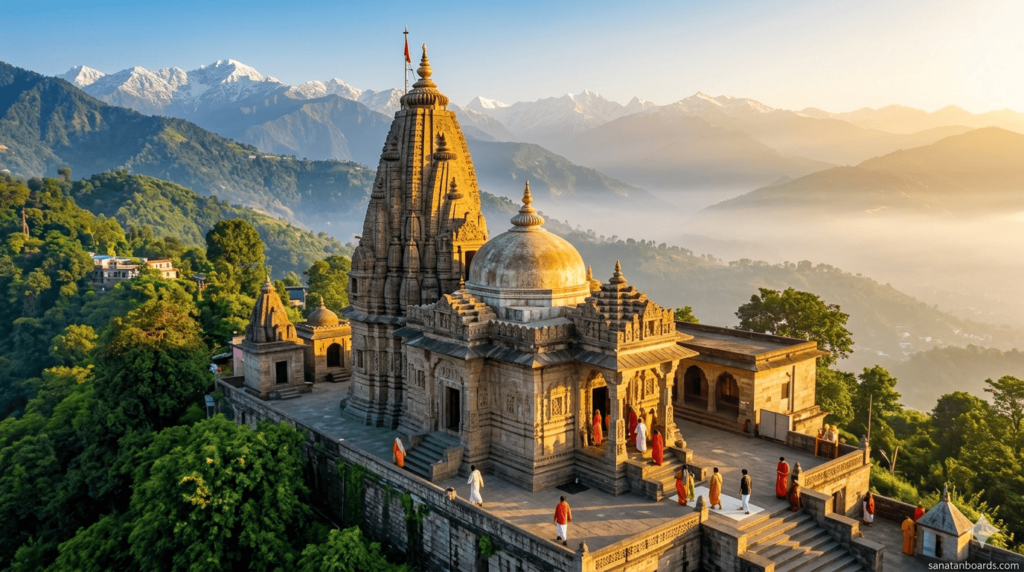
What Is Kangra Devi Temple (Himachal Pradesh) ?
The Kangra Devi Temple is a prominent Hindu pilgrimage site dedicated to Goddess Brajeshwari, a manifestation of Goddess Durga. It is one of the most important Shakti Peethas in India, which are sacred sites associated with the divine feminine power. The temple represents spiritual strength, protection, and divine energy, attracting devotees from various parts of the country.
This temple is known for its deep-rooted mythological significance. According to Hindu scriptures, it is believed that after the death of Goddess Sati, Lord Shiva carried her body across the universe, and parts of her body fell at different locations, forming Shakti Peethas. The Kangra Devi Temple is considered the place where her breast fell, symbolizing nourishment and motherhood.
Structurally, the temple is designed with a fortified appearance, reflecting its historical importance and the need for protection during ancient times. The sanctum houses the idol of Goddess Brajeshwari, adorned with ornaments and offerings from devotees. The temple complex also includes smaller shrines dedicated to other deities.
The temple is not only a religious site but also a cultural center where traditions, rituals, and festivals are preserved and celebrated. Daily prayers, special rituals, and grand festivals like Navratri highlight the spiritual vibrancy of the temple.
Who Is Required Kangra Devi Temple (Himachal Pradesh)
The Kangra Devi Temple holds importance for a wide range of individuals, particularly those seeking spiritual guidance, cultural understanding, and religious fulfillment. Primarily, it is required by devotees of Goddess Durga who visit the temple to offer prayers, seek blessings, and fulfill vows.
Pilgrims from across India consider the temple an essential destination in their spiritual journey. It is especially significant for those who follow Shakti worship, as the temple represents one of the powerful centers of divine feminine energy. Devotees believe that visiting this temple can bring prosperity, health, and protection from negative forces.
The temple is also important for historians and researchers who study ancient Indian traditions, architecture, and mythology. Its historical background, including invasions and reconstructions, provides valuable insights into India’s past and cultural resilience.
Tourists and travelers interested in exploring the natural beauty and spiritual heritage of Himachal Pradesh also find the temple highly relevant. It offers a unique blend of scenic landscapes and religious significance, making it a popular destination.
Additionally, the temple is important for local communities as it contributes to their economic and social well-being. Many people depend on pilgrimage tourism for their livelihood, including shopkeepers, guides, and hospitality providers.
When Kangra Devi Temple (Himachal Pradesh) Is Required ?
The significance of the Kangra Devi Temple becomes particularly evident during specific times and occasions when spiritual practices and religious observances are at their peak. One of the most important times when the temple is required is during the festival of Navratri, which is celebrated twice a year. During this period, thousands of devotees visit the temple to worship Goddess Durga and participate in rituals.
Navratri is considered highly auspicious, and visiting the temple during this time is believed to bring immense blessings and fulfillment of desires. Special पूजा (rituals), offerings, and ceremonies are conducted, creating a vibrant and spiritually charged atmosphere.
Apart from festivals, the temple is required during personal milestones and challenges in devotees’ lives. People visit the temple when they are starting new ventures, seeking solutions to problems, or expressing gratitude for success and well-being. It serves as a place of hope and reassurance during difficult times.
The temple also becomes important during seasonal tourism periods, particularly in summer and early winter, when the weather in Himachal Pradesh is pleasant. During these times, pilgrims and tourists combine spiritual visits with sightseeing, making the temple a key destination.
Historically, the temple has been required during times of crisis and rebuilding. After natural disasters like earthquakes, the reconstruction of the temple symbolized collective faith and determination. This highlights its role not just as a religious site but also as a symbol of resilience.
Additionally, the temple is relevant during cultural and educational visits, where students and researchers explore its historical and mythological significance. It provides a real-world context for understanding ancient traditions and religious practices.
In conclusion, the Kangra Devi Temple is required during festivals, personal life events, tourism seasons, and cultural studies. Its relevance extends beyond specific times, making it a timeless center of faith and spirituality.
Where Kangra Devi Temple (Himachal Pradesh) Is Required ?
The Kangra Devi Temple is required and significant primarily in the geographical and cultural context of northern India, especially in the state of Himachal Pradesh. Situated in the town of Kangra, the temple is strategically located in a region known for its natural beauty and spiritual heritage.
Within Himachal Pradesh, the temple is a central pilgrimage destination, forming part of a network of religious sites that attract devotees throughout the year. It is often included in spiritual tours that cover multiple temples in the region, enhancing its importance as a religious hub.
On a broader scale, the temple is required across India as one of the major Shakti Peethas. Devotees from different states travel long distances to visit the temple, making it a nationally recognized spiritual center. Its presence contributes to the cultural unity of the country by bringing together people from diverse backgrounds.
Internationally, the temple holds significance for the Indian diaspora and foreign tourists interested in Hindu culture and spirituality. It represents India’s rich religious traditions and serves as a point of cultural exchange and understanding.
The temple is also required in academic and research contexts, where it is studied as an example of ancient architecture, mythology, and religious practices. Universities and scholars often refer to it when exploring topics related to Indian heritage.
Economically, the temple is significant in the local region, supporting tourism and related industries. It creates opportunities for employment and business, making it an essential part of the regional economy.
Thus, the Kangra Devi Temple is required not only in its physical location but also in cultural, national, and global contexts. Its influence extends far beyond its geographical boundaries.
How Kangra Devi Temple (Himachal Pradesh) Is Required ?
The Kangra Devi Temple is required in multiple ways, reflecting its spiritual, cultural, and socio-economic importance. One of the primary ways it is required is through religious practices. Devotees visit the temple to perform rituals, offer prayers, and seek blessings from Goddess Brajeshwari. These practices help individuals connect with their faith and maintain spiritual well-being.
The temple is also required as a center for preserving cultural traditions. Festivals, rituals, and ceremonies conducted here ensure that ancient customs are passed down through generations. It acts as a living institution that keeps cultural heritage alive.
Another way the temple is required is through tourism. It attracts a large number of visitors, contributing to the development of infrastructure such as roads, hotels, and local markets. This, in turn, supports the economy of the region and provides livelihood opportunities for local residents.
Educationally, the temple serves as a valuable resource for learning about history, mythology, and architecture. Students and researchers study the temple to gain insights into ancient Indian civilization and religious practices.
The temple is also required for community bonding and social interaction. It brings people together during festivals and events, fostering a sense of unity and shared identity.
Furthermore, the temple plays a role in promoting environmental awareness. Being located in a natural setting, it encourages visitors to appreciate and preserve the surrounding environment.
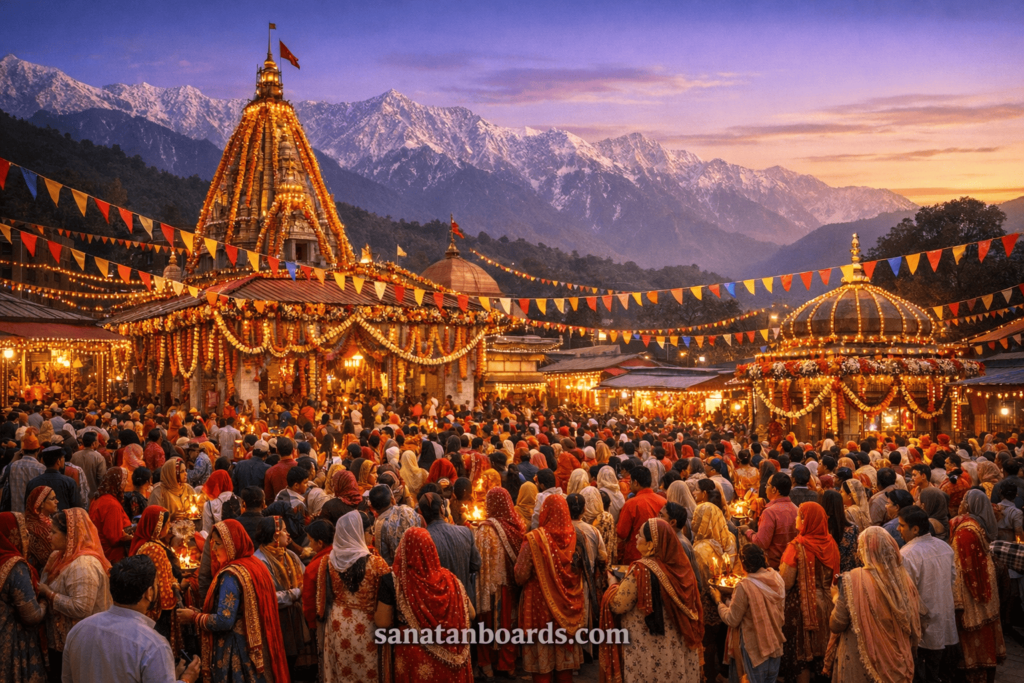
Case Study On Kangra Devi Temple (Himachal Pradesh)
The Kangra Devi Temple serves as a compelling case study illustrating the dynamic relationship between religion, history, economy, and community development. Located in the culturally rich region of Kangra, the temple has evolved over centuries, adapting to political, environmental, and social changes while maintaining its spiritual importance.
Historically, the temple has experienced repeated cycles of destruction and reconstruction. It was targeted by invaders due to its immense wealth and religious prominence. One of the most notable events was the attack by Mahmud of Ghazni in the 11th century, which led to large-scale destruction. Later, natural disasters such as earthquakes also caused severe damage to the structure. Despite these setbacks, the temple was rebuilt multiple times by devotees and rulers, symbolizing resilience, continuity, and unwavering faith.
From an economic perspective, the temple plays a vital role in regional development. Pilgrimage tourism is a major driver of the local economy. Thousands of visitors arrive throughout the year, especially during festivals like Navratri, leading to increased demand for accommodation, food services, transportation, and local goods. Small businesses, vendors, and artisans benefit significantly from this consistent flow of pilgrims, making the temple a cornerstone of economic activity in the region.
Socially, the temple acts as a unifying force. It brings together people from different cultural, linguistic, and regional backgrounds, fostering a sense of unity and shared identity. Religious gatherings and festivals create opportunities for community interaction and cultural exchange. The temple also supports charitable activities such as food distribution and social services, contributing to the welfare of society.
From a management standpoint, the temple provides insights into handling large-scale religious tourism. Authorities have implemented crowd control measures, security systems, and infrastructure improvements to ensure safety and convenience. These practices serve as a model for managing other pilgrimage destinations in India.
Environmentally, the temple’s location in a hilly region presents challenges such as waste management and ecological preservation. Efforts have been made to maintain cleanliness and promote sustainable tourism practices. Awareness campaigns encourage visitors to respect the natural surroundings and reduce environmental impact.
Academically, the temple is an important subject for research in fields such as history, archaeology, and religious studies. Its architectural features, inscriptions, and rituals offer valuable insights into ancient Indian civilization.
In conclusion, the Kangra Devi Temple stands as a multifaceted institution influencing various aspects of society. Its ability to withstand challenges while continuing to thrive makes it an exemplary case of cultural resilience and sustainable development.
White Paper On Kangra Devi Temple (Himachal Pradesh)
The Kangra Devi Temple represents a significant intersection of religious heritage, economic development, and cultural preservation. This white paper aims to analyze its current status, challenges, and future opportunities in a structured and strategic manner.
The temple’s primary importance lies in its designation as a Shakti Peetha, making it a major pilgrimage destination. It attracts a large number of devotees annually, contributing to the religious tourism sector in Himachal Pradesh. This influx of visitors generates revenue not only for the temple administration but also for local businesses and government authorities through tourism-related activities.
However, the growing number of visitors presents several challenges. One of the key issues is overcrowding, especially during peak seasons such as Navratri. Managing large crowds requires efficient planning, infrastructure, and security measures. Without proper management, overcrowding can lead to safety concerns and reduced visitor satisfaction.
Another challenge is environmental sustainability. The increase in tourism has led to concerns about waste management, pollution, and ecological imbalance. The temple’s location in a sensitive hilly region makes it essential to adopt eco-friendly practices. Implementing sustainable waste disposal systems, promoting the use of biodegradable materials, and encouraging responsible tourism are critical steps.
Technological integration offers significant opportunities for improvement. Digital platforms can be used for online booking, crowd monitoring, and information dissemination. Mobile applications and virtual tours can enhance accessibility and provide better guidance to visitors. These innovations can streamline operations and improve overall efficiency.
Infrastructure development is another important aspect. Improving roads, transportation facilities, and accommodation options can enhance the visitor experience. Collaboration between government bodies and private stakeholders can help in developing modern yet culturally sensitive infrastructure.
The temple also has potential for expansion as a cultural and educational hub. Organizing cultural programs, exhibitions, and research initiatives can attract a wider audience. Partnerships with academic institutions can promote research and documentation of the temple’s history and significance.
Policy support plays a crucial role in ensuring #Sanatanboardsinvasai sustainable development. Government initiatives focused on heritage conservation, tourism promotion, and environmental protection can provide the necessary framework for growth.
Industry Application Of Kangra Devi Temple (Himachal Pradesh)
The Kangra Devi Temple has wide-ranging applications across multiple industries, demonstrating how religious heritage can influence economic, cultural, and educational sectors. Its impact extends beyond spirituality, making it a valuable asset in various domains.
In the tourism industry, the temple is a major attraction that drives both domestic and international travel. Pilgrimage tourism forms a significant segment of India’s travel sector, and the Kangra Devi Temple plays a crucial role in this ecosystem. Tour operators design specialized packages that include visits to the temple along with nearby attractions, boosting regional tourism.
The hospitality industry benefits greatly from the temple’s popularity. Hotels, guesthouses, restaurants, and transport services experience increased demand, especially during peak seasons. This creates employment opportunities and contributes to the economic growth of the Kangra region. Local entrepreneurs and small businesses thrive due to the steady influx of visitors.
In the cultural and heritage management sector, the temple serves as a model for preserving historical sites. It demonstrates how ancient structures can be maintained while accommodating modern requirements. Heritage management professionals can study its restoration efforts and management practices to apply similar strategies elsewhere.
The education and research industry also finds significant value in the temple. It is used as a case study in subjects such as history, archaeology, religious studies, and tourism management. Students and scholars analyze its architecture, mythology, and socio-economic impact to gain practical insights.
The temple also supports the handicraft and local product industry. Pilgrims often purchase souvenirs, traditional items, and religious artifacts, promoting local craftsmanship. This helps preserve traditional skills and provides income for artisans.
In the digital and media industry, the temple has potential for content creation, virtual tours, and online engagement. Documentaries, blogs, and social media platforms can showcase its significance, reaching a global audience.
Additionally, the temple contributes to community development and social services. Charitable activities, employment generation, and infrastructure development improve the quality of life for local residents.
In conclusion, the Kangra Devi Temple is not just a religious site but a multifaceted institution with applications across tourism, hospitality, education, culture, and #Sanatanboardsinmumbai media industries. Its influence highlights the broader impact of cultural heritage on modern society.
source : India To Bharat
ASK FAQ
1. What is Kangra Devi Temple famous for?
Kangra Devi Temple is famous as one of the 51 Shakti Peethas in India, dedicated to Goddess Brajeshwari (a form of Goddess Durga). It is known for its strong spiritual significance, ancient history, and large number of devotees visiting during Navratri.
2. Where is Kangra Devi Temple located?
Kangra Devi Temple is located in the town of Kangra in the state of Himachal Pradesh. It is surrounded by scenic Himalayan landscapes and is easily accessible by road.
3. Why is Kangra Devi Temple important?
The temple is important because it is believed to be the place where a part of Goddess Sati’s body fell, making it a powerful spiritual center. Devotees visit to seek blessings for prosperity, health, and protection.
4. When is the best time to visit Kangra Devi Temple?
The best time to visit is during Navratri, when the temple hosts grand celebrations and rituals. The months from March to June and September to November also offer pleasant weather for travel.
5. How to reach Kangra Devi Temple?
The temple can be reached by road from major cities in Himachal Pradesh. The nearest railway station is in Kangra, and the closest airport is in Dharamshala. Local taxis and buses are available for easy access.
Table of Contents
Disclaimer
This content is created for informational, educational, and knowledge-sharing purposes only. The information provided is based on general historical, cultural, and religious references and may vary according to different sources and beliefs. It is not intended to offend any religious sentiments or provide definitive historical claims. Readers are encouraged to verify details from official or scholarly sources if required.