
ANNAMALAIYAR TEMPLE (TAMIL NADU) – ARUNACHALA JYOTI DARSHAN
The Annamalaiyar Temple, located in the sacred town of Tiruvannamalai, is one of the most revered pilgrimage destinations dedicated to Lord Shiva. Known for its spiritual grandeur and architectural magnificence, the temple is deeply associated with the concept of fire, representing one of the five elemental manifestations (Pancha Bhoota) of Shiva as Agni (fire). Among the many sacred events celebrated here, the Arunachala Jyoti Darshan holds a unique and profound significance for devotees and spiritual seekers.
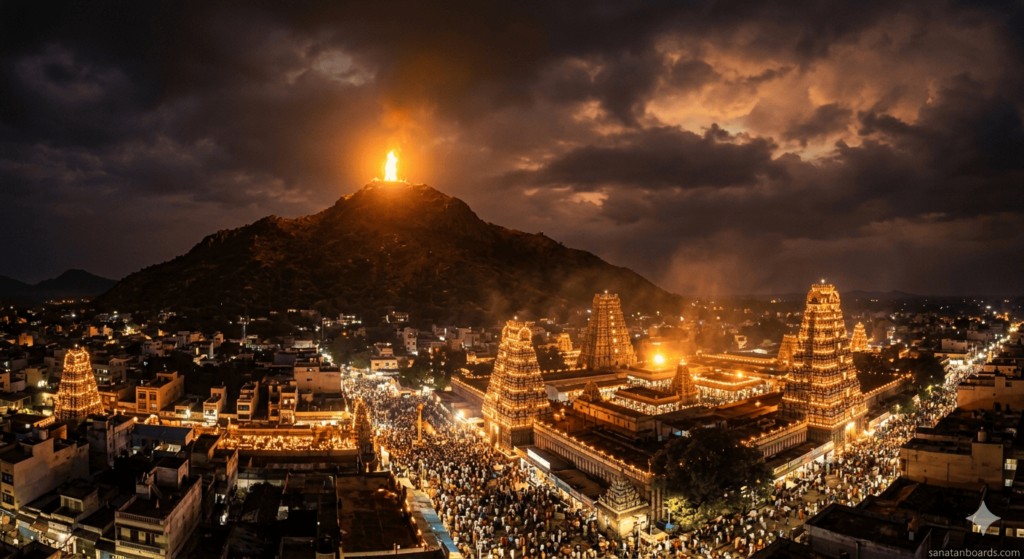
Arunachala Jyoti Darshan refers to the divine sighting of a sacred flame lit atop the Arunachala Hill during the grand festival of Karthigai Deepam. This flame symbolizes the infinite cosmic light of Shiva, representing enlightenment, knowledge and the destruction of ignorance. The tradition dates back centuries and is rooted in ancient legends that describe Shiva appearing as an endless pillar of fire to demonstrate his supreme power.
Every year, millions of devotees gather to witness this extraordinary event, believing that the darshan of the sacred jyoti purifies the soul and grants spiritual liberation. The temple itself with its towering gopurams and intricate carvings, enhances the divine experience, making it not just a place of worship but also a center of cultural and spiritual heritage.
The significance of Arunachala Jyoti Darshan extends beyond ritual practice. It represents the eternal light within every individual and encourages seekers to pursue inner realization. This sacred phenomenon continues to inspire devotion, faith, and unity among people from different walks of life, making it an enduring symbol of spiritual awakening.
What Is Annamalaiyar Temple (Tamil Nadu) – Arunachala Jyoti Darshan ?
The Annamalaiyar Temple – Arunachala Jyoti Darshan is a sacred spiritual event centered around the manifestation of divine light, symbolizing the infinite nature of Lord Shiva. It is closely associated with the Arunachala Hill, which is believed to embody Shiva himself in the form of fire.
Arunachala Jyoti Darshan specifically refers to the ceremonial lighting of a massive दीप (lamp) atop the hill during the festival of Karthigai Deepam. The flame is visible for miles and is considered a direct representation of Shiva’s cosmic form. According to mythology, Shiva once appeared as an endless column of fire to settle a dispute between Brahma and Vishnu, demonstrating that he is beyond comprehension. This event is commemorated through the lighting of the jyoti.
The darshan (viewing) of this sacred flame is believed to cleanse one’s sins and elevate spiritual consciousness. Devotees undertake rituals such as girivalam (circumambulation of the hill), fasting, and prayer to prepare themselves for this divine sight.
The temple serves as the focal point of these celebrations, where elaborate rituals, chants, and offerings are performed. The event is not only religious but also deeply symbolic, representing the triumph of light over darkness and knowledge over ignorance.
Who Is Required Annamalaiyar Temple (Tamil Nadu) – Arunachala Jyoti Darshan ?
The Arunachala Jyoti Darshan at Annamalaiyar Temple is considered essential for a wide range of individuals seeking spiritual growth, inner peace, and divine blessings. Primarily, it is deeply significant for devotees of Lord Shiva, who believe that witnessing the sacred flame grants liberation from the cycle of birth and death.
Spiritual seekers and practitioners are among those who feel a strong calling toward this event. The symbolism of the jyoti as the ultimate truth and consciousness resonates with individuals pursuing meditation, self-realization, and enlightenment. For them, the darshan serves as a reminder of the inner light that exists within every human being.
Pilgrims from across India and beyond consider this event a once-in-a-lifetime spiritual opportunity. Many undertake long journeys and rigorous practices, including fasting and barefoot walking, to participate in the ritual. It is believed that sincere participation enhances devotion and strengthens one’s connection with the divine.
Scholars and cultural enthusiasts also find value in this event, as it represents a rich blend of mythology, tradition, and architectural heritage. The temple and its associated rituals offer insights into ancient Indian philosophies and religious practices.
Additionally, individuals facing personal challenges often seek solace in the Arunachala Jyoti Darshan, believing that divine intervention can bring clarity, strength, and resolution to their problems.
Thus, the event is not limited to a specific group but is open to anyone who seeks spiritual enrichment, cultural understanding, or a deeper connection with the universal truth symbolized by the sacred flame.
When Annamalaiyar Temple (Tamil Nadu) – Arunachala Jyoti Darshan Required ?
The Arunachala Jyoti Darshan at Annamalaiyar Temple is primarily observed during the auspicious festival of Karthigai Deepam, which usually falls in the Tamil month of Karthigai (November–December). This period is considered highly sacred in Hindu tradition, especially for devotees of Lord Shiva.
The most important moment occurs on the full moon day (Pournami) when the grand दीप is lit atop the Arunachala Hill. This specific timing is believed to align with cosmic energies, enhancing the spiritual impact of the darshan. Devotees prepare for this moment through days of rituals, fasting, and temple visits.
Apart from the annual festival, the concept of Arunachala Jyoti Darshan holds relevance at various times in an individual’s life. It is particularly significant during periods of spiritual seeking, personal transformation, or emotional turmoil. Many believe that participating in or even mentally visualizing the jyoti during such times can bring clarity and inner strength.
The practice is also considered important during major life transitions, such as the beginning of a new journey, overcoming obstacles, or seeking blessings for success and well-being. The symbolic nature of the flame as a source of light and guidance makes it relevant in moments of uncertainty.
In addition, the full moon days throughout the year are considered favorable for visiting Tiruvannamalai and performing girivalam, even if the grand jyoti event is not taking place. These occasions are believed to carry spiritual benefits similar to the main festival, albeit on a smaller scale.
Thus, while the primary “when” is tied to Karthigai Deepam, the spiritual essence of Arunachala Jyoti Darshan makes it relevant at any time when one seeks divine guidance, purification, or enlightenment.
Where Annamalaiyar Temple (Tamil Nadu) – Arunachala Jyoti Darshan Required ?
The Arunachala Jyoti Darshan is intrinsically linked to the sacred geography of Annamalaiyar Temple and the Arunachala Hill. Located in Tiruvannamalai, this site is regarded as one of the most powerful spiritual centers in India.
The primary location for experiencing this event is the temple परिसर, where rituals and ceremonies are conducted with great devotion. However, the most significant aspect of the darshan is the lighting of the jyoti on the hilltop, which transforms the entire region into a sacred space. Devotees gather in and around the town to witness this divine spectacle.
The concept of “where” extends beyond the physical location. Spiritually, Arunachala is believed to reside within every individual as the inner flame of consciousness. Thus, while the physical darshan takes place in Tiruvannamalai, its essence can be experienced anywhere through devotion and meditation.
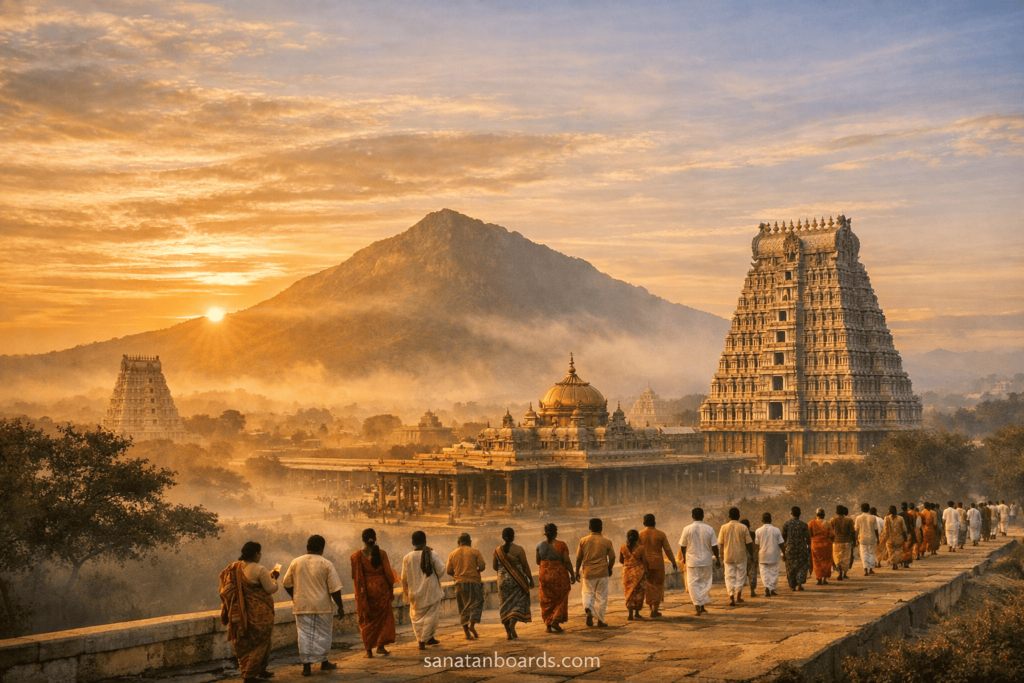
Pilgrims often perform girivalam around the hill, covering a distance of approximately 14 kilometers. This path itself is considered sacred, with numerous shrines and meditation spots along the way. Each location contributes to the overall spiritual experience of the darshan.
In a broader sense, Arunachala Jyoti Darshan is relevant in any place where spiritual awareness is cultivated. Temples, homes, and meditation centers often recreate symbolic दीप rituals to honor the same principle of divine light.
Nevertheless, the unique energy and historical significance of Tiruvannamalai make it the most powerful and authentic place for experiencing the full impact of the darshan. The convergence of natural, spiritual, and cultural elements at this location creates an atmosphere that is difficult to replicate elsewhere.
How Annamalaiyar Temple (Tamil Nadu) – Arunachala Jyoti Darshan Required ?
The process of experiencing Arunachala Jyoti Darshan at Annamalaiyar Temple involves a combination of physical participation, mental preparation, and spiritual devotion. Devotees typically begin their journey by visiting the temple and offering prayers to Lord Shiva.
Preparation plays a crucial role in the experience. Many devotees observe fasting, maintain discipline, and engage in chanting or meditation in the days leading up to the event. This helps purify the mind and body, making them receptive to the spiritual energy of the jyoti.
On the day of Karthigai Deepam, thousands gather to witness the lighting of the flame. The moment the jyoti is lit, devotees chant prayers and express their devotion with deep emotion. The sight of the flame is believed to be a direct connection with the divine.
Another important aspect is girivalam, where devotees walk around the Arunachala Hill, often barefoot. This act is considered a form of worship and penance, symbolizing surrender to the divine.
For those unable to attend physically, the darshan can be experienced through meditation and visualization. By focusing on the concept of divine light, individuals can connect with the spiritual essence of the event from anywhere.
Case Study On Annamalaiyar Temple (Tamil Nadu) – Arunachala Jyoti Darshan
The Arunachala Jyoti Darshan at Annamalaiyar Temple presents a compelling case study that illustrates the intersection of spirituality, human behavior, and socio-economic dynamics. Each year, during the festival of Karthigai Deepam, millions of devotees gather in Tiruvannamalai to witness the lighting of the sacred flame atop Arunachala Hill. This large-scale participation offers valuable insights into the impact of religious events on individuals and communities.
A key observation from this case study is the psychological transformation experienced by devotees. Many participants report a deep sense of peace, emotional release, and spiritual clarity after witnessing the jyoti. For instance, individuals dealing with stress or personal challenges often describe the experience as transformative, attributing their renewed sense of purpose to the symbolic power of divine light associated with Lord Shiva. This highlights the role of faith-based practices in enhancing mental well-being.
Another important dimension is the social cohesion fostered by the event. People from diverse regions, languages, and backgrounds come together with a shared sense of devotion. This collective participation strengthens cultural identity and promotes unity. The act of girivalam, where devotees walk around the hill, further reinforces this communal spirit, as individuals support and encourage each other throughout the journey.
Economically, the event has a significant impact on the local ecosystem. Small businesses, street vendors, transport services, and accommodation providers experience a surge in demand. Temporary employment opportunities are created, benefiting local residents. However, this economic boost also brings challenges, such as price inflation and resource strain, which require effective regulation.
From an administrative perspective, managing such a massive gathering involves complex planning. Authorities implement crowd control measures, traffic management systems, and emergency response strategies to ensure safety. Technological interventions, including surveillance and communication systems, are increasingly being used to handle the scale of the event.
Environmental concerns also emerge as a critical aspect of the case study. The large influx of visitors can lead to waste generation and ecological pressure on the Arunachala Hill. In response, initiatives promoting cleanliness, waste segregation, and sustainable practices have been introduced.
Overall, this case study demonstrates that Arunachala Jyoti Darshan is not merely a religious ritual but a multifaceted phenomenon influencing #Sanatanboardsintamilnadu psychological well-being, social harmony, economic activity, and environmental management. It serves as a valuable model for understanding how traditional practices can coexist with modern challenges.
White Paper On Annamalaiyar Temple (Tamil Nadu) – Arunachala Jyoti Darshan
The Arunachala Jyoti Darshan at Annamalaiyar Temple represents a unique convergence of spirituality, cultural heritage, and economic activity. This white paper aims to analyze its broader implications and identify opportunities for sustainable development and innovation.
From a cultural standpoint, the event plays a vital role in preserving ancient traditions associated with Lord Shiva worship. The rituals, chants, and ceremonial practices observed during Karthigai Deepam serve as living examples of India’s rich spiritual heritage. The temple’s architectural grandeur further enhances its cultural significance, attracting historians, researchers, and tourists.
Economically, Arunachala Jyoti Darshan acts as a major driver of regional growth. The influx of pilgrims stimulates various sectors, including hospitality, transportation, retail, and local crafts. This seasonal economic activity provides livelihoods to thousands of people. However, the reliance on festival-based income also highlights the need for diversification and long-term planning.
In terms of infrastructure, the event underscores the importance of scalable systems capable of handling large crowds. Investments in roads, sanitation, and public facilities are essential to ensure a smooth experience for visitors. The integration of smart technologies, such as real-time crowd monitoring and digital information systems, can significantly improve efficiency and safety.
Environmental sustainability is another critical area addressed in this white paper. The ecological sensitivity of Arunachala Hill requires careful management to prevent degradation. Initiatives such as eco-friendly lighting, waste reduction campaigns, and awareness programs can help balance religious practices with environmental preservation.
The role of digital transformation cannot be overlooked. Live streaming of the jyoti darshan allows global audiences to participate virtually, expanding the reach of the event. Mobile applications providing guidance, schedules, and safety alerts can enhance the overall experience for pilgrims.
Socially, the event fosters inclusivity and collective participation. It serves as a platform for cultural exchange and community bonding. However, ensuring accessibility for elderly and differently-abled individuals remains an area for improvement.
In conclusion, this white paper emphasizes the need for a holistic approach to managing Arunachala Jyoti Darshan. By integrating cultural preservation, economic development, #Sanatanboardsinvasai technological innovation, and environmental sustainability, the event can continue to thrive while addressing contemporary challenges.
Industry Application On Annamalaiyar Temple (Tamil Nadu) – Arunachala Jyoti Darshan
The Arunachala Jyoti Darshan at Annamalaiyar Temple offers valuable applications across multiple industries, extending far beyond its religious significance. Its scale, organization, and impact provide insights that can be adapted to various sectors.
In the tourism industry, the event serves as a prime example of destination-based pilgrimage tourism. The influx of visitors to Tiruvannamalai highlights the importance of branding cultural and spiritual destinations. Tourism boards can leverage similar events to promote regional heritage, attract international visitors, and boost local economies.
The hospitality sector benefits significantly from the surge in demand during the festival period. Hotels, guest houses, and food services experience high occupancy rates, demonstrating the need for scalable operations and efficient service delivery. This scenario provides a model for managing peak-season demand in other tourist destinations.
Event management is another field that can draw lessons from Arunachala Jyoti Darshan. Handling millions of attendees requires meticulous planning, coordination, and risk management. Techniques used for crowd control, traffic regulation, and emergency response can be applied to large-scale events such as concerts, sports tournaments, and public gatherings.
In the field of logistics and transportation, the event showcases the importance of coordinated systems to manage the movement of people. Temporary transport arrangements, route planning, and real-time communication are critical components that can be adapted to urban planning and disaster management scenarios.
The media and broadcasting industry plays a crucial role in expanding the reach of the event. Live telecasts and digital streaming enable remote participation, demonstrating the potential of technology in bridging geographical barriers. This approach can be utilized for other cultural and global events to enhance accessibility.
The wellness and spirituality industry also finds relevance in the principles associated with Arunachala Jyoti Darshan. The concept of inner light and self-realization aligns with modern practices such as meditation, mindfulness, and holistic healing. Wellness centers and retreats can incorporate these philosophies into their programs.
Additionally, the event provides insights for environmental management. Strategies implemented to handle waste, maintain cleanliness, and #Sanatanboardsinmumbai protect natural resources can be applied to other large gatherings and tourist destinations.
source : Tarkshya Pictures by Sonu Surag
ASK FAQ
1. What is Arunachala Jyoti Darshan at Annamalaiyar Temple?
Arunachala Jyoti Darshan is a sacred event at Annamalaiyar Temple where a divine flame is lit on Arunachala Hill during Karthigai Deepam. It symbolizes the infinite light form of Lord Shiva and represents spiritual enlightenment.
2. When is Arunachala Jyoti Darshan celebrated?
Arunachala Jyoti Darshan is celebrated during the Karthigai Deepam festival, usually in November or December. The main event occurs on the full moon day when the sacred flame is lit atop the hill.
3. Why is Arunachala Jyoti Darshan important for devotees?
The darshan is considered highly sacred as it symbolizes the divine light of Lord Shiva. Devotees believe that witnessing it removes negativity, purifies the soul, and brings spiritual growth.
4. Where does Arunachala Jyoti Darshan take place?
It takes place in Tiruvannamalai at the Annamalaiyar Temple and Arunachala Hill, where the sacred flame is lit and visible across the town.
5. How can devotees participate in Arunachala Jyoti Darshan?
Devotees participate by visiting Annamalaiyar Temple, performing prayers, fasting, and doing girivalam (circumambulation of the hill). They gather to witness the lighting of the jyoti during the festival.
Table of Contents
Disclaimer
This content is intended for informational and knowledge-sharing purposes only. The details provided are based on cultural, historical, and spiritual interpretations associated with the topic. Readers are encouraged to verify specific practices, dates, and beliefs through official or local sources before making any decisions related to travel or participation.