
SOMNATH (GUJARAT)
Somnath is one of the most significant cultural, historical, and spiritual destinations located in the western state of Gujarat, India. It is widely known for its deep-rooted heritage and its association with ancient Indian traditions and mythology. Situated along the Arabian Sea coastline in the Gir Somnath district, this place attracts millions of visitors every year due to its religious importance, architectural beauty, and historical legacy.
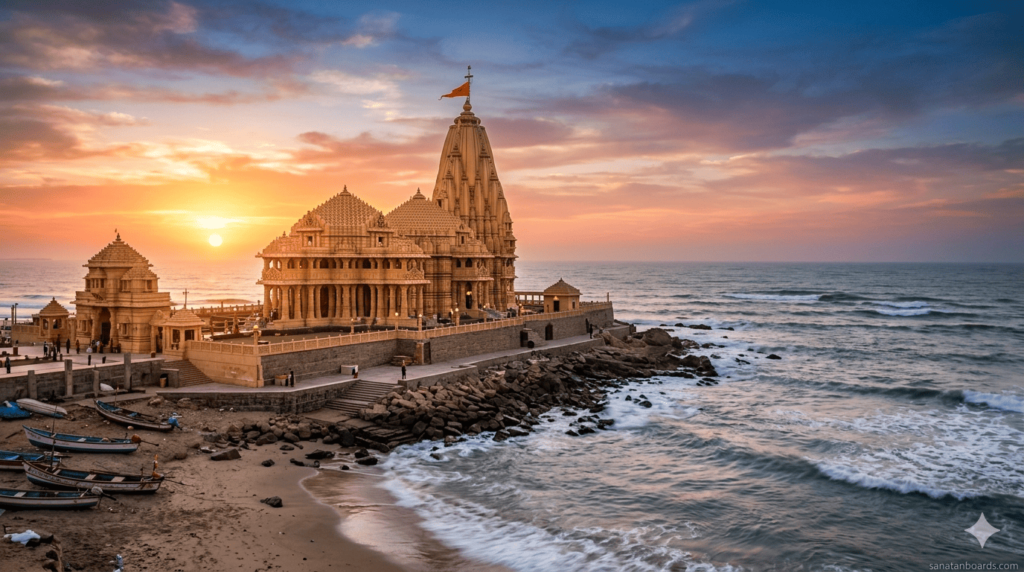
Somnath holds a special place in Indian civilization as it is home to one of the twelve Jyotirlingas dedicated to Lord Shiva. The presence of this sacred shrine has made it a major pilgrimage destination for centuries. The site has witnessed multiple invasions and reconstructions, symbolizing resilience faith, and cultural continuity. The current structure stands as a restored version of the temple rebuilt after India’s independence, reflecting modern craftsmanship blended with ancient design principles.
The surrounding region of Somnath is also known for its scenic beauty, with the Arabian Sea offering a serene backdrop to the temple complex. The rhythmic sound of waves, combined with the spiritual atmosphere, creates a peaceful environment for visitors. Apart from religious tourism, Somnath also contributes to heritage tourism due to its archaeological and historical significance.
The temple architecture reflects intricate carvings, towering spires, and detailed stone work that showcases the craftsmanship of ancient Indian artisans. The site is not just a religious center but also a symbol of India’s cultural revival and unity. Over time, Somnath has evolved into a destination that represents devotion, history, and architectural brilliance, making it one of the most visited spiritual landmarks in India.
What Is Somnath (Gujarat) ?
Somnath is a historically and spiritually significant coastal town in Gujarat, primarily known for its famous Shiva temple, one of the twelve Jyotirlingas in India. It is considered a sacred place where spirituality, history, and culture come together. The name “Somnath” means “Lord of the Moon,” which refers to Lord Shiva, the presiding deity of the temple.
The most prominent landmark here is the Somnath Temple, which holds immense religious importance in Hindu tradition. According to ancient beliefs, the original temple was built by the Moon God (Soma) himself, and since then, it has been rebuilt several times due to repeated invasions throughout history. Each reconstruction represents devotion and cultural preservation.
Somnath is not just a religious site but also a symbol of India’s historical resilience. The temple has been destroyed and rebuilt multiple times by various rulers, yet it continues to stand as a powerful representation of faith and determination. The present structure was reconstructed in the 20th century and reflects a blend of Chalukya-style architecture with modern engineering techniques.
Geographically, Somnath is located near the Arabian Sea, which enhances its scenic beauty and spiritual ambiance. The sound of waves, the sea breeze, and the temple chants together create a deeply peaceful atmosphere. It is also close to other tourist attractions such as beaches, caves, and wildlife sanctuaries.
Who Is Required Somnath (Gujarat) ?
Somnath serves a wide range of people for different spiritual, cultural, historical, and tourism-related purposes. It is primarily required by devotees of Lord Shiva who seek blessings, peace of mind, and spiritual fulfillment. For them, Somnath is a sacred destination where they can perform rituals, prayers, and offerings with deep devotion.
Pilgrims from across India and the world visit Somnath to experience its religious significance. It is believed that visiting the temple helps individuals attain spiritual cleansing and inner peace. Therefore, it is highly important for people who follow Hindu traditions and Jyotirlinga pilgrimage routes.
Historians and researchers also find Somnath important because of its rich past. The temple’s repeated destruction and reconstruction make it a subject of historical study related to invasions, cultural resilience, and architectural evolution. Scholars studying Indian heritage often refer to Somnath as a key example of cultural endurance.
Tourists and travelers also require Somnath as a destination for exploration and leisure. Its coastal location, peaceful environment, and architectural beauty attract photography enthusiasts, cultural explorers, and nature lovers. Educational groups and students also visit Somnath to learn about Indian history and temple architecture.
In addition, architects and conservationists study Somnath to understand ancient building techniques and modern restoration practices. It is also important for government and tourism authorities as it contributes significantly to cultural tourism and local economic development.
Thus, Somnath is required by a diverse group of people including devotees, historians, tourists, students, and professionals who seek spiritual, educational, or cultural value from this iconic destination.
When Somnath (Gujarat) Is Required ?
Somnath is considered important at various times depending on religious beliefs, cultural practices, tourism seasons, and personal spiritual needs. For devotees, it is especially required during major Hindu festivals such as Maha Shivaratri, Kartik Purnima, and Shravan month. During these periods, thousands of pilgrims visit the temple to offer prayers and perform rituals dedicated to Lord Shiva.
It is also required during personal spiritual journeys. Many individuals choose to visit Somnath when they seek peace, emotional healing, or answers to life challenges. In such moments, the temple serves as a place for meditation, reflection, and devotion. The calm environment near the Arabian Sea enhances this spiritual experience.
From a tourism perspective, Somnath is required throughout the year, but the best time is during the winter season when the weather is pleasant. Between October and March, tourists prefer visiting due to comfortable temperatures and clearer skies, making sightseeing more enjoyable.
Educational institutions often organize visits to Somnath during academic field trips or history-related study programs. These visits are usually scheduled when students are learning about Indian heritage, architecture, or religious studies. Researchers may visit at any time of the year depending on their study requirements.
Government and cultural organizations also consider Somnath important during events related to national heritage celebrations or cultural festivals. Special arrangements and programs are often conducted during such occasions to promote tourism and awareness.
Additionally, Somnath is required during times of personal pilgrimage planning. Many devotees include it in a larger pilgrimage circuit covering other Jyotirlingas. This makes timing important based on travel routes and religious calendars.
Where Somnath (Gujarat) Is Required ?
Somnath is primarily required in the context of religious geography, cultural tourism circuits, and historical study locations. Geographically, it is located in the Gir Somnath district of Gujarat, along the western coastline of India near the Arabian Sea. This coastal positioning makes it an important destination for both spiritual and scenic experiences.
Religiously, Somnath is required as part of the Jyotirlinga pilgrimage circuit. Devotees travel across India to visit all twelve Jyotirlingas, and Somnath holds a prominent position among them. It is often the starting or concluding point of this sacred journey, depending on the route chosen by pilgrims.
In tourism, Somnath is required as a key destination in Gujarat’s heritage and cultural tourism map. It is often included in travel itineraries that also cover nearby destinations such as Dwarka, Gir National Park, and Junagadh. Tour operators and travel planners consider it essential due to its popularity and accessibility.
Educationally, Somnath is required in academic discussions, especially in subjects like history, architecture, archaeology, and religious studies. Universities and research institutions include it as a case study site for understanding ancient Indian temple architecture and cultural evolution.
Economically, Somnath is required in the tourism development framework of Gujarat. It plays a role in generating employment, supporting local businesses, and boosting regional infrastructure. Hotels, transport services, and handicraft industries depend significantly on visitors to Somnath.
Spiritually, it is required wherever devotion to Lord Shiva is practiced. It represents a symbolic spiritual center that connects devotees across different regions. Even those who cannot physically visit often include Somnath in their prayers and spiritual imagination.
Thus, Somnath is required not only in its physical location but also in religious routes, tourism circuits, academic research areas, and cultural development zones, making it a multidimensional destination of importance.
How Somnath (Gujarat) Is Required ?
Somnath is required through structured travel systems, religious practices, cultural preservation efforts, and tourism development strategies. Devotees access Somnath through well-connected roadways, railways, and nearby airports. The availability of transportation ensures that pilgrims and tourists can reach the destination easily from different parts of India.
From a religious perspective, Somnath is required through rituals, prayers, and temple traditions. Devotees participate in daily worship ceremonies, special pujas, and festivals. The temple follows traditional practices that maintain spiritual continuity and cultural identity. Priests and temple authorities ensure that rituals are conducted according to ancient customs.
In tourism management, Somnath is required through organized infrastructure such as accommodation, guides, visitor facilities, and security arrangements. Government and tourism departments manage the site to ensure smooth visitor experiences. Information centers and guided tours help visitors understand the historical and spiritual significance of the site.
In educational contexts, Somnath is required through study programs, research documentation, and academic exploration. Students and researchers analyze temple architecture historical records, and cultural narratives. This helps in preserving knowledge and passing it on to future generations.
Technologically, Somnath is required through digital promotion, virtual tours, and online information systems. These tools allow global audiences to learn about Somnath even if they cannot physically visit. This increases its cultural reach and global recognition.
Culturally, Somnath is required through preservation efforts that maintain its heritage value. Restoration projects, archaeological studies, and conservation techniques ensure that the temple remains structurally and historically significant.
Thus, Somnath is required through a combination of physical accessibility, religious traditions, tourism infrastructure, educational systems, and digital platforms, making it a well-supported and continuously active destination.

Case Study On Somnath (Gujarat)
The case study of Somnath focuses on its historical evolution, cultural resilience, tourism development, and religious significance. Somnath represents one of the most remarkable examples of continuity in Indian heritage despite repeated historical disruptions.
Historically, the Somnath temple has undergone multiple cycles of destruction and reconstruction. Various invasions led to its repeated damage, but each time it was rebuilt by devoted rulers and communities. This cycle reflects not only religious devotion but also the determination to preserve cultural identity. The modern reconstruction of the temple after India’s independence stands as a symbol of national unity and revival.
Architecturally, Somnath showcases a blend of ancient Chalukya-style design and modern engineering techniques. The intricate carvings, towering shikhara, and stone craftsmanship highlight the skill of traditional artisans. The structure is designed to withstand coastal weather conditions, demonstrating advanced planning in temple construction.
From a tourism perspective, Somnath has become one of Gujarat’s most visited destinations. The temple attracts millions of pilgrims and tourists annually. Its coastal location enhances its appeal, offering scenic beauty along with spiritual experience. The local economy benefits significantly from tourism-related activities such as hospitality, transport, and handicrafts.
Culturally, Somnath plays a crucial role in preserving Hindu traditions and rituals. Daily worship practices, festivals, and ceremonies maintain a continuous connection with ancient customs. Maha Shivaratri is one of the most important events celebrated here, drawing large crowds and reinforcing its religious importance.
Economically, Somnath contributes to regional development. Infrastructure improvements such as roads, accommodation facilities, and public services have been developed to support tourism. Local employment opportunities have increased due to the growth of the hospitality and service sectors.
From an educational perspective, Somnath serves as a case study in history, archaeology, and religious studies. It provides insights into ancient temple architecture, cultural resilience, and the impact of historical invasions on heritage sites. Researchers analyze inscriptions, structural designs, and historical records associated with the temple.
Environmentally, the location of Somnath near the Arabian Sea presents both opportunities and challenges. Coastal weather conditions influence maintenance and preservation efforts. Conservation strategies are implemented to protect the structure from natural wear and environmental factors.
In conclusion, Somnath stands as a multidimensional case study that integrates history, culture, religion, tourism, economy, and education. It demonstrates #Sanatanboardsinvasai how a heritage site can evolve over time while maintaining its spiritual and cultural essence.
White Paper On Somnath (Gujarat)
A conceptual white paper on Somnath examines its significance as a heritage site, its socio-economic impact, and its role in cultural preservation and tourism development.
Somnath is recognized as one of the most important religious destinations in India, primarily due to the presence of a sacred Shiva temple. The site holds immense spiritual value and attracts pilgrims from across the country and abroad. Its importance is not limited to religion but extends to history, architecture, and national identity.
One of the key aspects of Somnath is its historical resilience. The site has faced repeated destruction and reconstruction over centuries. Despite these challenges, it continues to stand as a symbol of cultural continuity and faith. This resilience highlights the importance of heritage preservation in maintaining national identity.
From a tourism development perspective, Somnath is a major contributor to Gujarat’s tourism economy. The inflow of pilgrims and tourists supports local businesses, creates employment opportunities, and enhances infrastructure development. Hotels, transportation services, and local vendors benefit significantly from this tourism ecosystem.
In terms of infrastructure, Somnath has seen significant improvements over the years. Better roads, accommodation facilities, and visitor amenities have been developed to accommodate increasing tourist inflow. Digital initiatives such as online information systems and virtual tours have further enhanced accessibility.
Culturally, Somnath plays a key role in preserving traditional practices and rituals. The temple continues to follow ancient worship methods, maintaining continuity with historical traditions. Festivals and religious events strengthen community participation and cultural identity.
Educationally, Somnath serves as an important reference point for research in history, archaeology, and architecture. It provides valuable insights into ancient construction techniques, religious practices, and cultural evolution.
Environmentally, the coastal location of Somnath requires sustainable conservation practices. Efforts are made to protect the structure from erosion and weather-related damage. Environmental management plays a crucial role in long-term preservation.
The white paper also highlights the importance #Sanatanboardsingujrat of integrating technology with heritage management. Digital documentation, virtual tours, and online educational content help expand global awareness of Somnath.
Industry Application On Somnath (Gujarat)
Somnath, a major cultural and spiritual landmark in Gujarat, has significant applications across multiple industries, especially due to its religious importance, historical background, and tourism potential.
1. Tourism Industry
Somnath plays a central role in India’s tourism sector. It is one of the most visited pilgrimage destinations in the country due to its association with one of the twelve Jyotirlingas of Lord Shiva. The presence of the Somnath Temple attracts millions of domestic and international visitors every year. This high footfall supports travel agencies, tour operators, and hospitality businesses. Gujarat Tourism also promotes Somnath as part of its heritage circuits, boosting regional tourism growth.
2. Hospitality Industry
The continuous inflow of pilgrims and tourists has led to the development of a strong hospitality ecosystem around Somnath. Hotels, guest houses, dharamshalas, restaurants, and food services benefit directly from visitor demand. Seasonal peaks during festivals like Maha Shivaratri significantly increase occupancy rates, contributing to local economic growth.
3. Transportation and Logistics Industry
Somnath supports transportation networks including railways, roadways, and nearby airports. Taxi services, bus operators, and private travel companies rely on pilgrimage traffic. Logistics services also grow due to the need for supply chain support for hotels, shops, and temple-related activities.
4. Cultural and Heritage Conservation Industry
Somnath is a key site for heritage preservation projects. Archaeologists, historians, and conservation experts work on maintaining and restoring temple structures, artifacts, and surrounding heritage zones. This supports industries involved in restoration materials, stone carving, and architectural research.
5. Education and Research Sector
Educational institutions and research organizations use Somnath as a case study for subjects like Indian history, architecture, archaeology, and religious studies. Field visits, documentation, and research publications contribute to academic development.
6. Media and Digital Industry
Somnath is widely featured in documentaries, films, travel blogs, and digital tourism platforms. Virtual tours, drone photography, and online content creation help promote the site globally. This boosts digital tourism marketing and cultural storytelling industries.
7. Local Handicrafts and Small Business Sector
Local artisans and vendors benefit from selling souvenirs, religious items, handicrafts, and traditional goods to visitors. This supports rural entrepreneurship and small-scale industries in the region.
Conclusion
Overall, Somnath acts as a multi-industry growth driver, influencing tourism, hospitality, transport, education, media, and cultural preservation sectors, #Sanatanboardsinmumbai while also strengthening the regional economy and heritage value.
source : Yatra Mitra
ASK FAQ
1. What is Somnath famous for?
Somnath is famous for the Somnath Temple, one of the twelve Jyotirlingas of Lord Shiva, and is a major pilgrimage and historical site in Gujarat.
2. Where is Somnath located in India?
Somnath is located in the Gir Somnath district of Gujarat, on the western coast of India near the Arabian Sea.
3. Why is Somnath Temple important?
Somnath Temple is important because it is a sacred Jyotirlinga shrine dedicated to Lord Shiva and symbolizes faith, resilience, and Indian heritage.
4. What is the best time to visit Somnath?
The best time to visit Somnath is between October and March when the weather is pleasant and suitable for sightseeing and temple visits.
5. How old is Somnath Temple?
The original Somnath Temple is believed to be ancient, but it has been rebuilt multiple times throughout history, with the current structure reconstructed in modern India.
Table of Contents
DISCLAIMER
This content is created for educational and informational purposes only. It is intended to provide general knowledge and structured learning about the topic and does not claim absolute historical or factual verification of all details.