
MALLIKARJUNA (ANDHRA PRADESH)
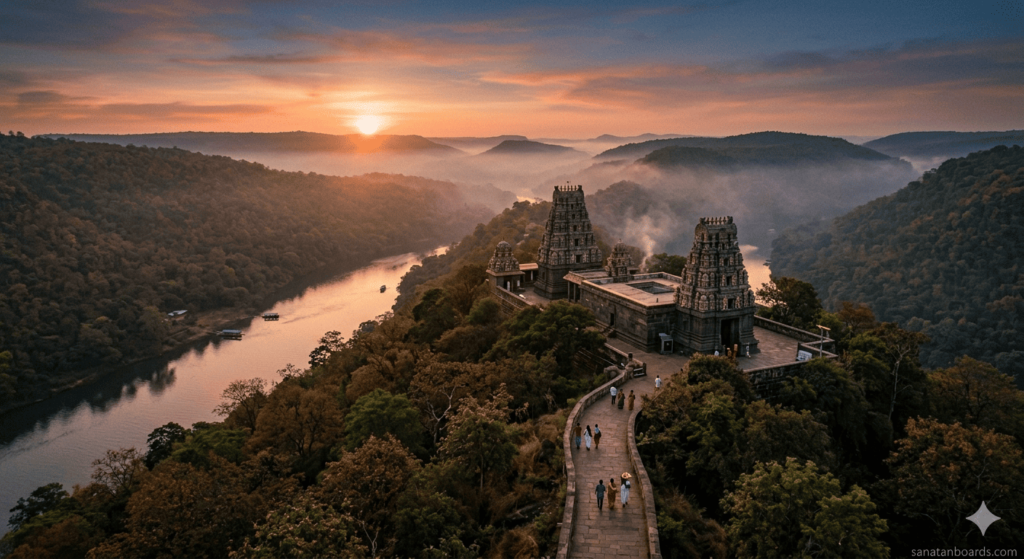
Mallikarjuna, located in Andhra Pradesh, is one of the most revered spiritual destinations in India. Situated on the sacred Srisailam hill along the banks of the Krishna River, it holds immense religious, cultural, and historical importance. The temple dedicated to Lord Mallikarjuna, a form of Lord Shiva, is among the twelve Jyotirlingas, making it a significant pilgrimage site for devotees from across the country. The presence of Goddess Bhramaramba alongside Lord Mallikarjuna further enhances its spiritual stature, as it is also considered one of the Shakti Peethas.
The region is surrounded by the lush greenery of the Nallamala forest, offering a serene and tranquil environment that complements its divine aura. Pilgrims and visitors not only seek spiritual solace but also experience a deep connection with nature. The temple architecture reflects traditional South Indian style, showcasing intricate carvings and ancient craftsmanship that narrate stories from mythology and history.
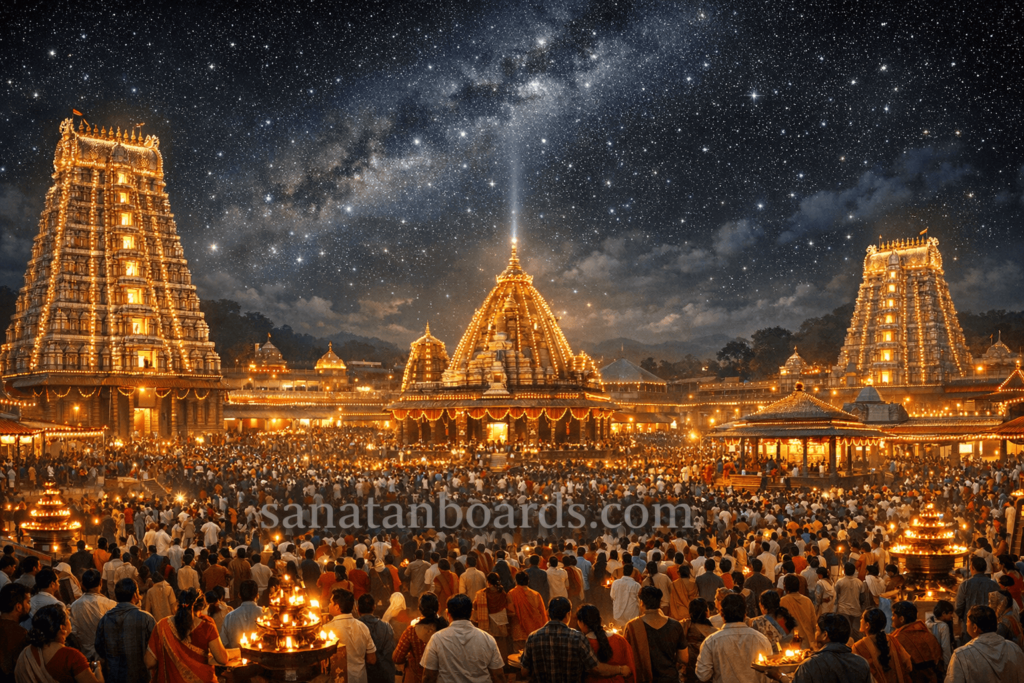
Mallikarjuna’s significance extends beyond religion, as it contributes to tourism, local economy, and cultural preservation. Festivals like Maha Shivaratri attract thousands of devotees, creating a vibrant atmosphere filled with devotion and celebration. The temple rituals, chants, and traditions have been preserved for centuries, maintaining their authenticity.
Overall, Mallikarjuna stands as a symbol of faith, heritage, and unity. It brings together people from diverse backgrounds, offering them a place for reflection, devotion, and spiritual growth. Its importance continues to grow, making it not only a sacred site but also a center for cultural and historical learning.
What Is Mallikarjuna (Andhra Pradesh) ?
Mallikarjuna in Andhra Pradesh refers to a sacred temple and pilgrimage center dedicated to Lord Shiva, worshipped here as Mallikarjuna. It is located in Srisailam and holds a unique position in Hindu religious tradition as one of the twelve Jyotirlingas, which are considered the most powerful representations of Lord Shiva. Additionally, the temple is associated with Goddess Bhramaramba, making it a dual shrine of both Shiva and Shakti.
The term “Mallikarjuna” is derived from two words: “Mallika,” meaning jasmine, and “Arjuna,” another name for Lord Shiva. This name symbolizes purity, devotion, and divine presence. The temple is not only a place of worship but also a center of spiritual learning and cultural heritage.
Historically, Mallikarjuna has been mentioned in ancient scriptures and has been patronized by various dynasties, including the Chalukyas, Vijayanagara rulers, and others. These contributions have helped in preserving and expanding the temple complex over time.
The temple complex includes multiple mandapas, shrines, and sacred tanks. Devotees perform rituals such as Abhishekam, Archana, and Darshan to seek blessings. The spiritual energy of the place is believed to cleanse the mind and soul, providing peace and guidance.
Mallikarjuna is also a significant tourist attraction due to its scenic surroundings and architectural beauty. It plays a vital role in promoting religious tourism in Andhra Pradesh.
Who Is Required Mallikarjuna (Andhra Pradesh) ?
Mallikarjuna in Andhra Pradesh is significant for a wide range of individuals and groups who seek spiritual, cultural, and personal enrichment. Primarily, it is required for devotees of Lord Shiva and Goddess Parvati who wish to experience divine blessings and deepen their faith. Pilgrims from across India visit the temple to perform rituals, offer prayers, and fulfill religious vows.
Spiritual seekers and practitioners also find Mallikarjuna important as it provides a peaceful environment conducive to meditation and self-reflection. The serene surroundings of the Nallamala forest and the sacred atmosphere of the temple help individuals connect with their inner selves.
Students and researchers in fields such as history, archaeology, and religious studies require Mallikarjuna as a valuable source of knowledge. The temple’s architecture, inscriptions, and traditions offer insights into ancient Indian civilization and cultural practices.
Tourists and travelers are another group for whom Mallikarjuna is important. Beyond its religious significance, it offers natural beauty, heritage, and a unique cultural experience. Visitors can explore nearby attractions, wildlife sanctuaries, and scenic landscapes.
Local communities also depend on Mallikarjuna for their livelihood. The temple supports economic activities such as tourism, hospitality, and local businesses, making it an essential part of the regional economy.
Additionally, policymakers and cultural organizations recognize its importance in preserving heritage and promoting tourism. Efforts to maintain and develop the site contribute to its sustainability and accessibility.
When Mallikarjuna (Andhra Pradesh) Required ?
Mallikarjuna in Andhra Pradesh is required during various occasions and circumstances, depending on the needs and intentions of individuals. One of the most prominent times is during religious festivals, especially Maha Shivaratri, when devotees gather in large numbers to worship Lord Shiva. This festival is considered highly auspicious, and visiting the temple during this time is believed to bring immense spiritual benefits.
Apart from festivals, Mallikarjuna is required during important life events such as marriages, childbirth, or the beginning of new ventures. Devotees often visit the temple to seek blessings for success, prosperity, and well-being. It is also common for individuals to fulfill vows or express gratitude after achieving personal milestones.
Mallikarjuna is also required during times of personal challenges or emotional distress. Many people turn to spiritual places for comfort and guidance when facing difficulties. The temple provides a sense of peace and hope, helping individuals cope with stress and uncertainty.
For students and researchers, the site is required when studying Indian culture, religion, and architecture. Field visits to Mallikarjuna offer practical insights that cannot be gained through books alone. Similarly, tourists may plan their visits during favorable weather conditions or holidays to fully enjoy the experience.
The temple is also required during cultural and heritage events organized by the government or local authorities. These events help promote tourism and preserve traditional practices.
Seasonal considerations also play a role. The best time to visit is usually between October and March, when the weather is pleasant. During this period, the temple attracts a large number of visitors.
Where Mallikarjuna (Andhra Pradesh) Required ?
Mahakaleshwar, located in Madhya Pradesh, is another important spiritual destination in India. It is situated in the city of Ujjain and is one of the twelve Jyotirlingas of Lord Shiva. The temple is located near the banks of the Shipra River, making it a central part of the city’s religious landscape.
Mahakaleshwar is required primarily in the context of religious pilgrimage. Devotees visit the temple to seek blessings and participate in rituals such as the famous Bhasma Aarti. This unique ritual, performed early in the morning, attracts thousands of visitors and is considered a highlight of the temple experience.
The temple is also required for cultural and historical exploration. Ujjain is an ancient city with a rich heritage, and Mahakaleshwar serves as a focal point for understanding its history. The temple’s architecture and traditions reflect centuries of devotion and craftsmanship.
Mahakaleshwar is required during major festivals such as Maha Shivaratri and the Kumbh Mela, which is held in Ujjain every twelve years. During these events, the temple becomes a hub of spiritual activity, drawing pilgrims from across the country and beyond.
Tourists and travelers require Mahakaleshwar as part of their itinerary when visiting Madhya Pradesh. It is often included in religious circuits along with other significant temples and historical sites.
The temple is also required for economic and social reasons. It supports local businesses, including hotels, restaurants, and shops, contributing to the city’s economy.
In addition, Mahakaleshwar is required for educational purposes. Students and researchers study its rituals, architecture, and historical significance to gain a deeper understanding of Indian culture.
How Mallikarjuna (Andhra Pradesh) Required ?
Mallikarjuna in Andhra Pradesh is required in various ways depending on the purpose of the visit. For religious purposes, devotees engage in rituals such as Abhishekam, Archana, and Darshan. These practices are believed to bring spiritual purification and blessings.
For spiritual seekers, Mallikarjuna is required as a place for meditation and self-discovery. The peaceful environment and sacred atmosphere help individuals focus on their inner thoughts and achieve mental clarity.
In terms of tourism, Mallikarjuna is required as a destination that offers both cultural and natural attractions. Visitors can explore the temple, nearby forests, and scenic landscapes, making it a holistic travel experience.
From an economic perspective, the temple is required as a source of livelihood for local communities. It generates employment in sectors such as hospitality, transportation, and retail.
Educationally, Mallikarjuna is required as a resource for studying history, architecture, and religious practices. Students and researchers can observe and analyze various aspects of the temple.
Government and cultural organizations require Mallikarjuna for promoting tourism and preserving heritage. Initiatives are taken to maintain the temple and improve infrastructure for visitors.
Case Study On Mallikarjuna (Andhra Pradesh)
Mallikarjuna temple in Andhra Pradesh serves as a significant case study in the fields of religious tourism, cultural preservation, and regional development. Located in Srisailam, the temple attracts millions of visitors annually, making it one of the most visited pilgrimage sites in India.
One of the key aspects of this case study is its role in promoting religious tourism. The temple’s status as a Jyotirlinga and Shakti Peetha draws devotees from various parts of the country. This influx of visitors has led to the development of infrastructure such as roads, accommodation, and transportation facilities.
Another important aspect is cultural preservation. The temple has maintained its traditional rituals and practices for centuries. Efforts have been made to preserve its architecture and historical artifacts, ensuring that future generations can experience its heritage.
The economic impact of Mallikarjuna is also noteworthy. The temple contributes significantly to the local economy by generating employment and supporting small businesses. Vendors, guides, and service providers benefit from the steady flow of tourists.
Environmental management is another critical factor. Being located in a forest area, the temple authorities and government have implemented measures to protect the surrounding ecosystem. Sustainable practices are encouraged to minimize the impact of tourism.
Challenges faced by the temple include managing large crowds, maintaining cleanliness, and ensuring safety. Various strategies have been adopted to address these issues, such as crowd control measures and improved facilities.
Overall, the Mallikarjuna temple serves as a #mallikarjunaandhrapradesh model for balancing धार्मिक significance with modern development, making it an important subject of study.
White Paper On Mallikarjuna (Andhra Pradesh)
Mallikarjuna temple in Andhra Pradesh represents a critical intersection of spirituality, heritage, and economic development. This white paper explores its significance, challenges, and opportunities for sustainable growth.
The temple’s importance as a Jyotirlinga and Shakti Peetha makes it a major religious destination. It attracts millions of pilgrims annually, contributing to the growth of religious tourism in the region. This has led to increased investment in infrastructure and services.
However, the growing number of visitors also presents challenges. Issues such as overcrowding, environmental degradation, and resource management need to be addressed. Sustainable tourism practices are essential to ensure the long-term viability of the site.
Technological advancements can play a role in improving visitor experience. Online booking systems, digital guides, and crowd management tools can enhance efficiency and convenience.
The role of government and private stakeholders is crucial in developing and maintaining the temple infrastructure. Public-private partnerships can help in funding and implementing various projects.
Community involvement is another important factor. Local residents should be included in decision-making processes to ensure that development benefits them as well.
In conclusion, Mallikarjuna has the potential to serve as a model for sustainable religious tourism. By balancing tradition with modern #Sanatanboardsinvasai practices, it can continue to thrive while preserving its cultural and spiritual essence.
Industry Application On Mallikarjuna (Andhra Pradesh)
Mallikarjuna in Andhra Pradesh plays a significant role across multiple industries due to its religious importance, geographical location, and cultural value. One of the primary industries influenced by Mallikarjuna is the tourism and hospitality sector. As a major pilgrimage destination, it attracts millions of visitors annually, creating demand for hotels, guest houses, restaurants, and transportation services. Travel agencies design special pilgrimage packages, while local transport providers benefit from increased passenger movement. This continuous influx of visitors ensures steady economic activity in the region.
The temple also contributes to the retail and handicrafts industry. Local vendors sell religious items such as पूजा materials, idols, souvenirs, and traditional crafts. This supports small-scale businesses and artisans, helping preserve regional art forms and cultural identity. Seasonal festivals and events further boost sales and create temporary employment opportunities.
In the infrastructure and development sector, Mallikarjuna drives government and private investments. Roads, bridges, sanitation facilities, and public utilities are developed and maintained to accommodate the growing number of pilgrims. These improvements not only benefit visitors but also enhance the quality of life for local residents.
The environmental and forestry sector is also impacted, as Mallikarjuna is located within the Nallamala forest region. Sustainable practices are encouraged to balance tourism with ecological conservation. Initiatives such as waste management, eco-tourism, and wildlife protection are implemented to preserve the natural surroundings.
In the digital and technology industry, there is increasing adoption of online services related to the temple. E-darshan bookings, mobile applications, and virtual tours improve accessibility and convenience for devotees. Data management and digital platforms also help in crowd control and operational efficiency.
Additionally, the education and research sector benefits from Mallikarjuna. Scholars and students study its architecture, history, and religious practices, contributing to academic knowledge and cultural understanding.
Overall, Mallikarjuna serves as a catalyst for growth #Sanatanboardsinmumbai across various industries, integrating spirituality with economic development, cultural preservation, and technological advancement.
source : Shashank Voyage
ASK FAQ
1. What is the significance of Mallikarjuna Temple in Andhra Pradesh?
Mallikarjuna Temple, located in Srisailam Temple, is one of the 12 Jyotirlingas of Lord Shiva and also a Shakti Peetha. It holds great religious importance for Hindu devotees and attracts millions of pilgrims every year.
2. Where is Mallikarjuna Temple located?
Mallikarjuna Temple is situated in Srisailam, Andhra Pradesh, on the banks of the Krishna River and surrounded by the Nallamala Hills.
3. Why is Mallikarjuna Temple famous?
The temple is famous for being both a Jyotirlinga and a Shakti Peetha, dedicated to Lord Shiva and Goddess Bhramaramba. It is also known for its ancient architecture and spiritual atmosphere.
4. When is the best time to visit Mallikarjuna Temple?
The best time to visit Mallikarjuna Temple is between October and March, especially during festivals like Maha Shivaratri when the temple hosts grand celebrations.
5. How can I reach Mallikarjuna Temple in Andhra Pradesh?
Mallikarjuna Temple can be reached by road from major cities like Hyderabad. The nearest railway station is Markapur, and the nearest airport is in Hyderabad, followed by a road journey to Srisailam.
Table of Contents
Disclaimer
This content is created for general informational purposes only. While efforts have been made to ensure accuracy and completeness, the information provided may vary based on sources and interpretations. Readers are advised to verify details from official or authoritative sources before making any decisions or conclusions based on this content.