
YAMUNOTRI – SOURCE OF RIVER YAMUNA
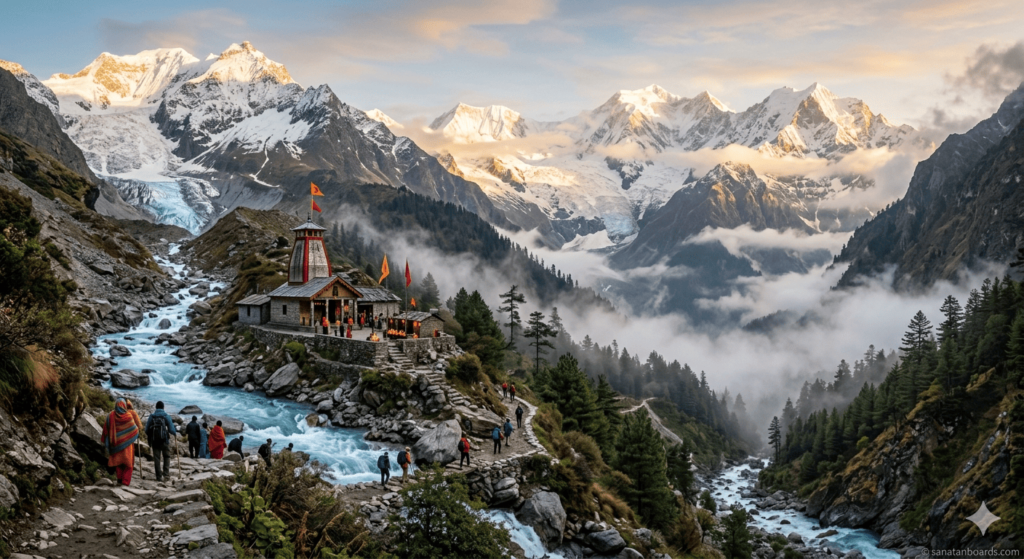
Yamunotri is one of the most sacred and spiritually significant pilgrimage destinations in India, located in the Uttarkashi district of Uttarakhand. It is widely known as the origin point of the holy River Yamuna, one of the major rivers of northern India. The river holds immense cultural, religious, and environmental importance, as it supports millions of people across its basin. The Yamuna River originates from the Yamunotri Glacier near the Champasar Glacier at an altitude of around 3,293 meters in the Garhwal Himalayas.
The region of Yamunotri is surrounded by snow-capped mountains, dense forests, and breathtaking landscapes, making it not only a spiritual destination but also a place of natural beauty. The sacred temple of Goddess Yamuna, located here, is part of the famous Char Dham Yatra of Uttarakhand which also includes Gangotri, Kedarnath, and Badrinath. Pilgrims visit Yamunotri to seek blessings and purification of the soul.
The river Yamuna, which originates from this divine location, eventually flows through several states including Haryana, Delhi, and Uttar Pradesh, before merging with the Ganga at Prayagraj. The origin of the river at Yamunotri symbolizes purity, life, and divine energy. The place is not just geographically important but also deeply rooted in Hindu mythology, where Goddess Yamuna is worshipped as the daughter of Surya (Sun God) and sister of Yama (God of Death).
Thus, Yamunotri stands as a powerful combination of spirituality, geography, and cultural heritage, making it one of the most revered river sources in India.
What Is Yamunotri – Source Of River Yamuna ?
Yamunotri is the geographical and spiritual origin of the sacred River Yamuna. It is located in the Garhwal Himalayas of Uttarakhand and is considered one of the holiest pilgrimage sites in Hindu tradition. The River Yamuna originates from the Yamunotri Glacier, which lies at a high altitude in the mountains, surrounded by rugged terrain and extreme climatic conditions.
The River Yamuna is one of the most important rivers in northern India. It flows through several states, including Uttarakhand, Haryana, Delhi, and Uttar Pradesh. It plays a crucial role in agriculture, drinking water supply, and cultural traditions. At its origin in Yamunotri, the river is in its purest and most natural form, consisting of glacial meltwater.
Yamuna River is not only a physical water body but also holds deep religious importance in Hinduism. It is believed that bathing in its waters purifies the soul and removes sins. According to mythology, Goddess Yamuna is the daughter of Surya (Sun God) and sister of Yama (God of Death), which gives the river a divine identity.
Yamunotri also houses the famous Yamunotri Temple dedicated to Goddess Yamuna. This temple attracts thousands of pilgrims every year as part of the Char Dham Yatra. The location is accessible through trekking routes, adding to its spiritual journey experience.
Thus, Yamunotri is not just a source of a river but a combination of natural wonder, religious belief, and environmental significance. It represents the beginning of a lifeline that sustains millions of people and ecosystems downstream.
Who Is Required Yamunotri – Source Of River Yamuna?
Yamunotri is required and significant for multiple groups of people, systems, and ecological needs. First and foremost, it is essential for pilgrims and devotees who follow Hindu traditions. For them, Yamunotri is a sacred destination where spiritual purification and religious fulfillment are achieved. Visiting the origin of the River Yamuna is considered highly auspicious.
Secondly, environmentalists and geographers require Yamunotri as a critical natural source to study glacier systems, river formation, and Himalayan ecology. The region provides valuable data about climate change, glacial retreat, and water resource management. Scientists monitor the Yamunotri Glacier to understand long-term environmental changes.
Thirdly, millions of people living downstream depend on the River Yamuna for drinking water, irrigation, and daily usage. Without its origin at Yamunotri, the river system would not exist, making it essential for agriculture and urban settlements.
Tourism professionals and the local economy also depend heavily on Yamunotri. The pilgrimage route supports hotels, transport services, guides, and small businesses. This makes Yamunotri important for livelihood generation in Uttarakhand.
Lastly, government bodies and environmental agencies require Yamunotri for conservation planning. Protecting the glacier and surrounding ecosystem ensures the sustainability of water resources for future generations.
When Yamunotri – Source Of River Yamuna Is Required ?
Yamunotri becomes required at multiple stages of human, environmental, and seasonal contexts. One of the most important times is during the pilgrimage season, especially from April/May to October/November, when the Char Dham Yatra takes place. During this period, thousands of devotees visit Yamunotri to offer prayers and seek blessings from Goddess Yamuna.
It is also required during agricultural cycles in northern India. The Yamuna River provides irrigation water during planting and harvesting seasons. Farmers depend on its flow, which originates from Yamunotri, especially during dry months when rainfall is low.
From a scientific perspective, Yamunotri is required throughout the year for environmental monitoring. Researchers continuously study glacial melt patterns, snowfall levels, and water discharge rates. These observations help in predicting water availability and climate change impacts.
During summer, the importance of Yamunotri increases due to higher glacial melting, which contributes to river flow. In winter, although pilgrimage access is restricted due to heavy snowfall, the glacier continues to sustain the river system.
Yamunotri is also required in times of water scarcity in downstream regions like Delhi and Uttar Pradesh. The river becomes a lifeline during shortages, and its origin ensures continuous supply.
Additionally, during religious festivals and rituals, Yamunotri’s significance increases as devotees perform special prayers and ceremonies dedicated to Goddess Yamuna.
Where Yamunotri – Source Of River Yamuna Is Required ?
Yamunotri is located in the western Garhwal region of Uttarakhand, India. It lies in the Uttarkashi district at an altitude of approximately 3,293 meters above sea level in the Himalayas. The exact origin of the River Yamuna is the Yamunotri Glacier, which is situated near the Champasar Glacier.
This region is surrounded by steep mountain ranges, dense pine forests, and snow-covered peaks. The geographical location makes it one of the most remote and pristine pilgrimage sites in India. The climate remains cold throughout most of the year, with heavy snowfall in winter and mild summers.
The Yamuna River originates here and flows southward through the states of Uttarakhand, Haryana, Delhi, and Uttar Pradesh. It eventually merges with the Ganga River at Triveni Sangam in Prayagraj, Uttar Pradesh.
Yamunotri is located about 30 kilometers northwest of Hanuman Chatti and is accessible through trekking routes. The nearest road access point is Janki Chatti, from where pilgrims trek approximately 6 kilometers to reach the temple.
The location is part of the larger Himalayan ecosystem, which plays a critical role in sustaining river systems in northern India. The glaciers in this region act as natural water reservoirs.
Thus, Yamunotri is geographically located in the high Himalayan region of Uttarakhand and serves as the origin point of one of India’s most important rivers.
How Yamunotri – Source Of River Yamuna Is Required ?
Yamunotri is required through a combination of natural, spiritual, and ecological processes. Naturally, it is required as a glacial source that continuously feeds the River Yamuna through melting snow and ice. The Yamunotri Glacier acts as a reservoir that regulates water flow throughout the year.
Spiritually, Yamunotri is required as a pilgrimage destination. Devotees travel through difficult terrain to reach the temple of Goddess Yamuna. The journey itself is considered a form of devotion and purification.
Hydrologically, the Yamuna River depends on Yamunotri for its origin and continuous supply. Without this glacier-fed system, the river would not sustain its flow across northern India.
Ecologically, Yamunotri is required to maintain biodiversity in the Himalayan region. It supports various flora and fauna adapted to cold climates. The glacial melt also supports downstream wetlands and agricultural zones.
Economically, Yamunotri is required for tourism and pilgrimage-based income. Local communities depend on it for employment opportunities in transport, hospitality, and guiding services.
Scientifically, the region is required for studying climate change. Glaciologists and environmental scientists analyze snow patterns, temperature variations, and water discharge to understand global warming effects.
Thus, Yamunotri is required through natural glacial processes, religious practices, ecological balance, economic support, and scientific research.
Case Study On Yamunotri – Source Of River Yamuna
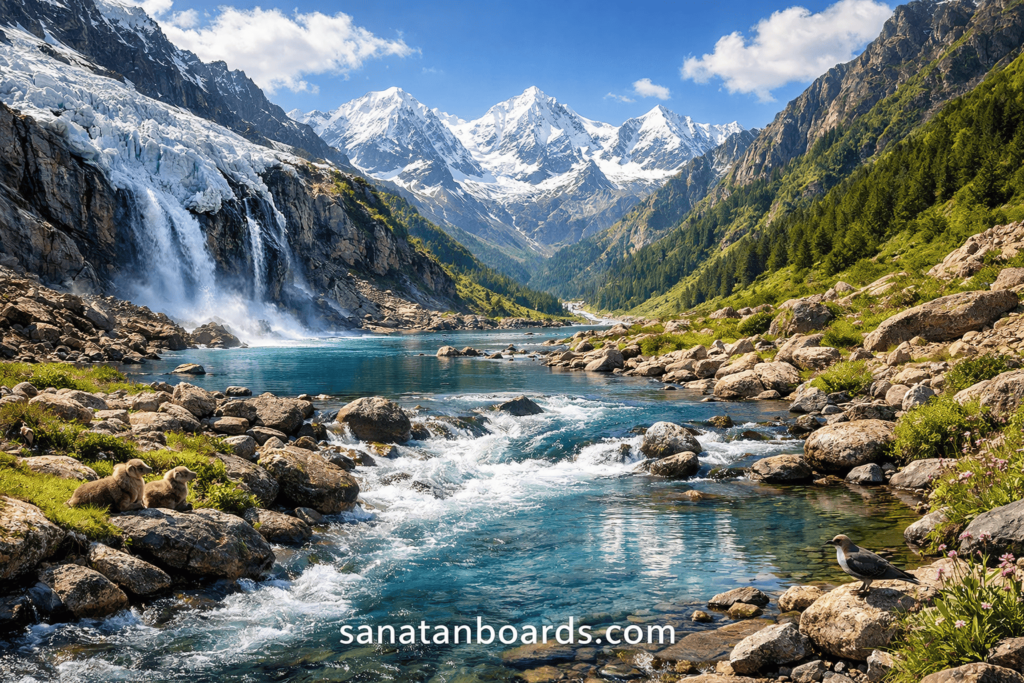
Yamunotri serves as a significant case study in understanding Himalayan river systems, pilgrimage-driven economies, and climate-sensitive ecosystems. Located in the Garhwal Himalayas Yamunotri represents the origin of the River Yamuna and provides insights into how natural and human systems interact.
A major observation from the Yamunotri region is the dependence of downstream populations on glacial sources. The Yamuna River supports millions of people in agriculture, drinking water supply, and industrial usage. Any change in the Yamunotri Glacier directly impacts water availability in states like Delhi and Uttar Pradesh.
One key issue observed is glacial retreat due to climate change. Studies show that rising temperatures are causing gradual melting and reduction in glacier size. This affects the timing and volume of river flow, creating long-term water security concerns.
Another important aspect is pilgrimage pressure. The Char Dham Yatra attracts thousands of visitors each year. While this supports the local economy, it also creates environmental stress through waste generation, deforestation, and infrastructure expansion.
A case example is the increasing tourism load on the trekking route from Janki Chatti to Yamunotri Temple. Overcrowding has led to soil erosion and pressure on local resources. Authorities have introduced measures like regulated trekking and waste management systems to reduce environmental damage.
Hydroelectric potential in the Yamuna basin is another factor studied in this case. While development provides energy benefits, it also raises concerns about ecological disruption.
Community involvement plays a crucial role in conservation. Local residents participate in eco-tourism and environmental protection initiatives. Awareness campaigns about plastic reduction and sustainable tourism have shown positive results.
Government policies focus on balancing development and conservation. Monitoring stations have been installed to track glacier movement and river flow.
In conclusion, Yamunotri demonstrates the delicate balance between nature, religion, and development. It highlights the need for sustainable practices to #yamunotrisourceofriveryamuna protect the source of one of India’s most important rivers.
White Paper On Yamunotri – Source Of River Yamuna
Yamunotri, located in the Uttarkashi district of Uttarakhand, is a critical geographical and ecological zone that serves as the origin of the River Yamuna. This white paper analyzes its environmental significance, socio-economic role, and sustainability challenges.
The region of Yamunotri is characterized by glacial systems that feed the Yamuna River. These glaciers act as natural freshwater storage systems essential for maintaining river flow across northern India.
Environmental Importance
Yamunotri is a sensitive ecological zone. It supports biodiversity and regulates hydrological cycles. However, climate change has resulted in glacier retreat, altering water availability patterns. This poses risks to long-term water security.
Socio-Economic Importance
The region supports pilgrimage tourism under the Char Dham Yatra. This contributes significantly to the local economy through hospitality, transport, and trade. However, unregulated tourism can strain natural resources.
Challenges
Key challenges include:
- Glacier melting due to global warming
- Waste management issues from tourism
- Infrastructure pressure in fragile terrain
- Risk of natural disasters like landslides
Conservation Measures
Government and environmental agencies have implemented:
- Controlled trekking routes
- Environmental monitoring stations
- Afforestation programs
- Awareness campaigns for pilgrims
Sustainable Development
Sustainable tourism is essential in Yamunotri. Eco-friendly infrastructure and regulated visitor flow can help preserve the ecosystem while maintaining economic benefits.
Future Outlook
Long-term sustainability requires #Sanatanboardsinvasai integration of climate research, policy intervention, and community participation. Protecting Yamunotri ensures the survival of the Yamuna River system.
Industry Application Of Yamunotri – Source Of River Yamuna
Yamunotri is the origin point of the River Yamuna and plays an indirect but highly important role in multiple industries across northern India. The water system that begins from this glacier-fed region supports economic activities, energy production, agriculture, tourism, and environmental research.
1. Hydropower Industry
One of the most significant applications is in the hydropower sector. The meltwater from the Yamunotri Glacier contributes to river flow, which is utilized in downstream hydroelectric projects. These projects help generate renewable energy for households, industries, and urban centers. The consistent water supply from the upper Himalayan region ensures stability in power generation systems.
2. Agriculture Industry
The Yamuna River is essential for irrigation across major agricultural states like Haryana, Uttar Pradesh, and parts of Delhi. Crops such as wheat, rice, sugarcane, and vegetables depend heavily on its water. Without the continuous flow originating from Yamunotri, large-scale farming and food supply chains would be severely affected.
3. Tourism and Hospitality Industry
Yamunotri is a key pilgrimage destination in the Char Dham Yatra. This attracts thousands of visitors every year, supporting hotels, guest houses, travel agencies, guides, transport operators, and small local businesses. The tourism economy of Uttarakhand is significantly strengthened by religious and adventure tourism in this region.
4. Drinking Water Supply Industry
The Yamuna River is a major source of drinking water for several cities, including Delhi. Water treatment plants depend on its flow to supply safe drinking water to millions of people. The origin at Yamunotri ensures continuous replenishment of this vital water resource.
5. Environmental and Climate Research Industry
Scientists and environmental organizations study Yamunotri to understand glacier dynamics, climate change effects, and water resource sustainability. The region is crucial for monitoring glacial retreat and predicting long-term water availability.
6. Fisheries and Ecosystem-Based Economy
Although limited in the upper Himalayan region, downstream river ecosystems support fisheries and biodiversity-related economic activities. The health of the river system beginning at Yamunotri directly influences aquatic life.
7. Urban and Industrial Development
Industries and urban areas along the Yamuna basin rely on its water for processing, cooling, and manufacturing activities. Industrial development in northern India is closely linked to river availability originating from Yamunotri.
CONCLUSION
Yamunotri is not only a spiritual and geographical landmark but also a foundation for multiple industries. From energy and agriculture to tourism and #Sanatanboardsinmumbai urban supply systems, its importance extends far beyond its physical location, making it a critical natural asset for economic and environmental stability.
source : Geo Study
ASK FAQ
1. What is Yamunotri known for?
Yamunotri is known as the origin of the River Yamuna and is a sacred Hindu pilgrimage site in Uttarakhand, India.
2. Where does the River Yamuna originate?
The River Yamuna originates from the Yamunotri Glacier in the Garhwal Himalayas of Uttarakhand.
3. Why is Yamunotri important?
Yamunotri is important because it is a holy pilgrimage site and the starting point of the Yamuna River, which supports millions of people.
4. What is the significance of Yamunotri temple?
The Yamunotri Temple is dedicated to Goddess Yamuna and is part of the Char Dham Yatra, attracting thousands of devotees every year.
5. How does Yamunotri support industries?
Yamunotri supports industries indirectly through water supply for agriculture, hydropower generation, tourism, and environmental research.
Table of Contents
DISCLAIMER
The information provided above is for educational, informational, and academic writing purposes only. It is intended to support learning, research, and general knowledge development. While care has been taken to ensure accuracy, geographical, environmental, and cultural data may vary based on sources and ongoing scientific research. Readers are advised to refer to official and verified sources for critical or professional use.