GANGOTRI – SOURCE OF RIVER GANGA
Gangotri is one of the most sacred and significant pilgrimage destinations in India, located in the Uttarkashi district of Uttarakhand. It is widely known as the originating point of the holy River Ganga in its earthly form. Surrounded by the majestic Himalayas, snow-covered peaks, and dense forests, Gangotri holds deep spiritual, cultural, and environmental importance.
According to ancient beliefs, Goddess Ganga descended from heaven to Earth at this place, making it a highly revered site for devotees. The temple of Gangotri, dedicated to Goddess Ganga, is one of the Char Dham pilgrimage sites, which also includes Yamunotri, Kedarnath, and Badrinath. Every year, thousands of pilgrims visit this sacred location to seek blessings and spiritual purification.
Apart from its religious significance, Gangotri is also important from a geographical and environmental perspective. It is situated at a high altitude in the Garhwal Himalayas and serves as a crucial glacier-fed source of river systems. The surrounding region plays a vital role in maintaining ecological balance, supporting biodiversity, and regulating water flow in northern India.
Gangotri is not just a religious destination but also a symbol of purity, devotion, and natural heritage. The region attracts trekkers, researchers and tourists who are interested in exploring its natural beauty and studying its glacial environment. The peaceful surroundings and spiritual atmosphere make it a unique place where nature and faith come together.
What Is Gangotri – Source Of River Ganga ?
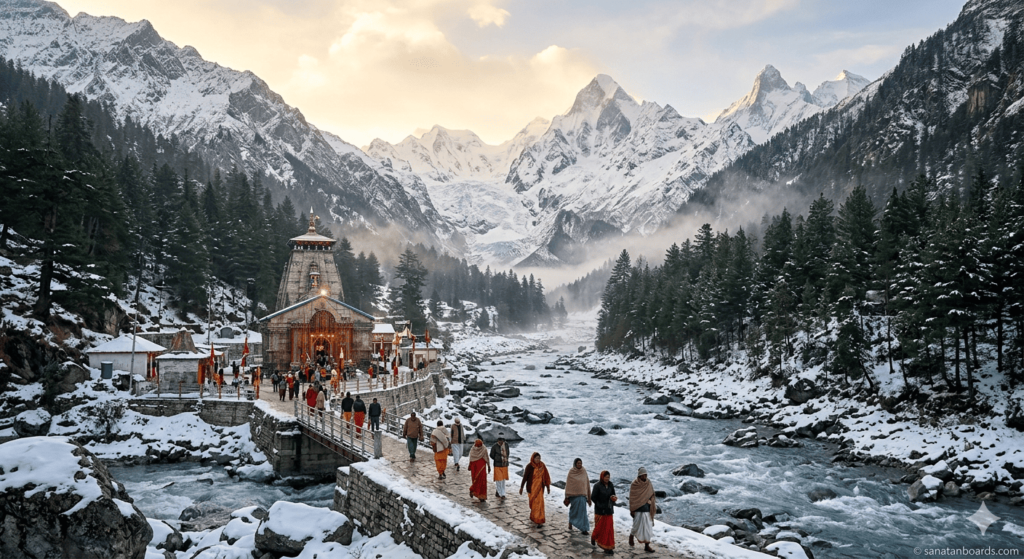
Gangotri is a high-altitude pilgrimage town located in the Uttarkashi district of Uttarakhand, India. It is widely recognized as the sacred source of the River Ganga in its early terrestrial form. The river is believed to originate from the Gangotri Glacier, known as Gaumukh, which lies a few kilometers ahead of the town.
The region is surrounded by the Garhwal Himalayas and is situated at an elevation of over 3,000 meters above sea level. The environment is cold, mountainous, and covered with snow for most of the year. Despite its harsh climate, Gangotri holds immense religious importance in Hindu traditions. It is believed that Goddess Ganga descended here to purify the souls of humanity.
The Gangotri temple is a major attraction in the region. It is part of the Char Dham Yatra, one of the most sacred pilgrimage circuits in Hinduism. Devotees travel long distances to offer prayers and take part in spiritual rituals performed at the temple.
Geographically, Gangotri is an important glacial region that contributes to the formation of one of the major river systems in India. The melting ice from the glacier feeds the river, which then flows through various states, supporting agriculture, drinking water supply, and ecosystems.
Gangotri is also a site of scientific interest. Glaciologists and environmental researchers study the region to understand climate change, glacial retreat, and water resource sustainability. Over the years, the glacier has shown signs of melting, making it an important focus area for environmental protection.
Who Is Required Gangotri – Source Of River Ganga ?
Gangotri is required and significant for a wide range of people, including religious devotees, environmental scientists, local communities, government authorities, and tourists.
For Hindu devotees, Gangotri is an essential pilgrimage site. It is believed that visiting this sacred place and offering prayers at the Gangotri Temple helps in attaining spiritual purification and liberation. Pilgrims travel from across India and the world to experience its divine atmosphere.
For environmental scientists and researchers, Gangotri is crucial for studying glaciers, climate change, and hydrological systems. The Gangotri Glacier provides important data about global warming and its impact on freshwater resources. Researchers monitor glacial retreat, snowfall patterns, and river flow behavior.
Local communities depend on the river system originating from Gangotri for agriculture, drinking water, and livelihood activities. The river supports millions of people downstream, making the region indirectly essential for farmers, industries, and urban populations.
Government and environmental organizations also require Gangotri for conservation planning and disaster management. Since the region is sensitive to ecological changes, authorities focus on protecting biodiversity, preventing pollution, and ensuring sustainable tourism.
Tourists and trekkers are also drawn to Gangotri for its natural beauty and adventure opportunities. The scenic landscapes, Himalayan peaks, and trekking routes make it a popular destination for exploration and eco-tourism.
When Gangotri – Source Of River Ganga Is Required ?
Gangotri becomes important at various times and situations, both in spiritual practice and environmental context.
From a religious perspective, Gangotri is especially required during the pilgrimage season, which typically occurs from April/May to October/November. During this period, the temple remains open to devotees, as extreme winter conditions make the region inaccessible. Pilgrims visit during this time to perform rituals, seek blessings, and complete the Char Dham Yatra.
Gangotri is also required during religious festivals and special occasions such as Ganga Dussehra, when devotees celebrate the descent of the River Ganga to Earth. On such days, spiritual activities, prayers, and holy baths in the river are considered highly significant.
From an environmental and scientific perspective, Gangotri is required throughout the year for monitoring glacier conditions and water flow. Researchers study seasonal variations in snow accumulation, melting rates, and river discharge patterns. This helps in predicting water availability for millions of people downstream.
During climate change assessments, Gangotri becomes highly relevant as it provides key data on glacier retreat and ecosystem changes. Scientists use this information to understand long-term environmental trends and water security challenges.
In terms of water resource management, Gangotri is required especially during summer months when downstream regions depend heavily on river flow for irrigation, drinking water, and hydroelectric power generation.
Additionally, during disaster management situations such as floods or glacial lake outburst floods, monitoring Gangotri becomes essential to ensure safety of communities living along riverbanks.
Tourism departments also consider Gangotri important during travel seasons for planning infrastructure, safety measures, and environmental protection.
Where Gangotri – Source Of River Ganga Is Required ?
Gangotri is required in multiple geographical, ecological, spiritual, and administrative contexts.
Primarily, Gangotri is required in the Uttarkashi district of Uttarakhand, where it is physically located. This Himalayan region depends on its glacial system for maintaining ecological balance and water sources. The surrounding valleys and mountain ecosystems are directly influenced by the glacier-fed river system.
Downstream regions across northern India also require Gangotri, as the River Ganga flows through several states including Uttarakhand, Uttar Pradesh, Bihar, Jharkhand, and West Bengal. These regions depend on the river for agriculture, drinking water, transportation, and cultural practices.
Urban areas such as Varanasi, Haridwar, and Kolkata rely heavily on the river originating from Gangotri for daily water usage, religious rituals, and economic activities. Without the continuous flow originating from this Himalayan source, these regions would face significant water stress.
From an environmental perspective, Gangotri is required in the Himalayan ecosystem, where it plays a key role in maintaining biodiversity, supporting alpine flora and fauna, and regulating climate conditions.
Scientifically, it is required in research institutions across India and the world that study glaciology, hydrology, and climate science. Data from Gangotri helps in understanding global environmental changes.
Administratively, it is required in government planning offices dealing with water resource management, disaster preparedness, and environmental conservation policies.
Spiritually, it is required in religious practices across India, as the river originating from Gangotri is considered sacred in Hinduism and is used in rituals, ceremonies, and pilgrimages nationwide.
Thus, Gangotri is required not only at its physical location but across vast geographical regions and multiple sectors including ecology, spirituality, governance, and human livelihood systems.
How Gangotri – Source Of River Ganga Is Required ?
Gangotri is required through natural processes, human activities, and institutional systems that depend on its glacier and river origin.
Naturally, Gangotri is required through the process of glacial melting. The Gangotri Glacier accumulates snow over time, which slowly melts and forms streams that contribute to the River Ganga. This continuous hydrological cycle ensures water availability downstream.
Spiritually, Gangotri is required through rituals, prayers, and pilgrimages. Devotees visit the temple and perform religious ceremonies, believing that the sacred river purifies sins and provides spiritual liberation. The site is maintained through traditional practices and cultural heritage systems.
Environmentally, Gangotri is required through conservation efforts. Forest departments, environmental agencies, and researchers work to protect the fragile Himalayan ecosystem, monitor glacier health, and reduce human impact.
Economically, Gangotri is required through agriculture and industry. The river originating from this region supports irrigation systems, hydroelectric power projects, and industrial water supply across northern India.
Scientifically, Gangotri is required through monitoring systems that track climate change indicators such as temperature variation, glacier retreat, and river flow changes. Satellite imaging and field research are commonly used.
Tourism-wise, Gangotri is required through infrastructure development such as trekking routes, accommodation facilities, and transportation systems that support visitors while maintaining ecological balance.
Governmentally, it is required through policies and regulations that ensure sustainable development, disaster management, and water resource planning.
Thus, Gangotri is required through a combination of natural hydrological processes, human devotion, scientific research, economic dependence, and environmental management systems.
Case Study On Gangotri – Source Of River Ganga
The case study of Gangotri focuses on its environmental, cultural, and hydrological importance as the primary glacier-fed source of the River Ganga.
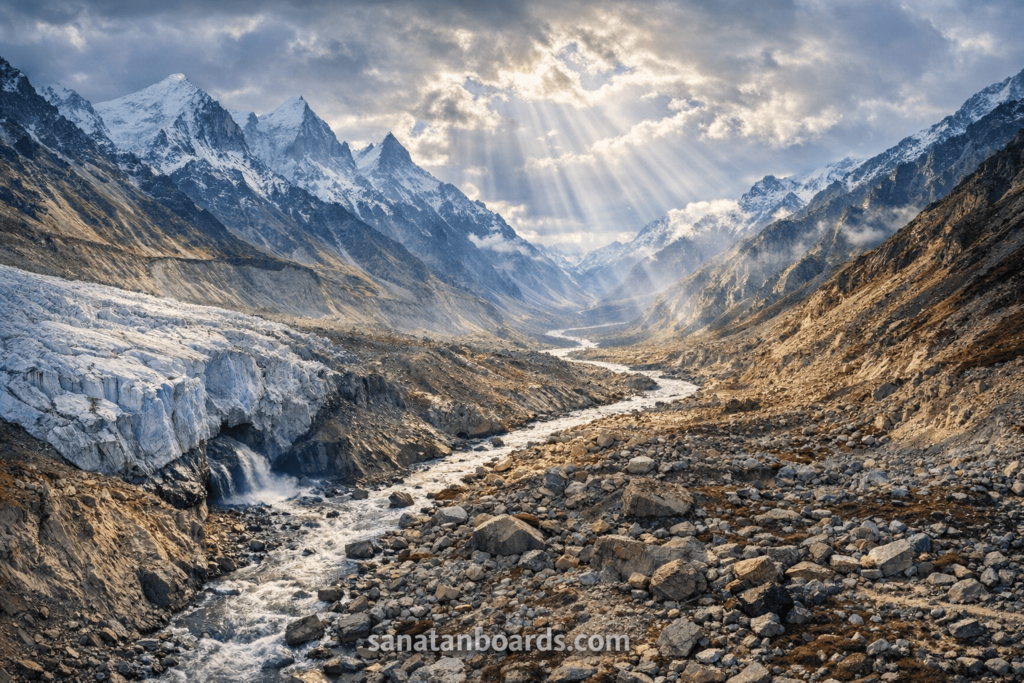
Gangotri Glacier, located in the Garhwal Himalayas, is one of the largest glaciers in the region and plays a critical role in sustaining river systems that support millions of people. Over the years, it has become a major subject of scientific research due to its sensitivity to climate change.
One of the major observations in this region is glacier retreat. Studies have shown that the glacier is gradually shrinking due to rising global temperatures. This has raised concerns about long-term water availability for northern India, where the River Ganga is a lifeline for agriculture, drinking water, and industry.
From a cultural perspective, Gangotri holds immense religious significance. The temple dedicated to Goddess Ganga attracts thousands of pilgrims every year. The Char Dham Yatra, of which Gangotri is a part, contributes significantly to spiritual tourism and local economy.
However, increased tourism has also created environmental challenges. Waste management, deforestation, and infrastructure development have put pressure on the fragile Himalayan ecosystem. Authorities have implemented regulations to control pollution and promote eco-friendly tourism practices.
Hydrologically, Gangotri serves as a crucial water source for the Ganga basin. The river system supports irrigation networks across several Indian states. It is estimated that millions of farmers depend on its waters for crop cultivation.
A key case observation involves seasonal variations in water flow. During summer, glacial melt increases river discharge, while in winter, flow reduces significantly. This seasonal dependency makes water resource planning highly important.
Disaster risks are also associated with the region. Glacial lake outburst floods (GLOFs) and landslides pose threats to nearby communities and infrastructure. Monitoring systems have been installed to provide early warnings and reduce risks.
Conservation efforts have been initiated by government and environmental organizations. These include afforestation programs, controlled tourism policies, and glacier monitoring projects.
Another important aspect is scientific collaboration. Research institutions regularly conduct field studies, satellite monitoring, and climate modeling to understand long-term changes in the glacier system.
In conclusion, the Gangotri case study highlights a delicate balance between spirituality, environment, and human dependency. #gangotrisourceofriverganga It demonstrates the need for sustainable practices to preserve this critical natural resource for future generations.
White Paper On Gangotri – Source Of River Ganga
The white paper on Gangotri presents an analytical overview of its environmental significance, socio-economic dependency, and policy implications.
Gangotri, located in the Indian Himalayas, serves as the origin point of the River Ganga through the Gangotri Glacier system. This region is vital for sustaining one of the largest river basins in the world, which supports over hundreds of millions of people.
From an environmental perspective, the region is highly sensitive. Climate change has led to rising temperatures, resulting in glacial retreat and altered hydrological cycles. This poses a long-term risk to water security in northern India.
The white paper identifies water resource dependency as a major concern. Agriculture, hydroelectric power generation, and domestic water supply in multiple states rely heavily on the river originating from Gangotri.
Tourism is another significant factor. The region attracts religious pilgrims and adventure tourists, contributing to local economies. However, unregulated tourism has led to environmental degradation, waste accumulation, and pressure on infrastructure.
Policy recommendations emphasize sustainable tourism practices, including waste management systems, visitor limitations, and eco-friendly infrastructure development.
The document also highlights the importance of scientific monitoring. Continuous observation of glacier movement, snow cover, and river discharge is necessary for accurate forecasting and climate modeling.
Disaster management is a critical concern. The risk of floods, landslides, and glacial lake outburst events requires early warning systems and coordinated response mechanisms.
Community involvement is essential in conservation efforts. Local populations play a key role in protecting forests, maintaining cleanliness, and supporting eco-tourism initiatives.
The white paper suggests strengthening institutional collaboration between environmental agencies, research organizations, and government bodies to ensure sustainable development of the region.
Educational and awareness programs are also recommended to inform visitors and pilgrims about ecological sensitivity and responsible behavior.
In conclusion, Gangotri represents a #Sanatandharmaaccreditationboardsinvasai complex intersection of environment, spirituality, and socio-economic systems. Sustainable management is necessary to preserve its ecological integrity and ensure long-term water security.
Industry Application On Gangotri – Source Of River Ganga
Gangotri has multiple industry applications indirectly through the river system and its natural resources.
One of the most important applications is in the agriculture industry. The River Ganga, originating from Gangotri, provides irrigation water for vast agricultural lands in northern India. This supports crop production such as wheat, rice, sugarcane, and pulses, forming the backbone of the rural economy.
In the hydroelectric power industry, the river system is used to generate renewable energy. Several dams and hydropower projects along the river and its tributaries depend on consistent water flow originating from the Himalayan glaciers.
The drinking water industry also relies heavily on this source. Many cities and towns extract and treat water from the river for domestic consumption. This makes Gangotri indirectly essential for urban water supply systems.
The tourism and hospitality industry is directly influenced by Gangotri. Pilgrimage tourism under the Char Dham Yatra brings millions of visitors annually. This supports hotels, transport services, guides, and local businesses.
In the environmental research industry, Gangotri is a key study area for glaciologists, hydrologists, and climate scientists. Data collected from this region helps in developing climate models and understanding global warming patterns.
The transportation industry also benefits indirectly as pilgrimage routes and trekking paths require infrastructure development such as roads, vehicles, and logistics support.
In the textile and manufacturing industries, water from the Ganga basin is used in various production processes, especially in dyeing and processing sectors.
The fisheries industry downstream also benefits from the river system, which supports aquatic biodiversity and fish populations.
Additionally, the religious and cultural industry thrives around Gangotri. Ritual goods, temple services, and spiritual tourism contribute to local economic development.
Government planning and infrastructure industries use data from Gangotri to design flood control systems, water resource distribution networks, and environmental protection policies.
In conclusion, Gangotri’s influence #Sanatandharmaaccreditationboardsinmumbai extends far beyond its geographical location, supporting multiple industries through its river system and ecological importance.
source : BBC Studios
ASK FAQ
1. What is Gangotri famous for?
Gangotri is famous as the origin place of the River Ganga and for the sacred Gangotri Temple dedicated to Goddess Ganga in Uttarakhand.
2. Where is Gangotri located?
Gangotri is located in the Uttarkashi district of Uttarakhand, India, in the Garhwal Himalayas at a high altitude region.
3. Why is Gangotri important?
Gangotri is important because it is a holy pilgrimage site, the source of the River Ganga, and a key ecological region supporting water systems in India.
4. Which river originates from Gangotri?
The River Ganga originates from the Gangotri Glacier, specifically from Gaumukh, which is the primary source of the river system.
5. When is the best time to visit Gangotri?
The best time to visit Gangotri is between April/May and October/November when the weather is suitable and the temple is open for pilgrims.
Table of Contents
Disclaimer
The information provided above is for educational, informational, and knowledge-sharing purposes only. It is based on general understanding of geographical, cultural, environmental, and scientific aspects. While efforts have been made to ensure accuracy, details may vary based on updated research and regional changes. Readers are advised to refer to official and scholarly sources for precise and updated information.