
BADRINATH – VISHNU TEMPLE (REPEATED FROM CHAR DHAM)
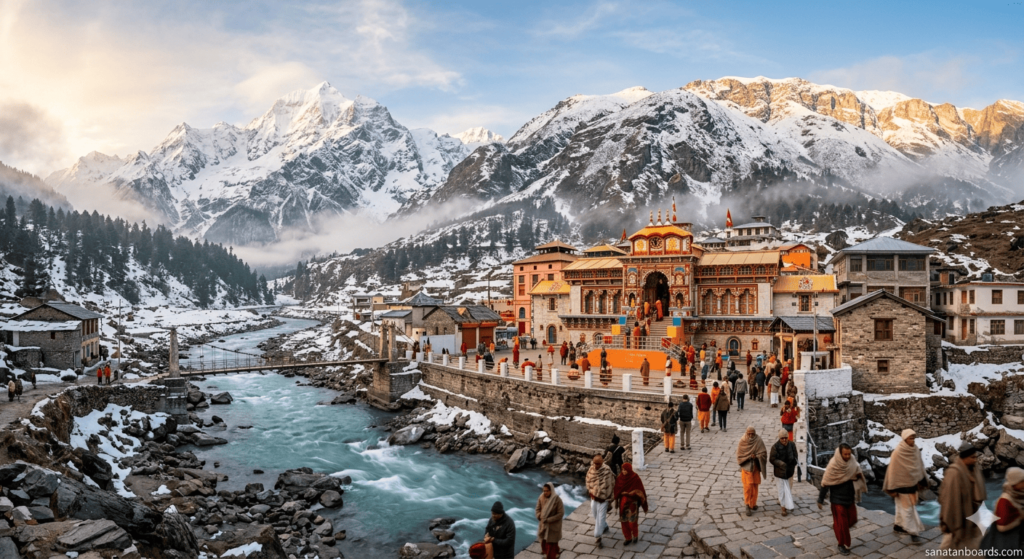
The sacred site known as Badrinath Temple is one of the most revered pilgrimage destinations in India. Dedicated to Lord Vishnu, it holds a central position in Hindu spiritual tradition and is also an essential part of the famous Char Dham pilgrimage circuit in the Indian Himalayas. Situated in the Chamoli district of Uttarakhand, the temple is surrounded by the majestic Nar and Narayan mountain ranges, with the Alaknanda River flowing nearby, creating an atmosphere of deep spiritual significance and natural beauty.
The temple is considered a place where devotion, faith, and divine energy come together. It attracts millions of devotees, sages, and travelers every year who seek blessings peace of mind, and spiritual liberation. The architecture of the temple reflects traditional Himalayan style with its brightly painted facade and conical structure, making it both culturally and visually distinctive.
According to ancient traditions, the temple has existed for thousands of years, though it has been reconstructed and restored multiple times due to natural calamities and weather conditions in the Himalayan region. Despite harsh climatic challenges, it continues to remain a strong symbol of faith and resilience.
The significance of this temple is not only religious but also cultural and historical. It represents the deep-rooted connection between humans and divine belief systems in Hindu philosophy. The presence of sacred rituals, chants, and offerings creates an environment that fosters devotion and inner reflection.
What Is Badrinath – Vishnu Temple (Repeated From Char Dham) ?
The Badrinath Temple is a sacred Hindu shrine dedicated to Vishnu, one of the principal deities in Hinduism responsible for preserving and sustaining the universe. This temple is located in the Himalayan town of Badrinath in Uttarakhand and forms an important part of the Char Dham pilgrimage circuit, which is considered highly sacred in Hindu tradition.
Badrinath is not just a physical structure but a deeply spiritual symbol that represents faith, devotion, and liberation (moksha). It is believed that Lord Vishnu meditated here in ancient times, which is why the site is regarded as extremely holy. The temple is situated at a high altitude making it accessible only during specific months of the year due to heavy snowfall in winter.
The temple houses a black stone idol of Lord Vishnu in a meditative posture. Devotees believe that visiting this shrine and offering prayers helps in washing away sins and attaining spiritual enlightenment. The rituals performed here follow strict Vedic traditions, and priests carry out daily worship ceremonies with devotion and discipline.
The significance of Badrinath is also linked to Hindu mythology, where it is mentioned in various ancient scriptures and epics. It is considered one of the 108 Divya Desams, which are sacred Vishnu temples mentioned in Vaishnavite tradition.
In modern times, the temple continues to attract pilgrims from all over India and the world. Despite its remote location and challenging weather conditions, devotees undertake difficult journeys to experience its divine atmosphere.
Thus, Badrinath Temple represents a combination of spiritual belief, cultural heritage, and natural beauty, making it one of the most important pilgrimage destinations in Hinduism.
Who Is Required Badrinath – Vishnu Temple (Repeated From Char Dham) ?
The Badrinath Temple is considered spiritually significant for a wide range of individuals, especially those who follow Hindu beliefs and the teachings associated with Vishnu. However, its importance extends beyond religious followers and includes seekers of spirituality, cultural learners, historians, and travelers.
Primarily, devotees of Lord Vishnu are considered the main group for whom this temple holds immense importance. They visit the shrine to seek blessings, spiritual peace, and liberation from worldly attachments. For them, the temple is not just a place of worship but a vital part of their faith journey.
Secondly, pilgrims undertaking the Char Dham Yatra consider Badrinath an essential destination. It is believed that completing this pilgrimage cycle is necessary for attaining spiritual fulfillment in Hindu tradition. Therefore, individuals on religious journeys are naturally drawn to this sacred site.
Additionally, scholars and researchers studying Hinduism, Indian culture, and ancient traditions find Badrinath Temple important for understanding religious practices, temple architecture, and mythological history.
Travelers and nature enthusiasts are also indirectly “required” or attracted to this place due to its Himalayan location and scenic surroundings. The journey itself offers physical challenge, mental reflection, and exposure to cultural richness.
Even individuals seeking mental peace or spiritual clarity, regardless of religious background, may find the environment of Badrinath Temple meaningful. The calm atmosphere, chanting of mantras, and natural beauty make it a place of introspection.
When Badrinath – Vishnu Temple (Repeated From Char Dham) Is Required ?
The Badrinath Temple is considered spiritually relevant at different times depending on religious observances, pilgrimage seasons, and individual spiritual needs. Its importance is closely associated with seasonal accessibility and Hindu traditions connected to Vishnu.
The temple is generally open for worship only for a limited period each year, typically from April or May to October or November. This time period is considered the most important “when” aspect because heavy snowfall during winter makes the region inaccessible. During this open period, thousands of devotees visit the temple to perform rituals, prayers, and pilgrimage activities.
From a religious perspective, the temple is required during auspicious Hindu months such as Shravan, Kartik, and special festival days dedicated to Lord Vishnu. Festivals like Badri Kedar Utsav and other Vaishnav celebrations make the temple highly active with rituals and spiritual gatherings.
Individuals also feel the need to visit Badrinath during significant life events such as spiritual awakening, personal struggles, or the desire for peace and liberation. In Hindu belief, visiting the temple at the right time in one’s life journey can bring positive transformation and inner strength.
Another important timing is during the Char Dham Yatra season, when pilgrims undertake the full circuit of sacred sites. Badrinath becomes the final or major stop in this journey, making its timing crucial for spiritual completion.
The temple is also required during times of prayer for health, prosperity, and relief from difficulties. Many devotees plan visits based on astrological guidance or family traditions, believing that visiting at a spiritually favorable time increases blessings.
Where Badrinath – Vishnu Temple (Repeated From Char Dham) Is Required ?
The Badrinath Temple is located in the Chamoli district of Uttarakhand, India, within the Garhwal Himalayan region. It is situated at an elevation of around 3,300 meters above sea level, making it one of the highest and most sacred pilgrimage sites dedicated to Vishnu.
Geographically, the temple is placed on the banks of the Alaknanda River, surrounded by the Nar and Narayan mountain ranges, with the Neelkanth peak forming a majestic backdrop. This remote and mountainous location adds to its spiritual aura and natural beauty.
The “where” aspect is significant because the temple’s location symbolizes spiritual elevation. In Hindu belief, high-altitude temples are often associated with closeness to divine energies. The challenging terrain also represents the devotee’s journey of faith and endurance.
From a pilgrimage perspective, Badrinath is one of the four sacred destinations in the Char Dham circuit, along with Yamunotri, Gangotri, and Kedarnath. It is also part of the Chota Char Dham in Uttarakhand, making it an essential geographical point in Indian spiritual tourism.
Access to the temple is typically through road travel from Rishikesh and Joshimath, followed by a journey through winding Himalayan roads. The nearest airport is in Dehradun, and the nearest railway connectivity is also in the lower Himalayan region, making the final journey a combination of travel and trekking experience.
The remote location plays a crucial role in preserving the temple’s sanctity. It ensures that only dedicated pilgrims undertake the journey, reinforcing the spiritual discipline associated with visiting Badrinath.
Thus, the “where” of Badrinath Temple is not just a physical location but a symbolic representation of spiritual ascent and divine connection.
How Badrinath – Vishnu Temple (Repeated From Char Dham) Is Required ?
The “how” begins with pilgrimage planning. Devotees usually prepare months in advance due to the temple’s high-altitude location and limited accessibility. The journey typically starts from major cities like Haridwar or Rishikesh, followed by travel through mountainous roads leading to Badrinath.
Pilgrims often undertake the journey with faith, discipline, and spiritual intention. Many follow traditional practices such as fasting, chanting prayers, and carrying religious offerings. This preparation is considered essential to receive full spiritual benefit from the visit.
Upon reaching the temple, devotees participate in rituals such as darshan (viewing the deity), offering flowers, lighting lamps, and chanting mantras dedicated to Lord Vishnu. The temple priests guide worship activities according to Vedic traditions.
The architecture of the temple also influences how rituals are performed. The sanctum houses the black stone idol of Vishnu in meditation posture, and devotees stand in queues to offer prayers in an orderly manner.
Another important aspect of “how” is the spiritual mindset. Devotees are encouraged to approach the temple with humility, devotion, and inner purity. It is believed that sincere faith enhances the spiritual experience.
In modern times, the journey has become more accessible due to improved roads and transport facilities, but it still requires physical endurance and mental preparation.
Thus, the “how” of Badrinath Temple involves a combination of travel, devotion, ritual practice, and spiritual discipline.

Case Study On Badrinath – Vishnu Temple (Repeated From Char Dham)
Background
Badrinath Temple is one of the most visited pilgrimage sites in India, forming part of the Char Dham and Chota Char Dham circuits. Its location in the Himalayan region presents extreme environmental challenges, including heavy snowfall, landslides, and difficult terrain. Despite this, it remains continuously active during its operational months, attracting millions of pilgrims.
Objective of Study
The main objective of studying Badrinath Temple is to understand how a religious site maintains cultural significance, economic impact, and spiritual influence despite geographical limitations. It also highlights how faith sustains long-distance pilgrimage traditions.
Observations
One major observation is the strong emotional and spiritual connection devotees have with the temple. Despite physical hardship, pilgrims continue to visit the shrine, demonstrating deep-rooted faith.
Another observation is the role of infrastructure development in supporting pilgrimage. Roads, accommodations, and transportation systems have significantly improved accessibility, yet the journey still retains its challenging nature.
Environmental conditions play a major role in shaping the temple’s operational cycle. The temple remains closed during winter due to extreme weather, showing how natural forces directly influence religious practices.
Cultural Impact
Badrinath Temple acts as a cultural unifier, bringing together people from different regions, languages, and backgrounds. It strengthens the shared identity of Hindu tradition and reinforces spiritual tourism in India.
Economic Impact
The pilgrimage significantly contributes to the local economy through tourism, hospitality, transport, and religious services. Small businesses, hotels, and guides depend heavily on the seasonal influx of pilgrims.
Challenges
Some challenges include environmental degradation due to increasing tourist traffic, risk of natural disasters, and maintaining ecological balance in a fragile Himalayan ecosystem. Managing waste and preserving natural beauty are ongoing concerns.
Conclusion of Case Study
The case of Badrinath Temple #badrinath-vishnutemple demonstrates how spirituality and geography intersect to create a powerful cultural institution. It shows that faith-based destinations can influence economic systems, environmental management, and social behavior.
White Paper On Badrinath – Vishnu Temple (Repeated From Char Dham)
Executive Summary
The Badrinath Temple is a critical religious and cultural landmark dedicated to Vishnu. This white paper examines its religious significance, infrastructure, environmental considerations, and socio-economic impact.
Religious Significance
Badrinath Temple is one of the most sacred Hindu pilgrimage sites. It is part of the Char Dham tradition, which emphasizes spiritual purification and liberation. The temple’s rituals, mythology, and scriptures reinforce its importance as a center of devotion and spiritual discipline.
Infrastructure and Accessibility
Over the years, infrastructure development has improved accessibility to the temple. Roads, bridges, and transport services have made it easier for pilgrims to reach the destination. However, due to its high-altitude location, access remains seasonal and dependent on weather conditions.
Environmental Considerations
The temple is located in a fragile Himalayan ecosystem. Increased tourism has raised concerns about environmental sustainability, waste management, and ecological preservation. Responsible pilgrimage practices are necessary to maintain the balance between devotion and nature.
Socio-Economic Impact
The temple plays a significant role in supporting local livelihoods. Tourism generates employment in hospitality, transportation, retail, and religious services. Seasonal pilgrimage activities contribute significantly to the regional economy.
Cultural Importance
Badrinath Temple acts as a cultural heritage site that preserves ancient traditions, rituals, and architectural styles. It also promotes unity among diverse communities who visit the site for spiritual purposes.
Risk Factors
Natural disasters such as floods, landslides, and extreme snowfall pose risks to infrastructure and safety. Climate change is also a growing concern, affecting accessibility and long-term sustainability.
Recommendations
- Implement sustainable tourism practices
- Strengthen disaster management systems
- Improve waste management infrastructure
- Promote eco-friendly pilgrimage behavior
- Preserve cultural heritage while modernizing facilities
Conclusion
Badrinath Temple remains a powerful symbol of faith and #Sanatandharmaaccreditationboardsinvasai resilience. Balancing spiritual significance with environmental and infrastructural challenges is essential for its long-term preservation.
Industry Application On Badrinath – Vishnu Temple (Repeated From Char Dham)
The Badrinath Temple has several real-world applications across multiple industries, despite being primarily a religious site dedicated to Vishnu.
Tourism and Hospitality Industry
One of the most significant applications is in the tourism sector. The temple attracts millions of pilgrims annually, supporting hotels, lodges, guest houses, and restaurants. This seasonal tourism creates employment opportunities and drives regional economic growth.
Transportation Industry
The pilgrimage route to Badrinath supports transportation services including buses, taxis, helicopter services, and trekking guides. Infrastructure development in mountainous regions is heavily influenced by the demand generated by religious tourism.
Cultural and Heritage Industry
The temple plays a key role in preserving Hindu cultural traditions. It supports religious art, architecture, rituals, and festivals. Cultural tourism also benefits from the temple’s historical significance.
Information and Communication Industry
Digital platforms, travel agencies, and pilgrimage management systems provide information about routes, weather conditions, and booking services. This improves accessibility and planning for pilgrims.
Environmental Management Industry
Due to its location in a sensitive ecological zone, environmental management practices are essential. Waste disposal systems, eco-tourism initiatives, and sustainability projects are increasingly being implemented to protect the region.
Public Administration and Policy
Government agencies are involved in regulating pilgrimage flow, maintaining infrastructure, and ensuring safety. Disaster management systems are also critical due to the risk of natural calamities.
Conclusion
Badrinath Temple influences multiple industries #Sanatandharmaaccreditationboardsinmumbai beyond religion. It acts as a driver of tourism, infrastructure development, cultural preservation, and environmental planning, making it a multi-dimensional institution.
source : The J.P Mystery
ASK FAQ
1. What is Badrinath Vishnu Temple?
The Badrinath Temple is a sacred Hindu temple dedicated to Lord Vishnu, located in Uttarakhand and part of the Char Dham pilgrimage.
2. Why is Badrinath Temple important?
It is important because it is believed to be a holy place for attaining spiritual peace and liberation (moksha) and is one of the most sacred Vishnu temples in India.
3. Where is Badrinath Vishnu Temple located?
It is located in the Chamoli district of Uttarakhand, India, in the Himalayas near the Alaknanda River.
4. When is Badrinath Temple open for visitors?
The temple is usually open from April/May to October/November due to heavy snowfall during winter months.
5. How can devotees visit Badrinath Temple?
Devotees travel by road from Rishikesh or Haridwar, followed by mountain routes, and then participate in darshan and rituals at the temple.
Table of Contents
DISCLAIMER
This content is provided for educational and informational purposes only.
It is not intended to promote or criticize any religion, belief, or tradition.
All interpretations are general and based on commonly available historical and cultural references.
Readers are advised to use their own judgment while using this information.