INDIA: TOP 75 HINDU PILGRIMAGE & TOURISM PLACES
India is a land where spirituality and heritage flow as deeply as its rivers. Across its vast plains, majestic mountains, and vibrant coastlines, India is home to a multitude of sacred sites that have defined faith, culture, and tradition for millennia. “INDIA: TOP 75 HINDU PILGRIMAGE & TOURISM PLACES” celebrates the diverse spiritual landscape that millions of people visit each year for devotion, self‑discovery peace, and cultural exploration.
From the snow‑clad peaks of the Himalayas in the north to the tranquil shores of Rameswaram in the south, and from the sacred riverbanks of the Ganges to the ancient temple cities of the east and west, these places hold stories woven into the very fabric of Indian civilization. Each site carries unique significance — temples that date back centuries, holy rivers revered as goddesses, sacred mountains where sages meditated, and festivals that bring entire communities together in song and prayer.
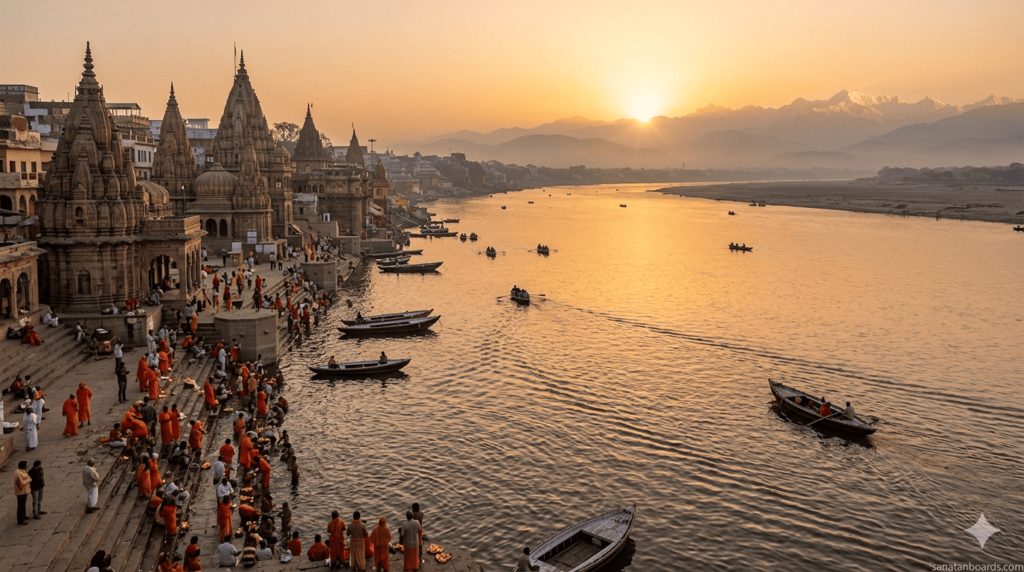
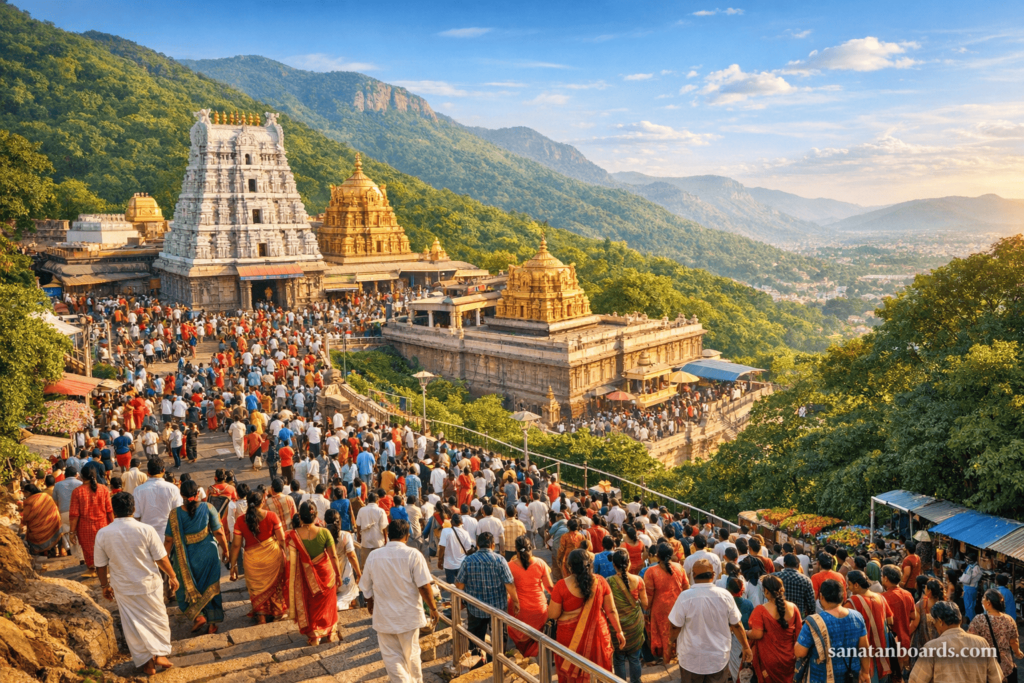
This compilation isn’t just a list of destinations; it is a reflection of how faith interacts with geography, how devotion drives journeys of millions, and how cultural heritage is preserved through generations. Whether it’s Varanasi’s ghats at sunrise, Tirupati’s long lines of devotion, or the serene corridors of Konark Sun Temple, each pilgrimage place acts as a living monument of belief.
For seekers of peace and education, these pilgrimage and tourism places offer lessons in resilience, history, art, and human unity. As gateways to understanding Hindu philosophy and Indian culture these sites provide not just experiences to visit, but experiences to reflect upon.
What Is India Top 75 Hindu Pilgrimage & Tourism Places ?
It is a curated collection of destinations across India that are deeply rooted in Hindu tradition, history, and spirituality. It represents a blend of mythological significance, cultural heritage, architectural brilliance, and natural beauty, all tied together through the spiritual ethos of the Indian subcontinent.
These pilgrimage sites include temples, sacred rivers, holy towns, revered mountains, and ancient monuments that have shaped the religious life of Hindus for centuries. Each place on this list holds a distinct identity — some are linked to specific deities like Shiva, Vishnu, Krishna, or Devi, while others are associated with saints, sages, and historical events that have enriched Hindu cultural narratives.
Pilgrimage has always been an integral part of Hindu practice. It involves journeying not only for worship but also for introspection, community bonding, and cultural learning. The “Top 75” places are selected based on their historical depth, ritual relevance, popularity among pilgrims, and tourism appeal.
These destinations help preserve ancient art forms, rituals, festivals, and sacred languages like Sanskrit and regional traditions. They also contribute significantly to the local economies, sustaining crafts, hospitality, and cultural tourism. For international travelers, this list offers insight into India’s spiritual diversity and civilizational roots.
Who Is Required India Top 75 Hindu Pilgrimage & Tourism Places ?
The “INDIA: TOP 75 HINDU PILGRIMAGE & TOURISM PLACES” holds value for a wide range of individuals and groups who seek connection, knowledge, culture, or simply inspiration through travel.
Firstly, pilgrims and devotees — people committed to their spiritual journey — find these sites essential as places of worship, meditation, and sacred rituals. Visiting these destinations can fulfill religious vows, deepen faith, and offer personal transformation.
Secondly, students and researchers who study history, anthropology, religion, and architecture benefit from understanding the cultural and artistic contributions of these places. Temples like Khajuraho, Konark, Madurai, and Jagannath Puri are living textbooks of art, symbolism, and ancient engineering.
Thirdly, global travelers and cultural explorers seek authentic experiences that go beyond ordinary tourism. These pilgrimage places provide immersive insights into festivals, rituals, folklore, and traditional lifestyles, enriching one’s perspective about diverse human experiences.
Families and communities also find significance in planning visits that strengthen bonds and create shared memories. For many, traveling to these places is a rite of passage that introduces younger generations to traditional values and collective heritage.
Government agencies, cultural organizations, and heritage institutions use such compilations to promote sustainable tourism, protect sacred sites, and preserve intangible cultural heritage.
Business sectors like hospitality, transportation, and local artisans also engage with these destinations as centers of economic activity, benefiting from the constant influx of visitors who sustain livelihoods.
When India Top 75 Hindu Pilgrimage & Tourism Places Is Required ?
The relevance and timing of engaging with the “INDIA: TOP 75 HINDU PILGRIMAGE & TOURISM PLACES” is influenced by both the calendar of Hindu festivals and the personal spiritual timing of seekers. Certain places are especially significant at particular times of year, when festivals, rituals, or seasonal pilgrimages draw crowds in numbers that transform the experience.
For example, Kumbh Mela, the world’s largest spiritual gathering, occurs once every 12 years at specific holy riverbanks like Prayagraj, Haridwar, Nashik, and Ujjain. Devotees from around the globe plan their lives around this cycle, seeing it as an auspicious moment for purification and blessing.
Other pilgrimages are tied to seasonal cycles — such as trekking to Amarnath in the summer months, or visiting Char Dham circuits in Himachal and Uttarakhand when the roads open in pleasant weather. Certain temples have special yearly festivals, such as Ratha Yatra in Puri or Maha Shivratri in Varanasi and Mahakaleshwar, which create once‑a‑year opportunities for deep ritual participation.
Beyond publicly celebrated dates, many individuals approach these places during personal milestones — times of wedding, birth, illness, or transition. Pilgrimage becomes a journey through life’s emotional landscape, a moment for introspection and renewal.
Educational tours and cultural expeditions often align with academic calendars, offering students the chance to study classical architecture, scriptural lore, and regional customs during specific months that are logistically conducive to travel.
From a tourism perspective, most sites have peak and off‑peak seasons based on weather and accessibility. For example, the Himalayan temples are best accessed in late spring through early autumn, while southern temple towns provide year‑round visitation but have special draw during annual festivals.
The concept of “when” is also philosophical. Many believers view pilgrimage not as confined to a certain time on the calendar, but as a stage in one’s spiritual growth. Visits may begin in youth with family, deepen in middle age with personal intent, and continue in later years as an expression of devotion and life reflection.
Thus, this collection of pilgrimage and tourism places becomes relevant in multiple temporal contexts — religious seasons, cultural traditions, personal life stages, and educational timelines — making each visit both a journey through space and through time.
Where India Top 75 Hindu Pilgrimage & Tourism Places Is Required ?
The places identified in “INDIA: TOP 75 HINDU PILGRIMAGE & TOURISM PLACES” span the full geographic breadth of India, reflecting the country’s diverse landscape and spiritual topography. These sites are found in the plains, riversides, mountains, deserts, and coastal regions — each place signaling a different chapter in India’s sacred narrative.
In the northern Himalayas, places such as Badrinath, Kedarnath, and Yamunotri‑Gangotri form significant parts of spiritual circuits. Here, serene high‑altitude settings and snow‑capped peaks provide an environment of peace and reflection, encouraging pilgrims to connect deeply with nature and the divine.
Moving southward, the Ganges plains host iconic cities like Varanasi, Mathura, and Prayagraj. These riverine heartlands have been centers of spiritual learning, ritual bathing, and philosophical discourse for thousands of years. The Ganges itself is considered more than a river — it is a living goddess and the lifeblood of Hindu ritual life, drawing millions to its banks.
In the western regions, Rajasthan and Gujarat hold ancient temples and sites like Dwarka and Mount Abu that anchor legends and traditions. These places combine architectural elegance with mythological grandeur, attracting devotees and cultural travelers alike.
Southern India’s temples — found across Tamil Nadu, Karnataka, Andhra Pradesh, Kerala, and Telangana — represent a journey into devotional art and temple culture. Cities like Madurai, Rameswaram, Tirupati, and Guruvayur are epicenters of traditional worship, festivals, and classical arts tied to Hindu literature and music.
Eastern India, including Odisha and Bengal, contributes destinations like the Jagannath Puri Temple and Kalighat, linking devotional expression with regional identity and artistic heritage.
Each region calls visitors not just to a location, but to an experience — whether it’s spiritual tranquility in the mountains, ritual immersion beside sacred rivers, cultural richness in ancient temple towns, or community participation in festivals and traditions.
How India Top 75 Hindu Pilgrimage & Tourism Places Is Required ?
It is required involves recognizing the processes, purposes, and experiences that bind travelers to these destinations. At its core, this collection is a framework for meaningful engagement — whether spiritual, cultural, academic, or experiential.
For millions, pilgrimage is a practice rooted in ritual action and devotion. Visiting sacred sites such as temples, holy rivers, and shrine complexes requires preparation — mentally, physically, and socially. Pilgrims undertake vows (vratas), journeys (yatras), fasting, and ceremonial participation. These acts are ways of aligning mind and heart with higher ideals and expressing reverence.
From a heritage tourism perspective, these places are required to connect people with India’s historical narrative and cultural continuity. Travelers who seek knowledge about ancient architecture, scriptural lore, classical arts, festivals, and community traditions use this list to structure educational itineraries, study tours, and cultural expeditions.
For local economies, these sites are required as centers of livelihood and enterprise. Pilgrimage and tourism spur the hospitality sector, transportation services, handicraft markets, guide services, and regional hospitality training. This creates jobs and sustains crafts that are tightly interwoven with regional identities.
The requirement of this collection also emerges in planning and infrastructure. Governments and cultural institutions use such frameworks to improve routes, preserve monuments, ensure pilgrim safety, and create informative resources like interpretation centers, heritage trails, and community‑based tourism models.
Additionally, these pilgrimage places are required by the diaspora and global visitors seeking connection with Indian culture, ancestry, and sacred geography. They form bridges between continents, languages, and generations.
Finally, they are required in personal transformation — travelers often report that these journeys shape perspectives, shift priorities, and cultivate inner calm. Whether through meditation by a riverbank at dawn, watching rituals in an ancient temple courtyard, or participating in festival processions, these places engage participants actively, not passively.
Thus, the “Top 75” places are required as living arenas of experience — where devotion meets culture, history meets presence, and exploration meets meaning.
Case Study On Trinidad & Tobago Hindu Leaders – Bhadase Sagan Maraj
Background
Trinidad & Tobago, a Caribbean nation with a vibrant multicultural society, has a significant population of Hindu descent. The Indian presence in Trinidad & Tobago began in the 19th century when indentured laborers were brought to work on sugar plantations after the abolition of slavery. Over time, these communities preserved religious practices, festivals, language elements, and cultural traditions rooted in Hindu heritage.
One figure who stands out among the Hindu diaspora leadership in Trinidad & Tobago is Bhadase Sagan Maraj. Born into a family deeply committed to Hindu religious life, Maraj rose to prominence not only as a religious leader but also as a social architect shaping community identity.
Religious Leadership and Community Organization
Maraj was instrumental in institutionalizing Hindu worship and festivals in Trinidad & Tobago. In an era when colonial structures did not always value indigenous traditions, his leadership helped communities sustain temples, organize public celebrations like Phagwah (Holi) and Divali, and institute educational programs that maintained scriptural learning.
He worked to create associations and councils that provided platforms for Hindus to come together — not just for ritual worship, but for community dialogue, youth engagement, and cultural performance. He emphasized that faith must be lived in both personal and public spheres. His work helped transform private home rituals into community‑based cultural expressions that were visible, respected, and celebrated nationally.
Pilgrimage and Cultural Identity
While Trinidad & Tobago lies far from the sacred geography of India, Maraj advocated for the symbolic value of pilgrimage in diaspora life. He did not merely promote travel to India; rather, he elevated the idea of pilgrimage as a spiritual commitment — whether through local temple engagement or annual events that mirrored Indian traditions.
Under his guidance, temples became centers where children and adults alike learned Sanskrit chants, stories of deities, and values embedded in Hindu philosophy. These knowledge traditions were treated as living elements of identity. For many, the temples served as heritage anchors — spaces within Trinidad & Tobago that paralleled the sacred sites of India, offering continuity and belonging.
Maraj’s leadership encouraged organized pilgrimages — group travel to India’s Hindu pilgrimage sites — which helped establish personal connections between diaspora communities and ancestral landscapes. These journeys were more than tourism; they were expressions of spiritual homecoming and cultural reaffirmation.
Societal Impact and Multicultural Engagement
Maraj understood that Hindu community strength was reinforced through inter‑communal respect and multicultural dialogue. He promoted cooperation with other faith communities, participated in national celebrations, and spoke of diversity as an asset for the nation. While upholding Hindu traditions, he also emphasized that religious identity should not isolate individuals from social cooperation.
His work helped integrate Hindu festivals into wider national calendars, giving them visibility and respect across ethnic and religious boundaries. This contributed to a shared cultural space in Trinidad & Tobago where Hindu traditions were recognized as part of the national heritage.
Legacy and Continuing Influence
Bhadase Sagan Maraj’s legacy continues through institutions, temples, educational programs, and community networks that remain active today. His emphasis on structured community engagement, cultural preservation, and spiritual continuity continues to influence how Hindus in Trinidad & Tobago maintain connections with India’s pilgrimage landscapes, even while building vibrant spiritual lives at home.
White Paper On Trinidad & Tobago Hindu Leaders – Bhadase Sagan Maraj
Introduction
The “INDIA: TOP 75 HINDU PILGRIMAGE & TOURISM PLACES” represents a strategic compilation of India’s most significant sacred and cultural destinations. This white paper examines the historical context, socio‑cultural importance, economic dimensions, and future development pathways for these sites.
Historical and Cultural Context
India’s spiritual geography is unique in its scale and continuity. Hinduism — one of the oldest living traditions — has nurtured temple cultures, rituals, cosmological concepts, and pilgrimage practices that have shaped social structures and cultural expressions across the subcontinent.
From ancient temple complexes such as those in Khajuraho and Konark to epic river cities like Varanasi, these places are repositories of layered civilizations. Texts such as the Puranas and epics like the Ramayana and Mahabharata provide mythological associations for many sites, while inscriptions and archaeological evidence confirm centuries of pilgrimage activity.
The integration of sacred geography with ritual journeying — known as tirtha yatra — is central to Hindu philosophy. Pilgrimage bridges the material and spiritual dimensions of life, enabling individuals to interface with mythic landscapes, celestial lore, and communal memory.
Socio‑Cultural Significance
Pilgrimage and tourism places contribute to cultural continuity by transmitting rituals, languages, music, art, and community practices across generations. Festivals such as Maha Kumbh, Navratri, Diwali, and Ratha Yatra function as collective expressions of belief that bring millions together in shared celebration.
Temples serve as living classrooms where architecture tells stories — sculptural panels encode mythic narratives, mandapas and garbhagrihas express cosmological symbolism, and temple festivals sustain traditional performing arts.
These cultural functions help maintain regional diversity within a shared civilizational framework, promoting both unity and pluralism.
Economic Dimensions
Pilgrimage and tourism generate significant economic activity. Millions of visitors annually stimulate local economies through accommodation, food services, guided tours, transportation, handicrafts, and heritage conservation efforts. Sites like Tirupati, Vaishno Devi, and Jagannath Puri are major economic engines for surrounding regions.
Government and private sectors invest in infrastructure improvements — roads, sanitation systems, information centers, digital ticketing, and crowd management solutions — to accommodate large flows during peak periods.
Challenges and Opportunities
Despite their importance, many sites face challenges such as congestion, environmental stress, inadequate facilities, and preservation pressures. Seasonal crowd surges require sophisticated planning to ensure safety, comfort, and sustainability.
There are opportunities for digital integration (e.g., virtual tours, mobile apps, multilingual guides), community‑based tourism models, and heritage education programs that empower local custodians while enhancing visitor experiences.
Policy Recommendations
- Sustainable Site Management: Implement eco‑friendly measures, waste management systems, and crowd forecasting tools.
- Cultural Interpretation Centers: Develop visitor centers that provide context on history, rituals, and architecture.
- Training and Capacity Building: Equip guides, local business owners, and volunteers with skills in hospitality and cultural interpretation.
- Digital Outreach: Create apps, multilingual content, and virtual experiences to make pilgrimage sites accessible globally.
- Heritage Conservation: Prioritize restoration using best practices to protect artistic and architectural integrity.
Conclusion
The “INDIA: TOP 75 HINDU PILGRIMAGE & TOURISM PLACES” embodies India’s spiritual mosaic — a remarkable blend of belief, history, art, and human endeavor. #Sanatandharmaaccreditationboardsinvasai Through thoughtful development and stewardship, these places can continue to inspire generations and contribute meaningfully to cultural understanding and economic vitality.
Industry Application On Trinidad & Tobago Hindu Leaders – Bhadase Sagan Maraj
Bhadase Sagan Maraj’s leadership in Trinidad & Tobago demonstrates how religious and community leadership can intersect with multiple industries, creating socio‑economic value while preserving cultural heritage. His influence extends beyond spiritual guidance, impacting education, cultural tourism, community development, and social enterprise.
1. Education and Training Industry
Maraj emphasized the transmission of Hindu knowledge, language, and ritual practices to younger generations. Temples under his guidance functioned as informal educational hubs, offering lessons in Sanskrit, Vedic chants, devotional music, and religious philosophy.
Industry application:
- Development of religious schools and extracurricular programs.
- Curriculum design for diaspora communities to teach heritage languages and practices.
- Training centers for youth leadership and community organization.
2. Cultural Tourism and Heritage Industry
Maraj promoted cultural events and symbolic pilgrimages to connect Trinidad & Tobago Hindus with Indian heritage. This created opportunities for heritage tourism, including temple visits, festival tours, and organized trips to India’s pilgrimage sites.
Industry application:
- Travel agencies offering diaspora-focused spiritual and cultural tours.
- Festival event management businesses coordinating public celebrations like Divali and Phagwah.
- Local hospitality and catering businesses benefitting from event-driven tourism.
3. Community Development and Social Enterprise
By organizing temples and associations, Maraj structured sustainable community engagement that also supported livelihoods. The temples became hubs for volunteerism, small-scale entrepreneurship, and charitable initiatives.
Industry application:
- Social enterprises linked to temple activities (e.g., food distribution, crafts, cultural workshops).
- Community fundraising platforms to maintain heritage sites and cultural programs.
- Networking organizations that enable artisans and performers to monetize skills while preserving traditions.
4. Media and Communication Industry
Maraj understood the power of outreach. By promoting Hindu festivals, teachings, and diaspora events, he facilitated media coverage that elevated the visibility of Hindu culture nationally.
Industry application:
- Production of cultural documentaries, radio, and digital content.
- Publishing religious and historical texts that educate and engage wider audiences.
- Digital marketing and online platforms to connect diaspora communities globally.
5. Policy, Governance, and Civic Industry
Maraj’s collaborative approach with multicultural institutions influenced public policy on cultural recognition, inclusion, and festival observance.
Industry application:
- Advisory roles in government cultural boards and religious councils.
- Consulting services for multicultural integration, festival planning, and heritage preservation.
- Planning of inclusive civic spaces where diaspora communities can celebrate traditions safely and sustainably.
Conclusion:
Bhadase Sagan Maraj’s leadership illustrates how religious guidance can intersect with economic, social, and cultural industries. By fostering education, tourism, #Sanatandharmaaccreditationboardsinmumbai community enterprise, media, and governance involvement, he created a model where spiritual leadership directly contributes to sustainable industry practices, cultural preservation, and community empowerment.
source : EpicExplorationsTV EN
ASK FAQ
1. What are the top Hindu pilgrimage sites in India?
India’s top Hindu pilgrimage sites include Varanasi, Tirupati, Rameswaram, Jagannath Puri, Vaishno Devi, Kedarnath, Badrinath, Dwarka, Konark Sun Temple, and Madurai Meenakshi Temple among others.
2. Which Hindu temples in India are must-visit for tourists?
Must-visit temples for tourists include Meenakshi Temple (Madurai), Jagannath Temple (Puri), Brihadeeswarar Temple (Thanjavur), Somnath Temple (Gujarat), and Golden Temple of Dwarka.
3. When is the best time to visit Hindu pilgrimage sites in India?
The best time depends on location: Himalayan temples like Kedarnath/Badrinath are open May–October; South Indian temples can be visited year-round, while festivals like Kumbh Mela, Maha Shivratri, and Ratha Yatra attract pilgrims seasonally.
4. How can I plan a pilgrimage tour to India’s top Hindu sites?
Plan by selecting key sites based on region, festival timings, and personal interests. Book accommodations early, consider guided tours, and account for transport between major temples to optimize your spiritual journey.
5. Who should visit India’s Hindu pilgrimage and tourism places?
Pilgrims, devotees, cultural travelers, students of religion and history, diaspora communities, and anyone interested in spiritual, historical, or cultural exploration should visit these sites.
Table of Contents
DISCLAIMER
The information provided above is intended for informational and general use only. It is based on widely known cultural, historical, and tourism traditions associated with Hindu pilgrimage sites in India and recognized figures in diaspora contexts. While efforts have been made to ensure accuracy, readers should consult official sources, scholarly research, or relevant authorities for verification of specific details.