
TRINIDAD & TOBAGO HINDU LEADERS – BHADASE SAGAN MARAJ
TRINIDAD & TOBAGO HINDU LEADERS – BHADASE SAGAN MARAJ refers to a prominent personality who played a groundbreaking role in shaping the Hindu religious, cultural, political, and social identity of the Indo‑Trinidadian and broader Caribbean community during the mid‑20th century. Born on 29 February 1920 in Caroni Village, Trinidad and Tobago, Bhadase Sagan Maraj was a Hindu leader, politician, civil‑rights activist, trade unionist, and nation‑builder known for his extraordinary contributions to his community and country.
Maraj is especially remembered for founding the Sanatan Dharma Maha Sabha (SDMS) in 1952, which became the most influential Hindu organization in Trinidad and Tobago and the wider Caribbean. Under his leadership, the SDMS strengthened Hindu identity, standardized religious practices established temples and cultural centers, and grew into the central institution representing Hindu interests in the region.
In addition to his religious leadership, Maraj was deeply involved in politics. He established multiple political parties, including the People’s Democratic Party, the Democratic Labour Party, and later the Democratic Liberation Party, all aimed at ensuring political representation and civil rights for Indo‑Trinidadians and other disenfranchised communities. He also served as Leader of the Opposition in the Trinidad and Tobago Legislative Council in the late 1950s.
Maraj’s life was marked by his efforts to uplift a community that faced marginalization in a society transitioning from colonial rule to independent nationhood. Through advocacy, institution building, education, and political participation, he helped redefine what it meant to be both Hindu and Trinidadian. His legacy continues to influence contemporary cultural, educational, and political discussions in the Caribbean.
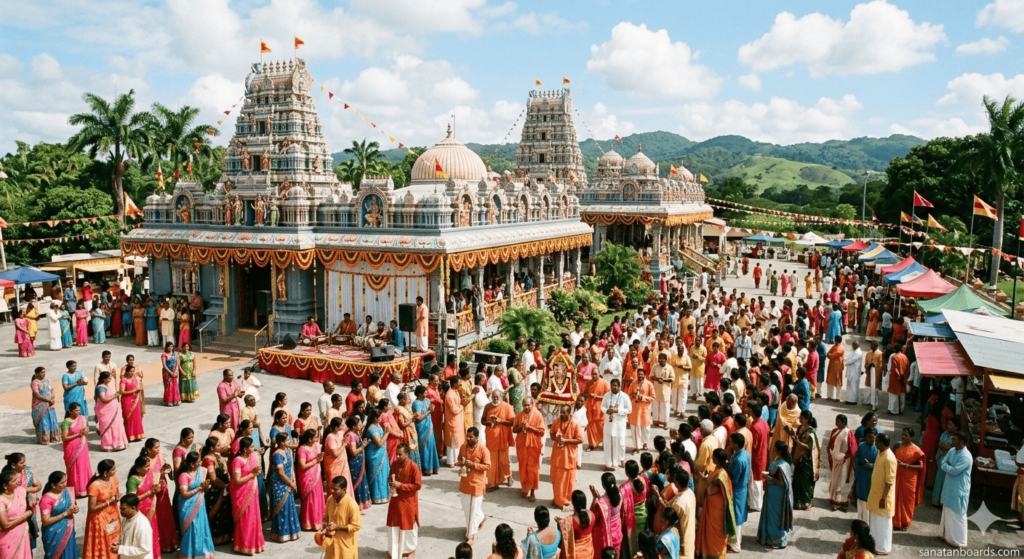
What Is Trinidad & Tobago Hindu Leaders – Bhadase Sagan Maraj ?
TRINIDAD & TOBAGO HINDU LEADERS – BHADASE SAGAN MARAJ refers to the life and impact of Bhadase Sagan Maraj as a key Hindu community leader in the Caribbean, most notably in Trinidad and Tobago. Born into an Indo‑Trinidadian Hindu family in Caroni Village in 1920, Maraj emerged from modest beginnings to become one of the most influential figures in the political, religious, and cultural history of his community and country.
Maraj’s leadership took shape in multiple domains. As a Hindu leader, he established the Sanatan Dharma Maha Sabha (SDMS) in 1952 with the goal of unifying disparate Hindu groups, standardizing religious practices, and promoting Hindu cultural identity. The SDMS under his guidance became the foremost Hindu organization in the nation, overseeing temples, educational institutions, and cultural events that continue to serve Hindu communities to this day.
Politically, Maraj used his influence to found several parties that offered political representation for Indo‑Trinidadians and other marginalized groups. His religious and political pursuits were guided by his commitment to civil rights, equality, and community development. He served as Leader of the Opposition from 1956 to 1961, demonstrating that Hindu leaders could also play central roles in national governance.
Beyond organization and advocacy, Maraj’s efforts extended to educational empowerment. Through temples and SDMS‑affiliated institutions, he invested in schools that provided access to quality education for children who had historically lacked equal opportunities, contributing to long‑term socio‑economic uplift. His work challenged colonial structures and helped reshape perspectives on cultural and religious plurality in Trinidad and Tobago.
Who Is Required Trinidad & Tobago Hindu Leaders – Bhadase Sagan Maraj ?
The phrase TRINIDAD & TOBAGO HINDU LEADERS – BHADASE SAGAN MARAJ designates the essential personality of Bhadase Sagan Maraj and the community and historical contexts in which such leadership was necessary. Leaders like Maraj were particularly required by the Indo‑Trinidadian Hindu community in the mid‑20th century because they faced marginalization in a society shaped by colonial legacies. These communities needed representation, cultural affirmation, and political agency to preserve their identity and secure equal access to education, economic opportunity, and civil rights.
During that era, social and economic structures were dominated by colonial and Afro‑Creole political elites, and Hindu traditions and languages were often sidelined in public life. Hindu festivals, temples, and schools did not have the institutional support required for sustainable growth. As a result, there was a critical need for leaders who could organize, advocate, and build institutions that would allow Hindus to fully participate in national life without losing cultural heritage.
Maraj was required in this role because of his unique capacity to mobilize people, his entrepreneurial acumen, and his unwavering commitment to his heritage. By founding the Sanatan Dharma Maha Sabha (SDMS), Maraj provided a unified organizational structure that could standardize religious education, formalize temple management, and advocate for recognition of Hindu observances. This leadership filled a void that had existed for decades, giving Hindu communities the confidence and infrastructure needed to thrive.
In politics, Maraj’s leadership was also necessary to challenge prevailing power dynamics. His formation of political parties gave voice to Indo‑Trinidadians and helped break patterns of exclusion from decision‑making processes. His dual leadership capacity — spiritual and political — made him a bridge between communities and a defender of pluralism.
Thus, TRINIDAD & TOBAGO HINDU LEADERS – BHADASE SAGAN MARAJ was required because history demanded leaders who could preserve cultural identity, expand opportunities, and contribute meaningfully to the nation’s evolving democratic framework.
When Trinidad & Tobago Hindu Leaders – Bhadase Sagan Maraj Required ?
The leadership of TRINIDAD & TOBAGO HINDU LEADERS – BHADASE SAGAN MARAJ became crucial during the mid‑20th century, a period marked by social, political, and cultural transformation in Trinidad and Tobago. This era saw the decline of British colonial control, the rise of national consciousness, and debates around equality, civil rights, and cultural identity. The Indo‑Trinidadian Hindu community faced particular challenges during this time, including limited access to political power, underrepresentation in education, and societal marginalization.
Maraj’s leadership was required precisely when there was an urgent need to unify the Hindu population and secure its position in a plural society. The 1940s and 1950s were characterized by tensions between different ethnic groups and competition over land, jobs, and political influence. In such a context, Hindu leaders like Maraj were essential for negotiating recognition of cultural and religious rights while ensuring that Hindu voices were present in policymaking.
The formal founding of the Sanatan Dharma Maha Sabha (SDMS) in 1952 marked a pivotal moment. This organization allowed for the standardization of Hindu religious practices, the construction of temples, and the creation of schools that provided formal education with Hindu values. These efforts were timely because, without organized leadership, Hindu traditions risked fragmentation or marginalization amid broader societal changes.
Politically, Maraj’s leadership was required during elections and debates over constitutional reform, as he championed the representation of Indo‑Trinidadians in local government and the Legislative Council. By the mid‑1950s, his political parties and advocacy offered a structured channel for the community to influence policy, from education to labor rights.
Where Trinidad & Tobago Hindu Leaders – Bhadase Sagan Maraj Required ?
The influence and leadership of TRINIDAD & TOBAGO HINDU LEADERS – BHADASE SAGAN MARAJ were most acutely required in locations where the Indo‑Trinidadian Hindu community was concentrated and where social, cultural, and political advocacy could have maximum impact. Geographically, Maraj’s work was centered in Caroni, Chaguanas, and other central Trinidadian villages, which had large populations of indentured labor descendants and families practicing Hindu traditions.
Temples and schools built under Maraj’s guidance were strategically placed to reach these communities. Locations such as the Central Hindu Temple in Chaguanas became hubs for religious, educational, and social activities. By situating resources in key regions, Maraj ensured accessibility to both rural and urban Hindu populations. These centers were not only religious sanctuaries but also community meeting points where cultural identity could be strengthened, and local issues addressed collectively.
Beyond Trinidad, Maraj’s leadership was relevant throughout the Caribbean diaspora, including places like Guyana, Suriname, and Jamaica, where Hindu migrants maintained connections with their Trinidadian counterparts. Through cultural outreach, temple affiliations, and religious festivals, his influence transcended national borders and provided a model of organized Hindu leadership for the wider region.
Maraj’s political efforts were concentrated where electoral engagement mattered most. Regions with high Indo‑Trinidadian populations, such as the central and southern plains of Trinidad, were areas where political mobilization under his leadership ensured representation in legislative councils and local governance.
In contemporary terms, the legacy of TRINIDAD & TOBAGO HINDU LEADERS – BHADASE SAGAN MARAJ remains evident in the continued need for community centers, schools, and temples across Trinidad, where religious guidance, education, and social cohesion are essential. Maraj’s organizational blueprint demonstrates that effective leadership requires a strategic presence where communities are most concentrated, culturally active, and socially engaged.
How Trinidad & Tobago Hindu Leaders – Bhadase Sagan Maraj Required ?
The leadership of TRINIDAD & TOBAGO HINDU LEADERS – BHADASE SAGAN MARAJ was required through a combination of religious, educational, social, and political strategies. His approach demonstrates a multi‑layered model of community empowerment that can still serve as a reference for effective leadership.
Religiously, Maraj provided institutional structure. He formalized temple management, standardized rituals, and established guidelines for Hindu education. By creating the Sanatan Dharma Maha Sabha (SDMS), he ensured that temples were not isolated spaces but organized institutions that could support religious, cultural, and social initiatives.
Educationally, Maraj emphasized the importance of schooling with cultural foundations. Schools under the SDMS incorporated Hindu philosophy, history, and language alongside mainstream subjects, ensuring that younger generations retained cultural knowledge while preparing for broader societal participation.
Socially, Maraj’s leadership required community mobilization and advocacy. He addressed issues such as workers’ rights, social inequality, and access to resources, often acting as a mediator between government bodies and marginalized populations. His ability to unite diverse Hindu groups under a shared organizational framework made him indispensable.
Politically, he was required to provide representation and influence policy. By forming political parties, Maraj ensured that Indo‑Trinidadians had a voice in local and national government, advocating for civil rights, social reforms, and equitable development His leadership style combined grassroots engagement with formal political strategy.
In summary, TRINIDAD & TOBAGO HINDU LEADERS – BHADASE SAGAN MARAJ was required through structured institution-building, strategic education, social advocacy, and political organization. Each of these mechanisms reinforced the others, creating a comprehensive model of leadership that ensured cultural preservation, social empowerment, and political agency.
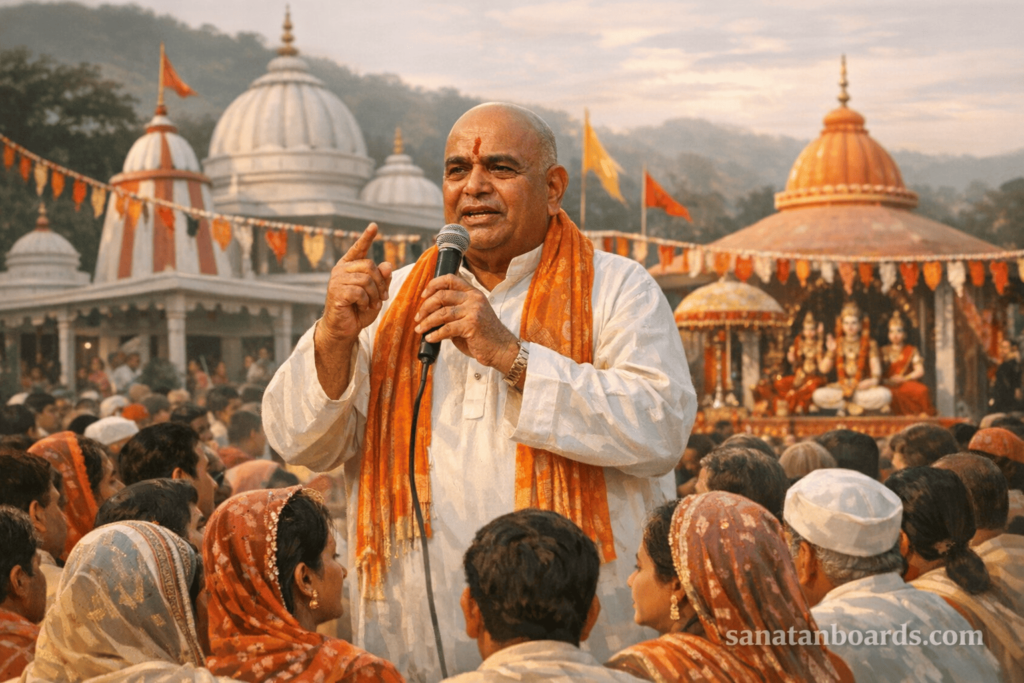
Case Study On Trinidad & Tobago Hindu Leaders – Bhadase Sagan Maraj
Background:
Bhadase Sagan Maraj emerged as a transformative figure for Trinidad and Tobago’s Hindu community during a time when social, political, and cultural challenges were significant. Born in 1920 in Caroni Village, Maraj witnessed firsthand the marginalization of Indo‑Trinidadian Hindus, descendants of indentured laborers brought to the Caribbean by the British. These communities faced economic limitations, limited access to education, and underrepresentation in political processes. Maraj recognized that without organized leadership, Hindu traditions, language, and cultural practices risked being eroded by societal pressures and colonial legacies.
Organizational Leadership:
One of Maraj’s most notable achievements was the founding of the Sanatan Dharma Maha Sabha (SDMS) in 1952. Before its establishment, Hindu communities were fragmented with multiple small temples and informal religious groups. Maraj created a centralized structure to standardize rituals, formalize temple governance, and provide consistent religious education. This organization also expanded to include schools, cultural programs, and community outreach, helping to instill Hindu values while preparing students to participate in a modern society.
Political Engagement:
Understanding that cultural leadership alone would not secure long-term progress, Maraj entered the political arena. He founded political parties including the People’s Democratic Party and later the Democratic Labour Party, which aimed to give voice to the Indo‑Trinidadian community in legislative processes. Maraj’s political engagement ensured that Hindu concerns — from labor rights to education policy — were formally represented. He served as Leader of the Opposition, demonstrating that religious and cultural leadership could intersect with political activism effectively.
Community Impact:
Maraj’s initiatives created a blueprint for sustained community development. Schools affiliated with the SDMS provided quality education and emphasized cultural literacy. Temples became hubs for social interaction, religious practice, and community problem-solving. Additionally, Maraj’s leadership encouraged dialogue between different ethnic and religious groups, fostering social cohesion in a plural society.
Challenges and Controversies:
Maraj faced opposition from competing religious and political factions, as well as skepticism from those wary of consolidating religious authority. Despite these challenges, his strategies emphasized inclusivity within the Hindu community and negotiation with external stakeholders.
Outcomes and Legacy:
Today, the SDMS operates over 150 schools and numerous temples throughout Trinidad and Tobago, directly attributable to Maraj’s leadership. Politically, his advocacy set precedents for Indo‑Trinidadian representation and the acknowledgment of Hindu rights in public policy. The case study of Maraj illustrates that transformational leadership requires a holistic approach — integrating religious, educational, social, and political spheres to achieve lasting impact.
White paper On Trinidad & Tobago Hindu Leaders – Bhadase Sagan Maraj
Executive Summary:
This white paper explores the leadership, strategies, and societal impact of TRINIDAD & TOBAGO HINDU LEADERS – BHADASE SAGAN MARAJ, highlighting how his initiatives shaped the Hindu community in Trinidad and Tobago. The analysis addresses historical context, leadership strategies, institutional development, political engagement, and the broader social and cultural implications of his work.
Historical Context:
During the mid-20th century, Indo‑Trinidadian Hindus faced systemic marginalization. Education opportunities were limited, political representation was weak, and cultural practices were fragmented. Maraj’s leadership emerged in this environment, recognizing the need for a unifying vision that addressed both preservation of cultural identity and socio-political empowerment.
Institutional Development:
Maraj’s establishment of the Sanatan Dharma Maha Sabha (SDMS) represented a structured approach to religious and cultural leadership. SDMS standardized temple practices, introduced consistent religious curricula in schools, and facilitated the creation of community centers that doubled as hubs for social services. This institutional model allowed the Hindu community to maintain cohesion, strengthen identity, and mobilize resources effectively.
Political Leadership:
Beyond cultural and educational initiatives, Maraj’s political engagement was critical. He founded and led political parties to provide Indo‑Trinidadians with formal representation. Policies advocated under his leadership addressed education reform, labor rights, and social equity. By participating in legislative processes, Maraj bridged cultural leadership with national policymaking.
Social and Cultural Impact:
Maraj’s influence extended to social integration, encouraging collaboration among different ethnic and religious groups. His work reinforced Hindu identity while promoting pluralism in a multicultural society. Schools and temples under the SDMS model contributed to social mobility, cultural literacy, and community resilience.
Challenges and Risk Management:
Maraj faced challenges including political opposition, internal community disputes, and resource limitations. He mitigated these risks through negotiation, coalition-building, and strategic planning, ensuring sustainability of his initiatives.
Strategic Recommendations:
- Leadership Development: Future community leaders can study Maraj’s holistic approach integrating religion, education, and politics.
- Institutional Replication: The SDMS model can be adapted for diaspora communities seeking cultural preservation.
- Policy Advocacy: Leveraging organizational structures to influence public policy remains an effective strategy for minority communities.
Conclusion:
TRINIDAD & TOBAGO HINDU LEADERS – BHADASE SAGAN MARAJ exemplifies a model of leadership where religion, education, and politics converge. His legacy demonstrates the importance of structured institutional support, strategic advocacy, #Sanatandharmaaccreditationboardsinvasaiand community mobilization for sustainable cultural and social development. Maraj’s work continues to inform contemporary discussions on leadership, minority representation, and community resilience.
Industry Application On Trinidad & Tobago Hindu Leaders – Bhadase Sagan Maraj
The leadership model of TRINIDAD & TOBAGO HINDU LEADERS – BHADASE SAGAN MARAJ has applications across various industries and organizational sectors:
- Education Sector:
- SDMS schools illustrate how culturally integrated curricula can enhance educational outcomes.
- Organizations can apply Maraj’s model to design programs for minority or diaspora communities, promoting both academic excellence and cultural literacy.
- Non-Profit & Community Development:
- Maraj’s approach to institution building provides a blueprint for NGOs aiming to unify fragmented communities.
- Establishing hubs for social services, cultural engagement, and advocacy can increase outreach effectiveness.
- Political Strategy & Civic Engagement:
- Maraj’s dual focus on community empowerment and political representation offers lessons for advocacy groups.
- Minority-led organizations can leverage structured leadership to influence policy and ensure equitable participation.
- Corporate & Leadership Training:
- His holistic leadership model demonstrates the integration of vision, organization, and stakeholder management.
- Corporations can adapt these principles for managing culturally diverse teams and community relations.
- Diaspora & Cultural Organizations:
- Replicating Maraj’s organizational framework allows diasporas to preserve cultural identity while engaging with host nations.
- Temples, schools, and cultural centers serve as multipurpose platforms for education, social networking, and advocacy.
Conclusion:
The strategies employed by Maraj illustrate a transferable leadership framework that combines vision, structure, advocacy, and community engagement. #Sanatandharmaaccreditationboardsinmumbai This model has relevance beyond the religious sector, informing best practices in education, non-profits, politics, corporate management, and diaspora relations.
source : The Global Hindu
ASK FAQ
1. Who was Bhadase Sagan Maraj in Trinidad & Tobago?
Bhadase Sagan Maraj was a prominent Hindu leader, politician, and founder of the Sanatan Dharma Maha Sabha, advocating for the rights and cultural preservation of Indo‑Trinidadians.
2. What is the Sanatan Dharma Maha Sabha founded by Bhadase Sagan Maraj?
It is the largest Hindu organization in Trinidad & Tobago, standardizing religious practices, running schools, temples, and promoting Hindu culture.
3. Why is Bhadase Sagan Maraj important for Trinidad & Tobago Hindu communities?
He unified Hindu communities, provided political representation, established schools and temples, and preserved Hindu cultural identity.
4. When did Bhadase Sagan Maraj lead the Hindu community in Trinidad & Tobago?
His leadership was most active from the 1950s until his death in 1971, a crucial period for cultural consolidation and political representation.
5. How did Bhadase Sagan Maraj influence politics in Trinidad & Tobago?
He founded political parties, served as Leader of the Opposition, and ensured Indo‑Trinidadian voices were represented in government decisions.
Table of Contents
Disclaimer
The information provided in this blog is intended for informational, learning, and knowledge purposes. All historical facts, references, and interpretations are drawn from publicly available sources. The content does not constitute legal, political, or religious advice and should not be used as such.