SRI LANKA (RAVANA’S LANKA) – KING RAVANA, KING PARAKRAMABAHU
Sri Lanka, often referred to in ancient texts as “Ravana’s Lanka,” holds a unique position in both mythology and history. The island is deeply associated with the legendary king Ravana from the epic Ramayana, as well as with historical rulers like Parakramabahu I, who left a lasting legacy on governance and infrastructure.
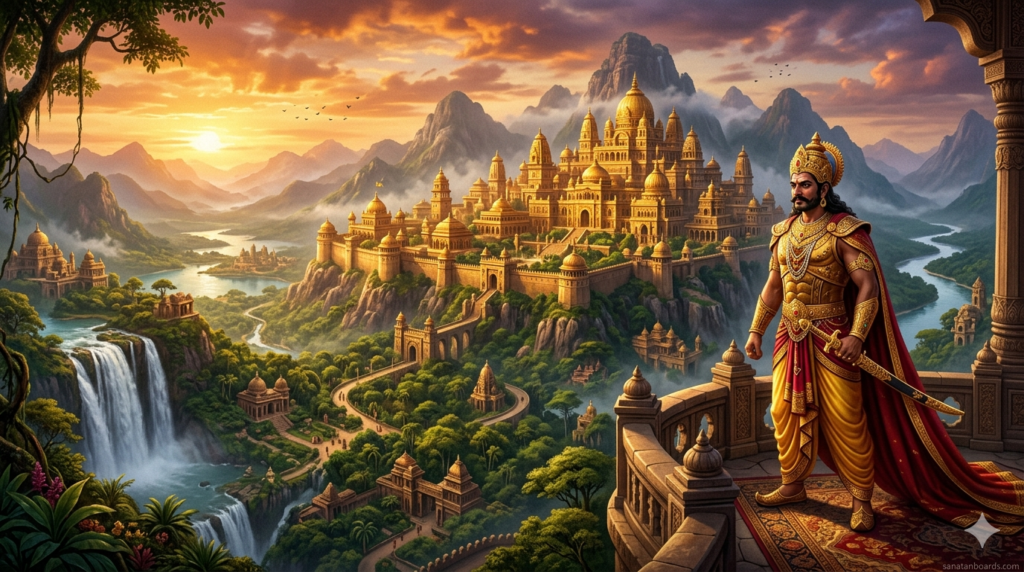
The narrative of Ravana presents Sri Lanka as a highly advanced and prosperous kingdom, rich in knowledge, architecture, and aerial technology, as described in mythological accounts. Ravana is portrayed as a complex figure—both a powerful ruler and a learned scholar often associated with devotion, music, and scientific knowledge. His Lanka is described as a golden city, symbolizing wealth and sophistication.
In contrast, King Parakramabahu I represents the historical brilliance of Sri Lanka during the medieval period. His reign marked a golden era of agricultural innovation, irrigation systems, and political consolidation. He is best known for his famous statement that not even a drop of rainwater should flow into the ocean without being used for human benefit reflecting his visionary approach to resource management.
Together, Ravana and Parakramabahu symbolize two dimensions of Sri Lanka’s identity—mythological grandeur and historical achievement. This blend of legend and reality makes Sri Lanka a fascinating subject of study, offering insights into cultural evolution, governance, and the interplay between mythology and history.
What Is Sri Lanka (Ravana’s Lanka) – King Ravana, King Parakramabahu ?
The concept refers to the combined understanding of Sri Lanka through both mythological and historical perspectives. Ravana’s Lanka originates from the Ramayana, where the island is described as a powerful and advanced kingdom ruled by Ravana. This portrayal emphasizes cultural imagination, symbolic storytelling, and philosophical ideas about power and morality.
Historically, Sri Lanka under King Parakramabahu I represents a period of organized governance and technological advancement. His rule is associated with large-scale irrigation systems, economic stability, and political unity. Unlike mythological narratives, his contributions are supported by historical evidence and archaeological findings.
The topic connects these two dimensions to provide a holistic view of Sri Lanka’s identity. Ravana’s story reflects beliefs, traditions, and values passed through generations, while Parakramabahu’s reign demonstrates practical achievements and administrative excellence.
Understanding this concept allows individuals to explore how myths influence cultural identity and how historical figures contribute to real-world development. It also helps in distinguishing between symbolic narratives and factual history while appreciating the importance of both.
This combined perspective is essential for studying the cultural and intellectual history of Sri Lanka, making it a valuable topic in education, research, and cultural discussions.
Who Is Required Sri Lanka (Ravana’s Lanka) – King Ravana, King Parakramabahu ?
This topic is important for multiple groups of people across different fields. Historians and researchers require this knowledge to analyze the relationship between mythology and history. By studying Ravana and Parakramabahu, they can understand how narratives evolve and influence cultural identity over time.
Students and educators also benefit from this topic. It provides an interdisciplinary approach, combining literature, history, and cultural studies. This helps learners develop a broader perspective and critical thinking skills.
Cultural scholars and anthropologists require this knowledge to study traditions, beliefs, and societal values. Ravana’s story offers insights into ancient philosophies, while Parakramabahu’s achievements reflect practical governance and innovation.
Tourism professionals and heritage managers also need this understanding. Sri Lanka’s tourism industry promotes both mythological and historical sites, making it essential to interpret and present these narratives accurately.
General readers and knowledge seekers can use this topic to gain a deeper appreciation of Sri Lanka’s heritage. It encourages exploration of both myth and reality, helping individuals understand how they coexist and shape cultural identity.
When Sri Lanka (Ravana’s Lanka) – King Ravana, King Parakramabahu Is Required ?
This topic becomes relevant in academic, cultural, and practical contexts. In education, it is required when studying South Asian history, mythology, and literature. The Ramayana introduces Ravana’s Lanka, while historical studies focus on Parakramabahu’s contributions.
In cultural discussions, the topic is important for understanding traditions and storytelling practices. Ravana’s character is often analyzed in terms of morality, leadership, and symbolism. These discussions help in interpreting ancient texts and their relevance in modern times.
The topic is also required in tourism development. Sri Lanka promotes locations associated with Ravana and historical monuments from Parakramabahu’s era. These sites attract visitors and contribute to the economy.
In environmental and engineering studies, Parakramabahu’s irrigation systems are examined as early examples of sustainable resource management. His approach is relevant in modern discussions about conservation and development.
Media and entertainment industries also require this topic. Stories about Ravana continue to inspire films, books, and artistic works. These adaptations keep the narrative alive and introduce it to new audiences.
Overall, the topic is required whenever there is a need to understand the intersection of mythology, history, and cultural identity.
Where Sri Lanka (Ravana’s Lanka) – King Ravana, King Parakramabahu Is Required ?
The topic of Sri Lanka (Ravana’s Lanka) – King Ravana and King Parakramabahu I is required across multiple domains where cultural, historical, and intellectual understanding is essential. It is particularly significant in academic institutions, cultural organizations, tourism sectors, and research environments.
In educational settings such as schools, colleges, and universities, this topic is required for teaching subjects like history, literature, and cultural studies. The study of Ramayana introduces Ravana’s Lanka as a mythological concept, while historical courses focus on the real contributions of Parakramabahu. This combination helps students understand the difference between myth and history while appreciating both perspectives.
In cultural and heritage institutions, the topic is required to preserve and promote traditional knowledge. Museums, cultural centers, and heritage sites often present narratives related to Ravana and historical exhibits from Parakramabahu’s era. These institutions rely on such topics to educate visitors and maintain cultural continuity.
The tourism industry is another important area where this topic is required. Sri Lanka promotes several locations associated with Ravana, along with historical sites like ancient reservoirs and cities developed during Parakramabahu’s reign. Tour guides, travel planners, and tourism boards use this knowledge to create informative and engaging experiences for visitors.
In research and academic studies, scholars require this topic to explore the relationship between mythology and history. It is used in interdisciplinary research involving archaeology, anthropology, and literature.
Additionally, media and creative industries also require this topic. Films, books, and documentaries often draw inspiration from Ravana’s story and Sri Lanka’s historical background, making it relevant in storytelling and content creation.
Overall, this topic is required wherever there is a need to understand cultural heritage, historical development, and mythological narratives in a structured and meaningful way
How Sri Lanka (Ravana’s Lanka) – King Ravana, King Parakramabahu Is Required ?
This topic can be studied through various methods. Academic research involves analyzing texts like the Ramayana and historical records of Sri Lanka. Archaeology also plays a key role in understanding Parakramabahu’s contributions.
Educational institutions include this topic in curricula to teach students about history and mythology. Interactive methods such as storytelling and site visits enhance learning.
Tourism uses this topic to promote cultural heritage. Locations associated with Ravana and historical sites from Parakramabahu’s era are developed for visitors.
Digital platforms also contribute by sharing information through articles, videos, and documentaries. This makes the topic accessible to a global audience.
Research organizations and cultural institutions work to preserve and promote this knowledge through publications and events.
Case Study On Sri Lanka (Ravana’s Lanka) – King Ravana, King Parakramabahu
A significant case study on Sri Lanka (Ravana’s Lanka) – King Ravana and King Parakramabahu I can be observed in the integration of mythology and history within Sri Lanka’s tourism and cultural development sectors. This case study highlights how a nation successfully utilizes both mythological narratives and historical evidence to promote identity, education, and economic growth.
The mythological aspect of this case study centers on Ravana, a prominent figure in the Ramayana. Several locations in Sri Lanka, such as caves, mountains, and temples, are believed to be associated with Ravana’s life. These places are promoted as part of a “Ravana Trail,” attracting tourists who are interested in mythology and religious narratives. Although there is limited archaeological evidence to support all these claims, the cultural significance of these sites plays a major role in tourism.
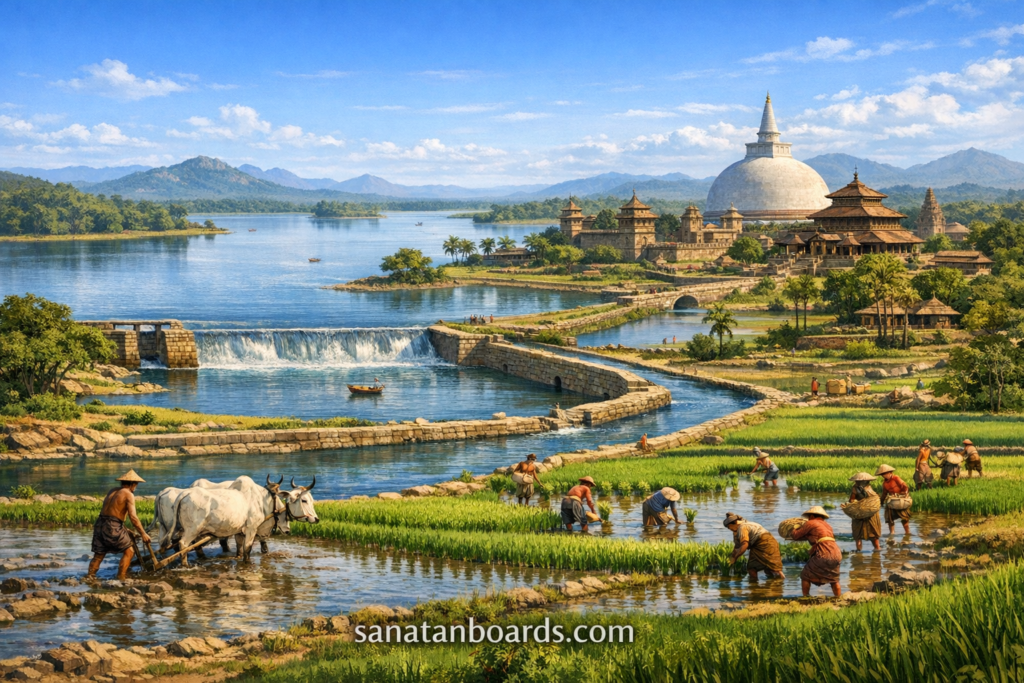
On the historical side, the contributions of Parakramabahu I provide a strong foundation of verified achievements. His development of large-scale irrigation systems, including reservoirs and canals, transformed agriculture in Sri Lanka. Sites like ancient cities and water management systems are preserved as heritage landmarks. These locations attract historians, researchers, and tourists interested in engineering and history.
The integration of these two dimensions creates a diversified tourism model. Visitors can explore both mythological and historical aspects, gaining a comprehensive understanding of Sri Lanka’s heritage. This approach not only increases tourist engagement but also enhances the country’s global image.
However, this case study also presents challenges. One major issue is maintaining a balance between myth and historical accuracy. Overemphasis on mythology without proper evidence may lead to misconceptions. Therefore, it is important for authorities to clearly differentiate between belief-based narratives and factual history.
Another challenge is the preservation of historical sites. Increased tourism can lead to environmental degradation if not managed properly. Sustainable practices are essential to protect these valuable resources.
The case study demonstrates that combining mythology and history can be a powerful strategy for cultural and economic development. By carefully managing these elements, Sri Lanka continues to benefit from its rich and diverse heritage.
White Paper On Sri Lanka (Ravana’s Lanka) – King Ravana, King Parakramabahu
This white paper examines the combined influence of mythological narratives and historical developments in Sri Lanka, focusing on Ravana’s Lanka and the reign of Parakramabahu I. The objective is to analyze how these elements contribute to cultural identity, education, and economic growth.
The mythological foundation is based on the story of Ravana from the Ramayana. Ravana is depicted as a knowledgeable and powerful ruler, symbolizing strength, intelligence, and devotion. His story has been preserved through generations and continues to influence cultural practices and beliefs.
In contrast, the historical contributions of Parakramabahu I are well-documented. His reign is known for advancements in irrigation, agriculture, and governance. His famous principle of utilizing every drop of water reflects a forward-thinking approach to resource management. These achievements provide valuable lessons for modern development strategies.
The integration of these two aspects creates a unique framework for understanding Sri Lanka’s heritage. It allows for a multidimensional approach that includes mythology, history, and cultural studies. This integration is particularly beneficial in education, where students can explore both symbolic and factual narratives.
From an economic perspective, this topic plays a crucial role in tourism. Mythological sites associated with Ravana and historical landmarks from Parakramabahu’s era attract a wide range of visitors. This contributes to revenue generation and employment opportunities.
However, the white paper also identifies key challenges. One major concern is the lack of clear distinction between myth and history in public narratives. This can lead to misinformation and confusion. Another issue is the need for sustainable tourism practices to protect heritage sites.
To address these challenges, the paper recommends promoting accurate information through education and research. It also suggests implementing sustainable tourism strategies and encouraging interdisciplinary studies.
In conclusion, the combination of Ravana’s mythology and Parakramabahu’s history offers significant opportunities for cultural preservation and #Sanatandharmaaccreditationboardsinvasai economic development. By managing these elements effectively, Sri Lanka can continue to strengthen its identity and global presence.
Industry Application On Sri Lanka (Ravana’s Lanka) – King Ravana, King Parakramabahu
The concept of Sri Lanka (Ravana’s Lanka) – King Ravana and King Parakramabahu I has wide-ranging applications across multiple industries, as it combines mythological narratives with historical achievements. This unique combination provides opportunities for economic growth, cultural preservation, and knowledge development.
In the tourism industry, this topic plays a crucial role in attracting both domestic and international visitors. Locations associated with Ravana, often referred to as the “Ravana Trail,” are promoted as cultural and spiritual destinations. At the same time, historical sites developed during the reign of Parakramabahu, such as irrigation systems and ancient cities, are major attractions. This dual approach enhances visitor engagement and boosts tourism revenue.
In the education sector, the topic is used to teach history, literature, and cultural studies. Institutions incorporate the study of the Ramayana alongside historical records of Sri Lanka to provide students with a balanced understanding of mythology and reality. This interdisciplinary approach improves critical thinking and cultural awareness.
The media and entertainment industry extensively utilizes this topic for storytelling and content creation. Films, television series, books, and digital content inspired by Ravana’s character and Sri Lanka’s historical background continue to gain popularity. These creative works help in preserving and spreading cultural narratives to a global audience.
In the environmental and engineering sector, the contributions of Parakramabahu I are highly relevant. His advanced irrigation systems are studied as early examples of sustainable water management. Modern engineers and environmental planners analyze these systems to develop efficient resource management strategies.
The cultural preservation industry also benefits from this topic. Museums, heritage sites, and cultural organizations use these narratives to maintain traditions and educate the public. Exhibitions and cultural programs based on Ravana and Parakramabahu help in preserving Sri Lanka’s identity.
Additionally, the research and academic industry uses this topic for interdisciplinary studies involving history, archaeology, anthropology, and literature. Scholars analyze the relationship between myth and history to understand cultural evolution.
Overall, the industry application of this topic demonstrates its importance in tourism, education, media, environmental studies, and cultural preservation, #Sanatandharmaaccreditationboardsinmumbai making it a valuable resource for both economic and intellectual development.
source : Project Sanatana : The Eternal Ways of Life
ASK FAQ
1. What is Ravana’s Lanka in Ramayana?
Ravana’s Lanka refers to the powerful and advanced kingdom ruled by Ravana in the Ramayana. It is often associated with Sri Lanka and symbolizes wealth, knowledge, and architectural brilliance.
2. Who was King Parakramabahu I of Sri Lanka?
Parakramabahu I was a great historical ruler of Sri Lanka known for his advanced irrigation systems, strong governance, and economic development during the 12th century.
3. Is Ravana’s Lanka the same as modern Sri Lanka?
Ravana’s Lanka is a mythological concept described in the Ramayana, while modern Sri Lanka is a real country. Many believe they are connected, but there is no confirmed historical evidence.
4. Why is King Parakramabahu important in Sri Lankan history?
King Parakramabahu I is important for his innovations in water management, agriculture, and administration, which helped strengthen Sri Lanka’s economy and infrastructure.
5. How is Ravana connected to Sri Lanka today?
Ravana is connected to Sri Lanka through cultural beliefs, tourism sites, and storytelling traditions, making him an important part of the country’s mythological heritage.
Table of Contents
Disclaimer
This content is prepared for educational, learning, and knowledge purposes. The references to Ravana are based on mythological texts and cultural traditions, while information about King Parakramabahu is based on historical records. Interpretations may vary, and readers are encouraged to explore multiple sources for a broader understanding.