MAURITIUS HINDU LEADERSHIP – SEEWOOSAGUR RAMGOOLAM
Mauritius is a culturally diverse island nation in the Indian Ocean, with a majority Hindu population shaped by history, migration, and political leadership. Among the towering figures in its modern history, Seewoosagur Ramgoolam stands as a defining leader whose life embodied the aspirations of the Hindu community and all citizens of Mauritius in their pursuit of self‑rule, dignity and national identity. Born into an Indo‑Mauritian Hindu family in rural Belle Rive in 1900, Ramgoolam’s early years were shaped by the values of culture, education, resilience, and service.
His family background was rooted in the experience of indentured Indian immigrants who carried Hindu traditions and social values across the Indian Ocean to settle in Mauritius. From this cultural foundation, he emerged not only as a politician but as a leader who represented the hopes of many Hindus seeking representation, equality, and the ability to shape the island’s future.
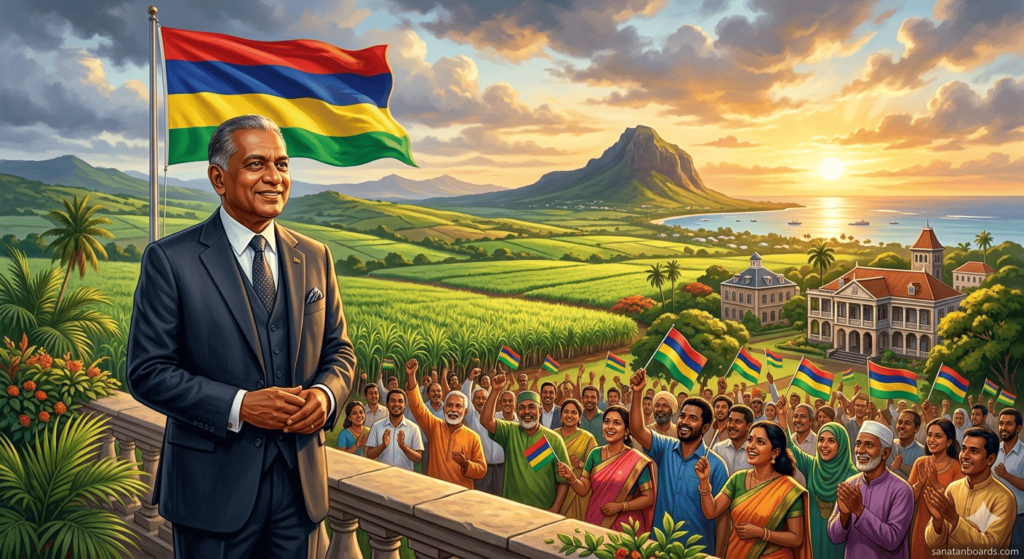
Ramgoolam’s political journey began at the heart of social activism and community organizing and culminated in his election as Chief Minister and later as the first Prime Minister when Mauritius gained independence from British colonial rule in 1968. His leadership was widely recognized for promoting inclusive governance, improving social welfare, expanding education, and strengthening national unity across religious and ethnic lines. Through his leadership Ramgoolam became known as “Chacha” (Uncle) among Mauritians — a figure of warmth, stability, and guidance. His life and work reflect how Hindu cultural roots and values informed political leadership in a plural society, contributing meaningfully to the birth of an independent, democratic Mauritius.
What Is Mauritius Hindu Leadership – Seewoosagur Ramgoolam ?
The concept of Mauritius Hindu Leadership in the context of Seewoosagur Ramgoolam refers to the role played by an individual rooted in Hindu cultural heritage who rose to national political leadership during a critical era of social and political transformation. Ramgoolam’s leadership was not solely defined by religious identity, but his background as a descendant of Indian ancestors and his understanding of Hindu philosophy and community values provided a foundation for ethical service, social justice, and commitment to human dignity.
Seewoosagur Ramgoolam studied medicine in London and returned to Mauritius with a deep belief in the dignity and rights of all people. He entered public life driven by a desire to improve conditions for workers — many of whom were descendants of Indian laborers brought to the sugar plantations — and to extend opportunities for education, employment, and political participation. Within the multicultural makeup of Mauritius, the Hindu share of the population often sought greater voice in governance and recognition of cultural heritage. Ramgoolam’s leadership emerged at a time when universal suffrage and civil rights were gaining ground, and his political career became intimately tied with the struggle for these rights.
Although his political leadership addressed the needs of all Mauritians, many in the Hindu community saw his rise as symbolic and empowering. He became a unifying figure who bridged community interests with national responsibilities, negotiating alliances across ethnic and religious groups to achieve independence and build state institutions. Ramgoolam’s leadership style emphasized consensus, humanitarian welfare, and constitutional democracy — principles that resonated deeply within a society shaped by diverse traditions and histories.
Who Is Required – Mauritius Hindu Leadership – Seewoosagur Ramgoolam ?
Mauritius needed a leader like Seewoosagur Ramgoolam during the mid‑20th century because the island was undergoing a critical transition from colonial rule to self‑government and eventual independence. During this time, the majority Hindu population was seeking representation and recognition within political structures that were historically dominated by colonial interests and established elites. Ramgoolam’s blend of personal integrity, professional training, and social commitment made him a key figure capable of articulating the aspirations of the people and negotiating the complex political environment of decolonization.
As a trained physician, Ramgoolam possessed analytical thinking, empathy, and a commitment to human welfare — qualities that were essential in confronting the social challenges of the time, including economic inequality, limited access to education, and political disenfranchisement. His stature grew as he championed universal suffrage, better labor conditions, and social reforms that improved the lives of ordinary citizens. This made his leadership appealing not only among Hindus but across Mauritius’s multiple communities.
Ramgoolam’s leadership was required to bring unity in a society with deep cultural, linguistic, and religious diversity. Through coalition‑building and respectful dialogue with various groups, he demonstrated a capacity to balance community identity with broader national interests. He led the Labour Party to multiple elections, becoming Chief Minister, and then becoming the first Prime Minister when Mauritius gained independence in 1968. In this role, he guided the nation’s early years, establishing democratic systems, social services, and institutions that provided stability and growth. His leadership was essential in transforming a colonial outpost into a sovereign, democratic nation
When Mauritius Hindu Leadership – Seewoosagur Ramgoolam Is Required ?
The era in which Mauritius Hindu Leadership – Seewoosagur Ramgoolam was required corresponded with the rise of global decolonization after World War II, and specifically from the late 1940s through the early 1980s in Mauritius. This period marked a historical pivot point when the island’s political structure, society, and economy were evolving rapidly. Colonial rule under the British had granted limited political participation, and the social hierarchy favored established European and elite groups. Among the challenges were a rapidly growing population, economic inequality, and a lack of political autonomy. As the majority of the population were of Indian descent — largely Hindu — they sought leadership that could articulate their aspirations and protect their interests within a broader national framework.
Ramgoolam entered the political landscape at a moment when Mauritius was transitioning from a colonial government to self‑governance. In the 1940s and 1950s, movements for voting rights and improved social conditions gained momentum. During this time, Ramgoolam served in various local governmental roles, becoming Municipal Councillor, Deputy Mayor, and Lord Mayor of Port Louis. His leadership was required most critically in the early 1960s, when universal suffrage had been achieved and discussions about constitutional reforms intensified. The British, influenced by global winds of change, agreed to open more avenues for self‑rule. In 1961, Ramgoolam became Chief Minister, positioning him at the forefront of negotiations for independence.
Between 1963 and 1968, the political ground was shifting rapidly. Ramgoolam forged alliances between diverse political parties and community groups, emphasizing compromise, inclusion, and respect for minority rights. This was not a period for aggressive confrontation; it required a leader capable of bridging differences while steadfastly pursuing independence. Across elections, dialogues with the British government, and managing social tensions, Ramgoolam’s leadership was tested and affirmed. His efforts culminated on 12 March 1968, when Mauritius attained independence and he became its first Prime Minister — a moment that required both political skill and moral credibility.
After independence, his leadership continued to be required as the new nation faced the challenges of building democratic institutions, expanding education, creating social welfare systems, and fostering economic growth. Between 1968 and 1982, under his guidance, Mauritius advanced significantly in infrastructure, human development, and international relations. His role was essential in navigating social change and consolidating unity in a plural society during these early decades of nationhood.
Where Mauritius Hindu Leadership – Seewoosagur Ramgoolam Is Required ?
The leadership model exemplified by Seewoosagur Ramgoolam is required in contexts where diverse communities, social equity, and ethical governance intersect. While rooted in Mauritius’s Hindu-majority society, the lessons from his leadership are applicable across multiple settings — political, social, and organizational.
- National Governance in Multi-Ethnic Societies:
Ramgoolam’s leadership was essential in Mauritius because the country had a complex mix of ethnicities, religions, and cultural groups. Leadership of this type is required in other nations where policymakers must navigate diverse populations, ensuring representation, preventing marginalization, and fostering social cohesion. - Post-Colonial or Transitional Societies:
Countries or regions transitioning from colonial rule to independence, or from authoritarian regimes to democracy, require leaders like Ramgoolam. His ability to negotiate with colonial authorities while uniting local communities demonstrates the importance of diplomacy, vision, and ethical guidance in times of political change. - Community Development and Social Reform Projects:
Leadership inspired by Ramgoolam is required in rural development, public health initiatives, and educational programs where equity and inclusion are priorities. His focus on uplifting marginalized communities through infrastructure, schools, and healthcare demonstrates a model that ensures social programs reach those most in need. - Political Movements and Democratic Consolidation:
Ramgoolam’s principles are required in political systems where coalition-building and consensus are necessary to maintain stability. His style shows how inclusive dialogue, negotiation, and respect for minority voices can prevent conflict and strengthen democratic institutions. - Corporate and Organizational Leadership:
Beyond politics, his model is required in modern organizations emphasizing ethical decision-making, diversity, and social responsibility. Companies with multicultural workforces or global partnerships can benefit from leadership that balances strategic vision with empathy, ethical values, and inclusive policies. - Education and Leadership Training:
Leadership inspired by Ramgoolam is required in academic institutions, leadership academies, and training programs. His life demonstrates how ethical principles, cultural understanding, and strategic planning can prepare future leaders to navigate complex social and professional environments.
How Mauritius Hindu Leadership – Seewoosagur Ramgoolam Is Required ?
The methodology of Mauritius Hindu Leadership – Seewoosagur Ramgoolam demonstrates how leadership can integrate cultural identity with modern governance. Ramgoolam’s approach was required in specific ways to ensure inclusive, sustainable nation-building:
- Consensus-Building: Ramgoolam used dialogue and negotiation to bring diverse ethnic and religious communities together. He formed coalitions across political lines, ensuring that policy-making respected multiple perspectives. This approach was required to avoid ethnic polarization and maintain national cohesion.
- Social Development Initiatives: Leadership required him to prioritize education, healthcare, and social welfare, particularly for historically marginalized groups. Programs like rural schools, free medical services, and housing schemes reflected a practical way to uplift citizens and strengthen society.
- Political Advocacy: He navigated colonial structures and international negotiations with diplomacy, securing independence while avoiding conflict. Leadership was required to advocate for democratic rights, universal suffrage, and minority protections, ensuring that governance was fair and inclusive.
- Moral Guidance: Ramgoolam’s Hindu values guided decisions, promoting justice, compassion, and ethical responsibility. Leadership was required to inspire public trust and instill confidence in state institutions during a fragile transition to independence.
- Strategic Vision: By balancing immediate socio-economic needs with long-term national goals, Ramgoolam’s leadership demonstrated how cultural rootedness can inform progressive governance. Policies in economic planning, social equity, and diplomatic engagement were implemented with foresight, ensuring sustainability
Case Study On Mauritius Hindu Leadership – Seewoosagur Ramgoolam
Background:
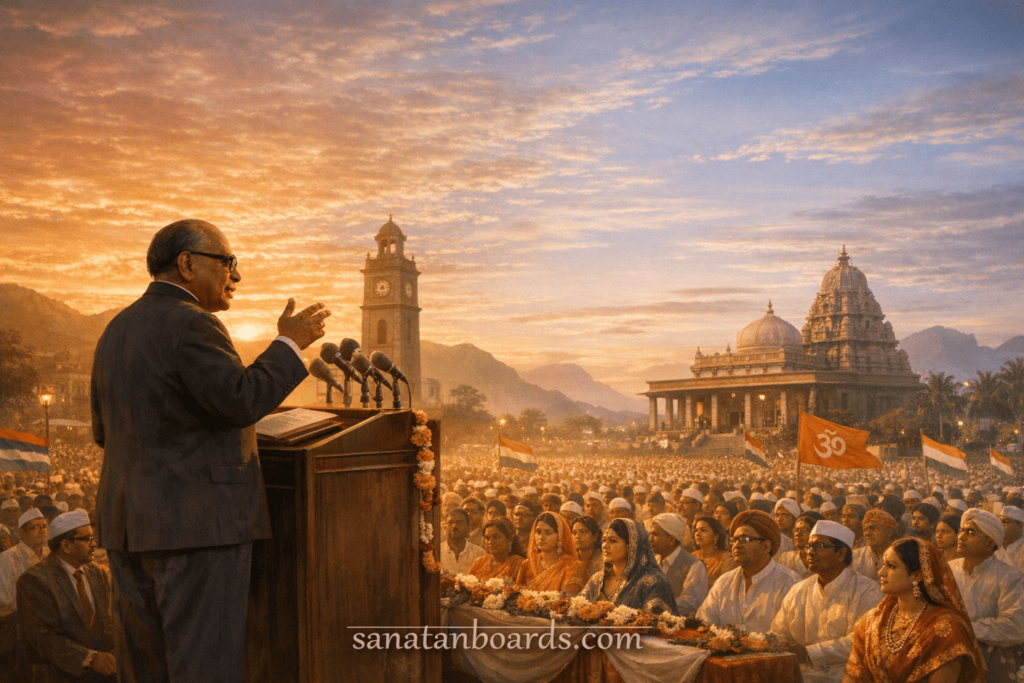
Seewoosagur Ramgoolam (1900–1985), often called “Chacha” (Uncle) by Mauritians, was a prominent Hindu leader in Mauritius. Born into a family of Indian descent, his ancestors arrived in Mauritius as indentured laborers. He trained as a medical doctor in London, where he gained exposure to modern governance, democratic values, and social reform movements. Returning to Mauritius, he became deeply involved in politics at a time when the island was transitioning from British colonial rule to self-governance.
Leadership Context:
In mid-20th century Mauritius, the majority Hindu population lacked adequate political representation despite forming the largest ethnic group. Economic inequality and colonial governance favored European and elite groups. Social services were limited, and political activism was gaining momentum. Mauritius needed a leader who could unite diverse communities, advocate for universal rights, and guide the nation toward independence. Ramgoolam’s leadership emerged as the solution to these challenges.
Leadership Actions:
- Political Mobilization: Ramgoolam led the Labour Party and built alliances across ethnic and political lines. He championed universal suffrage, allowing broader participation in governance.
- Negotiation with Colonial Authorities: He successfully negotiated with the British government to achieve constitutional reforms and eventual independence in 1968.
- Social Reform: He prioritized rural education, healthcare, and labor protections, improving conditions for the majority Hindu population and other marginalized groups.
- Nation-Building: As the first Prime Minister, he established democratic institutions, a merit-based civil service, and mechanisms for social welfare, guided by ethical Hindu principles.
Impact:
- Mauritius transitioned from a colonial economy to a self-governing nation with inclusive political representation.
- Social mobility increased through education and welfare programs.
- Ramgoolam’s leadership promoted unity among diverse communities and reduced ethnic conflict.
- Ethical leadership, informed by Hindu cultural values, established trust in governance and institutional stability.
Lessons Learned:
The case of Seewoosagur Ramgoolam demonstrates that leadership rooted in cultural identity, ethics, and strategic thinking can achieve national transformation. Inclusive governance, social development, and coalition-building are critical to sustainable leadership in plural societies.
White Paper On Mauritius Hindu Leadership – Seewoosagur Ramgoolam
Executive Summary:
This white paper examines Seewoosagur Ramgoolam’s leadership as a model of Mauritius Hindu Leadership, demonstrating how cultural heritage, ethical principles, and strategic political insight can transform societies. The study explores the challenges Mauritius faced under colonial rule, the socio-economic needs of the Hindu majority, and how Ramgoolam’s leadership shaped inclusive governance, nation-building, and sustainable development.
Introduction:
Mauritius, an island nation in the Indian Ocean, is home to a diverse population of Hindus, Muslims, Creoles, Chinese, and Europeans. By the mid-20th century, the majority Hindu community, largely descendants of indentured laborers, sought representation in governance, equal opportunities, and recognition of cultural identity. Simultaneously, colonial authorities controlled economic resources and political decision-making. In this environment, a leader with vision, cultural grounding, and ethical principles was required. Ramgoolam’s education as a medical doctor, exposure to British democratic values, and deep Hindu cultural roots positioned him to meet these needs.
Leadership Principles:
- Ethical Governance: Ramgoolam’s decision-making was informed by Hindu ethical values, such as dharma (duty), ahimsa (non-violence), and karuna (compassion). These values guided social policy, labor reforms, and education initiatives.
- Inclusive Politics: Recognizing Mauritius’s multicultural reality, he prioritized coalition-building across ethnic and religious groups, ensuring no community felt marginalized. This inclusivity reduced social tension and fostered national cohesion.
- Social Empowerment: Understanding that political freedom without social empowerment was insufficient, he emphasized education, healthcare, and rural development, particularly for historically disadvantaged Hindu communities.
- Strategic Vision for Independence: His leadership balanced assertiveness with diplomacy, negotiating with colonial authorities to achieve constitutional reforms and eventual independence in 1968.
- Nation-Building and Institution Formation: Post-independence, Ramgoolam implemented policies for democratic institutions, merit-based civil service, judicial independence, and civil liberties.
Implementation Strategies:
- Expanded access to education through rural schools and vocational programs, ensuring equitable opportunities for all communities.
- Developed healthcare infrastructure, prioritizing preventive care and accessibility in underserved regions.
- Enforced labor reforms, improving working conditions in plantations and industries.
- Promoted constitutional democracy, enabling fair elections, political pluralism, and citizen participation.
- Strengthened national identity while respecting cultural diversity, fostering a unified yet pluralistic society.
Impact and Outcomes:
- Mauritius gained independence peacefully in 1968, establishing one of Africa’s most stable democracies.
- Improved literacy rates, access to healthcare, and social mobility for marginalized groups.
- Political stability and inclusive governance prevented ethnic conflicts common in other post-colonial states.
- The Labour Party, under Ramgoolam’s guidance, became a model of ethical and inclusive political leadership.
Conclusion and Recommendations:
Seewoosagur Ramgoolam’s leadership exemplifies the integration of cultural identity, ethical governance, and strategic planning. Contemporary leaders in multicultural and transitional societies can adopt this model to promote social cohesion, #Sanatandharmaaccreditationboardsinvasai sustainable development, and equitable growth. His approach demonstrates that values-based leadership, inclusive policy-making, and strategic vision are critical for nation-building.
Industry Application On Mauritius Hindu Leadership – Seewoosagur Ramgoolam
Introduction:
While Seewoosagur Ramgoolam’s leadership was primarily political, the principles he demonstrated are highly relevant to modern industries, organizations, and institutional leadership. By applying his model, industries can achieve inclusive governance, ethical decision-making, and sustainable development in diverse environments.
1. Corporate Governance:
- Ethical Decision-Making: Ramgoolam’s value-driven leadership teaches companies to prioritize integrity and transparency.
- Stakeholder Inclusion: Just as Ramgoolam balanced community interests, corporations can adopt multi-stakeholder strategies, incorporating employees, customers, and local communities in decision-making.
- Long-Term Vision: His strategic foresight encourages businesses to focus on sustainable growth rather than short-term gains.
2. Human Resources and Workforce Diversity:
- Inclusive Workplace: Like Ramgoolam’s coalition-building across ethnic lines, organizations can create diverse and equitable work environments.
- Training and Development: Emphasizing skills development and empowerment mirrors his approach to education and workforce preparation.
- Conflict Resolution: His example shows how mediation and dialogue prevent workplace conflicts in multicultural teams.
3. Education and Leadership Training:
- Leadership Curriculum: Universities and corporate programs can teach Ramgoolam’s integration of ethics, strategy, and cultural awareness.
- Mentorship Programs: Guiding young leaders with values-based mentorship reflects his “servant leadership” model.
- Community Engagement: Projects encouraging students or employees to work in underserved areas mirror his commitment to social upliftment.
4. Public Policy and Non-Governmental Organizations:
- Social Programs: NGOs and government agencies can implement initiatives prioritizing education, health, and rural development.
- Coalition-Building: Cross-sector collaborations emulate Ramgoolam’s inclusive political alliances.
- Ethical Oversight: Decision-making frameworks informed by moral principles can improve accountability and public trust.
5. International Business and Diplomacy:
- Negotiation Skills: Ramgoolam’s diplomacy provides lessons for negotiating international deals and partnerships.
- Cultural Intelligence: Awareness and respect for cultural diversity is essential for multinational corporations and global teams.
- Strategic Planning: Anticipating long-term outcomes while managing immediate challenges mirrors his governance style.
Conclusion:
The essence of Ramgoolam’s leadership — ethical responsibility, inclusive governance, cultural awareness, and strategic foresight — is highly applicable in industry, education, #Sanatandharmaaccreditationboardsinmumbai public policy, and global diplomacy. By adopting these principles, organizations can enhance resilience, social impact, and sustainable performance.
source : StudyIQ IAS
ASK FAQ
Who was Seewoosagur Ramgoolam and why is he important?
Seewoosagur Ramgoolam was the first Prime Minister of Mauritius and a key leader in the country’s independence movement. He played a major role in establishing democratic governance, promoting social reforms, and representing the Hindu community while maintaining national unity.
What is Mauritius Hindu leadership in the context of Seewoosagur Ramgoolam?
Mauritius Hindu leadership refers to the influence of Hindu cultural values in governance through leaders like Ramgoolam. His leadership combined ethics, inclusivity, and social welfare to guide Mauritius toward independence and development.
How did Seewoosagur Ramgoolam contribute to Mauritius independence?
Ramgoolam led political movements, negotiated with British authorities, and built alliances across communities. His efforts resulted in Mauritius gaining independence in 1968 through peaceful and strategic leadership.
Why is Seewoosagur Ramgoolam considered a symbol of unity in Mauritius?
He is considered a symbol of unity because he promoted inclusive governance, respected all ethnic and religious groups, and worked to reduce social divisions while building a strong national identity.
What leadership qualities made Seewoosagur Ramgoolam successful?
His success came from ethical decision-making, strong communication, coalition-building, and a clear vision for social and economic development. These qualities helped him lead Mauritius during a critical period of transformation.
Table of Contents
Disclaimer
The information provided here is for educational and knowledge purposes only. It draws from publicly available historical records, scholarly articles, and credible online sources. It does not constitute professional advice or guidance. Readers are encouraged to verify details independently.