BALI (INDONESIA) – KING DHARMODAYANA WARMADEWA
BALI (INDONESIA) – KING DHARMODAYANA WARMADEWA refers to one of the most important monarchs in the early history of the island of Bali, in present‑day Indonesia. Known formally as Sang Ratu Maruhani Sri Dharmodayana Warmadewa, he was a ruler from the influential Warmadewa dynasty, a series of kings who governed Bali during the 10th and early 11th centuries. The Warmadewa dynasty is considered the earliest historically documented ruling family of Bali, appearing in inscriptions and archaeological records dating back to the 900s CE.
King Dharmodayana Warmadewa is particularly notable because he presided over a period of political consolidation, cultural development, and expanding influence in the Indonesian archipelago. His reign is usually dated to the late 10th century approximately 989 to 1011 CE during which Bali maintained strong ties with neighboring kingdoms, especially in Java.
He is often referred to by historians simply as Udayana Warmadewa or “Udayana the Great,” titles that reflect the respect later generations accorded him for his leadership and legacy. Dharmodayana Warmadewa and his queen, Mahendradatta (also known as Gunapriya Dharmapatni), appear together on several inscriptions, indicating that they co‑ruled Bali for part of his reign.
One of the most enduring aspects of his legacy is his connection to his son, Airlangga, who went on to become a celebrated king in Java. The dynastic ties created through marriage and familial relations under Dharmodayana helped to shape the political landscape of early medieval Indonesia.
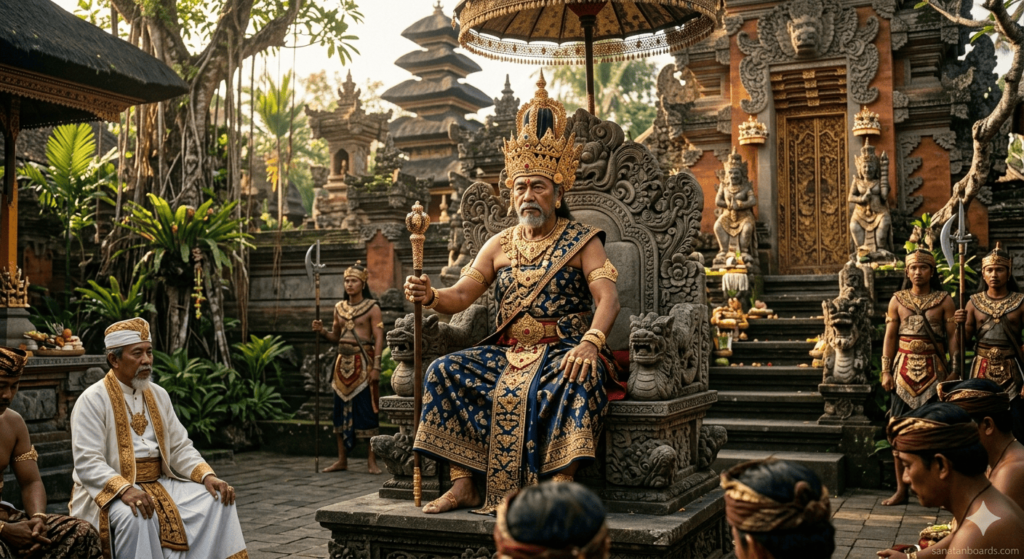
What Is Bali (Indonesia) – King Dharmodayana Warmadewa ?
BALI (INDONESIA) – KING DHARMODAYANA WARMADEWA was a monarch of the island of Bali who ruled during a formative stage of Balinese history. His title, Sang Ratu Maruhani Sri Dharmodayana Warmadewa, reflects the Sanskrit‑derived regnal language common among Indonesian monarchs of the period, incorporating terms denoting righteousness (dharma) and divine authority (dewa).
He belonged to the Warmadewa dynasty, a series of Balinese rulers whose names appear on stone inscriptions, religious monuments, and ancient records. The earliest of these inscriptions in Bali date back to around the 10th century, and the Warmadewa name signifies a lineage of rulers united under this dynastic title.
What sets Dharmodayana Warmadewa apart from many other rulers of the era was the broader historical context of his reign. Bali during his time was not isolated; it was part of an interconnected network of Hindu‑Buddhist influenced kingdoms across the Indonesian archipelago. Through marriage alliances — such as his union with the Javanese princess Mahendradatta — Bali strengthened its connections with powerful neighbors, influencing trade, cultural exchange, and political alliances.
Records from inscriptions indicate that Dharmodayana competently managed internal affairs in Bali and oversaw administrative and governmental developments that helped create a more cohesive Balinese polity. His rulership likely included advising councils, issuing pronouncements on land and religious endowments, and supervising religious rituals that were deeply interwoven with governance.
Importantly, Dharmodayana Warmadewa’s era is one of the few in early Balinese history where both the king and queen share joint public recognition through inscriptions, highlighting his co‑rule with Mahendradatta and the importance of royal partnership in statecraft at that time.
Who Is Required Bali (Indonesia) – King Dharmodayana Warmadewa ?
Understanding BALI (INDONESIA) – KING DHARMODAYANA WARMADEWA is essential for anyone studying the early historical and cultural formation of Bali and the broader Indonesian archipelago. His reign represents a key transitional moment from fragmentary regional chiefdoms to a more organized policing of territory and tradition under dynastic leadership.
Historians, archaeologists, and scholars of Southeast Asian studies are particularly interested in Dharmodayana Warmadewa because he is one of the earliest Balinese rulers whose name and tenure are documented through surviving inscriptions. These inscriptions serve as primary historical sources for reconstructing how Bali’s political institutions evolved during the first millennium CE.
Students of comparative history find his life and reign valuable when examining the interplay between regional kingdoms, especially Bali’s interactions with Java. His marriage alliance with a Javanese princess illustrates how dynastic ties functioned as instruments of diplomacy and cultural exchange in ancient Indonesia.
Cultural anthropologists also look to his reign for insights into how Hindu‑Buddhist religious ideas were integrated into local Balinese practices, shaping ritual, statecraft, and social norms that would persist for centuries. Because the Warmadewa dynasty left inscriptions mixing Sanskrit and local language, researchers can trace linguistic, religious, and iconographic developments of the period
When Bali (Indonesia) – King Dharmodayana Warmadewa Is Required ?
BALI (INDONESIA) – KING DHARMODAYANA WARMADEWA is required to be studied when exploring the formation of early Balinese society and the political history of Indonesia during the 10th and 11th centuries CE. Historical understanding of Bali’s evolution into a structured kingdom relies heavily on Dharmodayana Warmadewa’s reign as a reference point. His period of rule, approximately between 989 and 1011 CE, marks a critical era when Bali transitioned from smaller, scattered chiefdoms into a unified political entity under dynastic leadership.
This historical knowledge is particularly required when studying the Warmadewa dynasty’s consolidation of power, which laid the foundation for Bali’s subsequent political stability. Scholars investigating the spread of Hindu-Buddhist cultural influence across the archipelago look to Dharmodayana’s reign, especially because of his marriage to Princess Mahendradatta of Java, which exemplifies inter-kingdom alliances and the movement of ideas, rituals, and governance practices.
Dharmodayana Warmadewa’s governance is required for reference when analyzing inscriptions that survive from this period. These inscriptions document land grants, religious donations, and administrative proclamations, offering a rare glimpse into the social, religious, and political life of early Bali. They are essential for historians and linguists seeking to reconstruct early Indonesian languages, script evolution, and epigraphy.
Moreover, his reign is required in the context of genealogical studies of Southeast Asian royalty. Dharmodayana’s son, Airlangga, became a prominent king of Java, demonstrating the importance of Bali’s royal lineage in shaping broader regional dynamics. Understanding when Dharmodayana Warmadewa ruled helps contextualize the interconnected history of Bali and Java, and the flow of political and cultural influence between islands during this era.
Finally, knowledge of Dharmodayana Warmadewa is required when exploring Bali’s religious and cultural transformations. This was a time when Hindu-Buddhist practices were solidifying, and rulers like Dharmodayana played a central role in integrating these spiritual systems into governance, law, and societal structure.
Where Bali (Indonesia) – King Dharmodayana Warmadewa Is Required ?
The study of BALI (INDONESIA) – KING DHARMODAYANA WARMADEWA is required primarily in Bali itself, as the kingdom he ruled forms the geographical and cultural context of his reign. Key archaeological sites, such as ancient temples and stone inscriptions in the Bedulu and Buleleng regions, provide direct evidence of his rulership and administrative decrees. Researchers require his historical presence to map the early political landscape of Bali and to understand how dynastic governance influenced local communities.
Where Dharmodayana Warmadewa is required extends beyond Bali to Java, particularly in historical analyses of dynastic alliances. His marriage to Mahendradatta and the subsequent reign of their son, Airlangga, in Java, illustrate that Bali’s political influence extended regionally. Researchers studying historical ties between Indonesian islands must consider where Dharmodayana Warmadewa’s reign intersected with larger political and cultural currents of the archipelago.
His legacy is also required at museums, universities, and research institutions specializing in Southeast Asian history and archaeology. Here, artifacts, inscriptions, and scholarly publications reference his reign to teach or examine the Warmadewa dynasty’s contributions to art, literature, governance, and religion.
Additionally, Dharmodayana Warmadewa is required in digital archives and historical databases, where inscriptions and genealogical records are analyzed using modern technology. These repositories allow scholars to locate his influence across both physical and cultural landscapes, enabling comparative studies with contemporary monarchs in Indonesia and Southeast Asia.
Finally, his reign is required in cultural and tourism contexts throughout Bali. Temples and cultural heritage sites that date back to the Warmadewa period are often interpreted for visitors, highlighting his role in shaping Balinese traditions, governance, and religious practices. Understanding where his influence remains visible helps contextualize Bali’s living cultural heritage.
How Bali (Indonesia) – King Dharmodayana Warmadewa Is Required ?
BALI (INDONESIA) – KING DHARMODAYANA WARMADEWA is required to be examined through multiple historical and cultural methodologies to understand his reign and its enduring impact. Primarily, his study involves epigraphy, the analysis of inscriptions engraved on stone or copper plates during the Warmadewa dynasty. These inscriptions, often in Sanskrit or Old Balinese script, provide direct evidence of his governance, land grants, religious patronage, and the structure of Balinese political institutions. Scholars require these sources to reconstruct the administrative mechanisms and societal norms of 10th-11th century Bali.
Historical methodology also plays a key role. Researchers cross-reference inscriptions with archaeological findings, such as temple ruins, statues, and palace foundations. These tangible artifacts allow historians to determine how Dharmodayana Warmadewa implemented religious rituals and civic projects. For instance, his support for temple construction and land donations to Brahmins demonstrates how rulership intertwined with spiritual authority, a model repeated in subsequent Balinese governance.
Comparative studies with neighboring regions are another way his reign is required. Dharmodayana’s dynastic connections with Java via his queen Mahendradatta highlight inter-island political diplomacy. Researchers trace the lineage to Airlangga, his son, to show how royal alliances and marriages influenced regional stability and cultural exchange, linking Bali to the larger Indonesian archipelago’s history.
Additionally, his reign is required in modern academic frameworks such as cultural anthropology and religious studies. By examining the integration of Hindu-Buddhist practices into governance, rituals, and societal hierarchies, scholars understand how early Balinese society maintained cohesion and continuity. Ethnographic studies often reference his era to explain contemporary Balinese customs and ceremonial life, demonstrating the lasting influence of his governance model.
Finally, interdisciplinary approaches—combining history, archaeology, linguistics, and anthropology—show how Dharmodayana Warmadewa’s reign is required to provide a holistic understanding of early Bali. These methods reveal not only the political and cultural significance of his rule but also his role in shaping enduring Balinese identity, religious institutions, and dynastic traditions.
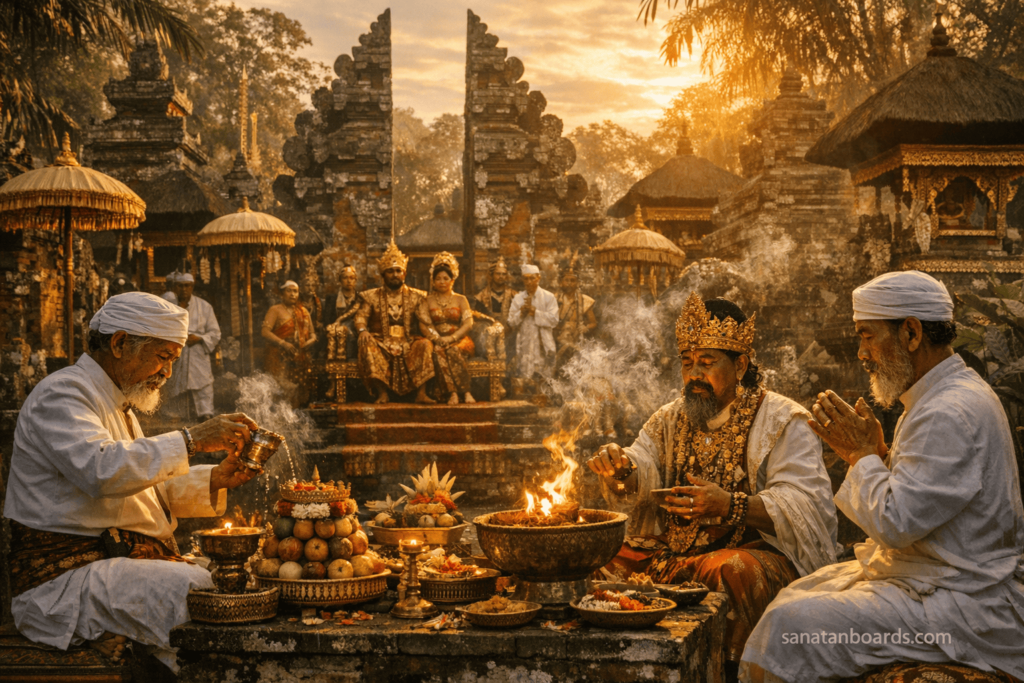
Case Study On Bali (Indonesia) King Dharmodayana Warmadewa
Background:
BALI (INDONESIA) – KING DHARMODAYANA WARMADEWA ruled during a pivotal period in Balinese history, around the late 10th century CE. Belonging to the Warmadewa dynasty, his reign coincided with the integration of Bali into a network of Hindu-Buddhist kingdoms across the Indonesian archipelago. One of the most notable aspects of his reign was his marriage to Princess Mahendradatta of Java, a strategic alliance that cemented political and cultural ties with East Java. This case study examines his reign’s political, cultural, and societal impact.
Political Administration:
Dharmodayana Warmadewa established strong dynastic governance that organized Bali into territories overseen by local officials, often members of the royal family or trusted advisors. Inscriptions such as the Gusti Panji Sakti inscription indicate land grants and royal edicts, showing the administrative sophistication of his reign. The king maintained law and order while ensuring that religious institutions received support, illustrating the integration of secular and sacred authority.
Cultural Influence:
The marriage to Mahendradatta introduced Javanese cultural elements, including ritual practices, art, and language. Inscriptions from his period are often bilingual, combining Old Balinese and Sanskrit, reflecting cross-cultural communication. Dharmodayana Warmadewa’s patronage of temples and religious ceremonies reinforced Bali’s identity as a center of Hindu culture while accommodating regional influences.
Dynastic Legacy:
His son, Airlangga, became a prominent ruler in Java, demonstrating the lasting influence of Dharmodayana Warmadewa’s lineage. This dynastic continuity highlights the strategic importance of marital alliances and royal succession. The case study emphasizes how Bali’s political decisions had ramifications across the archipelago, affecting trade, culture, and religious practices.
Economic Aspects:
Inscriptions indicate that Dharmodayana Warmadewa oversaw agricultural development, particularly rice cultivation, which was central to Bali’s economy. Land grants to temples and Brahmins not only reinforced religious authority but also optimized land use and resource management. These practices show an early model of combining economic planning with cultural and spiritual governance.
Social Integration:
The king promoted a hierarchical yet cohesive society. Local elites collaborated with royal administrators to maintain stability, and religious leaders played an active role in community affairs. The co-rule with Mahendradatta demonstrates gendered power dynamics, where queens could hold political influence alongside kings, ensuring broader social acceptance of rulership.
Conclusion:
This case study demonstrates that BALI (INDONESIA) – KING DHARMODAYANA WARMADEWA was a foundational figure in Balinese history. #baliindonesiakingdharmodayanawarmadewa His reign integrated political stability, religious authority, cultural synthesis, and economic management. By examining inscriptions, archaeological evidence, and historical narratives, scholars can reconstruct a sophisticated governance model that influenced Bali’s subsequent history and contributed to the regional dynamics of the Indonesian archipelago.
White Paper On Bali (Indonesia) King Dharmodayana Warmadewa
Executive Summary:
BALI (INDONESIA) – KING DHARMODAYANA WARMADEWA represents a cornerstone in the early historical and political development of Bali. This white paper explores his reign, contextualizes his contributions to governance, culture, and religion, and assesses the long-term implications for the Balinese archipelago and Southeast Asia.
Introduction:
The Warmadewa dynasty, to which Dharmodayana Warmadewa belonged, is the earliest historically documented royal lineage in Bali. Inscriptions and archaeological evidence indicate that the dynasty consolidated political authority, promoted religious institutions, and established social hierarchies during the late 10th to early 11th centuries. Dharmodayana Warmadewa’s rule is particularly significant for its dynastic alliances with Java, especially through his queen Mahendradatta, fostering inter-island political stability and cultural exchange.
Governance and Administration:
The king implemented a centralized system of governance that delegated authority to local officials and temple administrators. Inscriptions such as land grants and royal edicts demonstrate a structured approach to law, property rights, and taxation. By supporting temples and religious communities, Dharmodayana Warmadewa reinforced both spiritual authority and administrative control, creating a sustainable model of leadership. This governance approach highlights the symbiosis of political and religious institutions in pre-modern Bali.
Cultural and Religious Integration:
Dharmodayana Warmadewa’s reign exemplifies the integration of Hindu-Buddhist cultural practices into Balinese society. The combination of Old Balinese and Sanskrit inscriptions illustrates the linguistic and ritual sophistication of the period. Religious ceremonies, temple construction, and land endowments reflect the king’s role in fostering spiritual life as a vehicle for social cohesion. These cultural initiatives contributed to the long-lasting identity of Bali as a center of Hindu culture in Southeast Asia.
Dynastic and Regional Significance:
The marriage of Dharmodayana Warmadewa to Mahendradatta of Java positioned Bali as a participant in broader regional networks. The subsequent ascension of their son, Airlangga, in Java, underscores the dynastic and geopolitical importance of the Warmadewa family. Bali’s political decisions during this period influenced trade, diplomacy, and cultural diffusion throughout the Indonesian archipelago.
Economic Contributions:
Agricultural development, particularly rice cultivation, was central to the economy under Dharmodayana Warmadewa. Land grants to temples and Brahmins not only reinforced religious authority but also optimized land management. This approach reflects a strategic combination of economic planning, resource allocation, and cultural investment, ensuring both prosperity and social stability.
Legacy and Implications:
Dharmodayana Warmadewa’s reign established governance structures, cultural traditions, and dynastic continuity that endured for centuries. #Sanatandharmaaccreditationboardsinmumbai His leadership offers insights into early Balinese political systems, inter-island relations, and the role of religion in public administration. Modern scholars, historians, and cultural practitioners continue to reference his period to understand Bali’s historical trajectory and its regional significance.
Industry Application On Bali (Indonesia) King Dharmodayana Warmadewa
The historical significance of King Dharmodayana Warmadewa extends beyond academia, offering applications across several modern industries by leveraging his reign’s cultural, political, and economic insights.
1. Cultural Tourism and Heritage Development
King Dharmodayana Warmadewa’s reign forms the backbone of early Balinese royal and religious history. Tourism operators, heritage organizations, and cultural institutions utilize knowledge of his era to develop historically informed tours, temple experiences, and museum exhibits. Sites such as ancient inscriptions, temples, and palace ruins associated with the Warmadewa dynasty attract global visitors, and guides often incorporate stories of his reign to enhance visitor engagement and understanding of Balinese heritage.
2. Educational Industry
Schools, universities, and research institutes employ his reign as a case study in Southeast Asian history, archaeology, and anthropology. Curriculum developers use his governance, dynastic alliances, and cultural contributions to illustrate early models of political organization, inter-island diplomacy, and religious integration. Historical simulations and interdisciplinary research often reference Dharmodayana Warmadewa’s era to teach governance, law, and cultural evolution in pre-modern Indonesia.
3. Cultural Preservation and Ritual Continuity
Government agencies, NGOs, and cultural preservation organizations reference his reign to maintain traditional Balinese rituals and ceremonies. Land grants to temples and patronage of religious institutions under Dharmodayana Warmadewa provide models for preserving intangible cultural heritage, including temple festivals, royal rituals, and community-based ceremonies that remain central to Balinese identity today.
4. Archaeology, Museums, and Digital Humanities
The inscriptions and artifacts from his era are widely used in archaeological research and museum curation. Digital humanities projects create virtual reconstructions of temples and dynastic networks, allowing global audiences to explore early Balinese history. GIS mapping of inscriptions, AI-assisted epigraphy, and interactive museum exhibits are all enhanced by knowledge of his reign.
5. Interdisciplinary Research and Policy
Insights from Dharmodayana Warmadewa’s governance inform modern studies in political science, sociology, and economic management. His model of integrating religious authority with administrative governance provides lessons for cultural policy-making, community development, and sustainable resource management. Researchers studying dynastic leadership and cultural diplomacy draw parallels between his strategies and modern regional governance.
6. Creative Industries
Filmmakers, authors, and game developers also utilize his story for historical storytelling, documentaries, and cultural simulations. By dramatizing his reign, inter-island alliances, and dynastic legacy, creative industries can bring ancient Bali to life, connecting history to popular media while educating audiences.
SOURCE : Captivating History
ASK FAQ
Who was King Dharmodayana Warmadewa of Bali?
King Dharmodayana Warmadewa was a 10th‑century ruler of Bali from the Warmadewa dynasty, known for political consolidation, cultural development, and his alliance with Java through Queen Mahendradatta.
When did King Dharmodayana Warmadewa rule Bali?
He ruled Bali approximately between 989 CE and 1011 CE, a period marked by political stabilization and the strengthening of Hindu-Buddhist cultural practices.
What is the historical significance of the Warmadewa dynasty in Bali?
The Warmadewa dynasty, including King Dharmodayana, established Bali’s first documented royal lineage, promoted temples and inscriptions, and connected Bali to Java’s political and cultural networks.
Where are King Dharmodayana Warmadewa’s inscriptions found?
His inscriptions are found in Bali, particularly in regions like Bedulu and Buleleng, documenting land grants, temple patronage, and royal decrees.
Why is King Dharmodayana Warmadewa important for Bali’s cultural heritage?
His reign shaped Bali’s early political structure, religious practices, and dynastic legacy, influencing traditions, temple rituals, and Balinese identity that endure today.
Table of Contents
Disclaimer
The information provided in this document is based on historical records, inscriptions, and academic research available up to 2026. Some details about King Dharmodayana Warmadewa’s reign, including dates and specific events, may be subject to ongoing scholarly interpretation and debate. While efforts have been made to present accurate and well-sourced information, this document is intended for informational purposes only and should not be considered a definitive historical record.