
SUHELDEV (RAJA OF SHRAVASTI, FOUGHT MAHMUD OF GHAZNI)
SUHELDEV (Raja of Shravasti, fought Mahmud of Ghazni) is a historic figure whose story has been preserved through chronicles, folklore, and later narratives. He is traditionally described as a monarch from Shravasti, a town in present‑day Uttar Pradesh, India, who rose to prominence in the 11th century CE, during a turbulent period of foreign incursions into the Indian subcontinent. The name Suheldev (also spelled Suhaldev or Suheldev) appears in later Persian texts and many regional oral traditions, where he is portrayed as a spirited king who resisted invading forces associated with the Ghaznavid empire.
The backdrop to his story is the repeated military campaigns carried out in northern India by Mahmud of Ghazni, a powerful ruler based in what is now Afghanistan whose raids shaped the political landscape of the early second millennium. Mahmud’s expeditions brought him repeatedly into contact with Indian states and rulers, leading to confrontations that had both military and cultural resonance. While Mahmud himself did not personally rule over Shravasti his campaigns and the movements of his generals set the stage for heroic resistance among local rulers, including Suheldev.
In popular narratives, Suheldev is portrayed not merely as a king of a regional realm, but as a unifier of local forces who challenged a powerful invader’s influence and defended his land with determination. His fame largely rests on later accounts — especially the 17th‑century Persian chronicle Mirat‑i‑Masudi — that recount his confrontations with figures linked to Mahmud’s campaigns, most notably Ghazi Saiyyad Salar Masud, a commander associated with the Ghaznavid forces.
These portrayals have made Suheldev a powerful symbol in the cultural memory of northern India, where his legacy continues to be remembered and discussed in multiple contexts.
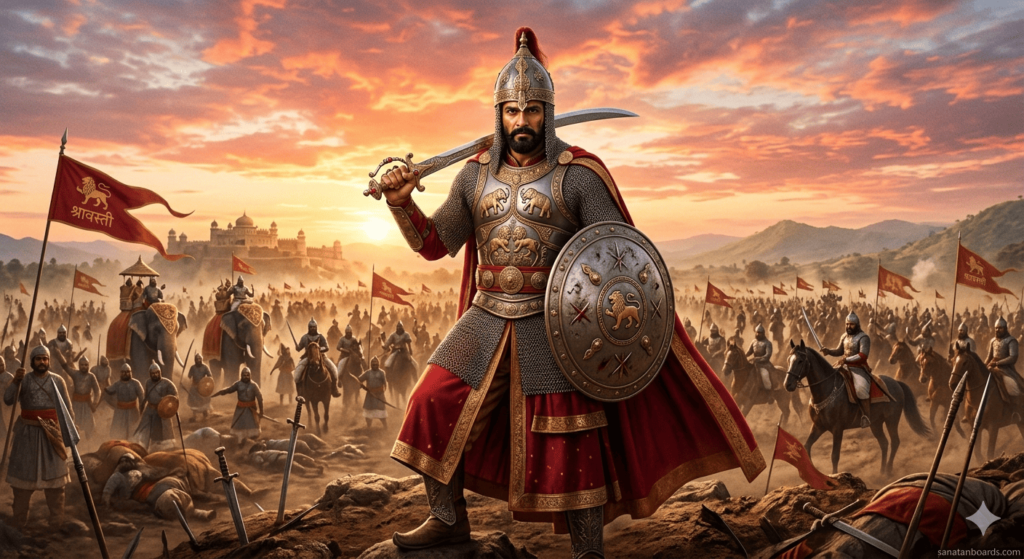
What Is Suheldev (Raja Of Shravasti, Fought Mahmud Of Ghazni) ?
SUHELDEV (Raja of Shravasti, fought Mahmud of Ghazni) refers to a semi‑legendary ruler whose narrative occupies a unique place between recorded history and regional lore. While mainstream medieval sources rarely mention him directly, his name and deeds are preserved in later texts and traditional accounts that portray him as a valiant defender of his homeland.
At its core, the story of Suheldev revolves around his resistance against incursions associated with the Ghaznavid Empire, whose most famous ruler, Mahmud of Ghazni, carried out several raids into northern India during the early 1000s CE. Though Mahmud himself was focused on wider campaigns across the subcontinent, including western regions, narratives about Suheldev specifically highlight his confrontation with Ghazi Saiyyad Salar Masud, a figure described as Mahmud’s nephew and commander of an invading force.
In the composite story found in Mirat‑i‑Masudi, Suheldev emerges as the son of a local king of Shravasti who, upon seeing the turmoil caused by the Ghaznavid incursions, rallied support from local tribes and smaller rulers. His strategy often emphasizes guerrilla tactics and the forging of confederations to check the advance of the invading contingent.
The central episode attributed to him is the Battle of Bahraich (1033–1034 CE) where his forces reportedly overcame and killed Salar Masud. After this clash, the territory under Suheldev’s influence was said to remain free from further major invasions for a significant period.
It’s important to note that much of what we know of Suheldev comes from narratives written several centuries after the events they depict. Historians therefore treat his story as a blend of memory, legend, and cultural consolidation, rather than as a fully documented historical chronicle. Nevertheless, his tale has persisted as a powerful emblem of local authority and resistance in the face of aggressive incursions.
Who Is Suheldev (Raja Of Shravasti, Fought Mahmud Of Ghazni) ?
SUHELDEV (Raja of Shravasti, fought Mahmud of Ghazni) is presented in later texts as a monarch whose leadership inspired regional resistance against invaders during the early medieval period in northern India. Although direct contemporary sources from his time are scarce, his identity has been shaped by later Persian chronicles and a rich body of folk tradition that celebrate his staunch defense of his realm.
In these narratives, Suheldev is depicted as the son of the ruler of Shravasti — a historically significant city that once served as a major center of trade, religion, and governance in the Gangetic plains. The chronicled accounts portray him as possessing martial skill, strategic acumen, and the ability to unite various local clans and tribal groups, such as the Tharu and Banjara communities, against common external threats.
The person Suheldev is described as confronting was Ghazi Saiyyad Salar Masud, a commander linked to the Ghaznavid campaigns. Masud, often framed in these narratives as an agent of foreign aggression, advanced through parts of northern India before encountering Suheldev’s organized resistance.
In the climactic encounter near Bahraich, Suheldev’s forces are said to have decisively defeated the invading army, resulting in the death of Salar Masud. This victory is traditionally seen as a pivotal moment that halted further incursions into the region at that time.
Although the details of Suheldev’s life and deeds vary across sources, his portrayal consistently emphasizes his role as a †leader who stood up to external military pressure. Over centuries, his story has been elaborated upon in poetry, local lore, and political narratives, making him a figure of enduring interest in the cultural consciousness of the region.
When Is Suheldev (Raja Of Shravasti, Fought Mahmud Of Ghazni) Required ?
The period associated with SUHELDEV (Raja of Shravasti, fought Mahmud of Ghazni) is the early 11th century CE, a time marked by significant military and political developments across northwestern and northern India. Although direct records of Suheldev’s activities are not found in contemporary chronicles from his lifetime, later sources and traditional accounts place his actions around the 1020s–1030s CE.
This era saw the Ghaznavid Empire, under the leadership of Mahmud of Ghazni, conducting a series of recurrent campaigns into the Indian subcontinent. Mahmud himself led large cavalry forces deep into Sindh, Rajasthan, and the Gangetic plains, often targeting wealthy urban centers and religious sites. These expeditions took place chiefly between 1000 and 1025 CE, establishing Ghaznavid dominance on the Indo‑Afghan frontier.
Although Mahmud’s own death in 1030 marked the end of his direct leadership, the Ghaznavid presence remained influential for years afterward. During this period, commanders such as Ghazi Saiyyad Salar Masud — portrayed in some accounts as an invader coming from the northwestern frontier — are central to narratives surrounding Suheldev. The legendary Battle of Bahraich, where Suheldev is said to have defeated the invading forces, is dated around 1033–1034 CE in regional lore.
The timing of Suheldev’s activities — in the early decades after Mahmud’s campaigns — reflects a moment when local rulers and regional powers were grappling with sustained external pressure. This was a time of shifting alliances, fragmented polities, and frequent skirmishes between indigenous kingdoms and Turkic forces moving into the Gangetic plains. Suheldev’s purported resistance symbolizes this larger historical moment: the efforts of smaller, decentralized rulers to safeguard their domains against well‑organized, mobile cavalry forces emerging from the northwest.
In addition to the battle narratives, later commemorations — including memorial inscriptions, folk festivals, and texts composed centuries afterwards — have anchored Suheldev to this early 11th‑century context. His presence in cultural memory as a defender against incursions reflects the broader political and military dynamics of the time.
Where Is Suheldev (Raja Of Shravasti, Fought Mahmud Of Ghazni) Required ?
The historical and cultural relevance of SUHELDEV (Raja of Shravasti, fought Mahmud of Ghazni) is primarily situated in northern India, specifically in the Awadh region of Uttar Pradesh. The city of Shravasti, which served as the capital of Suheldev’s kingdom according to tradition, is located near present-day Bahraich district. This area has historically been a crossroads of trade, religious activity, and political authority, making it strategically significant in the early medieval period.
The “where” of Suheldev’s relevance extends beyond just geography; it encompasses political and cultural domains. His influence is recalled in regions that were part of the Gangetic plains and where local rulers resisted Ghaznavid incursions. The Battle of Bahraich, where Suheldev reportedly confronted Ghazi Saiyyad Salar Masud, is itself a site of historical and memorial importance. This battlefield, located near modern Bahraich city, is where folklore situates Suheldev’s decisive victory, giving it ongoing symbolic significance.
Over centuries, the influence of Suheldev’s story has also been cultural and symbolic, extending to temples, memorials, and commemorative festivals in Awadh and surrounding districts. Temples dedicated to his memory, along with annual fairs and local observances, highlight the continued relevance of his legacy in regional identity.
In contemporary discourse, Suheldev’s story has traveled beyond Uttar Pradesh into broader narratives about resistance to foreign invasions and valor. Scholars and cultural commentators highlight that while the primary historical action occurred in Shravasti and Bahraich, his symbolic significance is recognized across northern India, often invoked in literature, folklore, and political narratives to represent courage, leadership, and the defense of local sovereignty.
How Is Suheldev (Raja Of Shravasti, Fought Mahmud Of Ghazni) Required ?
The methods by which SUHELDEV (Raja of Shravasti, fought Mahmud of Ghazni) exerted influence and fulfilled his role are portrayed in traditional accounts as a combination of military strategy, political alliance, and moral leadership. According to legends and later chronicles, Suheldev successfully mobilized local forces to defend Shravasti and neighboring regions against foreign incursions.
One of the key aspects of “how” Suheldev operated was organizing local resistance. Regional rulers, tribal groups, and community leaders were persuaded to unite under his command. By leveraging local knowledge of terrain and resources, Suheldev reportedly implemented tactics that neutralized the advantages of the invaders, who relied on heavy cavalry and organized units. Guerrilla warfare, ambushes, and strategic positioning are said to have been central to his military approach.
Another element of his approach was strategic governance. By maintaining the loyalty of his subjects and consolidating smaller principalities, Suheldev ensured sustained support for both defense and administration. This organizational skill allowed his kingdom to remain resilient against repeated external threats.
His moral and symbolic authority also played a significant role. Legends highlight Suheldev as a figure of ethical leadership, inspiring local populations to defend their land with unity and courage. The story of his confrontation with Salar Masud emphasizes the triumph of regional solidarity over invading forces, reinforcing the idea that leadership combined with popular support can be decisive.
Finally, his methods of resistance and consolidation were embedded in cultural memory. Songs, folklore, and later texts memorialized his actions, ensuring that his strategies and heroism were preserved for generations. These narratives illustrate “how” he achieved influence — not merely through combat but through moral authority, political acumen, and social cohesion, making Suheldev an enduring symbol of regional leadership.
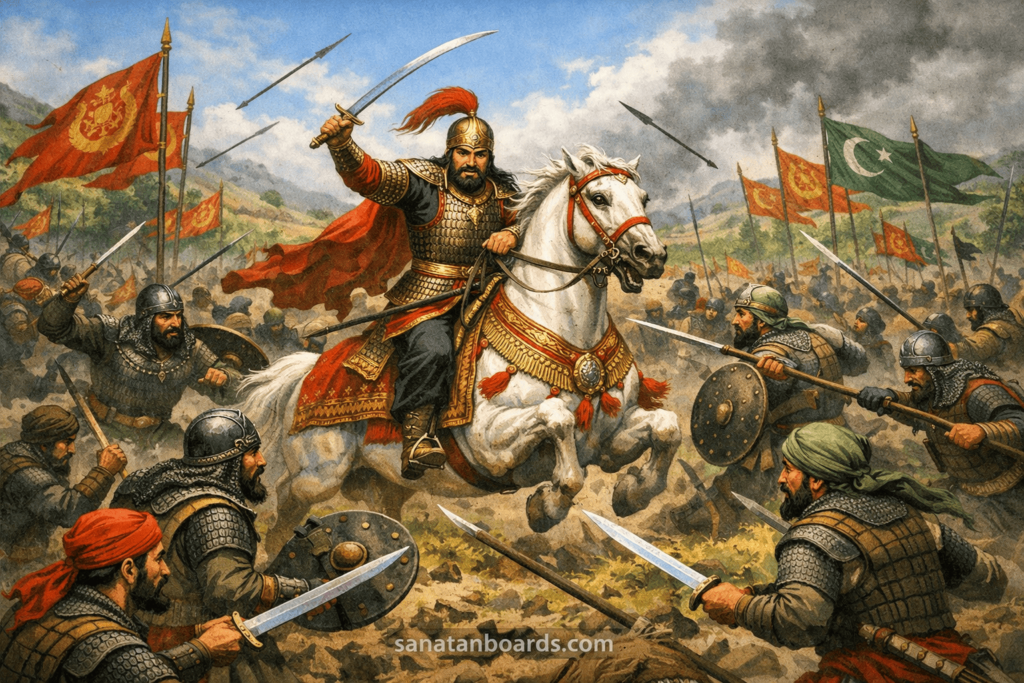
Case Study On Suheldev (Raja Of Shravasti, Fought Mahmud Of Ghazni)
Background Context
The early 11th century was a period of significant turmoil in northern India. The Ghaznavid Empire, led by Mahmud of Ghazni, launched repeated campaigns into the subcontinent, targeting wealthy cities, temples, and local rulers. These raids destabilized regional powers, leaving smaller kingdoms vulnerable. Shravasti, located in present-day Uttar Pradesh, was a strategically important city with a history of trade, governance, and cultural prominence.
Suheldev, according to traditional accounts, emerged as a local ruler with the capacity to unify disparate groups. This case study focuses on his leadership style, military strategy, and the socio-political impact of his actions.
Leadership and Mobilization
Suheldev’s leadership is characterized by strategic unification. He reportedly persuaded local chieftains, tribal communities, and minor rulers to form a coalition capable of resisting external incursions. The case study highlights how charismatic leadership and political negotiation can create a unified front in the face of superior forces. This demonstrates a model of distributed leadership, where authority is shared, and mutual support strengthens resilience.
Military Strategy
The legendary Battle of Bahraich (1033–1034 CE) serves as a key focus. Suheldev’s forces reportedly employed guerrilla tactics, strategic ambushes, and terrain advantages to counter the organized cavalry of Salar Masud, Mahmud’s general. By leveraging local knowledge and coordinating attacks, Suheldev’s smaller army overcame a numerically and technologically superior force. This illustrates principles still relevant in military strategy today: leveraging local intelligence, terrain familiarity, and coalition coordination.
Social and Cultural Impact
Beyond the battlefield, Suheldev’s story had lasting social and cultural effects. By protecting his realm, he maintained the stability of regional institutions, allowing trade, religion, and governance to continue without prolonged disruption. Later folklore, songs, and memorials reinforced the moral and cultural significance of his actions, establishing him as a symbol of regional pride and resilience.
Lessons from the Case Study
- Leadership in Crisis: Suheldev’s ability to unite fragmented groups shows the importance of vision and diplomacy alongside military skill.
- Adaptation to Resources: Effective use of local terrain and guerrilla tactics highlights resourceful decision-making under constraints.
- Cultural Resonance: Preserving local identity and values strengthens collective resolve, ensuring long-term legacy and influence.
In conclusion, the case of Suheldev demonstrates the intersection of leadership, military strategy, and cultural symbolism. While historical details remain debated, the narratives provide valuable insights into how regional actors can assert agency and influence outcomes even amid overwhelming external pressures.
White Paper On Suheldev (Raja Of Shravasti, Fought Mahmud Of Ghazni)
Executive Summary
This white paper examines SUHELDEV (Raja of Shravasti, fought Mahmud of Ghazni) as a model of regional leadership and strategic resistance. Through historical narratives, folklore, and cultural memorials, Suheldev exemplifies how local authority, military strategy, and social cohesion converge to create enduring influence.
Introduction
The 11th-century incursions of the Ghaznavid Empire into northern India presented existential threats to local rulers. The figure of Suheldev, king of Shravasti, emerges in chronicles such as Mirat-i-Masudi and oral traditions as a leader who successfully resisted these incursions, particularly the advance of Salar Masud, Mahmud’s commander.
Strategic Overview
Military Tactics: Suheldev’s reputed strategies included the effective use of terrain, ambush tactics, and coalition forces drawn from local tribes. This approach countered the numerical and technological advantage of Ghaznavid forces.
Coalition Building: Suheldev’s leadership highlights political skill in uniting minor rulers and tribal leaders under a common objective, demonstrating the importance of social networks in strategic defense.
Sociocultural Strategy: Preserving local institutions and fostering unity reinforced social resilience, providing the stability necessary to resist repeated incursions.
Impact Analysis
- Political: Suheldev’s victory at Bahraich (1033–1034 CE) reportedly halted further Ghaznavid incursions into Awadh, stabilizing regional governance.
- Military: His campaign showcases the effectiveness of asymmetric warfare and resourceful leadership in overcoming superior forces.
- Cultural: Oral traditions and commemorative practices preserved Suheldev’s legacy, reinforcing cultural identity and historical memory.
Risk and Mitigation
Historical accounts suggest several risks faced by Suheldev: potential betrayal by local allies, superior military technology of invaders, and disruption of trade and social structures. Mitigation involved fostering loyalty, leveraging terrain advantages, and consolidating forces through alliances.
Recommendations
- Leadership Development: Lessons from Suheldev’s coalition-building can inform modern organizational leadership in crisis scenarios.
- Strategic Planning: Emphasis on asymmetric strategies and terrain utilization can be applied in both military and corporate settings.
- Cultural Preservation: Maintaining and communicating local values strengthens community resilience and institutional memory.
Conclusion
The story of Suheldev is more than a historical anecdote; it offers a blueprint for combining leadership, strategy, and social cohesion in the face of overwhelming challenges. #suheldevrajaofshravasti While the historical veracity of every detail remains debated, the overarching lessons retain applicability across domains where leadership under pressure is critical.
Industry Application Of Suheldev (Raja Of Shravasti, Fought Mahmud Of Ghazni)
While Suheldev (Raja of Shravasti, fought Mahmud of Ghazni) is a historical and semi-legendary figure, the strategic, leadership, and organizational principles demonstrated in his story have meaningful applications across modern industries. His life and legend provide lessons in leadership, crisis management, teamwork, and cultural strategy.
1. Leadership and Organizational Management
Suheldev’s ability to unite fragmented groups against a larger invading force demonstrates the importance of visionary leadership and coalition-building. Modern organizations can take inspiration from his approach to:
- Align diverse teams toward a common goal.
- Cultivate loyalty and trust among stakeholders.
- Navigate complex competitive environments by leveraging collective strengths.
For example, corporations facing market disruption can apply Suheldev-inspired leadership by creating cross-functional teams that share resources, knowledge, and responsibilities to achieve resilience against competitors.
2. Risk Management and Strategic Planning
The military strategies attributed to Suheldev — particularly guerrilla tactics, terrain utilization, and resource optimization — translate into modern risk management practices. Industries can leverage these lessons in:
- Logistics: optimizing supply chains under unpredictable conditions.
- Finance: mitigating exposure to volatile markets by using diversified strategies.
- Technology: deploying agile frameworks to handle resource constraints or sudden market threats.
Suheldev’s approach illustrates asymmetric strategy — achieving significant outcomes despite limited resources — which is a highly relevant principle for startups and SMEs facing larger competitors.
3. Marketing, Branding, and Cultural Engagement
Suheldev’s legend has been preserved through folklore, monuments, and regional narratives, showcasing the power of cultural storytelling. Industries can apply these insights to:
- Build strong brand identity rooted in values and heritage.
- Engage communities by connecting products or campaigns to local or historical narratives.
- Foster loyalty by creating emotional resonance with audiences.
For instance, tourism, heritage, and educational sectors can use Suheldev’s story to attract interest and participation, linking historical pride to experiential offerings.
4. Education, Training, and Development
His story emphasizes resilience, strategic thinking, and unity — traits that are valuable in corporate training programs. Industries can create leadership modules, simulation exercises, and team-building workshops inspired by Suheldev’s example, cultivating:
- Critical decision-making under pressure.
- Collaboration and coordination across hierarchical or geographical boundaries.
- Ethical leadership and responsibility.
5. Governance and Community Development
Suheldev’s consolidation of local forces and protection of regional stability is analogous to modern public administration and governance strategies. Governments and NGOs can draw lessons in:
- Coordinating diverse stakeholders for community resilience.
- Strengthening local systems to withstand external pressures (economic, social, or environmental).
- Preserving cultural heritage while promoting regional development.
Conclusion
The principles embodied by Suheldev (Raja of Shravasti, fought Mahmud of Ghazni) — leadership, strategy, coalition-building, risk mitigation, and cultural legacy — remain highly relevant in today’s industries. From corporate management and #Sanatandharmaaccreditationboardsinmumbai startups to community governance, strategic planning, and cultural initiatives, his story provides a timeless framework for achieving objectives #Sanatandharmaaccreditationboardsinvasai despite challenges, uniting teams, and building resilience.
source : Study Glows
ASK FAQ
Who was Suheldev, the Raja of Shravasti?
Suheldev was a legendary 11th-century king of Shravasti, known for defending his kingdom against the Ghaznavid commander Salar Masud during Mahmud of Ghazni’s invasions.
What is Suheldev famous for?
Suheldev is famous for uniting local forces and defeating the invading army of Salar Masud in the Battle of Bahraich, protecting his region from foreign conquest.
When did Suheldev fight Mahmud of Ghazni’s forces?
Suheldev’s resistance is believed to have occurred around 1033–1034 CE, during the early 11th century, following Mahmud of Ghazni’s campaigns in northern India.
Where was Suheldev’s kingdom located?
Suheldev ruled from Shravasti, located in present-day Bahraich district, Uttar Pradesh, which was a key city in northern India during his time.
How is Suheldev remembered today?
Suheldev is remembered through folklore, memorials, and cultural celebrations in northern India as a symbol of leadership, valor, and resistance against invasions.
Table of Contents
Disclaimer
This document is based on historical accounts, folklore, and secondary sources. Certain events and figures associated with SUHELDEV (Raja of Shravasti, fought Mahmud of Ghazni) are subject to debate among historians. The information presented reflects a synthesis of available sources and cultural narratives and should not be interpreted as verified historical fact in every detail.